Why Do Some Watches Display the Date at 4:30?
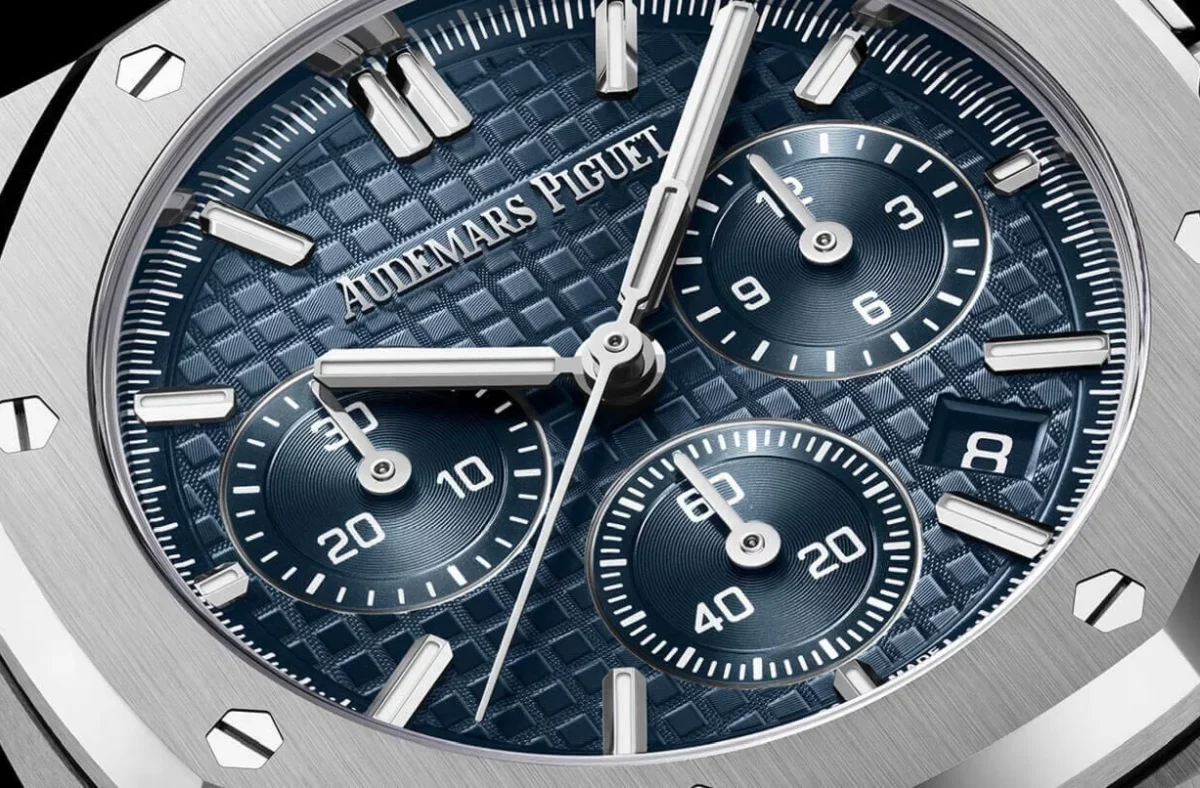
Why do some watches display the date at 4:30? Because watchmaking is almost never governed by chance; it is nearly always a succession of compromises. Behind that small, angled window lies an intensely serious dialogue between movement architecture, dial balance, legibility, historical continuity and, occasionally, sheer aesthetic laziness. Yes, even prestigious brands are guilty of it.
The 4:30 date is a minor detail that inspires a disproportionate amount of debate. On forums, it ruins watches; in a display case, it goes unnoticed; on the wrist, it suddenly stands out—and can even look like a clever solution. As is so often the case in watchmaking, everything depends on the execution.
How does a date window actually work?
Before judging a 4:30 date, let us look beneath the dial. A conventional date display generally uses a ring-shaped disc positioned just below the dial. This disc is printed with the numbers 1 through 31. Once a day, a driving finger linked to the going train and jumper mechanism advances the disc by one step. In a well-designed movement, the changeover is instantaneous—or almost so. In less successful examples, it creeps around midnight with all the elegance of a tired shutter.
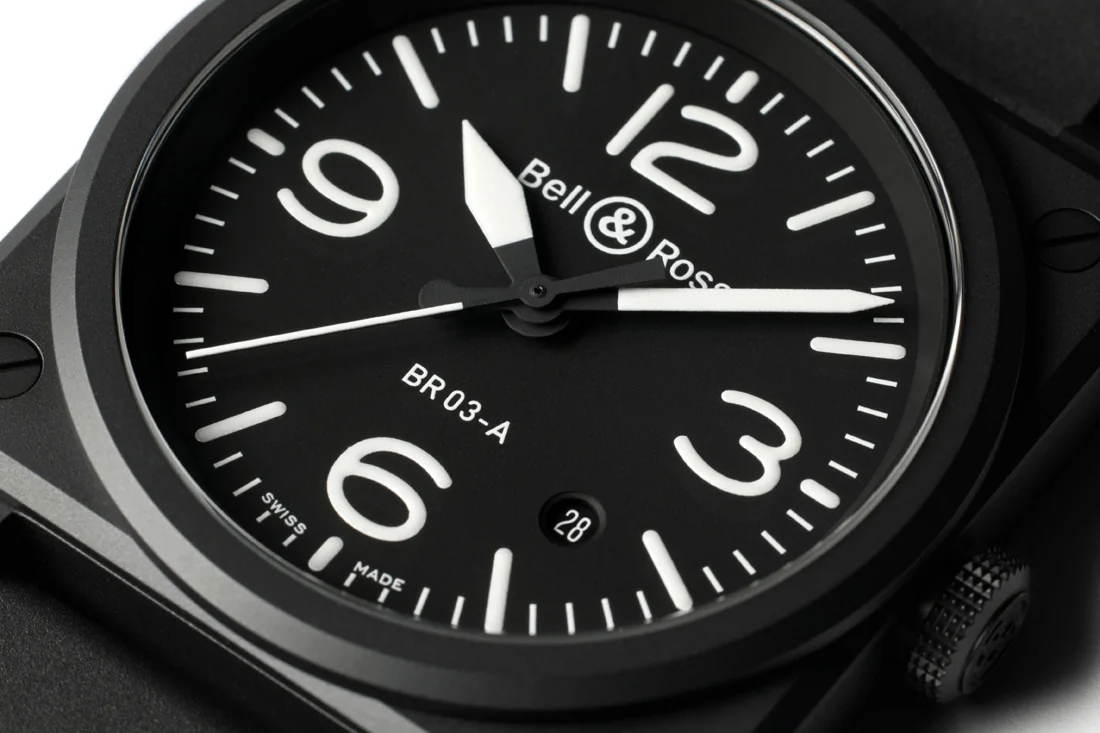
The dial merely has to show the correct number in the correct place. That is where the opening—known as the date window—comes in. Traditionally positioned at 3 o’clock, it became almost a standard feature with the Rolex Datejust in 1945. The Cyclops lens, introduced in the 1950s, reinforced its dominance. Simple. Legible. Almost bourgeois in its practicality.
Technically, however, there is no reason the date must be placed at 3 o’clock. By printing the disc to correspond with another opening, the date window can be moved to 6 o’clock, 12 o’clock, somewhere between 4 and 5 o’clock, or elsewhere entirely. In theory, anything is possible. In practice, everything comes at a price, whether in thickness, cost, development effort or elegance.
The most common reason: preserving dial balance
The 4:30 date often appears when designers want to retain the prominent indices at 3, 6, 9 and 12 o’clock. On sports watches, particularly those generously coated with luminous material, these markers can be essential to legibility. Cutting through the 3 o’clock index to make room for a date feels like damaging the dial. At 6 o’clock, the date can disrupt the balance of the minute track or interfere with a sub-dial. So the 4:30 date window becomes an escape route.
It slips into a kind of no-man’s-land between two indices. Neither the 3 o’clock marker nor the 6 o’clock marker has to be sacrificed. On paper, it is elegant. On the dial, it can be superb—or deeply unstable. Everything depends on the size of the window, the colour of the disc, the orientation of the numerals, the typeface and, above all, the brand’s ability to embrace the choice rather than conceal it like a sauce stain on a white shirt.
On chronographs, a 4:30 date often makes perfect sense
A chronograph is a natural setting for a 4:30 date. Its dial already contains sub-dials, sometimes a tachymeter scale, a crowded minute track, various inscriptions, a logo, central hands and a chronograph seconds hand. In short, it is a Parisian apartment. Every square metre comes at a price.
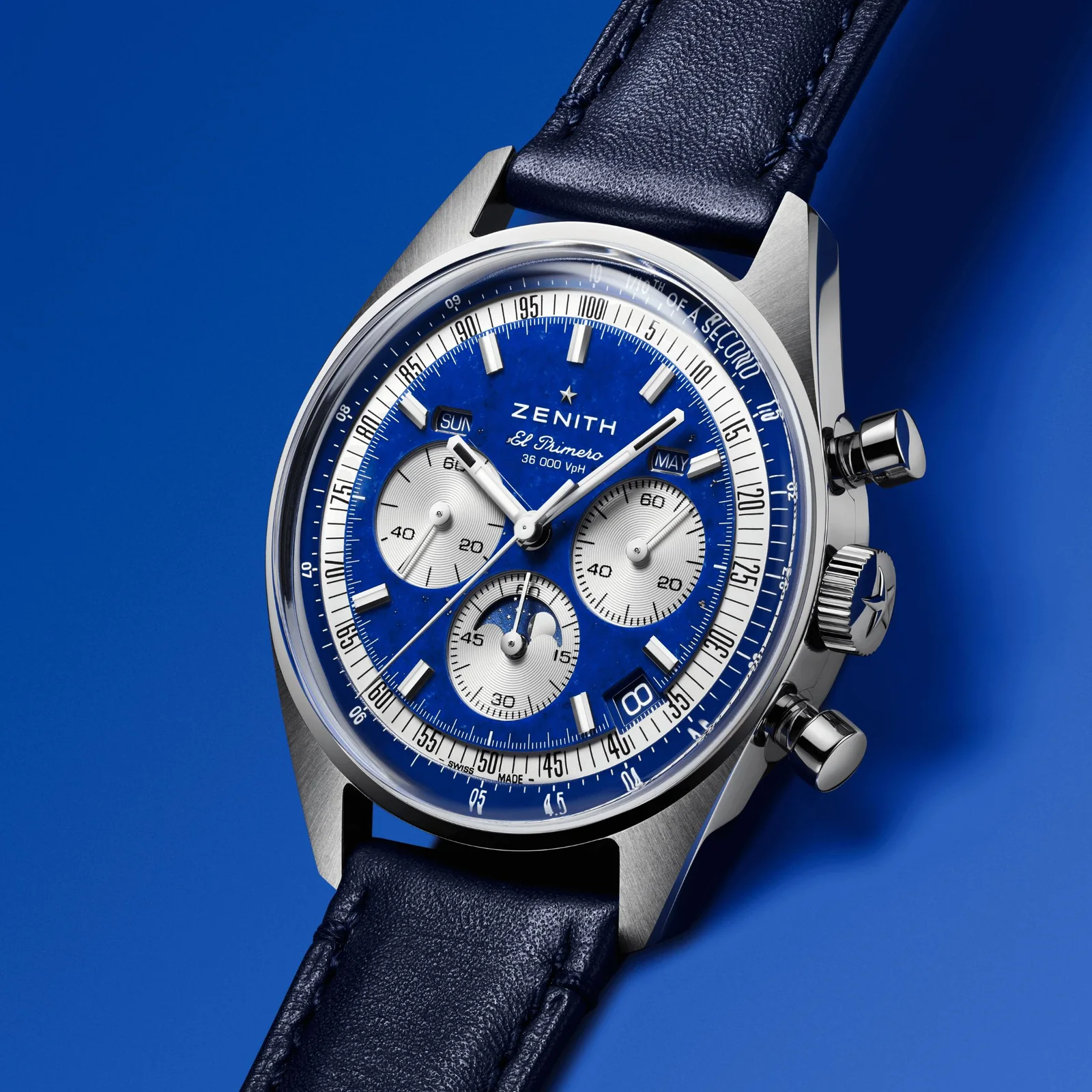
With a tricompax layout featuring sub-dials at 3, 6 and 9 o’clock, placing the date at 3 o’clock means cutting into a register. At 6 o’clock, it intrudes on another sub-dial; at 12 o’clock, it disrupts the logo or the vertical balance. What remains is the diagonal at 4:30, which becomes an almost natural solution.
Zenith established a textbook example of this arrangement. The 1969 El Primero A386, one of the earliest integrated automatic chronographs in history, already displayed the date between 4 and 5 o’clock. The El Primero calibre operated at a high frequency of 36,000 vibrations per hour, enabling it to measure tenths of a second. The arrangement on the current Chronomaster Original is therefore not a modern whim, but an inherited signature.
Movement constraints, not merely a designer’s choice
It is tempting to imagine that designers place the date wherever they please, like decorators moving a vase around a room. That is not entirely the case. A movement is a highly standardised machine. The position of the date disc, the construction of the quick-set mechanism, the height of the calendar works, the movement diameter and the case diameter all influence the result.
For some mass-produced calibres, manufacturers offer several date discs with different print layouts to match openings at 3, 6 or 4:30. In other cases, changing the position of the date window requires a bespoke modification. And in the world of mechanical watches, “bespoke” often means “more expensive”. A wonderfully elegant term that can turn a good idea into a crisis-management meeting.
The 4:30 date can also expose the difference between movement diameter and case diameter. Place a relatively small calibre inside a large case and the date disc may appear too close to the centre of the dial. The date window then seems to float in a strange position: neither truly peripheral nor clearly intentional. It is one of the great sins of modern watchmaking. The cases grew larger, but the movements did not. Only the dial tells the truth.
Why the numerals are sometimes set at an angle
Another source of debate is the orientation of the numerals inside the window. At 4:30, should the date be printed horizontally so that it reads naturally when the watch is viewed upright? Or should it follow the axis of the date window and be angled accordingly?
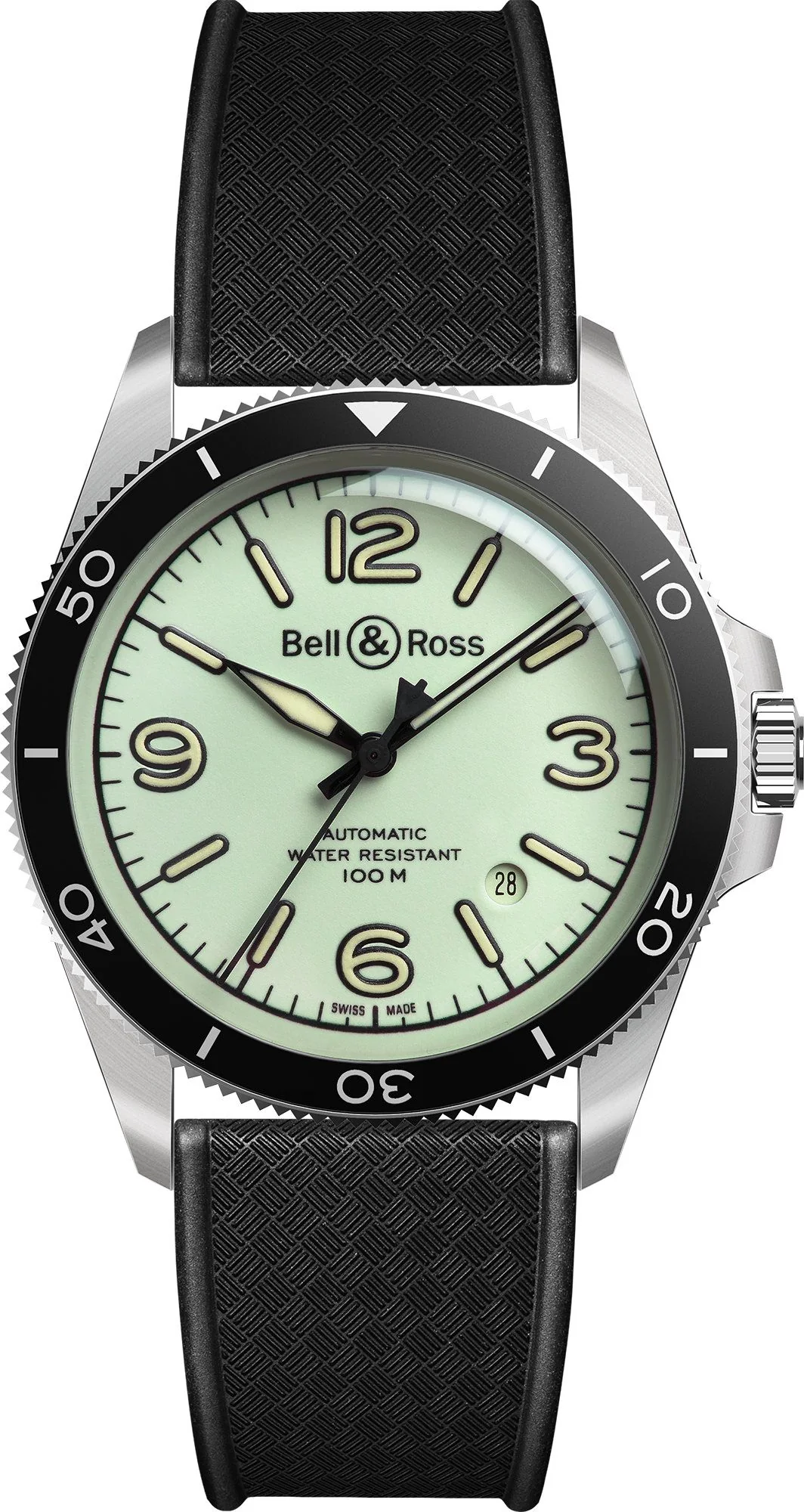
Both schools exist. A horizontal date appears more practical because it accommodates the reader’s eye. An angled date follows the geometry of the dial and can look more integrated. It does, however, take an extra second to get used to, particularly when the numerals are small. At this point, some collectors begin talking about aesthetic crimes. That may be exaggerated, but it is not entirely unfair.
The right choice depends on the watch. On a highly technical chronograph, an angled date can reinforce the instrument-like character. On a dress watch, it may look like a layout error. A 4:30 date on a Calatrava? The very idea produces an awkward silence.
The genuine advantages of a 4:30 date
When executed well, the 4:30 date has several advantages. It preserves the main indices, which is particularly useful on divers’ watches and chronographs. It also avoids overloading the dial’s vertical axis. Rather than relying on the endlessly repeated 3 o’clock date window, it maintains a layout that feels less static and more dynamic. It can even become part of a brand’s identity, as it has with Zenith. One might even call it part of the El Primero vocabulary.
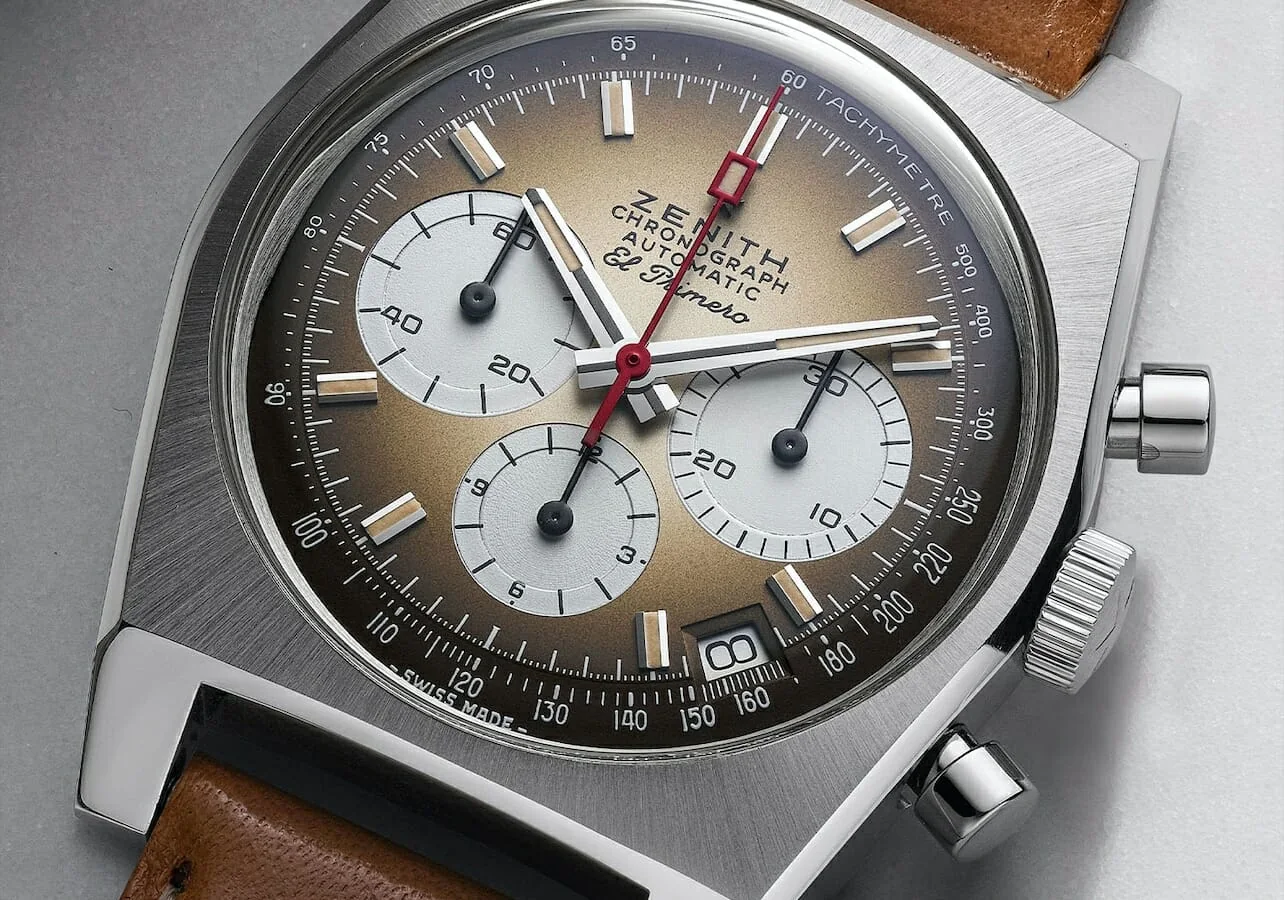
There is another, more understated benefit: it barely interferes with the sub-dials. On a chronograph, that is decisive. A date window placed inside a sub-dial can easily compromise the legibility of the register. At 4:30, the date remains small, pushed to the side and almost peripheral.
Finally, it can help avoid the infamous “cut-off index”. On sports watches with large markers in particular, an index truncated halfway across the dial can upset the entire composition. Enthusiasts will forgive many things. A brutally severed index is not usually one of them.
There are drawbacks too. Of course
The 4:30 date can be a brilliant solution. It can also be an admission of failure. If it is not properly integrated, it looks like an afterthought—as though the brand remembered at the very last moment that customers might want to know the date. The result is a small white rectangle stranded on a black dial, a typeface unrelated to the rest of the design, an absurd angle and a visual disconnect obvious at first glance.
The most common problem is, once again, contrast. Pair a white date disc with a dark dial and it will draw the eye with tremendous force. At 3 o’clock, one becomes accustomed to it; at 4:30, it becomes a glowing comma floating in the corner of the dial. Some brands solve this by matching the disc to the colour of the dial. Yes, it costs more. But on a watch costing several thousand euros, using cost as an excuse quickly becomes absurd.
Another drawback is legibility. A small, angled window positioned low on the dial may require you to twist your wrist to read it. That is slightly ironic for a mechanism intended to provide practical information. The date should be legible at a glance, not require the effort of an eye examination.
A date at 3, 6 or 4:30—which should you choose?
The 3 o’clock date remains the most classic. Intuitive, efficient and rooted in history, it works well with a three-hand watch, particularly when the design embraces its asymmetry. Combined with a Cyclops lens, as on a Rolex, it can even become an element of identity.
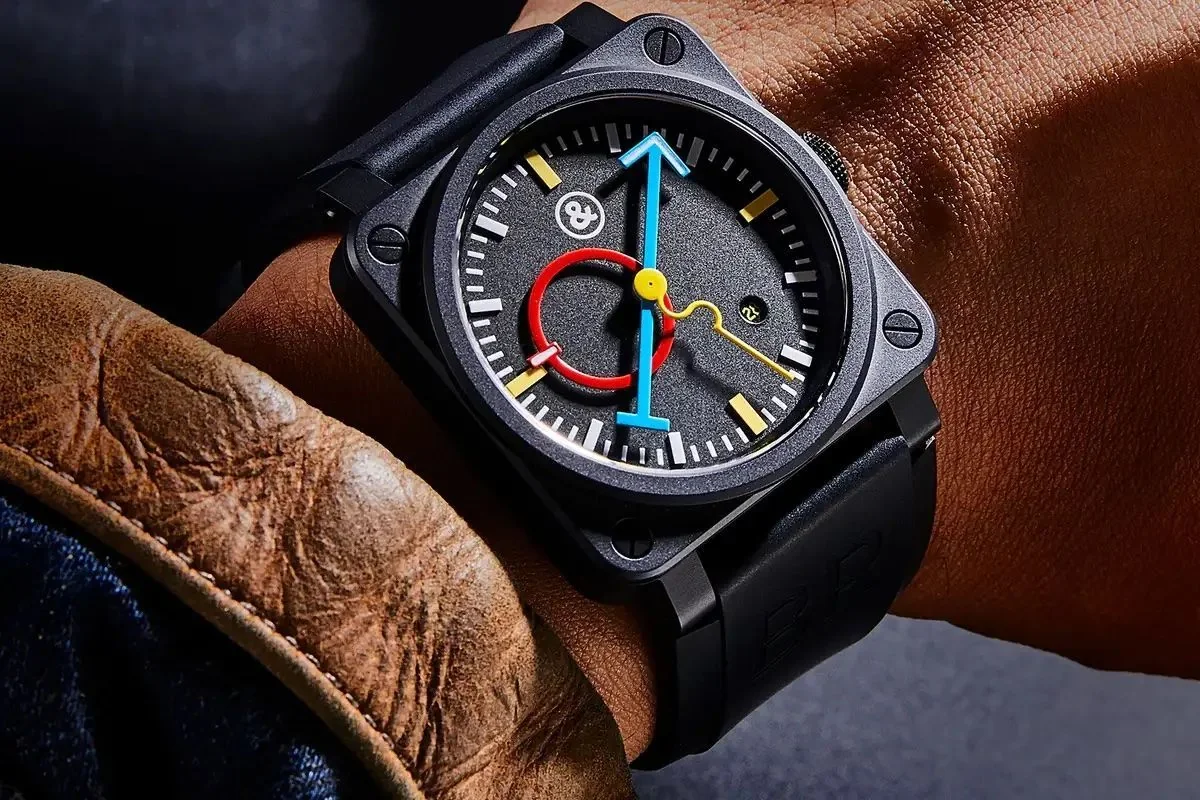
The 6 o’clock date is often the most balanced. It preserves the dial’s vertical symmetry and integrates beautifully into dress watches and sporty-chic designs. Many enthusiasts prefer it for precisely this reason. Visually, it is the most well-mannered arrangement.
The 4:30 date is more nervous. More technical, and more divisive. It suits complex dials, chronographs and watches whose design can accommodate a certain degree of tension. It is never invisible. That is precisely why it can both irritate and fascinate.
So, should you dislike the 4:30 date?
No. It should simply be judged without prejudice or laziness. A 4:30 date display is neither necessarily a mistake nor automatically a stroke of genius. It is a compositional tool. Used correctly, it can rescue an information-dense dial and respect the structural beauty of the watch. Used badly, it exposes a lack of finishing thought and turns a beautiful watch into a disjointed object.
The best test is extremely simple. Forget the specification sheet and look at the watch for five seconds. If your eye is immediately drawn to the date window—and only to the date window—it has failed. If the date is present without shouting, helping you read the information without disrupting the rhythm of the dial, then 4:30 becomes a genuinely horological decision. Not an excuse.
And perhaps that is where the appeal of this strange arrangement lies. It reminds us that a mechanical watch is never a design that can be drawn freely on glossy paper. It is an ongoing negotiation between beauty, mechanics, cost, history and usability.