How Is a Movement’s Power Reserve Calculated?
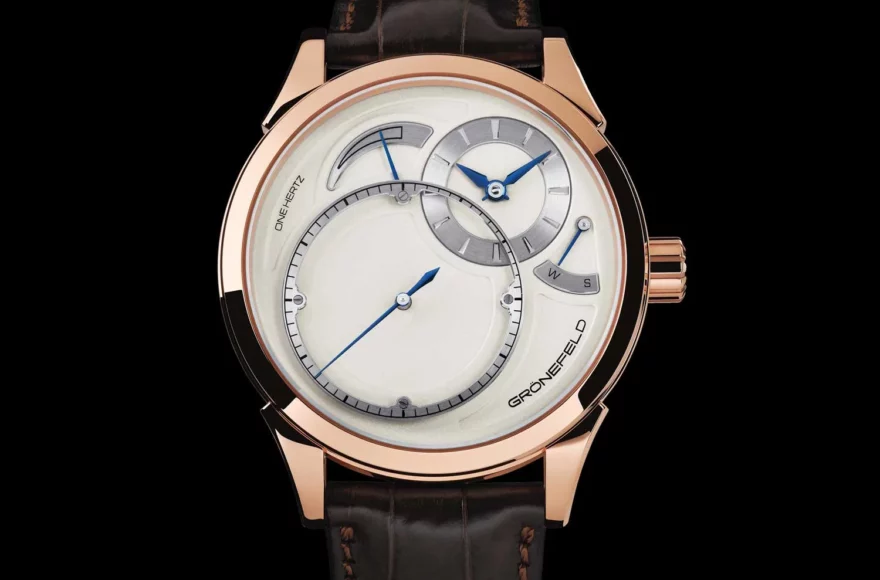
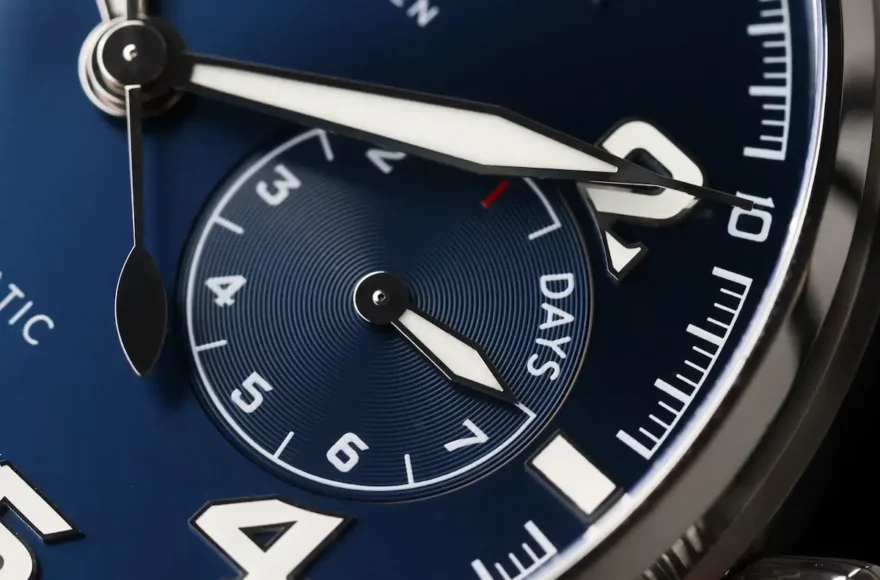
The power reserve of a mechanical movement refers to the length of time a watch can run after being fully wound. On paper, the calculation seems almost childishly simple: wind…
Explore the technical world of watchmaking: automatic movements, complications, materials such as sapphire and titanium, and watch adjustment and maintenance. This category breaks down the mechanical and technological aspects of watches to give you a better understanding of how they work and their value.
The power reserve of a mechanical movement refers to the length of time a watch can run after being fully wound. On paper, the calculation seems almost childishly simple: wind…
There is a scale on the dial, almost like a survivor from a vanished world. The pulsometer on medical watches mentioned earlier was also designed to calculate heart rate. The…
Some scales seem to have been placed on a dial like survivors of a vanished world. We have already looked at doctor’s watches with their pulsometer for calculating heart rate.…
There is something profoundly insolent about a mechanical watch. A few grams of brass, steel, synthetic rubies and hairspring presume to divide time with regularity, even as the Earth pulls…
Why do some watches have deadbeat seconds? It is a question that comes up often, usually with a raised eyebrow and a cutting remark: “It’s quartz, isn’t it?” That is…
Why do some watches display the date at 4:30? Because watchmaking is rarely a matter of chance, and almost always a matter of compromise. Behind that small angled aperture, often…
Grand Feu enamel dials: the unforgiving art of fire What is a Grand Feu enamel dial? Put simply, it is a dial coated with powdered glass, fired at very high…
An Absence That’s No Accident At first glance, the absence of a date on a military watch can seem surprising. After all, in civilian life, knowing the day of the…
In watchmaking, everything seems to be a matter of detail. A crown that’s too large, a case that’s too thick, a poorly balanced dial, and the alchemy disappears. Among these…
In the hushed language of watchmaking, certain terms seem simple, almost innocent. “Lacquered dial” is one of them. Two words, a vaguely glossy image—yet a far more exacting reality, almost…
A discreet mechanism In the world of chronographs, the “vertical clutch” represents a decisive innovation for the precision and user comfort of a modern chronograph, even though it remains largely…
A Steel Unlike Any Other In watchmaking, steel is everywhere. From accessible sports watches to the most coveted haute horlogerie pieces, it forms the raw material for the majority of…
The bridge: an invisible yet essential architecture Deep within a mechanical movement, the watch bridge plays a role that is almost never noticed—unless you take the time to turn the…
The mystery of the “California” dial, between watchmaking culture and deliberate oddity In the refined world of haute horlogerie, few aesthetic codes provoke as much curiosity—and perplexity—as the “California” dial.…
Long before optical sensors, smartwatches and electronic oximeters, mechanical watchmaking had already found an elegant solution to a very practical problem: measuring heart rate. This is the origin of the…
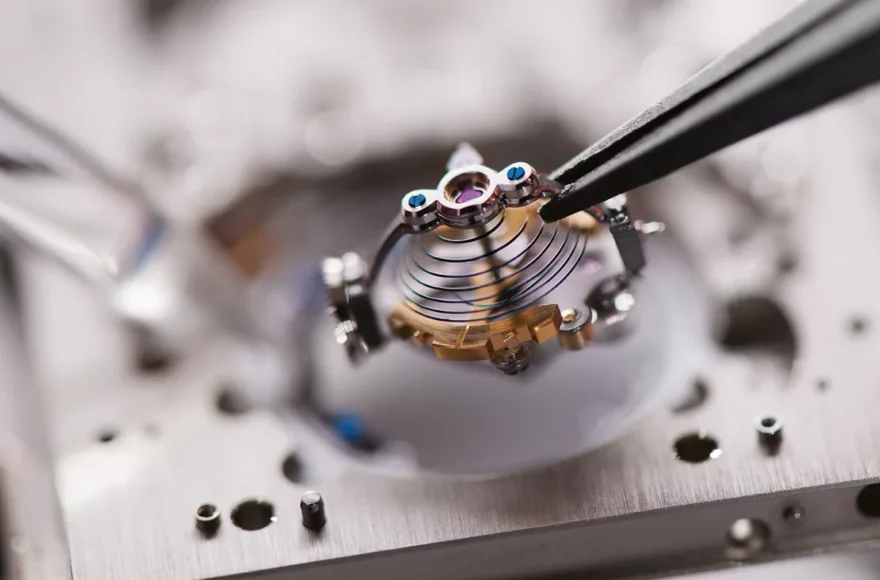
The hairspring, the invisible spring that decides everything In a mechanical watch, precision does not hinge on a single closely guarded “secret,” but on balance. At the heart of…