Mistakes to Avoid with an Automatic Watch
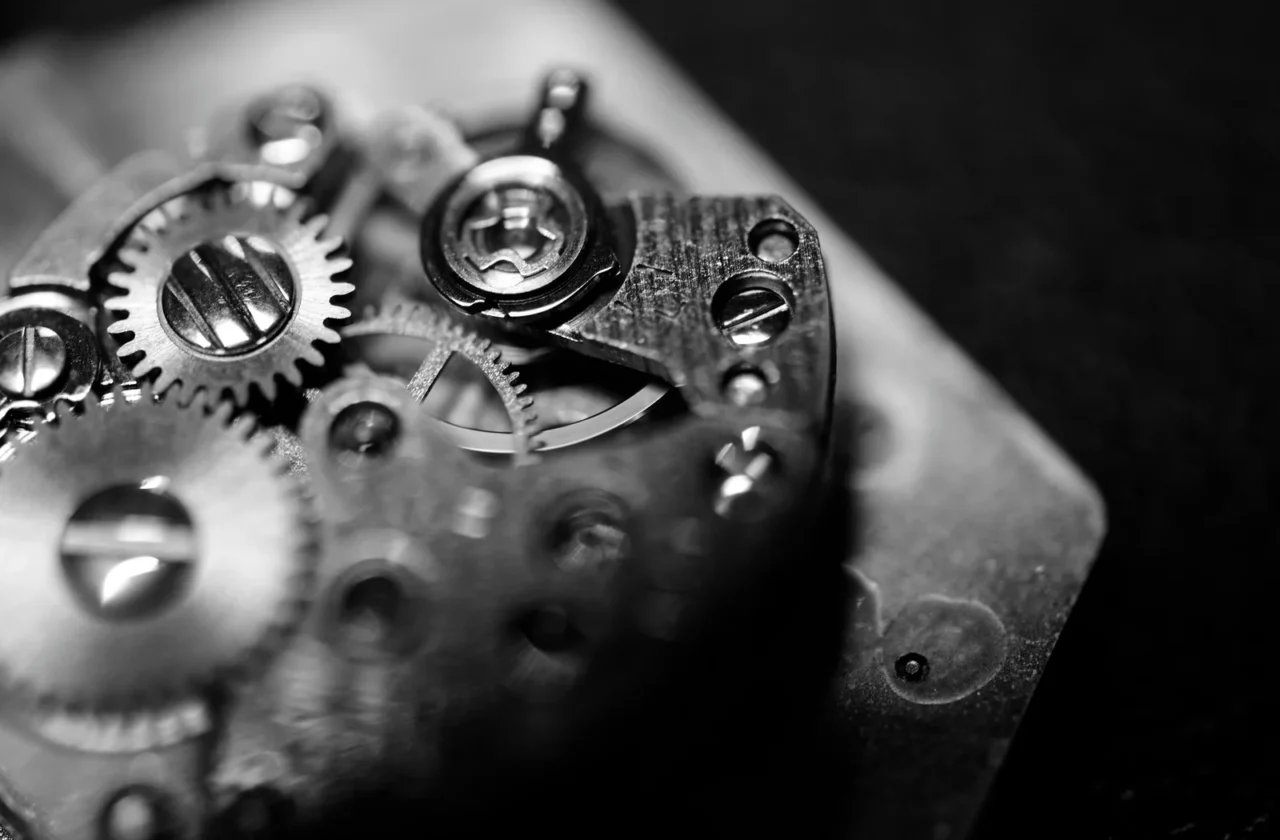

An automatic watch can remain stopped for a few days or even several weeks without its movement suffering as a result. The mistakes that can genuinely cause problems are often found elsewhere: correcting the date at the wrong time, failing to screw the crown back down properly, exposing the watch to moisture or magnetism, mishandling a complication, or using an incorrectly configured watch winder.
A mechanical movement is designed to run for decades when properly maintained. That said, a few good habits are essential—and, above all, it is important to understand how your watch works.
1. Setting the date without taking the calibre’s operation into account
This is one of the most common mistakes with an automatic watch equipped with a date display.
On many movements, the mechanism begins preparing the date change several hours before midnight. Wheels, levers and springs are already engaged in the process that will advance the date disc.
Using the quick-set function during this phase can disrupt the mechanism and, with some calibres, cause damage.
Enthusiasts sometimes refer to this period as the “danger zone”. The expression is dramatic, but the mechanical risk is real. It is nevertheless best to avoid adopting a universal rule such as “never change the date between 9 p.m. and 3 a.m.”
The period to avoid depends on the calibre.
Some manufacturers advise against making corrections between 9 p.m. and 1 a.m., while others specify different times. With an annual calendar, perpetual calendar, moon phase or additional indications, the procedures can become even more specific.
The right habit, therefore, is to consult your watch’s instructions before operating its complications.
Do not forget the screw-down crown
Another everyday action that deserves a little attention is screwing the crown back down correctly after setting the time or date.
On a watch equipped with a screw-down crown, the crown plays a direct role in protecting the case from water. A diver’s watch rated water-resistant to 200 or 300 metres should obviously not be considered water-resistant to that level if its crown has been left unscrewed.
You should also avoid operating a screw-down crown underwater.
2. Underestimating moisture and magnetism
An automatic watch has no problem spending some time in a box. The place where it is stored, however, does matter.
Moisture remains one of the main enemies of a mechanical movement. The gaskets that ensure water resistance age and gradually lose their properties. A watch rated as water-resistant when new will therefore not necessarily retain the same performance several years later without inspection.
Regular condensation beneath the crystal should in particular attract attention. If fogging persists or returns frequently, it is better to have the watch checked promptly rather than wait for corrosion to appear on components of the movement.
Magnetism is a more subtle problem.
A sufficiently strong magnetic field can disrupt the operation of a mechanical movement, particularly by affecting its hairspring. A magnetised watch may then begin to gain significantly or display abnormal timekeeping.
Recent movements sometimes benefit from solutions offering excellent resistance to magnetism, but not all watches have the same level of protection—and this is even less true of certain vintage pieces.
Powerful magnets, speakers, magnetic clasps and various electronic accessories therefore call for a minimum degree of caution when you own a mechanical watch.
3. Assuming that an automatic watch must never stop
An automatic watch harnesses some of the movements of the wrist through its oscillating weight. This winds the mainspring and allows the watch to keep running as long as it is worn regularly enough.
When the watch is put down, it gradually uses up its power reserve. Once the reserve is depleted, it stops.
This is perfectly normal.
A simple three-hand watch that remains stopped for a week or several weeks is not deteriorating. When you want to wear it again, you generally need only wind it, set the time and, if necessary, adjust the date.
With certain complications, however, things become more demanding.
A moon phase must be reset if you want to maintain an accurate indication. An annual or perpetual calendar may require several adjustments. Some highly complicated watches even require a specific procedure to restore all the correct indications.
In such cases, keeping the watch running offers a genuine practical advantage.
This is precisely the role of an automatic watch winder. Specialists in this equipment, such as SwissKubick, develop systems that reproduce the movements required for automatic winding, thereby preserving the power reserve when the watch is not being worn.
This does not mean that every automatic watch must spend its nights on a winder. For a simple watch worn occasionally, allowing it to stop generally presents no problem.
The value of a winder increases primarily when you own several watches and some of them take a long time or require delicate procedures to reset.
4. Applying force when winding or setting the watch
When an automatic watch has stopped completely, a few turns of the crown will generally begin winding the mainspring before you put the watch on your wrist.
The recommended number of turns depends on the movement.
A modern automatic watch generally has a system that allows the mainspring to slip once it reaches maximum tension. It is therefore difficult to “overwind” it in the way one might imagine with certain older mechanisms. That does not mean there is any benefit to turning the crown for several minutes.
Gentle, consistent handling is sufficient.
Above all, pay attention to any unusual resistance. Applying force to a crown, pusher or corrector when you do not understand why it is resisting is rarely a good idea.
The same principle applies to screw-down crowns. When replacing it, it is better to take a few seconds to engage the threads correctly than to tighten a crown that has started cross-threading.
Damaging the threads or crown tube will result in a far more demanding repair.
This caution becomes even more important with complications. Calendar correctors, moon phases, chronographs and repeaters each have their own operating rules. Once again, the instructions supplied by the manufacturer remain the best reference.
5. Using a watch winder without understanding the movement’s requirements
Not all automatic calibres operate in exactly the same way.
Some wind the mainspring when the rotor turns in both directions. Others use primarily, or exclusively, rotation in one particular direction.
This is where the concept of TPD, or Turns Per Day, comes in: the number of rotations performed by a watch winder each day.
The aim is not simply to keep the watch turning continuously. It is to provide enough movement to maintain its power reserve while respecting the characteristics of the calibre.
The number of rotations and their direction can therefore be adapted to the watch.
SwissKubik’s standard cycle, for example, is based on 1,600 rotations per day: 800 clockwise and 800 anticlockwise. On its programmable models, the number of rotations and their direction can be configured to take account of the specific recommendations for different movements.
The brand also uses a motor designed not to produce a magnetic effect capable of disrupting the mechanical movement placed nearby. This is a particularly relevant technical detail for a device whose motor operates just a few centimetres from the watch.
To find out more and discover its range of watch winders: https://swisskubik.com/fr-fr
Choosing a watch winder is therefore not simply a matter of finding an attractive object capable of rotating a watch in a display case. Compatibility with the calibre, programming and control of magnetism are far more important criteria.
The mistakes to avoid at a glance
| Situation | Actual risk | Best practice |
|---|---|---|
| Leaving an automatic watch stopped for several weeks | Low for a simple watch | Wind and set it before wearing it |
| Correcting the date at the wrong time | Potentially significant | Follow the recommendations specific to the calibre |
| Leaving a screw-down crown unscrewed | Risk to water resistance | Always screw it back down after setting the watch |
| Storing the watch in a damp environment | Yes | Choose a dry location and monitor for any signs of condensation |
| Exposing the watch to a strong magnetic field | Yes | Keep the watch away from powerful magnetic sources |
| Applying force to a crown or corrector | Yes | Stop operating it if you encounter unusual resistance |
| Using a watch winder with an unsuitable setting | To be avoided | Follow the TPD and rotation direction recommended for the calibre |
| Allowing a complicated watch to stop | Not necessarily dangerous, but inconvenient | Consider using a watch winder to avoid complex resetting procedures |
Key takeaways
- An automatic watch can remain stopped for several days or several weeks without this constituting a mechanical problem.
- The quick-set date function must be used in accordance with the recommendations specific to the calibre, particularly around the date-change period.
- A screw-down crown must be properly closed after every adjustment to preserve the watch’s water resistance.
- Moisture and strong magnetic fields can affect the operation and longevity of a mechanical movement.
- Never apply force to a crown, pusher or corrector that presents unusual resistance.
- A watch winder keeps an automatic watch running when it is not being worn, thereby avoiding repeated time-setting and adjustments, provided that the rotation direction and number of turns appropriate to the calibre are respected.