What Is an “Ultra-Thin” Watch?
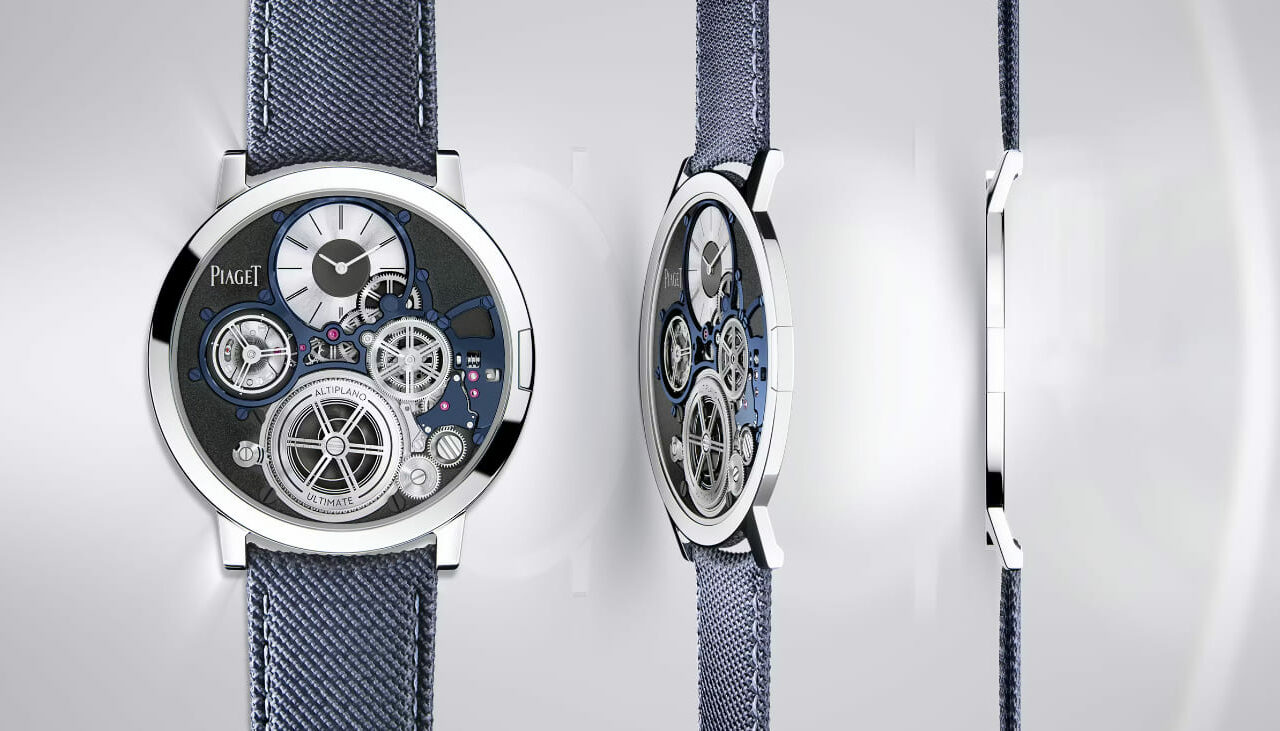
I remember my first encounter with an “ultra-thin.” I’m talking, of course, about an “ultra-thin watch” (what were you thinking?). Among these marvels of slenderness, a hand-wound watch truly defies the laws of traditional watchmaking.
It was in 2014: Piaget unveiled the Altiplano 900P. I was captivated by its thinness. Piaget achieved this by integrating the mainplate (the plate that supports the movement’s components) into the caseback by machining it. This fusion of the mainplate into the case made it possible to produce a watch just 3.65 mm thick. A feat at the time!
Ultra-thin: elegance measured in millimetres
The “ultra-thin” watch plays with tenths of a millimetre, and that changes everything: the way it slips under a cuff, its balance on the wrist, its presence—this feeling of an object designed down to the bone.
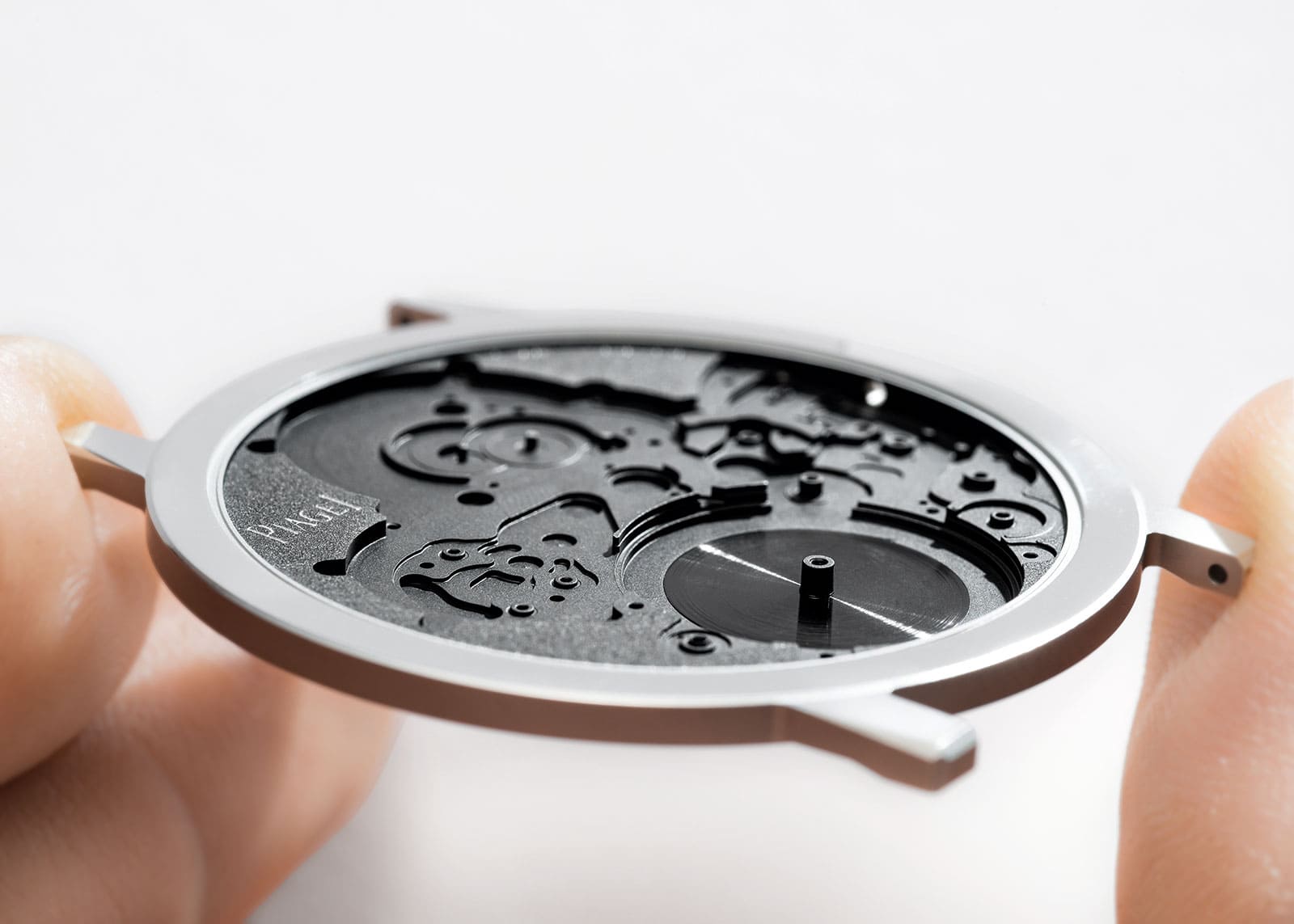
But what exactly do we mean by “ultra-thin”? Is it a marketing term or a technical category? And why does this quest for slimness fascinate both historic maisons and contemporary collectors? A dive into a world where the achievement is as much about engineering as it is about the art of compromise.
Definition: when does a watch become “ultra-thin”?
There is no ISO standard that officially decrees the threshold for ultra-thin. The definition is more a matter of watchmaking consensus, shaped by history and by records. In practice, we generally speak of ultra-thin when:
- A mechanical watch (automatic or manual) shows a thickness below around 7 mm for an elegant three-hander, and below 9 mm for a model that includes complications.
- An extra-thin movement often comes in under 3 mm thick. The legendary calibres go significantly lower.
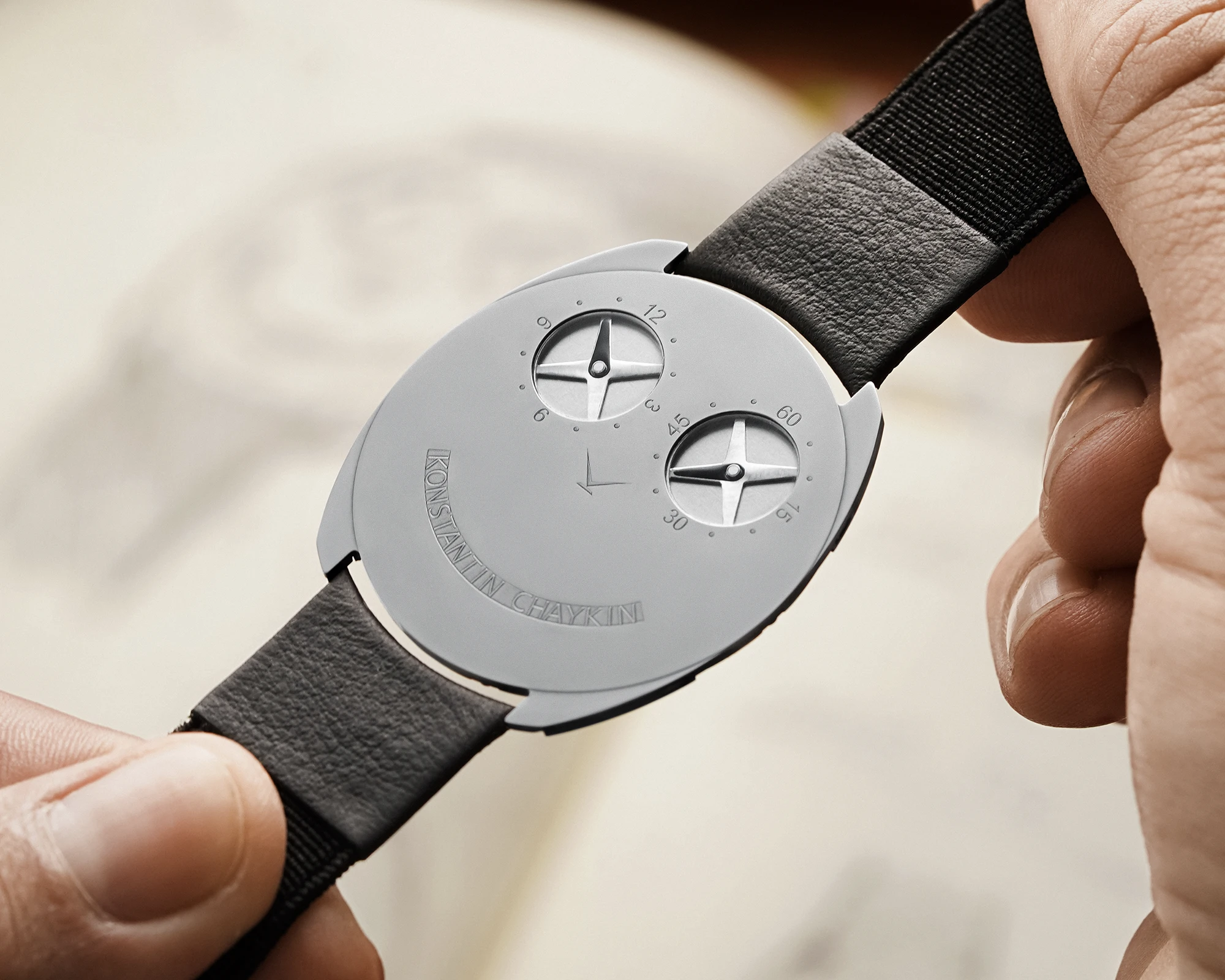
Worth noting: ultra-thin isn’t reserved for mechanical watches. Quartz, by nature, can be extremely slim. Yet in the watchmaking imagination, the term truly comes into its own when applied to a mechanical movement, because thinness there is difficult, costly, and highly expressive of know-how.
A story of prestige: thinness as a rivalry among great maisons
The pursuit of the thin watch runs through the 20th century like a ridgeline between elegance and modernity. In the post-war years, men’s clothing becomes more fitted, shirts get slimmer, suits take on structure. The watch, too, flattens out. Owning a thin piece becomes a way of saying: “I don’t need to overdo it.”
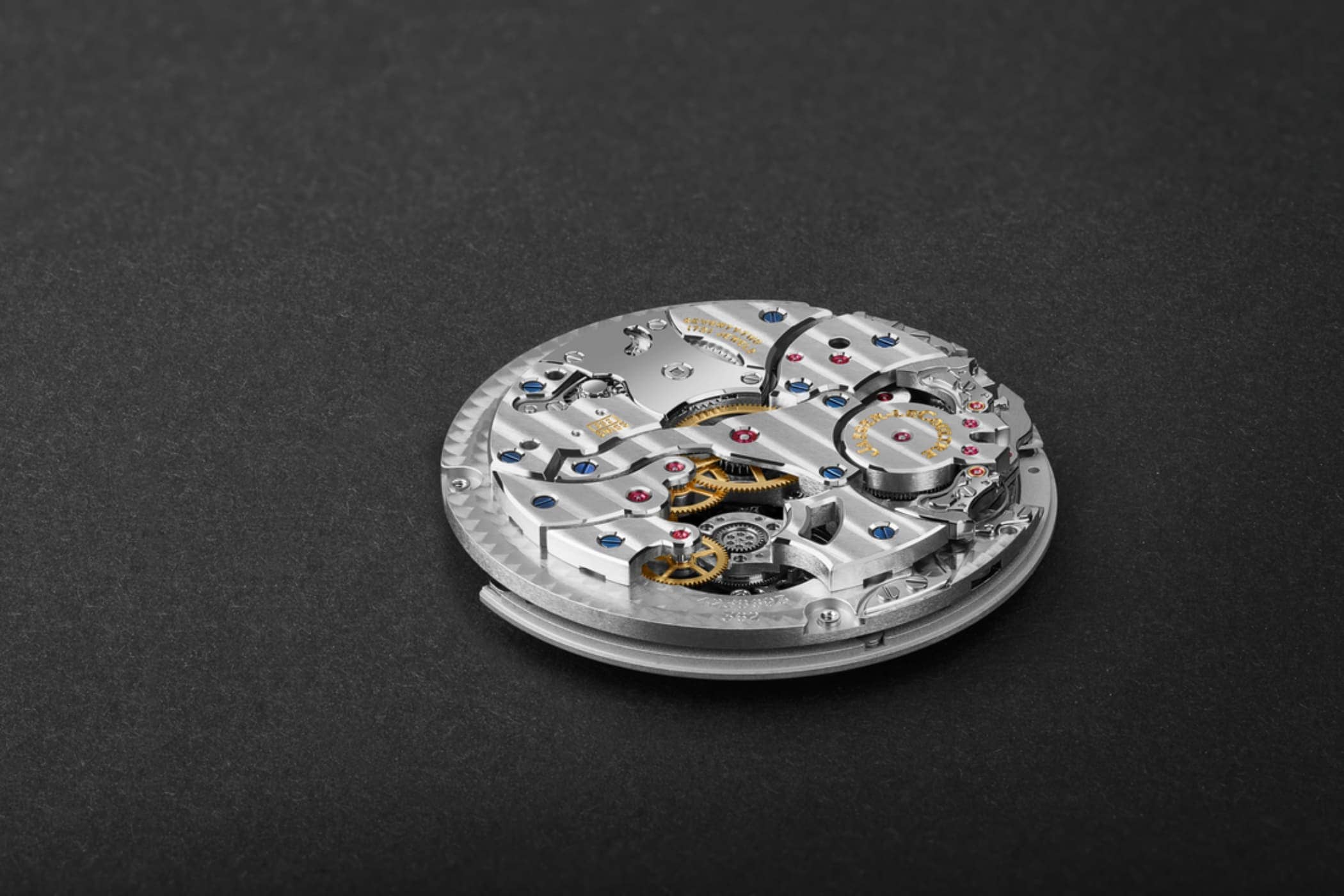
Manufactures then engage in a discreet competition. Some maisons build their reputation on this speciality, developing calibres that become benchmarks. Others alternate between sporty robustness and dressy thinness, like a double language. In every case, the ultra-thin takes on a particular prestige: it speaks of mastery of space, of essentialist watchmaking, where every component must justify its place.
How do you make an ultra-thin watch? The secrets of architecture
Reducing thickness isn’t a simple exercise in miniaturisation. It’s a rethinking of architecture. In a “classic” movement, components are stacked: mainplate, bridges, gear train, automatic module, dial. In the ultra-thin world, that stack becomes the enemy.
1) Reduce height… without making it fragile
Bridges are thinned, pivots shortened, tolerances tightened. But the thinner it gets, the more sensitive it becomes to shocks, wear, and deformation. An ultra-thin movement demands stable materials, precise surface treatments, and impeccable assembly quality.
2) Rethink automatic winding
An automatic rotor adds thickness. To stay slim, some maisons use a micro-rotor (a smaller rotor integrated within the movement’s thickness) rather than a central rotor that sits above the bridges. It’s an elegant solution, but a complex one: winding efficiency must remain effective despite reduced mass.
3) Integrate instead of stacking
The most spectacular technique is to turn elements of the watch into movement components. In some concepts, the caseback becomes part of the mainplate, eliminating an entire layer. You move from a watch that is “assembled” to a watch that is “integrated,” where the case is no longer a container but a structure.
4) Tame the energy
Thinness often goes hand in hand with a thinner mainspring and reduced space for autonomy. The challenge: preserve a coherent power reserve and good torque stability, while ensuring proper balance amplitude. Hence the trade-offs: frequency, lubrication, gear-train dimensions, escapement choice.
The limits of ultra-thin: when the feat becomes a compromise
An ultra-thin watch isn’t “better” in every respect. It excels in a specific register: elegance, comfort, purity of line. But it involves concessions.
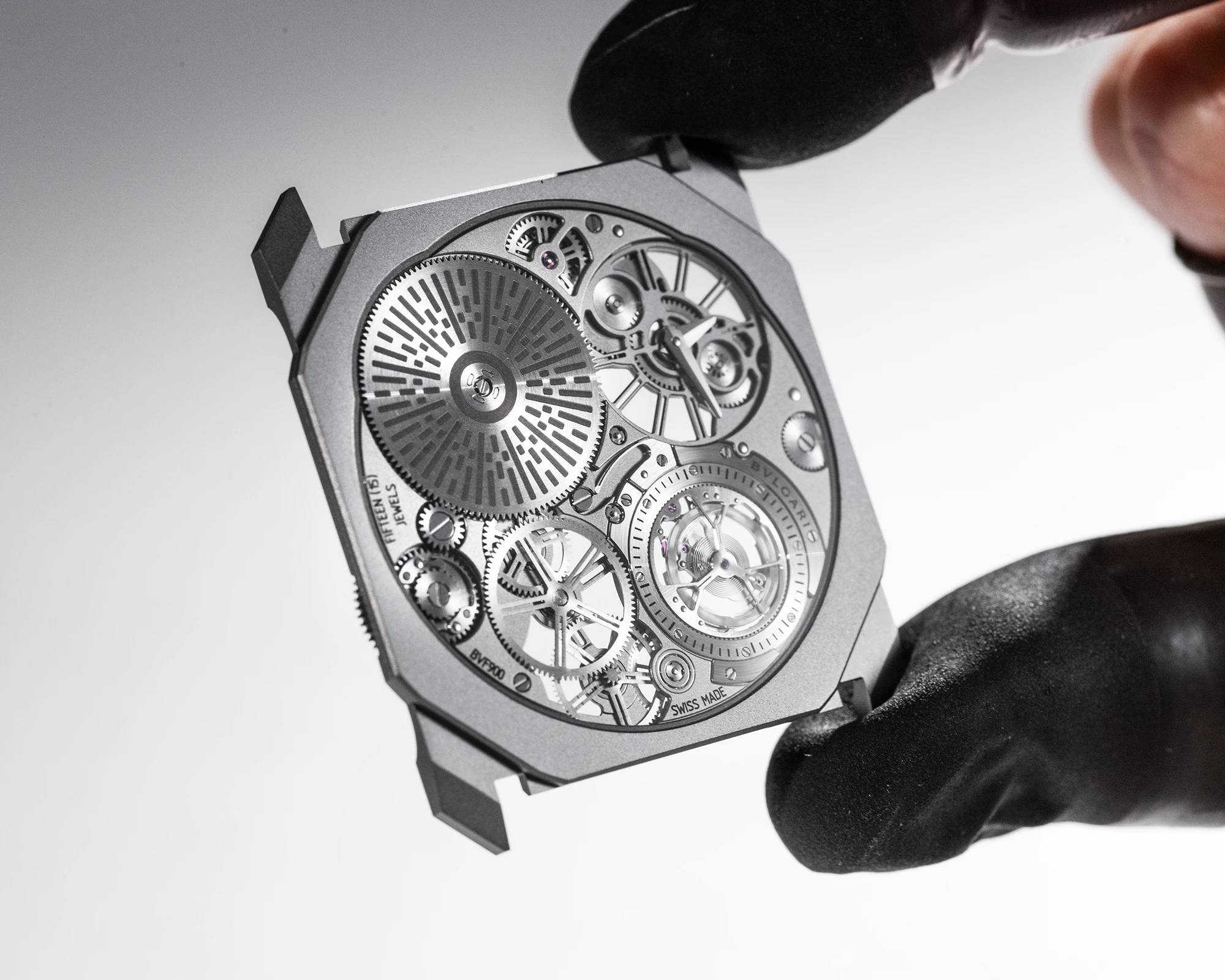
- Robustness: a thinner construction can be more sensitive to shocks, even if recent progress has significantly improved resistance.
- Water resistance: it isn’t incompatible with thinness, but it is harder to maintain at a high level, notably because of gaskets and case rigidity.
- Legibility: a thinner dial, sometimes more delicate hands: it’s superb, but not always “tool-like.”
- Cost: machining precision and assembly time drive the price up. Thinness is rarely a “bonus”—it’s a full programme.
You also have to distinguish “wearable” thinness from “record” thinness. Pieces designed to beat a world record are fascinating, but sometimes closer to high experimentation than to an everyday watch.
Why ultra-thin is coming back in force today
After a decade dominated by sport-chic and generous cases, the taste for discreet refinement is asserting itself again. The return of measured diameters and more dress-oriented silhouettes goes hand in hand with a desire: a watch that becomes an accomplice rather than a statement.
Thinness also answers a contemporary reality: we wear our watches to the office, to dinner, while travelling. An ultra-thin has an almost paradoxical versatility: it has character without ever “taking up space.” It pairs as easily with an open collar as with a suit, and its luxury is more about assured gesture than ostentation.
How to recognise a good ultra-thin: 5 simple criteria
If thickness is the entry point, it isn’t enough. Here are a few cues for judging the success of an ultra-thin watch.
- Proportions: a thin watch must remain balanced: diameter, dial opening, bezel height and caseband must speak to one another.
- Comfort: you feel ultra-thin on the wrist. Check the profile: caseback, lugs, buckle—everything matters.
- Movement: micro-rotor, extra-thin manual, integrated construction… Ask for the technical logic, not just the number.
- Finishing: on a thin watch, everything shows: bevels, Côtes de Genève, perlage, screw quality. Thinness is unforgiving of the merely “average.”
- Use: if you’re looking for a one-watch collection, think water resistance, durability and ease of servicing. Chic doesn’t rule out pragmatism.
Ultra-thin, extra-thin, thin: words, a culture
You might think thinness is merely a technical metric. In reality, it belongs to a culture of style. Ultra-thin is to watchmaking what the perfect cut is to sartorial craft: a silent demonstration of mastery. An ultra-thin watch doesn’t seek to impose its presence; it suggests a world—the workshops where microns are won through ideas, patience, and precision.
And that may be its most contemporary charm: in an era saturated with signals, ultra-thin puts luxury back in its natural place. In the hollow of the wrist. In the detail. In the intelligence of form.