The Story of Piaget: “Always Do Better Than Necessary”
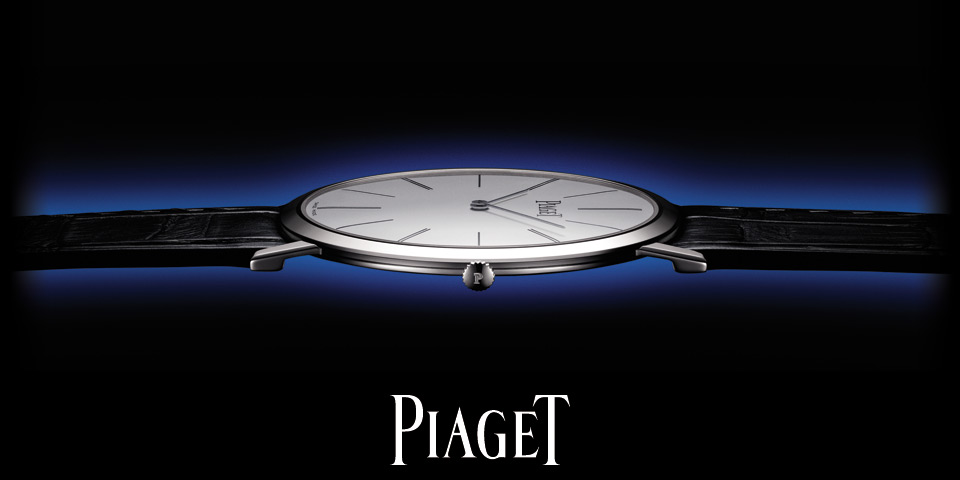
Piaget, an iconic watch brand, has written some of the most important chapters in modern watchmaking. A look back at more than a century of Piaget history—through the lens of its watches.
In 1874, in the quiet of a village in the Swiss Jura, Georges Edouard Piaget began designing high-precision watch movements to meet the needs of major brands.
Piaget’s talent quickly gained recognition, and the workshop in La Côte-aux-Fées became a thriving family business. Monsieur Piaget’s motto: “Always do better than necessary.”


In 1911, Thimothée Piaget took over, staying true to his father’s values.
1943 marked a decisive turning point in the brand’s history. That year saw the trademark registered and the launch of the first Piaget watches. As success grew, Piaget modernised its production facilities—setting the company on a path to a considerable lead in the field of ultra-thin movements. Valentin and Gérald Piaget continued the family adventure with this focus.
In 1957, the famous 9P calibre was born—an ultra-thin, hand-wound mechanical movement.
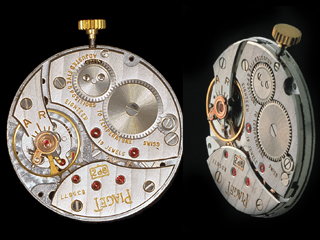
Technological advances opened up new avenues for designers. The sky was the limit in terms of bracelet, case and dial, thanks to movements that enabled the infinitely small—while also delivering elegance, perfection and jewellery artistry.
That same year, the legendary Emperador watch was born.
1959: the first boutique opened in Geneva.
Three years later, the 12P calibre—the world’s thinnest automatic movement at 2.3 mm thick—left Piaget’s workshops and entered the Guinness Book.
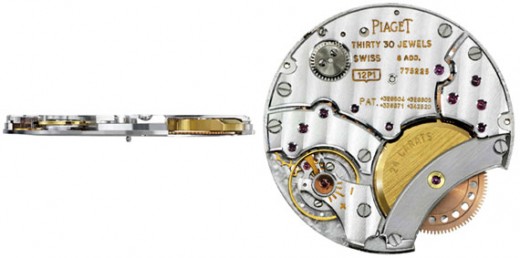
Piaget now had two major strings to its bow: jewellery and the production of ultra-thin movements.
The 1960s and 1970s saw the launch of the cuff watch, hard-stone dials and, in 1976, the 7P calibre, the smallest quartz movement (read “How a quartz watch works”).
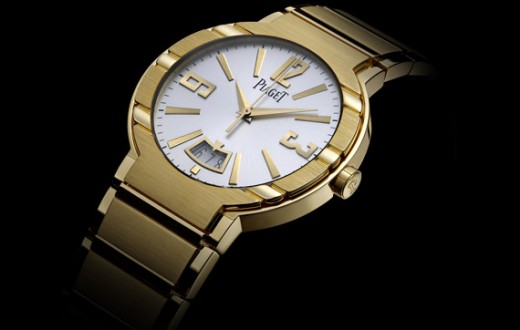
1979, the iconic Piaget Polo watch began its great story.
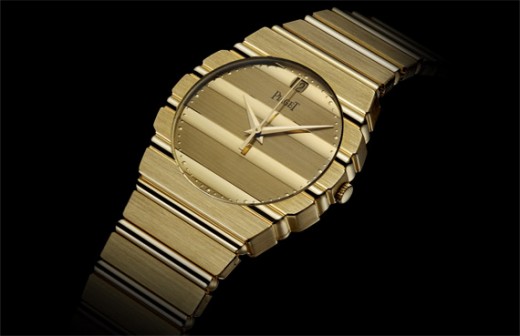
1986, launch of the Dancer collection.
1988, Piaget joined the Richemont luxury group.
The Altiplano collection of ultra-thin watches was launched in 1998.
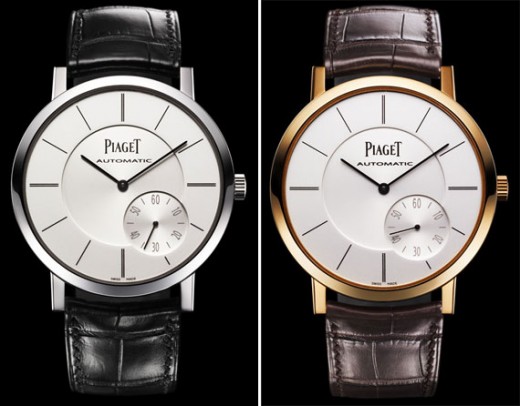
A year later, the brand launched the Emperador line and the Black Tie collection—the “must” among Piaget watches with grand complications.
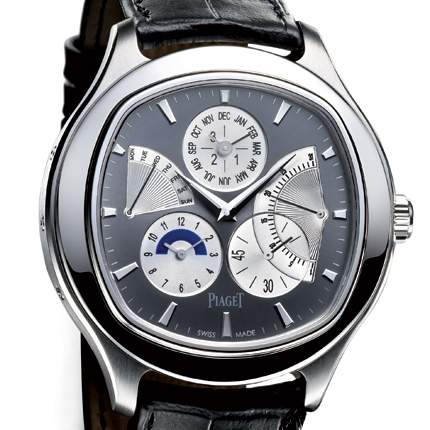
A new manufacture opened in 2001 near Geneva, bringing together more than forty watchmaking and jewellery crafts, while retaining the original production units in La Côte-aux-Fées.
The year 2001 also provided an opportunity for a facelift of the Piaget Polo.
Back to technical innovation in 2002 with the creation of the world’s thinnest tourbillon (3.5 mm thick): the 600P calibre.
2005, Piaget launched its own chronograph movement with a Flyback calibre featuring a dual time zone (5.6 mm thick).
2010, a return to the roots with the production of ultra-thin calibres, with the 1200P and 1208P at 2.35 mm thick.
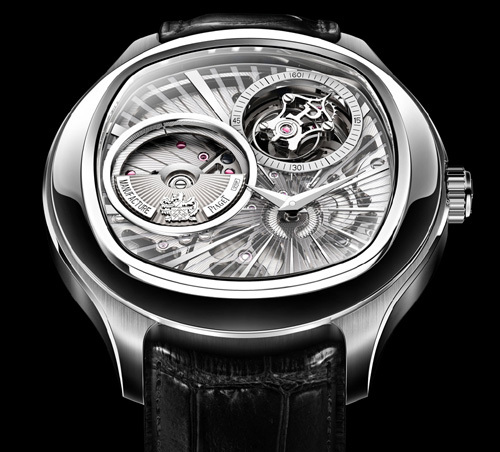
2011, Piaget launched the world’s thinnest automatic tourbillon watch: the Emperador Coussin Ultra-Thin Automatic Tourbillon.
Piaget’s history on video