The One by Maison Morfin: Detail as a Standard

Maison Morfin is moving forward without a safety net: that of a young independent French brand that must persuade without sheltering behind a century-old heritage. Founded in 2023 by Clément Morfin, the maison is not playing the card of recycled historical storytelling or ready-made watchmaking legend. Its playground is more concrete: the product above all, the design, the components, the construction, the materials, the details that change everything, and the ambition to produce quality watches at the best possible price.
With The One, this approach takes shape. The watch is not merely a Swiss movement placed inside a decent case, nor a spectacular dial designed to make you forget the rest. Instead, it gives the impression of a model on which Maison Morfin has worked every area: the calibre, the regulation, the bezel, the insert, the crystal, the caseback, the water resistance, the strap, the adjustment system. Nothing is revolutionary when taken in isolation, but together these elements bring a very serious watch to life.

That is often where the difference is made between a watch that is simply well presented and a proposition that is genuinely coherent.
A young French maison, without unnecessary folklore
Maison Morfin lays claim to contemporary French watchmaking, assembled in France, with French and Swiss partners depending on the components. That formula deserves clarification. This is not about selling a grand manufacturing legend or pretending that everything is born under the same roof. The brand speaks instead of design, technical choices, final assembly and control. It is more modest in words, but more interesting when the product follows through.
This transparency matters. Contemporary watchmaking loves stories. Some are magnificent. Others mainly serve to dress up rather ordinary watches. Here, Maison Morfin’s discourse rests less on myth than on the desire to push the components beyond the expected minimum in this price range. It is a rather healthy approach: show what has been chosen, explain why, and let the specification sheet do the talking.
And that specification sheet, precisely, is worth pausing over.
The One: an openworked piece, but not merely decorative
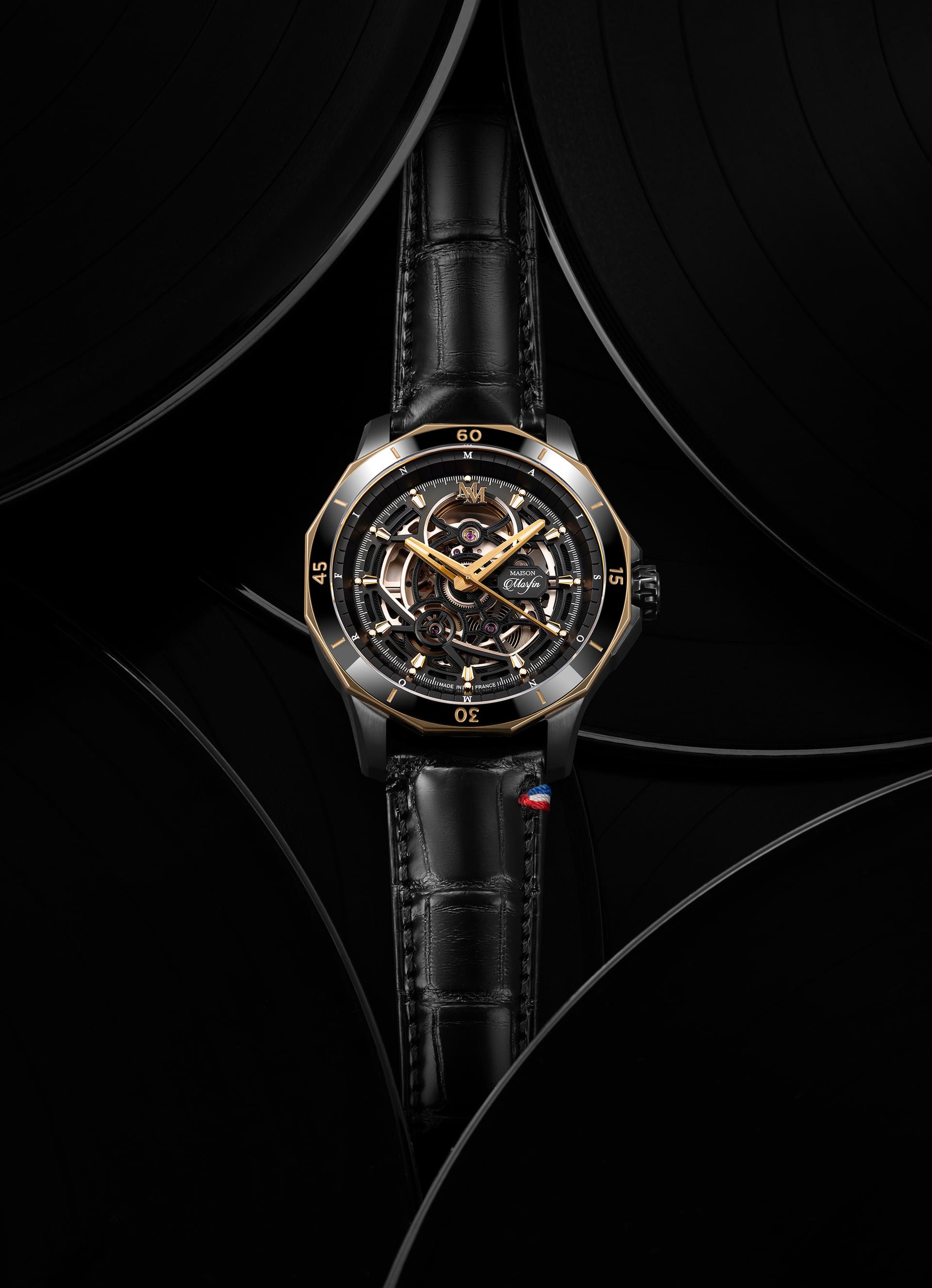
The One is a skeleton watch. The term can be worrying, because the genre is not always easy to master. Between an overly busy skeleton that is difficult to read and a fake mechanical effect that is purely decorative, there are many pitfalls. Maison Morfin takes a more architectural direction here, with an openworked dial built around bevels, facets and anglage.

The result is a highly designed watch, more contemporary than classical. The Black & Gold version combines a 316L steel case with black DLC treatment and gold PVD accents. The silver version takes a more direct route, in polished and satin-brushed steel with no coating. In both cases, the dial exposes the mechanics without entirely erasing the reference points needed for legibility. The applied indexes receive Super-LumiNova BGW9, while the openworked hands use Super-LumiNova C3. The detail matters: an openworked watch can quickly become illegible if light, reflections and the balance between solid and void have not been considered together.
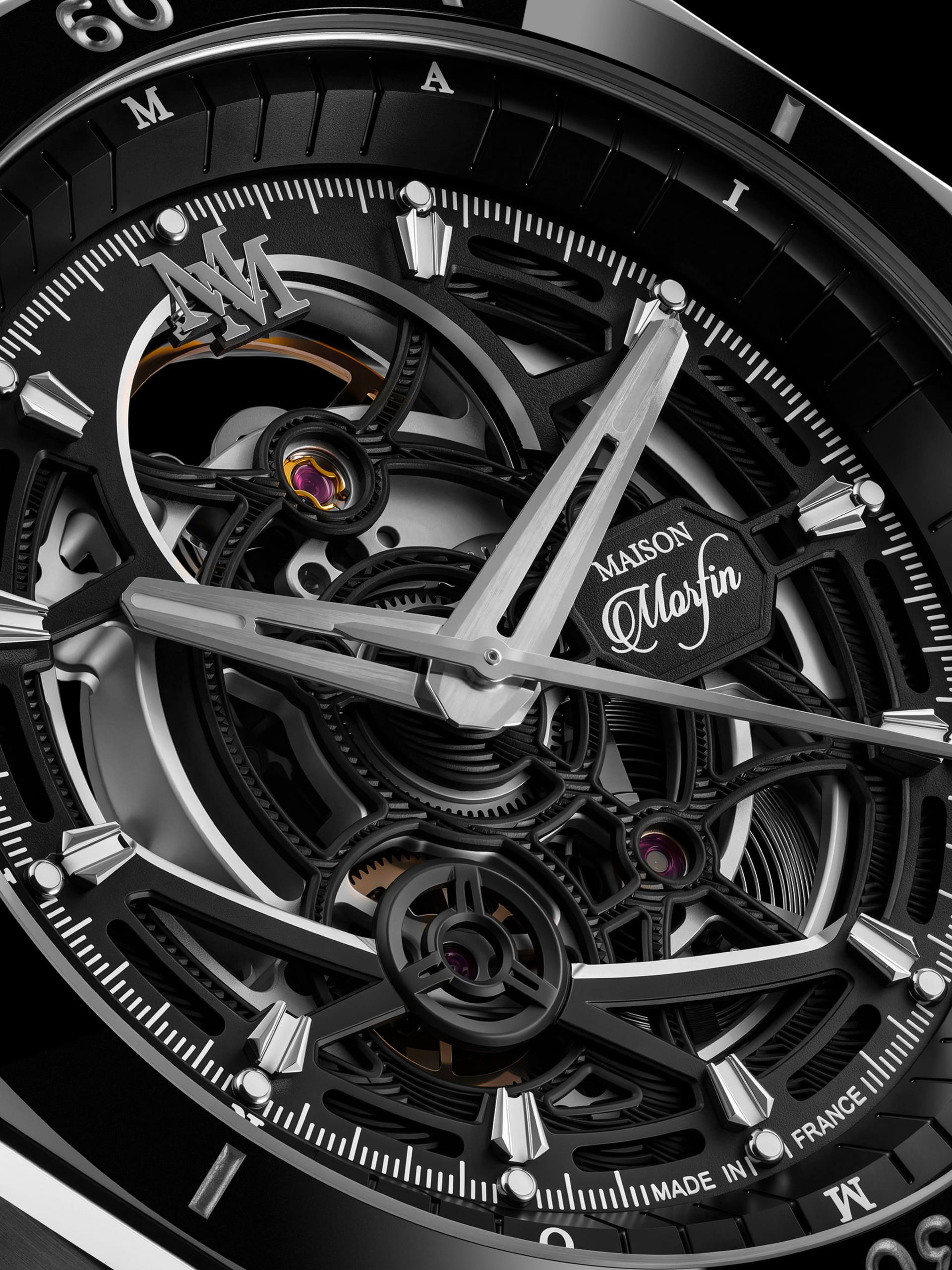
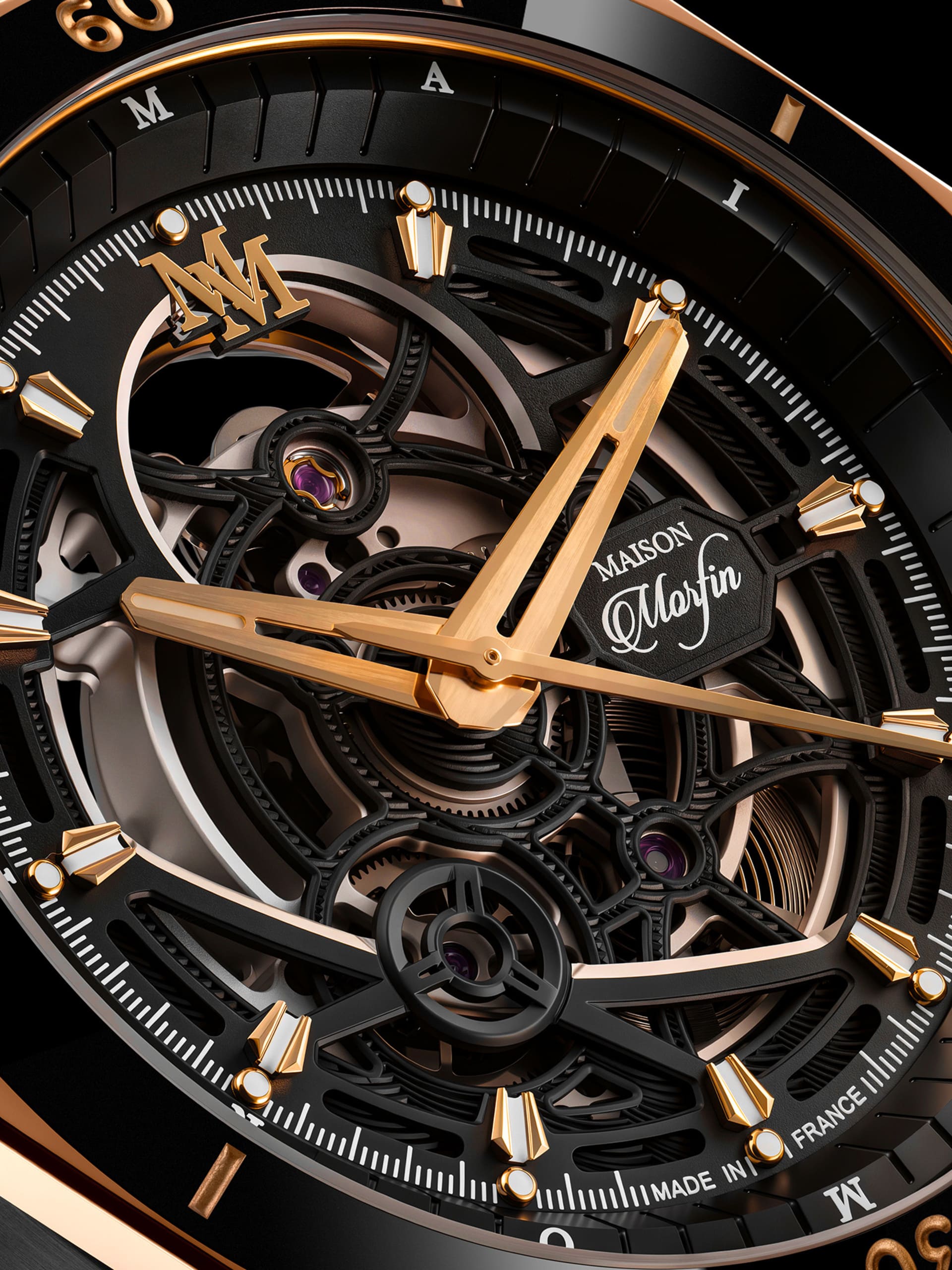
The One also pays tribute to Maison Morfin’s first model, the MM23-01. It is an interesting detail, because it gives the model a little more depth. This is not simply a new reference added to the catalogue. Here, the brand reprises the spirit of its beginnings, but with a more precise, more assertive execution, more fully realised in its materials and details.
A Sellita SW200 regulated properly
Inside, Maison Morfin uses a Sellita SW200. This is a reassuring choice. The SW200 is one of those Swiss automatic movements we know well: reliable, proven, repairable and sufficiently widespread not to lock the customer into an exotic solution. It is the kind of movement that can legitimately be called a “tractor”: it runs well and is hard to kill. A young brand often has every interest in choosing this type of base rather than a rare calibre that no one will really know how to service in ten years’ time.
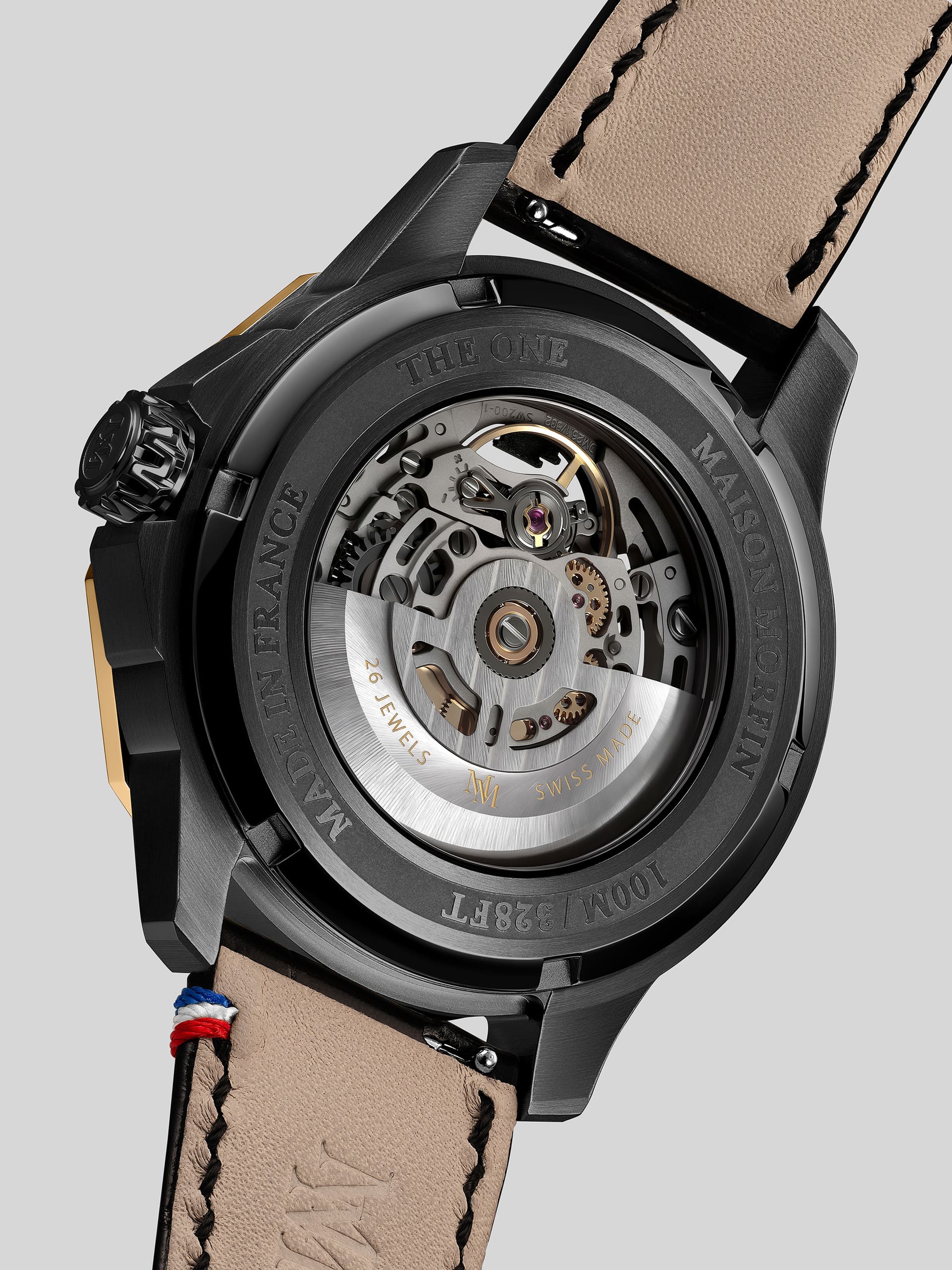
But the interesting point is not only the Sellita name. Maison Morfin announces regulation after casing to -4/+6 seconds per day, in three positions, with an associated timing report. The nuance is important: The One is not presented as a COSC-certified watch, with the official certificate and the administrative cost that comes with it. On the other hand, the claimed regulation does indeed correspond to Swiss chronometer tolerances.
One could draw a parallel with certain wines located just beside a great appellation: they do not carry the prestigious name on the label, but the vines sometimes grow on neighbouring soils, worked with the same care. Here, Maison Morfin is not selling the label; it is highlighting the regulation.
It is an intelligent choice. Official certification is reassuring, of course, but it comes at a price. On a watch positioned in a still-accessible segment, it is sometimes better to devote the effort to real regulation rather than to the prestige of a stamp. For the enthusiast, the message is clear: a serious Swiss base, carefully regulated, with no inflated promise.
The automatic movement beats at 28,800 vibrations per hour, has 26 jewels and offers around 40 hours of power reserve. Here again, nothing exotic, but a solid base, coherent with the watch’s positioning.
Tungsten, ceramic and a feel for materials
The case measures 41 mm in diameter and 11.3 mm thick. The proportions remain reasonable, especially for a watch with such visual presence. With a skeleton dial, strong contrasts and an elaborate bezel, a few extra millimetres would quickly have weighed down the whole. Maison Morfin has kept the thickness contained, which should help the watch remain wearable day to day.
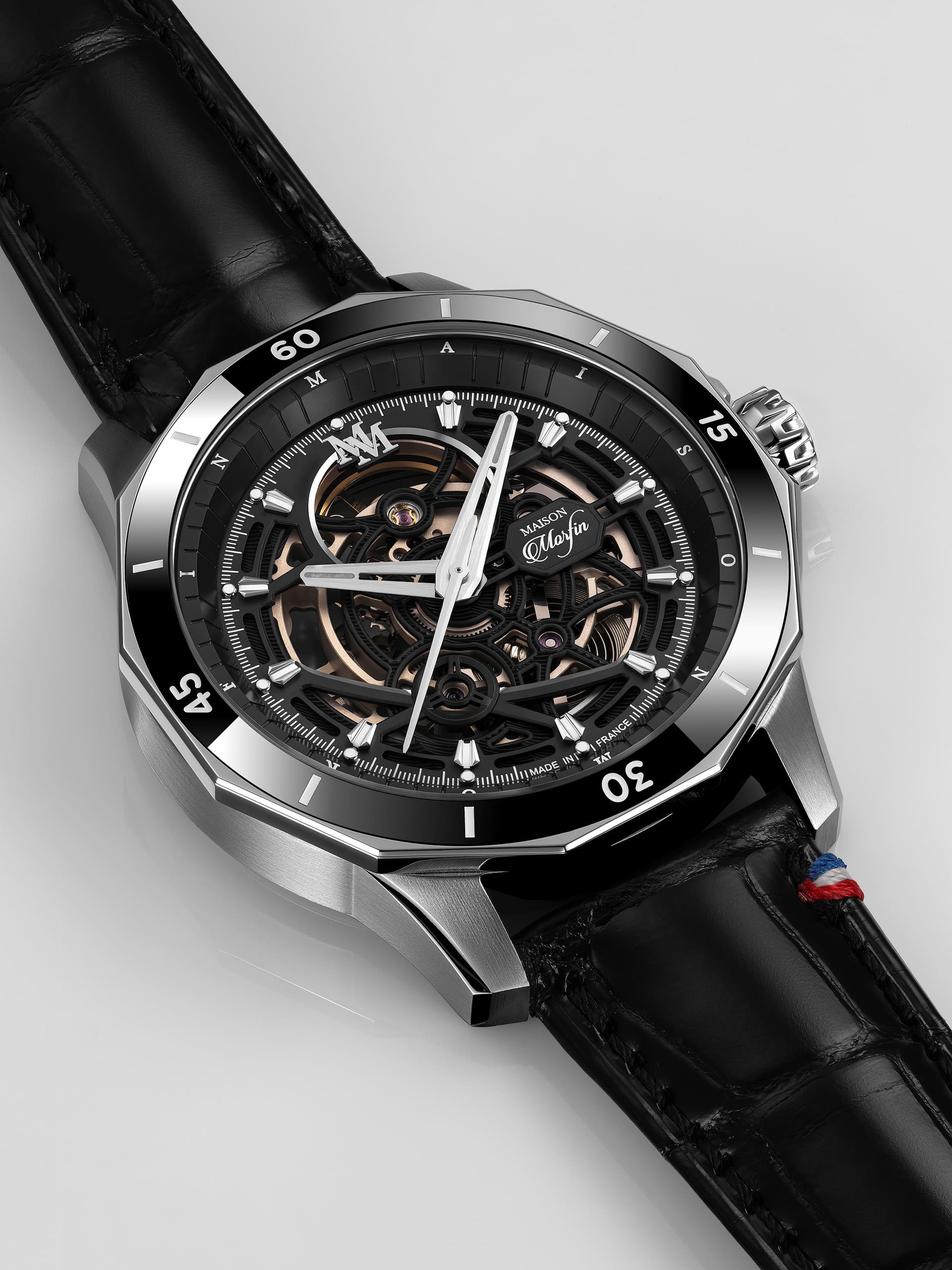
The bezel provides one of the model’s strongest arguments. It is made of tungsten, with a ceramic insert. Tungsten is not a material chosen at random. It costs more than steel as a raw material, it is difficult to work with, and it requires specific machining processes, notably with diamond tools. In return, it offers remarkable hardness and excellent scratch resistance.
Tungsten is found on far more ambitious watches, precisely for that sensation of density, resistance and durable materiality. In the case of The One, its use gives weight to Maison Morfin’s discourse. The brand could have settled for a steel bezel and concentrated its effort on the dial. It did not.
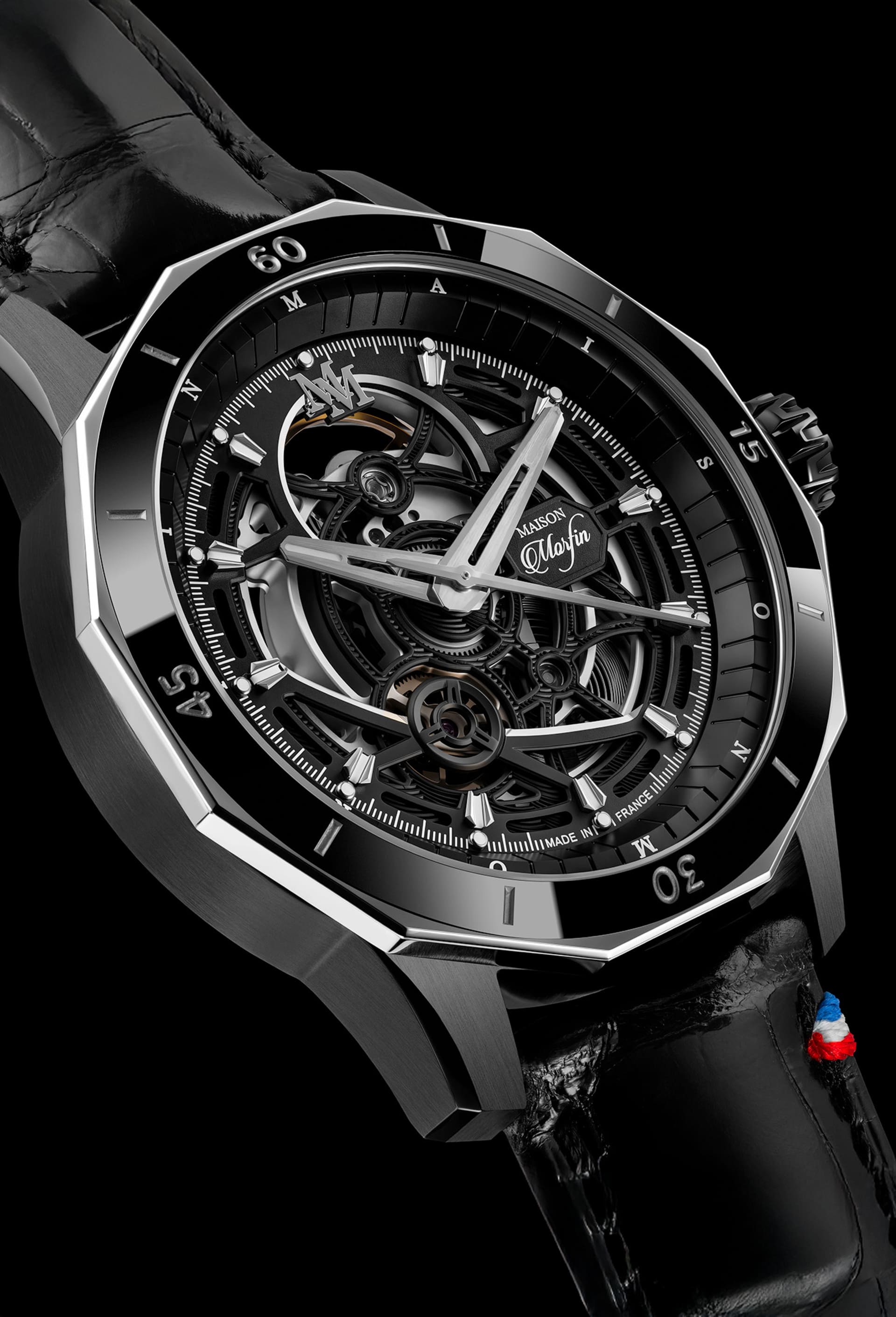
The ceramic insert moves in the same direction. Ceramic is rare in this price segment. It is an excellent choice for a bezel: scratch resistance, lasting aesthetics, a clean surface and depth of colour. Combined with tungsten, it reinforces the impression of a model designed to last visually, not merely to impress in the first photographs.
Real water resistance, not a cosmetic detail
The One advertises water resistance to 100 metres with a screw-down crown. This point may seem secondary next to the skeleton dial or the tungsten. It is not. Many highly designed watches still neglect this aspect, as if aesthetics were enough to excuse limited water resistance. Personally, I love this “detail” that Morfin offers its customers: your watch case could be water-resistant to 30 metres or 50 metres; it is not a dive watch, but we have chosen to give you better — not too much, simply better. It is a sign of assembly and design quality that should not be overlooked.
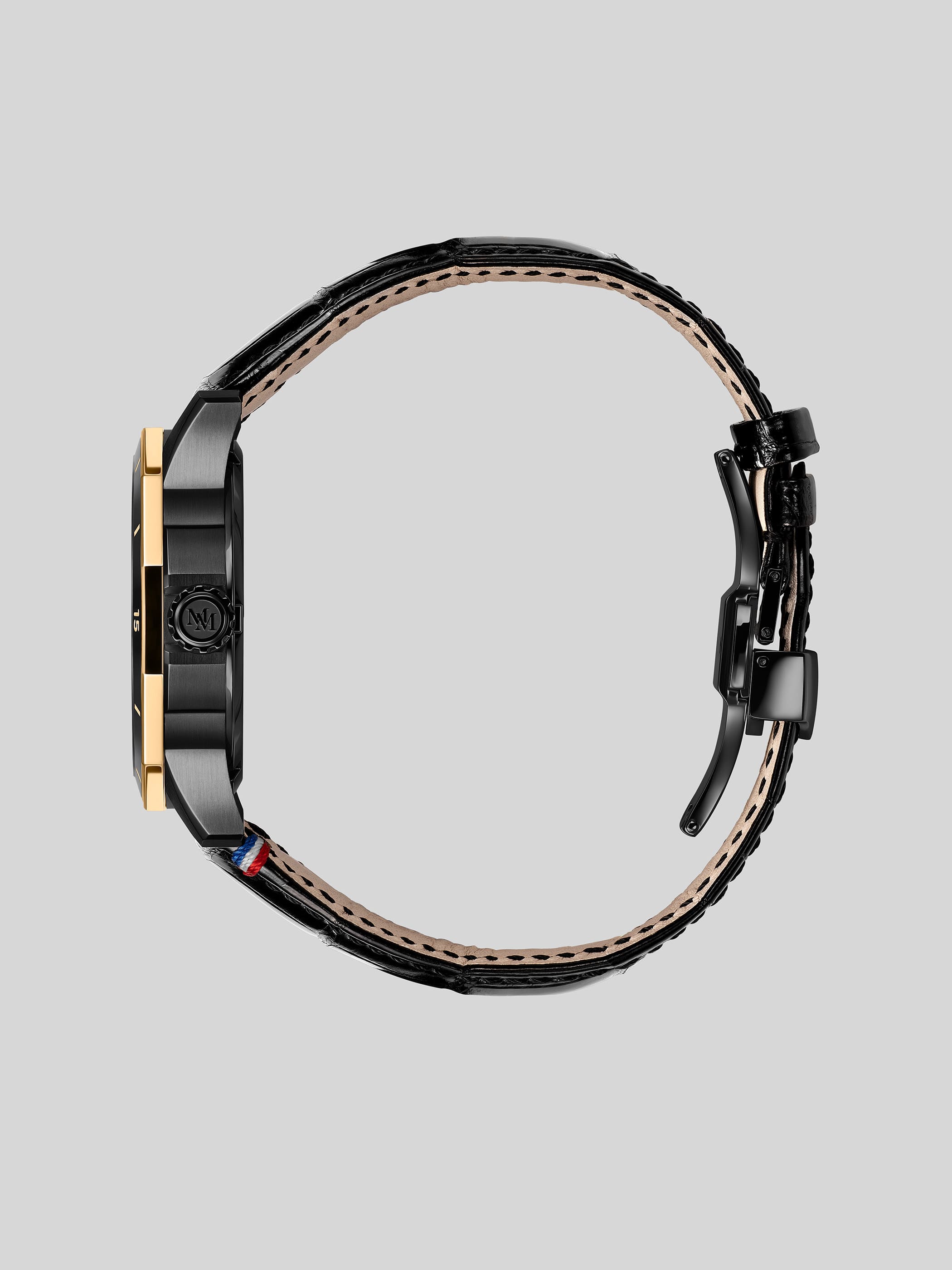
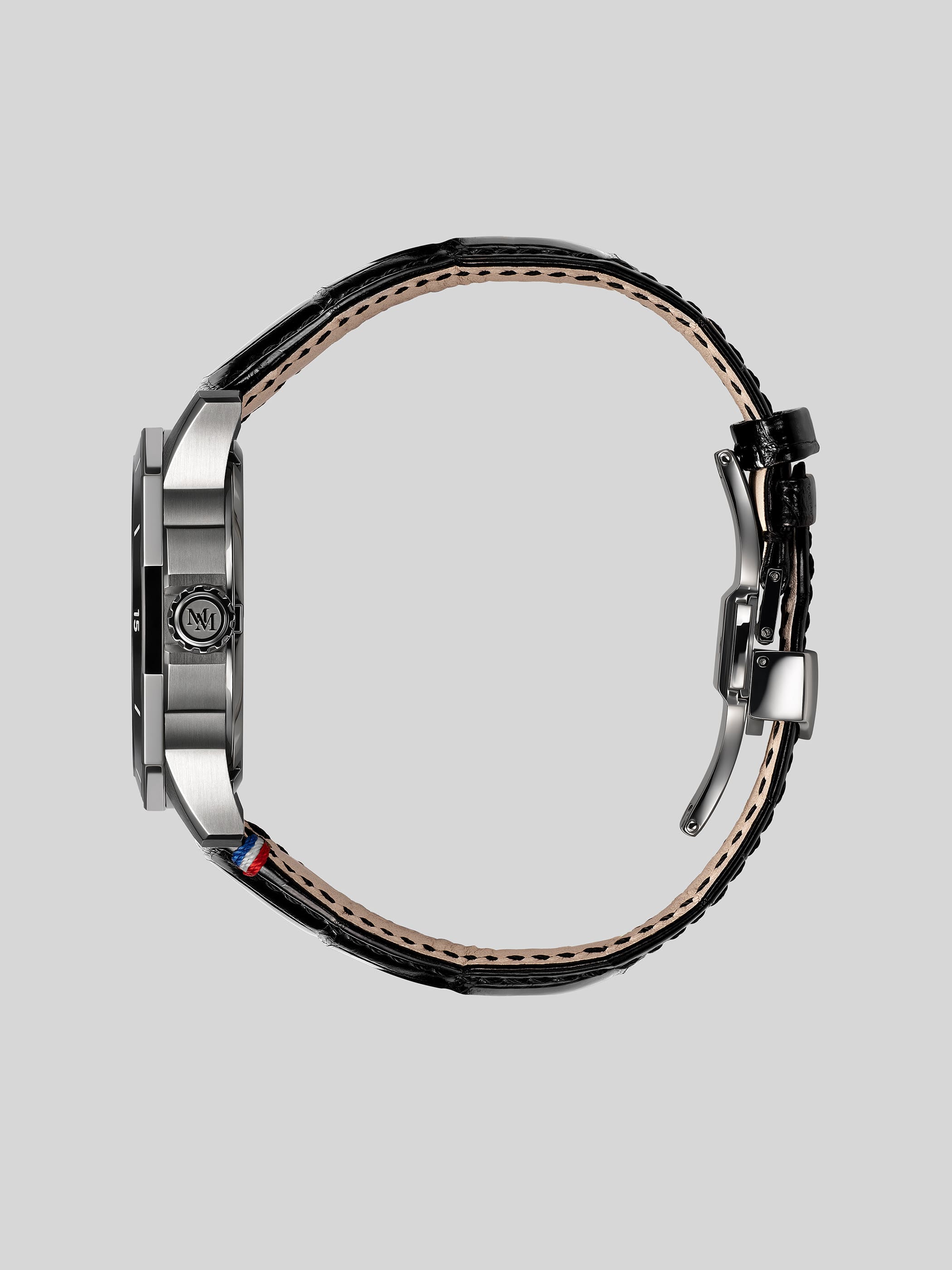
This 100-metre water resistance provides real freedom in use. This is not a fragile mechanical piece that must be removed at the slightest everyday gesture. For a modern watch worn regularly, that practical robustness matters.
An anti-reflective sapphire crystal protects the dial. The sapphire caseback allows the movement to be observed. Here again, Maison Morfin ticks the right boxes. Not to pile up words on a specification sheet, but because these choices contribute to the overall experience: legibility, resistance, mechanical transparency and the pleasure of looking at the calibre.
The bracelets and straps: the kind of detail that reveals a watch’s seriousness
Bracelets and straps often say a great deal about a brand. This is where one can save money discreetly. In photographs, the customer mainly sees the case and dial. On the wrist, he quickly discovers whether the bracelet follows through or not.
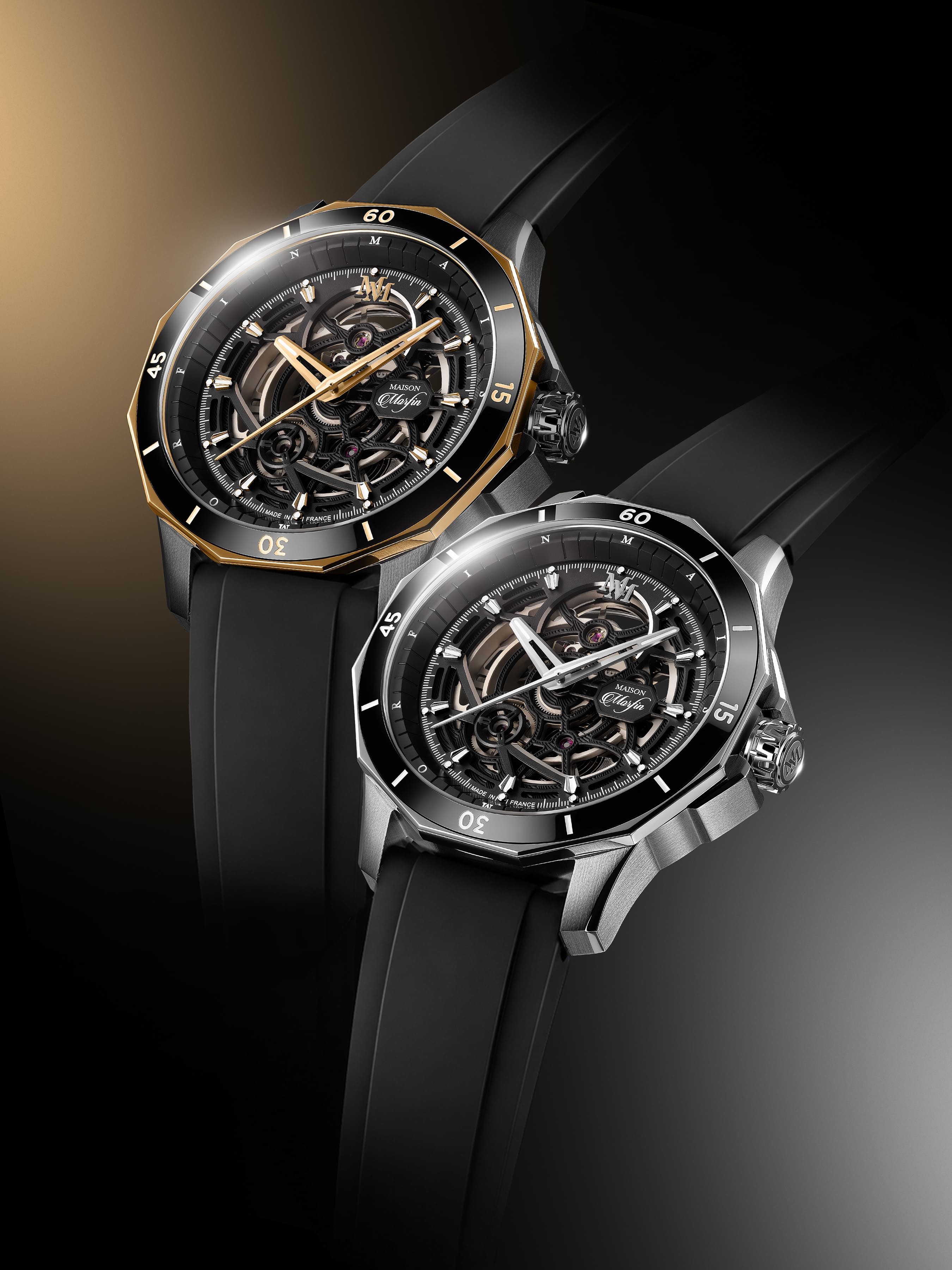
Maison Morfin offers three configurations: steel and tungsten, FKM rubber, and alligator leather made in Geneva. All straps and bracelets use quick-release spring bars, allowing them to be changed without tools. This has become common, but it remains a genuine convenience. On a watch with such a strong style, being able to move from a sporty strap to a more dressed-up version genuinely changes the perception of the model.
The steel and tungsten bracelet seems the most coherent with The One’s philosophy. It carries through the idea of a technical material, with tungsten centre links depending on the configuration, screwed pins and a micro-adjustable deployant clasp operated by a push-button. That last detail is far from anecdotal. A micro-adjustable clasp can save the comfort of a watch, especially when the wrist swells slightly during the day or when the weight becomes noticeable.
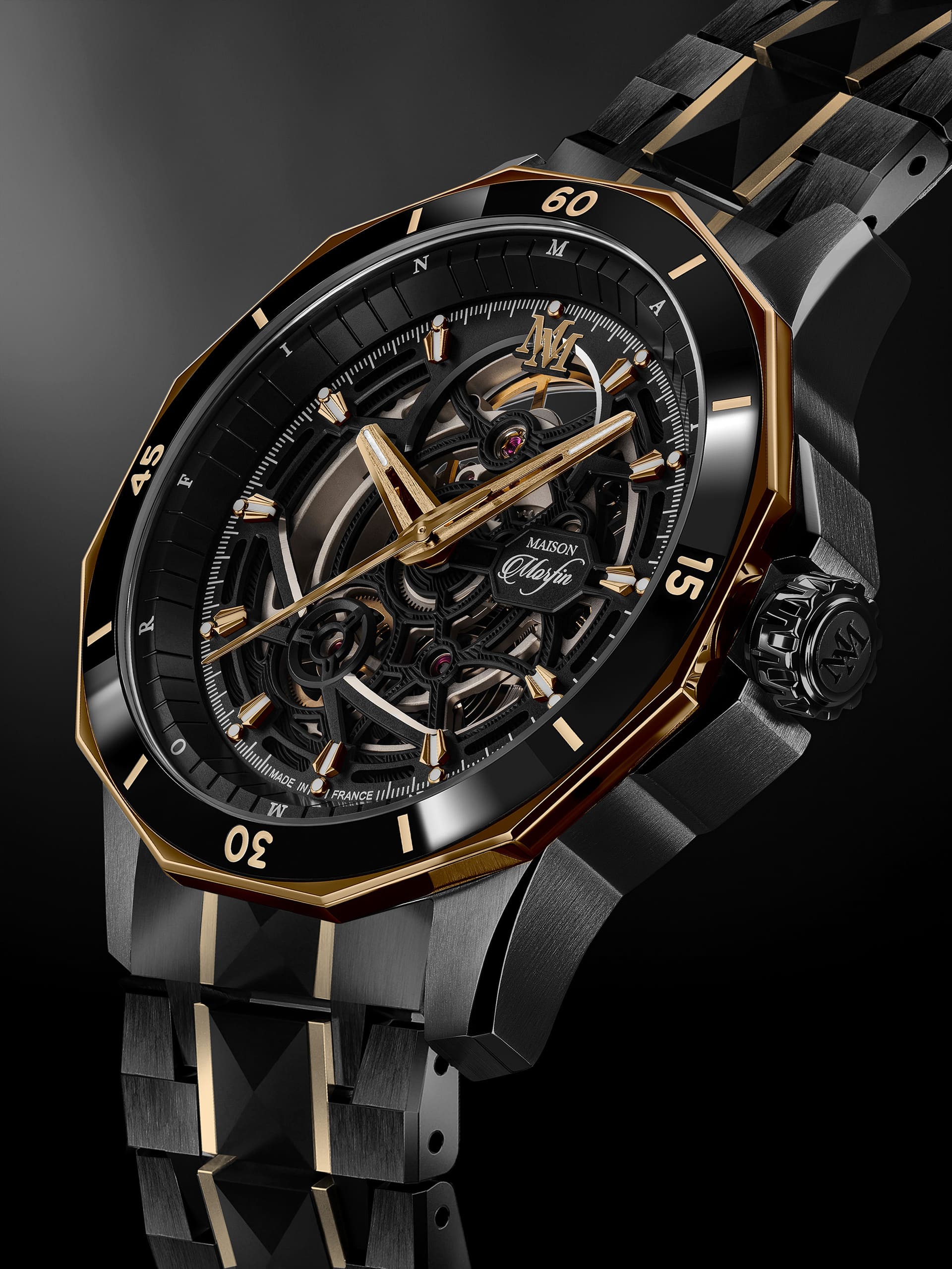
This bracelet even deserves a moment’s attention. Maison Morfin announces around 120 links for a single bracelet, with more than 10 hours of raw machining and up to nearly 20 hours when finishing passes, adjustments, brushing and polishing are added. Figures like these speak clearly. They show that the bracelet has not been treated as a secondary component, but as an integral part of the watch. Once again, we find this idea of pushing detail even into the elements one sometimes only notices after several days of wear.
The announced weight with bracelet reaches 170 grams. It is not a featherweight. The heavier a watch is, the more important bracelet adjustment becomes. An approximate clasp can ruin a good case. A well-designed clasp, by contrast, allows the mass to be distributed and keeps the watch comfortable.
The FKM strap offers a sportier interpretation. The alligator leather, folded and hand-stitched in Geneva, brings a dressier option. I also very much like the attention to detail on the leather strap, with that blue / white / red topstitch near the case lug. It is discreet, almost anecdotal at first glance, but it is exactly the kind of small sign that reminds you we are talking about a French maison, without needing to stick a huge flag on the dial.
This is not merely a matter of style. Each strap or bracelet changes the use, the presence on the wrist and even the way one perceives the watch. It is a good sign when the brand does not treat this part as a simple accessory.
A watch built through an accumulation of good choices
This, in my view, is where The One becomes interesting. The watch does not rely on a single argument. We are not simply in “look at my Swiss movement”, or “look at my skeleton dial”, or “look at my ceramic bezel”. Morfin adds up the right choices.
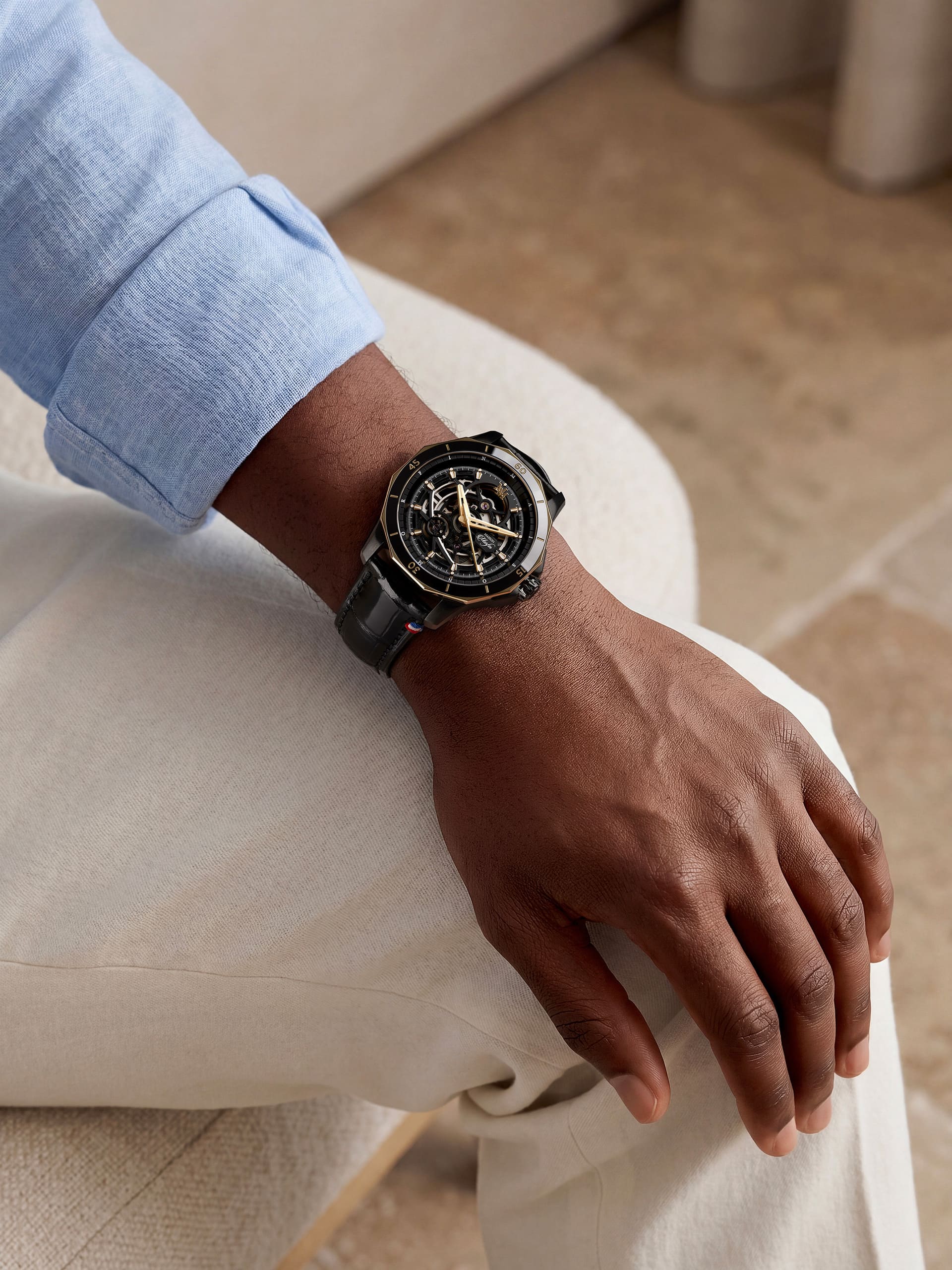
The movement is known, but carefully regulated. The bezel does not remain in steel; it moves to tungsten. The insert is ceramic. The crystal and caseback are sapphire. Water resistance reaches 100 metres. The straps and bracelets have practical systems. The steel and tungsten version receives screwed pins and a micro-adjustable clasp. Final assembly takes place in France.
Taken separately, each element may simply seem well chosen. Together, they give the proposition real density.
That is what I appreciate about this model. One does not sense a brand that has bet everything on a single brilliant line in the specification sheet before reverting to ordinary solutions everywhere else. Maison Morfin seems to have pushed every area where it could still do better without tipping the watch into another price bracket. There is almost a form of perfectionism in this refusal to let go of the details. A Pareto principle properly applied.
Maison Morfin positions its watches in an accessible premium segment, between 900 and 2,990 euros. At these prices, the customer is no longer buying only a decent automatic watch. They expect identity, materials, finishing, a genuine sensation on the wrist and an honest relationship between price and content.
In the case of The One, the price gives this entire analysis added relevance. The watch is available at 2,990 euros. At this level, the accumulation of technical choices makes perfect sense: regulated Swiss movement, tungsten, ceramic, sapphire front and back, 100 metres of water resistance, carefully developed straps and bracelets, and final assembly in France.
The One answers this expectation through density. The model does not try to imitate haute horlogerie. That would be a mistake. A Sellita SW200, even well regulated, does not become a grand complication calibre. An industrial skeleton dial, even worked, does not replace hundreds of hours of hand anglage. Proportion must be kept.
But within its category, the watch appears seriously constructed. Maison Morfin is not selling only an appearance. It also places components, materials and practical solutions behind the design. That is precisely what can convince an already informed enthusiast while also speaking to a novice: one understands where the money goes.
And that is probably the best way for a young brand to become credible.
An aesthetic that chooses its side
The One is not a neutral watch. The skeleton dial, the pronounced bezel, the contrasts of the Black & Gold version, and the use of tungsten and ceramic create an expressive, contemporary piece, quite far removed from the dressy three-hander one slips under a shirt cuff.
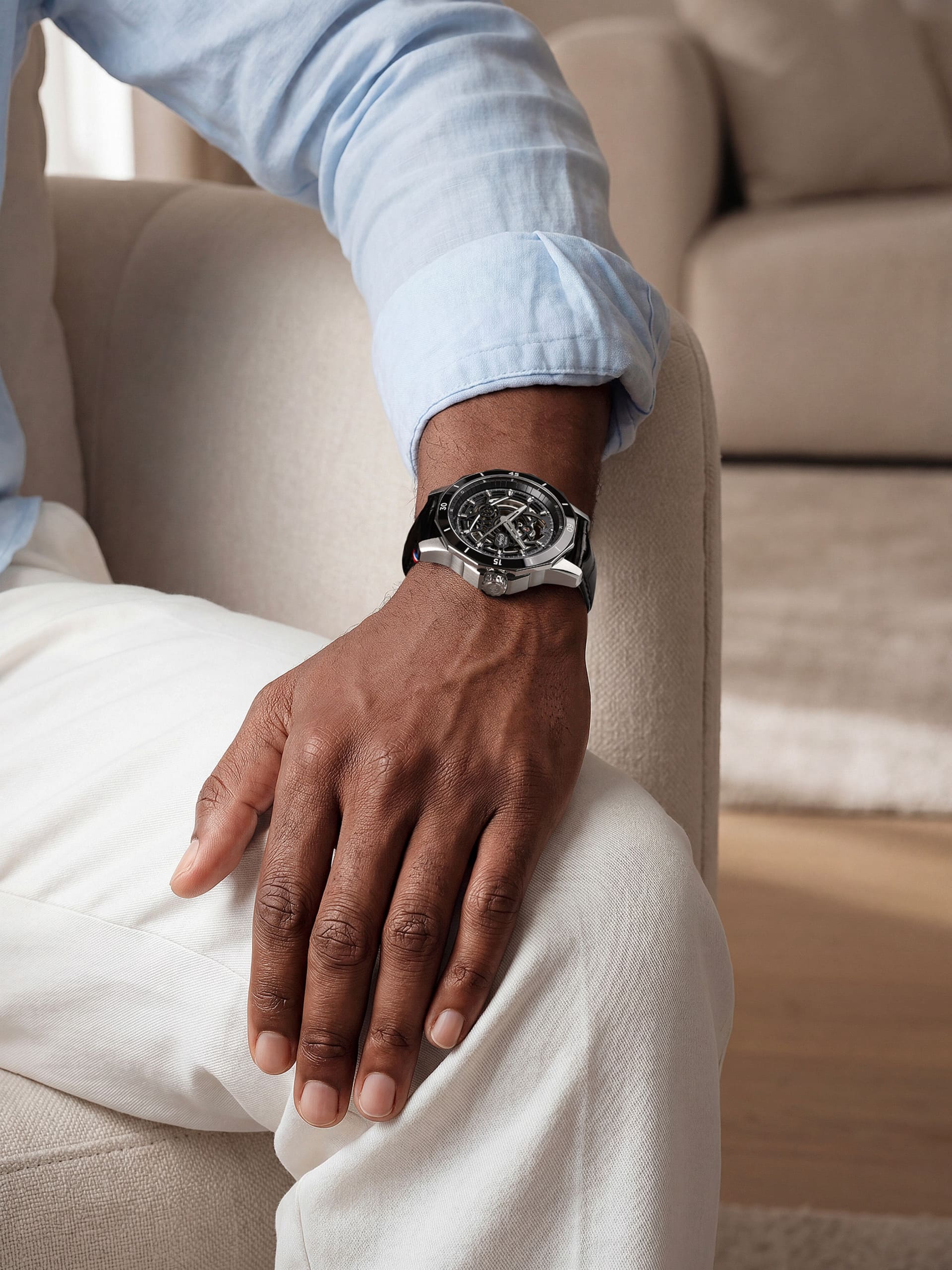
A young brand does not always benefit from producing a perfectly consensual watch. Consensus reassures, but it often makes models interchangeable. Maison Morfin takes the risk here of an identifiable design, with strong presence and a genuine construction personality.
The silver version should appeal to enthusiasts who prefer a more legible, more metallic, more direct rendering. The Black & Gold version plays more on contrast, black DLC treatment and gold accents. Two interpretations of the same model, then, but the same technical base.
The One and Maison Morfin
An important watch for a young brand is not always the one that sells fastest. Sometimes it is the one that sets a direction. The One seems to play that role for Maison Morfin. It shows what the brand wants to defend: contemporary French watchmaking built around the product, materials and practical details.
The philosophy appears quite clearly. Do not hide behind a story too big for the brand. Do not promise what the product is not. Work on the components. Choose good partners. Assemble and control in France. Offer a solid specification sheet. Seek the right balance between ambition and price.
In a market where many micro-brands sometimes settle for an attractive design and a single isolated technical argument, this coherence deserves to be underlined. The One gives the impression of a watch made by people who wanted to go all the way on every subject: movement, regulation, materials, dial, water resistance, bracelet, comfort.
Price, availability and information
The One is priced at 2,990 euros.
To discover the brand’s universe, you can visit the official Maison Morfin website. The full presentation of the model is available on the dedicated page for The One skeleton watch.
Technical specifications of the Maison Morfin The One
| Model | Maison Morfin The One |
|---|---|
| Price | 2,990 euros |
| Versions | Black & Gold; silver |
| Case | 316L stainless steel |
| Bezel | Tungsten with ceramic insert |
| Diameter | 41 mm |
| Thickness | 11.3 mm |
| Lug width | 20 mm |
| Water resistance | 100 metres with screw-down crown |
| Crystal | Anti-reflective sapphire |
| Caseback | Anti-reflective sapphire |
| Movement | Sellita SW200 automatic Swiss Made |
| Winding | Bidirectional automatic winding by rotor |
| Frequency | 28,800 vibrations per hour, or 4 Hz |
| Jewels | 26 jewels |
| Power reserve | Approximately 40 hours |
| Announced regulation | -4/+6 seconds per day, in three positions, after casing, with associated timing report |
| Stop-seconds | Yes |
| Dial | Skeleton with bevels, facets and anglage |
| Indexes | Applied, coated with Super-LumiNova BGW9 |
| Hands | Openworked, coated with Super-LumiNova C3 |
| Straps/bracelets | Steel and tungsten, FKM or alligator leather made in Geneva |
| Strap/bracelet systems | Quick-release spring bars; screwed pins on steel/tungsten bracelet; micro-adjustable clasp depending on configuration |
| Steel/tungsten bracelet | Approximately 120 links, more than 10 hours of raw machining, up to nearly 20 hours with finishing passes, adjustments, brushing and polishing |
| Leather strap | Folded alligator leather, made in Geneva, with blue / white / red topstitch near the case lug |
| Announced weight | 170 g with bracelet |
| Warranty | 2 years |
Interested in this watch?
Price, availability, contact: we can activate our watch-industry network to help you.
I’m interested in this watch