How to Set a Moonphase Watch?
A lunar ritual on the wrist
There is something profoundly soothing about setting a moonphase watch. A slow gesture, almost liturgical, in which you synchronise everyday life with an age-old celestial cycle. Poets will see it as an intimate conversation with the night; purists, as one of the finest dialogues between mechanics and the cosmos. The key is to do it properly: a moonphase is set with method, caution, and a little history.
Why this complication fascinates
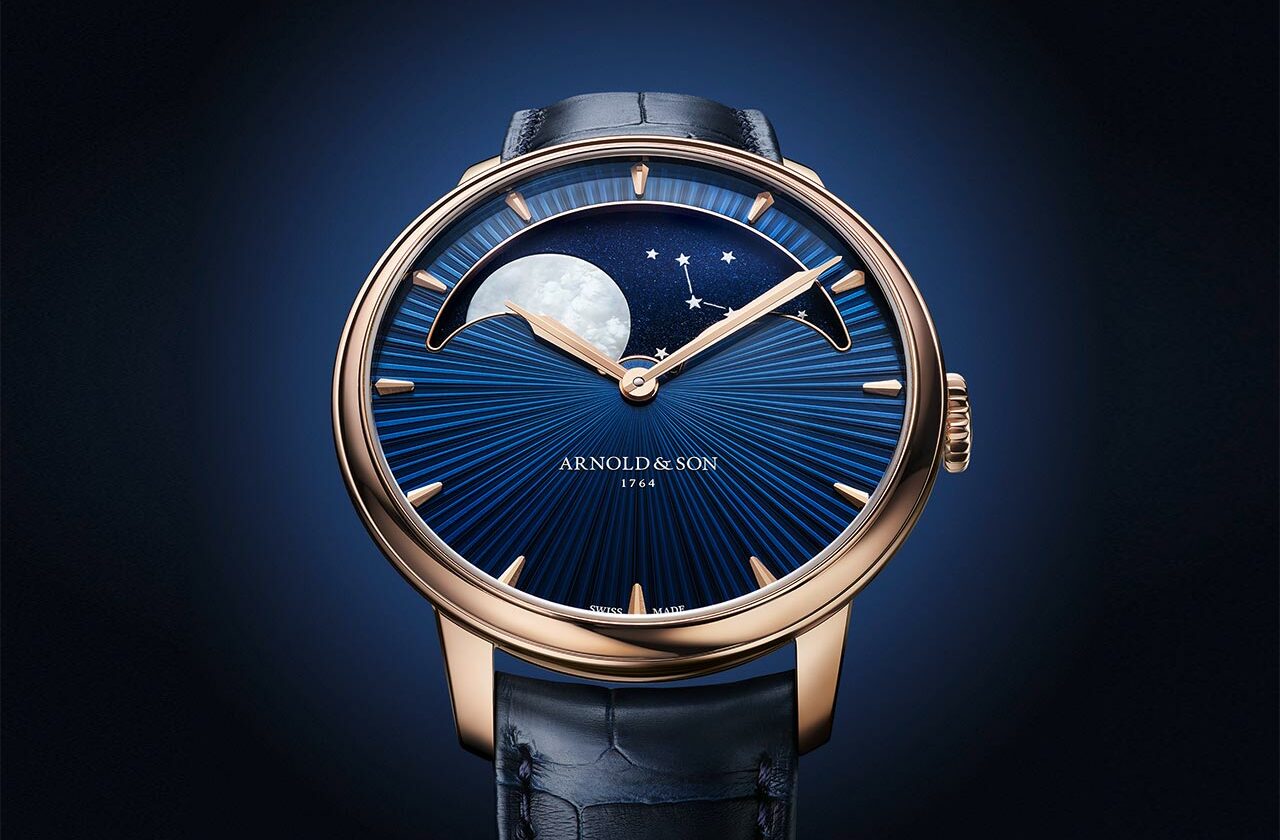
The moonphase is one of watchmaking’s oldest and most evocative complications. On a lacquered disc, often sprinkled with stars, a pearly moon waxes, fades, and returns. Technically, the principle is simple: a gear advances the disc by one step per day to reproduce an average cycle of 29.5 days. Aesthetically, it’s a miniature theatre. It is also a reminder: in a world of notifications, the moon imposes its own unhurried tempo.
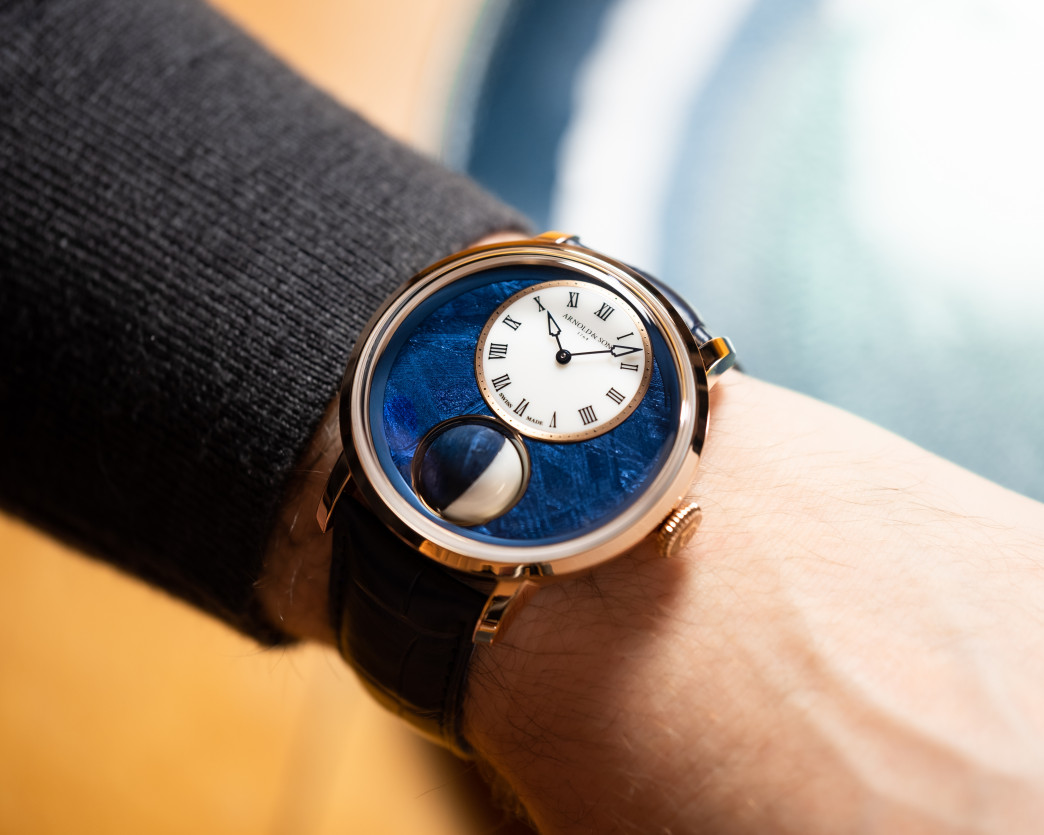
Before you begin: workshop precautions
- Danger zone: avoid any date/moonphase adjustment between 8pm and 4am. Set the hands to around 6:30 before any manipulation.
- Crown: if it is screw-down, unscrew it gently and screw it back down firmly after setting.
- Correctors: many moonphases are set via a recessed pusher. Use the dedicated tool (or a wooden toothpick), never an aggressive metal object.
- Water resistance: do not operate the crown or pushers right after a bath; dry the watch and wait for any condensation to disappear.
Pro tip: do the setting on a light-coloured table, in a calm environment. Patience is an invisible but essential spare part—especially when it comes to a moonphase complication.
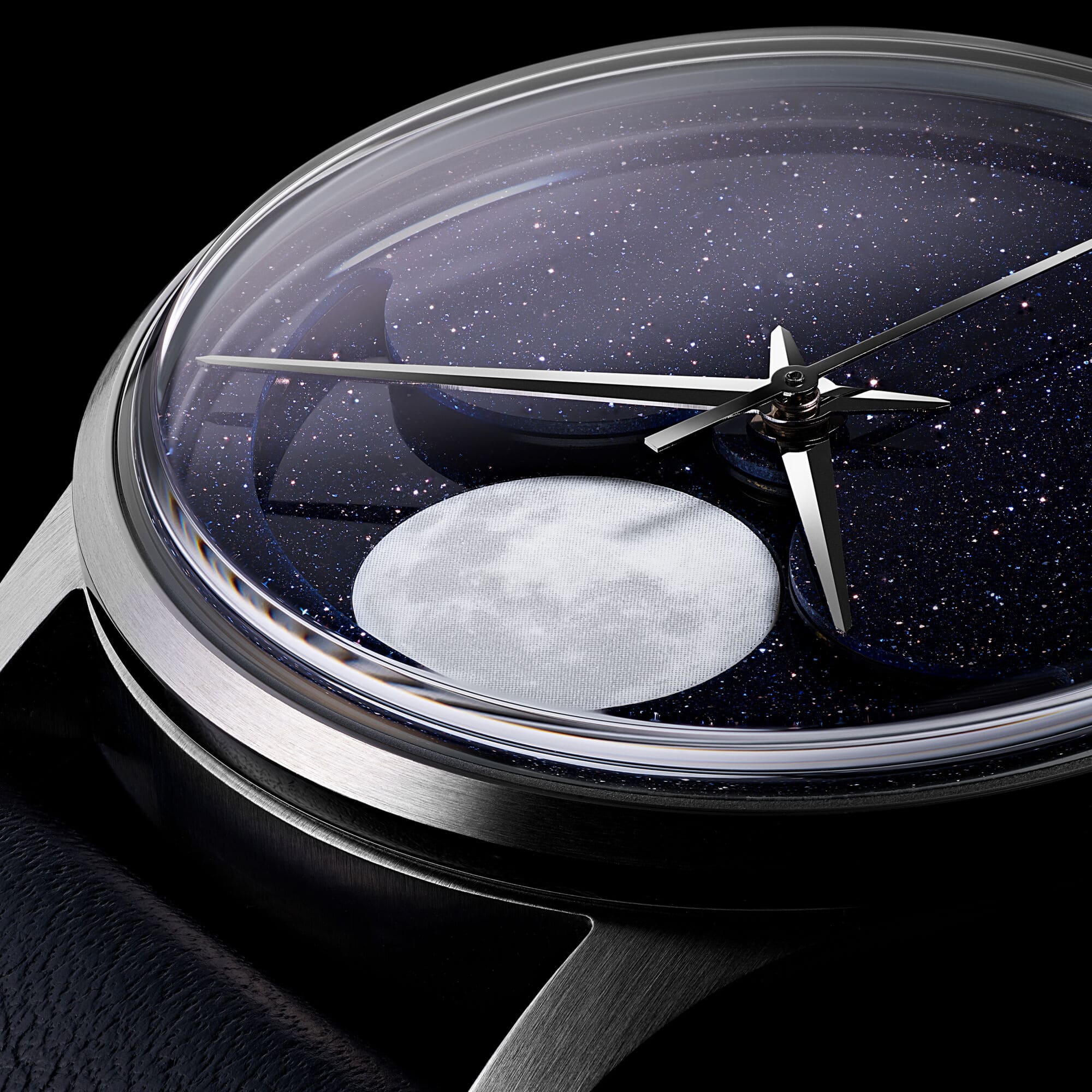
The step-by-step method
1. Know today’s moon
Two routes lead to the correct display:
- Moon age: look up the day’s “moon age” (0 = new moon, 14–15 = full moon). You will replicate that number on your watch.
- Since the last full moon: note the number of days since the last full moon. This is the most intuitive method.
An almanac, a reliable weather app, or an observatory website will do. Write the number down: it’s your compass.
2. Put the time in a safe position
Pull the crown to the time-setting position and place the hands at around 6:30. This avoids any interference with the calendar mechanism working behind the scenes.
3. Set the reference moon
Depending on the calibre, adjustment is done:
- Via a corrector: a tiny pusher at 2, 4, or 8 o’clock advances the moon by one day with each press.
- Via the crown: in an intermediate position, one direction changes the date, the other the moonphase.
Start by aligning the display to a “perfect” full moon (disc showing the moon centred and complete). This is your easy-to-spot visual zero point.
4. Count the days and advance
Count the number of days since the last full moon. Press the corrector as many times as needed (each click = 1 day), or turn the crown in the direction that advances the moon. If you have the moon age, advance by that many days from the new moon (0), or work backwards mentally from the full moon (14–15) and then advance the disc.
5. Set the time, check noon/midnight
Then set the correct time and date. To distinguish noon from midnight, move the hands forward until the date jumps: if it changes, you are at midnight; return to the desired time with that reference in mind. Finish by pushing the crown back in and screwing it down if necessary.
6. Final check
Look at your miniature sky: the shape of the moon should match what is forecast for your hemisphere. Note that a “mirror” display is not uncommon between brands; what matters is day-to-day consistency.
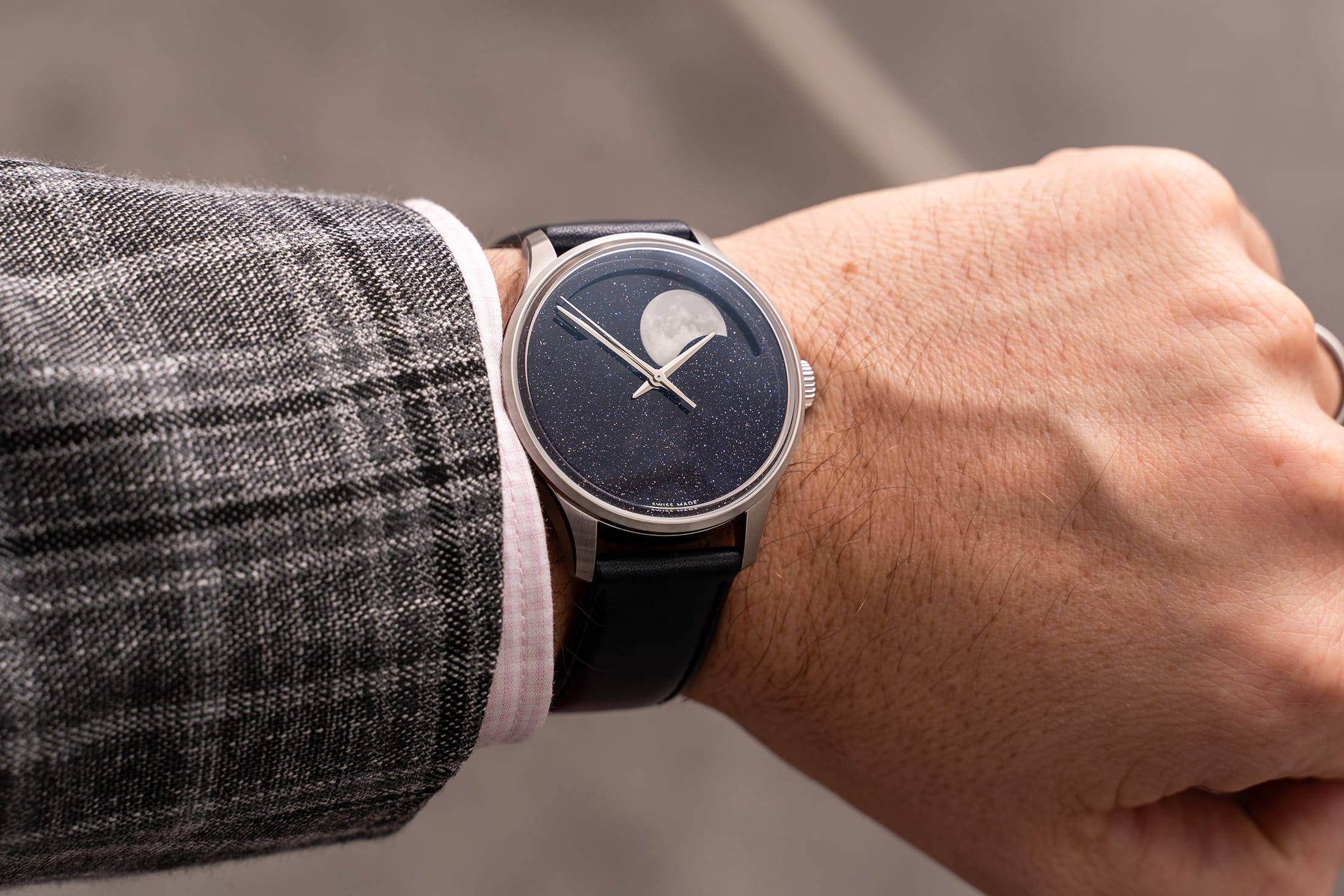
Understanding the mechanics to set it better
Most watches use a 59-tooth wheel: it accommodates two 29.5-day cycles, and the error accumulates slowly (around one day every two to three years). High-end models adopt more complex gear trains that require correction only every 122 years—or even longer. In all cases, the best habit is to adjust at full moon: the shape is crisp, and the eye won’t be fooled.
Variations and special cases
- Triple calendar: never touch the correctors when the hands are between 8pm and 4am; always advance clockwise.
- Pointer moonphases: some display the moon’s age via a dedicated hand; simply set the hand to the day’s lunar number.
- Vintage watches: fragile gaskets and sensitive correctors; favour a watchmaker if the crown stem “grates” or if the disc catches.
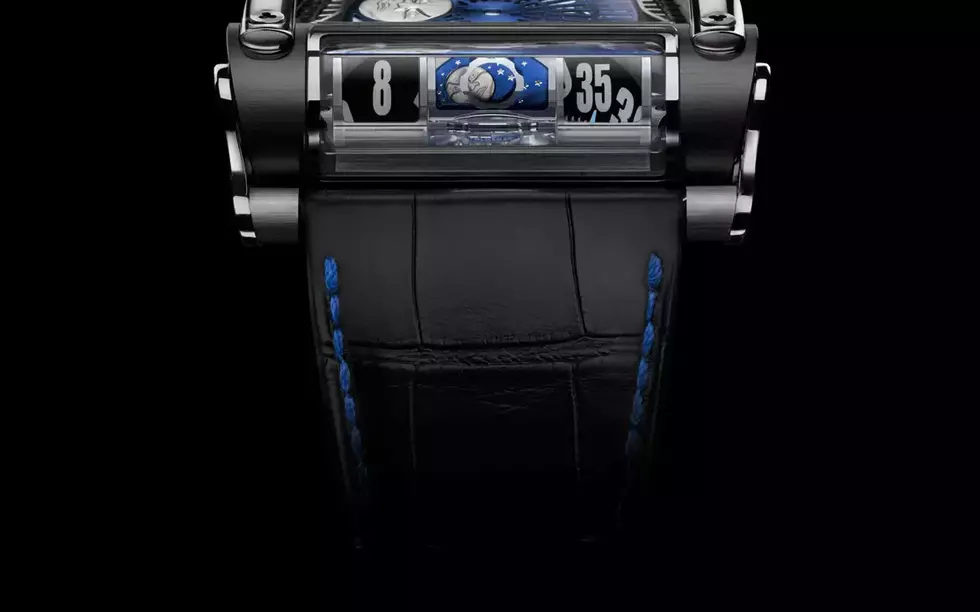
Watch culture: poetry versus patina
The moon draws in dreamers; patina, aesthetes. While moonphases are enjoying a fine resurgence among classical maisons, the taste for bronze cases continues to magnetise lovers of character. Bronze lives, oxidises, and shifts in tone: each wrist writes it a unique story, like so many different skies. Longines’ icon, the Legend Diver, has even treated itself to a bronze variation—a nod to the golden age of diving and to the beauty of materials that transform. Two parallel trends—moon and patina—united by the same idea: wearing the passage of time, and owning it.
Small habits that make the difference
- Note the date of the last full moon in your notebook or smartphone: adjustment becomes instant.
- When advancing a large number of days, take breaks: let the mechanics “catch their breath”.
- Avoid rushed corrections just before heading out; a hurried gesture is the enemy of a delicate disc.
Key takeaways
- Always set outside the danger zone (put the hands at 6:30 first).
- Use a full moon as your reference, then count the days elapsed.
- Advance gently, check noon/midnight, screw the crown back down.
- Correct periodically: it becomes second nature, and the promise of a true sky.
Setting a moonphase is making peace with slowness. A discreet, precise, and deliciously anachronistic art—exactly what watchmaking does best.