How the Jaeger-LeCoultre Reverso Was Invented for Polo
A shock, an idea: watchmaking meets the polo field
We often tend to mythologise great watches, imagining their birth as something abstract: a brilliant sketch, a hushed workshop, inspiration falling from the sky. The Jaeger‑LeCoultre Reverso, by contrast, comes from a very tangible scene, almost cinematic: a polo match, dust in the air, impacts, and a watch crystal that doesn’t hold up.
In the early 1930s, polo was a gentleman’s sport—but hardly a gentle pastime. On the field, mallets collide, horses charge, wrists take the punishment. Wristwatches, still relatively new in men’s habits, were exposed. The issue wasn’t so much elegance as survival: one simple knock could shatter the crystal, scratch the dial, ruin the object. It is in this context—a practical need, almost a brutal one—that a watchmaking solution would emerge and become one of the most recognisable silhouettes in history.
1931: Jaipur, the spark that flips the dial
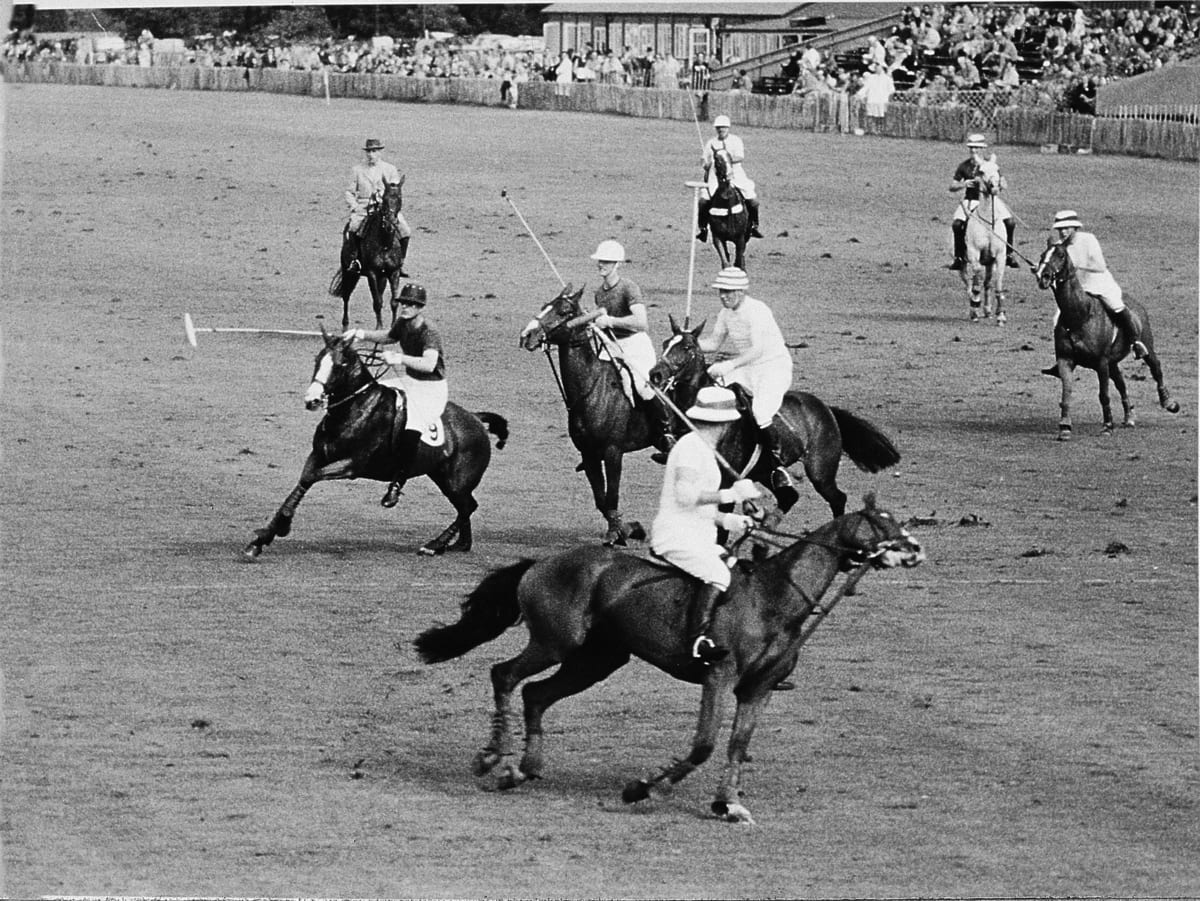
The most frequently cited legend places the Reverso’s origin in Jaipur, India—then under British influence—where polo was part of the social scenery for officers and local notables. A Swiss businessman, César de Trey, a traveller and entrepreneur with a sure instinct, attends a match. Players complain: their watches break, again and again. Watchmaking may produce refined timepieces, but it has not yet created the perfect tool for this very specific sport.
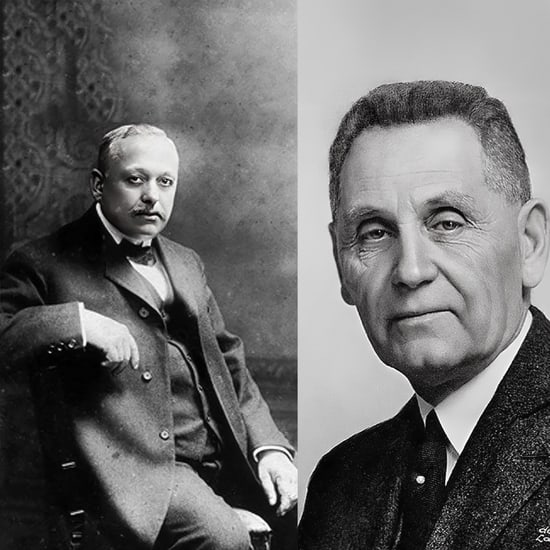
De Trey returns to Europe with this request as a challenge. He brings together partners capable of turning a mechanical constraint into a desirable object: Jacques‑David LeCoultre (for manufacturing) and Edmond Jaeger (for engineering and an innovative mindset). In this ecosystem, the idea is not to build a “sports watch” in the modern sense, but a dress watch able to withstand the roughness of the game. A watch that is both civilised and ready for impact.
The genius of the solution: a case that pivots, not a thicker crystal
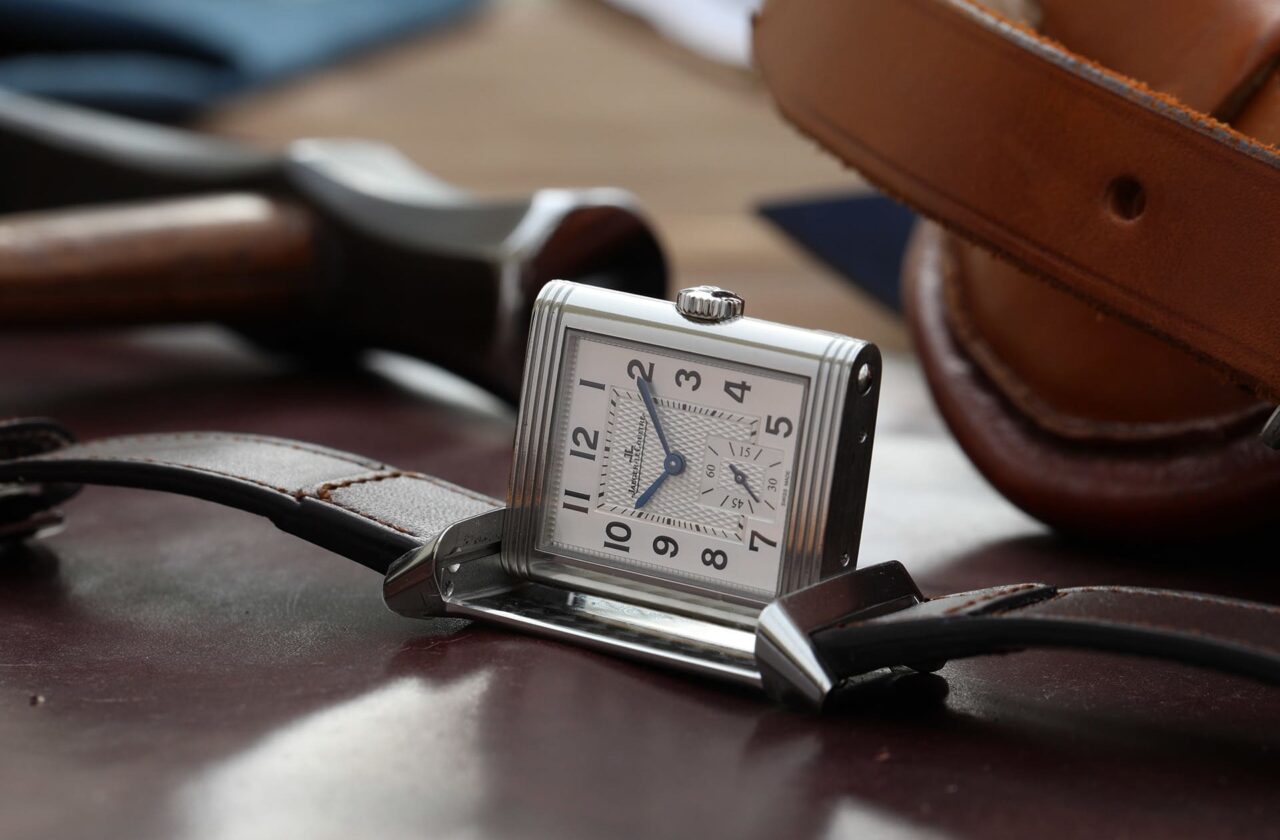
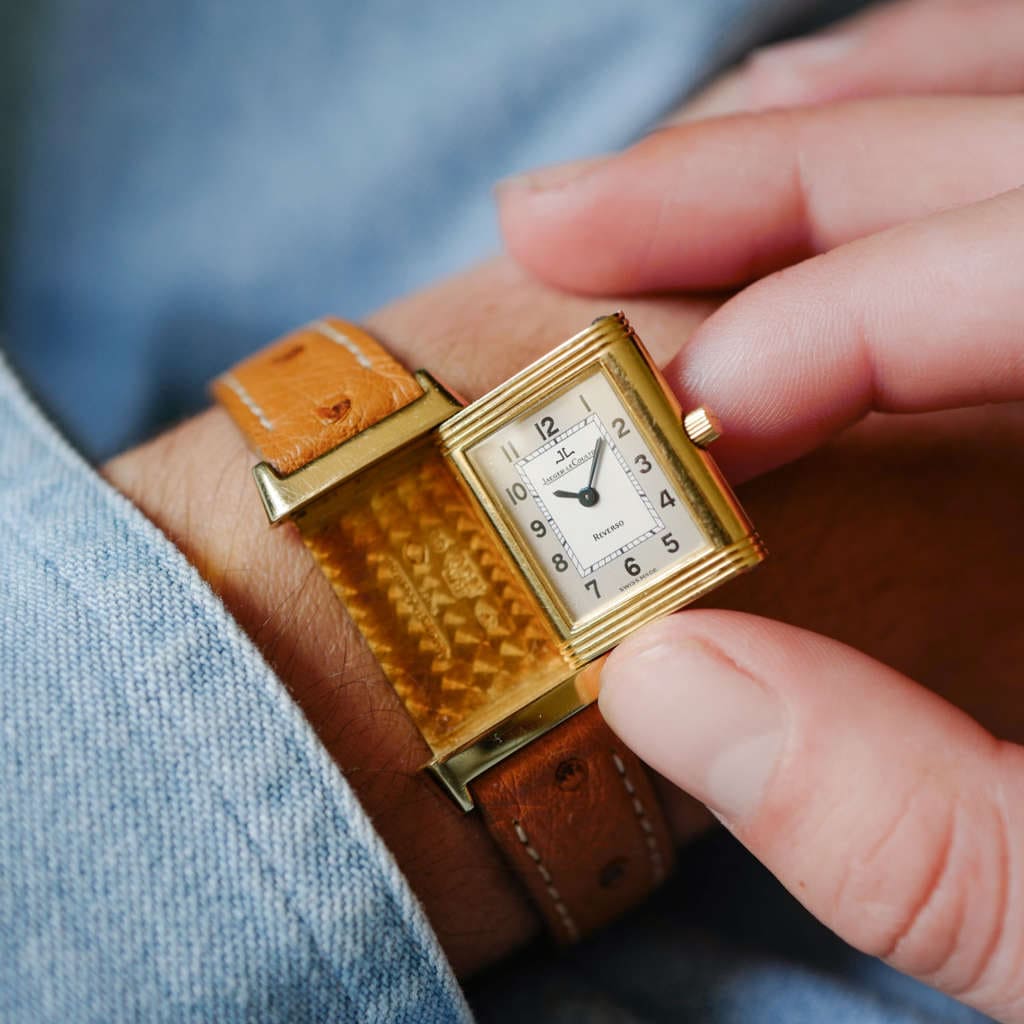
Rather than thickening the crystal—a logical but imperfect solution—the invention is conceptual: if the problem is an exposed dial, then it must be possible to protect it by making it disappear. The Reverso offers a rectangular case that can slide and pivot on itself. In a single gesture, the dial ends up turned against the wrist, while the back of the case (solid and robust) takes the blows.
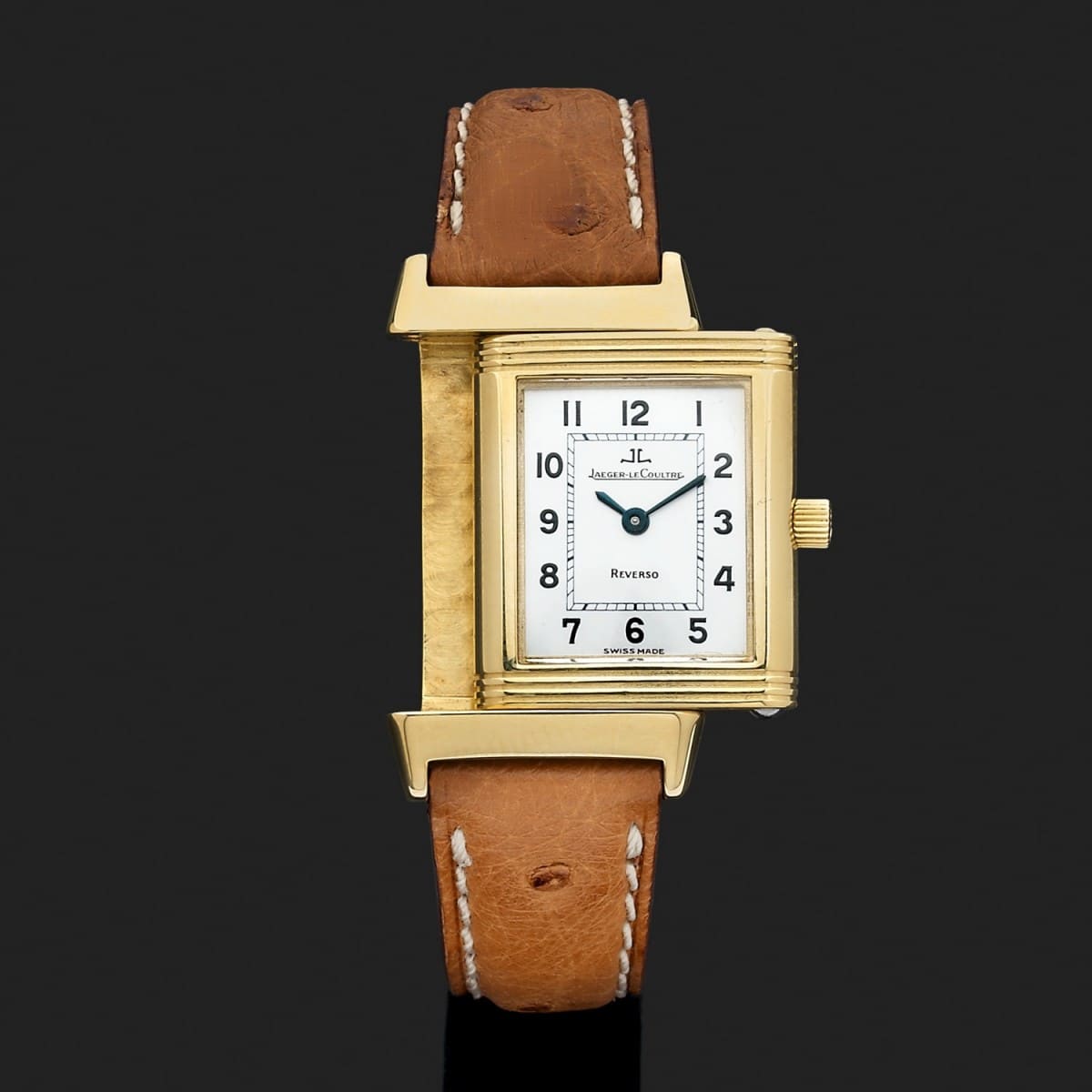
This movement is more than a sleight of hand: it is micro-architecture. The case isn’t merely reversible; it is guided by rails, engineered to remain precise, strong, repeatable. The idea is enough to win over the polo player, but also—very quickly—the design lover. Because a watch that transforms is a watch that tells a story. And watchmaking loves mechanisms that have a reason to exist.
Why “Reverso”?
The name feels inevitable: “Reverso” evokes reversal, the act of turning over. A simple word, clearly tied to the function, that will paradoxically become poetic over time. It sounds like a promise: that of a watch capable of having two faces.
A perfect alloy with Art Deco: when engineering meets style
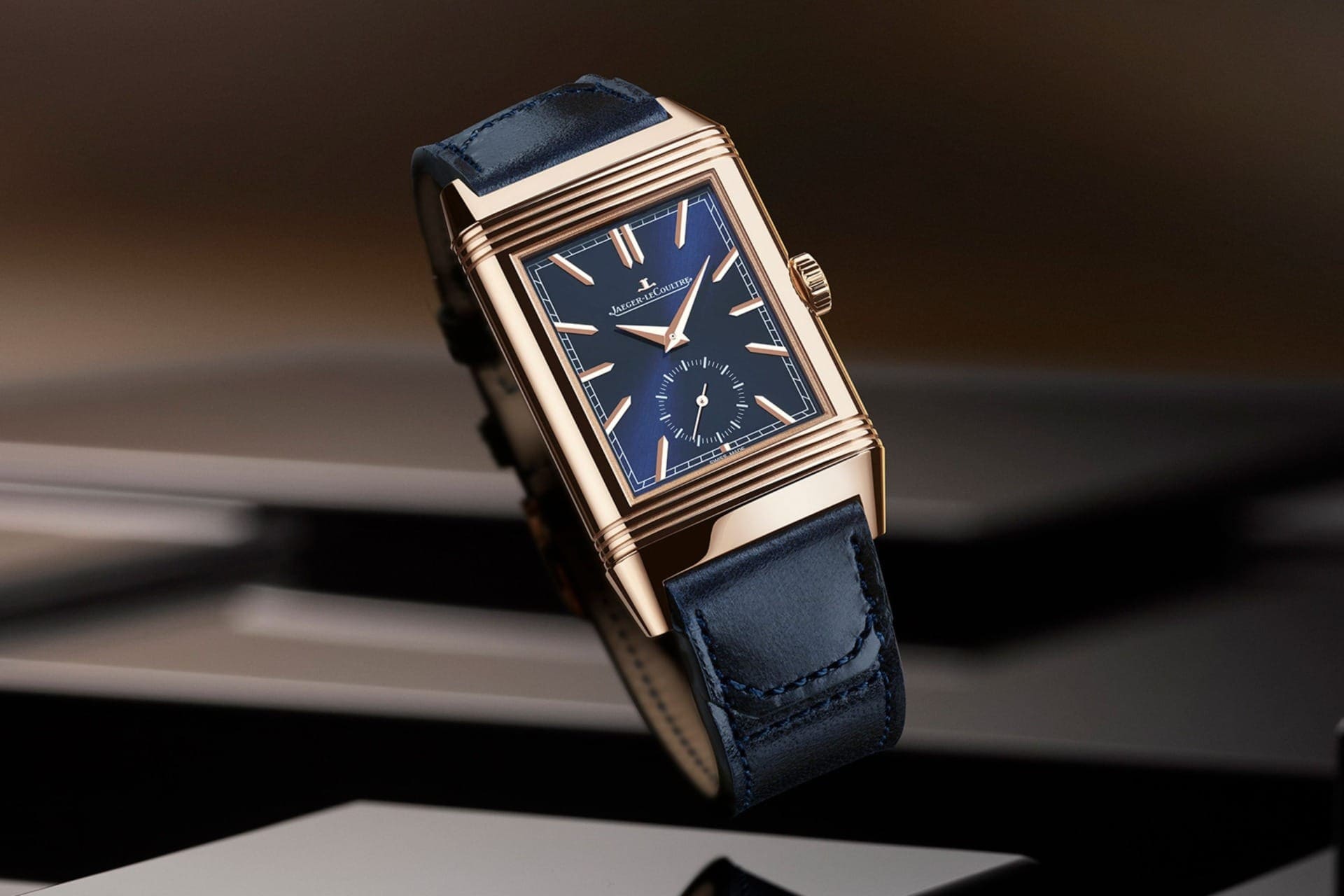
Another reason explains the Reverso’s iconic destiny: its birth coincides with the golden age of Art Deco. In 1931, geometric lines, architectural forms, strict proportions are in the air—from buildings to everyday objects. A rectangular, structured case, accented by gadroons (those three signature horizontal lines), arrives at exactly the right moment.
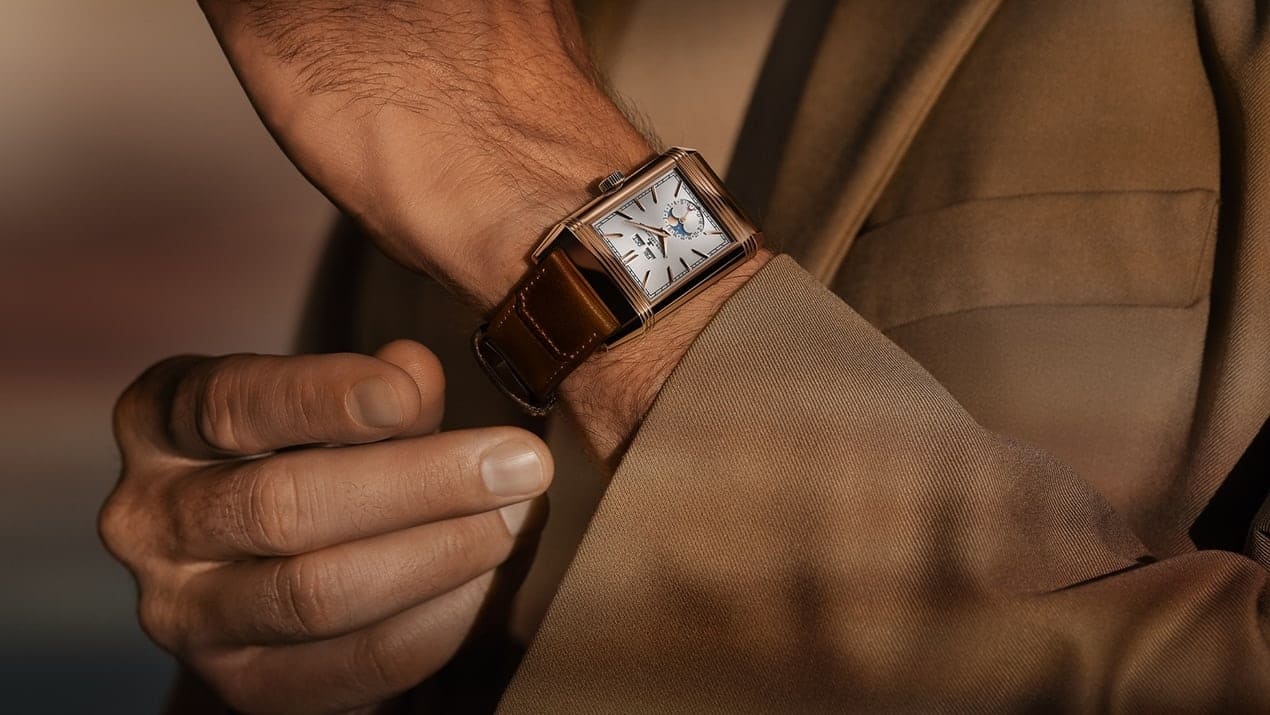
The Reverso isn’t merely an answer to a sport: it is a watch in step with its time. Its graphic restraint ensures its technical concept never feels like a gimmick. On the contrary, the flipping mechanism becomes an extension of the design—almost a cultural signature. It’s that rare conjunction where function creates a form that is instantly desirable.
From the polo field to the wrists of aesthetes: the object reinvents itself
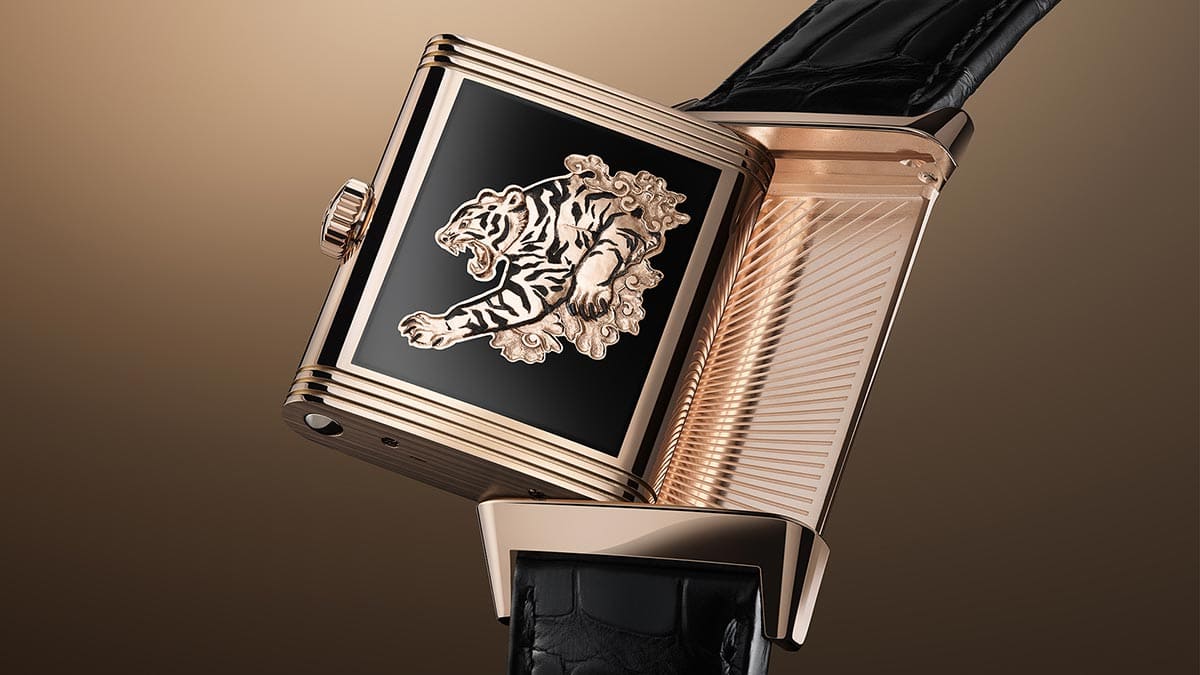
Once it escapes the strict confines of polo, the Reverso takes flight. Because flipping the case isn’t only useful for protection: it also opens the door to personalisation. Very early on, the solid back—the “hidden” side—becomes a space for expression: engraved initials, a coat of arms, an intimate message. Sport provided the idea, but high society gives it a second life.
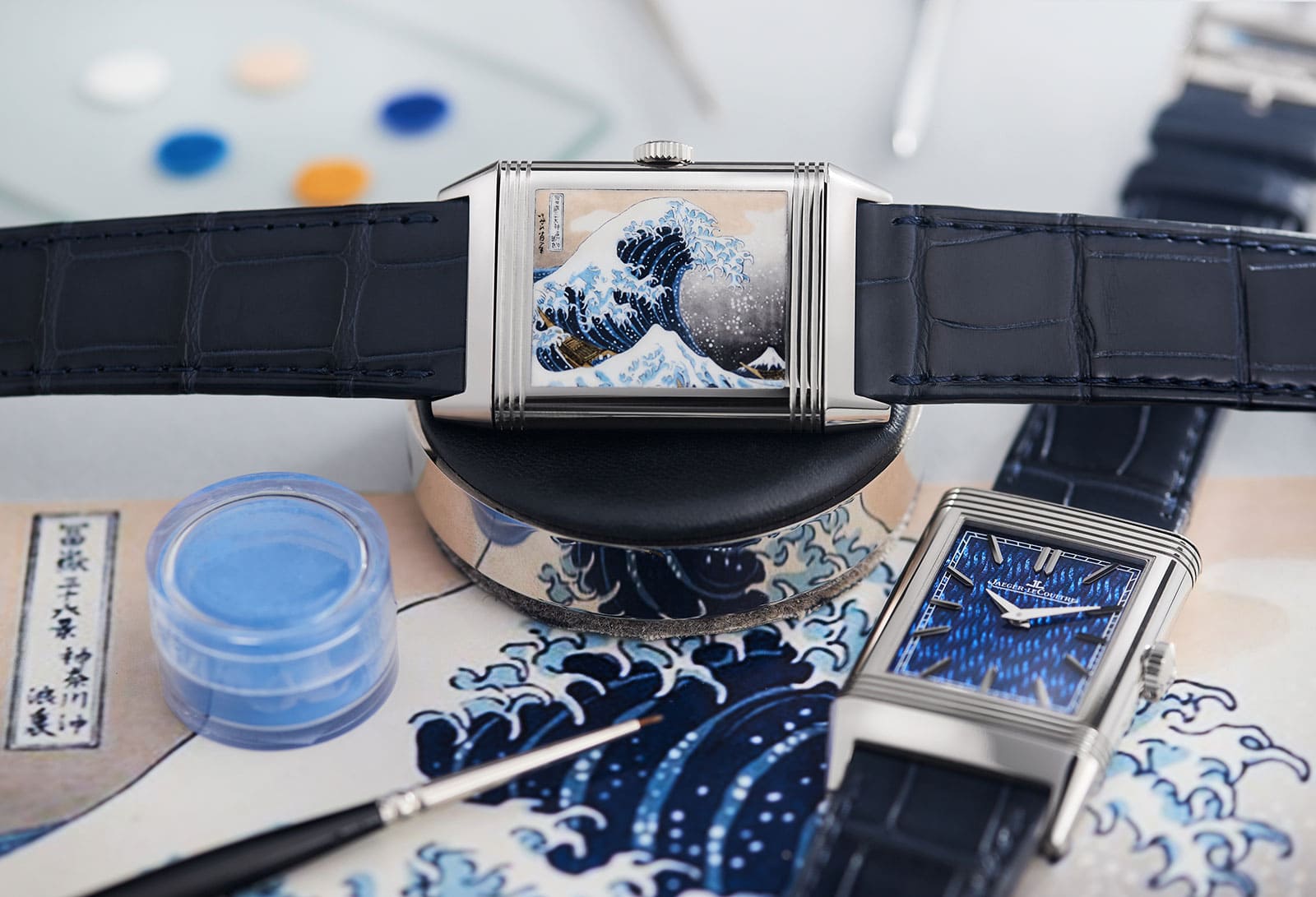
And then there is the other, implicit promise: that of duality. One watch for the day and another facet for the night. A watch that can hide its dial the way one closes a notebook. As the decades pass, Jaeger‑LeCoultre will play with this notion until it becomes a field for horological creativity.
A watch that opens the door to “two dials”
The reversible case makes a fascinating idea possible: displaying another way of reading time—or another complication—on the reverse. This logic will later culminate in double-faced versions, blending two aesthetics, two time zones, even two complete worlds. The Reverso then becomes a narrative object: you flip, you discover, you change pace.
What polo really brought: a founding constraint
To say the Reverso was invented “for polo” isn’t just a slogan: it’s a structuring fact. Polo imposes brief, repeated, unpredictable violence. The answer had to be immediate, intuitive, and compatible with an elegant lifestyle. The pivoting case ticks every box.
But above all, this sporting origin gave the Reverso a rare legitimacy: that of an object born from real use, not a mere trend. In watchmaking, the most enduring watches are often those that solve a specific problem before becoming icons. The Reverso belongs to that family—like the dive watch or the pilot’s watch—but with one distinction: it has retained a dressy, almost aristocratic soul.
- A clear function: protect the dial from impacts.
- A simple gesture: slide, pivot, lock.
- A timeless design: an Art Deco rectangle and gadroons.
- Emotional potential: engraving, a double face, a secret on the wrist.
Why the Reverso remains a legend in 2026
You might think a watch born in 1931 can survive only as a relic. Yet the Reverso moves through fashions with remarkable assurance. First, because its design has become a classic—on a par with a Dupont lighter or a well-cut double-breasted jacket. Second, because its concept has not been superseded: no other watch has truly managed to capture this combination of useful mechanics and graphic sophistication.
Finally, because the Reverso tells a story you can read in a second. You only have to see it flip to understand it comes from a world where people played polo, cared about their objects, and where elegance sometimes had to defend itself. It belongs to those rare creations in which engineering doesn’t overpower style, but reveals it.
The final flip: a simple idea turned into a symbol
At the beginning, it was about saving shattered dials. And yet the invention went beyond its original intent. The Reverso became a wearable metaphor: of the double, the hidden, protection, the contrast between active life and the intimate. A watch you can turn over the way you turn a page—or the way you protect a confidence.
That may be the true secret of its success: it has never stopped being faithful to its birth on a polo field, while offering everyone a reverse side of their own—a surface to engrave, a face to reveal, a fragment of history to wear.