How Is a Movement’s Power Reserve Calculated?
The power reserve of a mechanical movement refers to the length of time a watch can run after being fully wound. On paper, the calculation seems almost childishly simple: wind the mainspring, start the stopwatch and wait for the hands to stop. In reality, this autonomy results from a delicate balance between stored energy, available torque, gear-train efficiency and the regularity of the oscillator.
A watch advertised as offering 70 hours therefore does not simply possess “70 hours of energy”. It must deliver sufficient torque throughout that period to drive the wheels, maintain an acceptable balance amplitude and allow the escapement to operate with reasonable precision. Power reserve is a duration, but it is first and foremost a matter of mechanics.
The starting point: energy stored in the barrel
In a mechanical movement, energy is stored in the mainspring, a long metal blade coiled inside the barrel. When the wearer winds the watch, either manually or via the rotor of an automatic movement, the spring tightens around the barrel arbor.
As it unwinds, it applies torque to the arbor. The barrel then transmits this force to the going train, made up of a succession of wheels and pinions. This gear train progressively reduces the rotational speed while allowing the movement to deliver energy to the escapement, which releases it in small impulses towards the balance.
The mainspring does not deliver perfectly constant torque. This is one of the essential points to understand when considering power reserve. At the beginning of its unwinding, torque is high. It then gradually decreases. When the force becomes too weak to maintain sufficient amplitude or to operate the escapement correctly, the watch stops.
Power reserve therefore corresponds to the period between a full winding and this stopping threshold, subject to the measurement conventions used by each manufacturer.

The theoretical formula, and why it is not enough
From a physical standpoint, the available energy can be expressed in terms of the torque supplied by the mainspring and the angle through which it unwinds. In simplified form:
Available energy = torque × angle of rotation
To obtain a duration, this energy must then be related to the power consumed by the movement:
Power reserve = usable energy ÷ average power consumed
This formula gives a sound impression of the problem, but it remains theoretical. Spring torque varies, friction changes, oils behave differently depending on temperature, and the escapement does not always consume the same amount of energy. A watch therefore never converts all the energy in the mainspring into useful running time.
In more technical terms, the duration depends on the integral of the available torque over the spring’s unwinding range, divided by the power absorbed by the gear train and escapement. Manufacturers do not simply measure the length of the mainspring. They study its torque curve, the geometry of the barrel, the efficiency of the gear train and the ability of the regulating organ to remain stable as the energy diminishes.
The decisive role of torque
Two concepts that are often confused must be distinguished: stored energy and instantaneous torque.
A spring may contain a large amount of energy but release it irregularly. Conversely, a system may have a more modest reserve while supplying better-controlled torque over a greater portion of its unwinding. For a mechanical watch, this second quality is particularly valuable.
The balance spring, which regulates the rate, needs sufficient amplitude to oscillate correctly. If the torque transmitted by the escapement falls too far, the amplitude decreases. The watch may then lose time, become more sensitive to its positions or lose stability before it even stops.
This is why the genuinely usable power reserve does not always correspond to the advertised theoretical duration. A manufacture may choose to define its official figure as the period during which the movement remains within an acceptable operating range. Another may communicate the time elapsed until the movement comes to a complete stop. The figure shown must therefore be read in its technical context.
How is the number of hours measured?
The procedure begins with a full winding. In a hand-wound movement, this means turning the crown until the mainspring reaches its limit, where the mechanism is designed with a fixed bridle. In an automatic movement, the mainspring may continue to slip inside the barrel via a slipping bridle, preventing it from being overwound. In this case, the notion of “full winding” must be checked methodically.
The movement is then placed under defined conditions. Technicians record the starting time, balance amplitude, frequency, rate and, in some cases, the torque available at different stages of unwinding. The measurement ends when the movement stops or when the selected operating criteria are no longer met.
A serious measurement does not simply involve placing the watch on a table. Position can affect rate and friction. Temperature influences the viscosity of lubricants and the properties of the hairspring. Manufacturers therefore repeat the tests to obtain a representative figure rather than an isolated result produced under particularly favourable conditions.
The power reserve stated on a technical specification sheet is therefore a nominal figure. It may vary slightly depending on the actual winding state, the age of the movement, the quality of servicing and the way the watch is worn.
Why two movements with the same frequency do not have the same autonomy
The frequency of the balance plays a role, but it does not determine power reserve on its own. A movement oscillating at 4 Hz makes 28,800 vibrations per hour. It potentially consumes more energy than a movement operating at 3 Hz, which makes 21,600, because the escapement operates more frequently.
But this comparison remains incomplete. The size of the barrel, the length and thickness of the spring, the efficiency of the gear train, the mass of the balance, the type of escapement and the lubrication strategy also play a part. A high-frequency movement can offer respectable autonomy if it has a sufficiently long mainspring and a highly efficient transmission system. Conversely, a slower calibre may lose its energy quickly if its efficiency is poor.
Long power reserves are often achieved in several ways: a larger-capacity barrel, several barrels arranged in series or in parallel, a longer mainspring, reduced friction and improved energy management. Two barrels in series can help spread the delivery of torque, while several barrels in parallel can increase the available force, depending on the architecture chosen.
Is the displayed power reserve always accurate?
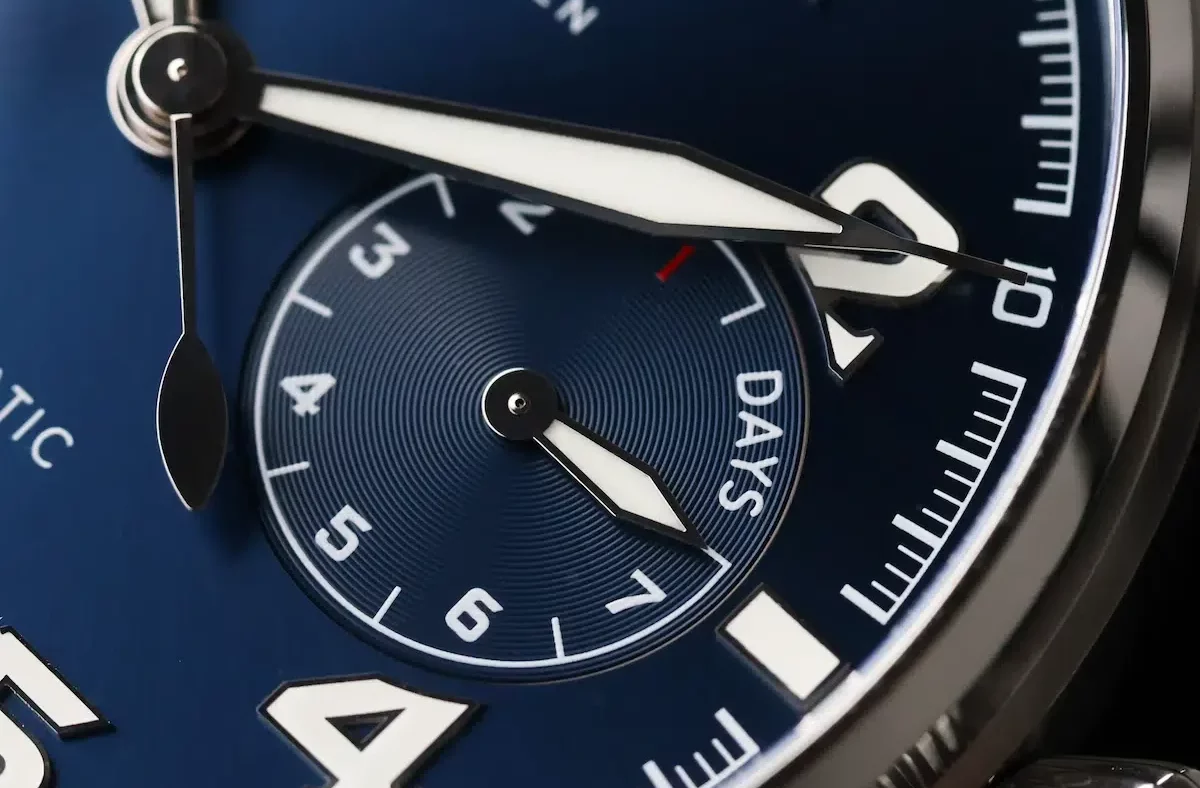
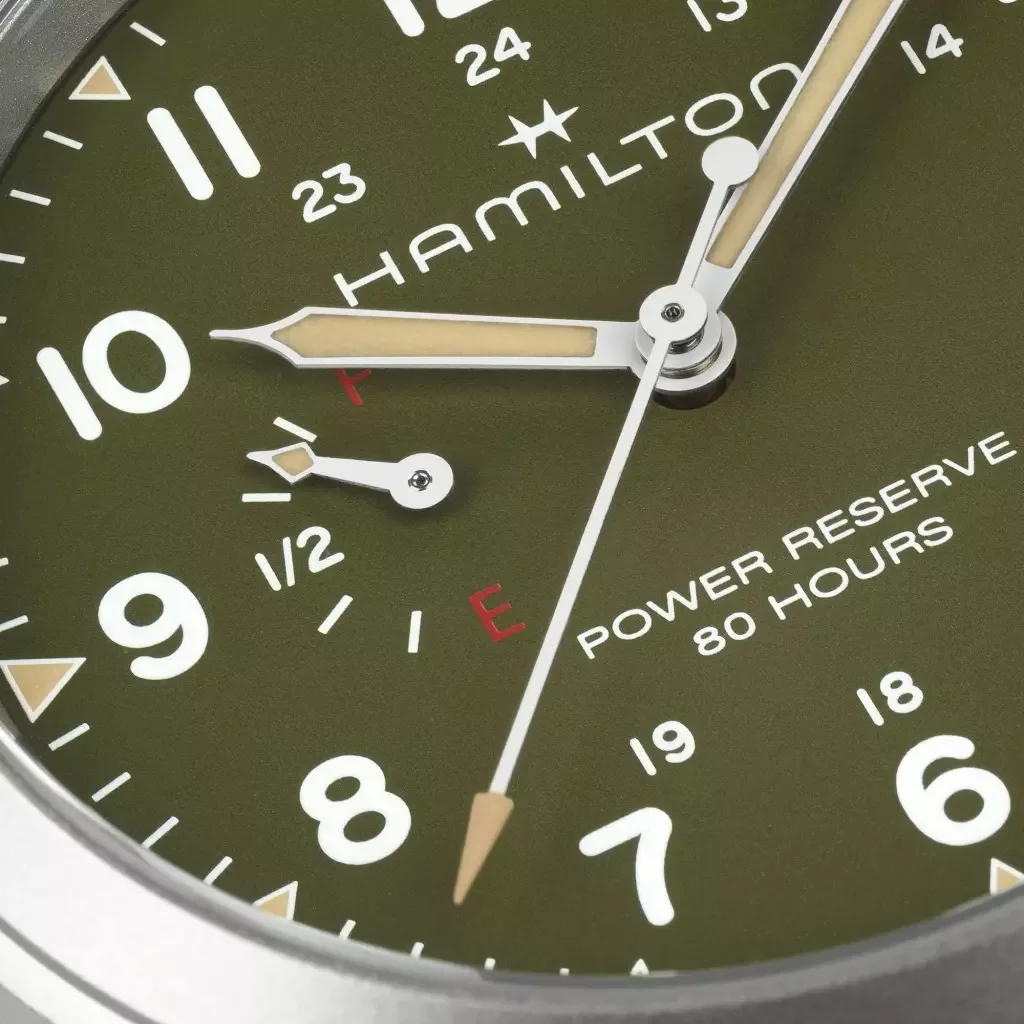
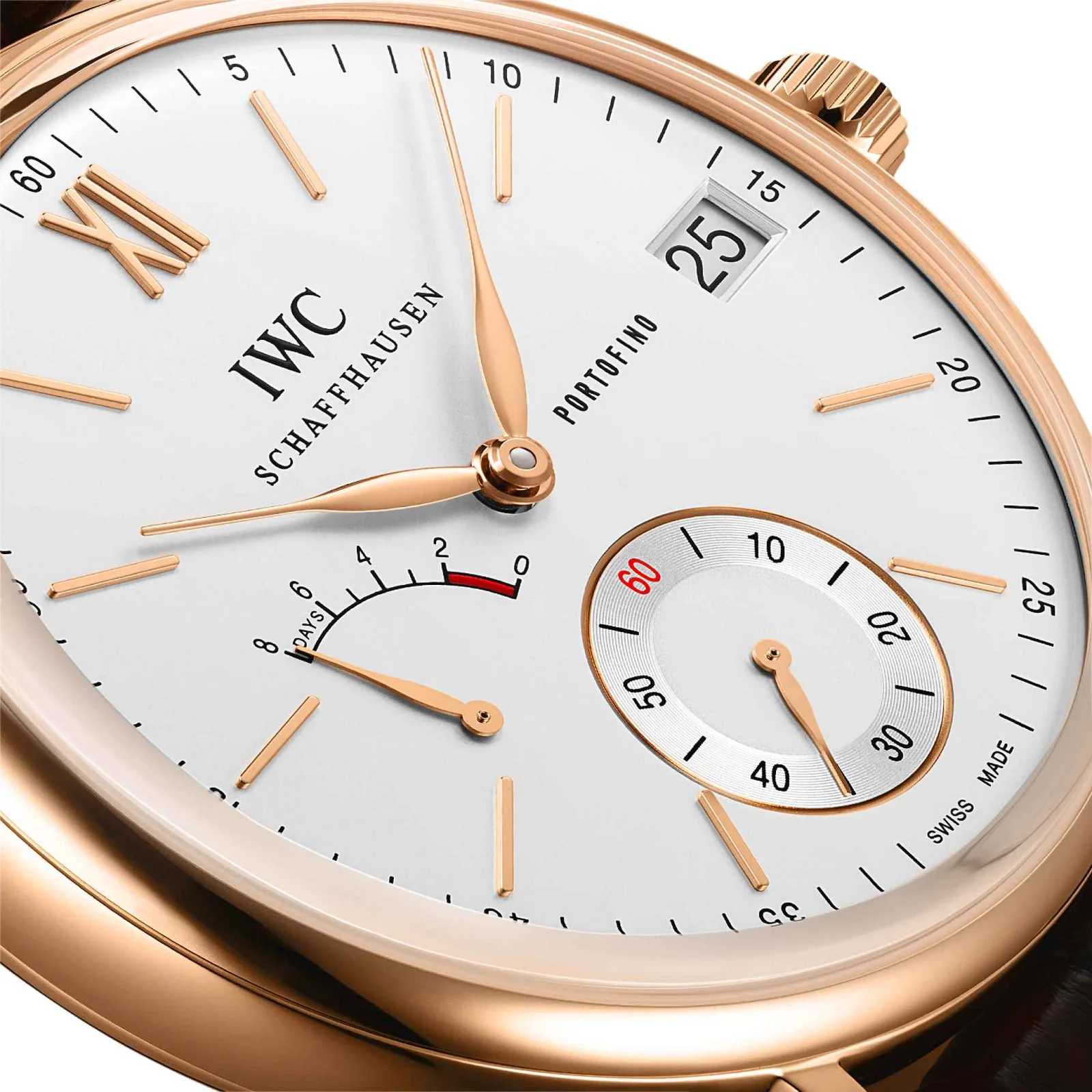
A power-reserve indicator is not an electronic gauge accurate to a tenth of an hour. It mechanically translates the position of the mainspring using a differential system, an indicating wheel and a return spring, or an equivalent arrangement. The hand therefore follows information transmitted by the barrel, rather than directly measuring the energy remaining.
In a well-designed movement, the display is sufficiently accurate to indicate whether the watch is close to fully wound or to stopping. It should not, however, be expected to match the precision of a laboratory chronometer. The end of the scale can sometimes appear to move faster than the beginning, because the relationship between barrel rotation and remaining running time is not perfectly linear.
Another nuance: automatic winding does not invariably guarantee that the mainspring is at its maximum. A watch worn for a few hours may be wound sufficiently to run throughout the night without reaching its advertised reserve. Official autonomy is measured from a full winding, not after a day at the desk during which the rotor has mostly been admiring the ceiling.
Power reserve and precision: the real issue
A long autonomy is of interest only if it is accompanied by good rate stability. A watch that runs for 120 hours but deviates significantly during the final hours of its reserve is not necessarily a greater achievement than a better-balanced 70-hour calibre.
Watchmakers therefore seek to achieve as consistent a torque curve as possible. Some movements use constant-force systems to deliver more homogeneous energy to the escapement. Others rely on a particular barrel architecture, an optimised transmission or a hairspring with improved geometry.
Power reserve is therefore less a contest of figures than a compromise between autonomy, precision, dimensions, robustness and ease of maintenance. A mechanical watch remains a miniature machine. It does not produce energy; it expends it with varying degrees of discernment.
What to remember
- Power reserve is the length of time a movement runs after being fully wound.
- It depends on the energy stored in the mainspring and the power consumed by the movement.
- The spring’s torque decreases as it unwinds, which can affect amplitude and precision before the watch stops.
- Frequency, the number of barrels, mainspring length, gear-train efficiency and friction directly influence autonomy.
- The advertised figure is a nominal measurement obtained under defined testing conditions.
- A power-reserve indicator provides a mechanical estimate, not an instantaneous electronic measurement.
Calculating power reserve therefore means following the journey of a tiny amount of energy, from the mainspring to the balance. Along the way, every tooth, pivot and oiled surface takes its share. It is this chain of controlled losses that transforms a simple twist of steel into hours, and then days, of mechanical time.