How Does a Complete Calendar Work in Watchmaking?
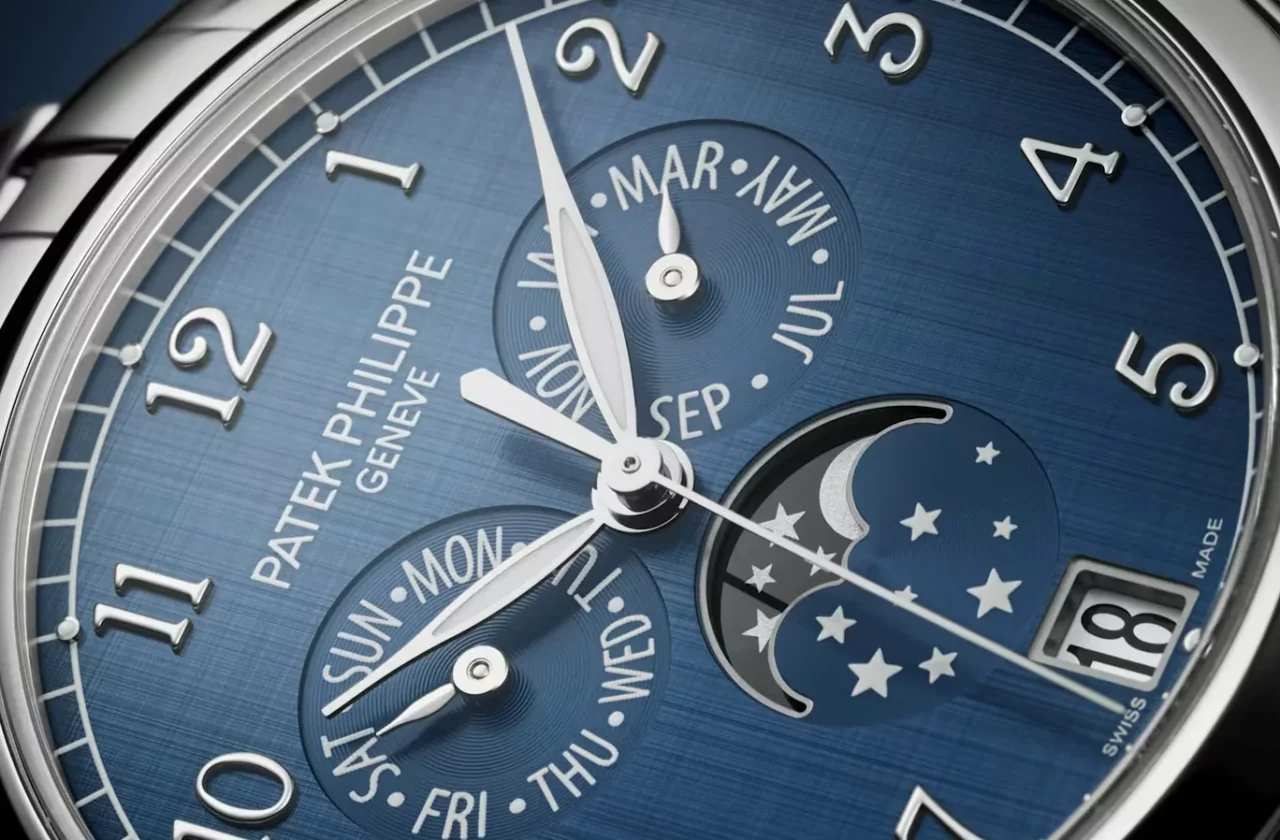

In the grand theatre of watchmaking complications, the full calendar occupies a special place. Less prestigious than a perpetual calendar, more sophisticated than a simple date window, it inhabits that grey area where mechanics, legibility and pragmatism coexist with a slightly old-fashioned elegance. Above all, it tells time differently: not merely the hour, but the rhythm of days, weeks and months.
Understanding how a full calendar works means entering the very human logic of the mechanical watch, with its compromises, ingenious solutions and little quirks.
What exactly is a full calendar?
A full calendar, sometimes called a “complete calendar”, generally displays four pieces of information: the date, the day of the week, the month and, often, the phases of the moon. These are distributed across the dial using windows, hands or sub-dials.
Contrary to what its name might suggest, it is not “complete” in an absolute sense. It cannot distinguish between 30- and 31-day months, let alone handle February. In other words, it must be corrected manually five times a year. Yes, five. March, May, July, October and December will appreciate your intervention.
It is precisely this imperfection that makes it so endearing. The full calendar is sophisticated mechanics, but without any hint of arrogance.
The heart of the system: programming for 31 days
At the centre of the mechanism lies a simple, almost naive idea: the movement is programmed for a 31-day month. Always 31. No exceptions.
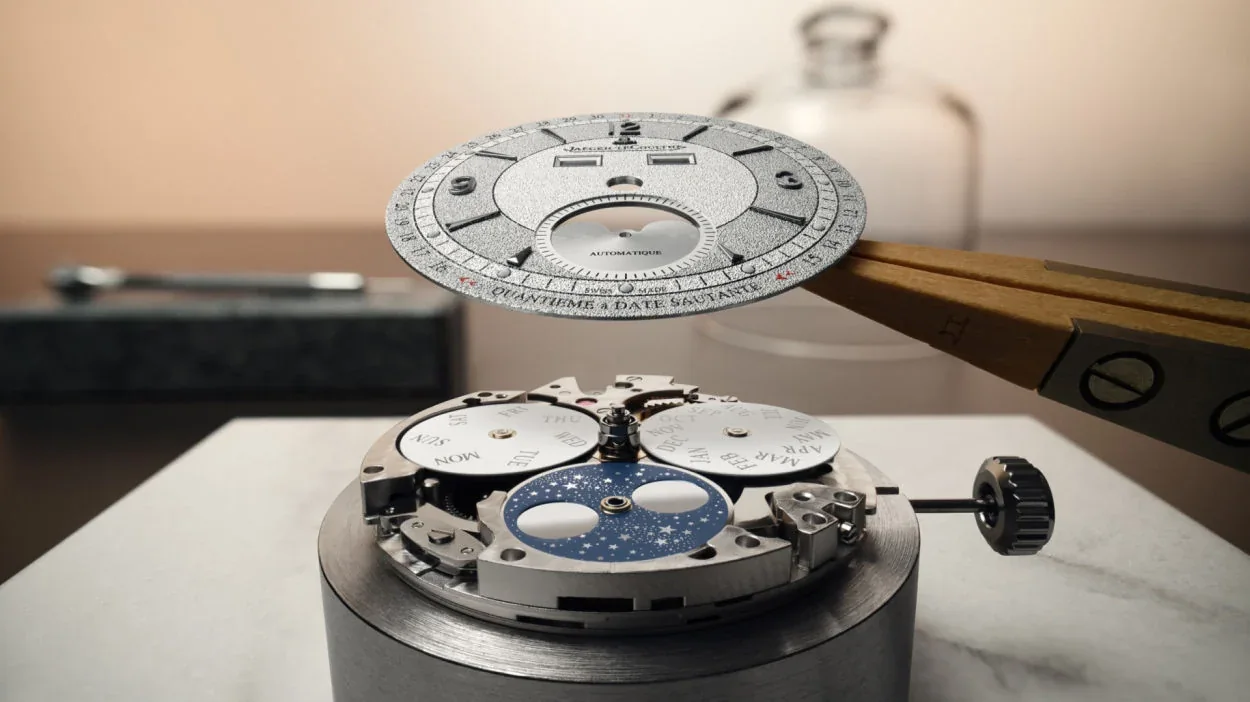
The date disc, generally mounted on an instantaneous or semi-instantaneous jump mechanism, advances by one step every 24 hours. This movement is controlled by a cam or a date wheel driven by the hour wheel. So far, there is nothing particularly exotic.
Things become interesting when the other indications are added.
The day of the week
The day is displayed by a disc bearing seven indications. It is indexed to the hour wheel and advances by one step each day. Synchronisation with the date is essential, otherwise you end up with a calendar that is… philosophically questionable.
The month
The month is displayed on a disc with 12 positions. It advances by one step each time the date moves from the 31st to the 1st. And this is where the problem lies: because the movement assumes that every month has 31 days, it will unfailingly move from the 31st to the 1st, even when reality dictates otherwise. Hence the need for manual correction.
The phases of the moon
Often incorporated into a full calendar, the moon-phase display adds a poetic, as well as technical, dimension. The classic system uses a 59-tooth disc, representing two lunar cycles of 29.5 days.
Each day, the disc advances by one tooth, reproducing the cycle with respectable, though imperfect, precision: a correction is generally required approximately every two and a half years. More advanced versions, known as astronomical moon-phase displays, improve on this precision, but at that point they move beyond the territory of the “standard” full calendar.
A ballet of correctors
If the full calendar requires your attention several times a year, it is because it is designed with correctors. Discreet pushers on the case band, or specific crown positions, allow the date, day, month and moon phase to be adjusted independently.
This is known as “quick correction”. And it is a blessing, because attempting to set a full calendar by turning the hands through several months would be an exercise in patience that even watchmaking monks would avoid.
There is one caveat, however: these corrections must be carried out outside the critical period, generally between 10 p.m. and 2 a.m., otherwise the mechanism may be damaged while the date is changing.
Legibility and dial architecture
The full calendar is also a design challenge. Several pieces of information must coexist without turning the dial into an Excel spreadsheet.
Two main layouts dominate:
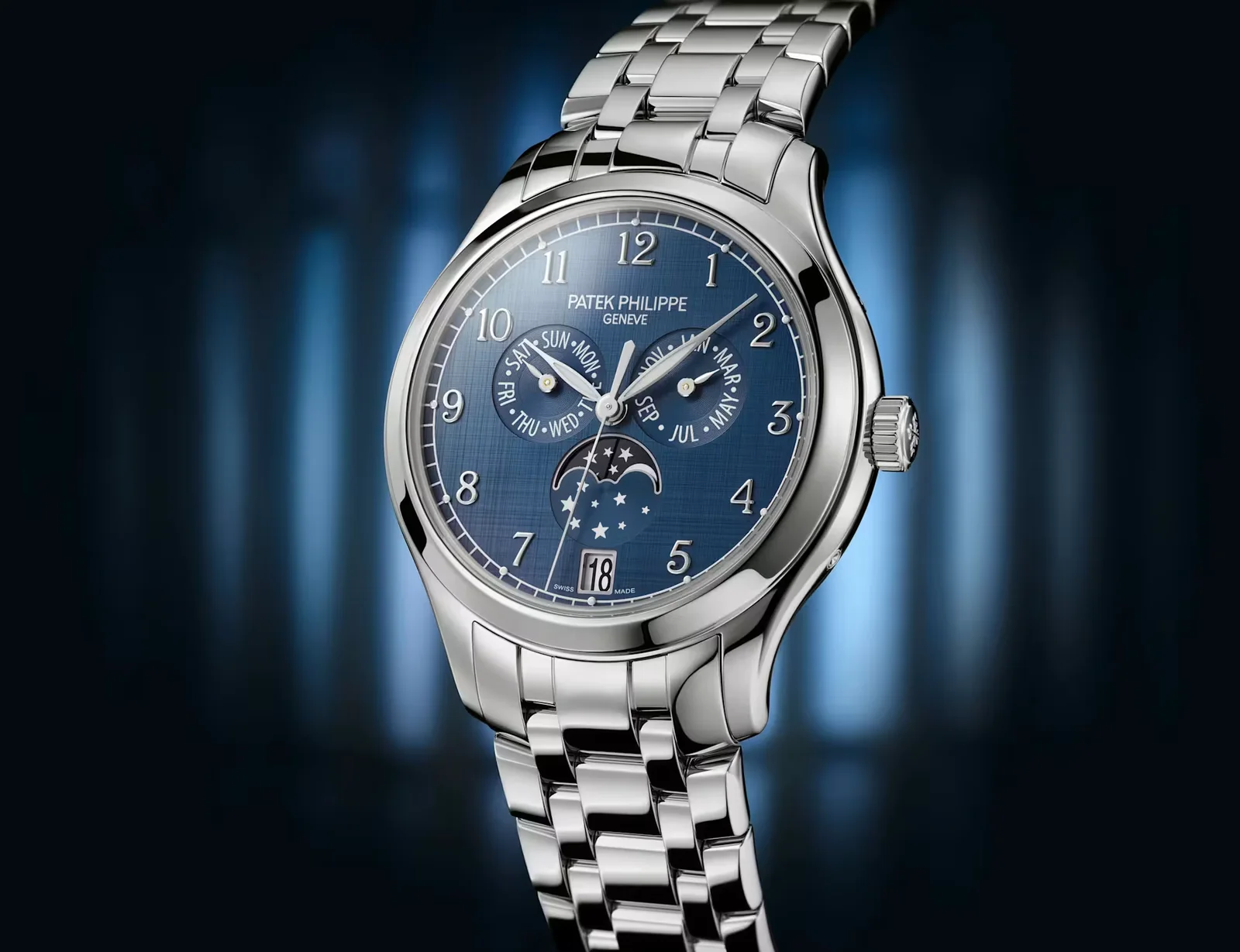
The “classic” arrangement, with the day and month displayed in windows at 12 o’clock, the date indicated by a peripheral hand and the moon phases at 6 o’clock. A tried-and-tested balance, particularly associated with Patek Philippe and its reference 5146.
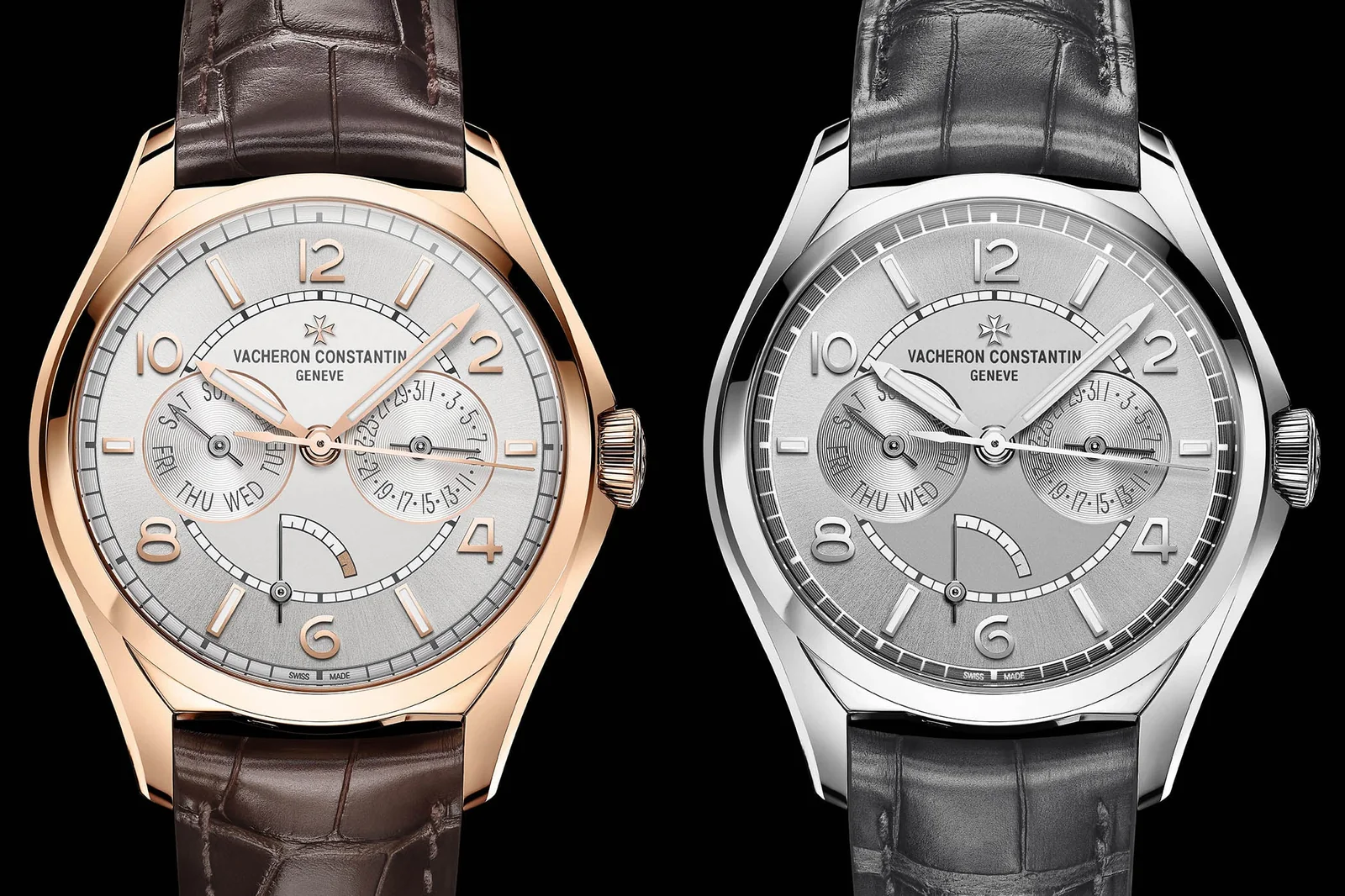
And the sub-dial configuration, known as the “triple calendar”, in which each indication occupies its own dedicated register. More crowded, but also more expressive.
In both cases, success depends on one detail: visual hierarchy. A good full-calendar watch should be legible in the blink of an eye, not after several seconds of analysis.
Why choose a full calendar?
It is a question worth asking, especially when faced with the sophistication of a perpetual calendar or the simplicity of an annual calendar.
The full calendar offers an appealing compromise. Mechanically more accessible, and therefore often less expensive, it nevertheless provides a wealth of information that goes far beyond a simple date window.
It also has a particular charm: that of a living complication requiring regular interaction. You do not simply live with the watch. You accompany it.
Some notable references
It is impossible to discuss full calendars without mentioning a few iconic watches.
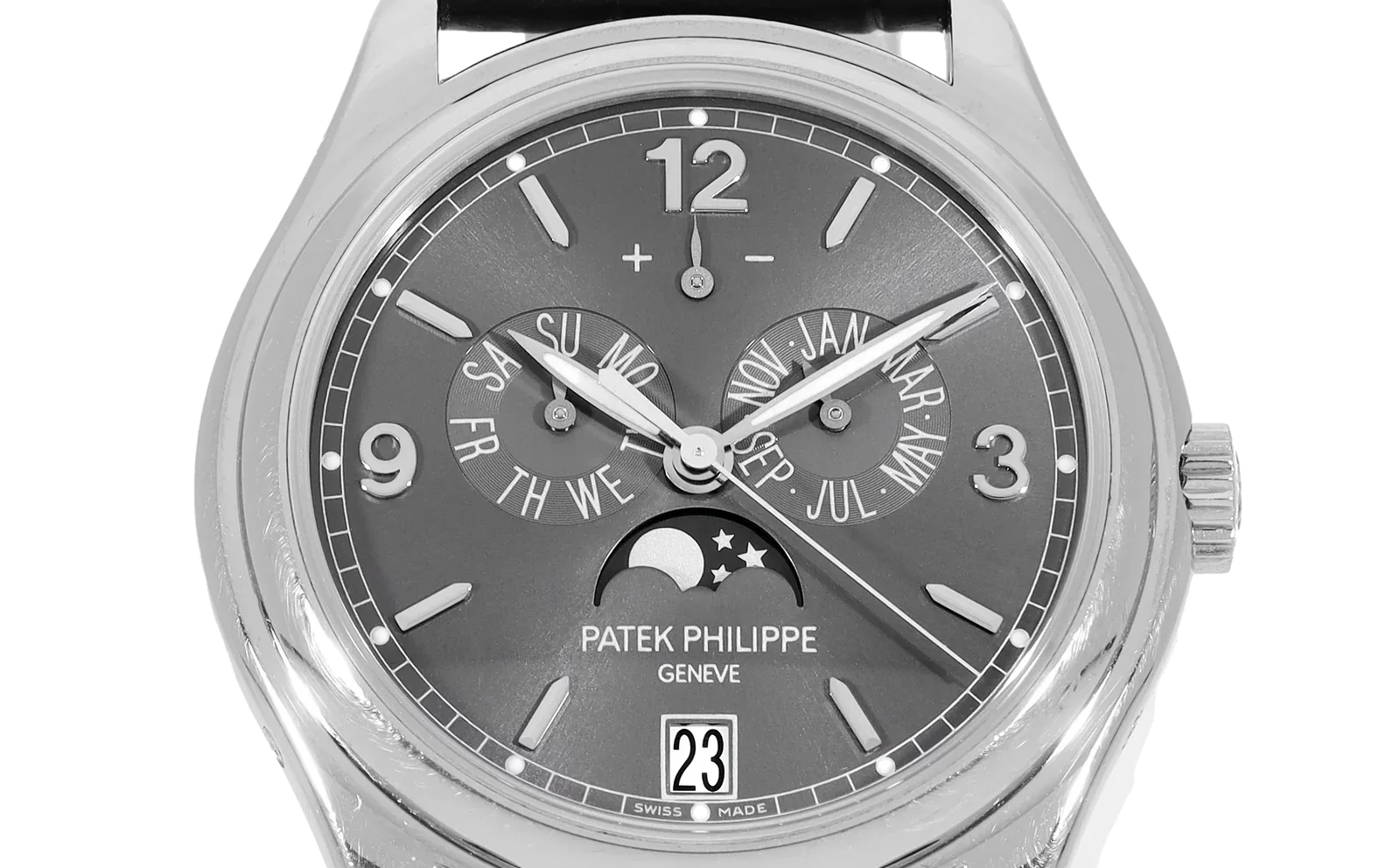
At Patek Philippe, references 5146 and 4947 embody this tradition with almost academic rigour. Full calendar, moon phases and power reserve, all presented with exemplary legibility.
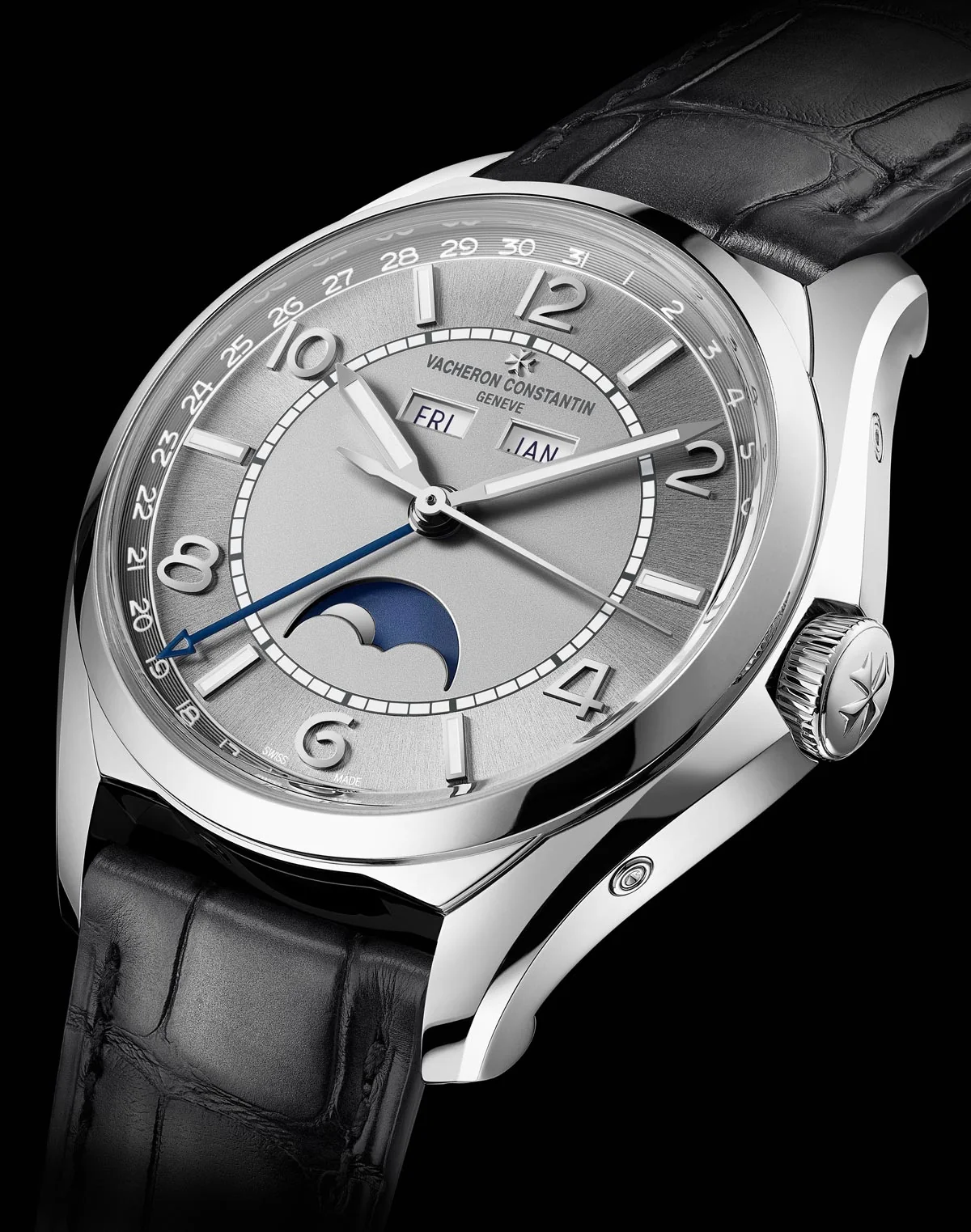
Vacheron Constantin, with the Fiftysix Complete Calendar—particularly reference 4000E/000A-B439—offers a more contemporary, almost relaxed interpretation without compromising on mechanical sophistication.
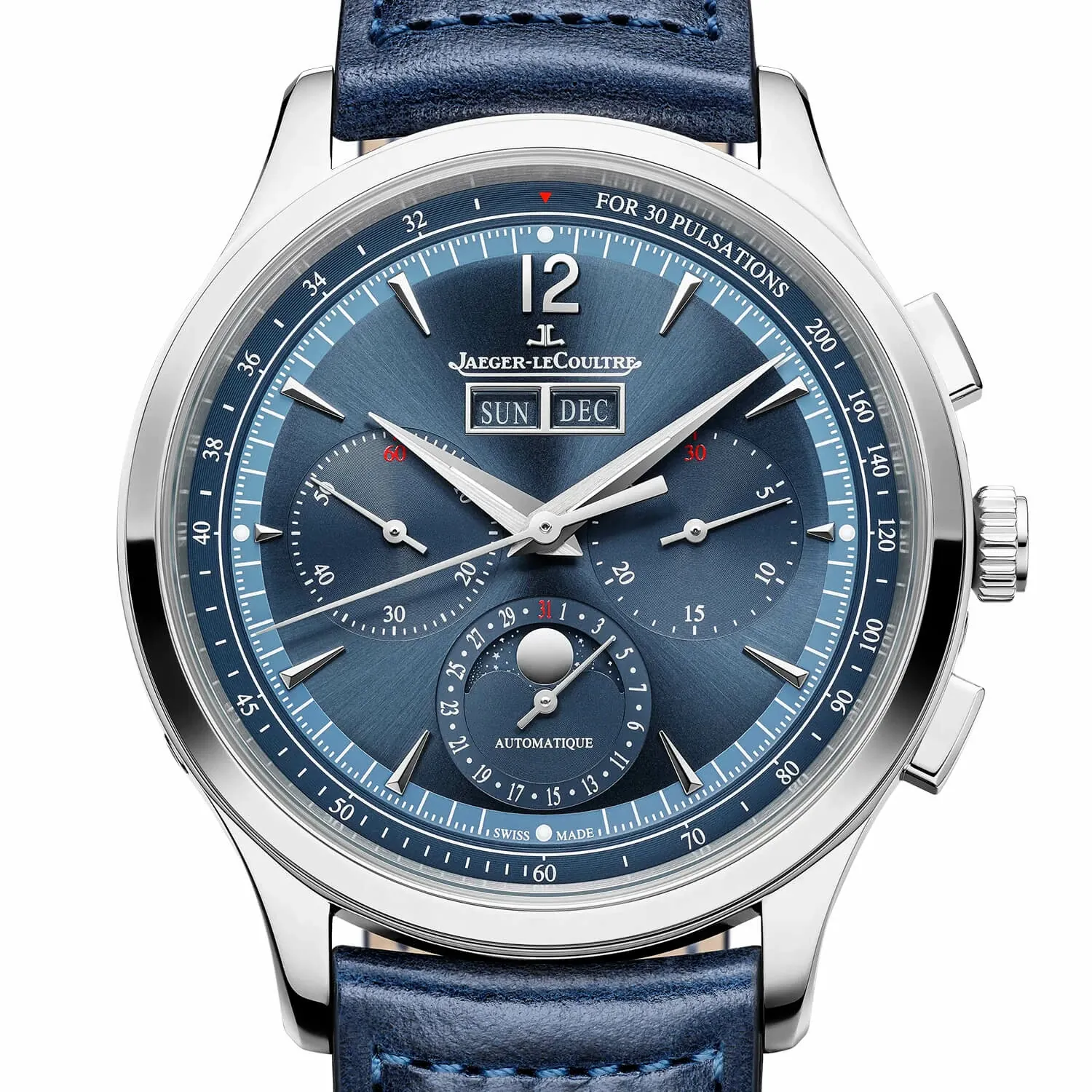
At Jaeger-LeCoultre, the Master Control Calendar remains an essential reference, particularly in its recent versions, which feature an improved date-jump mechanism and consistently impeccable finishing.
Then there are more accessible offerings, such as those from Frédérique Constant, which has democratised the manufacture full calendar with an approach that is remarkably serious for the price.
A profoundly human complication
The full calendar is not perfect. It forgets February, stumbles over shorter months and demands your attention. Yet that is precisely what makes it so endearing.
It reminds us that a mechanical watch is not a miniature computer. It is a machine designed with simple rules to interpret a complex world.
And in that gap between mechanical precision and calendar reality lies the very essence of watchmaking.
So yes, you will have to set it five times a year. But you will do so with a certain pleasure.