How a Vertical-Clutch Chronograph Works
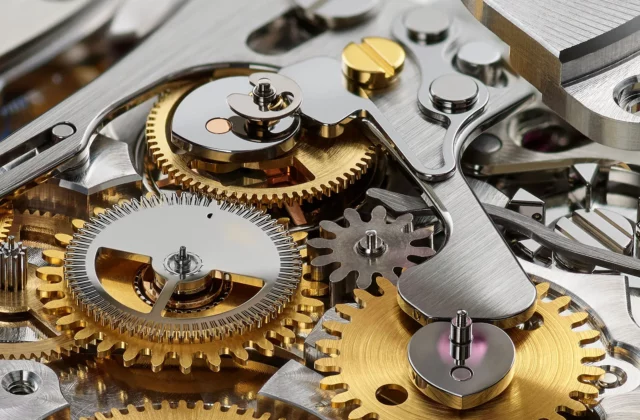
A discreet mechanism
In the world of chronographs, the “vertical clutch” represents a decisive innovation for the precision and user comfort of a modern chronograph, even though it remains largely invisible and rarely highlighted in display windows.
Understanding how a vertical clutch chronograph works means stepping into the inner workings of the movement, where the decisive moment unfolds: the instant you press the pusher to start measuring time.
The problem with traditional chronographs
Before discussing the vertical clutch, it’s worth revisiting the most historically widespread solution: the horizontal clutch.
In a classic chronograph with a horizontal clutch, activating the chronograph engages an intermediate wheel that meshes laterally with the chronograph gear train. In practical terms, one wheel shifts sideways to “bite” into another.
It’s mechanical. Visual. Almost theatrical when the caseback is transparent.
But this architecture comes with two well-known drawbacks:
– a jump of the seconds hand at start-up, caused by the abrupt engagement of the teeth
– progressive wear due to repeated friction between components
This small jump, often imperceptible to the untrained eye, is immediately noticed by a seasoned enthusiast. And it reveals a start that is less “clean” than it could be.
The principle of the vertical clutch
The vertical clutch chronograph takes a completely different approach. Here, there are no wheels engaging from the side. The system is based on a simple, almost self-evident idea: stacking rather than placing side by side.
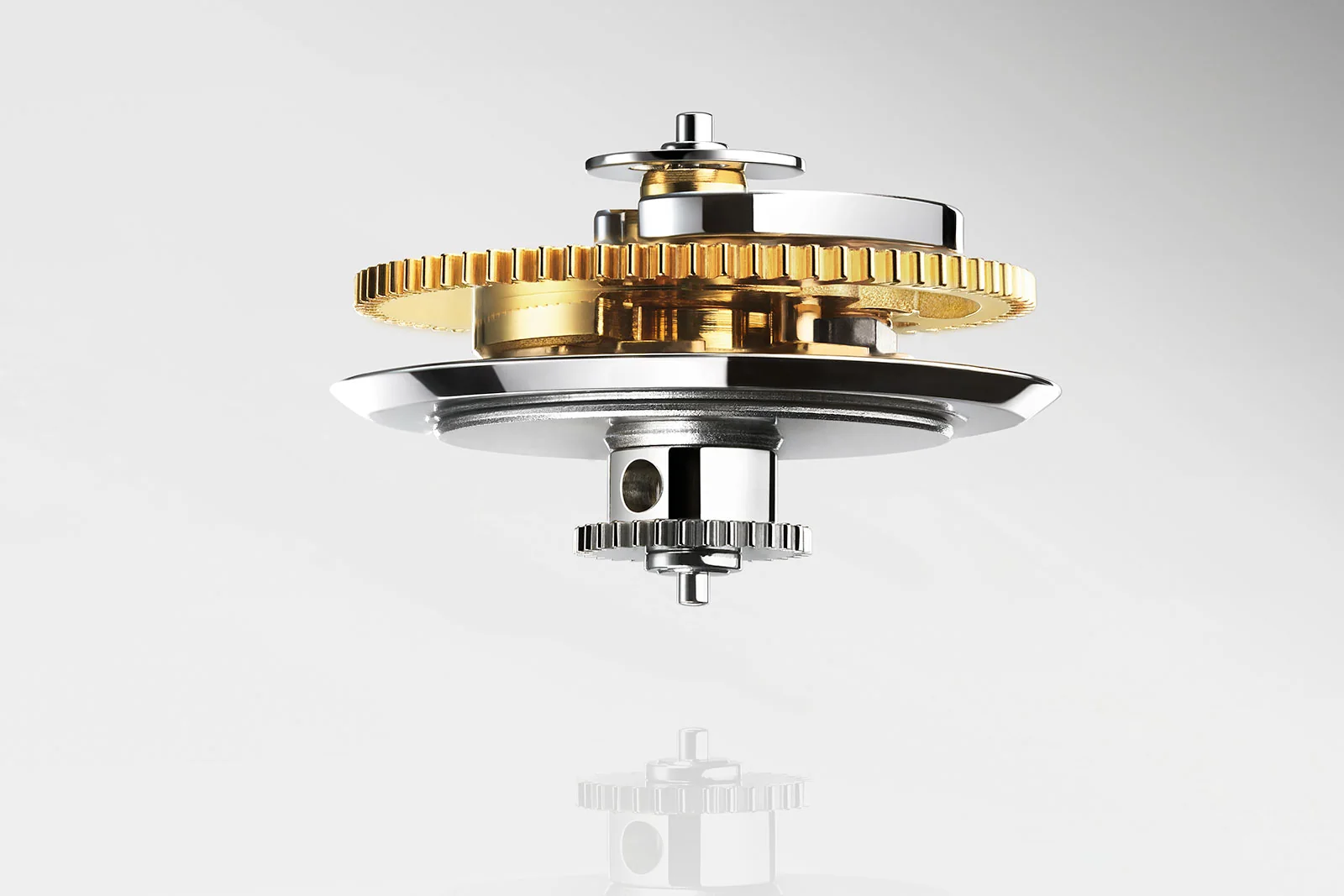
The vertical clutch stacks two coaxial discs, one connected to the going train, the other to the chronograph mechanism. When the chronograph is activated, these two discs are pressed against each other. Transmission then occurs via friction, progressively and in perfect alignment.
No shock. No teeth catching. No jump.
The clearest analogy is that of two plates pressed together to rotate as one, rather than two toothed wheels that must align abruptly.
A smooth start
The first advantage is immediately noticeable: the central chronograph seconds hand starts without any jerk. It glides, almost as if it had always been in motion.
It’s a small detail, but in watchmaking, details make the difference between a good movement and a remarkable one.
Reduced wear
The second benefit, more discreet but just as crucial, is wear.
In a horizontal clutch, the teeth come into contact repeatedly, even if tolerances are extremely fine. Over time, this can affect both precision and longevity.
With a vertical clutch, contact is continuous and controlled. The system behaves more like a modern automotive clutch than a traditional gear train. The result: improved durability and more stable energy transmission.
Can you leave the chronograph running continuously?
This is a question that comes up often, and it takes on particular relevance with the vertical clutch.
On a chronograph with a horizontal clutch, leaving the chronograph running continuously is not recommended. It places unnecessary strain on the gear train and increases wear.
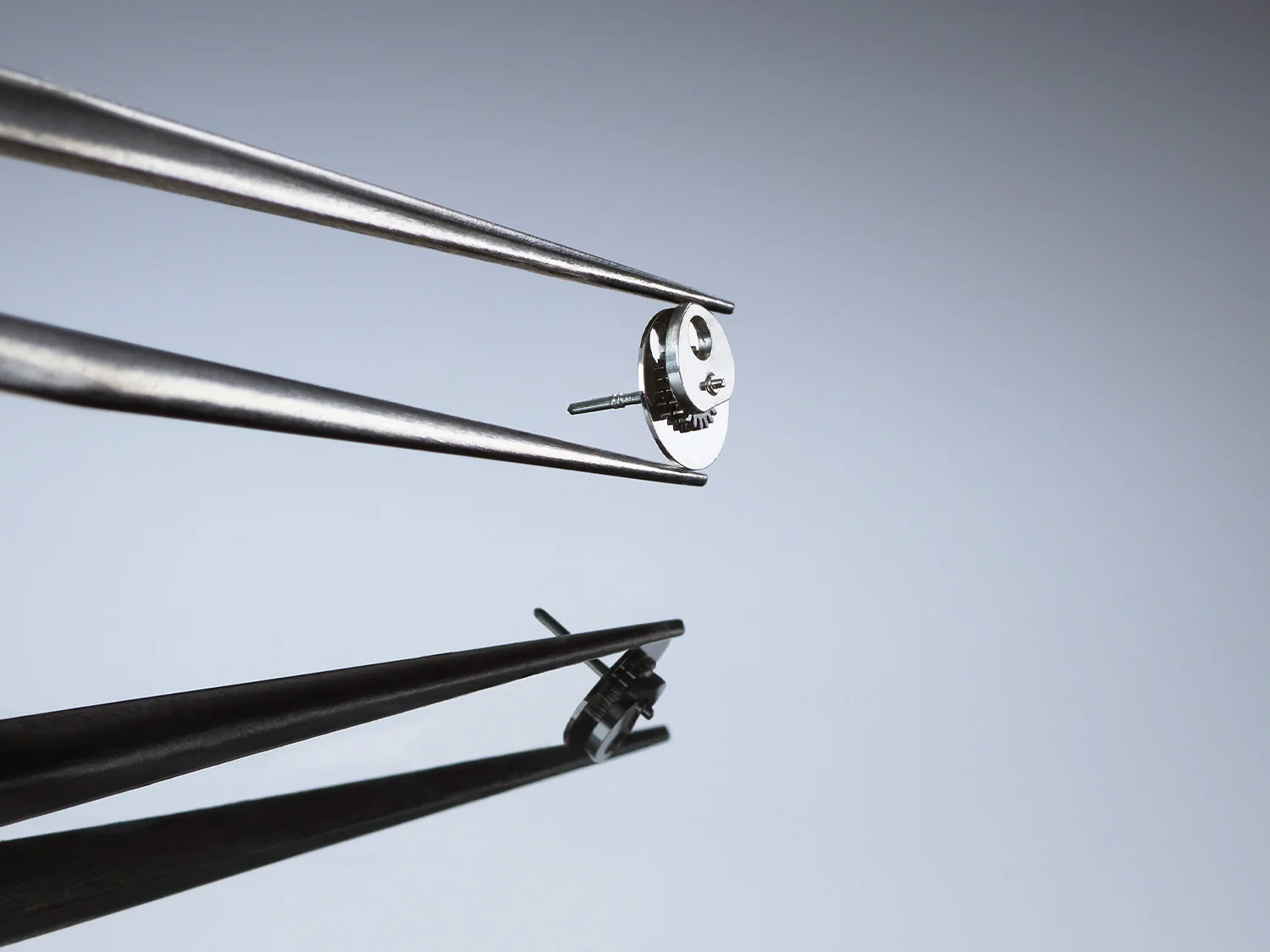
With a vertical clutch, the situation is different. Because the system is designed to operate under constant friction, it handles prolonged use far better. In some calibres, leaving the chronograph engaged continuously has no significant impact on frequency or power reserve.
This is, in fact, an implicit selling point for some manufacturers: turning the chronograph into a permanent central seconds hand, more legible and more useful in everyday use.
Vertical clutch and column wheel: the modern duo
The vertical clutch is often paired with another emblematic component: the column wheel.
The latter controls the chronograph’s functions—start, stop, reset—with a tactile and mechanical precision superior to cam systems. When the two are combined, the result is a chronograph that is both smooth to operate and technically sophisticated.
It’s not an absolute rule, but many contemporary high-end chronographs adopt this hybrid architecture.
Who uses the vertical clutch?
Contrary to what one might think, the vertical clutch is not reserved for a handful of niche manufactures. It is now widely used, particularly in the mid-range and high-end segments.
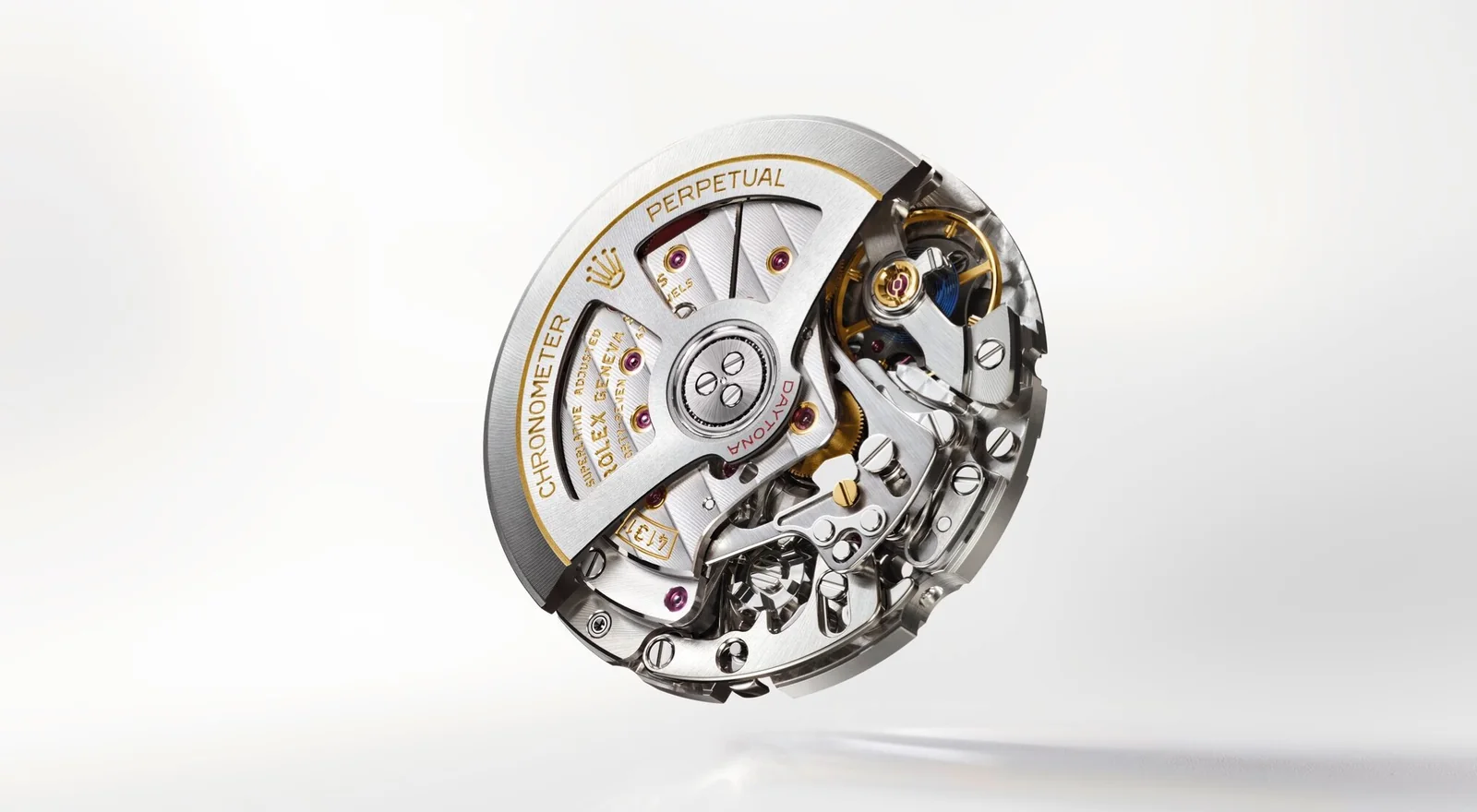
Rolex, for example, chose a vertical clutch for its calibre 4130 powering the Cosmograph Daytona—a decision aligned with the brand’s philosophy of robustness and reliability.
Zenith, through certain evolutions of the El Primero, has also integrated this solution while preserving its signature high-frequency performance.
Seiko, often underestimated in Europe, has mastered this technology in calibres such as the 8R28, combining a vertical clutch with a column wheel with formidable industrial precision.
Other houses such as Omega, with the calibres 9300 and later 9900, also employ this architecture, often paired with a Co-Axial escapement.
Are there any drawbacks?
No solution is perfect, and the vertical clutch is no exception.
The main criticism concerns its lack of spectacle. Where a horizontal clutch offers a fascinating ballet of meshing wheels visible through a sapphire caseback, the vertical clutch is… almost invisible.
Everything happens internally, without any visual drama. For enthusiasts who appreciate visible mechanics, this can feel somewhat frustrating.
Another point is manufacturing complexity. Achieving perfectly calibrated friction between the discs requires extreme precision. Too much pressure, and the system wears prematurely. Too little, and the transmission slips.
Finally, some purists regret a certain “sanitisation” of the action. The engagement of a horizontal clutch chronograph, with its slight resistance and mechanical feedback, has a charm that the smoother vertical clutch tends to soften.
An evolution rather than a revolution
The vertical clutch chronograph does not replace traditional architectures. It complements, modernises, and in some cases refines them.
It is a technical response to concrete challenges: start-up precision, durability, and user comfort—not an engineer’s whim.
Above all, it perfectly illustrates what contemporary watchmaking is about: a balance between heritage and innovation, where progress is not always immediately visible, but is felt in everyday use.
The next time you start a chronograph and the hand sets off without the slightest hesitation, you’ll know what’s happening, quietly, beneath the dial.