How a Quartz Watch Works
Impossible to take an interest in the history of watchmaking and watches without highlighting the role of quartz.
To the uninitiated, the idea of using a mineral to drive hands around a dial can seem incomprehensible. Montres-passion.fr offers you a quick refresher.
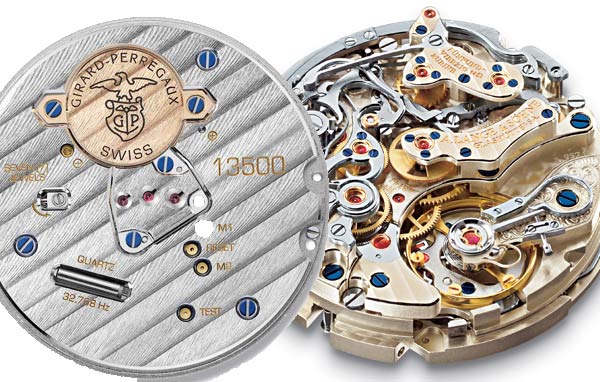
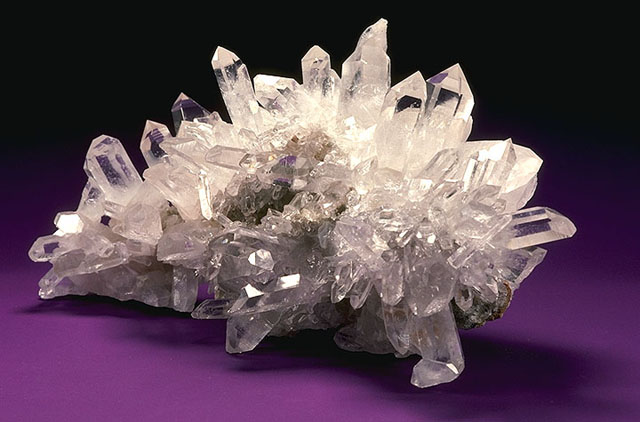
A quartz watch uses a quartz oscillator. Quartz has the advantage of oscillating at a stable frequency when stimulated by a battery.
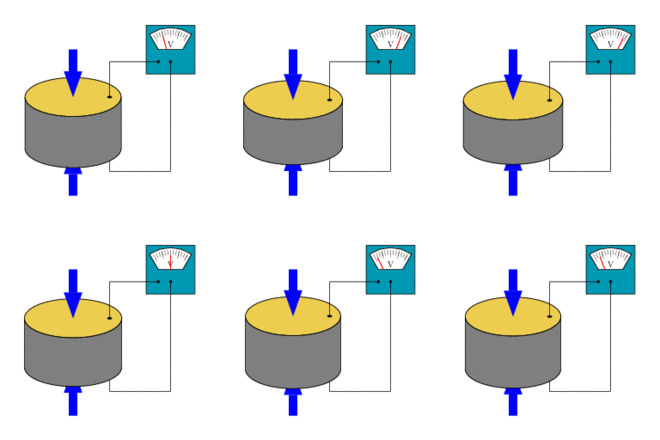
We owe the discovery of the piezoelectric effect in 1880 to brothers Pierre and Jacques Curie. Piezoelectricity is a material’s ability to become polarized under mechanical stress and to deform under the action of an electrical charge. Since quartz possesses this property, it became the ideal material for watchmakers in search of more precise oscillations.
Quartz’s properties were therefore applied to watchmaking by coupling the vibrations generated on the surface of the quartz (thanks to the battery) to a synchronous motor to create the movement of the watch hands.
Your watch contains only a thin sliver of quartz, yet it vibrates more than 32,000 times per second. Quartz’s great regularity allows watches to lose, on average, one second over 6 years.
The quartz watch in a few key dates:
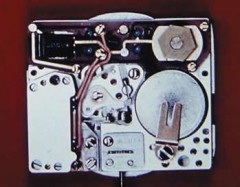
In 1967, the first quartz wristwatch appears: the Beta 21 model.
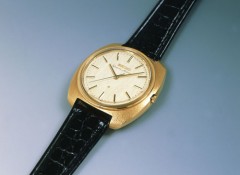
In 1969, the first quartz watch is commercialized: the Seiko 35SQ.
In 1975, Suncrux creates the first quartz wristwatch with an analog display using liquid crystals.
In 1981, the first quartz watch without an electric battery appears. It used a thermoelectric generator.
1996, launch of the first quartz watch without an electric battery equipped with an electrodynamic converter.
Also read the article presenting the differences between mechanical watches and quartz watches.