History of the Rolex Brand
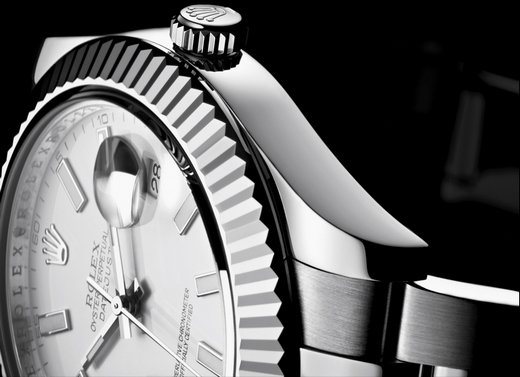
The famous Rolex brand was founded in 1908 by Hans Wilsdorf. Today, this Swiss company is the most emblematic figure in luxury, high-precision watchmaking.
Rolex is the result of a collaboration between H. Wilsdorf and his brother-in-law, Alfred Davis. They both moved to London in 1905 and founded Wilsdorf&Davis, a company producing pocket watches in Switzerland. A pioneer, Wilsdorf constantly sought to improve the quality of his products by producing luxury watches, and he went against the fashion of the time by pursuing miniaturisation. He then found a parts supplier that met his exacting standards: Aegler.
In 1906, Wilsdorf&Davis filed a patent for the expandable bracelet fitted to most of their watches. Two years later, the Rolex brand was born and would gradually replace Wilsdorf&Davis.
Rolex, a name that has sparked much debate. Officially, it was chosen because it is easy to pronounce in all languages and short enough to fit neatly on a watch dial. Other sources argue that Rolex is a contraction of “Horlogerie Exquise”, “Horlogerie Extrême” or “Horlogerie d’Excellence”. Be that as it may, all of these terms apply to the brand.
In 1910, Rolex had its movements certified by the Swiss Society of Chronometry, an undeniable mark of quality. Four years later, an English institute also certified Rolex. In 1924, the company moved to Geneva, as taxes had become too high in the United Kingdom.
With accuracy no longer an issue, Rolex then tackled a thorny problem that would make its name: waterproofness.
The year 1926 marked a decisive milestone with the creation of the Oyster model. The name Oyster quite simply refers to the first waterproof watch in the world.
To promote the Oyster and prove its effectiveness, jewellers’ display windows were fitted with aquariums in which watches were immersed. Further on, in 1927, British swimmer Mercedes Gleitze crossed the English Channel with an Oyster on her wrist.
The brand then rode the wave of this feat, becoming the first advertiser in the sector to publish an advertisement on the front page of the Daily Mail, no less.
The Rolex Prince watch was launched in 1928. Its double dial would bring it commercial success.
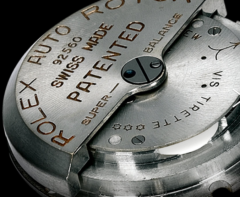
In 1931, Rolex distinguished itself once again by creating the Rotor. This new innovation enabled Rolex to create the first self-winding mechanism. The Rotor is a semi-circular piece of metal driven by wrist movements, allowing the watch to wind itself automatically.
This ingenious system set the standard and is still used today in the manufacture of modern automatic watches.
In 1945, the Oyster became the first watch to display the date (i.e. the day of the month). This version of the Oyster was named the Oyster Perpetual Datejust.
In 1953, the Oyster Perpetual Submariner could boast water resistance to a depth of 100 m.
Two years later, the Oyster Perpetual GMT Master made it possible to read the time in two different time zones.
In 1956, the date and day of the week were displayed in full on the Oyster Perpetual Day Date.
In 1959, Rolex sponsored the 24 Hours of Daytona, a motor race held at Daytona Beach. Rolex entered the world of sports sponsorship.
A new record in 1960: Professor Jacques Piccard reached a depth of 10,910 metres in the Mariana Trench with a Rolex Deep Special attached to his submersible.
Organisation
Rolex is headquartered in the canton of Geneva, Switzerland. Its legal form is a public limited company. Its capital of 3 million Swiss francs is held by the Wilsdorf Foundation, making Rolex a company that cannot be sold. While the brand runs highly visible marketing operations, it cultivates secrecy around its figures, its margins and even its turnover.
The 1,400-employee plant in Biel is complemented by three other factories: Le Locle, Chêne-Bourg and Plan-les-Ouates.
Rolex models and collections
The Oyster comes in two collections:
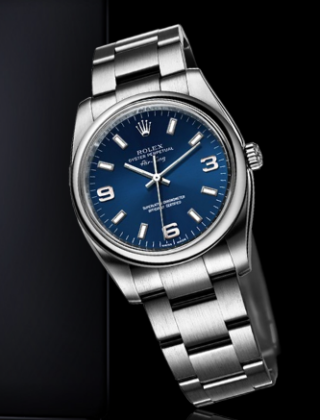
- Oyster perpetual with the models Air-King, Perpetual, Date, Datejust, Datejust Turn-o-Graph and Day-Date
- Oyster professional with the models Explorer, Explorer II, GMT-Master II, Submariner, Sea-Dweller 4000, Yachtmaster, Yachtmaster 2Milgauss and Daytona.
Also worth noting is the Cellini line with the models Prince, Cellinium, Quartz, Cellissima, Classic, Danaos, Cestello and Orchid and, finally, the Tudor brand, which offers lower-range products with a few identical pieces.
Rolex and sports sponsorship
Rolex has many ambassadors, as the first brand to have launched sports sponsorship: explorers (Edmund Hillary, for example), elite athletes (Jean-Claude Killy, Roger Federer, Tiger Woods) and artists such as Eric Clapton or Plácido Domingo.
Rolex sponsors many events including the 24 Hours of Le Mans, the Wimbledon tennis tournament, the Verbier classical music festival, the World Equestrian Festival CHIO, the US Open golf championship, the Masters, the Evian Masters, the Ryder Cup and sailing regattas.
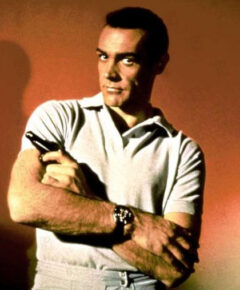
The world of cinema is not to be outdone, with the Submariner first worn on screen by James Bond, the most famous of spies, with Sean Connery in James Bond 007: Dr. No.
The Rolex website: www.rolex.com