Hanhart 417 TI Desert Pilot: The Pilot’s Chronograph Goes Titanium

In the world of pilot’s chronographs, some watches make it through the decades without ever losing their purpose. The Hanhart 417 is one of those instruments born for function. From the outset, this chronograph was designed for aerial navigation: instant legibility, straightforward operation, and a build capable of withstanding genuinely demanding conditions.
With the 417 TI Desert Pilot, the German manufacture revisits this historic model by introducing, for the first time in the 417 line, a Grade 5 titanium case. The material lends a more contemporary dimension to this military-inspired chronograph while reinforcing its utilitarian character.
The watch is offered in two sizes: 39 mm and 42 mm, each limited to 200 pieces. Pricing remains well judged in today’s watch landscape: €2,990 for the 42 mm version, with a column-wheel flyback chronograph and a titanium case.
Hanhart: a German manufacture deeply tied to chronograph history
To understand this watch, you first have to understand Hanhart.
The German company was founded in 1882 and quickly established itself as a specialist in chronographs and time-measuring instruments. Stopwatches for industry, military chronographs, aviation instruments: the brand operates in a world where precision and robustness are not marketing claims, but functional requirements.
In the 1930s and 1940s, Hanhart became one of the key suppliers of pilot’s chronographs to the German armed forces. The models developed during this period laid the foundations of an instantly recognisable aesthetic language: fluted bezels, sturdy pushers, exceptionally legible dials, and an unapologetically utilitarian construction.
In the early 1950s, one of the brand’s most emblematic models appeared: the Hanhart 417 ES, a pilot’s chronograph designed for military use.
Robust, legible, reliable, the 417 ticks every box of a true aerial navigation instrument. It quickly became one of the most characteristic pilot’s chronographs of its era and is now a highly sought-after piece on the vintage market.
The new 417 TI Desert Pilot fits directly into this lineage.
A true tool watch: what the term really means
In contemporary watchmaking, the term tool watch is often used a little too loosely. Many watches claim that heritage despite never having been designed as instruments.
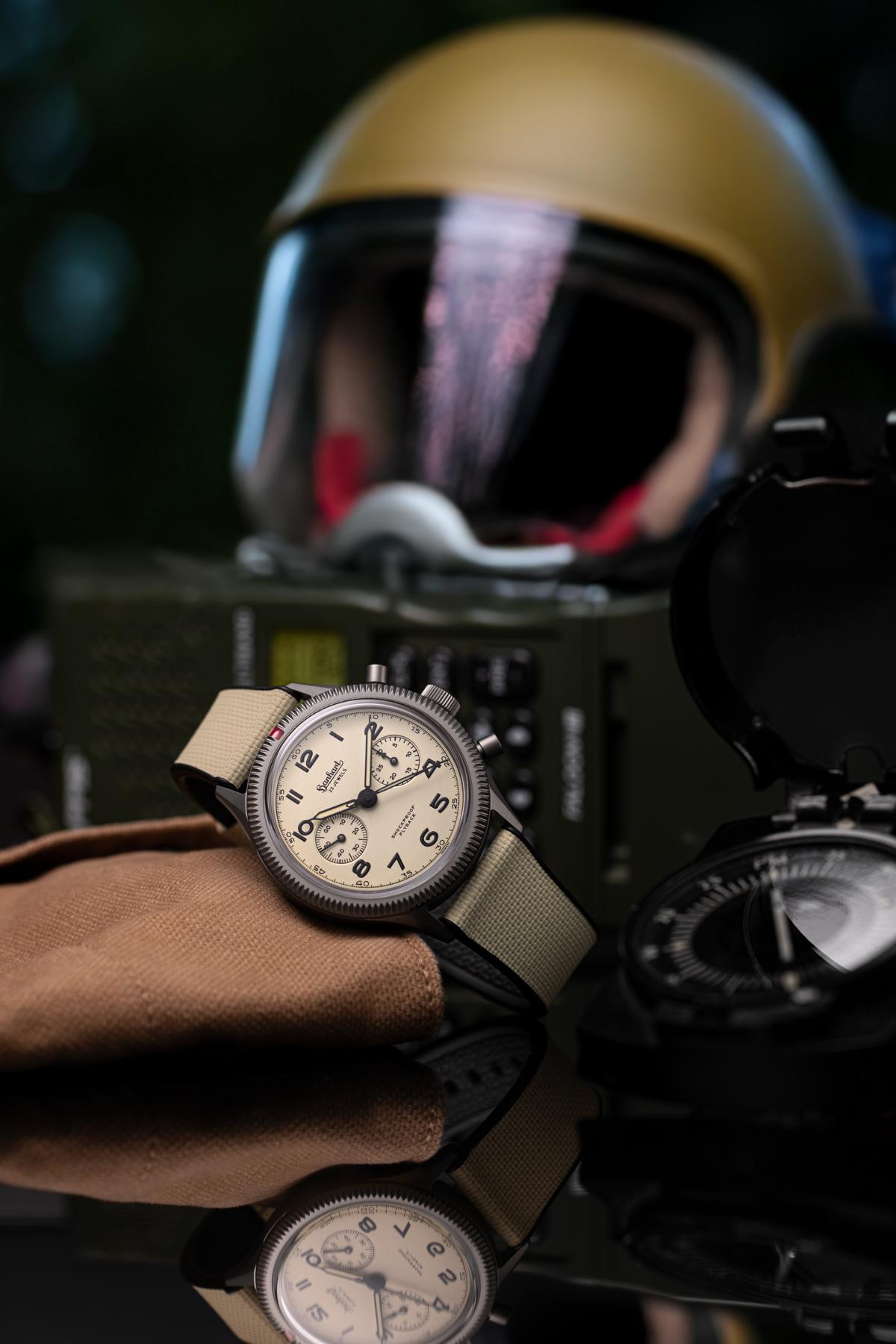
The Hanhart 417, however, leaves little doubt as to its purpose. From the drawing board, this chronograph was conceived for practical use: timing intervals in a cockpit, operating the pushers without hesitation, reading the time in a fraction of a second.
A genuine tool watch rests on a few simple principles: immediate legibility, intuitive ergonomics, reliable mechanics, and a construction robust enough to accompany real activity. The goal is not to add gratuitous sophistication, but to create an effective instrument.
With the 417 TI Desert Pilot, that logic remains intact. The design prioritises function, operation stays direct, and the watch retains the utilitarian character that already defined mid-20th-century pilot’s chronographs.
417 TI Desert Pilot: the technical evolution of a military chronograph
Visually, the new 417 remains very faithful to the historic silhouette.
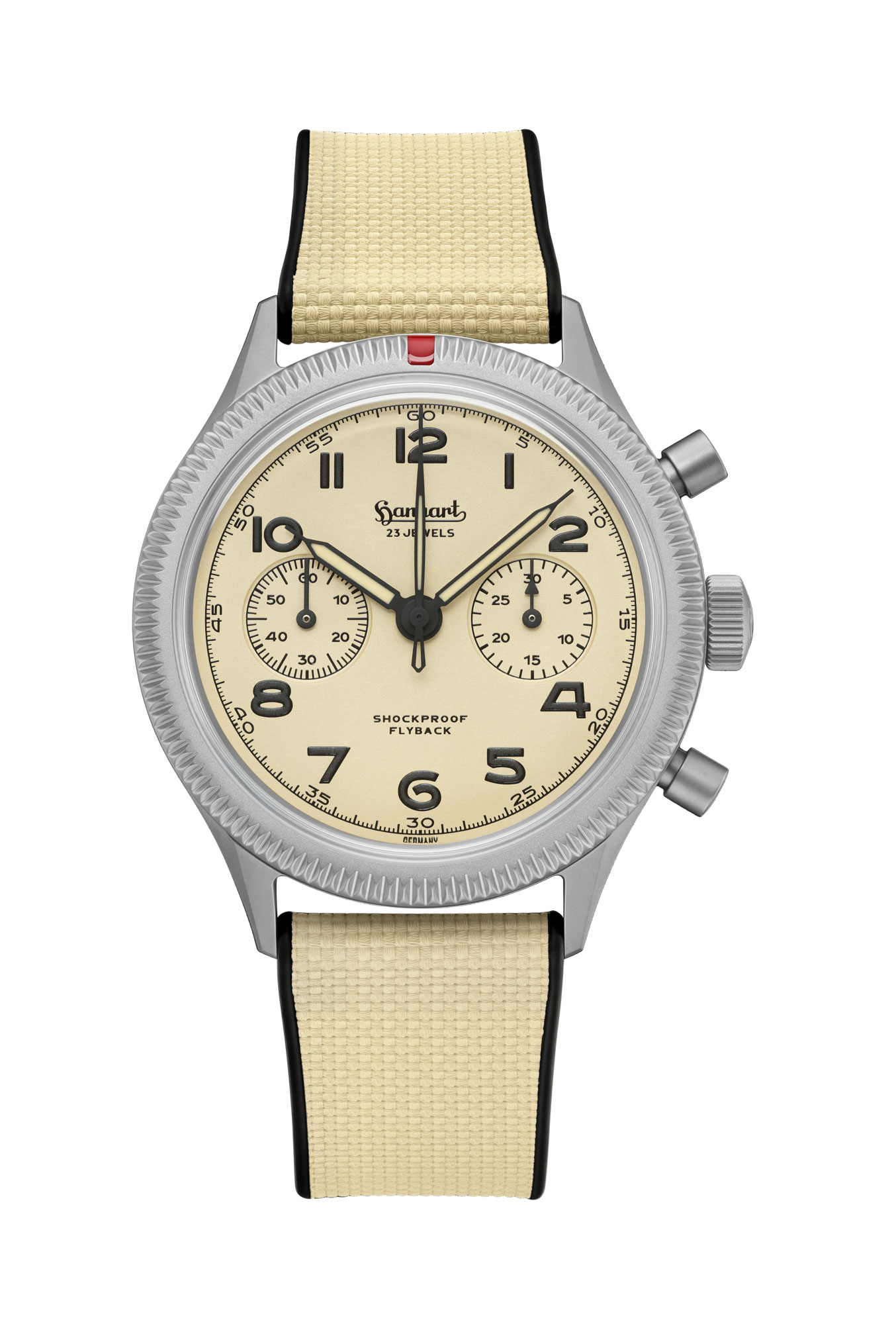
The bidirectional fluted bezel is still there, with its red marker, an emblematic Hanhart detail. The dial retains an extremely legible layout, true to the military chronographs of the period.
The real evolution comes from the material used for the case: Grade 5 titanium.
This choice is particularly coherent for a tool watch. Titanium is significantly lighter than steel while maintaining excellent mechanical strength. It also resists corrosion very well and brings appreciable comfort on the wrist.
On the 417 TI Desert Pilot, the case features a matte, sandblasted finish that heightens its technical, instrument-like look. Thickness is kept to 13.6 mm, while the strongly domed sapphire crystal recalls the profile of historic chronographs while offering modern scratch resistance.
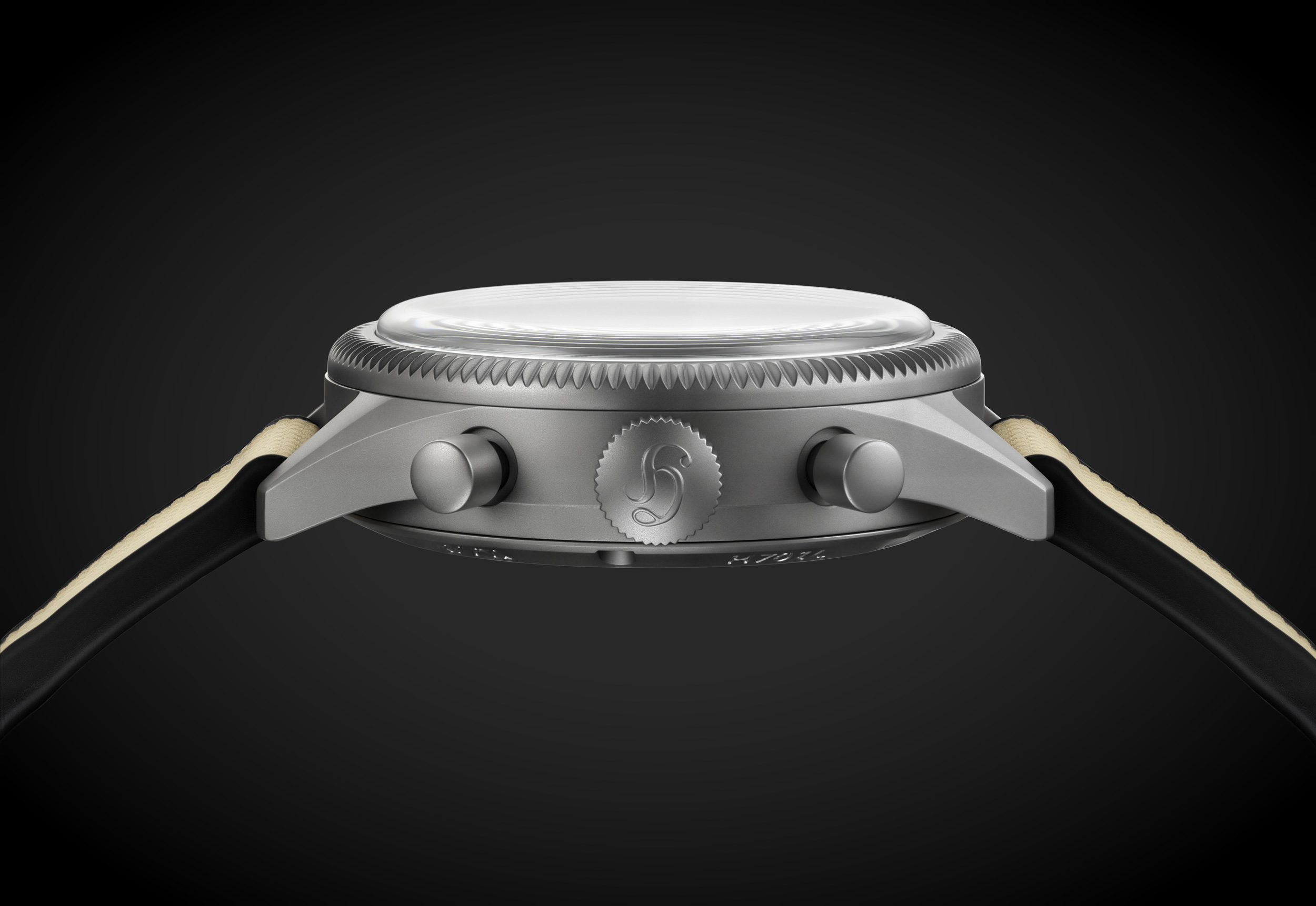
The watch also retains 10 ATM water resistance, perfectly suited to active everyday wear.
A desert-inspired dial
The Desert Pilot version introduces a slightly different aesthetic from the classic model.
The dial adopts a sandy hue, inspired by the desert environments the watch pays tribute to. The contrast with the black markers ensures the time can still be read very quickly.
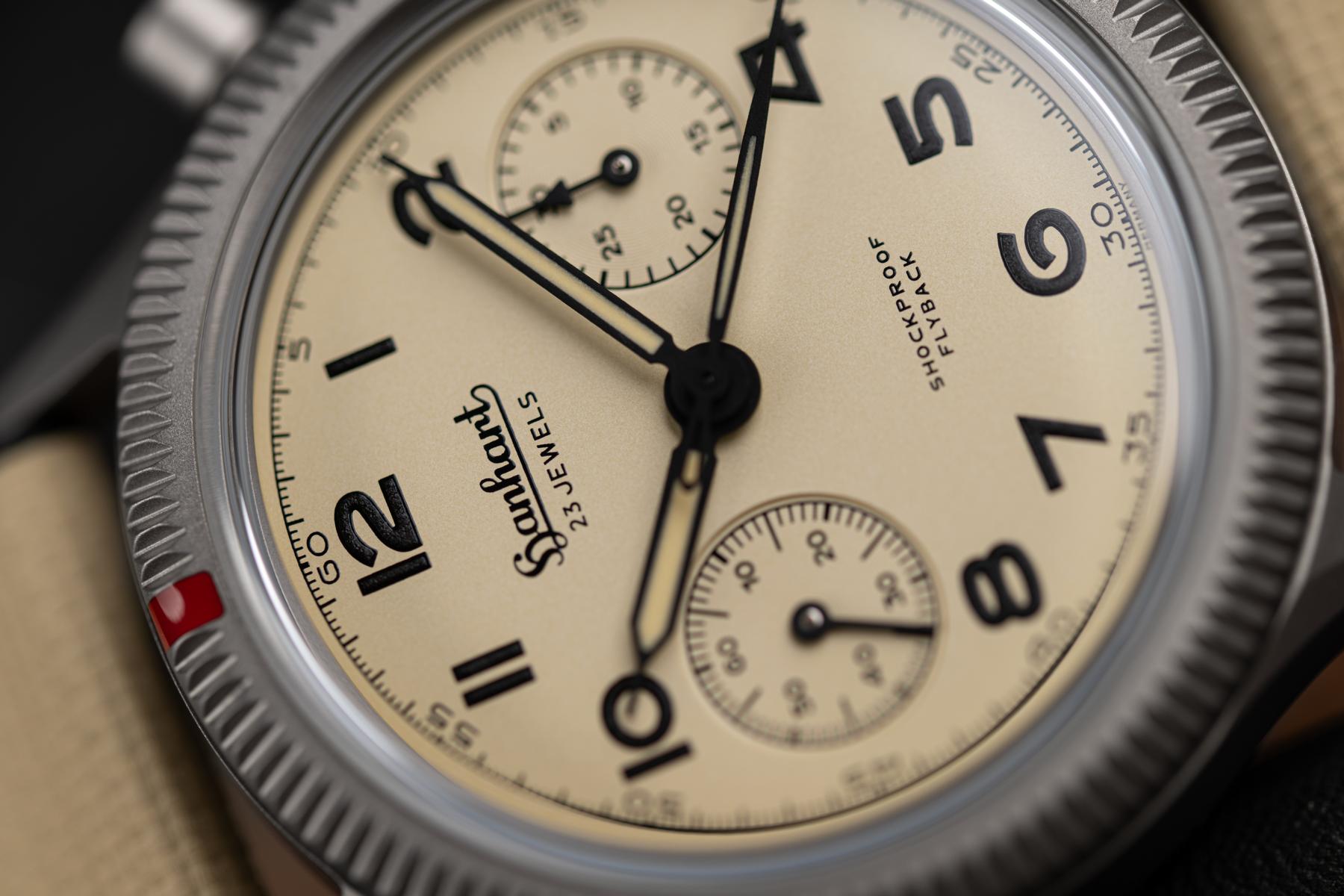
The hands and indices are coated with Super-Luminova, even if the sandy tone deliberately limits luminous intensity. This choice echoes certain historic military dials, where daytime legibility remained the priority.
The watch is fitted with a textured rubber strap, available in sand or black, with a titanium pin buckle.

A column-wheel flyback chronograph
At the heart of the 417 TI Desert Pilot is a movement that stands out at this price point.
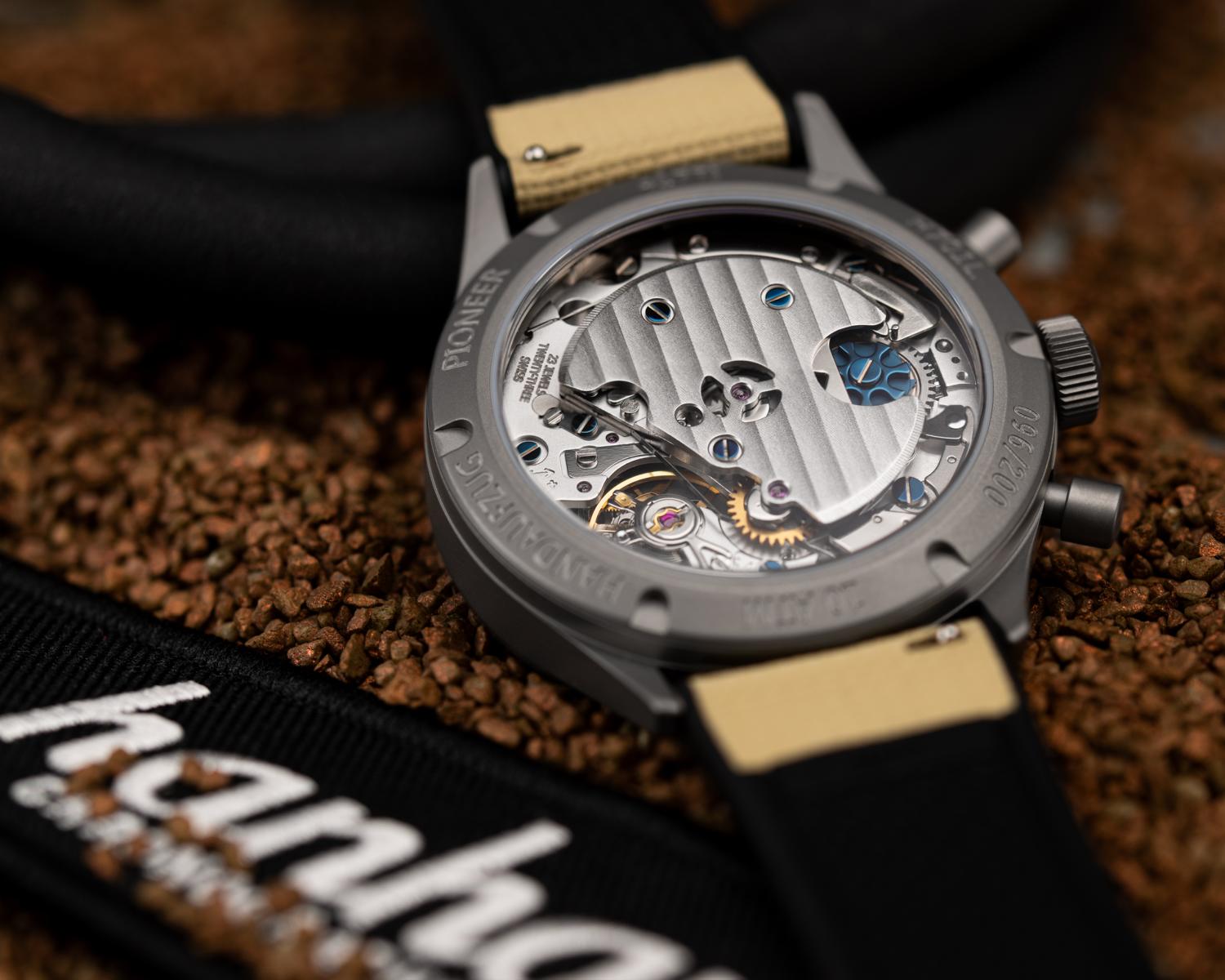
The watch is powered by the AMT 5100 calibre, based on the Sellita AMT5100 M. It is a manual-winding chronograph movement with a column wheel, an architecture traditionally considered more refined and more precise than the cam systems used in many modern chronographs.
But the most interesting element remains the presence of a flyback function.
What is a flyback chronograph?
On a classic chronograph, to start timing again you have to stop the chronograph, reset the hands to zero, then start the chronograph once more.
The flyback function simplifies everything. A single press of the lower pusher resets the hand to zero and immediately starts a new timing run.
This complication was developed for military pilots, who needed to chain several successive navigation calculations without losing time.
Mechanically, flyback is more complex than a standard chronograph, which makes its presence particularly compelling at this price level.

Solid performance
The movement beats at 28,800 vibrations per hour and offers a 58-hour power reserve.
Hanhart also states accuracy between 0 and +8 seconds per day. The brand applies a particular logic: no negative deviation is allowed, to avoid the wearer ending up late.
A very German philosophy.
A watch limited to 200 pieces per size
The 417 TI Desert Pilot is produced as a limited edition of 200 pieces in 39 mm and 200 pieces in 42 mm.
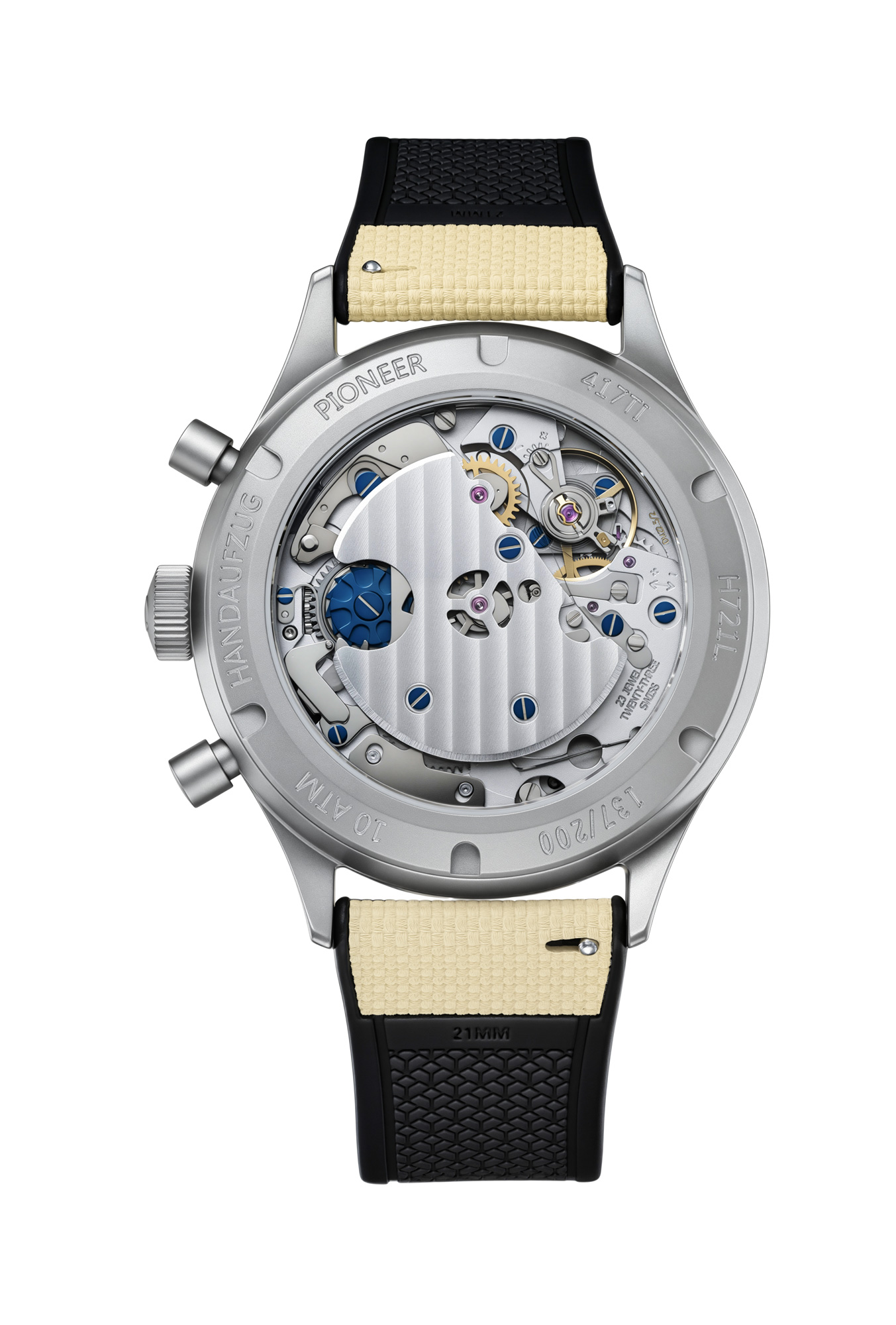
Each watch is numbered on the caseback, visible through a sapphire back that reveals the movement.
A particularly coherent proposition
At €2,990, the 417 TI Desert Pilot is positioned rather intelligently.
The market for mechanical chronographs has become particularly inflationary in recent years. Many models now exceed €6,000 or €7,000, sometimes with comparable specifications.
Hanhart’s proposition therefore remains compelling: a column-wheel flyback chronograph, a Grade 5 titanium case, and a design directly derived from a credible historic model.
The watch doesn’t try to be anything other than what it is: a pilot’s chronograph conceived as an instrument. That said, it remains particularly appealing.