Gold in Watchmaking: A Precious Metal at the Heart of Time

Introduction: a historical and symbolic overview of gold
Gold—this precious metal that has captivated humankind since the dawn of civilisation—has established itself as a symbol of wealth, power and beauty. For 5,000 years, gold has fascinated not only for its radiance but also for its unique properties. In watchmaking, it represents more than a simple material; it embodies a tradition of luxury and precision.
Gold’s physical characteristics
Gold, yellow as the sun, stands out for its exceptional resistance to corrosion, preserving its brilliant colour indefinitely. Its ductility and density give it distinctive malleability and heft, while its lustre after polishing is unmatched. These characteristics make it a material of choice in watchmaking, where durability and aesthetics are paramount.

Gold in watchmaking: more than just a metal
In the art of watchmaking, gold is not used in its pure form but rather as 18-carat alloys, in which it accounts for 75% of the composition. The remaining quarter, made up of other metals, gives the alloy specific properties, notably in terms of colour and strength.
Gold’s nuances: exploring colours
White gold, or grey gold, is an alloy that combines gold with pale metals such as palladium and silver to achieve its characteristic hue. However, to maintain this colour, a rhodium plating is often applied—except notably at Chopard, which favours a palladium-rich alloy.
Yellow gold and its variations
Yellow gold—iconic and traditional—varies in intensity depending on the proportion of copper and silver in the alloy. With shades ranging from 2N gold (official yellow) to 5N gold (pinkish red), each variation brings unique warmth and depth to a watch.
Rose gold: a touch of romance
Rose gold, achieved through a copper-enriched alloy, appeals with its warm, romantic tone. From 4N gold, typical of rose gold, to 5N, sometimes called red gold, these shades offer an elegant, contemporary alternative to traditional yellow gold.
Rolex innovations: Everose gold
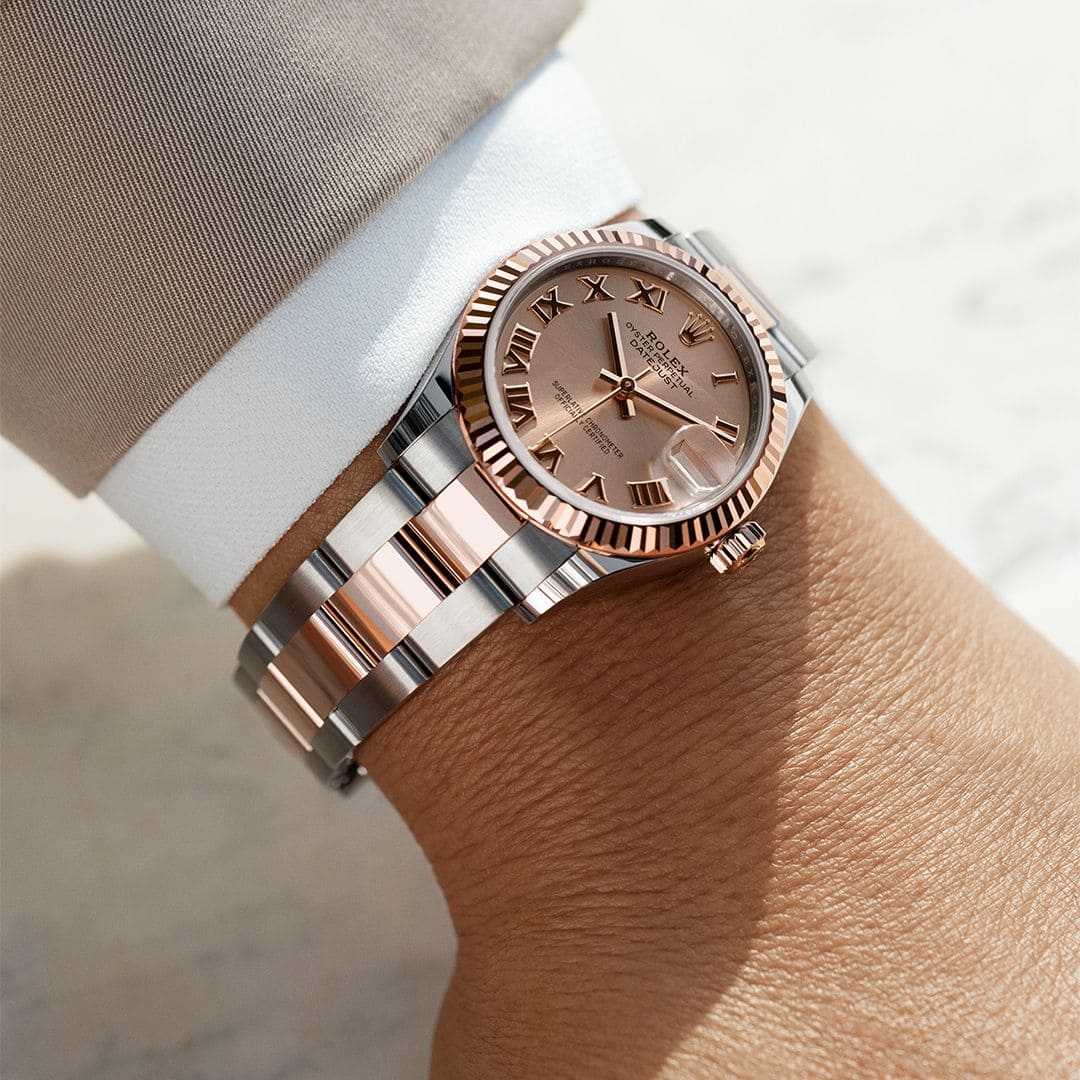
Rolex, in its perpetual pursuit of excellence, developed Everose, a unique alloy incorporating platinum. This innovation ensures exceptional colour stability while enhancing the prestige of its watches. It does not feature on the least expensive Rolex models.
Hublot and Omega: pioneers of innovation
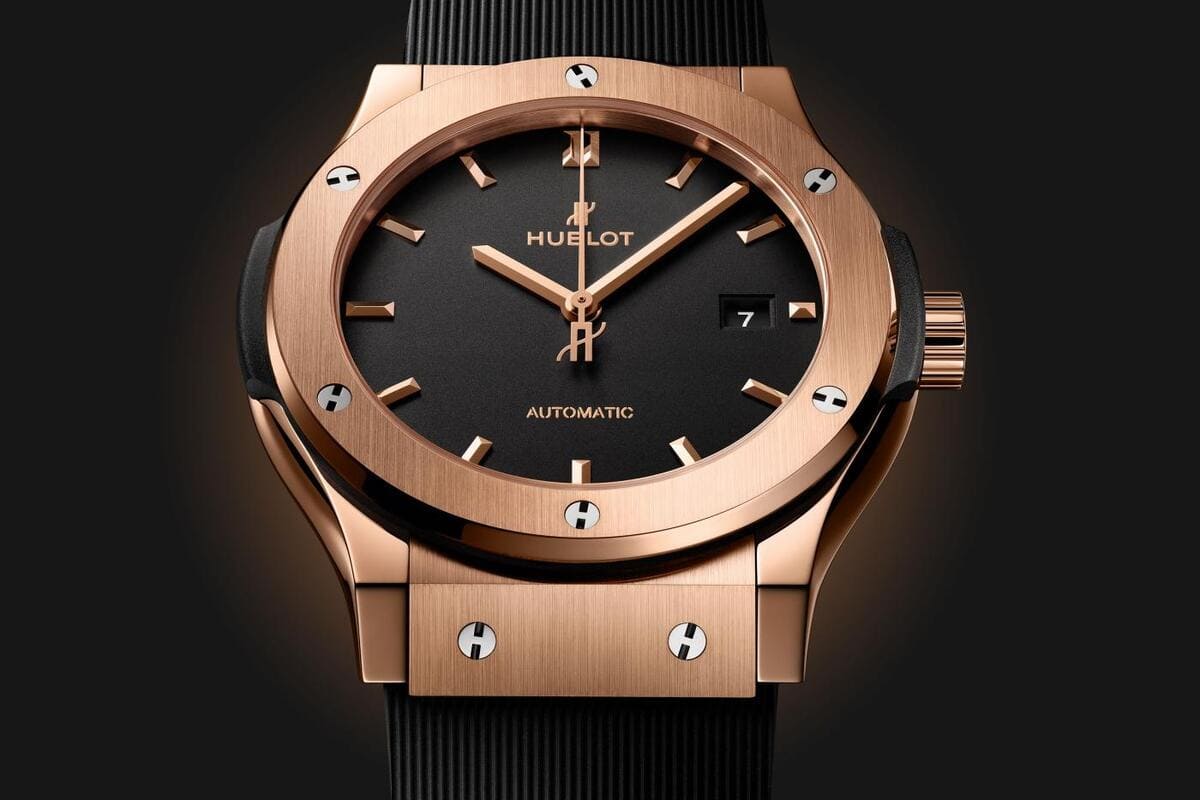
Hublot, with its King Gold, and Omega, with its Sedna Gold, have each explored innovative paths, using platinum and palladium respectively to improve the strength and brilliance of their alloys.

Metallurgy as an art: IWC and its “Hard Gold”
IWC revolutionised the use of gold in watchmaking with its “Hard Gold”. Thanks to advanced techniques, this approach significantly increased gold’s hardness, opening up new possibilities in terms of durability and design.
Unique initiatives: A. Lange & Söhne and Chanel
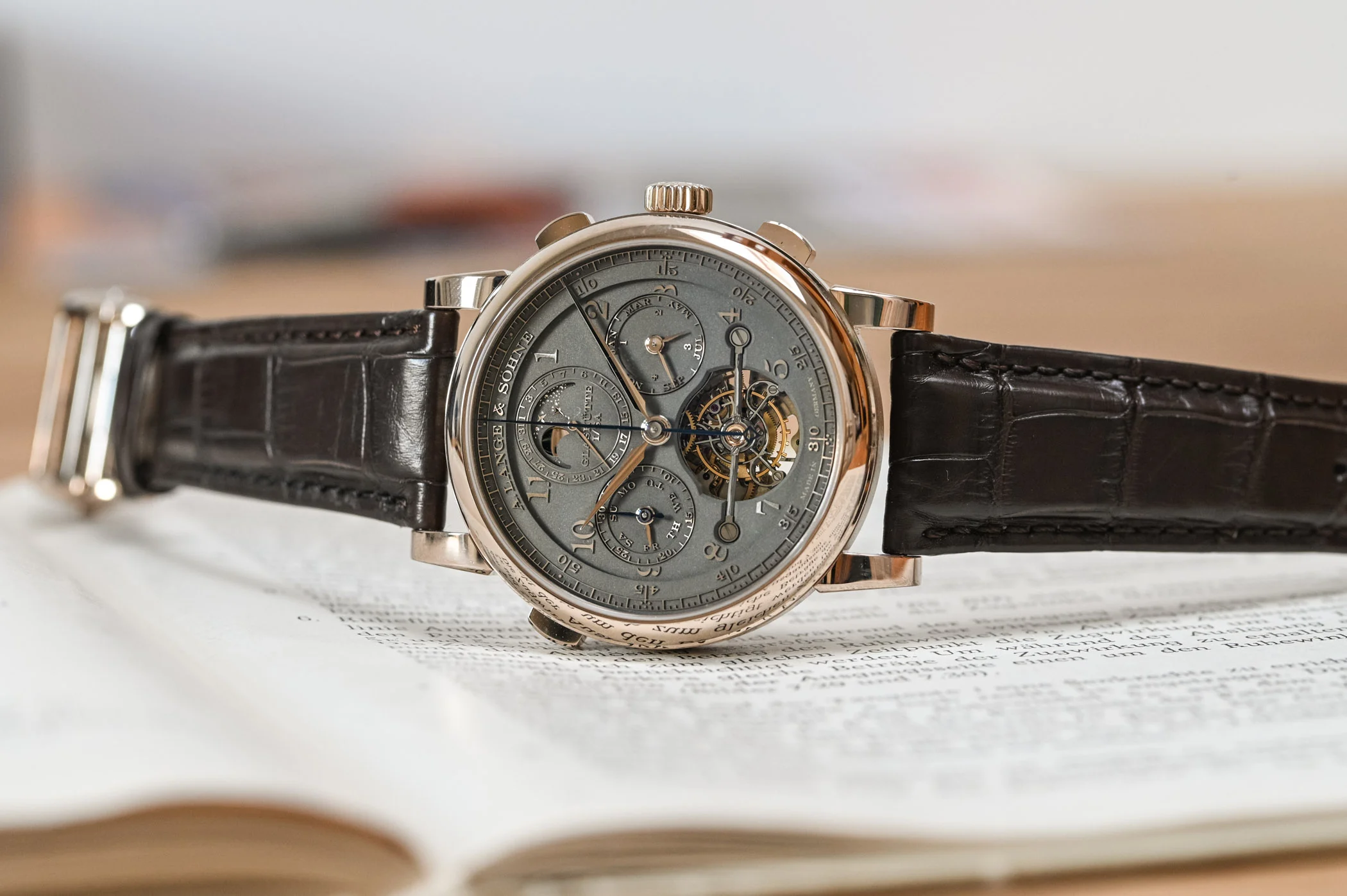
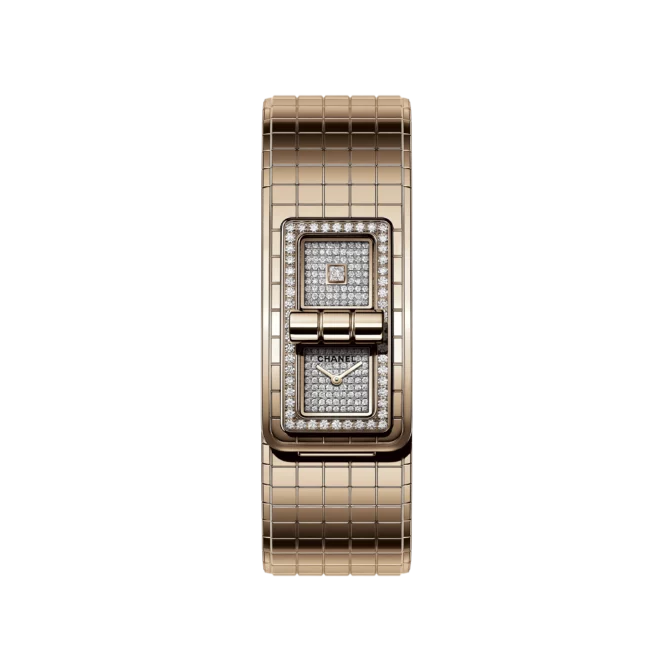
A. Lange & Söhne with its Honey Gold and Chanel with its Beige Gold tried innovative approaches to improve gold’s properties. Although these initiatives were discontinued, they bear witness to the constant innovation in this field.
Finishing techniques: sandblasting and engraving
Gold’s softness and malleability make it ideal for refined finishes such as sandblasting and engraving. Audemars Piguet, for example, uses a hammering technique called “Frosted” to create unique textured surfaces.
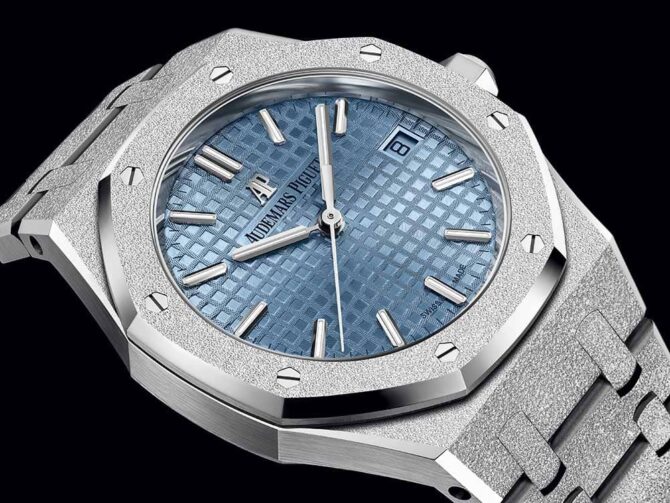
Hublot and the Magic Gold innovation
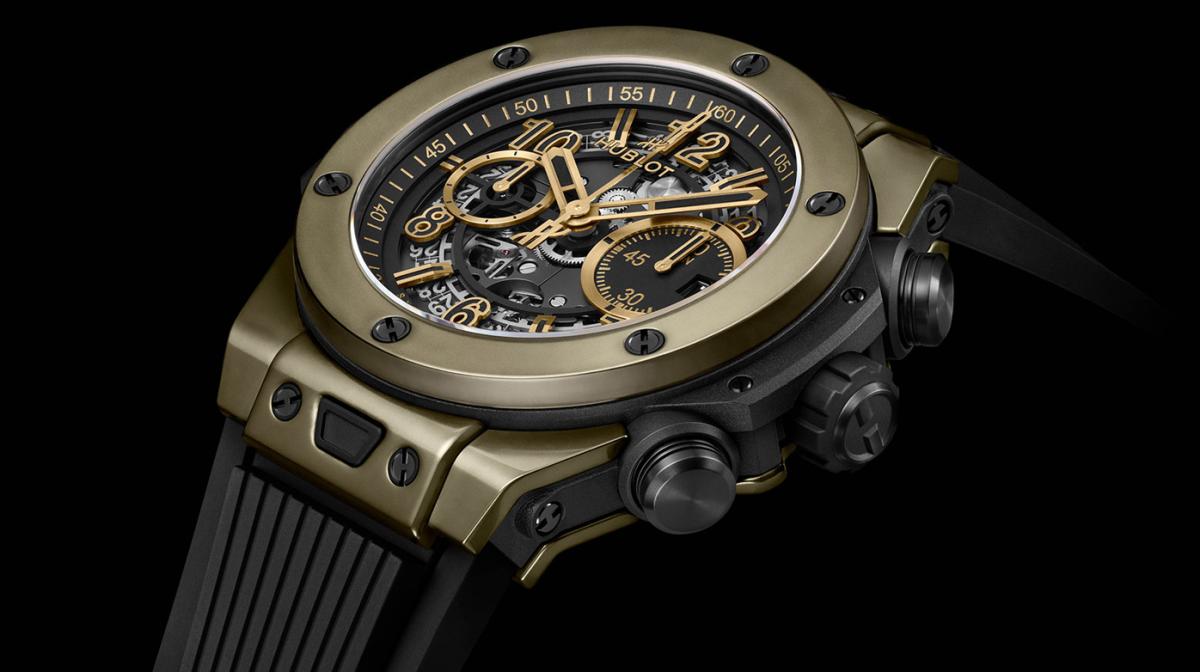
Hublot introduced Magic Gold, a revolutionary alloy combining gold with a ceramic structure. Although its appearance and the difficulty of understanding it have limited its use, it represents a significant advance in abrasion resistance.
Research and development: the gold of the future
Innovative projects, such as the gold based on recycled plastic developed by the Swiss Federal Institute of Technology Zurich, highlight gold’s potential in watchmaking. This research paves the way for new applications and a more sustainable approach to this precious metal.
Gold in luxury watch design
Gold remains a central element in luxury watch design, adding inestimable value and a unique cachet to each piece. Prestigious brands continue to innovate in their use of gold to create watches that are both works of art and masterpieces of precision.
Gold and the environment: ethical questions
Gold mining raises major ethical and environmental questions. In response to these challenges, the watch industry is moving towards more sustainable and ethical sources of gold, reflecting a growing awareness of its environmental impact.
The future of gold in watchmaking
The future of gold in watchmaking looks promising, with constant innovations both in alloys and in finishing techniques. The combination of tradition and modern technology will continue to make gold a material of choice in the creation of exceptional watches.
Conclusion: gold, a timeless element in watchmaking
Gold remains a symbol of prestige and innovation in watchmaking. Its ability to reinvent itself while retaining its timeless character and unrivalled brilliance guarantees its central role in the art of watchmaking for generations to come.
FAQs
1- What is the difference between 18-carat gold and pure gold in watchmaking?
Pure gold, or 24-carat gold, is gold in its purest form, without alloys. In watchmaking, it is rarely used because of its softness and malleability. 18-carat gold, by contrast, is an alloy containing 75% pure gold, with the remainder made up of other metals such as silver, copper, palladium or platinum. This alloy offers better strength and a variety of colours, while retaining gold’s lustre and prestige.
2- How are the different colours of gold achieved?
The different colours of gold are achieved by mixing pure gold with different metals. Yellow gold is traditionally a blend of gold, copper and silver. White gold is alloyed with metals such as palladium and silver, often coated with rhodium to enhance its brilliance. Rose gold is created by increasing the proportion of copper in the alloy, giving it a pinkish hue.
3- What are the advantages of Rolex Everose gold?
Rolex Everose gold is a unique alloy developed to maintain its distinctive colour over time. By incorporating platinum, this alloy guarantees improved colour stability and greater resistance to oxidation, while adding a touch of prestige and luxury to the watch.
4- How does innovation in gold alloys influence watch durability?
Innovations in gold alloys, such as the addition of palladium or platinum, not only improve gold’s colour and aesthetics but also increase its resistance to oxidation and abrasion. These advances make it possible to produce more durable watches, capable of retaining their brilliance and structural integrity over a longer period.
5- What are the environmental implications of using gold in watchmaking?
Gold mining has significant environmental consequences, notably in terms of landscape degradation, water pollution and social conflict. The watch industry is striving to find more sustainable sources of gold, such as ethically certified or recycled gold, to reduce its environmental impact.
6- How could current research transform the use of gold in the future?
Current research focuses on developing new alloys and gold-processing techniques to improve its physical and aesthetic properties. Innovations such as gold based on recycled plastic or high-strength alloys are paving the way for more sustainable and more varied uses of gold in watchmaking, while preserving its prestige and beauty.