Daylight Saving Time: Why So Much Hate?
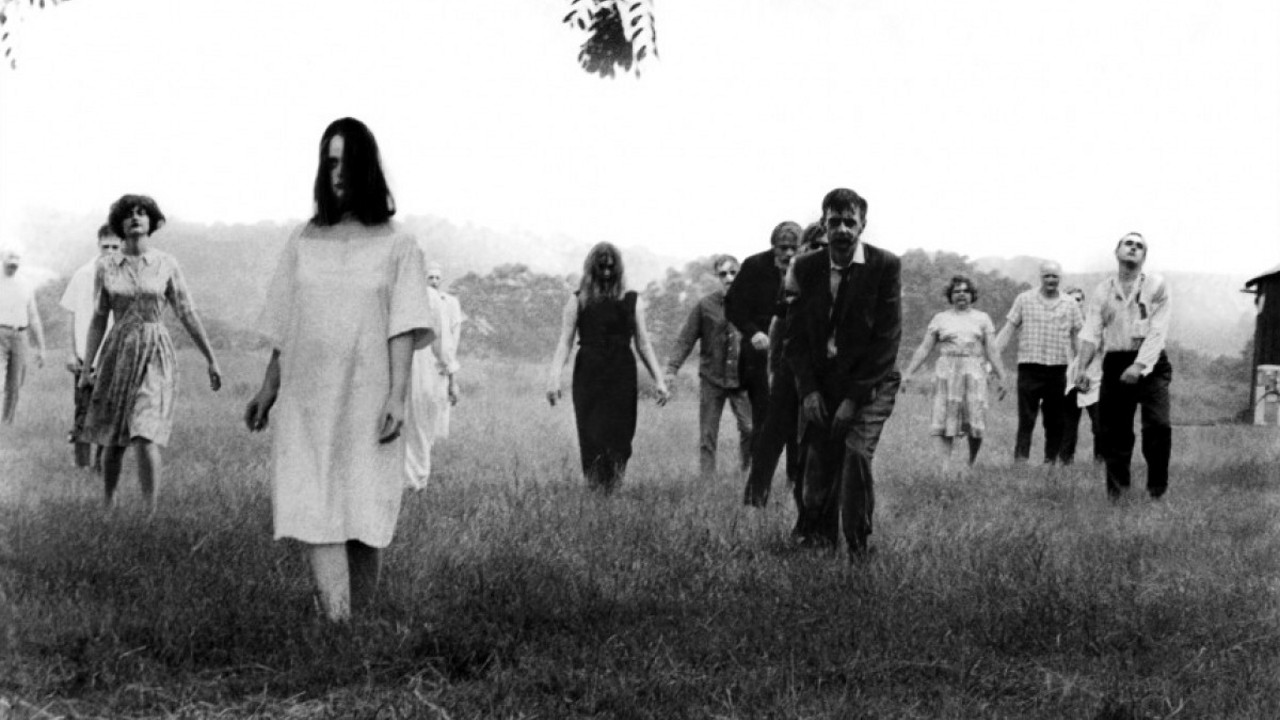
It has to be said that the switch to winter time makes us feel as though we’re wandering through a George A. Romero film on Monday morning. Between zombie colleagues and MGM-lion yawns (yes, in reality the MGM lion doesn’t roar, it yawns), one can seriously question the supposed health benefits of changing the clocks.
Summer time, winter time … What does this clock change really mean? A look back at the origins of this adjustment to local time, practised by many countries and forcing their citizens to endure a few necessary days of acclimatisation.
Let’s start with a simple way to remember how changing the clocks works: “In OctobER, I go back an hOUR. In APRil, I move FORWard.” Simple, isn’t it?
It should be noted that the switch to winter time takes place on the last Sunday in October and ends on the last Sunday in March in Europe.

The idea of changing the clocks is commonly attributed to Valéry Giscard d’Estaing, the Anaconda of Chamalières. Yet while we owe him its introduction in France, the paternity of the idea belongs to an 18th-century historical figure: Benjamin Franklin. He was in fact the first to suggest, on 16 April 1784 in Le Journal de Paris, changing the time with a view to saving energy.
In 1916, changing the clocks was applied for the first time by Germany, closely followed by England, then France.
In 1945, Free France abandoned the concept. A provisional, unprecedented time zone then emerged between the Free Zone and the Occupied Zone.
It was in 1976 that summer time returned to France. The 1973 oil shock drew attention to the need to save energy, particularly evening lighting.
The principle behind changing the clocks
The principle being defended is as follows: taking winter time as the “normal” time, we move the clocks forward by one hour in summer to gain an extra hour of natural light and thus reduce the need for artificial lighting.
A real energy saving?
The answer is yes, according to ADEME (the French Agency for Ecological Transition). It states:
“In 2009, these gains amounted to around 440 GWh, i.e. the equivalent of the lighting consumption of roughly 800,000 households. Thanks to these savings on lighting, 44,000 tonnes of CO2 were thus avoided, considering that, for this use, 1 kWh consumed produces 100 grams of CO2, since lighting relies on electricity generation methods that are partly carbon-based”
The consequences of changing the clocks on our health
Daniel Neum, head of the sleep laboratory at Brugmann University Hospital in Belgium, notes:
“For some very sensitive people, it takes ten days to two weeks to digest the variation, which can be compared to the effect of a slight jet lag experienced during a trip.”
The switch to summer time would be even more difficult. In 2008, a study published in the New England Journal of Medicine mentions an increase in heart attacks in the three days following the clock change.
The controversy surrounding changing the clocks still has a long life ahead of it …