Collecting Luxury Watches: How to Store, Secure and Showcase Them

Every luxury watch is a feat of engineering and craftsmanship, a delicate mechanism whose value often extends far beyond the purely financial to encompass sentimental and historical significance. For those who have chosen to embark on the journey of collecting luxury watches, the question of how to preserve, secure and display them becomes just as important as the choice of the watches themselves. A rigorous approach ensures not only the longevity and accuracy of these exceptional timepieces, but also the preservation of their lustre and value over time.
These prestigious objects deserve special attention to preserve their mechanical and aesthetic integrity. Whether you own a vintage piece, a hand-wound creation or a contemporary automatic watch, each example requires a suitable environment to maintain its beauty and optimal performance.
Why is it important to store luxury watches properly?
Properly preserving luxury watches is not merely a matter of convenience; it is essential to safeguarding their accuracy, aesthetics and value. These instruments of timekeeping are complex and delicate mechanisms, often composed of hundreds of tiny components interacting in perfect harmony. Neglecting their storage or maintenance can upset this delicate balance.
Preserving a watch begins with protecting it from external threats. Dust, humidity, extreme temperature fluctuations and magnetic fields are all silent enemies that can damage internal components or affect the appearance of the case and dial. Beyond functionality, there is also the question of value. A well-maintained watch retains its market value more effectively, particularly when accompanied by its original papers and box. Finally, for many collectors, a watch embodies a memory, a personal milestone or the culmination of a passion. Preserving it is therefore a way of perpetuating that story and emotional connection.
The fundamental principles of luxury-watch preservation
A high-watchmaking timepiece requires a stable environment and specific care to maintain its performance. Storage conditions directly influence the mechanical health and appearance of these valuable pieces.
The ideal environment
The place where you store your watches should be chosen with care. Ideally, it should be dry, temperate and protected from direct sunlight. Fluctuations in temperature and humidity can cause materials to expand or contract, affecting the water-resistance seals and the lubricants in the movement. Excessive humidity promotes corrosion, while extreme dryness can cause oils to dry out. It is also advisable to avoid placing watches near powerful electronic devices that generate magnetic fields, which can affect the accuracy of the movement. Boxes or cases lined with soft materials provide physical protection against knocks and scratches.
The essential role of a watch winder for automatic watches
For automatic watches, a frequently asked question is whether they should be allowed to stop or kept running. Watch winders are devices designed to simulate the movement of the wrist and keep an automatic watch’s mechanism active. This offers several advantages:
- Maintaining lubrication: The oils in the movement remain evenly distributed, preventing them from clumping together or drying out prematurely.
- Preserving accuracy: Keeping the movement running avoids frequent stops and restarts, which can place unnecessary strain on the components.
- Ease of use: The watch is always running on time and ready to wear, without requiring manual adjustment.
- Preserving complications: For watches equipped with complications such as a perpetual calendar, keeping them running avoids complex and time-consuming adjustments.
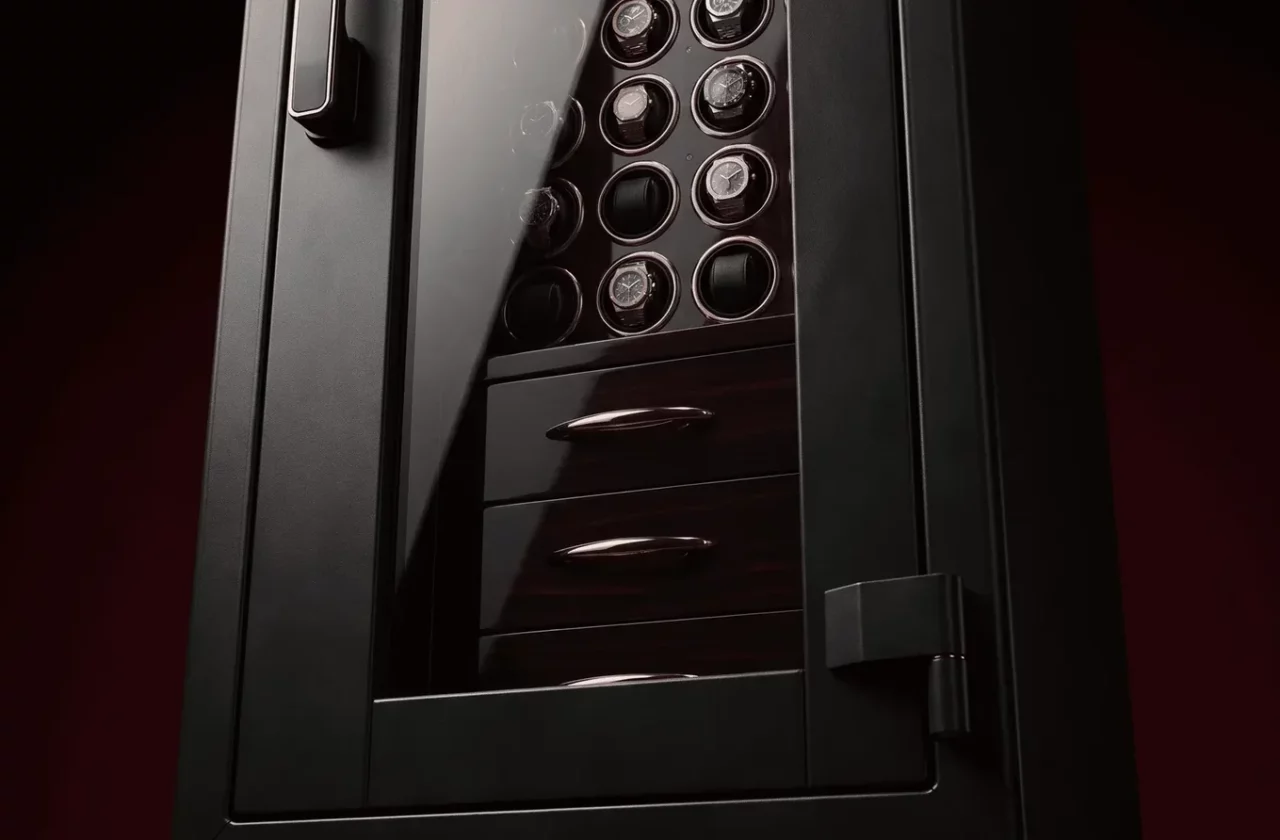
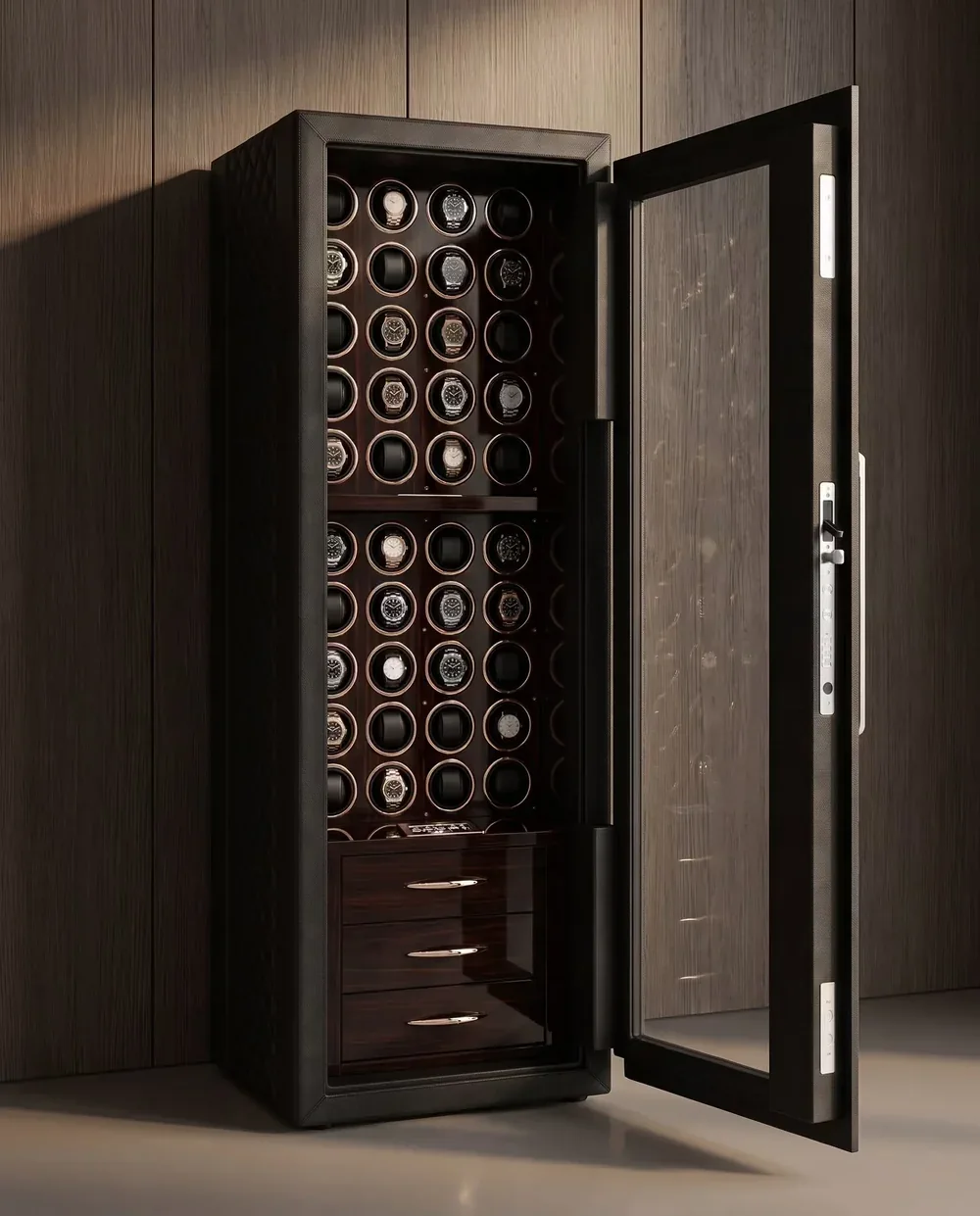
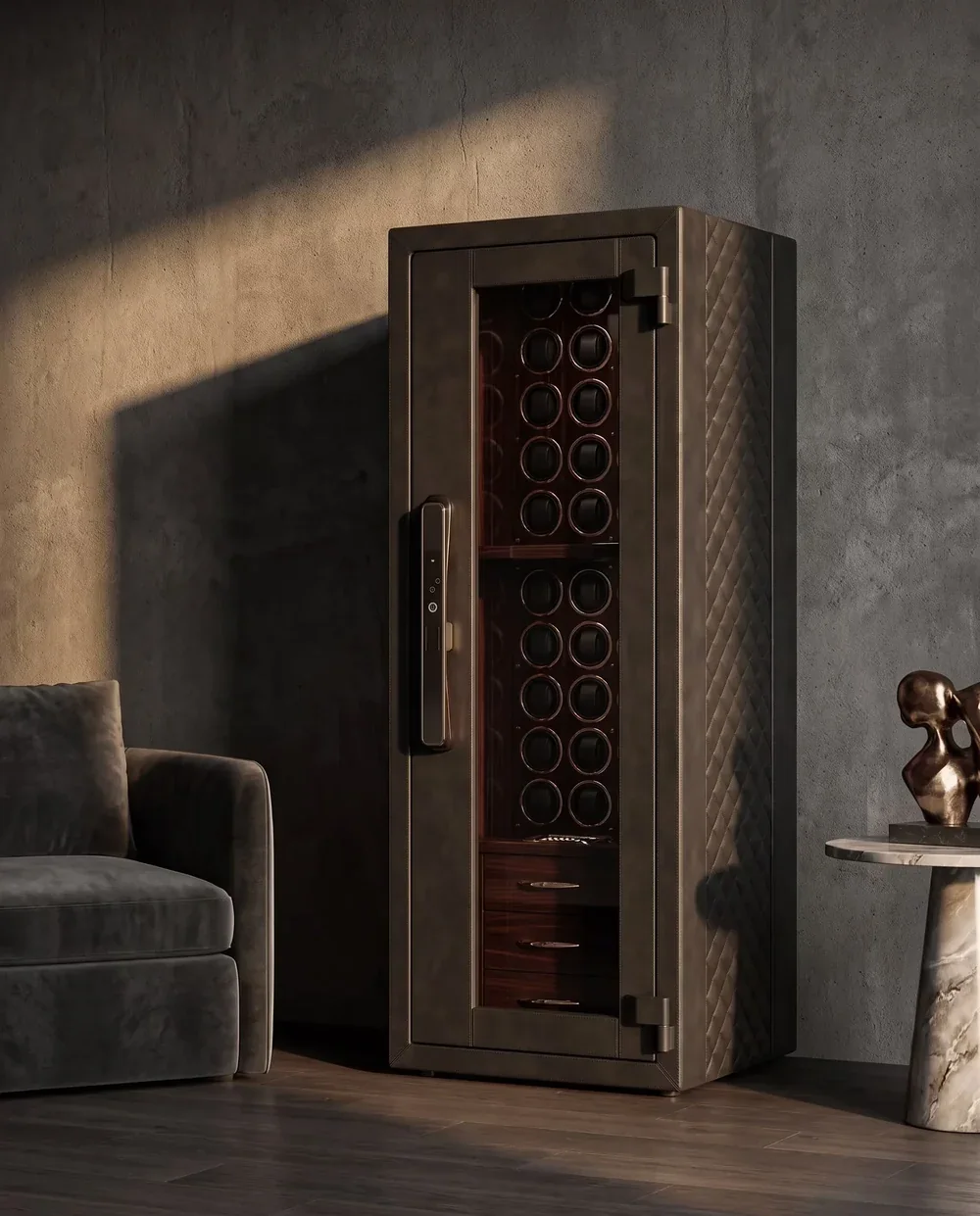
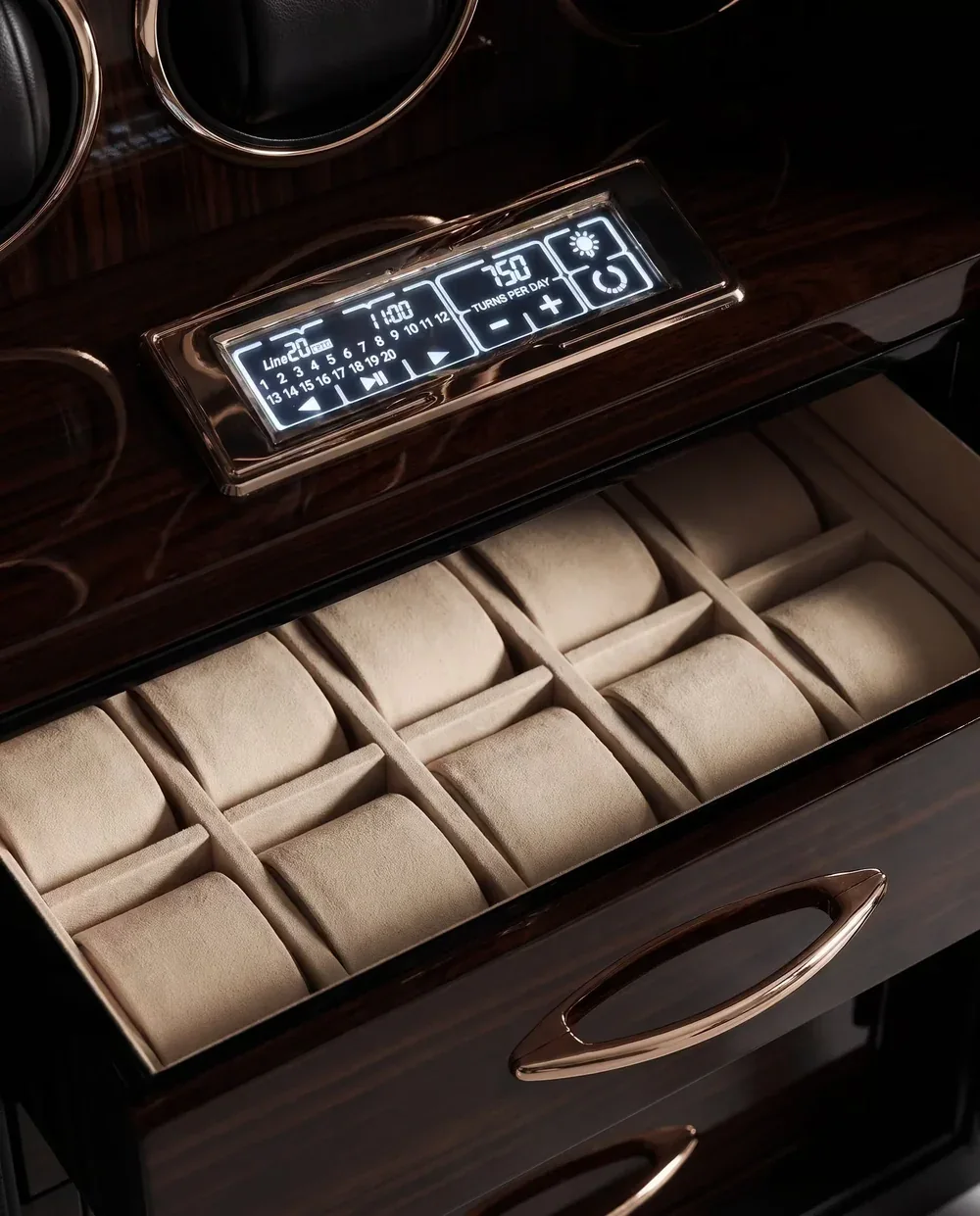
Choosing a winder suited to your watch is important, as the direction of rotation and number of turns per day vary from one calibre to another. Some devices even provide additional protection by incorporating security features, turning these systems into genuine watch safes that combine continuous operation with the security of the asset.
Regular professional servicing
Beyond everyday storage, periodic professional servicing is essential. A qualified watchmaker can check water resistance, clean the movement, replace the oils and adjust its accuracy. The recommended interval generally ranges from three to seven years, depending on the watch’s brand and model. Ignoring this step can lead to premature wear of the components and more expensive repairs in the long term. Regularly cleaning the exterior with a soft, dry cloth also helps preserve the lustre of the case and bracelet.
Securing your collection: an absolute priority
The financial or sentimental value of a watch collection makes it a potential target. Securing these assets goes far beyond simply putting them away; it requires a multi-layered strategy to minimise risk.
Detailed inventory and documentation
An often-overlooked first step is to create a complete inventory of your collection. This document should include:
- Clear photographs of each watch from different angles.
- The unique serial number of each piece.
- Purchase invoices and certificates of authenticity.
- Proof of servicing and maintenance.
- A detailed description of each watch (model, materials and complications).
- Your insurer’s contact details and policy references.
This inventory, stored in a secure location separate from the collection itself—for example, as a digital copy in a secure cloud—will be invaluable in the event of theft or loss, or when making an insurance claim. It proves ownership and makes it easier to identify the pieces.
Secure storage solutions
Discretion is a major component of security. Avoiding any ostentatious display of the extent of your collection reduces the risks. When it comes to storage, collectors have several options:
| Storage type | Advantages | Potential drawbacks |
|---|---|---|
| Basic watch box | Protection against dust and scratches; attractive appearance. | Limited protection against theft. |
| Watch winder | Keeps the movement running; physical protection. | Security varies by model; often visible. |
| Home safe | High protection against theft and fire; discreet. | Installation cost; less immediate access. |
| Bank safe-deposit box | Maximum security; protection against fire and flooding. | Access limited to the bank’s opening hours. |
Installing a safe in your home provides a significant level of protection. It is advisable to choose a certified, fire-resistant model anchored to the floor or wall. For the most valuable pieces or during extended absences, a bank safe-deposit box may be the safest solution.
The importance of appropriate insurance
Despite every precaution, zero risk does not exist. This is why specific insurance for your watch collection is essential. Standard home insurance policies often impose limited reimbursement caps for valuable items. You should consider taking out an extended policy or a dedicated contract covering theft, loss, accidental damage and, in some cases, damage in transit. Discuss your needs with your insurer to obtain cover suited to the true value and unique nature of each piece. The detailed inventory mentioned above will be crucial when arranging and managing the policy.
Displaying your collection: between aesthetics and protection
Once preservation and security have been addressed, collectors can turn to displaying their watches. The challenge is to strike a subtle balance between exposure and protection, allowing the beauty of the pieces to be appreciated without compromising their integrity.
Display cases and presentation boxes
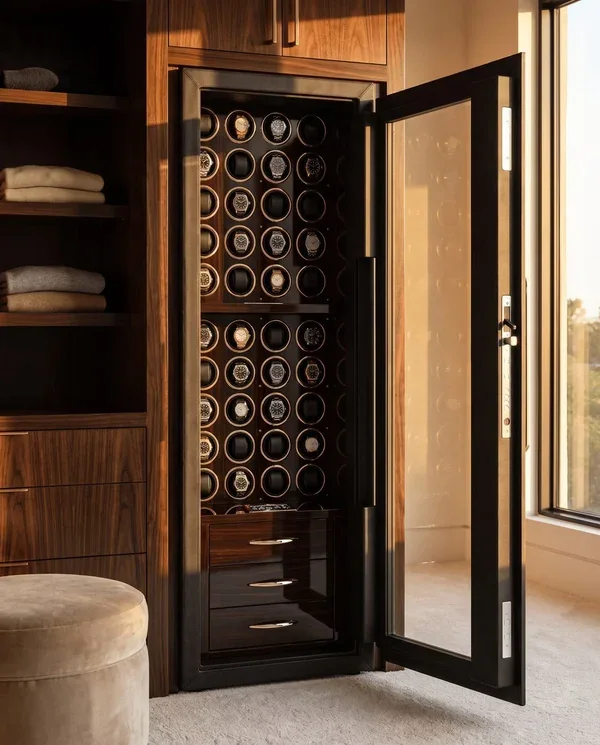
Watch boxes and display cases are key elements in presenting a collection. They should combine functionality with aesthetic appeal. Materials such as precious wood, leather and glass contribute to an elegant presentation. Interiors lined with velvet or silk protect watches from scratches. For display cases, UV-treated glass can prevent dials from fading in the light. Some models incorporate LED lighting systems to enhance the details of the watches while keeping them protected from dust and humidity. Choosing individual holders for each watch helps prevent contact and friction.
As one watchmaking expert points out:
“A luxury watch is a precision object whose value—and lifespan—depend directly on how it is stored. These timepieces deteriorate if they are treated like ordinary objects.”
This advice highlights the importance of viewing storage as an extension of the investment made in the watch itself.
Balancing visibility and discretion
Displaying one’s collection is a pleasure for any enthusiast, but caution remains essential. It is often preferable not to display the entire collection in places that are too visible from outside. The rarest or most expensive pieces can be kept in a safe, while others—less conspicuous or part of a regular rotation—can be displayed in a secure case inside the home. The idea is to create a space where you can enjoy your watches every day while maintaining a level of security appropriate to their value.
Integrating them into a high-end interior
Storage and display accessories can become decorative elements in their own right, blending harmoniously into a refined interior. A watch box made from precious wood placed on a desk, or an elegant display case in a dressing room, can complement the aesthetic of a room. Companies such as Mercier & Fils offer solutions that combine outstanding craftsmanship with functionality designed for the discerning collector, bringing together practical utility and sophisticated design.
An investment for the long term: the benefits of good management
The decision to collect luxury watches represents far more than the simple acquisition of objects. It is a commitment to a legacy of engineering, art and history—one that requires careful management to reach its full potential. By adopting best practices in preservation, security and presentation, you ensure the longevity of your passion.
Attention to every detail—from ambient humidity and the choice of winder to accurate inventory records and appropriate insurance—helps protect not only a financial investment, but also a source of personal pleasure and a potential legacy. A well-maintained collection is one that endures through the ages without losing its lustre or value, giving its owner the lasting satisfaction of a passion pursued with care.
Frequently asked questions about collecting luxury watches
What is the best place to store a luxury watch?
The best place is dry and temperate, protected from direct sunlight, magnetic fields and extreme fluctuations in humidity. A home safe or bank safe-deposit box offers the highest level of security, while lined watch boxes protect against scratches and dust.
Should automatic watches be kept running continuously?
Yes, using a watch winder for automatic watches is recommended. It keeps the movement’s oils evenly distributed, preserves accuracy and complications, and ensures that the watch is always ready to wear.
How can I protect my watch collection against theft?
Protection involves maintaining a detailed, secure inventory; storing the watches in a certified safe; being discreet about the existence and extent of your collection; and taking out specific insurance for valuable items.
How often should a luxury watch be serviced?
The recommended service interval generally ranges from three to seven years, depending on the watch’s model and brand. It is essential to follow the manufacturer’s recommendations to ensure the longevity and accuracy of the movement.
The passion for collecting luxury watches comes with the responsibility of preserving these treasures. By following best practices in preservation, security and presentation, every collector can ensure that their pieces remain timeless testaments to watchmaking excellence—for their own enjoyment and that of future generations.