Can You Really Shower with a Water-Resistant Watch?

Can a water-resistant watch really accompany you into the shower? The short answer is less comfortable than a simple “yes”: sometimes, but it is almost never a good habit. Between the pressure indicated on the dial, the heat of the water, soap and the condition of the gaskets, a watch’s water resistance depends on a subtler balance than the “100 m” engraved on the case back might suggest.
The problem is largely one of misunderstanding. A watch rated water-resistant to 100 metres is not necessarily designed to be worn at a depth of 100 metres, just as a watch rated to 30 metres cannot necessarily accompany you into a swimming pool without concern. These figures correspond to laboratory tests conducted under standardised, static conditions. Real life adds sudden movements, changes in temperature, soap and a crown that may not be properly secured. Everyday life is rarely as gentle as a test bench.
What does “water-resistant” really mean for a watch?
In watchmaking, water resistance refers to a watch’s ability to withstand water entering it under certain conditions. The term “waterproof”, once widely used, has gradually been abandoned because no watch can be considered permanently impervious to water. Gaskets age, shocks can sometimes deform the case, and work carried out on the case may compromise its original protection.
The most common indications are expressed in metres, bars or atmospheres. A pressure of 3 bar theoretically corresponds to 30 metres, 5 bar to 50 metres and 10 bar to 100 metres. But this is a pressure equivalence, not automatic permission to dive to the stated depth.
| Indication | Reasonable use | Avoid |
|---|---|---|
| 30 m, 3 bar | Splashes, washing your hands | Showering, bathing, swimming |
| 50 m, 5 bar | Heavy splashing, occasional swimming depending on the manufacturer | Diving, hot showers, water sports |
| 100 m, 10 bar | Swimming and regular water-related activities | Scuba diving, unless otherwise specified |
| 200 m and above | Swimming, snorkelling and more demanding water activities | Technical diving without appropriate certification |
This table is deliberately cautious. The manufacturer’s recommendations always take precedence over interpreting a figure printed on the dial.
Why is showering riskier than it seems?
Heat puts the gaskets to the test
The first threat is not pressure, but temperature. Under a hot shower, the case, crystal, gaskets and air trapped inside the watch do not all react in the same way. Materials expand at different rates. This variation can temporarily reduce a gasket’s effectiveness or encourage steam and moisture to enter the watch.
A modern dive watch is designed to withstand immersion and defined changes in pressure. That does not mean it enjoys repeated transitions between a bathroom saturated with steam and a cold room. Rubber, nitrile and synthetic gaskets eventually lose their elasticity. Heat accelerates this ageing process.
Soap and cosmetics are not harmless
Soap, shampoo, oils and certain cleaning products can attack or clog gaskets. They penetrate more easily around moving parts, particularly the crown, pushers and rotating bezel. Once dry, their residue can also interfere with the proper operation of these components.
The risk is rarely dramatic. The watch does not turn into an aquarium after the first shampoo. The deterioration is gradual and silent, which is precisely what makes it so insidious. Water resistance can degrade without warning its owner before condensation appears beneath the crystal.
A crown that is not properly closed is enough
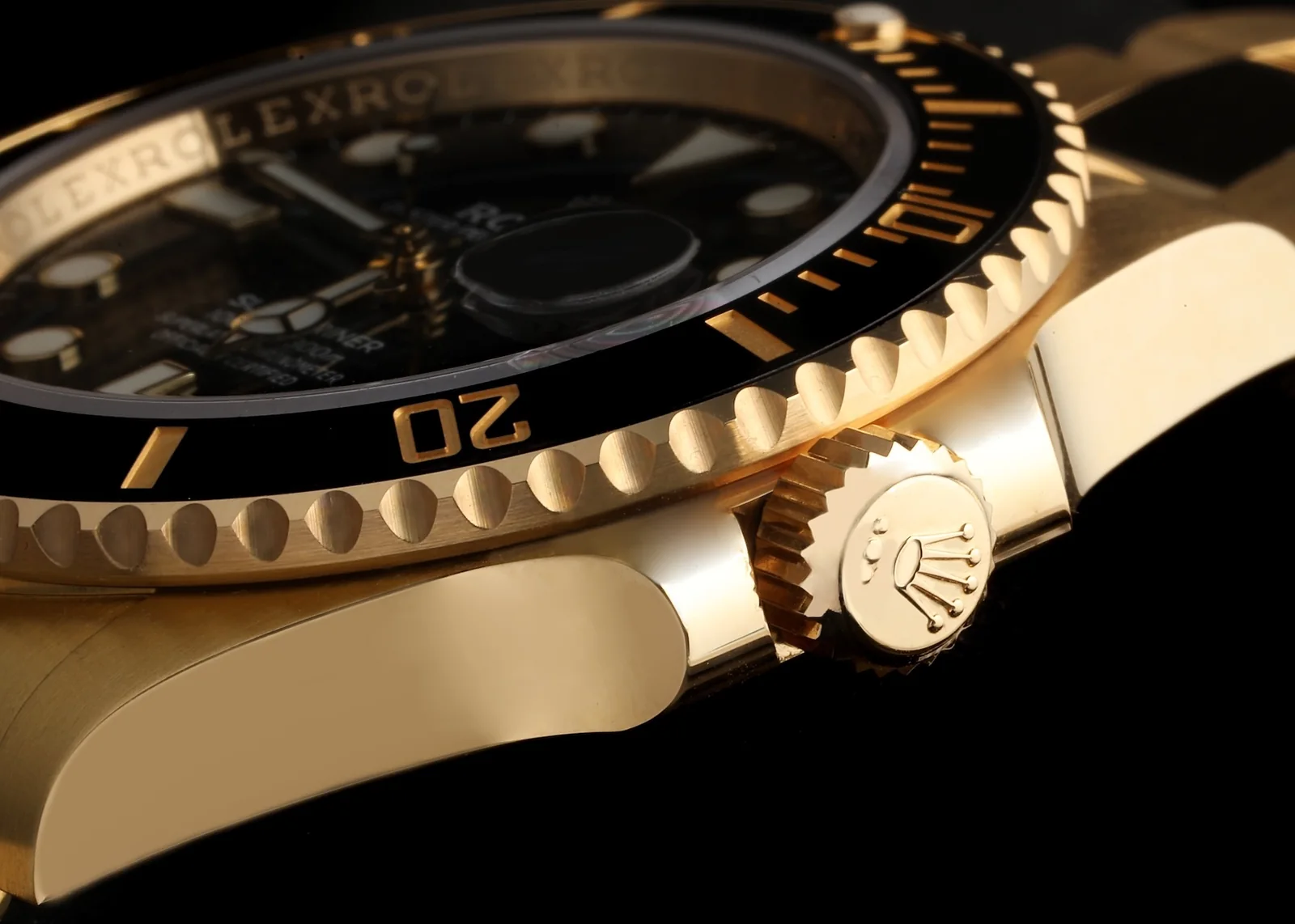
The crown is one of the case’s weak points. If it is not fully pushed in, or properly screwed down on a model with a screw-down crown, the stated protection is no longer worth much. The same applies to the pushers of a chronograph: they should never be operated in water unless the watch has been specifically designed for that purpose.
A screw-down crown does not make a watch invulnerable. It adds a mechanical barrier, but its threads and gasket may be worn, improperly engaged or damaged. Water resistance depends on the construction as a whole, not on one reassuring accessory.
Can a dive watch go into the shower?
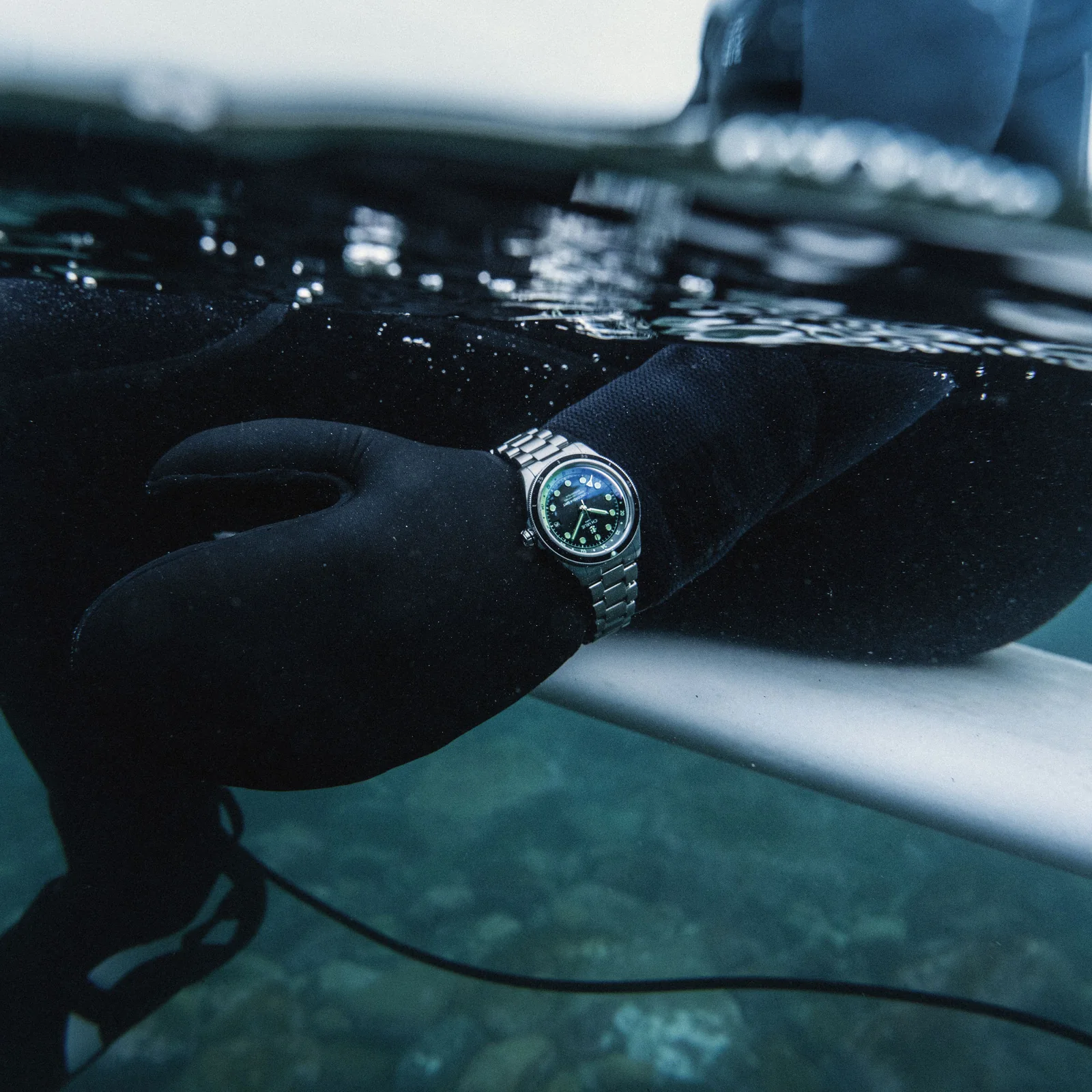
Technically, a genuine dive watch offers greater protection than a dress watch. The ISO 6425 standard notably sets requirements relating to water resistance, condensation, shocks and, for certain categories, legibility underwater. A watch complying with this standard is designed for serious aquatic use.
But “able to withstand a shower” does not mean “designed for showering”. A 300-metre dive watch with a unidirectional bezel, screw-down crown and thick case-back gasket will generally cope better with a humid environment than a slim 30-metre watch. Nevertheless, heat, detergents and ageing gaskets remain factors.
The best approach, therefore, is to distinguish between occasional exposure and repeated use. An unexpected shower while wearing a watch rated to 200 or 300 metres is unlikely to be a disaster. Making it a daily ritual is another matter. Robustness is no substitute for judgement.
Which watches should never be taken into the shower?
Vintage watches are the primary concern. Even when an older model once offered respectable water resistance, its gaskets may have hardened, shrunk or been replaced with unsuitable parts. A recent service, accompanied by a documented water-resistance test, is essential before any immersion.
Watches with snap-on case backs, very slim pieces, models fitted with leather straps and watches whose water resistance is not clearly stated should also be kept away from the shower. Leather does not tolerate water or fluctuations in humidity well. It stains, deforms, absorbs odours and may eventually crack.
Caution is also required with chronographs. A chronograph may be water-resistant, sometimes to 100 metres or more, but its pushers and more complex construction create additional potential entry points. A sports watch is not automatically a dive watch.
How can you preserve your watch’s water resistance?
- Check the water-resistance rating and the manufacturer’s specific recommendations.
- Make sure the crown is fully pushed in or screwed down before any contact with water.
- Never operate the crown or pushers underwater unless the watch has been specifically designed for this purpose.
- Avoid hot baths, hot tubs, saunas and prolonged showers while wearing a watch.
- Rinse a watch that has been exposed to seawater or pool water with fresh water, then dry it with a soft cloth.
- Have the water resistance checked after the case has been opened, following a significant shock or after work on the crown.
- Have the gaskets replaced according to the manufacturer’s schedule, often during a service or periodic inspection.
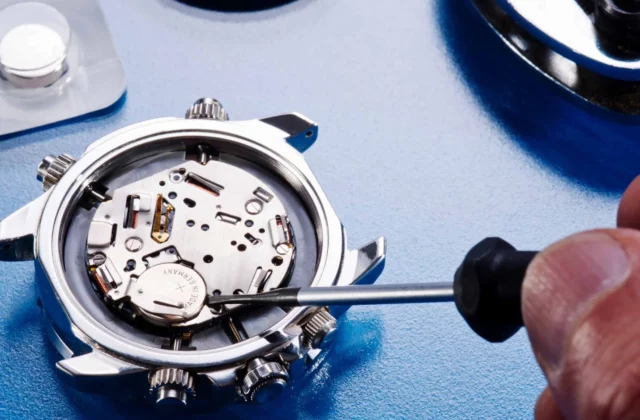
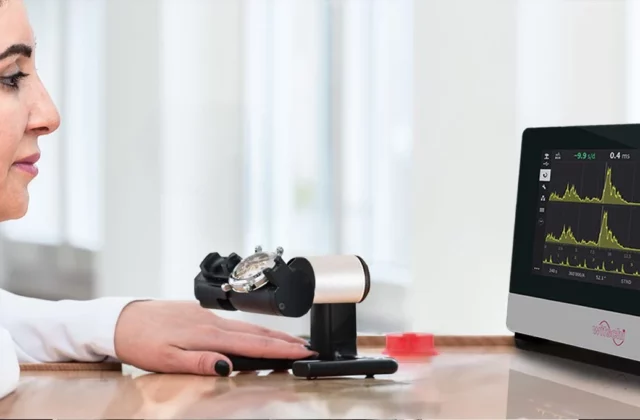
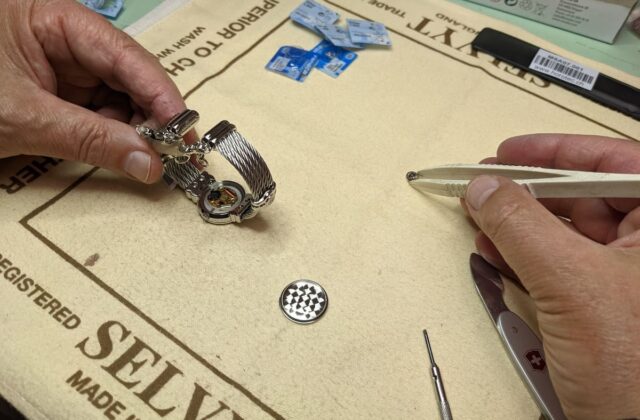
A water-resistance test does not simply involve checking whether the watch still works. The watchmaker generally uses an air- or pressure-testing device, then checks for any changes in volume or signs of leakage. Some tests are carried out dry, while others use water. In every case, testing the watch after each opening of the case is a basic precaution.
What should you do if condensation appears beneath the crystal?
Condensation is a warning sign. A light mist may occasionally appear after a sudden change in temperature, but it should not be dismissed. If the vapour persists, droplets form or moisture gathers around the dial, remove the watch and take it to a watchmaker promptly.
Do not try to dry it on a radiator, with a hairdryer or by exposing it to sunlight. Heat may worsen the damage, particularly to the oils, gaskets, dial and electronic components of a quartz watch. The correct response is to keep the crown closed, stop handling the watch and have it opened by a professional.
The verdict: can you shower while wearing a water-resistant watch?
Yes, a sufficiently water-resistant watch can survive an occasional shower. No, showering is not a recommended part of daily wear, even when the watch is a robust dive model. Heat, steam, cosmetics and ageing gaskets make for an unfavourable combination when it comes to the longevity of the case.
The safest rule is simple: remove your watch before showering, especially if it is rated to 30 or 50 metres, if it is old or slim, fitted with a leather strap, or if its service history is unknown. A mechanical watch is a precision instrument, not a bathroom accessory. It may enjoy adventure. It has no obligation to appreciate lavender shampoo.