2026 Smartwatch Comparison: Which Model Should You Choose?
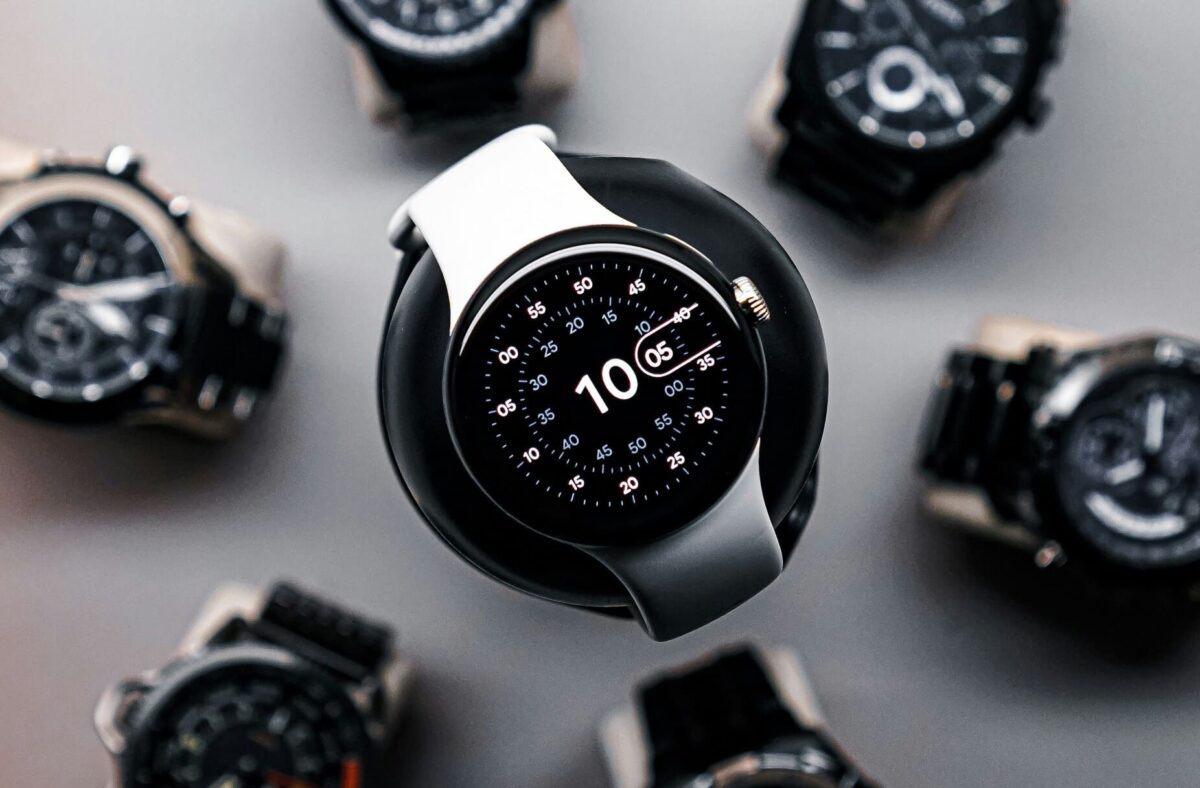
Which smartwatch should you choose in 2026? For most uses, the best compromise is a model that provides health tracking and everyday assistance: an electrocardiogram, skin-temperature measurement and at least a week of battery life, as offered by hybrid watches. An AMOLED display is mainly worthwhile if you prioritise notifications and apps, at the cost of recharging every one or two days. This comparison helps you decide according to your main priority: sports tracking, health monitoring or notification management. In all cases, aim for at least a week of battery life if you do not want to recharge every evening.
What are the essential criteria for choosing a smartwatch this year?
- To answer the question posed by this 2026 smartwatch comparison directly, devices that incorporate advanced health sensors (electrocardiogram, skin temperature) and offer at least a week of battery life are the most relevant for the majority of uses.
- E-commerce platforms such as Cdiscount make comparisons easier with their technical filters, while physical shops allow you to try the case on your wrist.
- According to analyst firm IDC, 34.8 million smartwatches were shipped worldwide in the first quarter of 2025, 4.8% more than a year earlier. (IDC, Worldwide Quarterly Wearable Device Tracker, 2025)
- Battery life remains the key differentiating factor: AMOLED-display watches often need recharging every day or every other day, whereas some hybrid watches last up to 30 days without recharging (Withings ScanWatch 2).
Technical analysis: hybrid watch or AMOLED display?
To make the right choice, start with your daily usage. If you want to monitor your health closely, look for models equipped with electrocardiogram and skin-temperature sensors. Buying a smartwatch then comes down to balancing screen size, built-in geolocation (GPS, Galileo) and budget. These devices generally sync with a smartphone via Bluetooth, but cellular (4G) versions can operate independently for calls and messages.
Their main strengths are immediate access to alerts and continuous tracking of sleep or heart-rate variability. Their main limitation remains battery life, often reduced to one or two days on models with highly interactive displays. To explore uses related to geolocation and sports activities in greater depth, you can consult our dedicated feature on smartwatches: where do things stand?.
Key takeaway: choosing a smartwatch means striking a balance between the depth of health tracking and battery life, based on how you will genuinely use it.
Filtering method: identifying the ideal device on Cdiscount
Using an online retailer allows you to compare technical configurations methodically. The French platform Cdiscount is a good example of this approach. Its catalogue is organised into subcategories (classic, sports and premium watches), while the number of references provides an overview of the year’s new releases. The search-filter system quickly isolates models according to case diameter, operating system or water-resistance rating.
Verified review (posted by Martine on Trustpilot on 22 October 2025):
“Smartwatch: There is plenty of choice across all brands.”
On Cdiscount, product pages provide detailed specifications for each model, helping you find a product suited to your lifestyle and budget. Sorting by battery life makes it easier to compare devices. Cdiscount also has a section dedicated to refurbished and second-hand smartwatches: a less expensive option that extends the useful life of these devices.
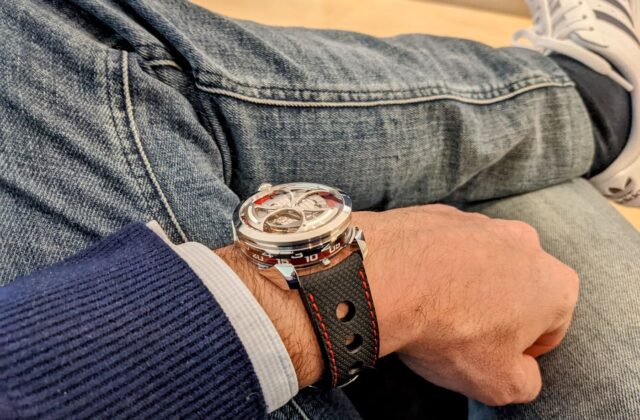
Before confirming your order, read the returns policy: it matters just as much as the price. The subcategories also help distinguish a sports-training watch from a model chosen primarily for its style. If you are hesitating between a traditional watch and a smartwatch, this feature explains why this smartwatch appeals even to mechanical-watch enthusiasts: hybrid models retain the look of an analogue watch while tracking activity and health.
Key takeaway: on Cdiscount, combining the catalogue’s technical filters with a close reading of product pages makes it possible to check that a model suits your needs before buying it.
Battery-life management: the energy impact of an always-on display
The battery life quoted by manufacturers does not always reflect real-world use. A large battery does not guarantee a week between charges: activating the Always-On Display can significantly reduce battery life.
Alongside GPS, the screen is one of the biggest power consumers on an AMOLED watch. A model promising five days of standard use may therefore run out of power in less than 48 hours if the screen’s sleep mode is disabled. Distinguish between the theoretical battery life quoted by manufacturers and battery life under intensive use to avoid unpleasant surprises after purchase.
Key takeaway: the always-on display is among the most power-hungry features; disabling it significantly extends the time between charges, whatever the battery capacity.
Protecting physiological data: the implications of European regulations
Health data collected by a watch is already covered by the GDPR. The EU Regulation 2023/2854, known as the Data Act, adds a right of access to and sharing of data generated by connected devices: it entered into force on 11 January 2024 and has applied since 12 September 2025. Since 12 September 2026, connected devices placed on the European market must also be designed to give users direct access to their data. (Regulation (EU) 2023/2854, Articles 3 and 50)
In practical terms, your heart-rate or sleep records must be retrievable and, at your request, shareable with a third party of your choice, such as a healthcare professional. The legislation therefore promotes greater interoperability between watches, applications and services.
Key takeaway: under the Data Act, access to and transfer of your data become a right; check in the manufacturer’s app how to export it before choosing a model.
Mapping specialist distribution networks in France
Each sales channel presents its watches differently. The following table compares filtering options and the refurbished offering according to the type of retailer.
| Distribution channel | Technical filtering options | Information on refurbished products |
|---|---|---|
| Cdiscount | Subcategories (classic, sports and premium) and filters by battery life, sensor type and water-resistance rating | Dedicated section for second-hand and refurbished smartwatches |
| Specialist high-tech retailers | Sorting by brand, operating system and price, varying by retailer | Offering varies by retailer |
| Manufacturers’ websites | Catalogue limited to the brand’s range | Refurbishment or trade-in programmes offered by some brands |
| Sports shops | Sorting by sporting discipline | Offering varies by retailer |
Key takeaway: Cdiscount brings new watches and refurbished products together in a single catalogue, making it easier to compare prices and specifications.
Frequently asked questions: the essentials about smartwatches
Which smartphones are compatible with the latest models sold in 2026?
Each manufacturer sets a minimum iOS or Android version, shown on the product page; in practice, you need a smartphone running a version of iOS or Android that is still receiving updates. Check your phone’s version before buying, as manufacturers discontinue support for older versions to protect personal data.
Can these devices be used to make contactless payments in shops?
Yes, the presence of an NFC chip enables contactless payments on a wide selection of models. Activating the service requires you to register an eligible bank card in the manufacturer’s companion app. The transaction is protected by an unlock code entered on the watch, requested in particular when the watch is removed from the wrist, thereby limiting the risk of fraud if it is lost.
Where can you easily find the models with the best battery life?
To quickly identify devices with extended battery life lasting several weeks, it is best to use a platform with advanced technical filters. A search on Cdiscount allows you to filter the catalogue to display only hybrid watches or very low-power models, giving you direct access to a targeted selection without having to analyse every technical specification one by one.
A smartwatch is designed to serve for several years, helping to organise everyday life and monitor your health over time. The right model depends above all on the trade-off between battery life and interactive features: take stock of your actual usage, then compare the technical specifications. A fact-based assessment of your habits remains the best way to validate this purchase.
Sources
- International Data Corporation (IDC), Worldwide Quarterly Wearable Device Tracker, press release “Global Wrist-Worn Device Shipments Grew 10.5% in Q1 2025”, 2025.
- Regulation (EU) 2023/2854 of the European Parliament and of the Council (Data Act), Official Journal of the European Union, 22 December 2023.