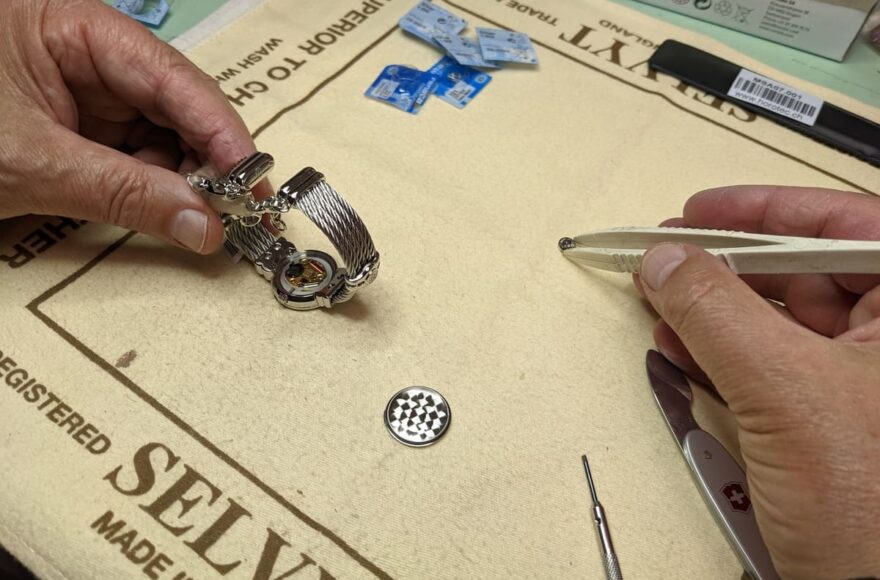
What Is a Mecha-Quartz Movement?
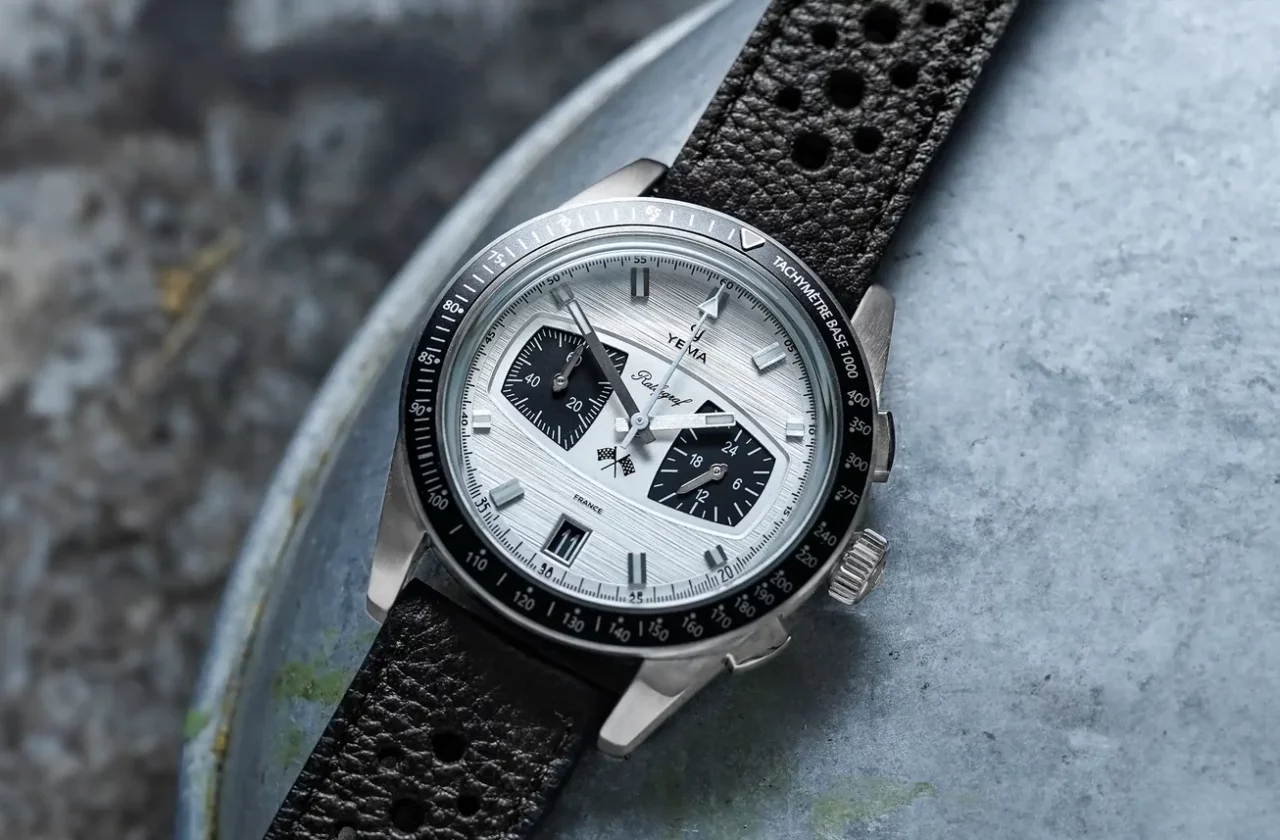

The meca-quartz movement occupies a unique place in contemporary watchmaking. It promises quartz precision, but seeks to recapture, in the sensations and architecture of the chronograph, something of traditional mechanics. A hand that instantly returns to zero, a more decisive pusher, sometimes the click of a column wheel: at first glance, everything suggests a mechanical watch. Yet the heart that measures time runs on a battery and a quartz oscillator.
Meca-quartz is therefore neither a miniature mechanical movement powered by a battery nor simply a quartz movement in disguise. It is a hybrid construction, particularly common in affordable chronographs, combining two worlds often presented as opposing forces: electronic precision for timekeeping, and some of the mechanical interaction of the chronograph.
The definition of meca-quartz
A meca-quartz movement is a hybrid calibre in which timekeeping is regulated by a quartz oscillator, while certain functions—particularly the chronograph—rely on a mechanical mechanism.
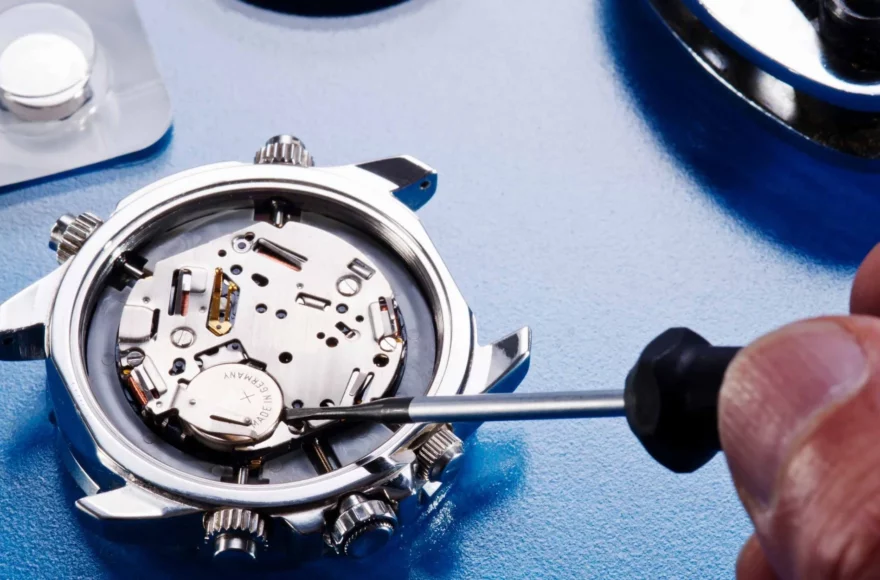
In a conventional quartz movement, a battery powers an electronic circuit. This circuit harnesses the highly regular vibrations of a quartz crystal, generally at 32,768 Hz, and converts them into electrical impulses. A stepper motor drives the hands, often in one-second jumps.
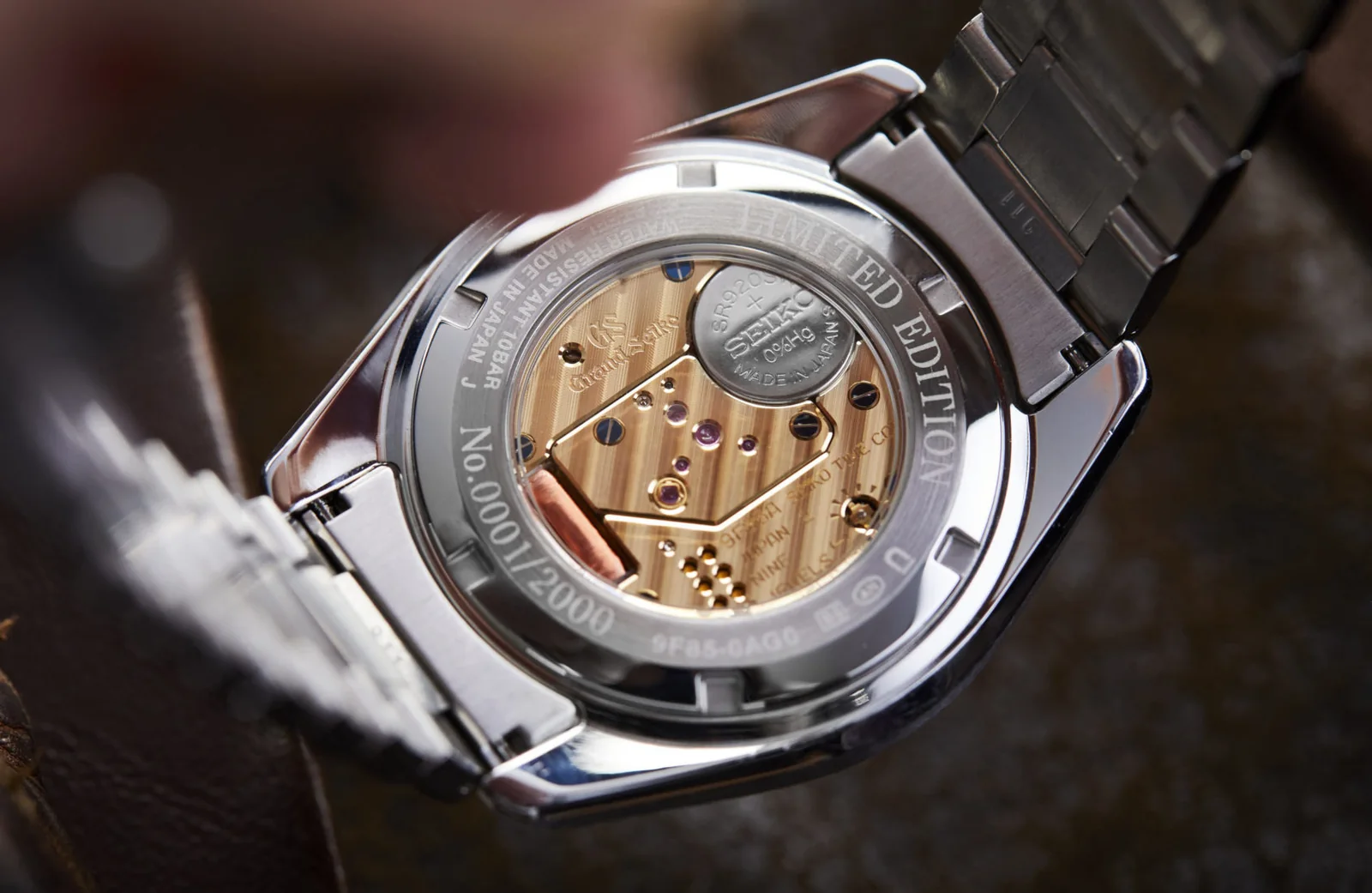
In a meca-quartz movement, this electronic foundation remains in place. It generally controls the hour and minute hands, as well as the watch’s normal operation. But the activation and resetting of the chronograph use a more sophisticated mechanical architecture: hammers, cams, springs, a clutch and, depending on the calibre, sometimes a column wheel.
The term is primarily used to describe hybrid chronographs. A three-hand quartz watch with a mechanical detail inside does not necessarily qualify for the name.
How does a meca-quartz chronograph work?
The principle is subtler than it may appear. The quartz circuit continues to measure time with great regularity. When the wearer presses the start pusher, a separate mechanism engages the central chronograph hand. The pusher therefore operates with a feel closer to that of a mechanical chronograph than to that of an ordinary quartz watch.
Resetting is often the system’s signature feature. In many meca-quartz calibres, the chronograph hands return instantly to their initial positions with a crisp snap. This is achieved by mechanical hammers striking the hearts mounted on the hand pivots. It is the same general principle used in many mechanical chronographs, even though the energy and regulation do not come from a mainspring wound in a barrel.
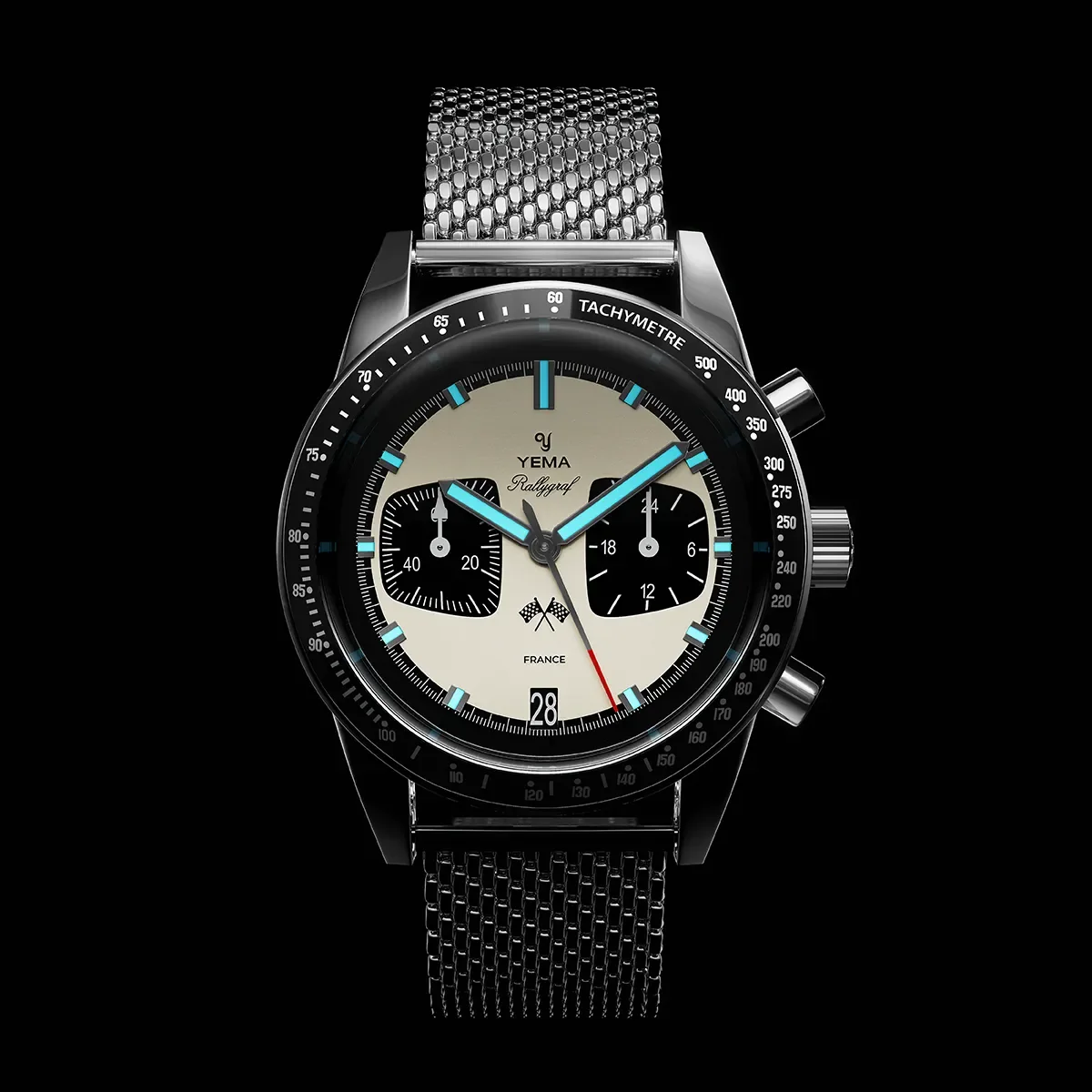
However, a common misconception should be avoided. A chronograph hand that appears to glide is not necessarily being driven by a mechanical movement. Certain meca-quartz calibres, such as the Seiko Instruments VK63 and VK64, advance the central hand in five impulses per second. The movement appears smoother than that of a traditional three-hand quartz watch, but the hand does not sweep continuously. It moves in very closely spaced jumps.
The Seiko VK calibres, standard-bearers of the system
The Seiko Instruments VK family has become one of the most common references in this category. These movements are manufactured by TMI, Seiko’s division dedicated to producing calibres for numerous third-party brands. Their widespread adoption has helped democratise vintage-inspired chronographs, without making them as expensive or as demanding to assemble as a genuine mechanical chronograph.
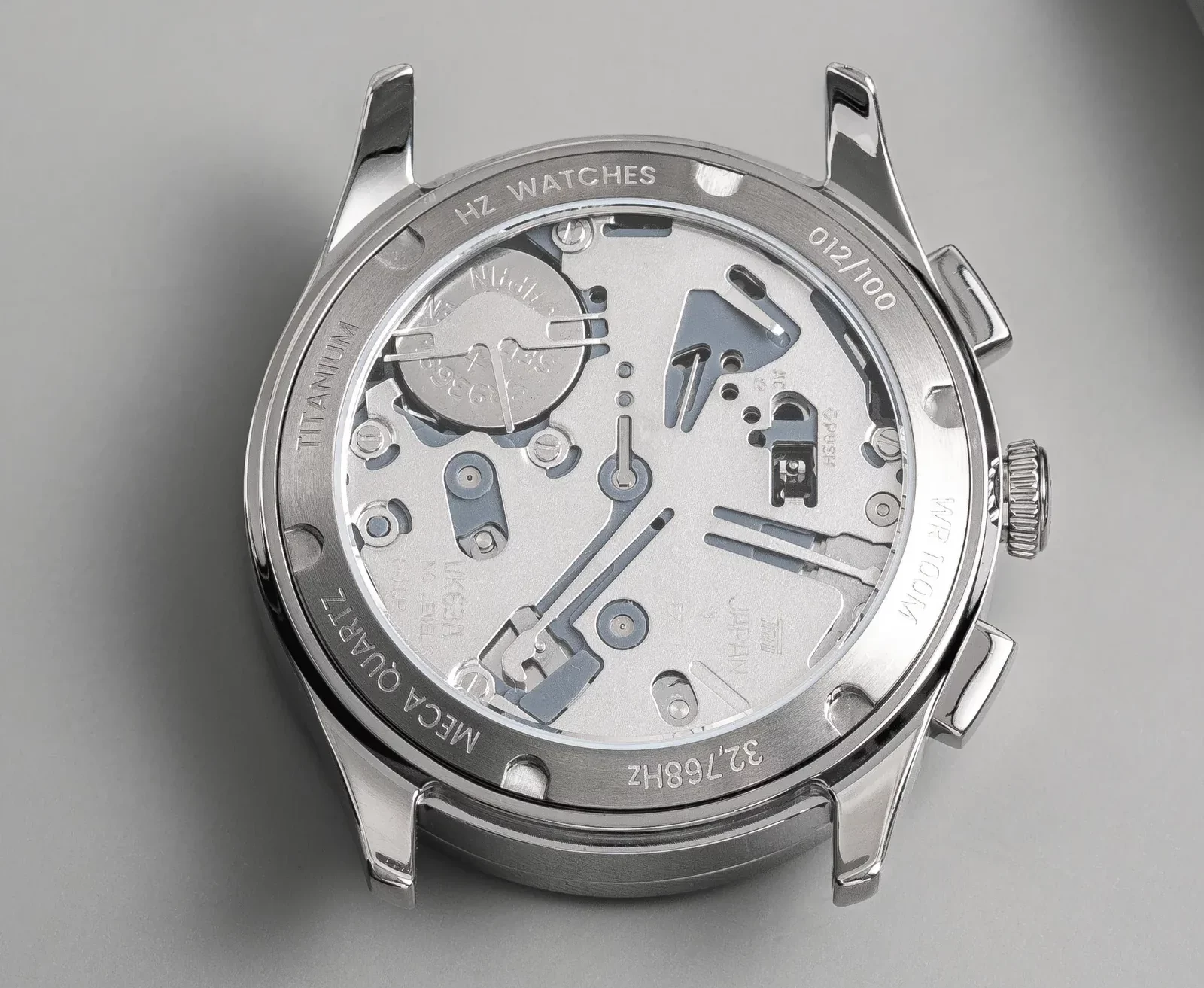
The VK63 is generally configured with a 60-minute counter and a 24-hour display. The VK64 adopts a similar layout, with variations in the dial and sub-dial configuration depending on the manufacturer. Other references in the family, such as the VK67, VK68 and VK73, offer different architectures, particularly in terms of their counters and small-seconds displays.
These calibres share several appealing characteristics:
- a battery-powered quartz base;
- greater accuracy than most mechanical watches;
- a mechanically operated chronograph;
- instantaneous resetting of the chronograph hands;
- controlled power consumption, with battery life generally lasting several years depending on the calibre and usage.
The detail that makes all the difference is found in the pusher. On a conventional quartz watch, the control can feel light, sometimes slightly dry. On a well-adjusted meca-quartz, the pressure is more decisive and the return more theatrical. This is not haute horlogerie hidden inside a €200 watch; there is no point asking it to play a role it never claimed. But the pleasure of use is entirely real.
Meca-quartz and mechanical movements: what are the differences?
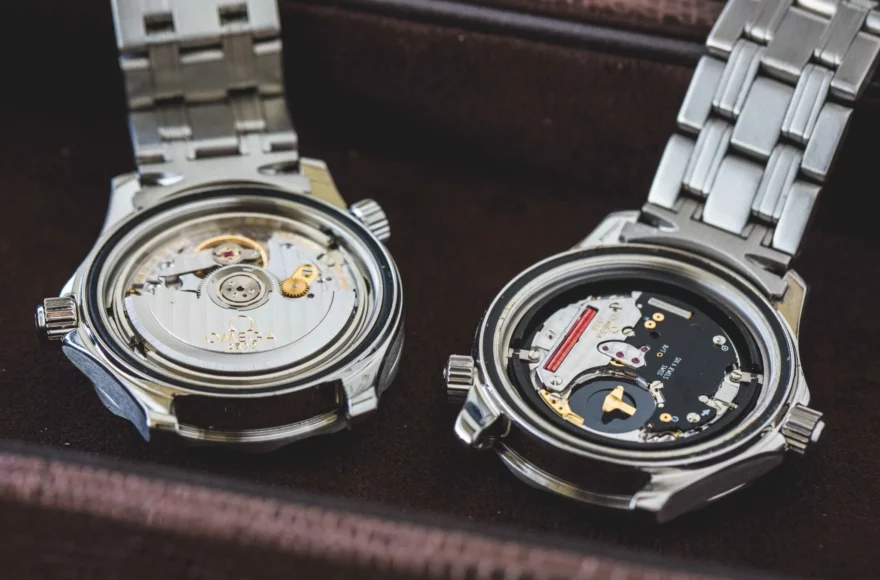
The first difference concerns the source of energy. A mechanical chronograph stores its energy in a mainspring, wound either by hand or by an automatic rotor. A meca-quartz uses a battery, which powers the electronic circuit and the movement’s motor.
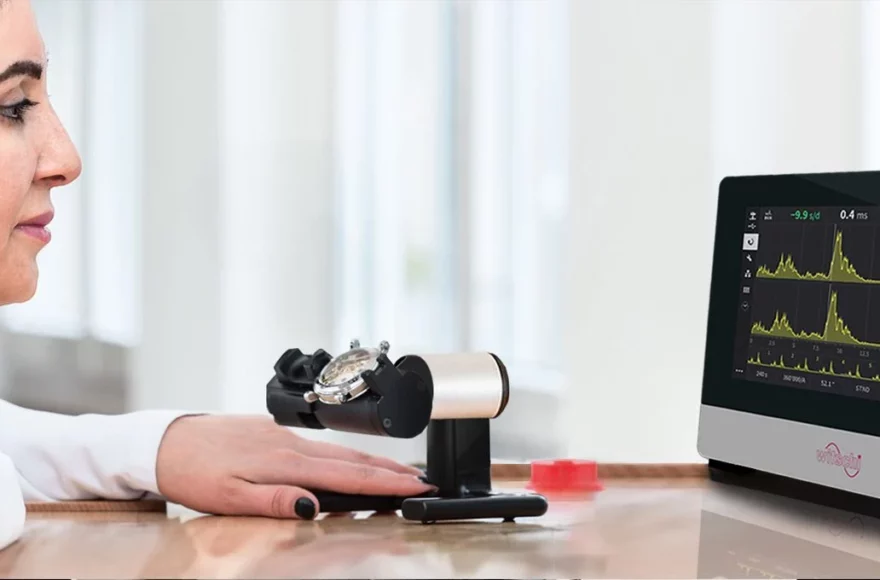
Accuracy is also markedly different. An ordinary mechanical movement may gain or lose several seconds per day, sometimes more depending on its design, adjustment and position. A properly functioning quartz calibre belongs to an entirely different category of precision, typically varying by just a few seconds per month. Meca-quartz retains this advantage for timekeeping.
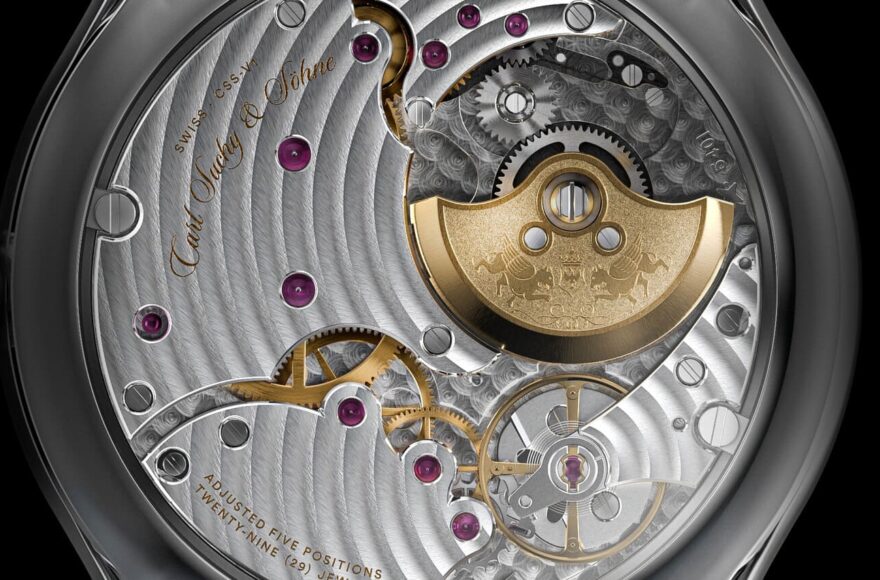
On the other hand, it has no power reserve, oscillating weight, escapement or balance spring. The watch stops when the battery runs down. Nor does its movement offer the finishing quality, architectural depth or heritage value of a genuine mechanical chronograph calibre.
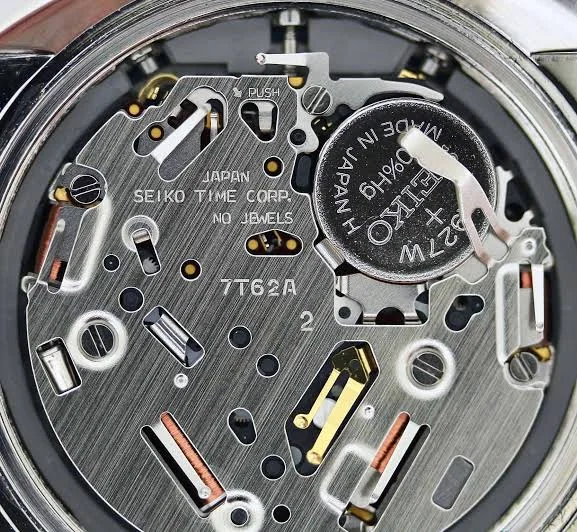
Finally, meca-quartz should be distinguished from a traditional quartz chronograph. The latter can be perfectly accurate and reliable, but its controls are entirely electronic. Meca-quartz adds a mechanical dimension to the chronograph’s operation, primarily in the clutch, controls and reset mechanism.
Why choose a meca-quartz watch?
The first argument is practical. A meca-quartz watch is accurate, relatively insensitive to position and generally less demanding in everyday use than a mechanical chronograph. It requires no regular winding and will not stop after being forgotten in a drawer over the weekend, provided its battery still has charge.
The second is aesthetic. Meca-quartz calibres enable brands to offer dials inspired by 1960s and 1970s chronographs, with counters, tachymeter scales and central hands, without reaching the price of a complex mechanical movement. The case can remain slim, servicing is relatively accessible and the watch retains genuine character on the wrist.
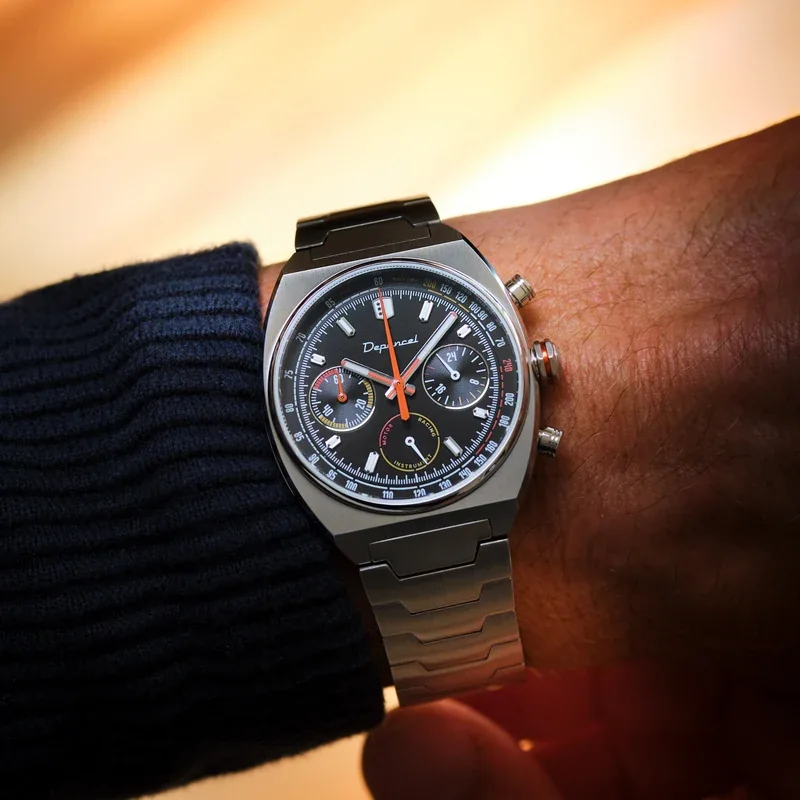
The third is tactile. A watch is also an object to be handled. Starting the chronograph, stopping it and resetting it produce a more expressive interaction than a simple digital display or a quartz watch without a mechanical module. For some enthusiasts, this is precisely where the appeal of meca-quartz lies.
Its limitations—because no solution is magic
Meca-quartz will never replace a mechanical chronograph for a collector drawn to the construction of a calibre, the beauty of a bevelled bridge or the slow choreography of a vertical clutch. The battery also requires periodic replacement. A depleted battery should not be left in the case for too long, as it may leak and damage the movement.
Shock resistance is generally good, but depends on the case and the assembly as a whole. As for repairs, they do not follow the same rules as those for a mechanical movement. A watchmaker may replace certain components, but industrial calibres are often replaced as a complete unit when the fault concerns the electronic module or the motor.
Another limitation is that the terminology is sometimes used very loosely. Some brands speak of a “mechanical feel” for a quartz chronograph whose only mechanical feature is its instantaneous reset. Others use “hybrid” for architectures that have very little in common with one another. It is therefore important to look at the movement’s exact reference rather than relying on catalogue terminology.
So yes, meca-quartz is less sexy—we are not going to lie to ourselves.
How can you recognise a genuine meca-quartz movement?
The technical specifications are the best place to start. References such as the Seiko VK63, VK64, VK67, VK68 and VK73 are clear indicators. Ronda Mecano movements also belong to this broader family of quartz chronographs equipped with mechanical elements in their controls.
In use, observe the central chronograph hand. If it advances in five small jumps per second, it is probably a meca-quartz calibre from the VK family, although this detail alone is not sufficient proof. Then press the reset pusher with the watch stopped: the instantaneous return of the hands, combined with a decisive control, provides another clue.
Meca-quartz ultimately deserves better than the label of compromise. It is not trying to fool enthusiasts by pretending to be a mechanical movement. It answers a different question: how can quartz precision and simplicity be retained while giving the chronograph a more physical presence? Its answer is pragmatic, occasionally ingenious and often highly enjoyable.
In an era when every watch must be assigned to one camp—mechanical or electronic—meca-quartz offers a reminder of an obvious truth: watchmaking has always advanced by combining technologies. Provided you know what you are buying, and do not mistake a well-deployed battery for a mainspring in a tuxedo (I am particularly proud of that line).