Should You Polish Your Watch?
The temptation of “like new”: a sign of the times
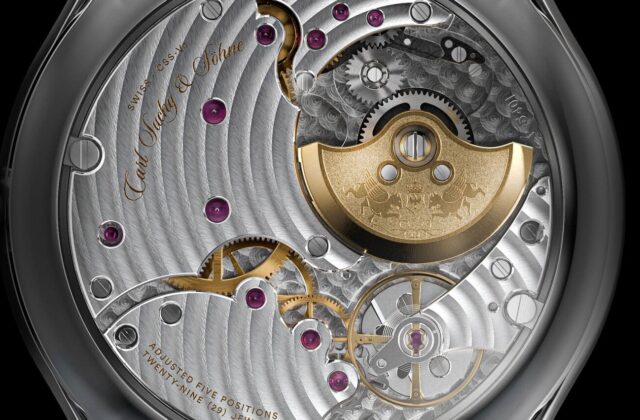
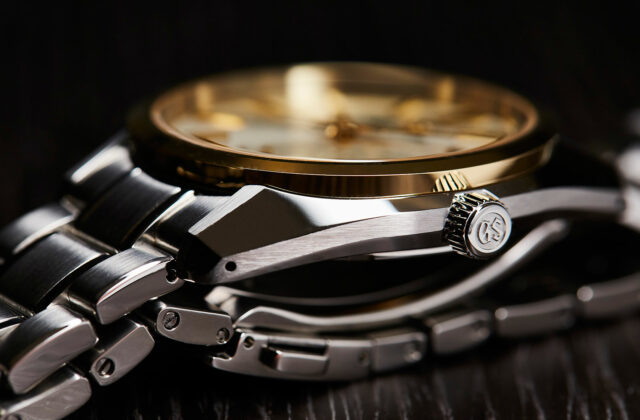
All it takes is a beam of light catching a scratched caseband for the thought to pop up: “What if I had it polished?” In the collective imagination, polishing is the promise of a return to origins—a watch made young again, freed from the marks of everyday life. Yet in watchmaking, “like new” is not always an upgrade. A scratch can be a flaw… or a memory. Patina can be wear… or a signature. Brushed finishes and other decorative techniques, such as perlage and Côtes de Genève, also play into this duality, sculpting the light across every component.
The dilemma is as cultural as it is technical. It pits two visions of luxury against each other: the immaculate object, and the lived-in object. In fashion as in watchmaking, contemporary taste is rediscovering the beauty of time passing—the noble wear of leather, the softened gleam of metal, the gentler feel of edges that are less aggressive. In watches, that translates into a word that has become almost sacred: patina.
What exactly is polishing? (And why it’s not trivial)
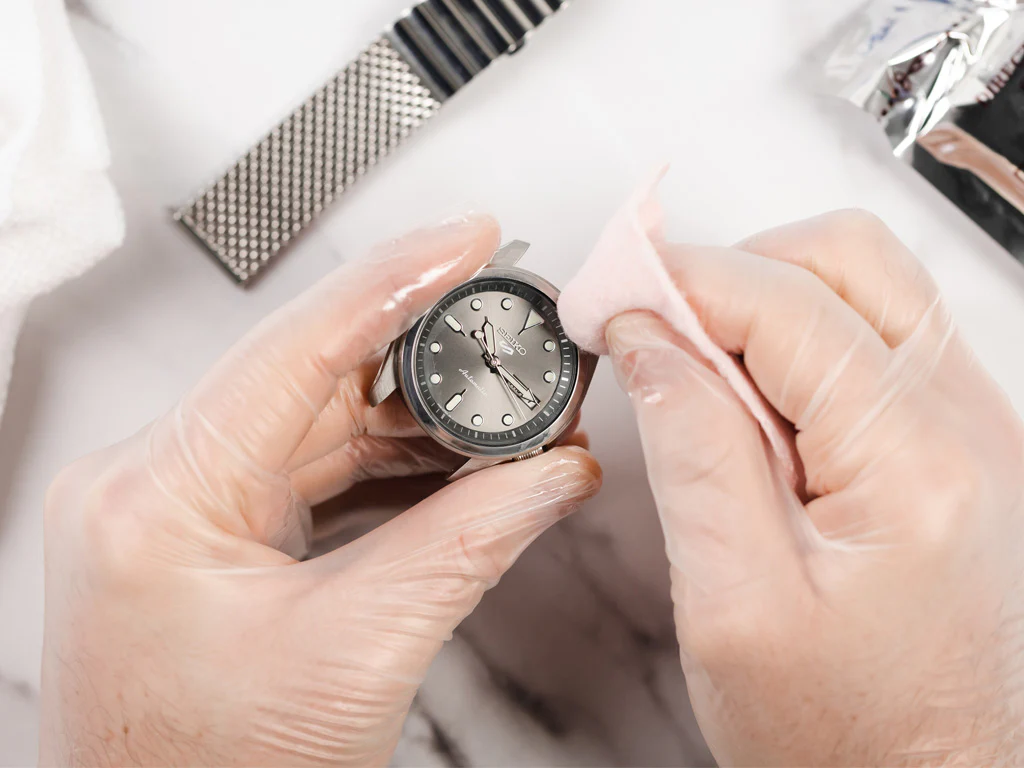
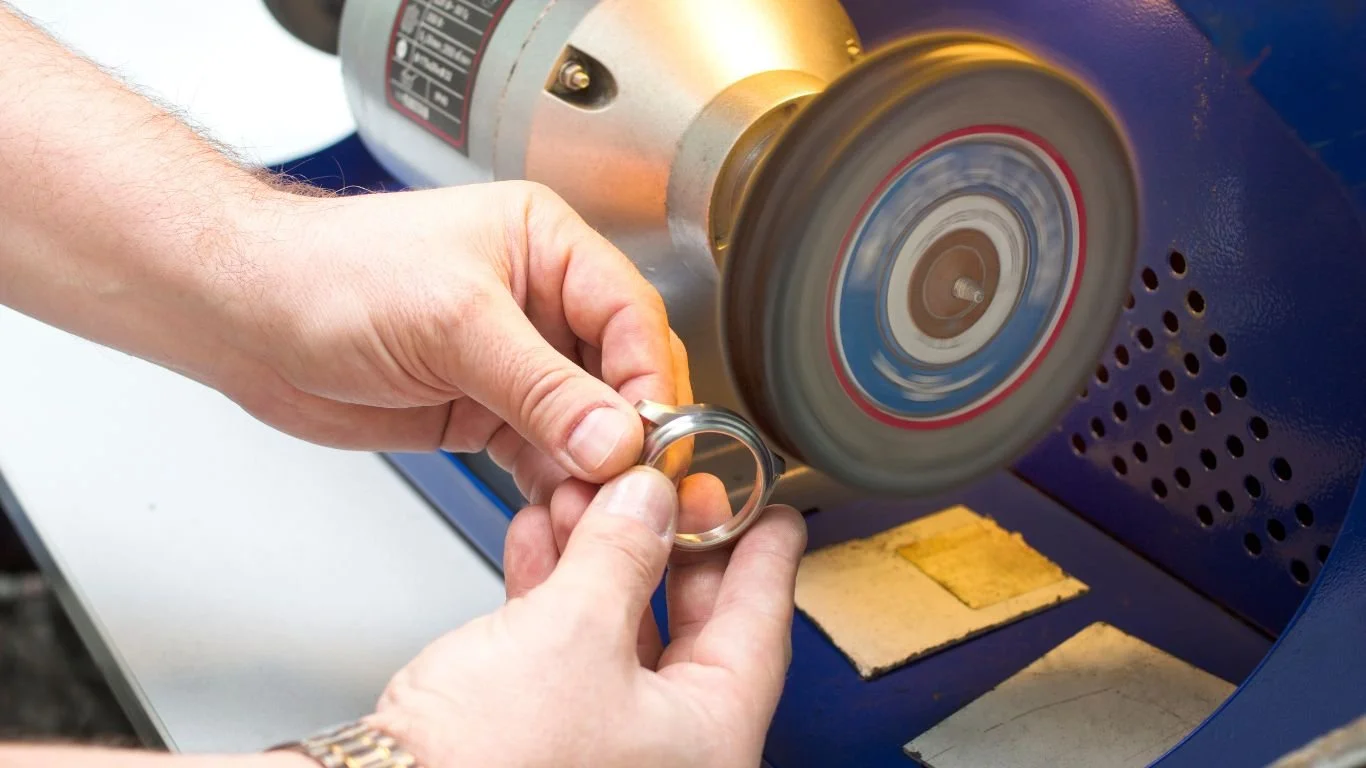
Polishing involves removing an infinitesimal layer of metal to soften or erase scratches. On a watch, this mainly concerns the case (caseband, lugs, bezel) and sometimes the metal bracelet. The process is carried out in stages: pre-polish, polish, and—crucially—restoring the original finishes (brushed, satin, mirror polish).
The key point: you don’t “clean” a watch by polishing it—you alter its material. Even if the amount of metal removed seems microscopic, it adds up over repeated interventions. And on certain designs, a few tenths of a millimetre are enough to change the silhouette.
Finishes: the invisible soul of a case
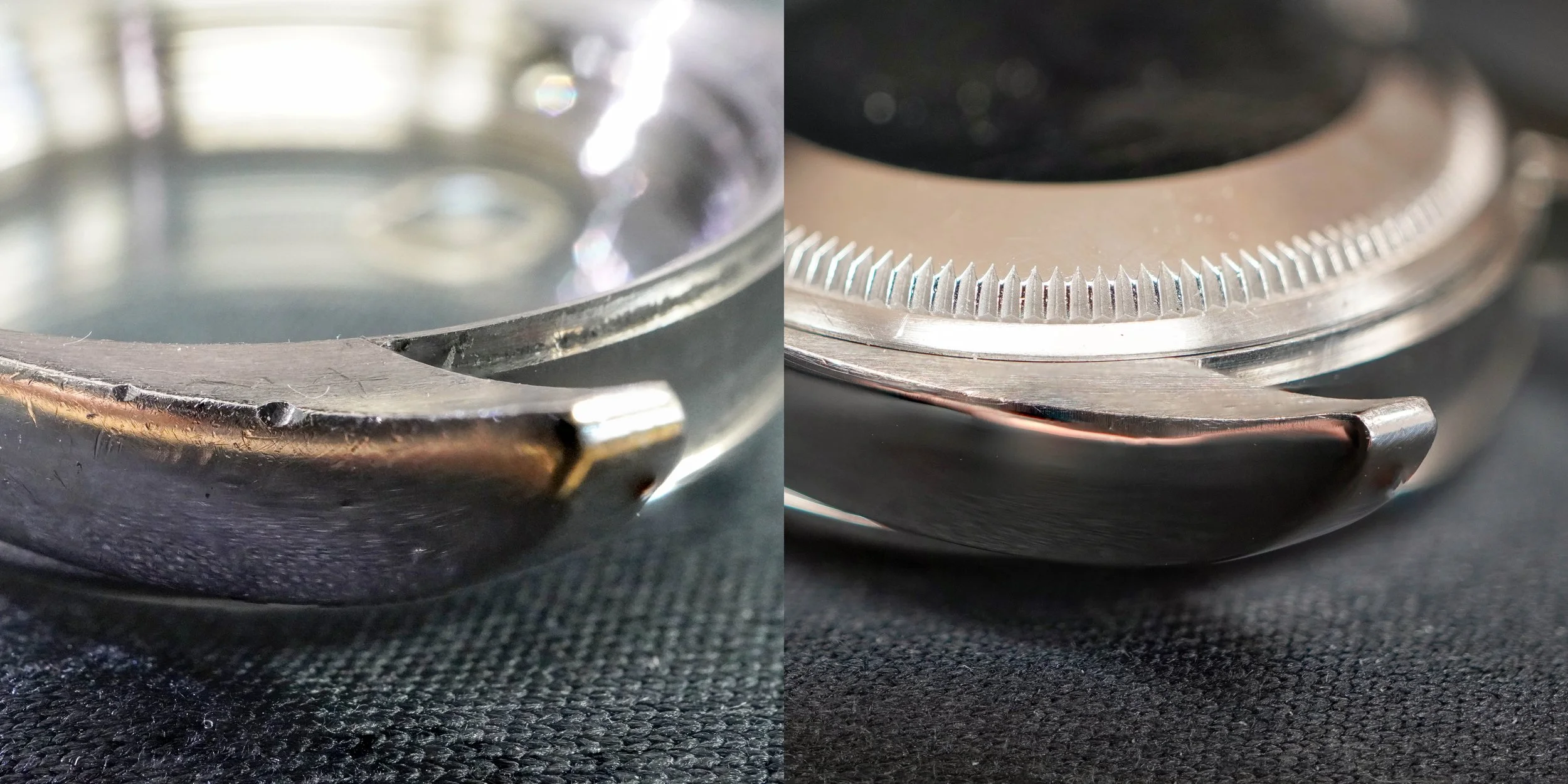
A Royal Oak without its crisp edges, a Submariner without the geometry of its lugs, a Speedmaster whose brushed surfaces turn blurry: the risk isn’t merely aesthetic—it’s one of identity. The great manufactures work finish contrasts the way a couturier works a cut. Poor polishing can “round off” what was meant to remain sharp.
Why people polish a watch: the good reasons
Polishing isn’t a horological crime. It’s a tool—sometimes legitimate, often useful. The key is knowing why you’re doing it.
- To restore visual coherence: a heavily marked watch can lose its charm if the scratches are deep, uneven, or concentrated in one area.
- To prepare for a sale: some buyers prefer a fresher-looking case, especially on modern models with no “vintage” appeal. Be careful, though: in the collectors’ market, polishing can also reduce desirability.
- To repair knocks: a ding on a lug, a dented bezel… Here we’re sometimes talking more about reworking metal than simple polishing, with all the limits that implies.
- To accompany a full service: many service centres offer case/bracelet refinishing as an option, to make the watch look uniform after maintenance.
The risks: when polishing erases history (and value)
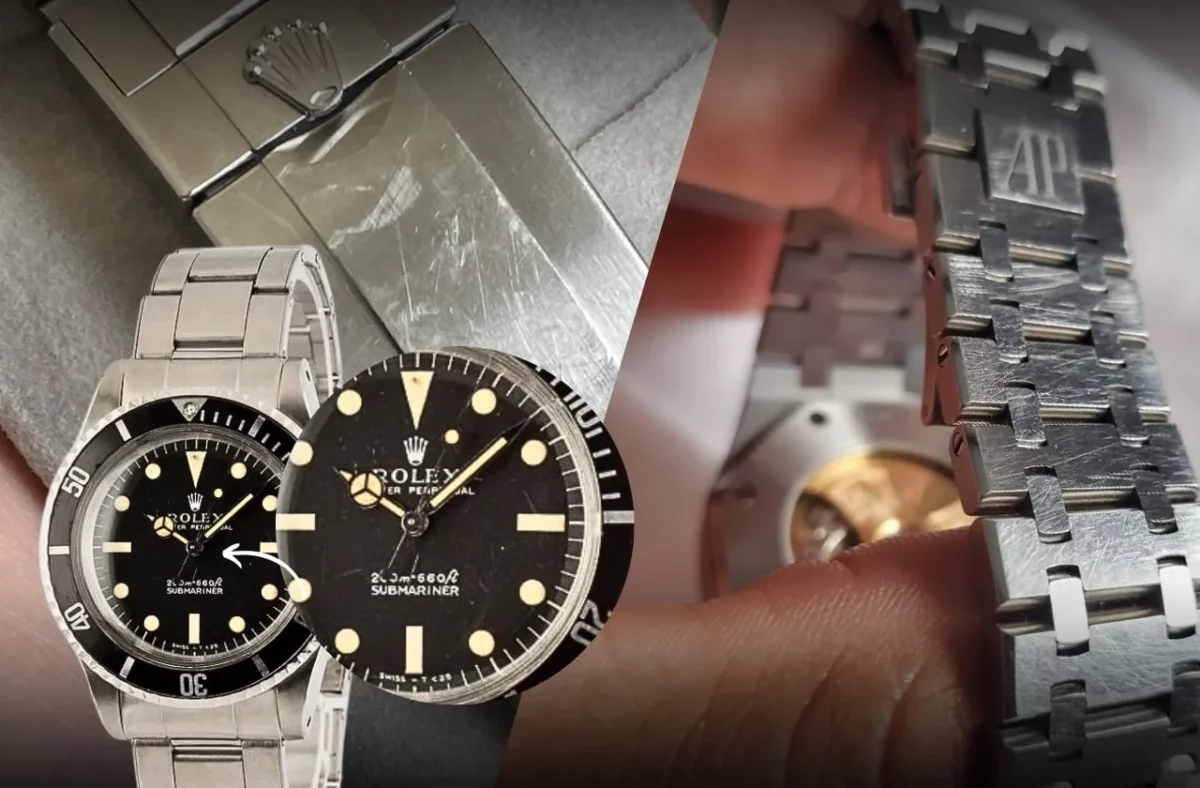
The main danger is confusing scratches with structural defects. A scratch tells a story of use. A softened edge, on the other hand, tells the story of an intervention. And in the watch market, interventions show.
1) Loss of material and distortion of the lines
Lugs that thin out, chamfers that vanish, brushed surfaces that get “smoothed”: these are the classic symptoms of polishing that’s too aggressive or repeated too often. On certain angular watches (1970s designs, faceted sport-chic cases), the impact can be immediate.
2) The “wrong” polish: uniform shine and betrayed finishes
A common mistake is polishing a watch until it becomes uniformly shiny, as if it had emerged from a bath of light. Yet many cases alternate mirror polish and brushing. Erasing those contrasts is erasing the design.
3) Collector value: sometimes an honest scratch is better
With a vintage watch, the logic often flips: a “never polished” piece with consistent marks can be more desirable than a “refinished” one with altered proportions. In collectors’ vocabulary, people talk about a “sharp” case (crisp edges). An over-polished case becomes “soft”. And that “soft” can be expensive.
Patina, scratches, lived-in character: where do you draw the line?
It all depends on the nature of the watch and your relationship with the object. A tool watch, worn to be lived in, can wear its marks the way a leather jacket wears its creases. Conversely, a dress watch that’s ultra-polished from the factory can look a bit sad once it’s covered in micro-scratches with no harmony.
But the real question is almost philosophical: are you looking for a “perfect” watch, or a watch that’s “yours”? In today’s luxury world, controlled imperfection can sometimes be chic-er than overzealous restoration—especially if that restoration wipes away what you’ve lived with it.
When it’s better to avoid polishing
- Vintage or collectible watches: especially if case geometry is a key value criterion.
- Designs with crisp edges and complex finishing: facets, chamfers, pronounced brushed/polished alternation.
- Watches that have already been polished several times: proportions eventually give away the history.
- If you’re considering resale to collectors: transparency is essential, and “unpolished” is often a selling point.
Smart alternatives to polishing
1) Professional cleaning (with no material removal)
People often confuse “dirty” with “scratched”. A proper clean can already transform a watch’s appearance: deposits, grease, dust embedded between bracelet links… A clean watch looks crisper, without losing a micron of metal.
2) Light, targeted re-satinising (by a specialist)
On certain brushed finishes, a competent workshop can carry out a light refresh while respecting the direction of the original brushing. It’s a subtler operation than an all-over mirror polish, but it demands a truly skilled watchmaker’s hand.
3) Accepting micro-scratches as a style detail
On polished steel, micro-scratches are almost inevitable. The obsession with “zero defects” can become exhausting. Many enthusiasts eventually see these traces as natural background noise—so long as there are no deep impacts.
Polishing your watch: best practices (if you decide to do it)
If you choose polishing, do it methodically. This isn’t a “cosmetic” operation to hand over lightly.
- Choose the right person: ideally the brand’s official service centre or a workshop renowned for case restoration.
- Ask for minimal polishing: the goal can be to soften, not to make everything disappear at all costs.
- Insist on respect for the original finishes: brushed/polished alternation, angles, chamfers, the grain of the satin finish.
- Try “at-home polishing” but with caution: abrasive pastes, a Dremel, special cloths.
The polishing cloth
Personally, I use a well-known professional steel polishing cloth: the “el famoso” Cape Cod:
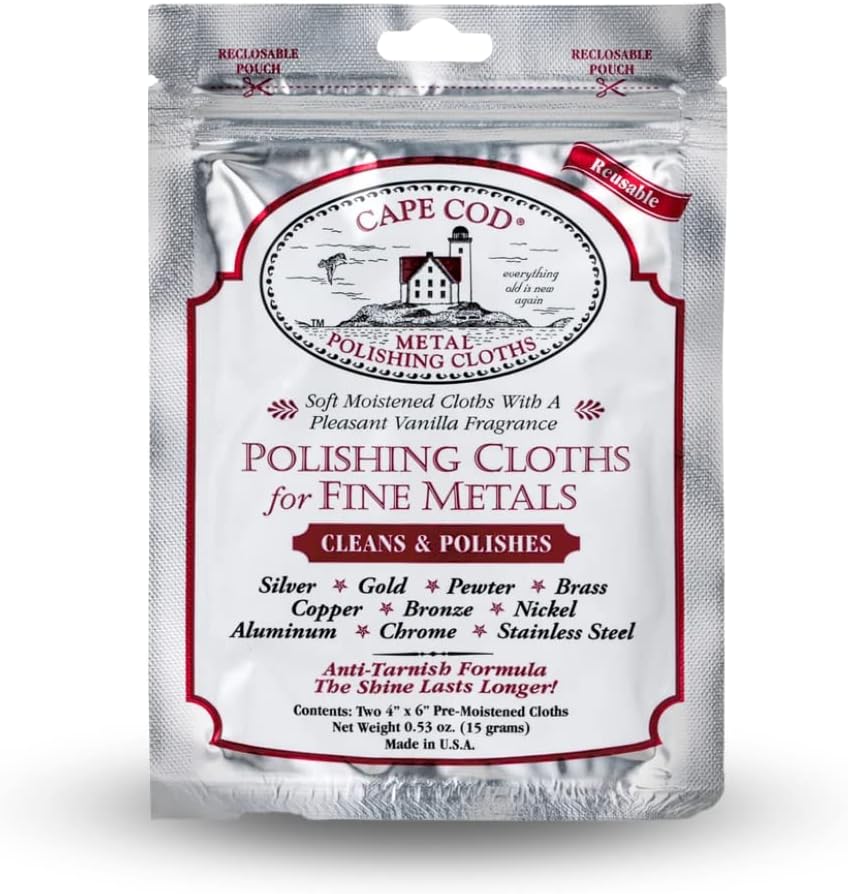
You’ll find it for around ten euros here.
So, should you polish your watch?
Polishing your watch is neither an obligation nor a taboo. It’s a choice that should respect two things: the piece’s design and its history. On a modern watch worn every day, a light, well-executed polish can bring back the pleasure. On a vintage or sought-after watch, the most elegant option is often… to do nothing, or almost nothing.
Video tutorial: polishing your watch