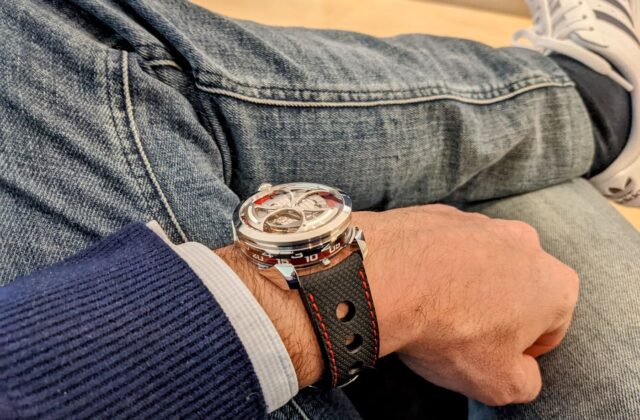
This Hand-Wound Watch Defies the Laws of Thinness
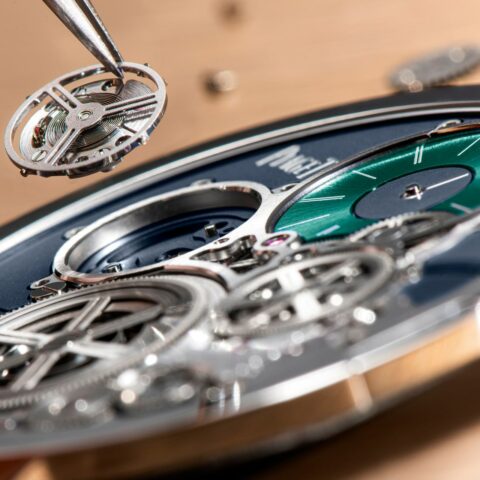
The obsession with thinness, reinvented by hand
Some watches tell the time, and others tell a pact between the eye, the hand and the material. This ultra-thin, hand-wound piece, heir to a long tradition of mastering slimness, belongs to the latter category. Its promise is simple, almost provocative: to defy gravity and compress a mechanical movement into a breath of metal—without giving up the pleasure of the manual gesture, the one that, each morning, reconnects the collector with living mechanics.
In a landscape saturated with thunderous complications, true modernity sometimes lies in thickness—or rather, in its absence. Reducing everything to the maximum means there is no longer any hiding place for approximation. Here, everything is visible, legible, crisp. The case looks as if it were carved with a scalpel; the sapphire crystal disappears; the dial—when there is one—slides like a sheet beneath a shirt cuff. This watch isn’t thin; it’s a statement: minimalism as an extreme discipline, pushed to its apex by a maison that has always made thinness a field for experimentation.
An engineer’s architecture more than a movement
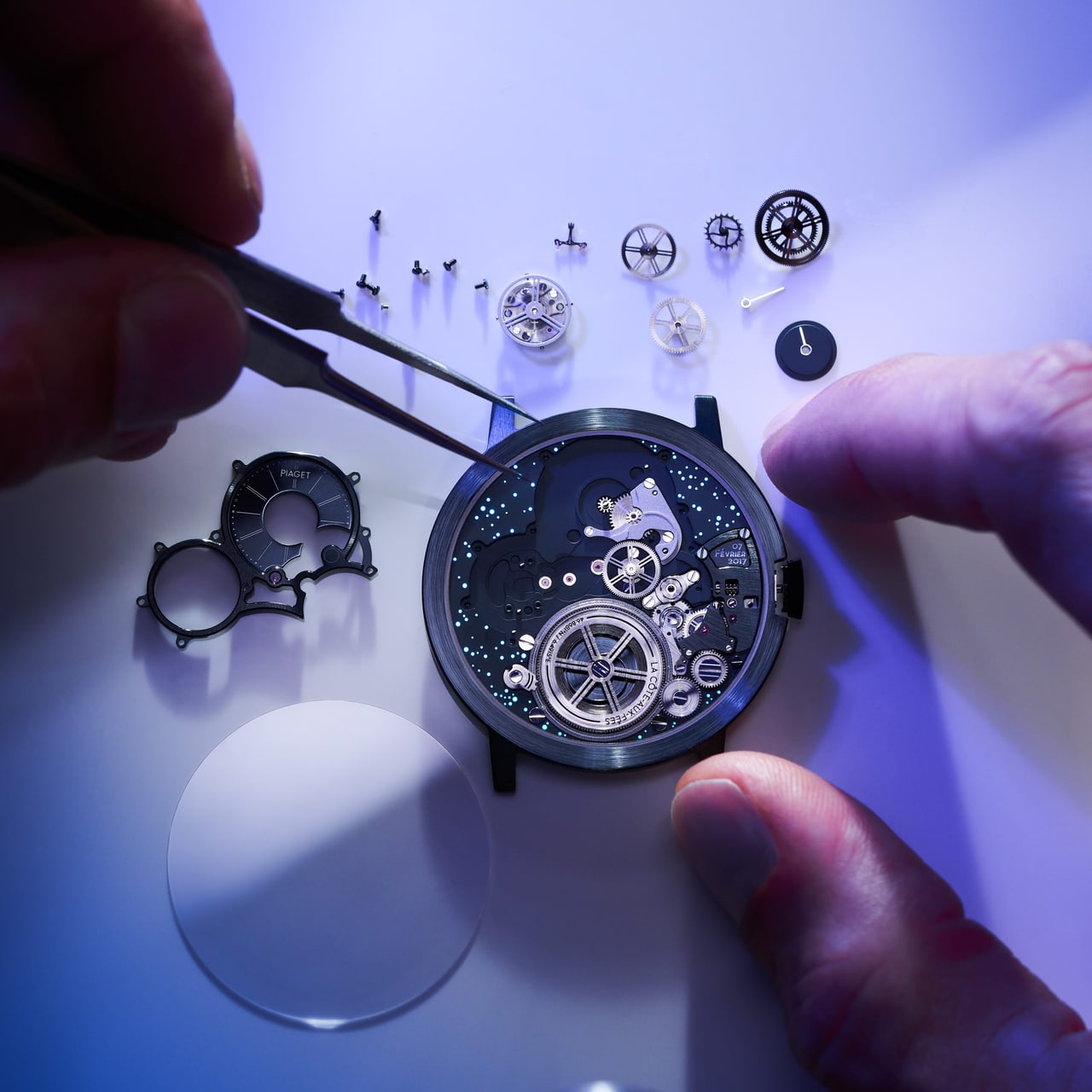
To reach this kind of thinness, you don’t “slim down” a conventional calibre: you reinvent its topography. The middle case becomes the structural mainplate, the caseback turns into a load-bearing skeleton, bridges dissolve into ribs where every hundredth of a millimetre counts. Winding, military in its discipline, is handled via a flush crown, in order to banish any protrusion.
Materials speak the language of innovation: cobalt alloy for extreme rigidity, PVD or DLC treatments to stabilise surfaces. Sapphire itself, thinned to the point of audacity, demands polishing that flirts with the impossible. At this scale, watchmaking becomes micro-architecture: every tolerance is an aesthetic decision, every compromise shows.
- Monobloc mainplate-case: fewer parts, greater rigidity, a purified silhouette.
- Reconfigured barrel for consistent torque despite the minimal height.
- Rethought transmission: optimised wheel profiles, shortened pivots, flush-set jewels.
- Stabilised extra-flat escapement, sometimes at a moderate frequency to preserve autonomy.
- Redesigned hand-winding system: patented flush crown, integrated into the caseband to eliminate any protrusion.
The whole delivers the striking impression of a technical blade: 2 mm in total thickness, from caseback to the top of the sapphire, a fixed figure that pushes back the physical limits of traditional mechanics.
The manual gesture, a promise of connection

In an age of all-automatic, choosing hand-winding isn’t nostalgic: it’s deliberate. The absence of a rotor saves crucial tenths, but above all it restores intimacy. You wind, you listen to the click, you feel the mainspring’s tension rise beneath your fingertip. In this watch, the mechanics don’t work alone: they collaborate with the wearer.
The power reserve, optimised by reduced friction, often lands between 40 and 60 hours—reasonable and poetic. Because the ultra-thin doesn’t invite forgetfulness: it asks for an appointment, a ritual. And that is precisely what sets it apart in a daily life saturated with notifications: a simple, manual, calming gesture.
A lineage of icons, a new chapter
This watch belongs to a prestigious lineage. One thinks of the chapters written by pioneering maisons of thinness with pieces that have pushed the limits of thickness—among them the emblematic Bulgari and its Octo Finissimo Ultra, or Richard Mille and the RM UP-01: visions of the same obsession, ways of distorting thickness without breaking reliability. Some made the case the mainplate; others rolled the oscillating mass so thin it all but vanished. All imposed a language: digitising mechanics, rationalising design, putting the structure front and centre, while integrating elements of the hybrid connected watch.
Today’s piece fits squarely within that family, heir to that philosophy: never to treat thinness as a mere technical datum, but as a workshop culture.
It doesn’t chase a record for the sake of a record. It plays a different score: genuine comfort, studied legibility, and a hand-winding system intelligently integrated. Innovation is visible, but above all it is felt on the wrist—which, in watchmaking, remains the ultimate test.
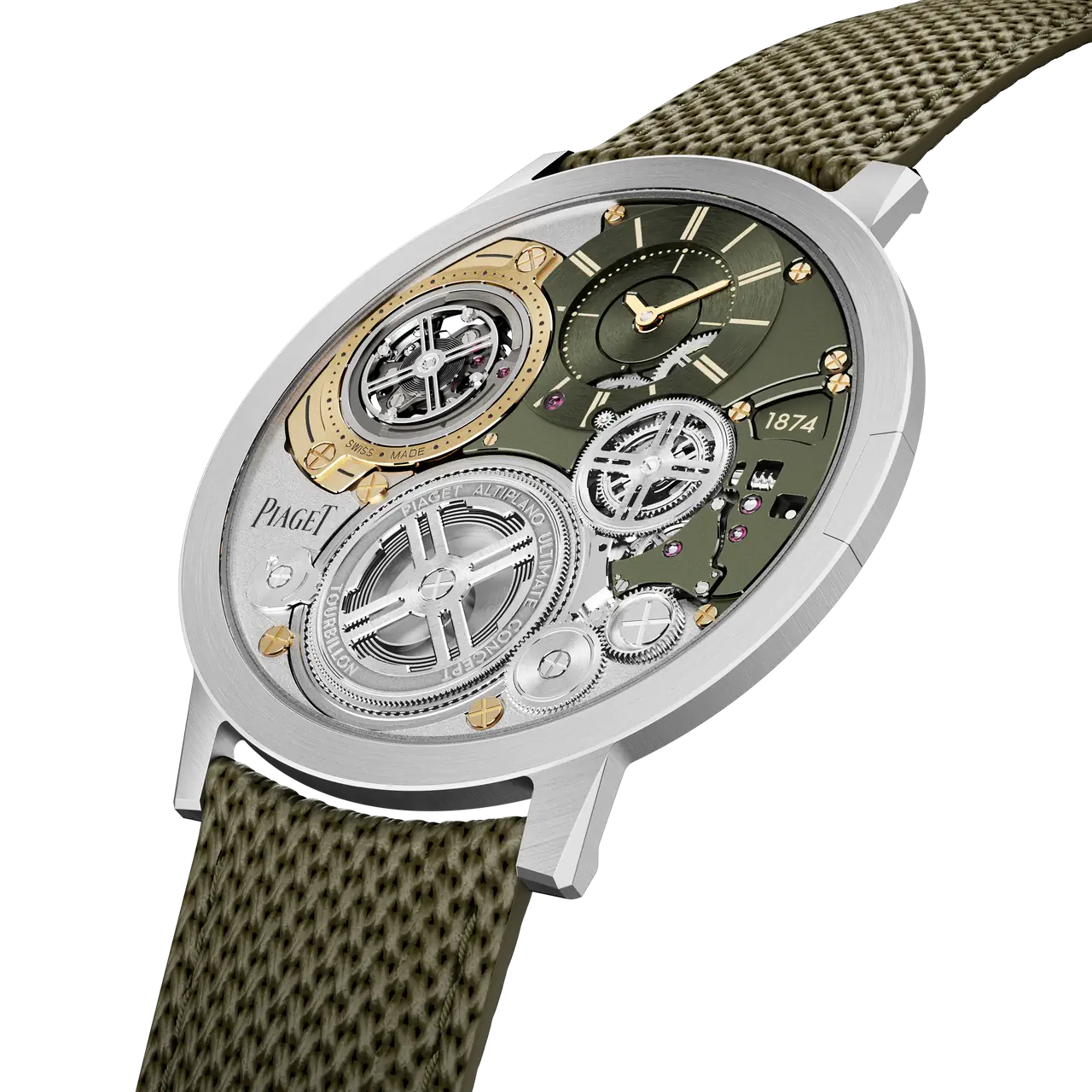
That is where the informed reader recognises the silhouette: we are indeed talking about the Piaget Altiplano Ultimate Concept, in its most accomplished interpretation.
Wrist style: the invisible blade
Beyond the spec sheet, it’s a style watch. Satin-brushed angles, crisp edges, indices like whispers: the hand-wound ultra-thin re-enchants sobriety. It disappears under a cuff, then reappears with a gesture, in a muted gleam. Far from demonstrative, it practises the art of almost-nothing—French in spirit: discreet, architectural luxury, schooled in “Less is more” interpreted with warmth.
- A considered diameter (41.5 mm) to preserve visual balance.
- So little thickness that it redefines the notion of comfort under a fitted shirt.
- Sober tones—greyed titanium, bluish cobalt, satin black—that let the form speak.
- A slim alligator strap or technical textile: flexibility and elegance without weighing down the line.
It’s the watch for those who know how to look closely. This Piaget calls for neither thunderous compliments nor performance badges: it waits for the knowing glance, the one that understands the difficulty lies first and foremost in the detail.
For whom, and at what price?
It must be said: this hand-wound ultra-thin is aimed at patient aesthetes. At collectors who understand that a tenth of a millimetre can cost months of engineering, and that innovation isn’t just talk, but tooling, adjustment, a series of micro-gestures at the bench. Quantities are small, waiting lists are real, and the entry ticket reflects the effort: that of know-how few workshops truly master. We are in the realm of haute horlogerie here, with prices that brush the top of the category.
Why this ultra-thin is iconic
It isn’t merely an exercise in industrial ego. By pushing the boundary of what’s possible in a hand-wound object, this watch restores meaning to the word “innovation”. It doesn’t seek to replace you; it invites you to collaborate. It doesn’t shout; it whispers—reminding you, each morning, that beauty lies both in the precision of an angle and in the softness of a gesture.
Thinness is not an end here: it is a language. Translated through today’s materials, cutting-edge techniques and the workshop culture that gives fine watchmaking its dignity. And if one had to sum up its charm, it would be this: modern enough to do without thickness, and human enough to demand the hand. In a world that accelerates, this is a rarity—a hand-wound ultra-thin that turns the moment into an experience, and innovation into the obvious.