Why Champagne-Dial Watches Are in Fashion

A colour that catches the light—and the eye
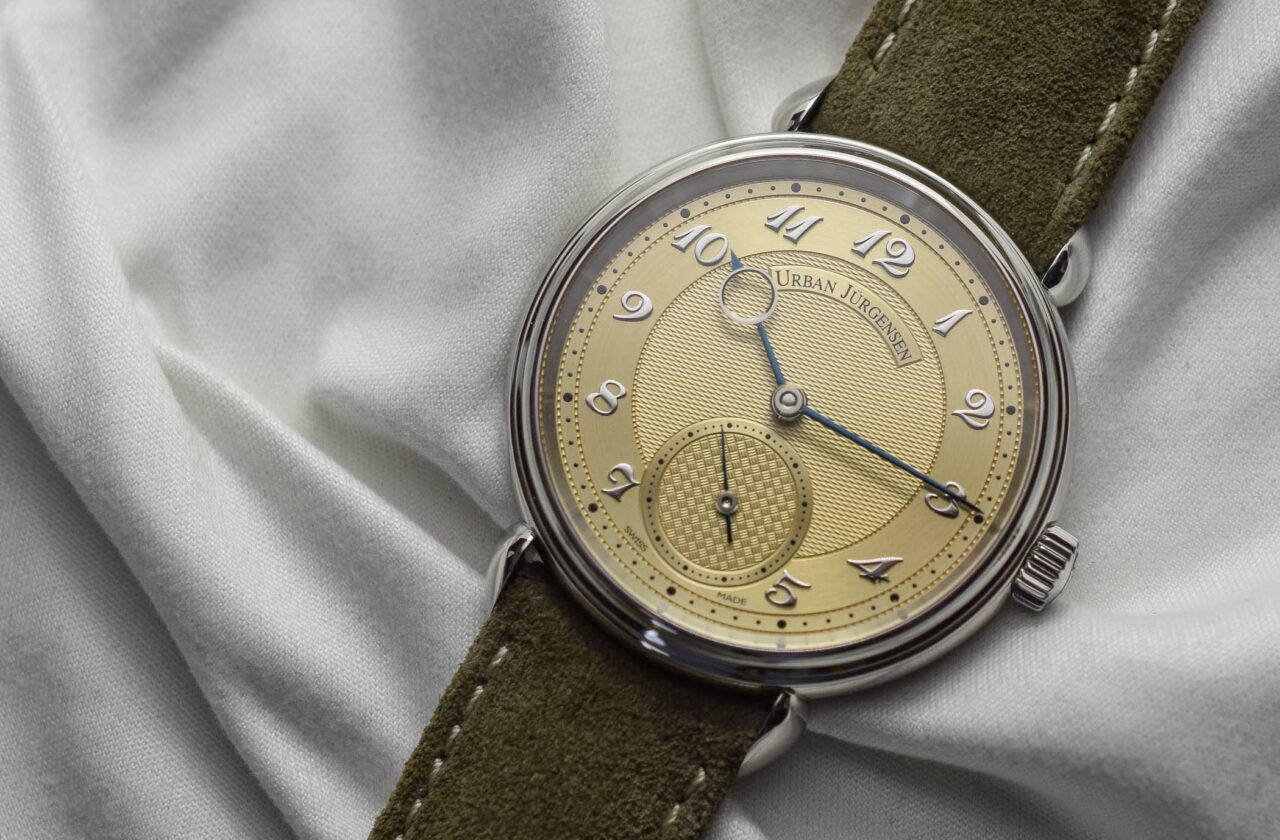
All it takes is a low, late-afternoon ray to understand the appeal of a champagne-dial watch. The disc comes alive, shifting between straw and honey, then settling into a soft, matte calm. It’s a living shade—less showy than polished gold, more refined than cold silver—that charms without trying. At a time when elegance is meant to be discreet, this colour becomes the secret language of knowing wrists, much like how case diameters have shrunk to favor proportion over boldness in modern watch design.
Where the charm began: from “gilt” to the golden years
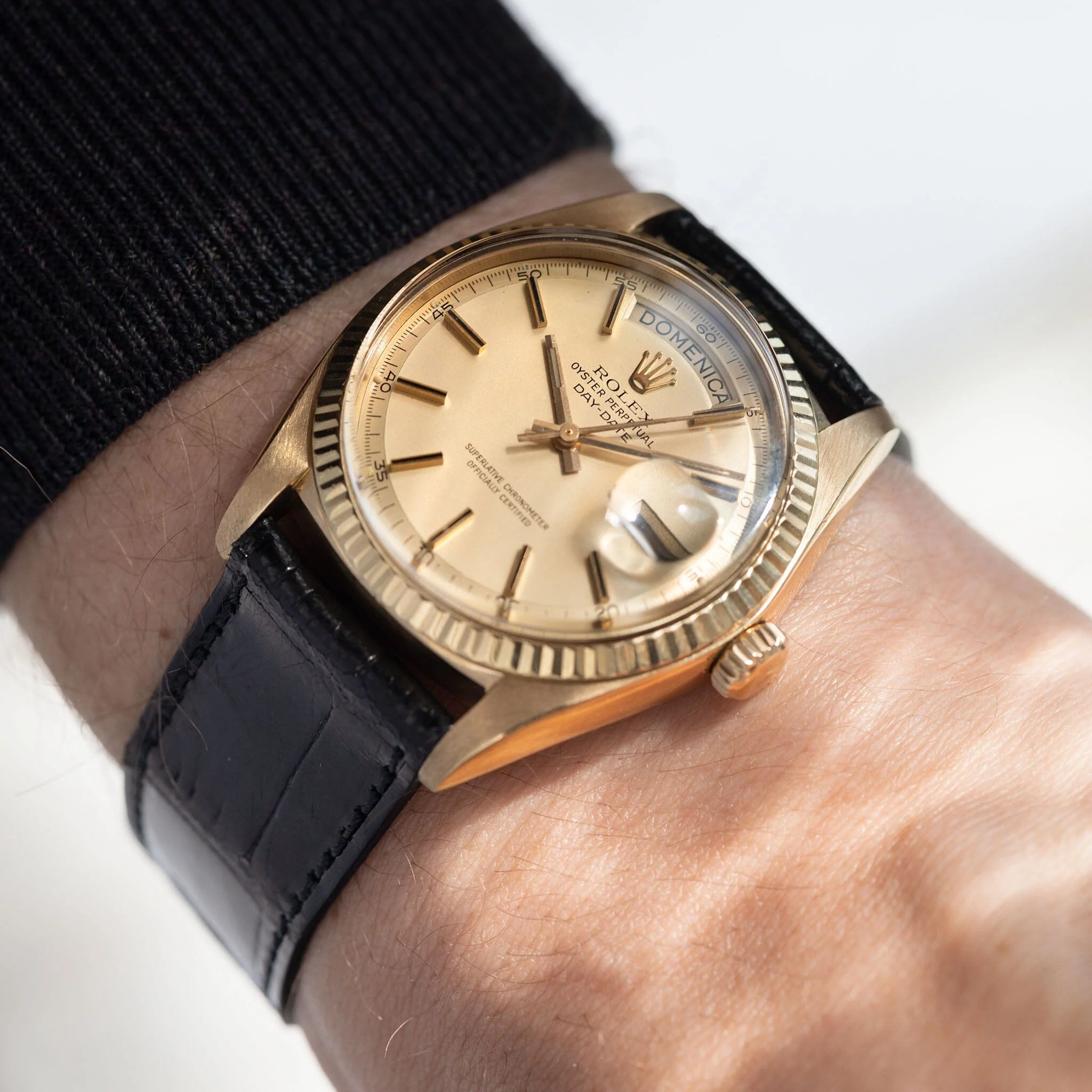
The champagne dial has its roots in the great tradition of galvanic gold dials and “gilt” printing from the 1940s to the 1960s. Back then, gold and steel already coexisted, and the idea of a warm disc—less white than silver—naturally found its place on dress pieces as well as versatile city watches. Later, in the 1970s and ’80s, two-tone (steel/gold) popularised a sunny, urban aesthetic: a nod to hedonism, now resurfacing with a new maturity.
Fashion is cyclical, of course, but the return of the champagne dial goes beyond nostalgia. It answers a desire for tactile, sensory luxury—where you can feel the material, the depth, and the potential for patina. Many collectors love the way it evolves: a champagne dial can look paler at the office, more amber in the sun, almost sandblasted in the evening. A watch that changes is already a conversation.
Current trend: retro-luxury in a “quiet” key
Why now?
Several currents are converging:
- The return of sensible sizes and restrained silhouettes, favouring nuance over ostentation.
- The vogue for warm palettes in menswear and womenswear: beige, tobacco, ecru, linen—tones that naturally converse with champagne.
- The search for versatile pieces that move from jeans to a suit without a false note.
- Renewed interest in the watch culture of the 1960s–70s, a rich era for sunburst brushing, faceted indices, and gilt markings.
Technically speaking, what are we talking about?
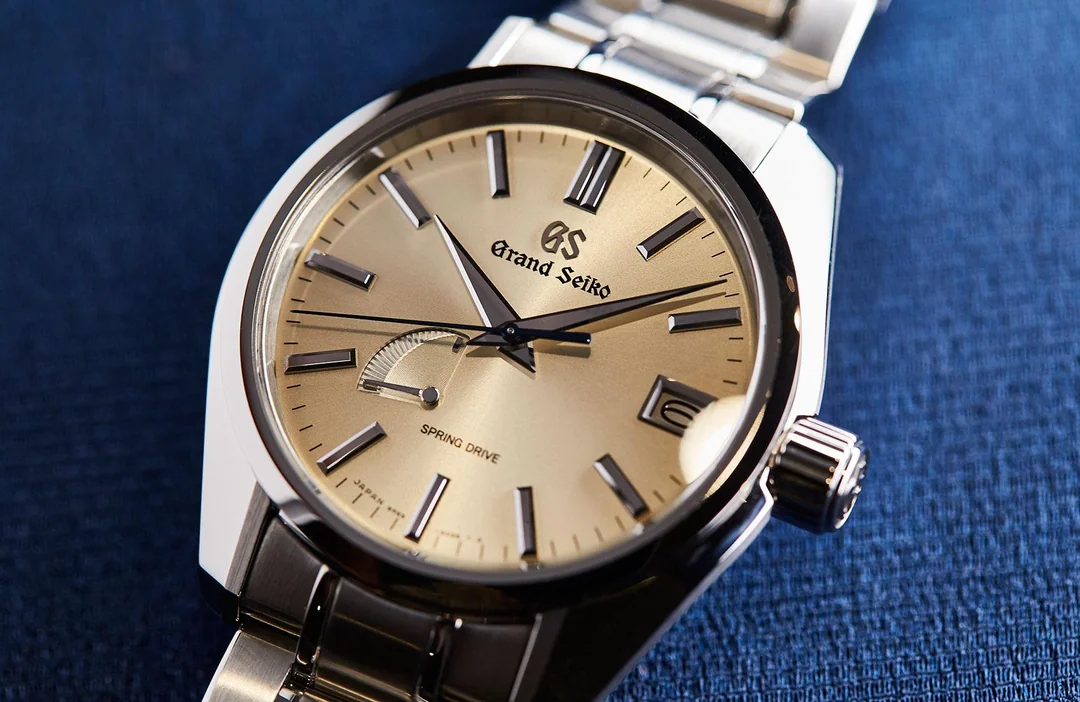
Champagne isn’t a single colour, but a family of tones achieved through different processes. You’ll come across pale-gold galvanic dials, sunburst finishes that stretch the light, sometimes warm lacquers or slightly opalescent varnishes. Some opt for “gilt” printing—gold text and minute track applied before the base layer—delivering rare chromatic coherence. Applied indices (batons, dauphine facets, Arabic numerals) then provide pinpoint flashes, boosting legibility without breaking the harmony.
The real secret? Light management. Champagne elevates micro-architecture: the bevels of indices, the relief of the rehaut, the ribs of a sunburst. Quality shows immediately: even brushing, crisp typography, a gold tone that leans neither too yellow nor too pink. When the balance is right, the whole watch breathes.
Style: how to wear a champagne dial
Steel, gold, or two-tone?
Steel with a champagne dial is the most modern pairing: it tempers the warmth of the disc with the coolness of the metal, perfect for everyday wear. In yellow gold, you’re embracing a dressed-up, almost ceremonial elegance. Two-tone, long shunned, is returning with confidence: more graphic, very Seventies, and it works beautifully with a wardrobe inspired by Italian tailoring.
Straps and textures
- Tobacco, cognac, or honey leathers: extend the dial’s softness without overloading it.
- Grey or taupe suede: a contemporary, less expected option—very chic on steel.
- Brown alligator: the formal route, ideal with a dark suit.
- “Beads of rice” or Jubilee steel bracelet: a retro accent, with complementary play of reflections.
Sizes and proportions
Champagne lends itself to restrained diameters—34 to 39 mm—that highlight the dial’s light rather than the case’s presence. Short lugs, a slim rehaut, and decent anti-reflective treatment further reinforce that impression of quiet sophistication. On fair skin as on tanned skin, the shade flatters the wrist: it warms cooler complexions and extends golden tones.
Three profiles, the same temptation
- The contemporary minimalist: slim steel case, matte champagne dial, three hands, grey suede strap. Guaranteed “art gallery” look.
- The vintage aesthete: dauphine indices, domed hesalite crystal, fine typography. A Sixties city vibe that hasn’t aged a day.
- The two-tone devotee: fluted bezel, bracelet alternating polished/brushed links, sunburst champagne. Riviera spirit, refreshed for today.
Quick buying guide: the enthusiast’s eye
- Dial finishing: look for even brushing, crisp printing, and a uniform shade with no greenish cast.
- Harmony of elements: hands and indices should speak to the colour (gold-toned, rhodium-plated, or well-chosen two-tone).
- Real-world light: check the watch outdoors and indoors; champagne changes dramatically with lighting.
- Versatility: ask yourself whether the watch works with your neutrals (beige, grey, navy). That’s the decisive test.
- Case metal: steel for everyday, gold for dress, two-tone if you like character.
- Movement and size: a slim automatic in 36–38 mm is an excellent balance between tradition and comfort.
- Maintenance: favour easily replaceable straps; a simple taupe leather can transform the whole look.
Why champagne-dial watches are in fashion
Because they embody exactly what enthusiasts are looking for today: presence without ostentation, culture without stiffness, and that indefinable charm only beautiful objects can distil. A champagne dial isn’t a fleeting fad; it’s a shade that tells a story of craftsmanship, light, and time passing. It aligns with the trend, of course—but above all it rises above it, like a fine vintage rediscovered with every sip.
On the wrist, the watch becomes more than an instrument: an invitation to nuance. And that may well be the true modernity.