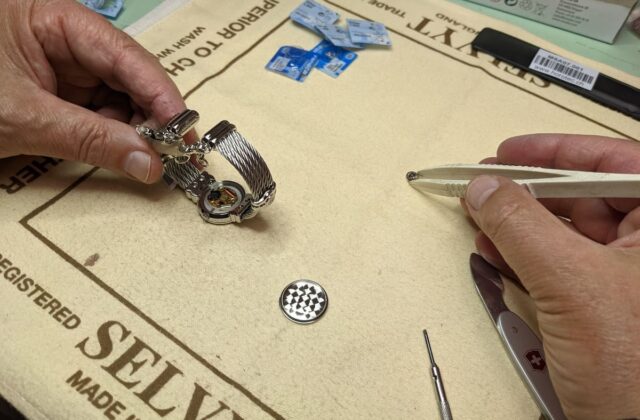
Watchmaking Decoration Techniques
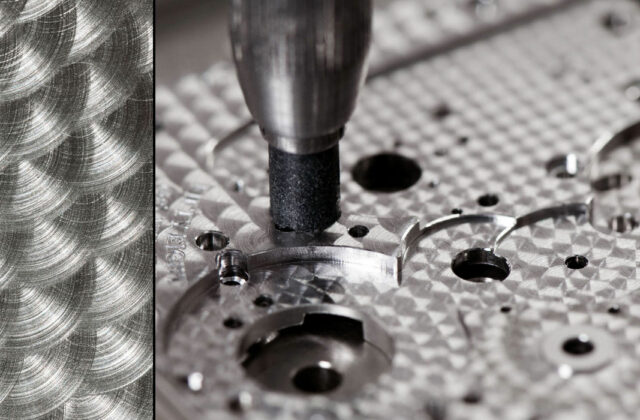
Decoration in watchmaking is different from finishing. Finishing is about perfecting and improving a component (polishing, satin-brushing, etc.), whereas decoration sets out to adorn a part with patterns by engraving it, guillochéing it, applying perlage, and so on.
So it is less a matter of functionality than of decoration, aesthetics, and artistic choice. It lends the watch character, personalises it and sets it apart. Of course, decoration should be used in moderation, otherwise a watch can end up looking overly busy.
Engraving in watchmaking
By engraving, we mean drawings depicting motifs, but also numerals and letters.
Engraving has no limits and can embellish the movements of a luxury watch, as well as bridges, oscillating weights, cases, pushers, and more.
Engraving techniques
There are many of them, from the most artisanal to the most modern, carried out by laser with formidable precision.
Even so, one tends to prefer the charm of hand engraving and its tiny imperfections, which reveal the human touch—intaglio engraving, for example, which involves cutting into the material with a burin.
Perlage
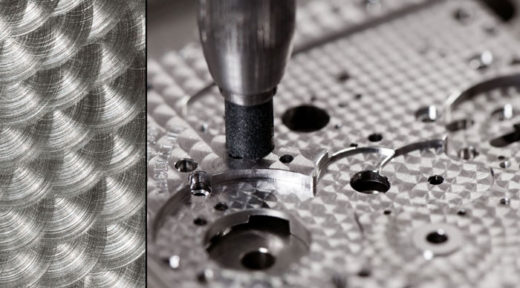
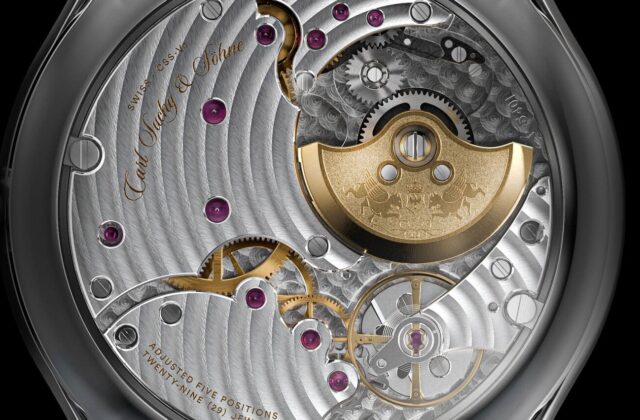
This pattern is a succession of circles. It is found mainly on mainplates or bridges.
Openworking
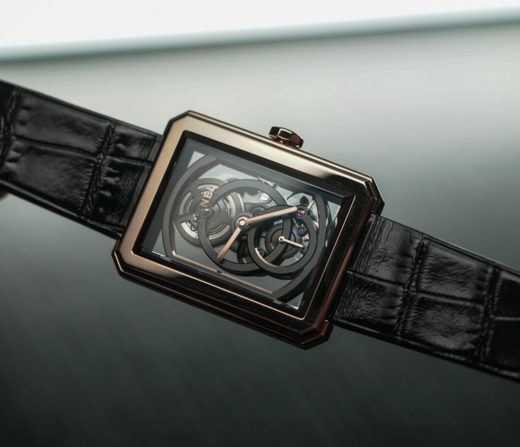
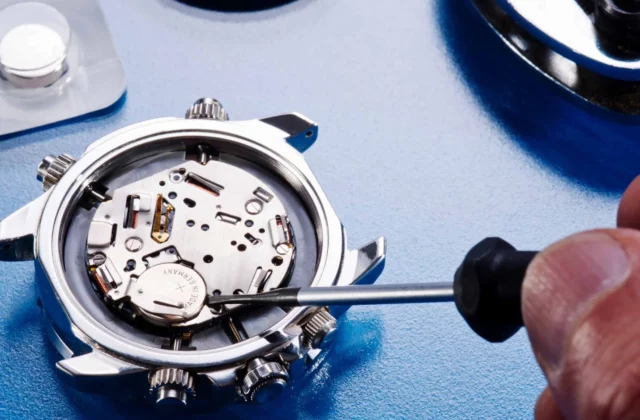
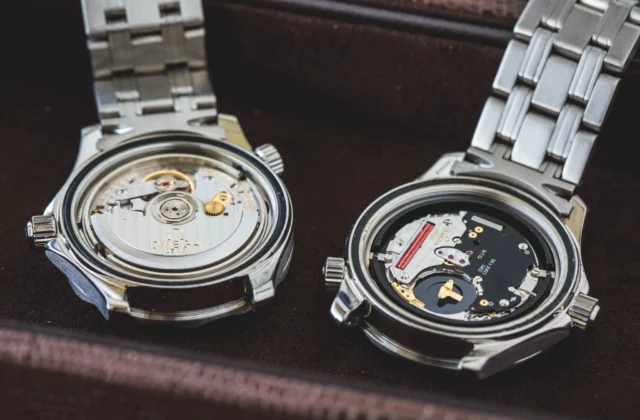
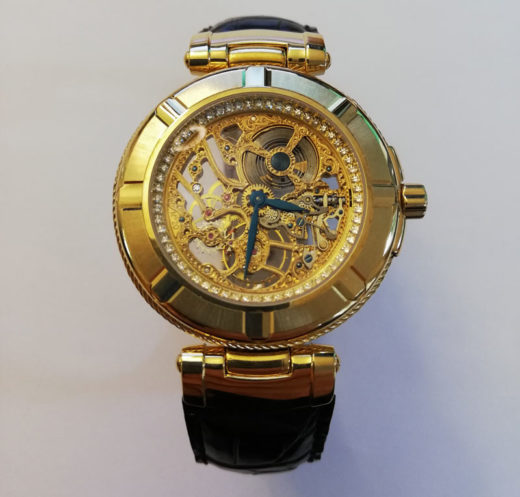
Openworking consists of creating openings to reveal the movement. A skeleton watch has therefore “undergone” openworking. It is best avoided on watch dials whose movement is nothing special. It would be ridiculous to do it on a watch fitted with a quartz movement.
Chasing
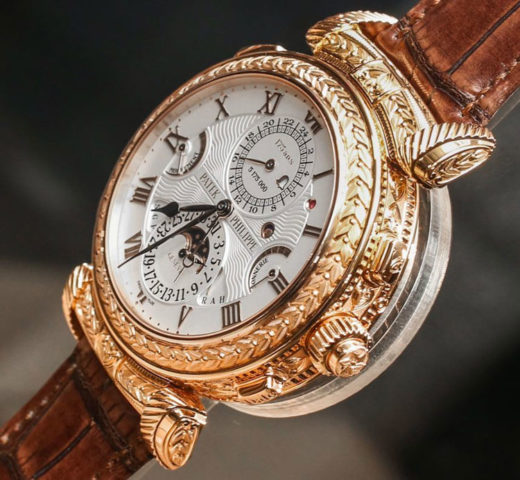
It is the opposite of intaglio engraving. The artisan, or the machine, creates relief by cutting away all around the shape.
Sunburst
As its name suggests, this decoration is made up of rays radiating from the centre, giving the impression of a sun. It is found on movement components. Not to be confused with the sunburst brushed finish often seen on dials.
Geneva stripes
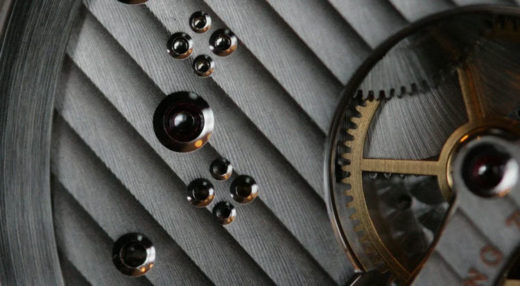
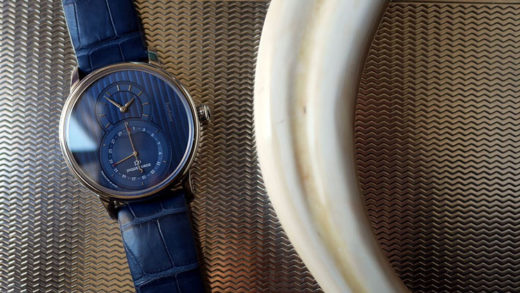
This decorative motif is mainly applied to oscillating weights or bridges. Personally, I love this decoration.
Guilloché
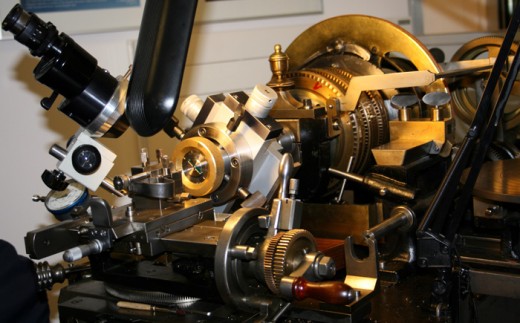
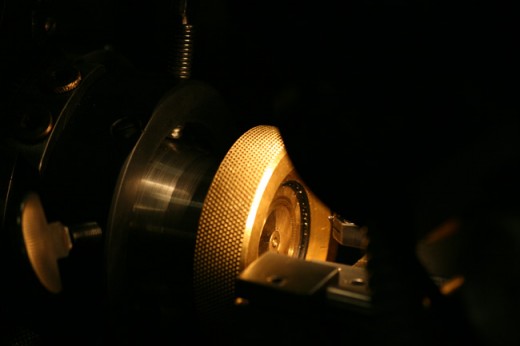
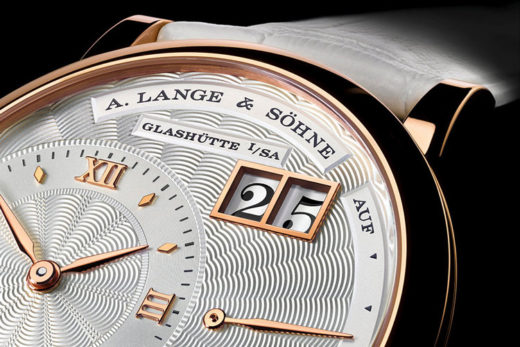
This very old technique consists of tracing lines and curves by removing material. I had the chance to try it on an old guilloché machine at Breguet in Geneva—it was magical. Here is the machine in question: