Why Some Watches Have Flame-Blued Hands
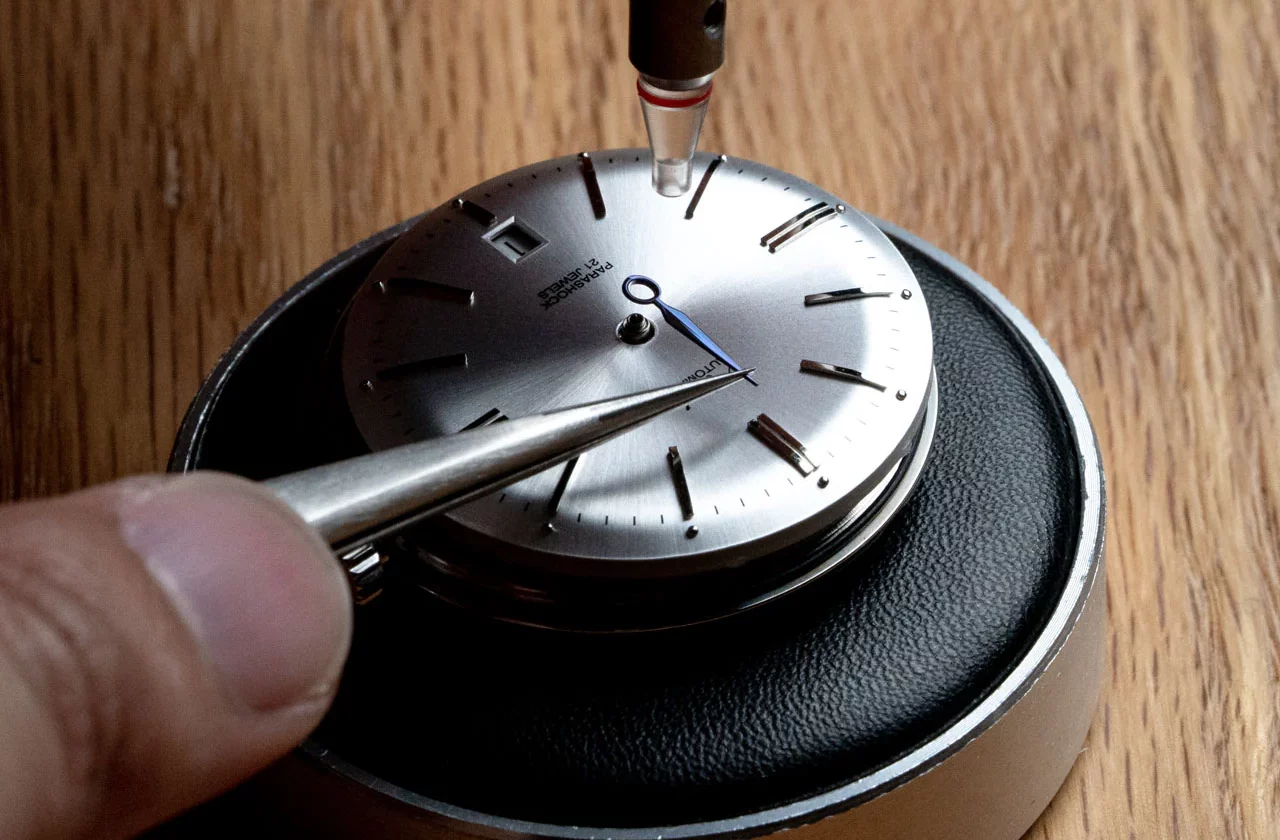
You notice them at first glance: that deep blue, sometimes almost electric, that catches the light and shifts in tone depending on the angle. It immediately conjures up a certain idea of watchmaking “beauty”: care, craft, tradition. Today, let’s talk about flame-blued hands.
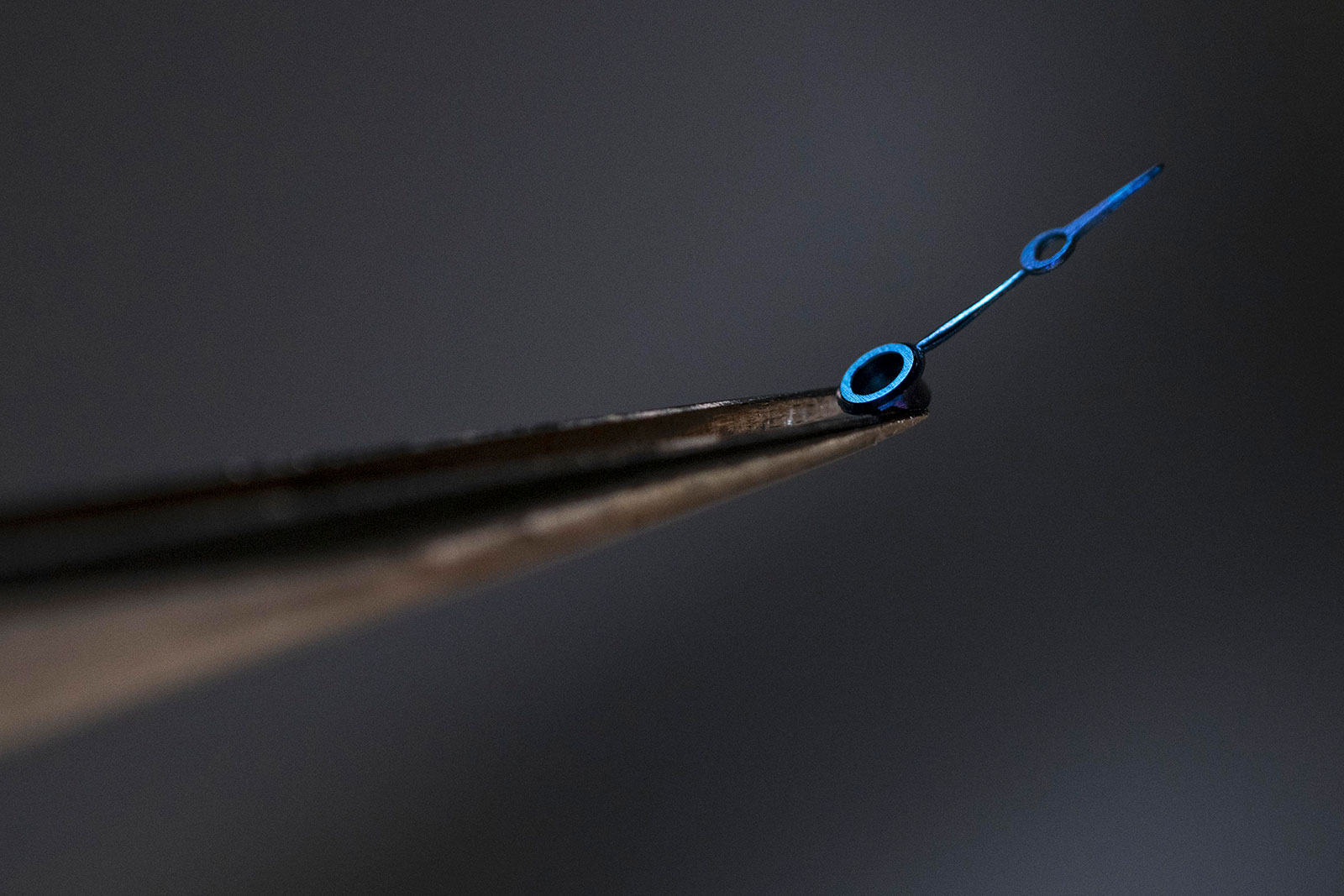
This blue is not a pigment. It doesn’t come from paint, nor from a decorative varnish. Historically, it is the result of a precise heat treatment applied to steel hands. In other words: it’s a transformation of the metal’s surface, a thin oxide layer that forms under the effect of heat. The blue is therefore the signature of a process—a discreet admission that the part has been worked, checked, mastered.
What does “flame bluing” mean?
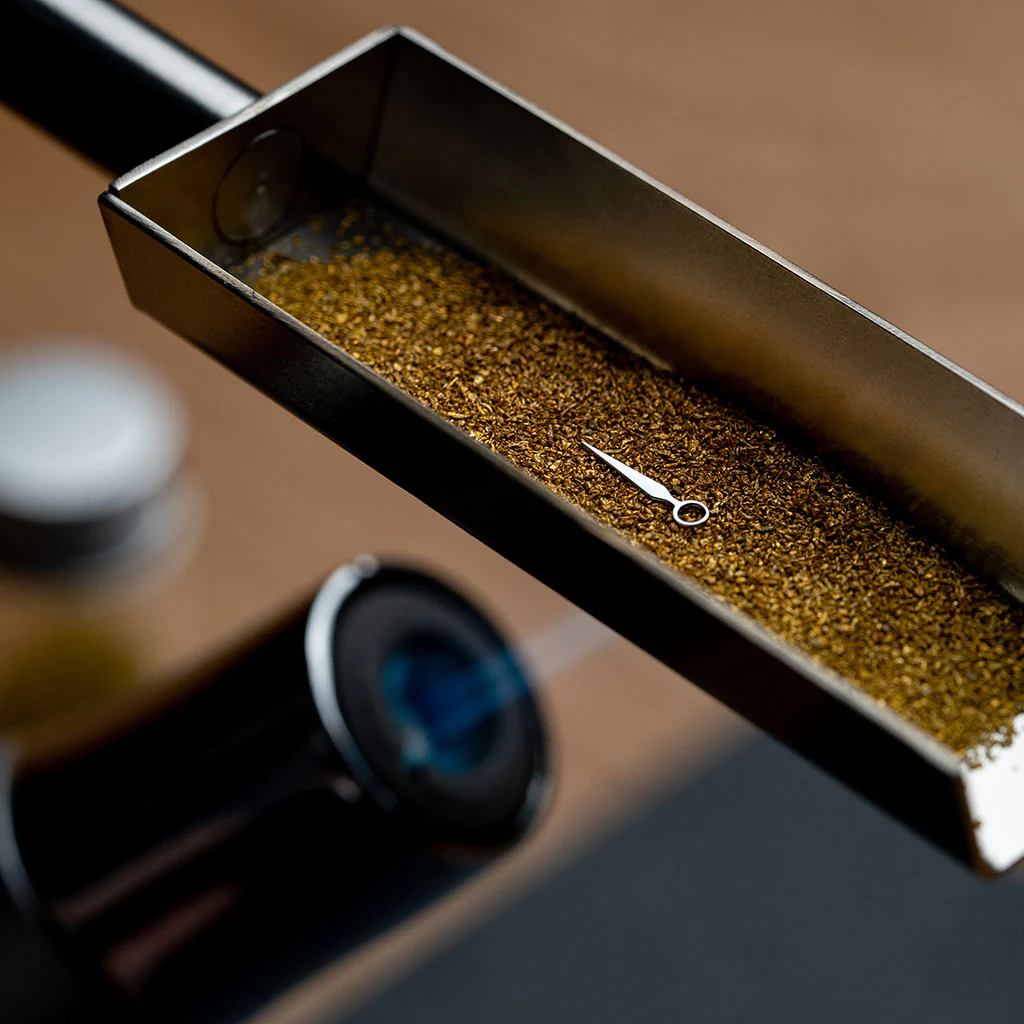
Flame bluing means heating a steel hand through a controlled temperature progression until it reaches a specific blue shade. As the steel heats up, an oxide layer forms on its surface and produces successive colours: straw, gold, brown, purple, and finally the sought-after blue. More than a simple colour change, it’s an optical phenomenon linked to the thickness of that oxide layer.
In workshops, tradition tells it like a little theatre: the artisan watches the colour “rise” and knows they have only a few moments to stop the process. Too early, and the hand remains purple; too late, and it turns bluish grey, even black—signs it has gone past the mark. Modern methods often use hot plates, ovens, or more repeatable processes, but the logic remains the same: achieve a blue that is both deep and lively, without spots or irregularities.
A discipline of precision
The difficulty lies in working on a tiny part, with unforgiving visual tolerances. A hand is thin, long, sometimes skeletonised, polished, bevelled—so many surfaces that react differently to heat. The slightest finishing flaw becomes visible once the colour appears. That’s also why, in collectors’ minds, flame bluing remains associated with a higher level of exacting standards.
Why does this blue carry so much prestige?
Because watchmaking loves signals. Votes aren’t cast with slogans, but with details: a bevel, perlage, black polish, a jewel setting, an engraving. Flame bluing belongs to that grammar. It says “steel”, “hand”, “tradition”, sometimes “haute horlogerie”—even if, technically, not all watches with blue hands play in the same league.
In the vocabulary of luxury, there is a key word: intention. A blue hand isn’t necessary. Time is read just as well with rhodium-plated or painted hands. If a maison chooses flame bluing, it’s because it wants to tell something else: a lineage, a rigour, a search for harmony with a silvered dial, guilloché, a black minute track, or an “enlightened classic” style. On a dress watch, that touch of blue is like a sartorial accent: discreet, but impossible to ignore.
A technical advantage… relative
You sometimes read that flame bluing protects steel from corrosion. That’s true to a certain extent: the oxide layer that forms creates a superficial barrier. But it shouldn’t be seen as armour. In a watch, hands live in a generally protected environment (closed case, controlled atmosphere at the time of assembly), and corrosion depends far more on humidity, water resistance, and conditions of use.
Historically, protection could be a coherent argument, but in modern practice, flame bluing is above all an aesthetic and cultural choice. Its technical interest is secondary; its value lies in what it evokes and in the quality of execution it demands.

Flame-blued vs “blue” hands: the differences to know
Not all blue hands are flame-blued. To the naked eye, some techniques can look similar, especially in photos. Yet the nature of the blue, its depth, and its reaction to light change.
The main methods
- Flame bluing (heated steel): evolving colours, deep blue, shifting reflections; requires careful finishing.
- Chemical treatment: colouring via a chemical reaction; the result can be more uniform, but often less “alive”.
- PVD deposition or coating: a layer deposited on the metal; great stability and repeatability, with varied shades.
- Painted/varnished hands: an economical solution; the blue can look flatter, more opaque.
The tell-tale sign that rarely lies? The way the blue “moves”. On a well-polished flame-blued hand, the shade isn’t a flat block of colour: it shifts, deepens, brightens depending on curvature and orientation. It’s a blue that lives with the light, almost like fabric.
This video shows the steps for flame bluing and makes you desperately want to try your hand at it.
A touch of blue in the history of watch style
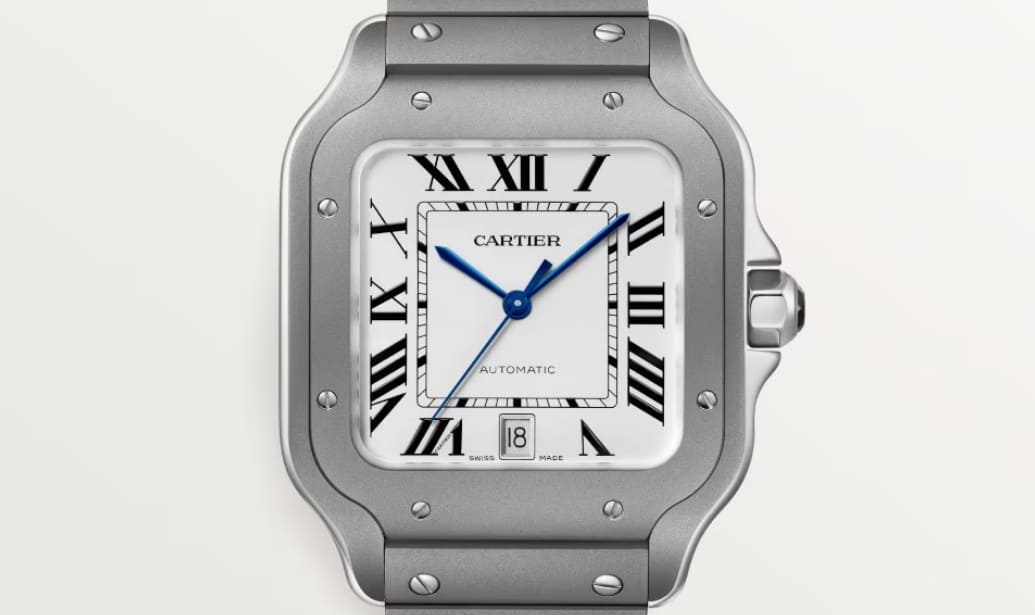
Flame-blued hands are inseparable from certain silhouettes: traditional pocket watches, classic pieces with light dials, “Breguet”-inspired watches (in the stylistic sense), or timepieces with a slightly academic elegance. They create a crisp contrast with a silvered, opaline, or guilloché dial, and naturally converse with Roman numerals, a railroad minute track, or a small seconds at 6 o’clock.
But reducing these hands to a single register would be unfair. They can also modernise a minimalist watch by bringing an unexpected nuance. On a very clean white dial, two blued hands are sometimes enough to add depth—a signature. It’s not “bling”; it’s character.
Why do brands still do it today?
Because contemporary luxury also works as a conversation with the past. In a world where excellence can be industrialised, certain “unnecessary” processes become precisely what makes the difference. Flame bluing serves as a bridge between modern manufacturing and an idea of the craft that cannot be reduced to performance figures.
And then there is a simple truth: it’s beautiful. Blue, in watchmaking, is never accidental. It evokes temperature, steel, precision, restraint. It pairs as well with a navy leather strap as with a grey suit. It will photograph well, of course—but above all, it will age well, because it isn’t subject to loud, fleeting trends.
How to recognise them (and what to look for before buying)
If you’re hesitating between a watch with flame-blued hands and one with simply “blue” hands, here are a few useful pointers.
- Depth: flame bluing often looks denser and darker, with subtle reflections.
- Variations: a change of angle should shift the shade (midnight blue, electric blue, sometimes almost black).
- Cleanliness: no spots, no lighter areas, no irregularities along the length.
- Consistency: on a well-executed watch, blued hands often go hand in hand with fine dial finishing and an overall high level of execution.
Finally, keep in mind that the best proof is often provided by the brand itself: if the description explicitly mentions “flame-blued” (or “blued steel hands”), that’s an indicator. By contrast, a simple “blue hands” can cover any technique.
The discreet charm of a detail that says it all
Flame-blued hands are neither a gimmick nor a mere affectation. They are a small manifesto: that of a watchmaking culture willing to embrace complexity to achieve something intangible—a particular gleam, a material emotion. This blue is not just a colour; it is the memory of mastered heat, a decisive moment, and a tradition that continues to seduce because it refuses the easy way out.
In an era where everything is measured, that may be what resonates most: this blue nuance that, in silence, reminds us that time—and the way we make it—can still be a matter of the hand.