Why Enamel-Dial Watches Are So Sought After
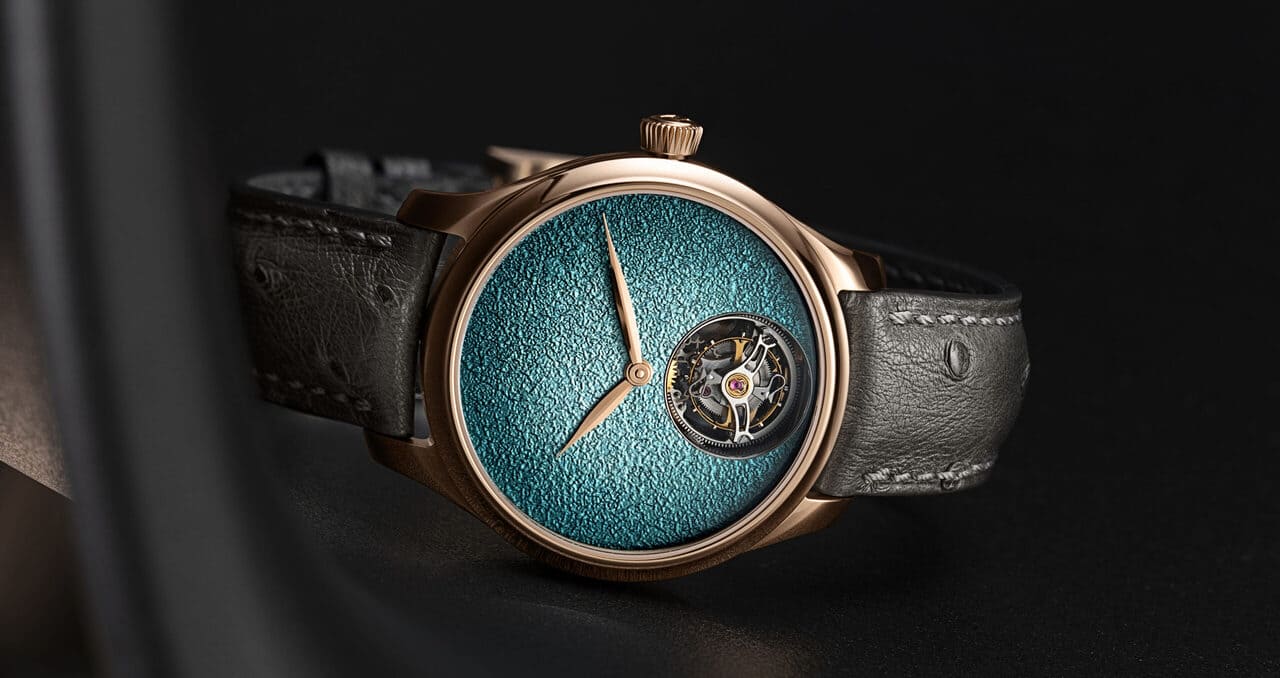
The enamel dial: a quiet luxury that never goes out of style
In a watch world saturated with spectacular finishes, new textures and bold colours, the enamel dial moves with a hushed step. It doesn’t try to dazzle at first glance—and that is precisely what makes it magnetic. Its sheen is nothing flashy: it calls to mind porcelain, a living surface that catches the light with an almost watery depth. Some dials seem lit from within, as if time were floating there rather than being inscribed.
If enamel-dial watches are so sought-after today, it isn’t only for their beauty. It’s for what they tell: permanence in the face of obsolescence, craft in the face of process, the happy accident in the face of industrial repetition. To wear an enamel dial is to wear a piece of mastered fire, like Hephaestus (yes, I’m rereading Homer at the moment …).
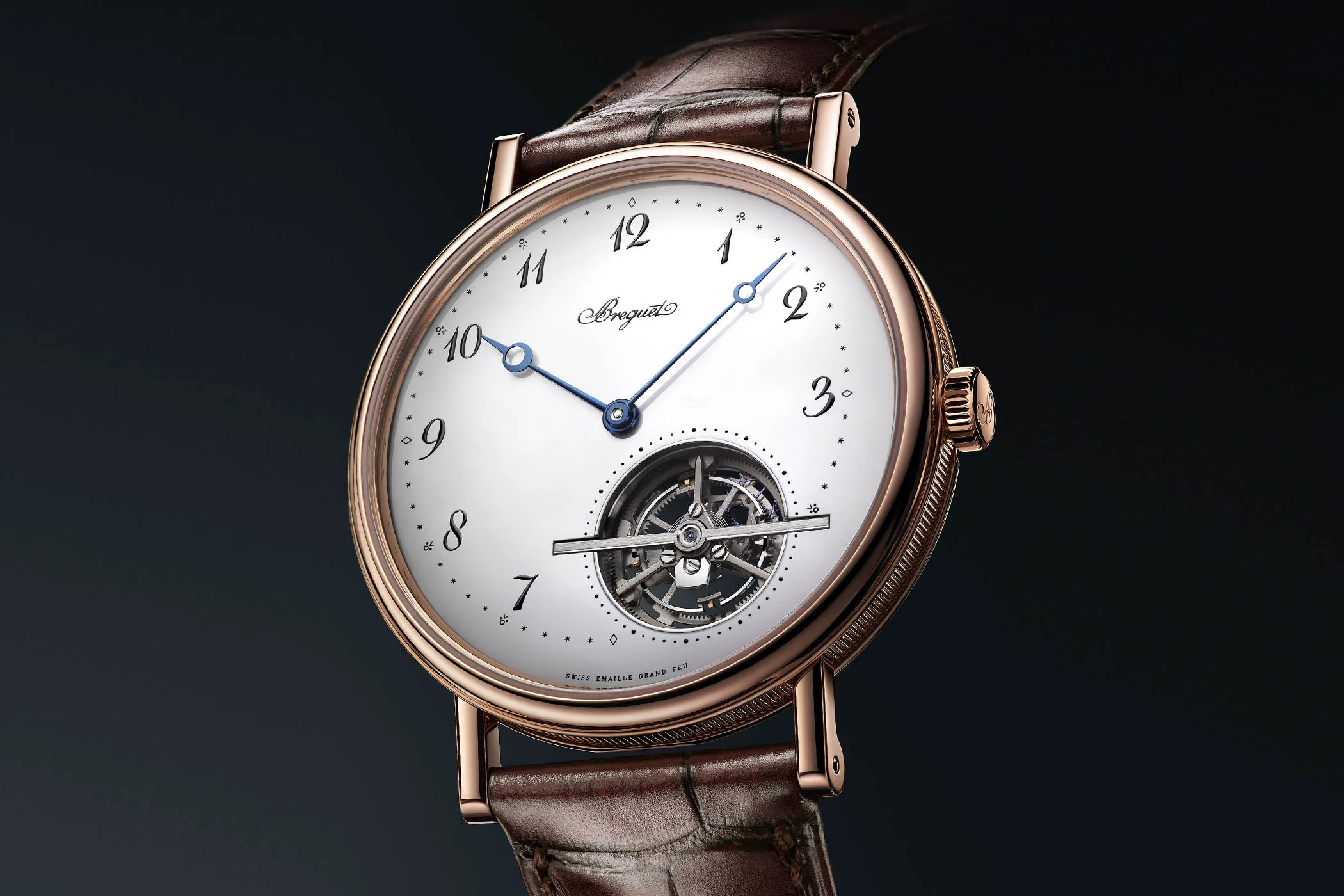
A material born of fire: understanding enamel in watchmaking
Traditional watchmaking enamel is a glass powder (silica) mixed with oxides, sometimes coloured with metallic pigments. This powder is applied to a base (often a metal disc) and then fired at high temperature, generally between 750 and 900°C. During firing, the powder melts and vitrifies, forming a smooth, glossy layer. Then you start again: several layers, several firings, until the desired shade and flatness are achieved. The video below illustrates the manufacturing process very well.
Everything about this process resists the logic of output. Enamel can crackle, bubble, shrink, shift in tone. A firing that runs slightly too long, an invisible speck of dust, residual tension in the metal base … and the piece is lost. That’s the first reason for its rarity: enamel does not forgive.
Grand Feu, flinqué, champlevé: the words that make desire rise
The vocabulary of enamel is a world unto itself. In collectors’ conversations, certain terms act like passwords.
- Grand Feu enamel: the most coveted designation. It refers to high-temperature firings and true vitrification. The result: stable colour, deep lustre, and a surface that ages beautifully.
- Flinqué enamel: a transparent enamel applied over a guilloché pattern. Light catches in the grooves, and the dial gains an almost three-dimensional depth.
- Champlevé / Cloisonné: decorative techniques in which compartments (either carved out or formed by partitions) are filled with coloured enamel—ideal for scenes, coats of arms or artistic motifs.
Without getting into a definitive hierarchy, one thing is certain: the rarer the gestures a technique requires, the more it feeds the myth.
Beauty that lasts: a patina without patina
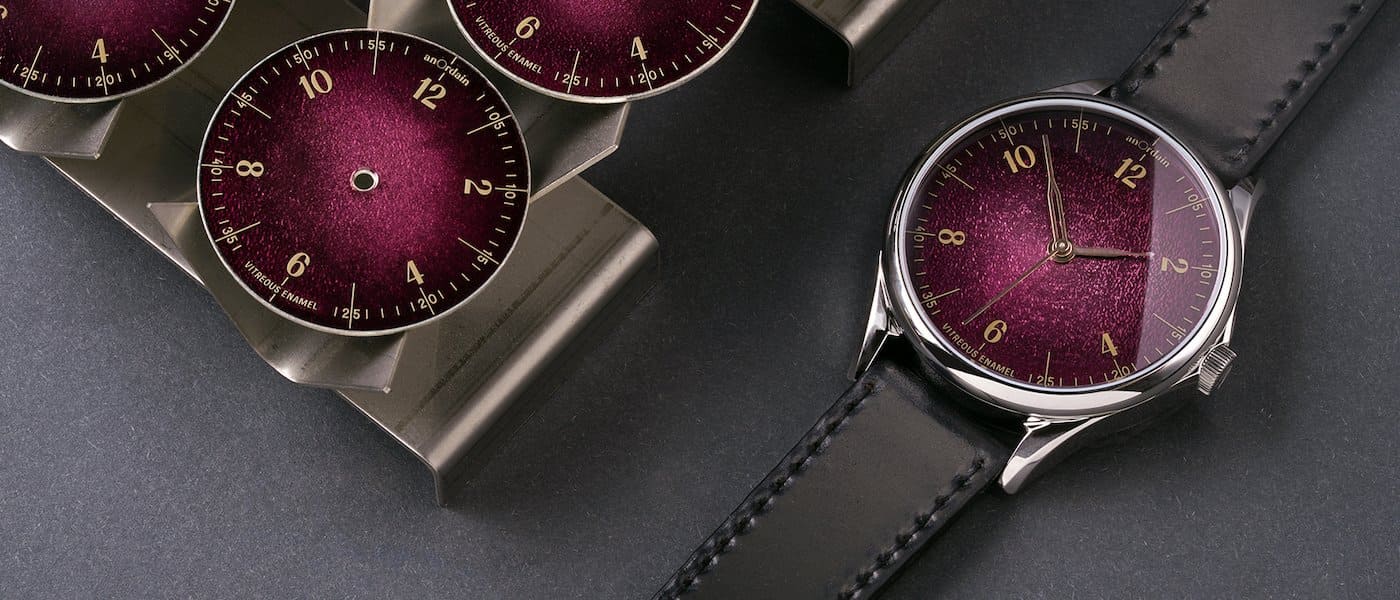
Most modern dials look superb when they leave the manufacture, but how they age is a lottery. Some lacquers dull, some printing breaks up, some colours shift. Enamel, by contrast, behaves like a timeless material. It doesn’t oxidise, is surprisingly resistant to UV, and retains a chromatic stability that borders on insolence.
It’s a paradox enthusiasts love: enamel ages without ageing. It changes little, yet it tells time differently. Under a loupe, you can make out a micro-topography, a density of material, sometimes minute irregularities that speak more of the hand than the machine. And if a crack appears—which can happen in the event of a shock—it doesn’t look like ordinary wear: it looks like an event, almost like a scar.
Why it’s so rare: craftsmanship, risk and slowness
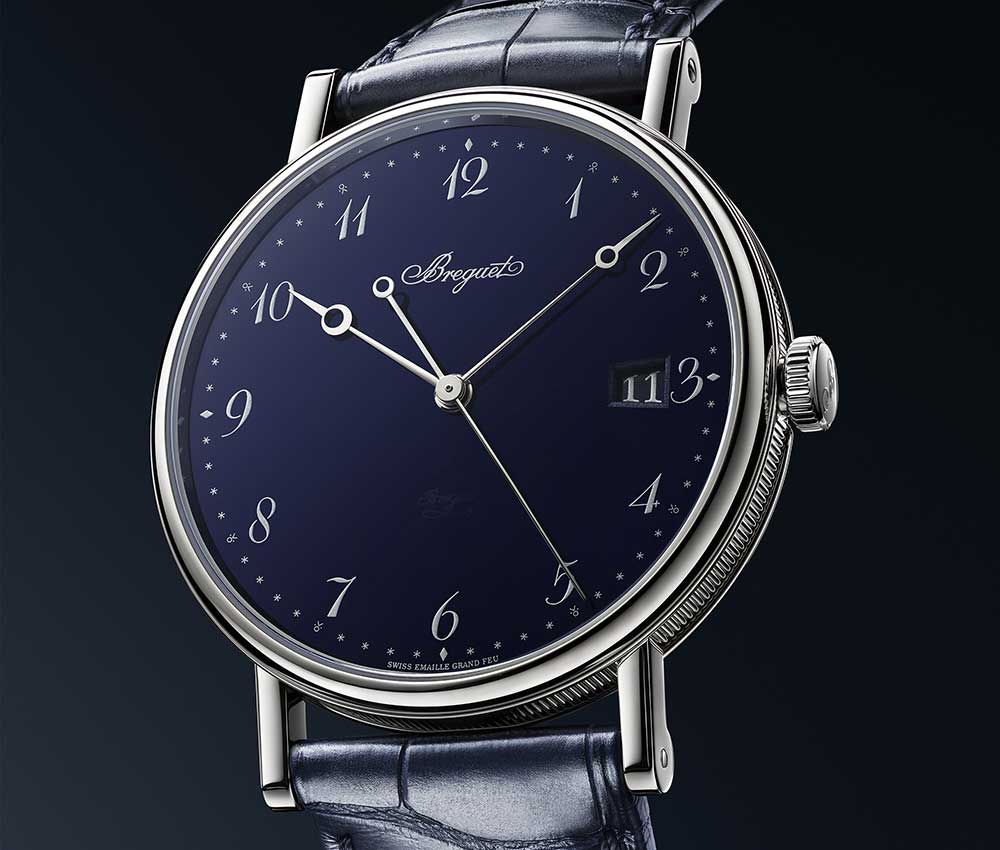
Producing an enamel dial isn’t merely time-consuming: it’s uncertain. Where a galvanic or lacquered dial can be repeated with remarkable consistency, enamel lives under the law of the kiln. Each firing is a trial by ordeal, and the rejection rate can climb—especially when aiming for a perfect white, a deep black or delicate colours.
Add to that the difficulty of detail: drilling, perfectly even fields, printing the indexes, setting applied markers, tolerance adjustments. An enamel dial isn’t simply “pretty”: it must remain functional, legible, stable, compatible with final assembly. Excellence is measured at the moment when art meets engineering.
The perfect white: the top of the mountain
The white enamel dial, seemingly the simplest, is often the most unforgiving. The slightest flaw shows: a bubble, a speck of dust, an unintended creamy tint. That’s why a truly crisp, luminous white, with no visible defects, exerts a particular pull. It recalls pocket watches and the great classics, but with an almost contemporary freshness.
A long history: from craft métier d’art to a contemporary object of desire
Enamel is part of the historical DNA of European watchmaking, particularly in pocket watches, where it served readability as much as ornament. White enamel dials with black numerals have crossed the centuries with an almost graphic obviousness. At the time, it wasn’t a whim: it was a noble, durable solution, perfectly suited to use.
Later, industrialisation and the arrival of new techniques made enamel less “necessary”. It shifted from the status of a high-end standard to that of a speciality. And as often in luxury, what becomes rare becomes desirable. Today, enamel returns in waves, carried by a desire for the real, the slow, for visible gestures—even when they’re hidden beneath an immaculate surface.
What collectors are really buying: an emotion on the surface
An enamel dial is, first and foremost, a sensation. The way light slides across it isn’t like lacquer or varnish: it’s softer, deeper, almost “mineral”. The reflections have something rounded about them, as if the dial had a temperature of its own.
Collectors also look for a cultural signal. Enamel speaks of a lineage with the classic watch, but without forced nostalgia. It can dress an ultra-contemporary piece or a minimalist three-hander. And above all, it contradicts the logic of permanent novelty.
The details that drive value
- Balanced typography: Roman numerals, Arabic numerals, a railway track … on enamel, the slightest disproportion jumps out.
- Print quality: crisp lines, depth of black, perfect alignment.
- Appropriate hands: blued, polished, feuille … enamel demands hands that are up to the task.
- Case coherence: a watch that’s too sporty can make enamel feel anecdotal; a watch that’s too dressy can make it feel expected. Balance is rare.
How to choose an enamel-dial watch (without getting it wrong)
Before giving in to love at first sight, you have to learn how to look. A quality enamel dial isn’t judged solely by its shine. It’s judged by its evenness, its legibility, its presence.
- Observe from several angles: the surface should remain uniform, without excessive waviness, without visible bubbles.
- Check the colour: a white should be “intentional”, if I may put it that way (pure, ivory, opaline), not accidental.
- Examine the perimeter and the drillings: that’s often where defects appear.
- Ask about the technique: “enamel” can cover very different realities. Traditional Grand Feu is not a simple varnish.
Finally, accept the idea that an enamel dial can have tiny singularities. In this field, absolute perfection is rare; beauty, on the other hand, is common when the gesture is right.
Why enamel withstands every trend
Enamel-dial watches are sought-after because they offer a form of luxury that cannot be sped up. They demand time, fire, patience and a measure of risk—the exact opposite of an optimised product. They also seduce because they move through the years with quiet dignity, without asking to be reinvented every season.
In watchmaking, there are complications that impress and finishes that captivate. The enamel dial does better: it reassures. It reminds us that the most modern beauty is sometimes the oldest—and that a simple watch face, when born of fire, can be enough to make time desirable.