Why Do Some Dials Change Color Over Time?
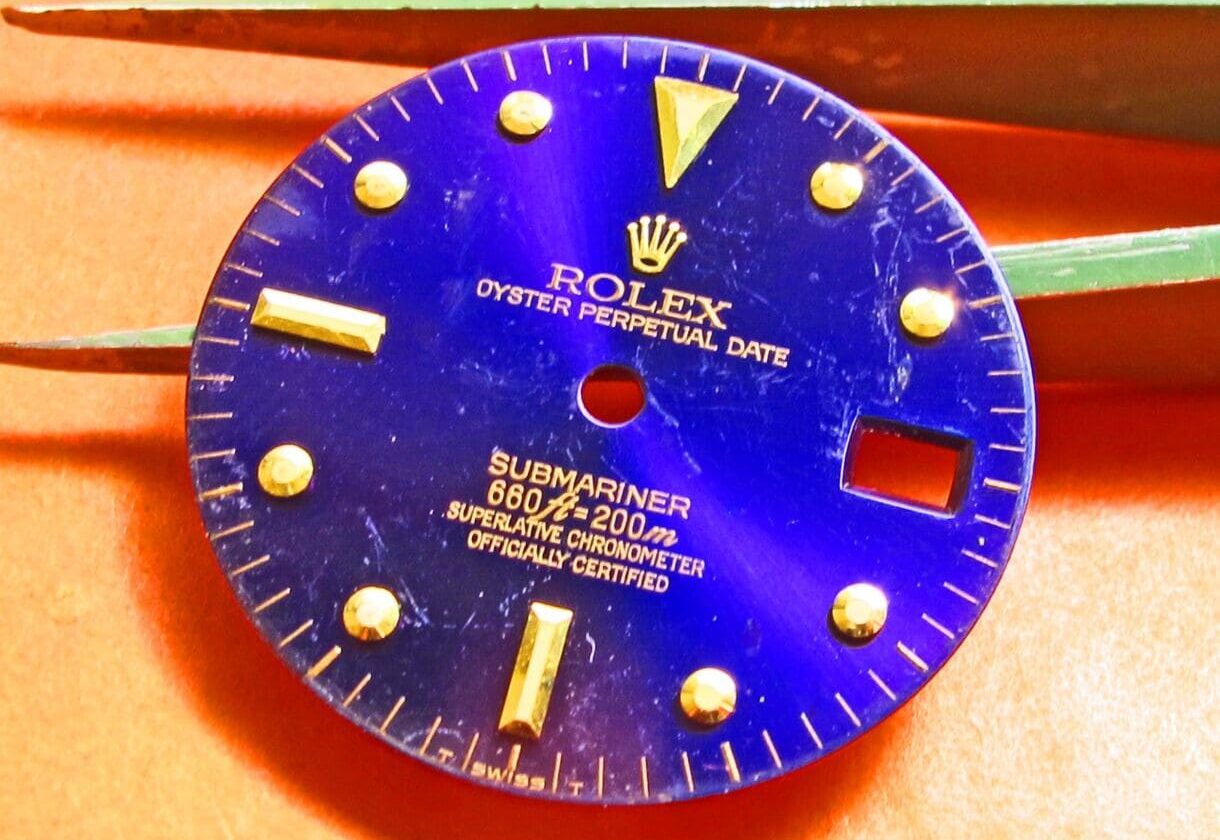
When time colours time
One morning, you wind your old dive watch. The light catches the domed crystal and—surprise: the deep black of its dial has taken on a chocolate hue, warm and velvety. It’s not an illusion. It’s patina, that word collectors utter with the same smile as lovers of great Bordeaux (I’ve leaned more towards Burgundy these past few years, but I imagine you don’t really care, dear reader). Why do some dials change colour over time? The answer lies in a discreet ballet of chemistry, light and materials—a phenomenon similar to what we see with bronze watches, and one that says a lot about our relationship with authenticity.
The science behind the poetry: varnish, pigments and light
Most vintage dials were not designed for eternal colourfastness. Their shade, sheen and markings are the result of a stack of layers that are sensitive to the outside world.
- UV and the solar spectrum: ultraviolet light breaks down the bonds in pigments and binders; black can shift to brown, blue can lighten, red can fade.
- Heat and humidity: they accelerate the oxidation of nitrocellulose varnishes and the corrosion of metal bases (brass, copper), which then “rise” visually.
- Varnishes and lacquers: varnishes yellow, craze and develop micro-cracks; black lacquer can become translucent, revealing a brownish underlayer.
- Electroplating and treatments: certain galvanic deposits or tinted varnishes lose chromatic stability over the decades.
- Luminous materials: radium, then tritium, age and take on a “honey” tone, tinting the overall perception of the dial.
This slow chromatic drift is rarely uniform. That’s what creates—when a watch has lived a coherent life—an “organic” patina the eye reads as harmonious.
Tropical dials, paints and pigments: the great patina classics
From black to chocolate: the tropical legend
In the 1950s–70s, many sports watches—divers and chronographs—used UV-sensitive lacquers and varnishes. Exposed to equatorial sun, these black dials gracefully turned brown, sometimes all the way to dark caramel. This “tropical” metamorphosis affects dive icons as much as pilot chronos. It’s explained by photo-degradation of the binder and the gradual transparency of the black layer, which lets the warm tone of the brass—or a browned undercoat—show through.
“Pumpkin” Super-Luminova: when light turns to honey

For a long time, night-time legibility was ensured by radium paints, then tritium. As they age, these compounds lose their glow, oxidise, and adopt shades from vanilla to apricot—the famous “pumpkin”. The contrast with the dial creates the illusion of a warmer dial, and when indices and hands age in step, the whole gains a sought-after chromatic coherence. Beware: Super-Luminova that looks too perfect often betrays a modern intervention.
Gilt, lacquer, electroplating: three playgrounds
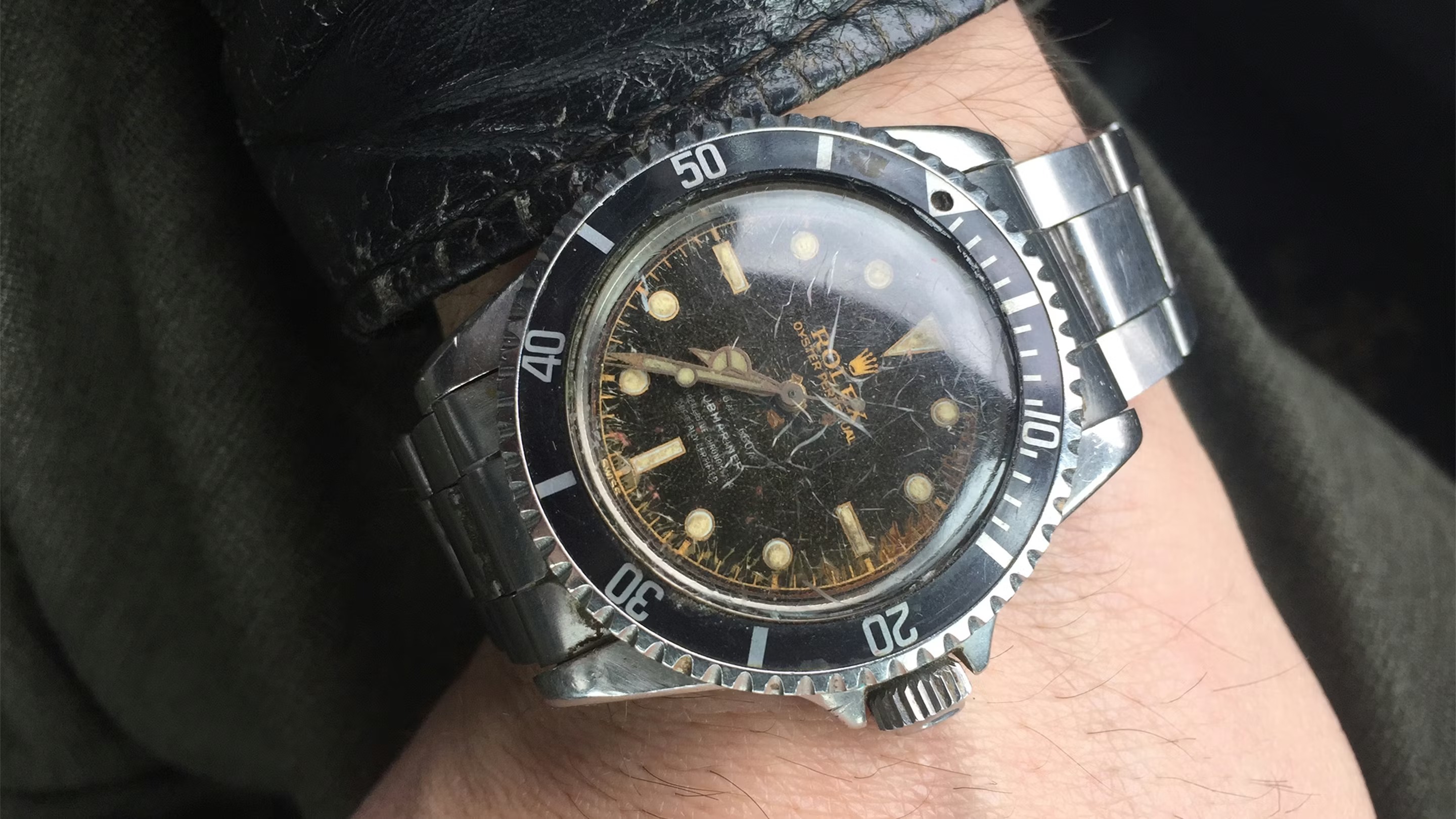
“Gilt” dials (negative printing that reveals the golden brass beneath a black lacquer) change mood over time: the black browns, the lettering takes on a more coppery glow. Electroplated dials, meanwhile, can lose their lustre and shift slightly, especially as the protective varnish thins. As for glossy lacquers, they’re the most theatrical: micro-crazing, increased translucency, warmer reflections—here, patina becomes narrative.
Patina or degradation? The fine line
Not everything is poetry. Between patina and damage, the boundary is thin. The seasoned collector looks for:
- Uniformity: an even patina across the entire surface is often a sign of natural ageing. Mottled, greened or pitted areas point to moisture or active corrosion.
- Consistency: indices, hands and dial should tell the same story. A very brown dial with unnaturally white Super-Luminova suggests a replacement.
- Stability: patina that “moves” quickly signals a sealing problem. Old, stable patina is generally preferable.
- Integrity of the markings: crisp pad-printing despite the colour shift? A good sign. Smudged or doubled printing? Risk of a redial.
Value, ethics and “service dials”: the market meets time

On the market, a beautiful natural patina—this deep “tropical brown”, free of spots, with intact legibility—can drive prices up. It lends character and uniqueness, two cardinal values for enthusiasts. Conversely, a refinished dial (redial), a rough reprint, or a reapplication of Super-Luminova tends to penalise the piece.
“Service dials”—replacement dials fitted during an official service—restore a watch’s original appearance, but erase part of its history. Some collectors see them as necessary mechanical and aesthetic hygiene; others lament the loss of that unique patina. The sensible path? Transparency. Document the work, keep the original parts, and let the buyer judge with full knowledge of the facts.
Preserve without freezing: practical advice
- Avoid prolonged exposure to direct sunlight: UV accelerates chromatic shifts.
- Control humidity: aim for 40–60% RH; store protected, with silica gel packets if needed.
- Careful servicing: ask the watchmaker not to clean the dial aggressively or polish the indices.
- Crystal and gaskets in good condition: proper water resistance slows internal oxidation.
- Accept patina: don’t try to “rejuvenate” a dial chemically; you’ll lose more than you gain.
Controlled patina: when contemporary watchmaking takes its cue from vintage
Faced with the public’s love for these lived-in nuances, some contemporary brands have chosen the path of controlled patina. Smoked dials—graduating from light in the centre to dark at the edges—play with depth and warmth without cheating. Tinted varnishes and modern, more stable pigments offer browns, greens or blues that evoke time without suffering its abuses. The watch isn’t “aged”; light is composed to achieve a similar emotion—controlled and enduring.
In the end, a matter of taste and truth
Why do some dials change colour? Because they live. Sun, air, skin and years converse with materials that are both fragile and noble. A few decades later, the result can be an accidental masterpiece: a black that has become cocoa, Super-Luminova turned to honey, a silver that patinates into pearl grey. This beauty is neither perfect nor reproducible. It reminds us that in watchmaking, time isn’t only a measure: it’s a pigment.