Why Collectors Love Bicompax Chronographs
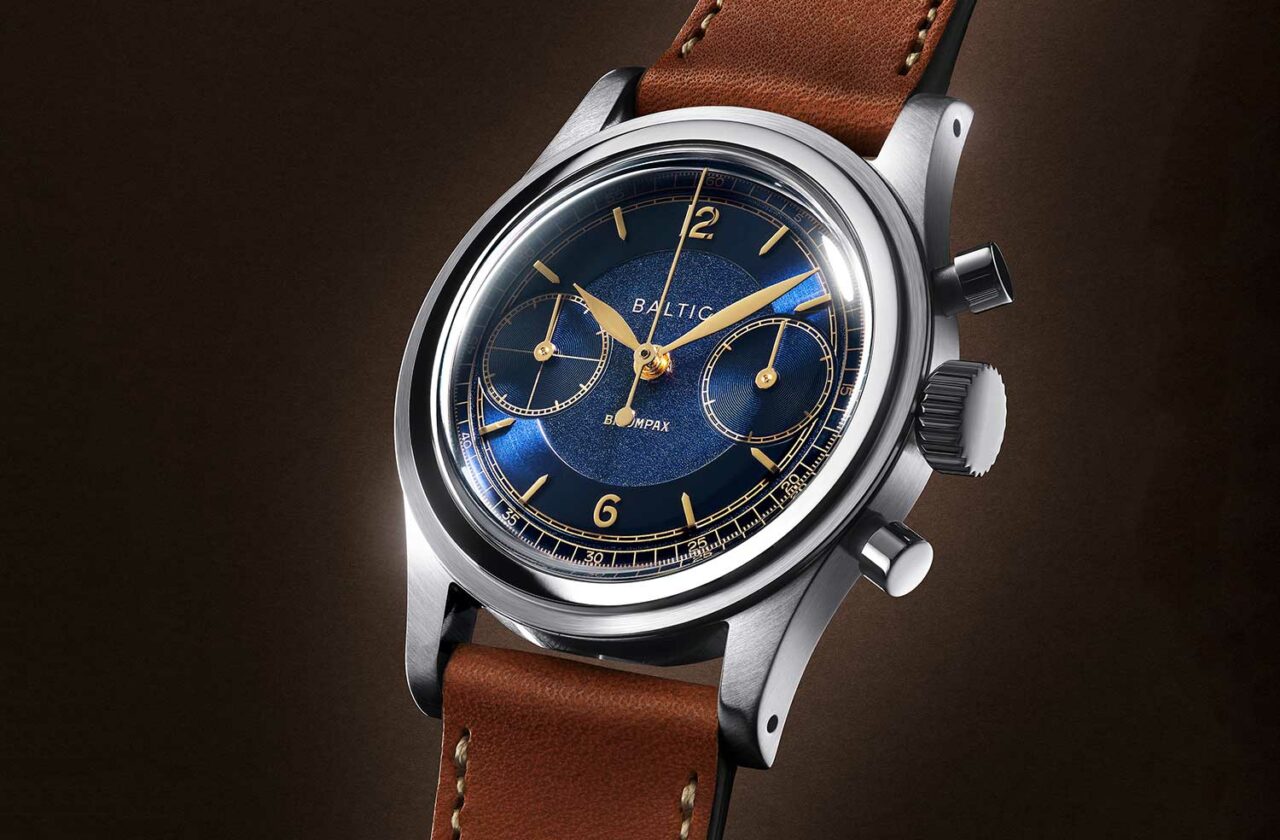
Two sub-dials, a dial that can breathe, a functional elegance inherited from aviation’s golden years and the paddocks: the bicompax chronograph speaks as much to the heart as it does to the eye. Its instant legibility, forged in the noise and urgency of cockpits, captivates collectors who keep coming back to it, because it embodies a very pure idea of the chronograph—where form follows function and design tells the story of a heroic era. A deep dive into a very French obsession: the art of the bicompax.
Reassuring symmetry, legibility that matters
Bicompax is, first and foremost, a silhouette. Two registers at 3 and 9 o’clock, like two eyes balancing the composition and freeing up broad swathes of “typographic white space”. The result? A dial that breathes. You can read the time and the chronograph information at a glance. The relative minimalism—running seconds on one side, a minute counter on the other—creates a sense of precise calm, the opposite of the sometimes anxiety-inducing density of overloaded tricompax layouts.
This carefully calibrated emptiness highlights the typography, the railway track, and, where applicable, the tachymeter or telemeter scale. In a well-designed bicompax, there’s a mastery of negative space dear to modernist graphic design: every marker, every index, every numeral has room to breathe in exactly the right place.
From cockpits to paddocks: a living heritage
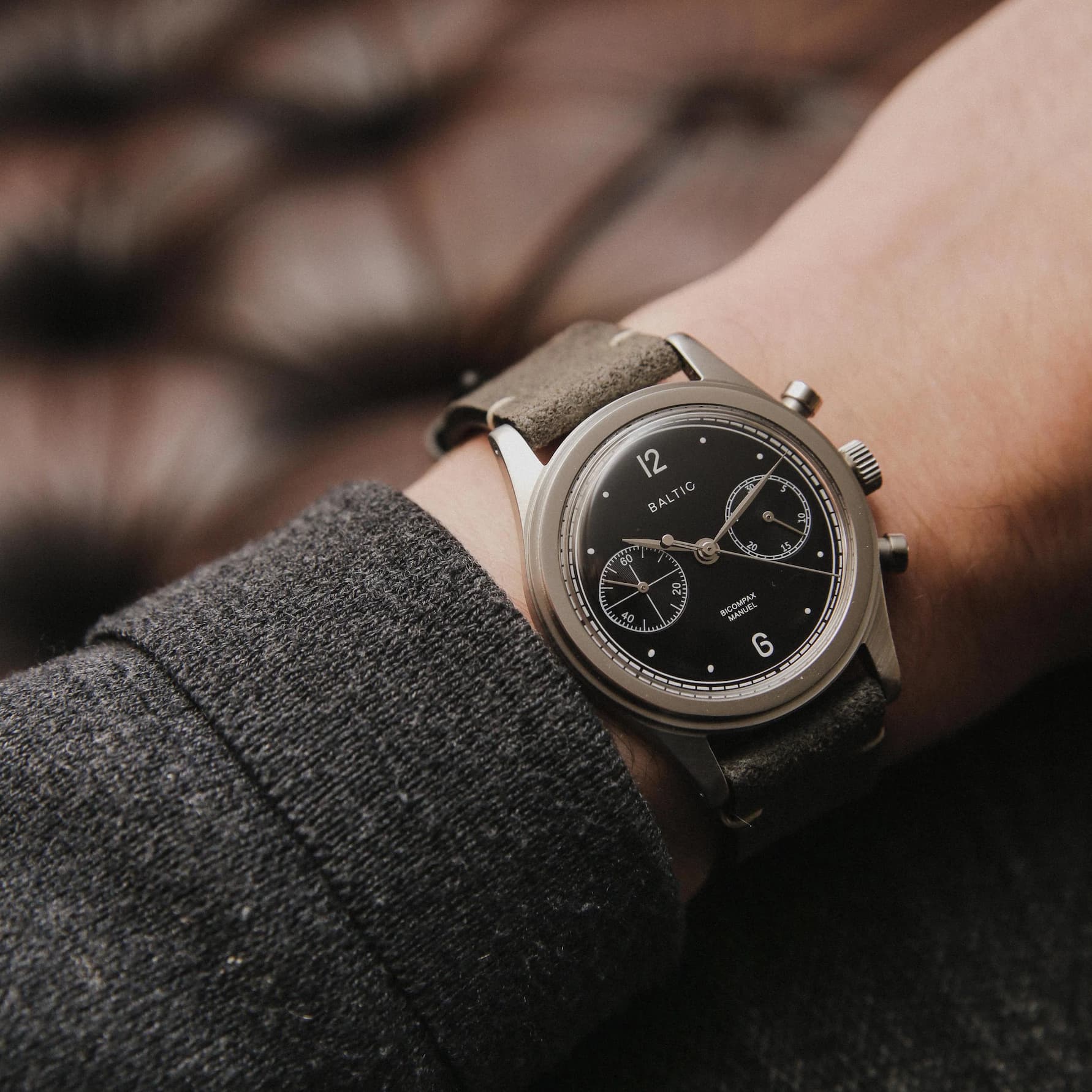
Before it became a stylistic gesture, the bicompax was a tool. In post-war military aviation, the Type 20 specification prioritised immediate legibility and the flyback function: two sub-dials were enough. They appeared on the wrists of French and German pilots, notably in Hanhart’s catalogue, and later in re-editions that rekindled their aura.
On the road, bicompax chronographs also accompanied the great saga of the gentleman driver. The two-register Heuer Carrera models of the 1960s (ref. 3647) nailed that blend of austerity and edge. The same philosophy can be found at Universal Genève with its Uni-Compax, or at Longines with the mythical 13ZN: chronographs whose elegance is never decorative, but always in the service of real use.
Desired mechanics: the calibres that make hearts beat faster
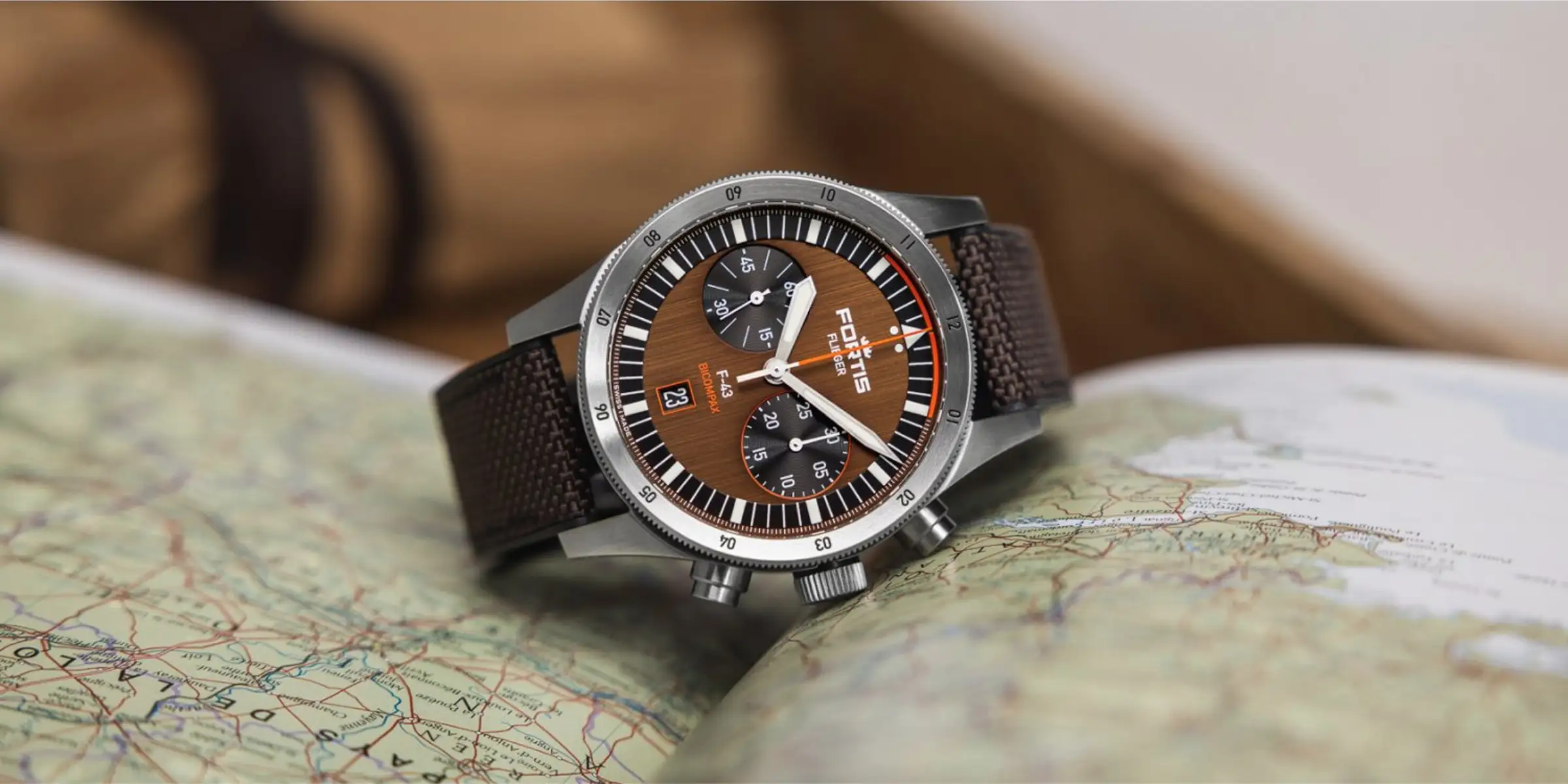
The bicompax passion also lies in the hand that actuates the mechanism. That crisp “click” of a column wheel, that decisive pusher travel: sensations that set a great chronograph apart. Historically, the Venus 175, Valjoux 22/23/92, Minerva 13-20 or Longines 13ZN shaped the two-register ideal. Enthusiasts love the mechanical choreography, the beauty of the bridges, and the possibility of careful restorations.
In the contemporary era, brands have understood the format’s emotional value: the Lemania 2310 and its descendants at Patek Philippe or Vacheron Constantin deliver sublime two-register interpretations; A. Lange & Söhne signs the 1815 Chronograph with narrative virtuosity; IWC preserves purity with the Portugieser Chronograph; Longines modernises the flyback spirit with the Spirit; Hanhart reissues its 417 ES; and even micro-brands like Baltic make the archetype accessible with column-wheel calibres inspired by tradition.
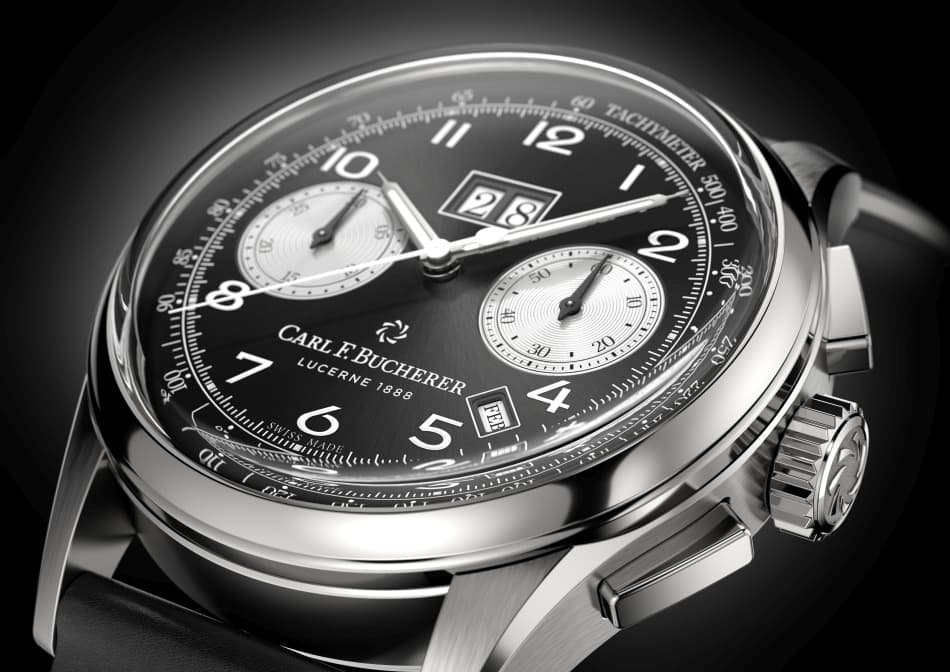
Bicompax design, or the eloquence of restraint
A good bicompax is recognised in the details: a well-ordered scale hierarchy, hands that are slender yet assertive, recessed or snailed registers that play with depth, indices that catch the light. Mushroom or olive pushers tell you the decade; the typography of the Arabic numerals places the period; a smooth or tachymeter bezel dictates the use. This grammar of detail is what delights collectors: reading a dial is deciphering a culture.
Then there’s the question of proportions. Two sub-dials often mean less thickness on the wrist, a more compact case, and a balance that allows 36 to 40 mm without losing presence. At a time when we’re rediscovering the grace of sensible sizes, the bicompax ticks every box.
A few iconic reference points
- Longines 13ZN: the nobility of an in-house calibre and the archetype of the 1930s–40s.
- Universal Genève Uni-Compax: Milanese clean lines, beloved by aesthetes.
- Heuer Carrera 3647: Jack Heuer’s graphic rigour, born for racing.
- Hanhart 417 ES: a pilot’s tool, made famous outside the cockpit by Steve McQueen.
- A. Lange & Söhne 1815 Chronograph: a contemporary demonstration of the two-register layout.
- Vacheron Constantin Cornes de Vache 1955: timeless chic, ideal proportions.
- IWC Portugieser Chronograph: maritime legibility and discreet modernity.
Why collectors fall for it
- Instinctive legibility: two pieces of information, no clutter—one glance is enough.
- Soothing symmetry: a balanced design that ages well and transcends trends.
- Authentic heritage: aviation, rallying, field timing; a real story.
- Movements with character: column wheels, flyback, finishes that speak to the soul.
- Exemplary wearability: slim cases, restrained diameters, impeccable on the wrist.
- Strong identity: an instantly recognisable style, from dressy to tool-watch.
- Staying power: stable values, solid serviceability for historic calibres.
A very current taste: the revenge of the two-register chronograph
In a landscape saturated with complications and talkative dials, the bicompax offers a breath of fresh air. Here, the goal is less about showing off than about obviousness: the right object, well made, in the right size. This return to cultivated simplicity explains the appetite for faithful re-editions—without pastiche—and for contemporary creations that reprise the original logic: a chronograph designed to be read, worn, loved and passed on.
Perhaps that’s why it captures the spirit of the times so well: in an age of overloaded screens, its design stands apart. It reminds us that a watch can say everything without showing everything. And that, unlike flash-in-the-pan trends, a beautiful symmetry, a decisive start, and a well-drawn minute track form a universal language. The bicompax isn’t nostalgia; it’s a lesson in restraint. And collectors—who know that style is as much about silence as it is about signs—are not mistaken.