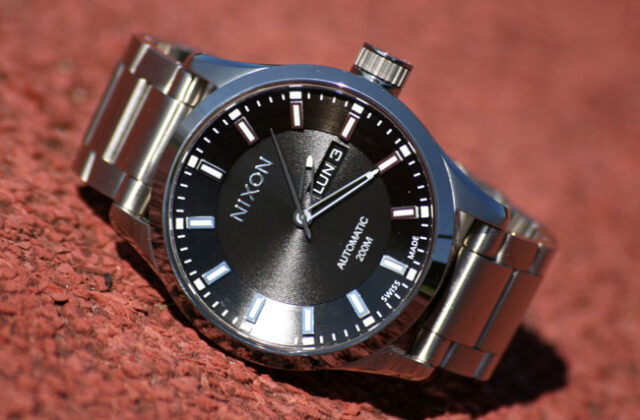
Which first watch should you buy when you’re just getting started in watchmaking?

A simple, no-snobbery guide to choosing well
Choosing your first watch can quickly become confusing. Between the big brands, micro-brands, automatic watches, quartz, prices ranging from €100 to several thousand… it’s easy to feel lost.
Here, there’s no snobbery, no judgement, no elitist talk.
No matter the brand or the budget: if a watch appeals to you and makes you want to wear it, that’s what matters.
Our role is simply to guide you towards sound choices, to avoid the classic beginner mistakes.
Whether you have €200, €500 or more, this guide is here to help you make a thoughtful first purchase, without pressure.
The essential criteria for choosing your first watch
Before talking about specific models, you need to understand what really matters when you’re starting out.
Quartz or automatic: what should you choose first?
- Quartz: accurate, reliable, low maintenance—ideal if you want a “no-fuss” watch.
- Automatic: mechanical, alive, more emotional—perfect for discovering traditional watchmaking.
There is no universally best choice. Many enthusiasts started with a quartz… and some stick with it for life. Personally, I strongly prefer mechanical watches.
Case size: the number-one beginner mistake
A watch that’s too big is the most common misstep.
- Small to medium wrist: 38 to 40 mm
- Larger wrist: 40 to 42 mm
- Beyond that: you can push up to 46 mm.
A well-proportioned watch will be more elegant, more comfortable, and will age better.
Style: versatility before originality
For a first watch, it’s better to go for:
- a simple design
- legible
- goes with everything
You can always treat yourself later to a more “characterful” watch.
The strap
It plays a major role in the watch’s overall “look”. Leather has a certain charm: it’s skin, it’s alive—but it’s more fragile over time.
The “metal” bracelet, generally steel, is far more durable and lets you swim with your watch. It is, however, heavier on the wrist.
Bear in mind you can absolutely change straps to suit your mood, with a small bit of handling you’ll probably enjoy doing. There are also NATO straps, very practical, which make it easy to switch up your watch’s look regularly.
Maintenance and reliability
When you’re starting out, prioritise:
- brands known for their reliability
- proven movements
- accessible after-sales service
Comparison table – Our selection to get started right
| Model | Movement | Diameter | Style | Budget |
|---|---|---|---|---|
| Seiko 5 Sports | Auto | 38 mm | Sport / everyday | €350 |
| Tissot PRX | Quartz | 40 mm | Sport-chic | €375 |
| Hamilton Khaki Field | Quartz | 38 mm | Field | €440 |
| Citizen Promaster | Solar | 41 mm | Sport | €320 |
| Baltic HMS 002 | Auto | 38 mm | Neo-vintage | €432 |
| Yema Rallygraf | Quartz or auto | 39 mm | Pilot | €399 |
| Lip GDG | Auto | 39 mm | Skeleton | €479 |
Our selection of watches for a successful first purchase
The watches presented come in different versions (dials and straps). If a model appeals to you, don’t hesitate to compare the other pieces within the same collection.
Seiko 5 Sports (€350)
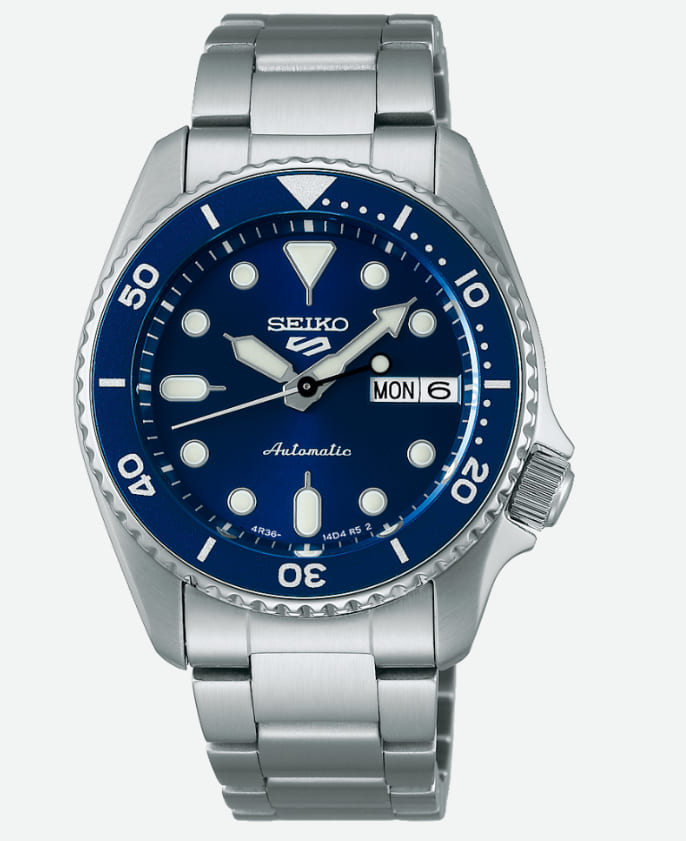
The ideal gateway into mechanical watchmaking. Japanese reliability, robustness, widely recognised—often the first automatic for many enthusiasts.
- ✔ Proven automatic movement
- ✔ Excellent value for money
- ✔ A well-established brand
- ❌ Nothing to fault
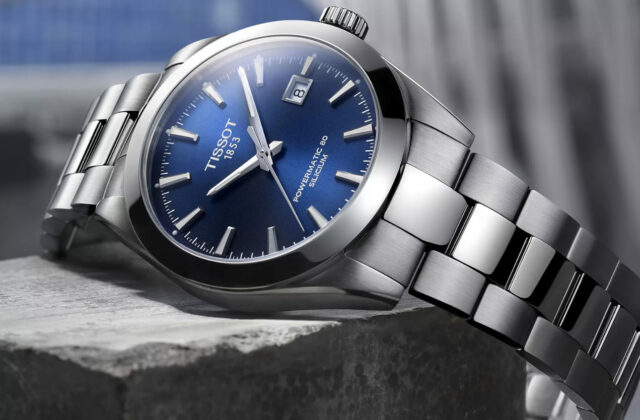
Tissot PRX Quartz (€375)
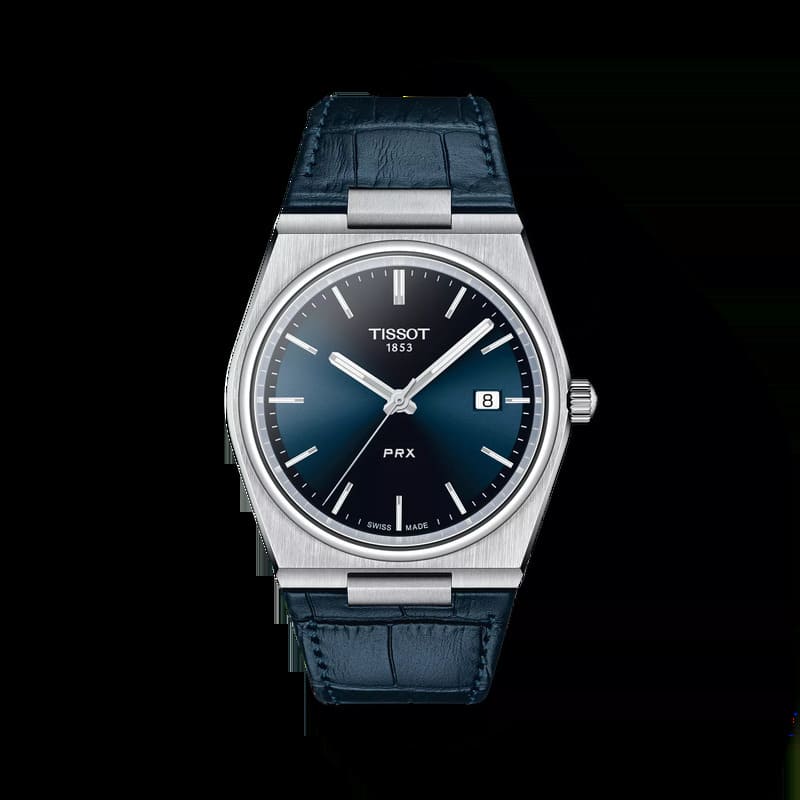
A modern, elegant Swiss quartz watch that’s easy to wear every day.
- ✔ Timeless design
- ✔ Swiss precision
- ✔ Extremely versatile
- ❌ Less “emotional” for mechanical-watch lovers
Hamilton Khaki Field Quartz (€440)
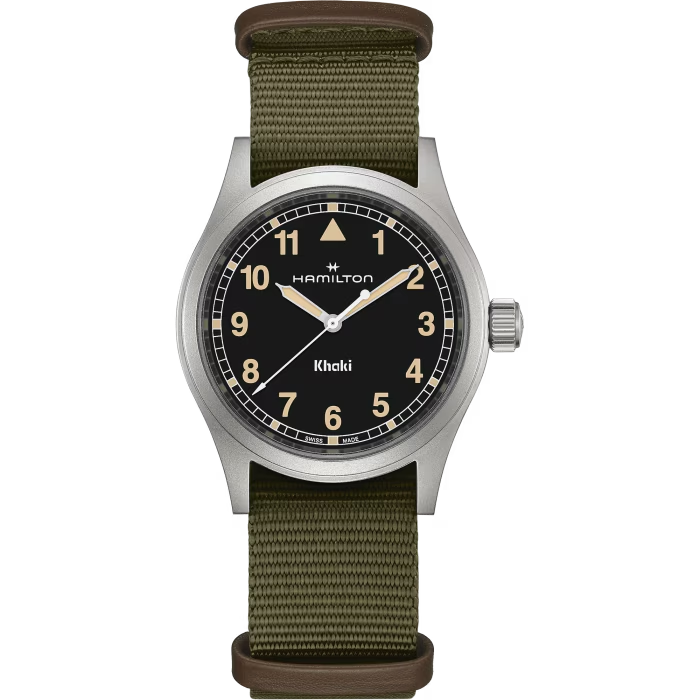
Inspired by military watches—simple, legible, effective: the quintessential “field” watch.
- ✔ Perfect as a one-watch collection
- ✔ Very comfortable
- ✔ Swiss brand
- ❌ Expensive for a quartz movement and a polyester strap
Citizen Promaster Eco-Drive (€320)
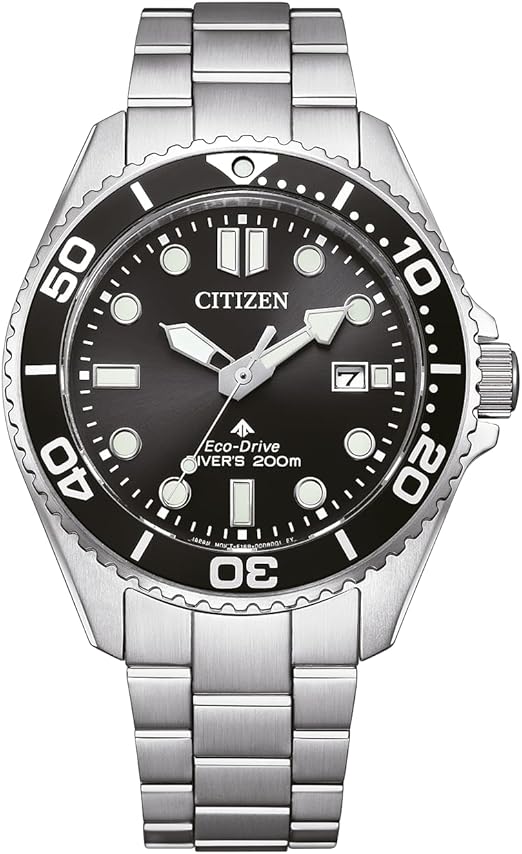
A Japanese watch featuring a highly innovative technology that converts artificial and natural light into energy to power the watch, with a 180-day power reserve!
- ✔ Solar-powered operation
- ✔ No battery, no setting
- ✔ Ideal for intensive use
- ❌ We’re looking…
Baltic HMS 002 (€432)
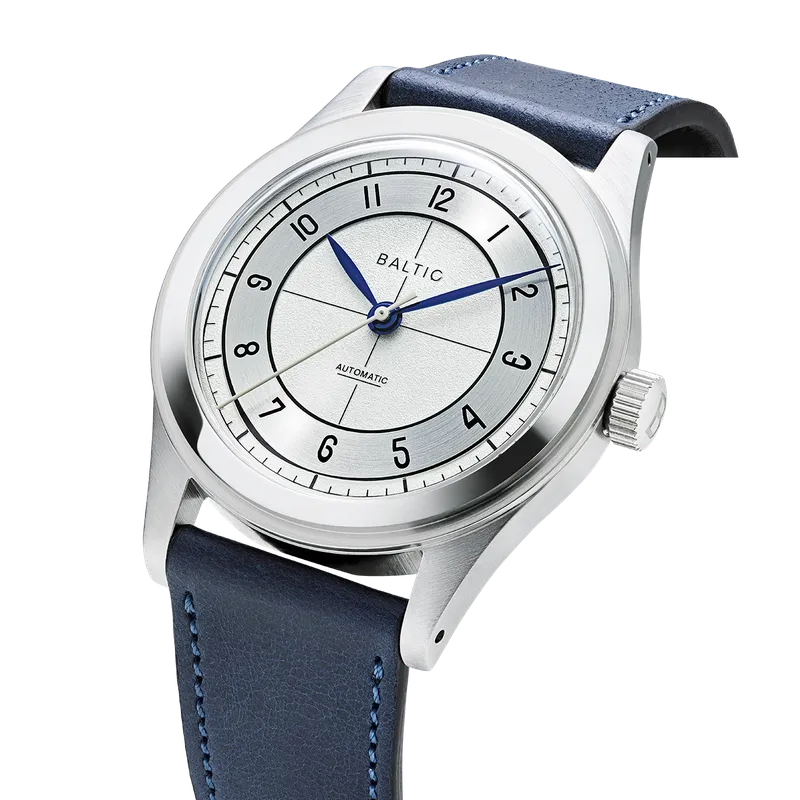
A serious French micro-brand, appreciated by enthusiasts. The movement is a Miyota; however, the crystal isn’t sapphire but hesalite (more prone to scratches).
- ✔ Elegant aesthetics
- ✔ Mechanical movement
- ❌ Hesalite crystal
Yema Rallygraf Meca-Quartz II Panda (€399)
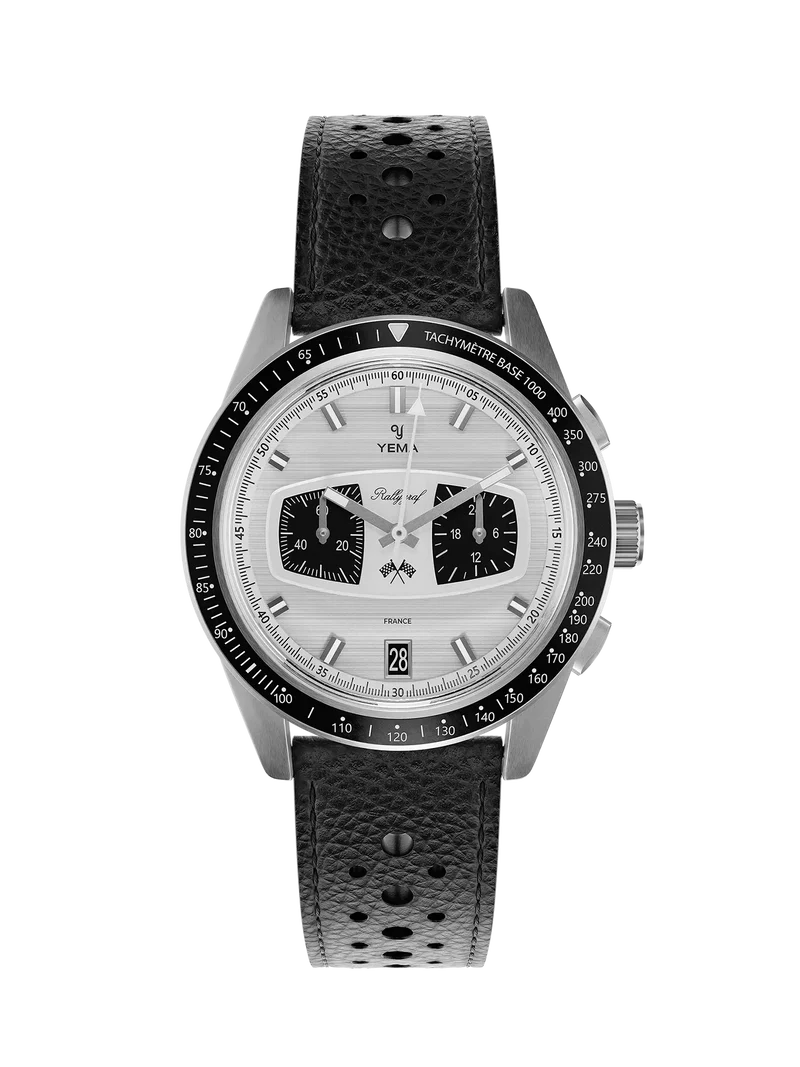
A pilot’s watch from a French watchmaking house founded in 1948. The movement is a quartz/mechanical hybrid.
- ✔ Strong identity
- ✔ Nice finishing
- ✔ Genuine watchmaking legitimacy
- ❌ Mineral crystal
LIP Général de Gaulle Automatic Skeleton (€479)
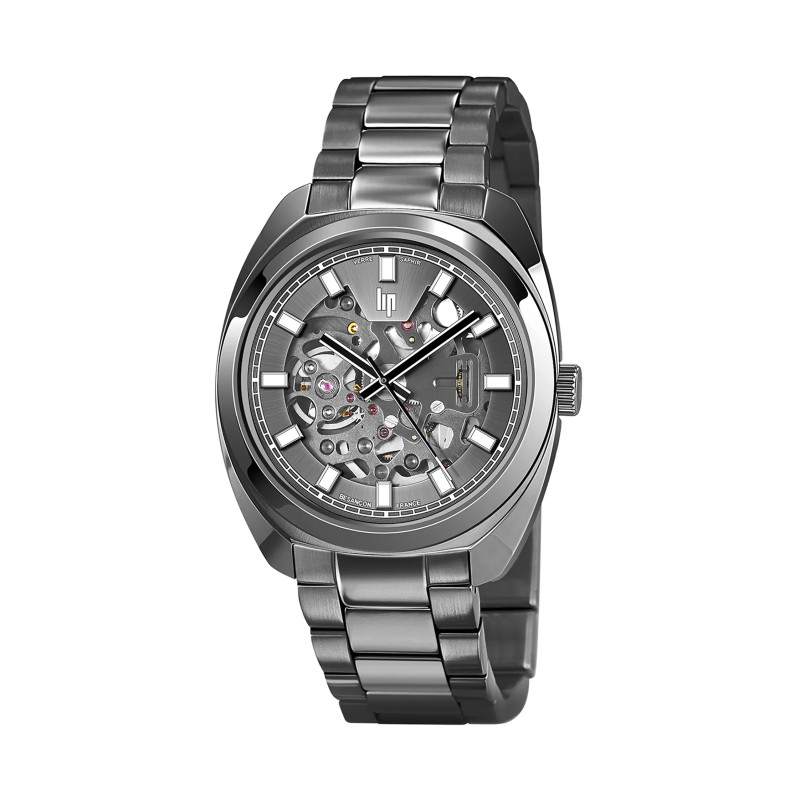
Lip is a legendary French watchmaking house whose story begins in 1867! This skeletonised model showcases a very attractive automatic movement.
- ✔ Sapphire crystal
- ✔ Automatic movement
- ✔ Display caseback
- ❌ ?
What you’re better off avoiding when you’re starting out
Without contempt, but with honesty:
- Oversized watches, often uncomfortable
- Impulse buys “because it’s trendy”
- Watches from licensed fashion brands (Lacoste, Diesel, Hugo Boss, Calvin Klein, Tommy Hilfiger, etc.)
Some ready-to-wear brands offer watches through licensing deals.
They aren’t necessarily bad watches, but they aren’t watch brands.
If your goal is to discover watchmaking, it’s better to prioritise a specialist house.
FAQ – First watch
What’s the minimum budget for a first watch?
From €200 to €300, you can find watches that are reliable, well made, and built to last.
Quartz or automatic when you’re starting out?
Both are good choices. Quartz is simpler; automatic is more emotional.
Can a first watch last a long time?
Yes. A well-chosen watch can stay with you for decades.
Can you resell your first watch later on?
Some brands hold their value better, but a first watch is above all a pleasure purchase—one you’ll enjoy taking out of its box again.
So? What are you waiting for?
There is no universally “best” first watch.
The best watch is the one you’ll want to wear, that fits your lifestyle and your budget. Prestige isn’t mandatory—coherence is.
This guide is here to help you get off to a good start, with peace of mind.