What Is a “Super Compressor” Watch?
A simple idea, a stroke of genius
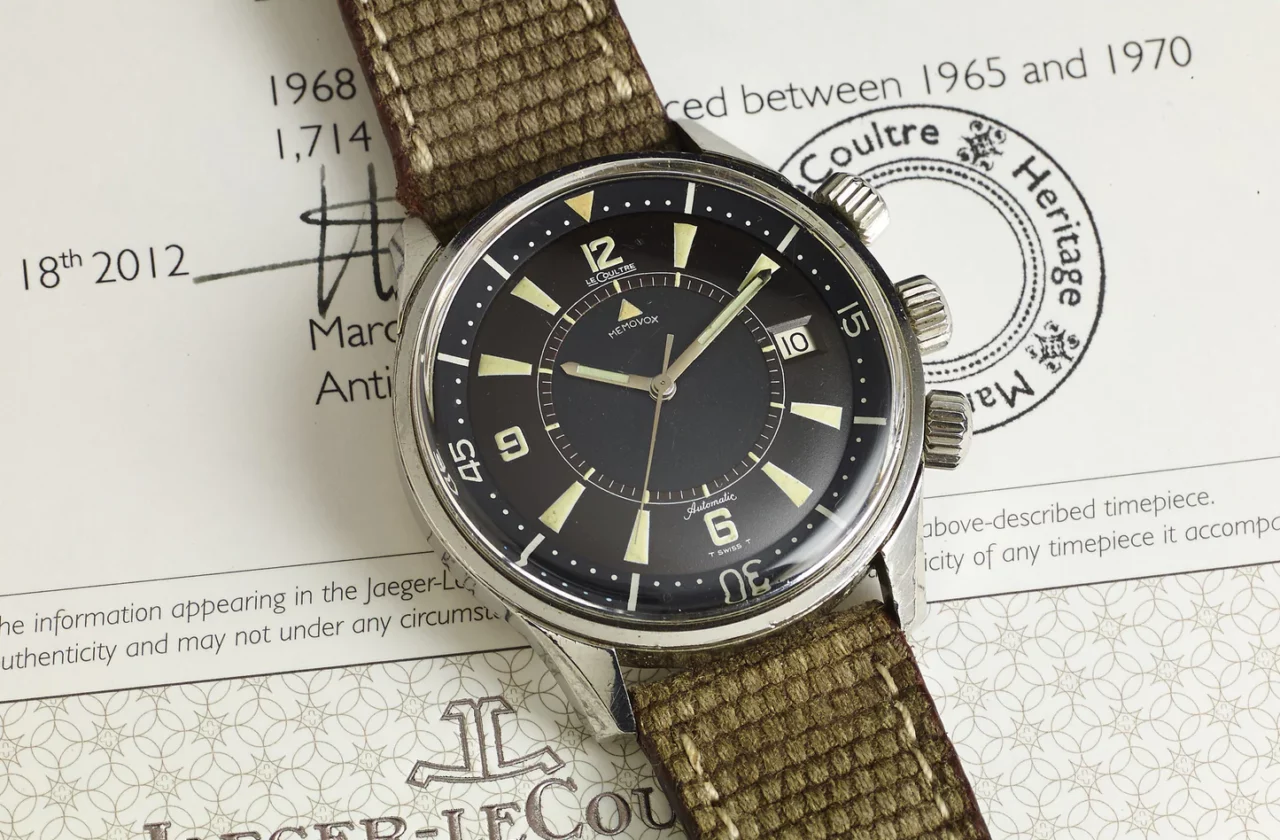
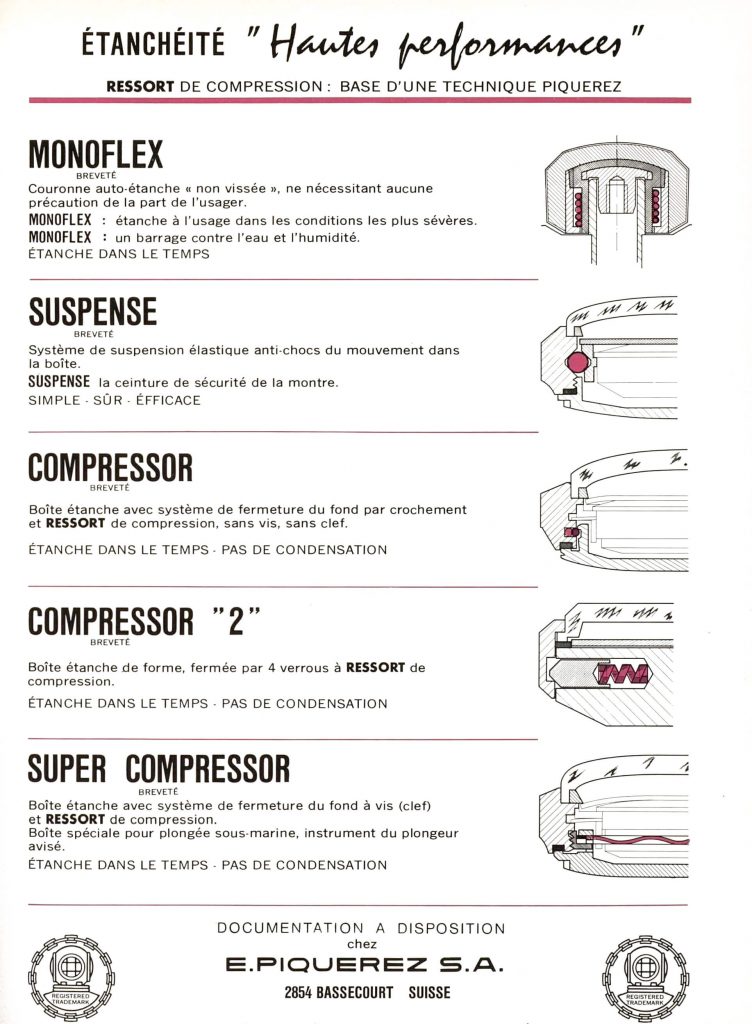
In the history of dive watches, the term “super compressor” is no marketing affectation. It refers to a patent developed by Ervin Piquerez S.A. (EPSA), the Swiss case specialist, in the late 1950s. Its deliciously clever principle can be summed up in a single sentence: the higher the pressure, the more the watch compresses against its gasket—and the more watertight it becomes. Where traditional dive watches rely on a screw-down caseback that forces sealing from the surface, the super compressor case uses a spring-loaded back that presses onto the gasket progressively as you descend. Water, paradoxically, becomes an ally.
This architecture ushered in an era in which relative slimness, urban elegance and underwater performance could coexist. It was the EPSA signature: case-making know-how, precisely calibrated springs, tight tolerances, and that famous diver’s-helmet stamp on the inside of the caseback—now a collector’s fetish.
The vocabulary of a super compressor
If the term first describes a construction, it also shaped an instantly recognisable style.
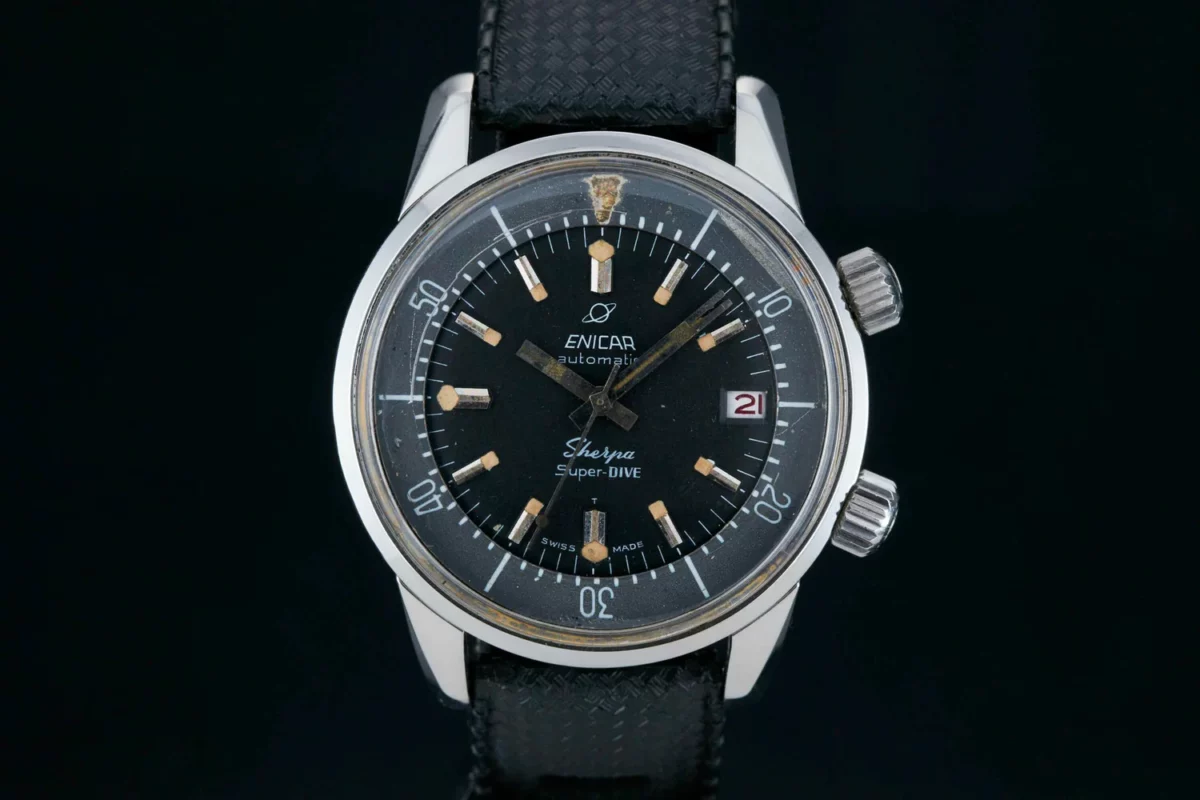
- Two crowns at 2 o’clock and 4 o’clock, often with a “checkerboard” guilloché (cross-hatch) pattern—an EPSA hallmark.
- An internal rotating bezel, operated by the upper crown, protected from knocks and salt.
- A spring-loaded caseback that compresses under pressure, optimising water resistance at depth.
- Measured case sizes (36 to 42 mm at the time), dials with crisp graphics, sometimes topped with vanilla Super-LumiNova—now patinated.
Beware received ideas: not every watch with an internal bezel is a super compressor, and some EPSA “compressor” cases weren’t dive watches at all. But the archetype that has endured in the collective imagination is indeed the dual-crown diver with a compressible caseback.

Super compressor vs. classic diver: two schools of thought
Set against the “tool watch” with its knurled external bezel and screw-down crown, the super compressor offers a different philosophy. Operating the bezel via a crown makes the whole experience smoother and better protected. With no protruding part, there’s less to snag. And on the wrist, these cases often have a gentle curvature, a more discreet presence. It’s the dive watch that slips under a shirt cuff without disowning its maritime roots.
Cult models that wrote the legend
In the 1960s, many maisons turned to EPSA. A few milestones are enough to grasp the genre’s aura.
- Longines 7042/7150, ancestor of the Legend Diver: a pared-back silhouette, a finely grained internal bezel, crisp typography. An icon built to last.
- Jaeger-LeCoultre Polaris (1963–1968): the rare alloy of a super compressor case and a dive alarm. Poetic engineering.
- Enicar Sherpa Super-Dive / Sherpa Ultradive: expedition spirit, exemplary legibility, Swiss robustness and the exoticism of “Sherpa” dials.
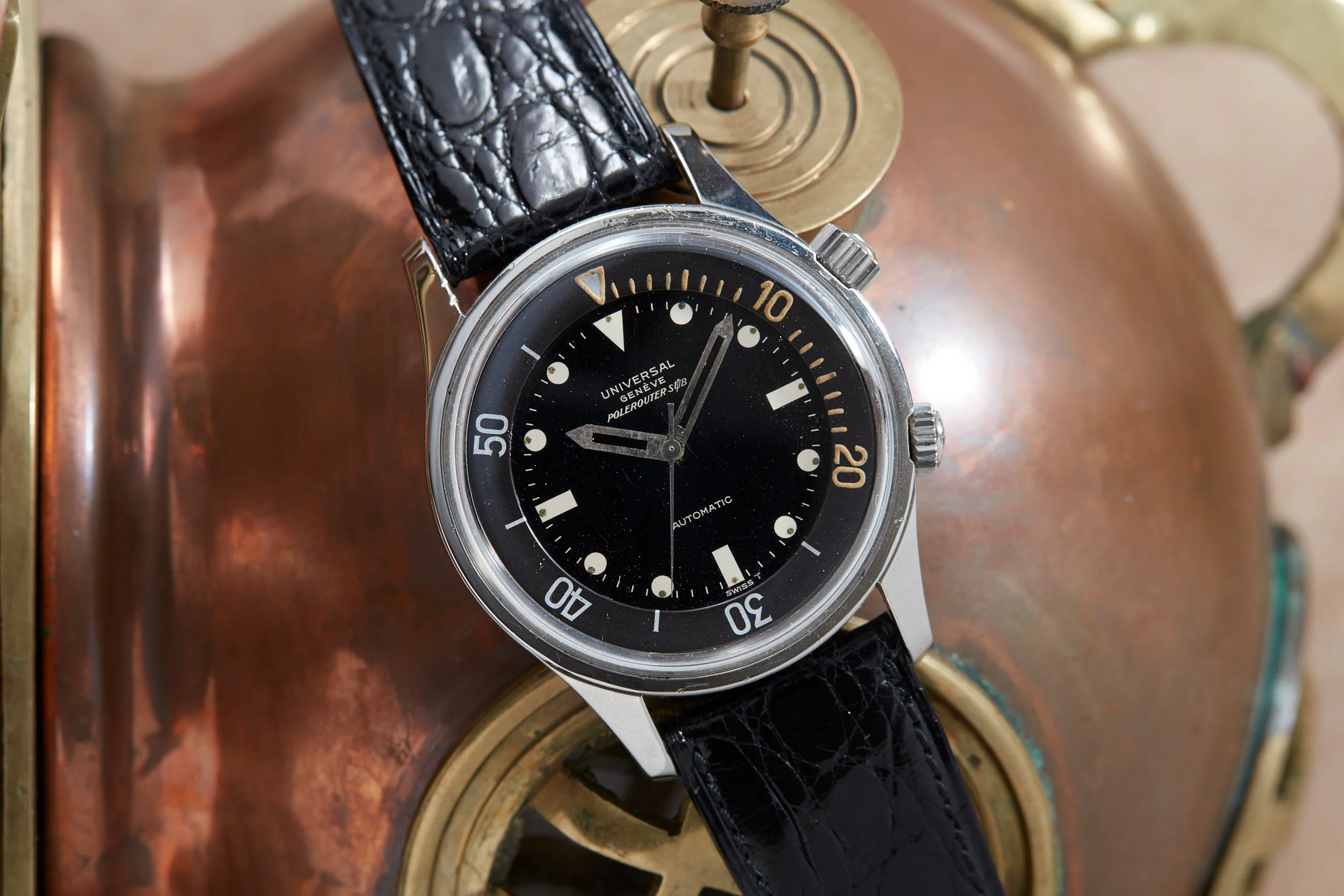
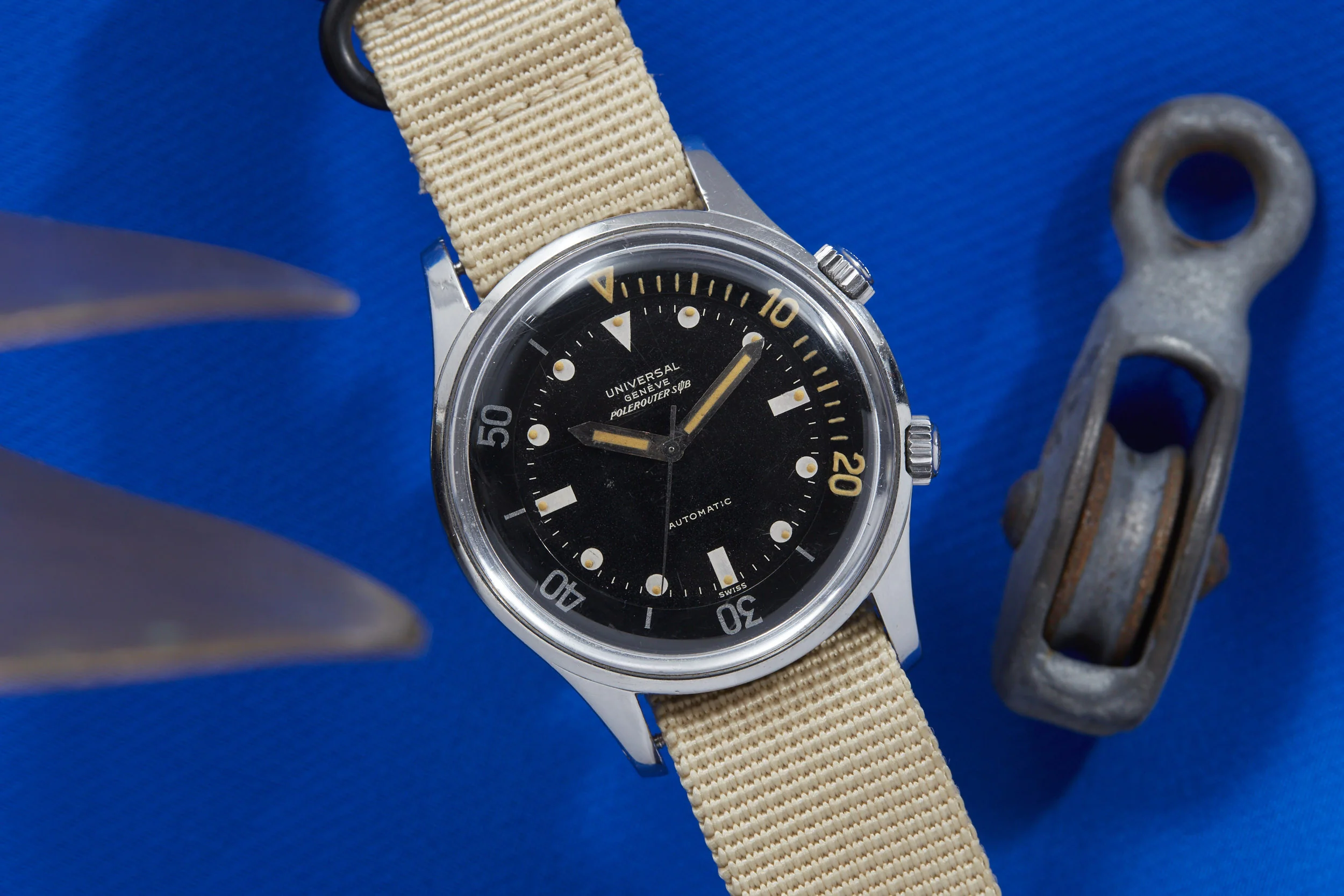
- Universal Genève Polerouter Sub (early series): designed elegance, an explorer’s soul, that blend of slimness and functionality that still captivates.
- Wittnauer, Benrus, Bulova, Hamilton: an ecosystem of period references, highly sought after for their dial and crown variations.
These watches share a common DNA, yet each tells its own nuance: adventure, city life, technique, the modernity of the sixties. They have become the totems of a kind of diving that is more romantic than purely “tool” driven.
The contemporary renaissance
The neo-vintage wave has revived the myth. Longines brought the Legend Diver back to the surface with tact, respecting the proportions and graphic spirit. Jaeger-LeCoultre rebuilt a Polaris family that reprises the codes with real savoir-faire. Others—from Christopher Ward to demanding micro-brands—have restored meaning to the compression function itself, sometimes made visible via a coloured ring inside the case to materialise pressure. And then there are the unabashed “compressor-style” pieces: the dual-crown look and internal bezel without the original EPSA mechanism, but with contemporary day-to-day comfort. The style remains intact: sporty, sharp, timeless.
How to recognise a true vintage super compressor
- The caseback generally bears, on the inside, the famous EPSA diver’s helmet and case references.
- The two crowns often feature a cross-hatched pattern. If they’ve been replaced, the checkerboard may be missing.
- The internal bezel is operated by the upper crown, with precise, regular clicks.
- The case isn’t necessarily thick: water resistance comes from compression, not mass.
- The whole watch should feel period-correct: typography, hands, tritium patina, coherence of components.
As always with vintage, the devil is in the details. A dial that looks too new, a poorly lettered service bezel, anachronistic crowns—these are all signals to slow down and document.
Why it still fascinates
Because it tells a different way of going underwater. The gesture is different: you set the bezel with your fingertips, without clicking an external insert. The sound is muted, the feel precise to the millimetre. And above all, the watch lives with its environment: the pressure of water becomes a protective force. That mechanical poetry, paired with a perfectly balanced dual-crown design, explains the almost affectionate attachment super compressors inspire. On aged leather, tropic rubber or polished mesh, they carry an athletic elegance that transcends eras.
Buying and maintenance advice
- Water resistance: with a vintage piece, consider water the enemy. Have it pressure-tested, replace gaskets and crown tubes if necessary, but remain cautious.
- Originality: prioritise original dials, hands and bezels. Checkerboard crowns are a plus, but may have been replaced over the course of servicing.
- Documentation: cross-check case references, EPSA markings and brand archives when they exist.
- Servicing: entrust the watch to a watchmaker familiar with compression cases. Spring adjustment and the condition of the caseback are key.
For enthusiasts drawn to watches with a strong narrative, the super compressor is a passport. It distils the innovative spirit of the post-war boom years and a graphic chic that speaks to our time. A dive watch that doesn’t need to raise its voice to be noticed: perhaps that is true luxury.