What Is a Field Watch?
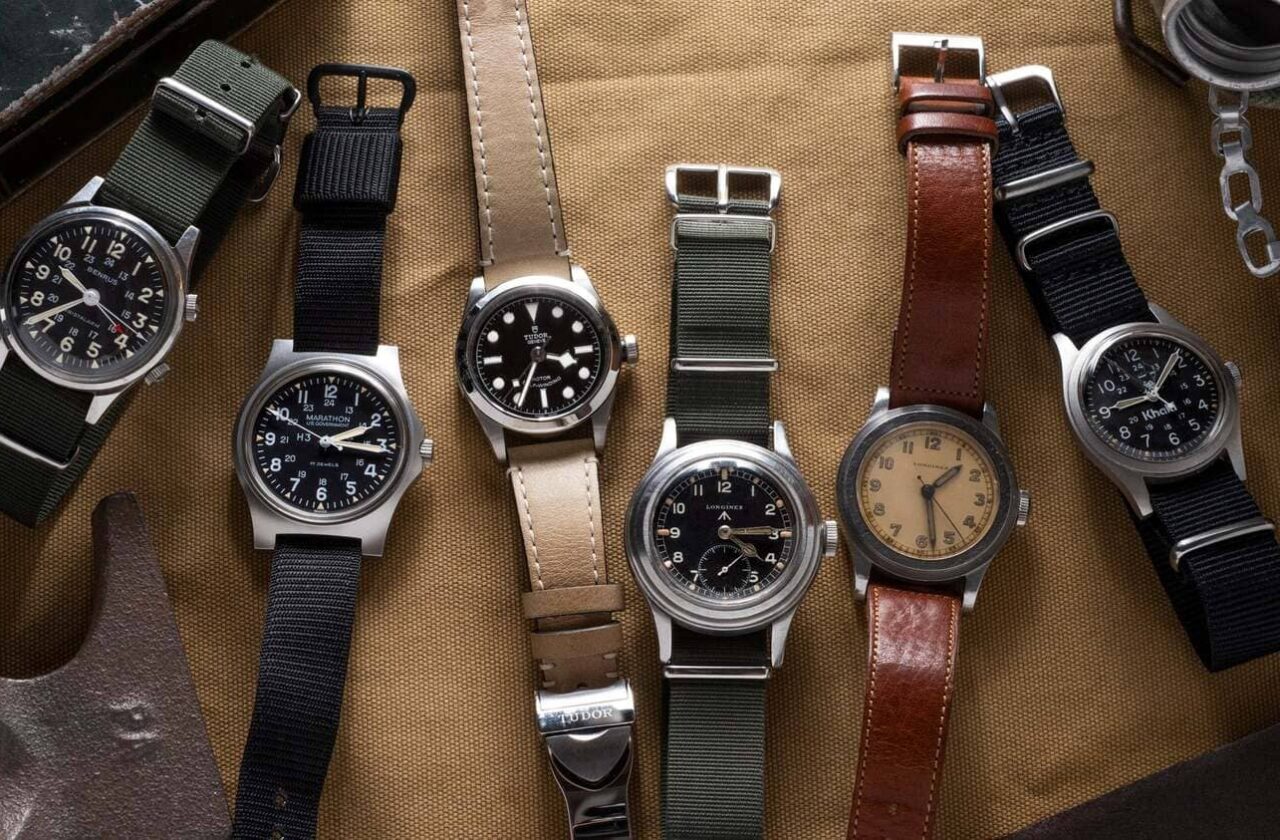
There are watches made for showing off, and others that have a purpose. The field watch—or montre de terrain in French—belongs to the latter family: honest pieces, built to be lived with. Born in the shadow of barracks, it has left the theatre of operations for café terraces, hiking trails and open-air offices. A watch for use, in the noblest sense: a tool that tells a life as much as it accompanies it.
Definition: the essence of a field watch
“Field” as in “field”—of battle, originally. The field watch is a land-based military watch, designed for legibility, toughness and reliability. Its brief can be summed up in three words: simple, robust, readable. Typically you’ll find a matte black or khaki dial, large Arabic numerals, a precise minute track, sometimes an inner 24-hour scale, high-contrast hands with generous lume, and a hacking seconds function (stop-seconds) for setting and synchronising the time.
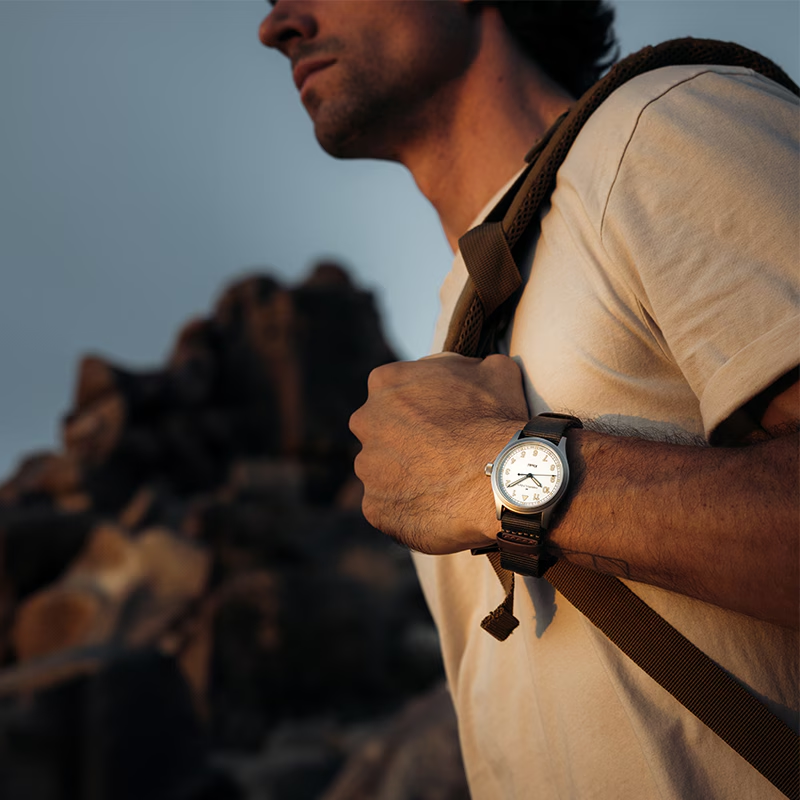
On the case side, brushed steel keeps reflections down; the diameter stays restrained (36 to 40 mm) so it doesn’t get in the way on the wrist; water resistance ranges from 50 to 100 m; the crystal is hardened mineral or sapphire depending on budget. The movement? Mechanical, hand-wound or automatic—the purists will love the daily winding ritual—sometimes quartz for maintenance-free accuracy. On the wrist: rugged textile, a NATO G10, thick leather or a canvas strap. The field watch likes honest materials.
A captivating military heritage
The trenches of 1914–1918 accelerated the shift from pocket watches to wristwatches: you had to read the time at a glance. During the Second World War, the American A-11 specification would lay down a grammar that became canonical—so much so it was nicknamed “the watch that won the war”. The A-17 and GG-W-113 would follow for Vietnam, while the British Army ordered its W.W.W. watches from twelve manufacturers—the famous “Dirty Dozen”, from Omega to Longines, from IWC to Jaeger-LeCoultre.
Beyond operations, the field watch has become a symbol of tangible adventure: everyday odysseys, weekend expeditions, a return to the functional. Its aesthetic has become a language. You don’t wear a field watch to be seen; you wear it to do.
Design codes, line by line
- Absolute legibility: matte dial, full Arabic numerals, baton or syringe hands, “railroad” minute track, maximum contrast.
- Utility case: brushed steel, straight lugs, 36–40 mm, measured thickness, a simple, usable crown.
- Toughness: sapphire crystal preferred, serious gaskets, 50–100 m water resistance, shock protection and sometimes an anti-magnetic cage.
- A synchronisable movement: hacking seconds is essential to the “mil-spec” spirit; manual for the ritual, automatic for practicality.
- Tactical strap: NATO G10 (born at the British MoD in the 1970s), webbing, patinated leather; fixed bars on some models.
- Lume without ostentation: Super-LumiNova, or tritium tubes on a few military references.
Why the field watch appeals today
Because it’s the antithesis of the superfluous. A field watch goes with raw denim, an Oxford shirt and a waxed jacket; it also slips under a textured suit if you like blurring the lines between smart and utilitarian. Slim and compact, it disappears on the wrist, yet its character shows in the details: a silky brush finish, a discreet 24-hour scale, a patina that belongs to you alone. It’s the ultimate “capsule” watch: neutral enough to do everything, distinctive enough to tell a story.
How to wear it
- Weekend: on an olive NATO with boots—it smells of a forest walk and a steaming thermos.
- Office: grained brown leather, a blue shirt, an unstructured jacket—the perfect contrast between rigour and ease.
- Summer: sand-coloured canvas, sleeves rolled up; a nod to exploration rather than the yacht club.
Iconic and contemporary models
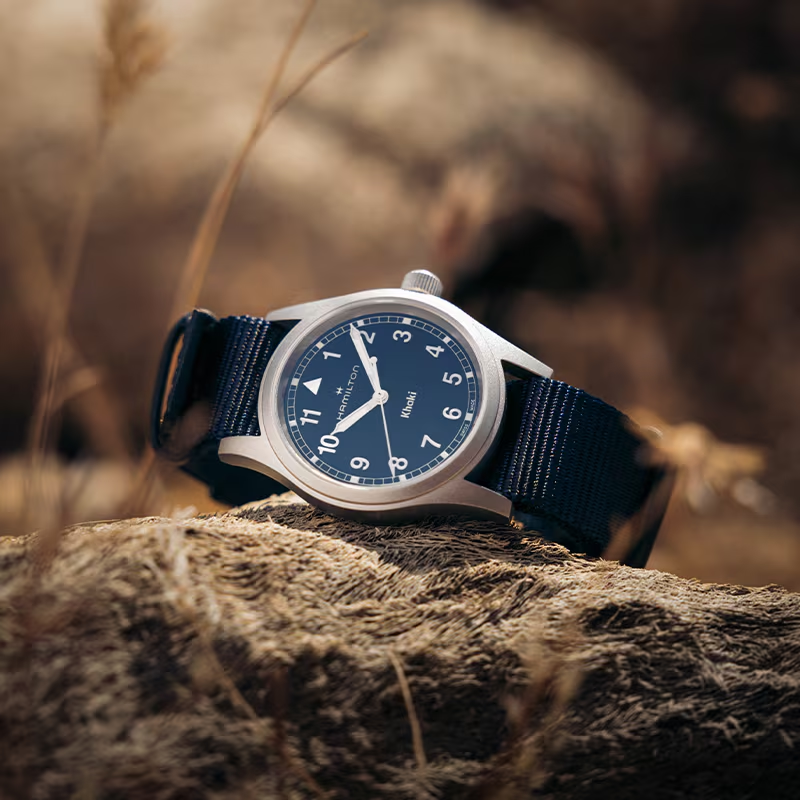
- Hamilton Khaki Field Mechanical 38 mm: the modern archetype. Hand-wound, 80-hour power reserve, clean dial and authenticity at a gentle price.
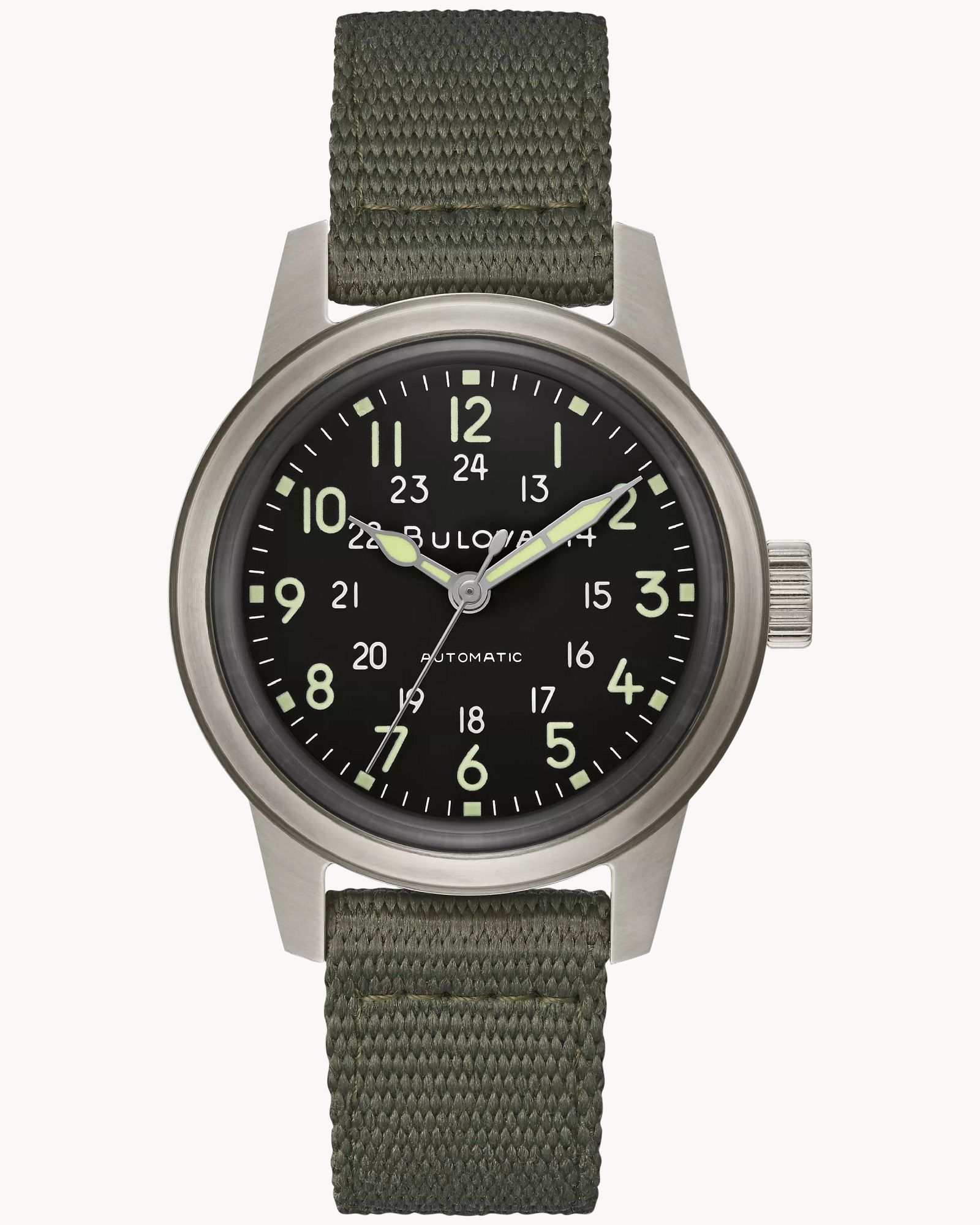
- Bulova Hack: a tribute to US “hack” watches from the 1940s–50s, hacking seconds as it should be, and instant vintage charm.
- CWC G10 and W10 (vintage): British DNA. From issued quartz to older mechanicals, a lesson in pragmatism.
- Marathon General Purpose (GPM): purely military, with tritium tubes and sentry-grade legibility.
- Seiko 5 Field (SRPG, etc.): the accessible, reliable option, with a modern hacking movement and a useful day-date.
- Citizen Promaster Tough: rugged monocoque case, solar Eco-Drive; the civilian tool watch that takes punishment without flinching.
- Vintage “Dirty Dozen”: for collectors. Cyma, Vertex, Omega, Longines… a horological saga in twelve voices.
Choosing the right field watch
- Size: 36–38 mm for a vintage look, 39–40 mm for modern versatility.
- Crystal: sapphire for durability; hardened mineral if budget comes first or if you’re happy to accept a life-worn patina.
- Movement: manual for the daily connection, automatic for set-and-forget ease, quartz if accuracy is paramount. Always with hacking seconds if possible.
- Water resistance: 100 m if you live outdoors; 50 m is enough for dry urban life.
- Generous Super-LumiNova; tritium for professional use (constant watch), with standards in mind.
- Straps: invest in a trio (NATO, canvas, leather). Drilled lugs = easy changes; fixed bars = military security.
Care and longevity
A field watch needs care: rinse it in fresh water after the sea and have the water resistance checked every 5 years. A mechanical movement is typically serviced every 5 to 7 years; a quartz simply needs a battery from time to time, and you’re good to go. Straps, meanwhile, are replaced the way you change playgrounds.
Beyond the watch: a mindset
The field watch isn’t a trend; it’s a code of ethics. It says a beautiful thing can be useful, that a design can be born from constraint and become a style. In a world of complications, it reminds us of the elegance of what’s necessary. Whether you’re walking in the city or along a trail, it keeps the time—and the look.