What Is a “California” Dial?
The mystery of the “California” dial, between watchmaking culture and deliberate oddity
In the refined world of haute horlogerie, few aesthetic codes provoke as much curiosity—and perplexity—as the “California” dial. At first glance, it confuses. At second, it intrigues. And by the third, it captivates.
This half-Roman, half-Arabic dial is anything but a designer’s whim. It tells a story. A story of legibility, military heritage, Californian restoration … and a certain taste for objects that refuse to fit neatly into categories.
A mismatched dial … by design
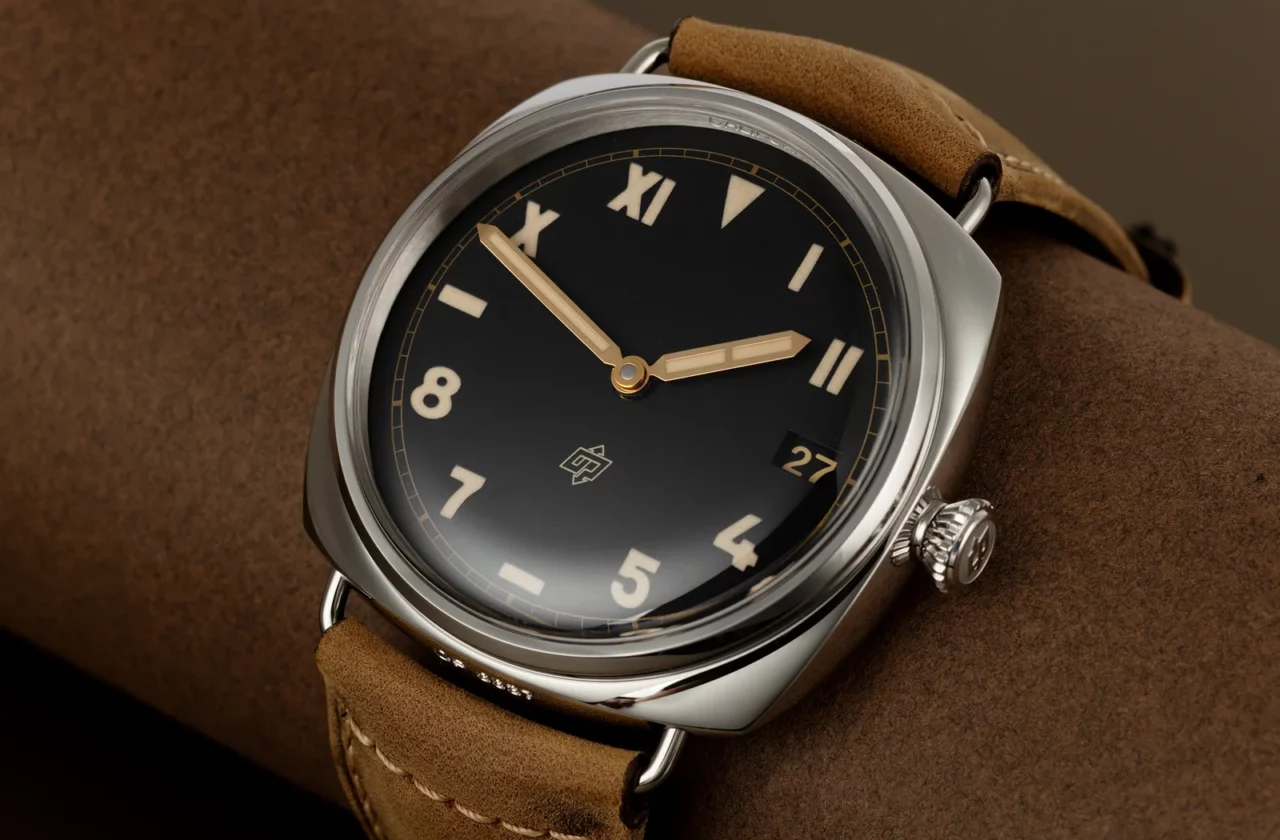
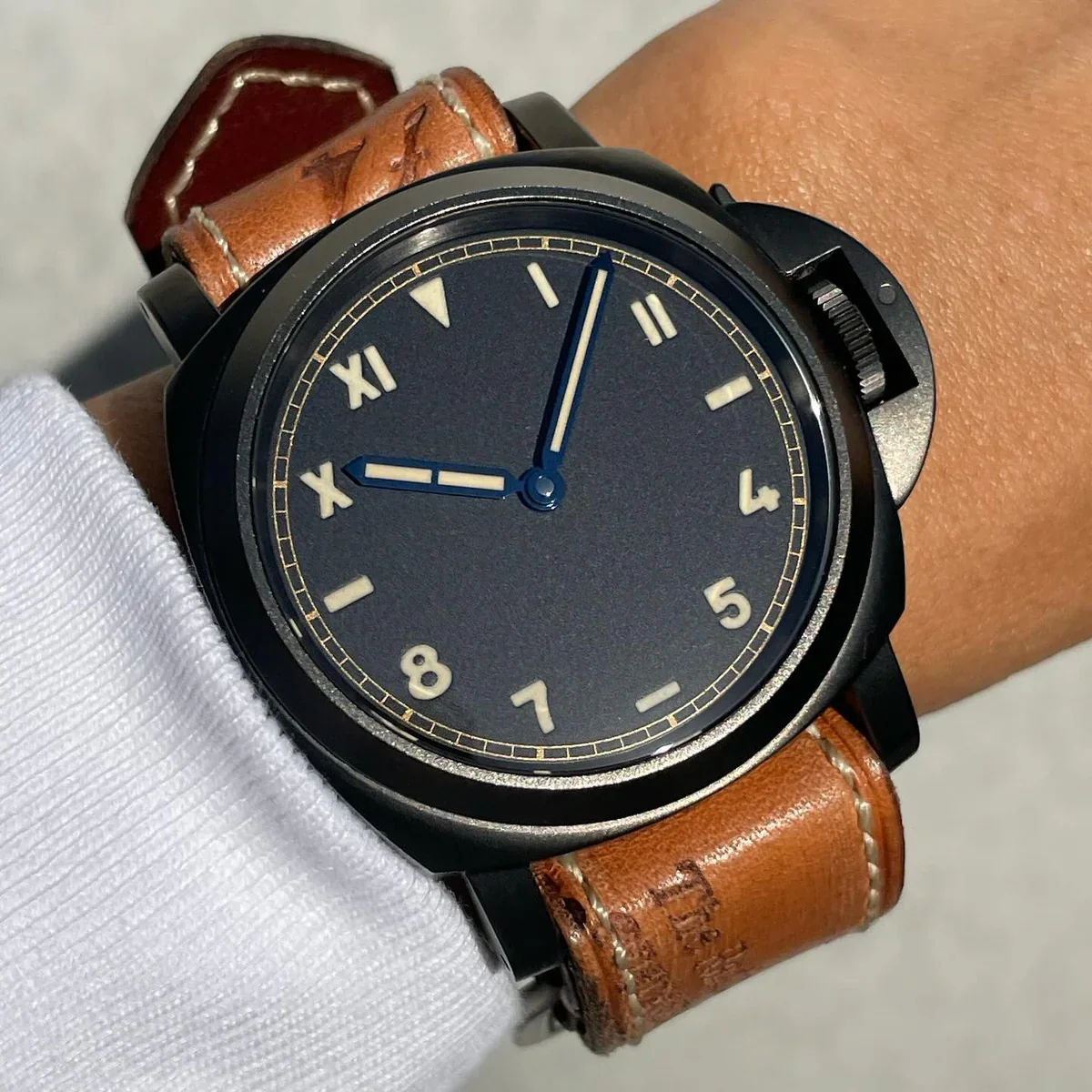
The “California” dial is instantly recognizable thanks to its hybrid typography:
– Roman numerals on the upper half, typically from 10 o’clock to 2 o’clock
– Arabic numerals on the lower half, from 4 o’clock to 8 o’clock
– A triangle at 12 o’clock, often accompanied by dots or baton markers for the remaining positions
The result: an asymmetrical dial, almost unbalanced at first glance, yet surprisingly legible once on the wrist.
This combination is no accident. It follows a simple functional logic: instantly distinguishing the orientation of the watch, even in low-visibility conditions. A crucial quality at a time when wristwatches were becoming essential tools in military and professional settings.
Origins: Rolex, Panerai, and the military route
Contrary to what its name might suggest, the “California” dial was not born under the sunshine of the American West Coast.
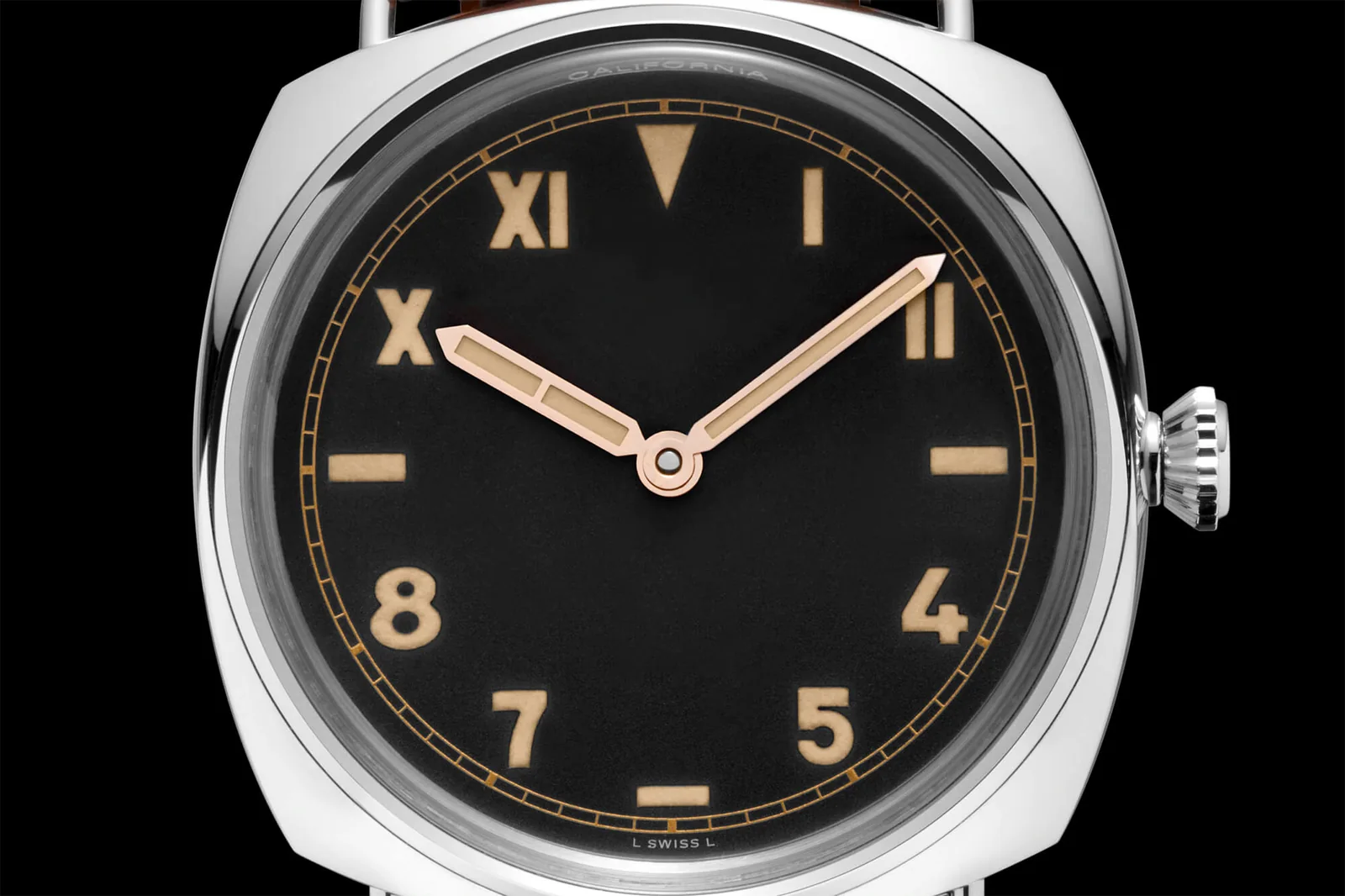
Its roots trace back to the 1930s and 1940s. During this period, Rolex produced watches featuring this type of dial, often intended for utilitarian or even military use. Panerai, then a supplier to the Italian Navy, also adopted similar dials on certain Radiomir models.
The goal was clear: maximize legibility. Roman numerals, more visually distinctive, made it easier to identify the upper portion of the dial at a glance, while Arabic numerals allowed for quick reading on the lower half.
It is a typographic compromise in service of function—not a decorative whim.
So why “California”?
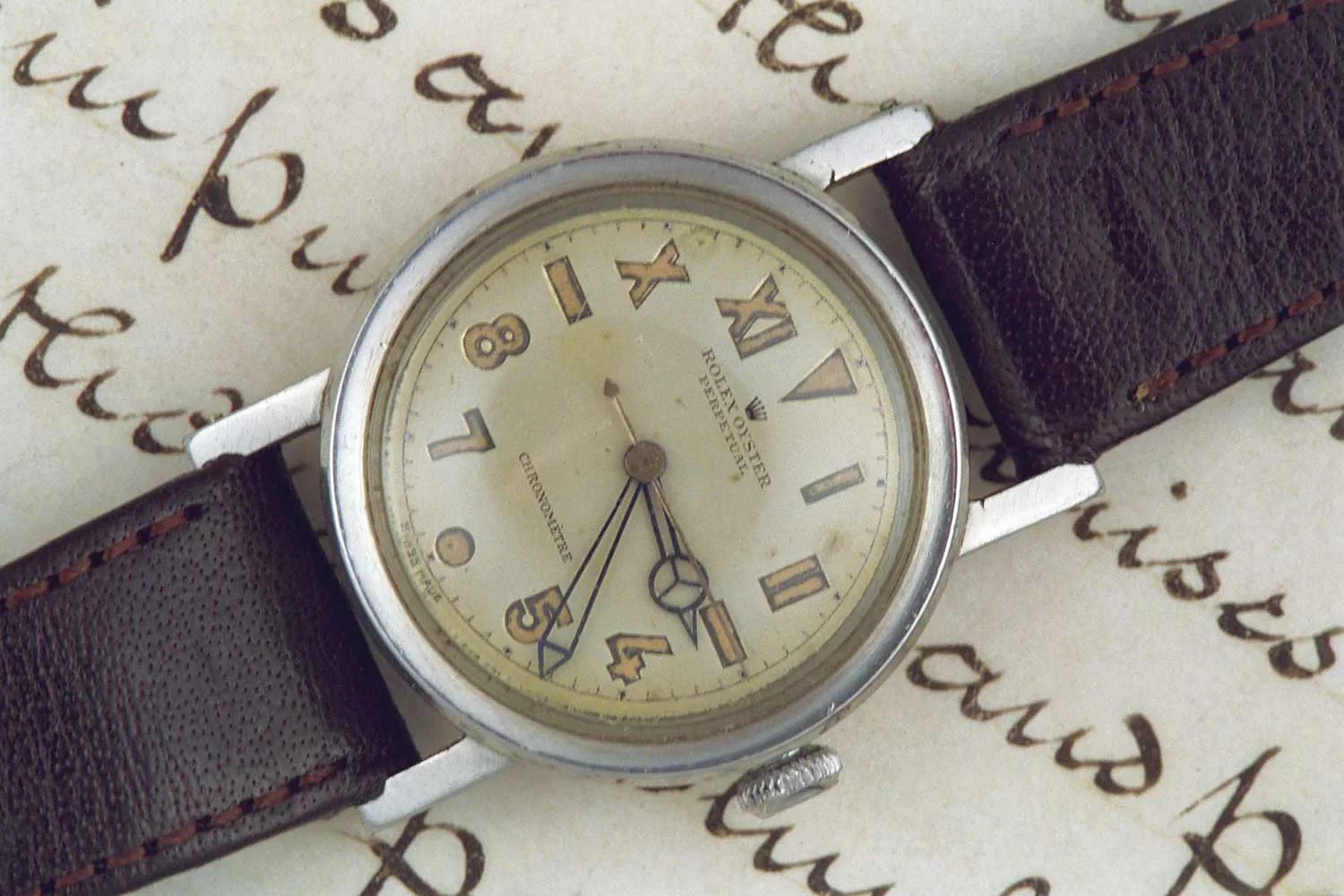
The name emerged much later, in the 1970s and 1980s. During this time, a large number of vintage Rolex watches were restored in the United States, particularly in California.
Damaged dials were repainted using this hybrid style, which had by then become both recognizable and sought-after. The nickname “California dial” gradually took hold among American collectors before spreading worldwide.
The irony: it’s not the dial’s origin that is Californian, but its revival.
Legibility above all
Beyond its unconventional aesthetic, the California dial is grounded in very practical legibility principles.
First, the clear division between top and bottom allows the brain to orient itself instantly. In darkness or under stress, this visual distinction can make all the difference.
Then, the frequent use of luminous material—historically radium, then tritium, and today Super-LumiNova—further enhances nighttime readability.
Finally, the triangle at 12 o’clock acts as a universal reference point, a feature also found on many modern dive watches.
This dial is therefore less eccentric than it appears. In fact, it is deeply rational.
Panerai, modern ambassador of the California dial
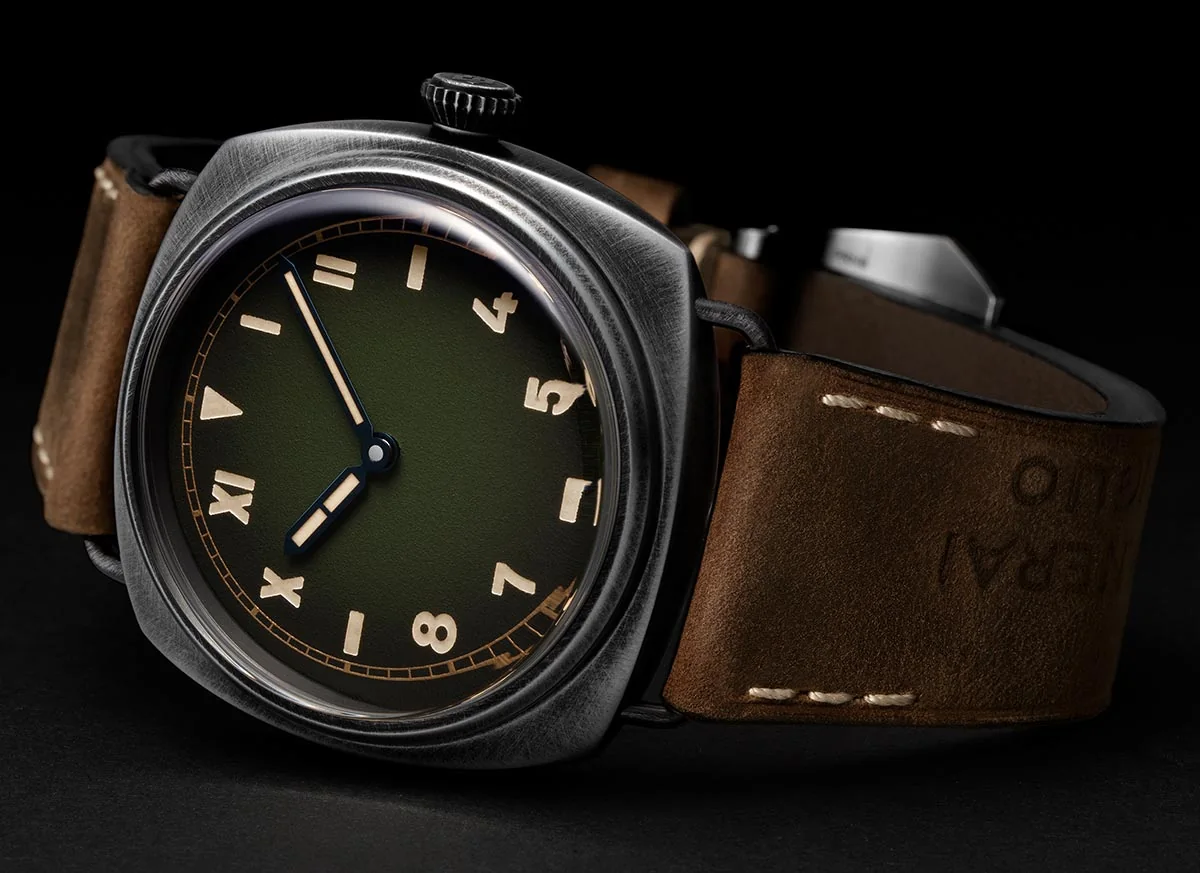
If one contemporary brand has brought the California dial back into the spotlight, it is undoubtedly Officine Panerai.
With models such as the Radiomir California, the Italian brand draws on its military heritage to deliver interpretations that are both faithful and coherent.
The PAM00424, for instance, perfectly embodies this aesthetic:
– Case: 47 mm polished steel
– Movement: in-house calibre P.3000, manual winding
– Power reserve: 72 hours
– Dial: California with luminous markers
– Water resistance: 100 m
All presented in a generous, almost oversized format, true to Panerai’s DNA. Here, the California dial is not a gimmick—it is a signature.
Rolex and vintage “California dials”
At Rolex, California dials are now highly sought-after collector’s pieces.
They can be found on certain references from the 1930s and 1940s, often within the Oyster family. These watches, sometimes restored over the decades, feature dials whose authenticity may be debated, yet whose charm is undeniable.
The vintage market has fully embraced the phenomenon. The result: numerous variations, sometimes far removed from historical standards, yet always recognizable.
A well-preserved period California dial can significantly increase a watch’s value—provided, of course, that it is properly documented and consistent with the piece.

A divisive aesthetic … and a deliberate one
Let’s be honest: the California dial is not to everyone’s taste.
Some find it unbalanced, almost incoherent. Others see it as a bold signature—a rejection of the overly polished conventions of contemporary watchmaking.
There is something slightly rebellious about this dial. A way of saying that legibility does not have to be uniform to be effective.
And in a world saturated with baton indices, sunburst finishes or lacquered black dials, this mixed typography offers a welcome breath of fresh air.

Contemporary reinterpretations
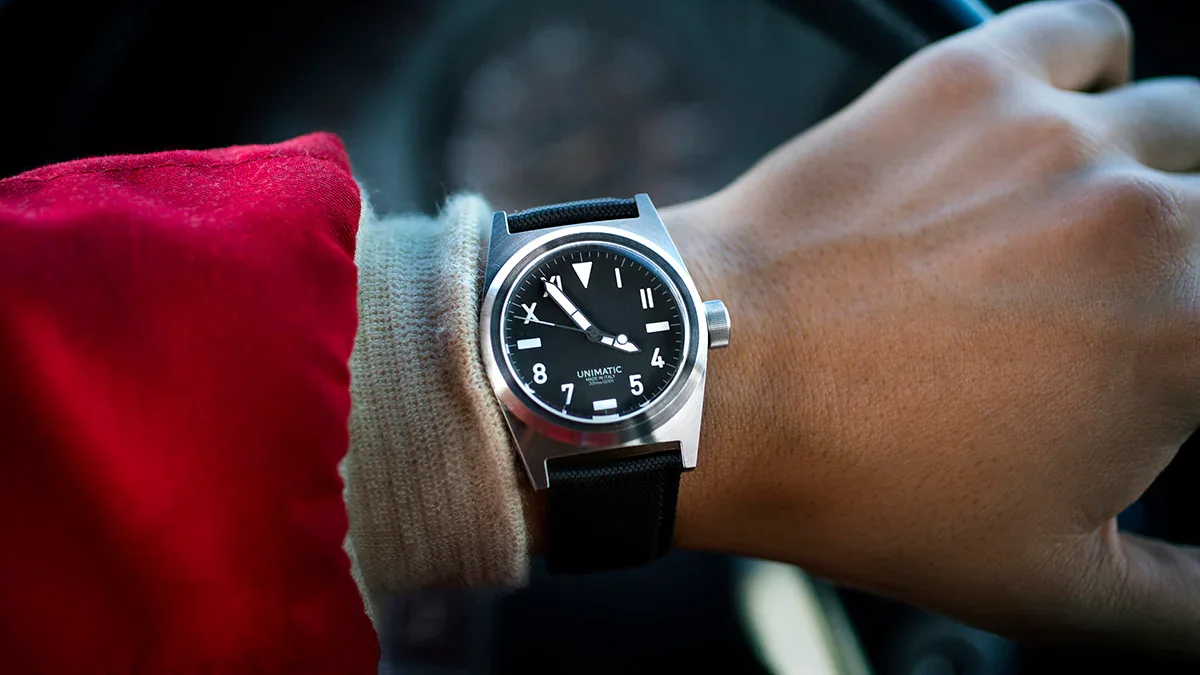
Beyond Panerai, other brands have experimented with the California dial, with varying degrees of success. Some microbrands use it to inject a vintage touch into their collections. Others, more established, treat it as a nod to history.
But the exercise is a delicate one. Poorly executed, the California dial can quickly slip into pastiche. Too clean, it loses its soul. Too busy, it becomes illegible.
The best versions are often those most faithful to the original spirit: simple typography, controlled patina, and above all, overall coherence.
And today?
If the California dial still appeals today, it’s not just for its aesthetic. It embodies a time when a watch was first and foremost an instrument—when every detail served a precise function.
In a market dominated by storytelling and limited editions, it reminds us of a simple truth: a watch can be unusual, imperfect, asymmetrical … and still be perfectly right. And perhaps that is its greatest strength.
A California dial does not seek to convince immediately. It takes a little time. But once it gets under your skin, it is hard to go back.