What Are Blued Screws Used for in a Watch Movement?
A blue glint that’s anything but accidental
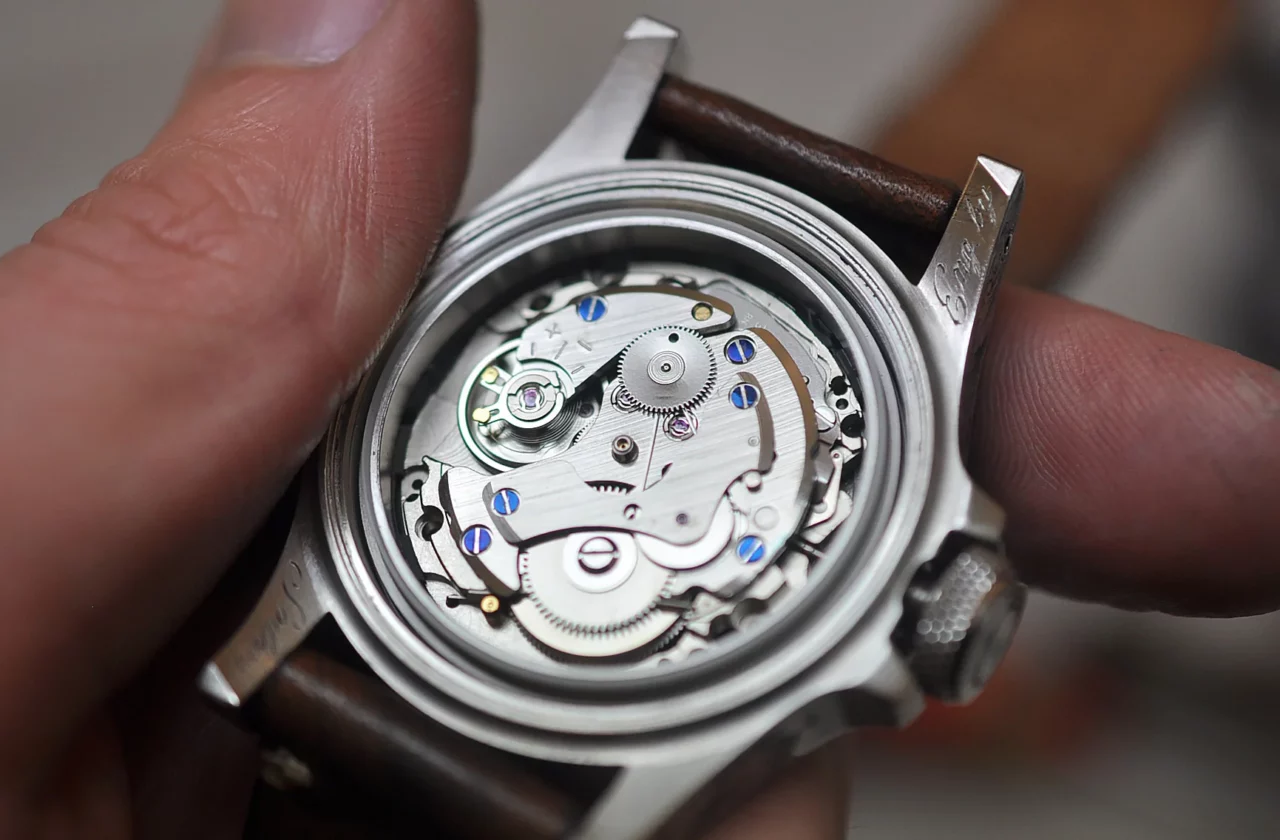
Open the sapphire caseback of a well-bred watch and you’ll spot that discreet, almost electric shimmer: blued screws, set like inked punctuation marks against rhodium-plated bridges. For enthusiasts, it’s a workshop thrill; for the uninitiated, a mere affectation. The truth? That blue isn’t make-up, but the tangible trace of an age-old watchmaking gesture—both technical and poetic. In a watch movement, blued screws don’t just flatter the eye: they speak of a way of doing things, a discipline of fire, an inheritance from marine chronometers and master repairers.
The science behind the blue
The blue of screws comes from heat-treating polished steel. Carefully heated to around 290–310°C, the screw heads develop a thin oxide layer (magnetite) that diffracts light, producing that deep blue hue—sometimes leaning toward violet depending on the angle. Before that, the craftsperson polishes the screw to a mirror finish: the more perfect the surface, the purer and more even the blue. Traditionally, heating is done on a brass plate or on a bed of filings—sometimes over a flame, sometimes in an oven. A few degrees too many and the screw shifts to violet, then grey; a few degrees too few and it stays straw-coloured. The precision of the gesture is what gives the colour its nobility.
What are blued screws actually for?
- Anti-corrosion protection: the thin oxide layer shields the steel from moisture and micro-oxidation—essential in a movement where stability reigns supreme.
- Mechanical stability: the tempering process fine-tunes hardness and reduces brittleness. A properly tempered screw withstands repeated tightening and loosening during servicing.
- Readability for the watchmaker: the blue contrasts with rhodium-plated bridges and brass or gold chatons, making fixing points easier to identify during assembly.
- An aesthetic signature: it’s a code of fine workmanship, particularly in Germanic schools (three-quarter plate, screwed gold chatons and blued screws) and among several Swiss houses with deep-rooted traditions.
Real, fake, and every shade of blue
Not all blue screws are created equal. To a trained eye, the “living” blue of flame bluing differs from the “industrial” blue of a modern coating. Here’s how to tell them apart:
- Traditional heat bluing: a tone that shifts slightly with the light, possible violet reflections, natural micro-variations. The heads are often bevelled, with chamfered and polished slots.
- Chemical/PVD blue: very uniform and cool, so perfect it can look almost flat. Clean, stable, less artisanal. Common on more industrial production.
- Cosmetic colouring: at entry level, some screws may simply be dyed. Clues: unchamfered slot edges, a garish hue, and a lack of coherence with the rest of the finishing.
Should you turn your nose up at PVD? Not necessarily. As always in watchmaking, what matters is honesty: a watch with an openly industrial positioning can perfectly well adopt a deposited blue. But if you’re being sold the art of fire and “the master’s blue,” you expect genuine thermal bluing.
A legacy of the sea—and of Breguet
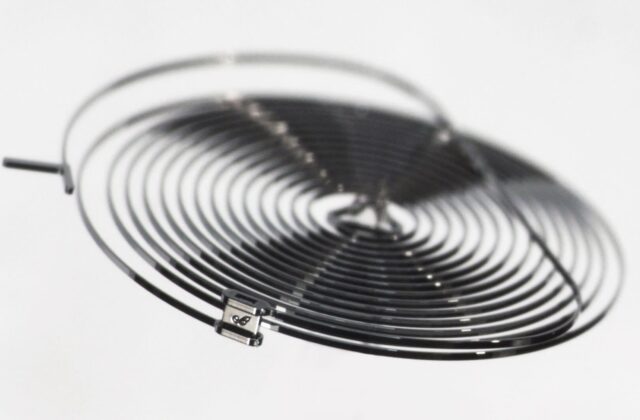
In the 18th and 19th centuries, the fight against corrosion aboard ships set the standard for marine chronometers: blued steel was common, as much for durability as for legibility. Abraham-Louis Breguet also popularised the use of blued elements—think of the famous “blue hairspring,” a balance spring thermally blued to improve stability and protect it from rust. In the Glashütte valley, the German school has perpetuated this language: three-quarter plate, screwed gold chatons, blued screws. A. Lange & Söhne, Glashütte Original, NOMOS and others have made it a cultural hallmark. In Switzerland, many classic houses (Breguet, of course, but also independent artisans) still use this blue as a sign of work well done.
Aesthetics: the dialogue with finishing
On a rhodium-plated movement with satin Côtes de Genève, blued screws create a graphic counterpoint. With tight perlage, they prick the surface like stars in a winter sky. In the presence of screwed gold chatons, they form a three-colour dialogue: cool grey, warm gold, deep blue. It isn’t just pretty—it’s legible, orderly, almost musical. Watch photographers know it: a movement without blue loses an octave.
Precision: myth or reality?
Blued screws, in and of themselves, don’t miraculously increase a watch movement’s accuracy. Their role is indirect: better protection of the steel, more stable assemblies, and a perceived quality that often goes hand in hand with tighter quality control. Be careful not to confuse them with balance screws (timing screws) on older regulating organs: those could be gilded, steel or blued, and they did affect the balance’s inertia. Today, most modern calibres regulate differently (Microstella masses, serge screws, variable-inertia balances).
Spotting the fine details… and caring for them
- Signs of quality: polished screw heads, softened edges, chamfered slots, a blue that’s even yet alive. Slot alignment, when present, signals an extra level of perfectionism.
- Care: never try to “revive” a blued screw yourself. An ill-advised polish removes the oxide and alters the colour. Leave it to a watchmaker during a full service.
- Everyday use: a well-sealed, properly lubricated movement protects its screws. Simply avoid extreme thermal shocks and entrust any intervention to certified hands.
Houses and workshops to watch
- A. Lange & Söhne: flame-blued screws, screwed gold chatons—the Glashütte triptych in its most accomplished form.
- Glashütte Original and NOMOS: well-executed in-house calibres, with thermal bluing often found depending on the reference.
- Breguet: a living legacy of the blue hairspring and thermally blued details across its classic lines.
- Grand Seiko/Seiko (depending on calibre): blued screws appear on certain references, often in dialogue with meticulous finishing.
- Independents (Kari Voutilainen, Romain Gauthier, among others): traditional bluing and top-tier finishing.
In summary
In a watch movement, blued screws are witnesses: witnesses to mastered fire, to tamed steel, to a culture where technique allies itself with style. They protect, they structure, they guide the eye and the hand. They tell the story of continuity between marine chronometers, contemporary workshops, and the undimmed pleasure of turning a watch over to contemplate its architecture. A small blue note on a rhodium-plated bridge, and all of watchmaking is reflected in it.