This French Watch Rivals the Swiss
When France Takes a Seat at the Swiss Table
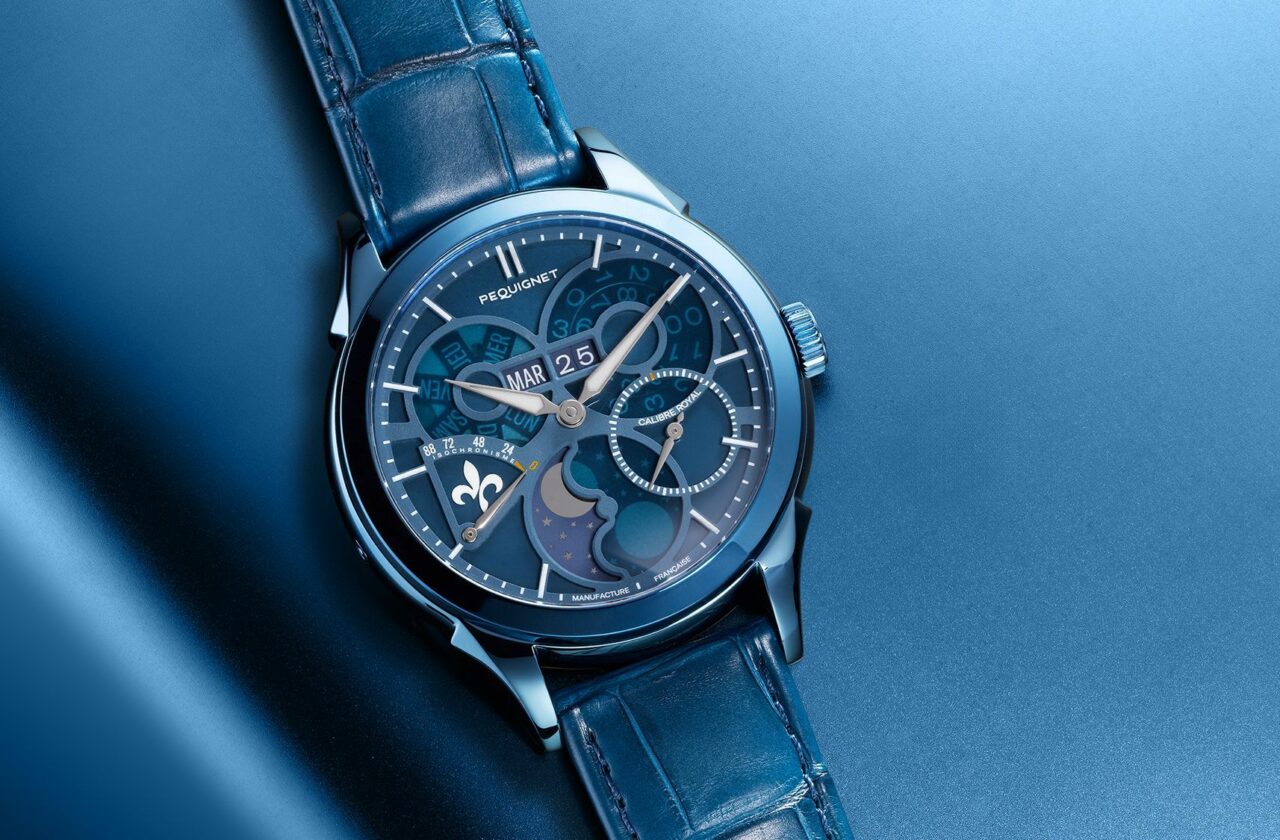
In the Morteau valley, on the banks of the Doubs, French watchmaking has never stopped beating—sometimes under its breath, often with a doggedness that commands respect. Here, just a few kilometres from the border, a watch sets the record straight and reminds us that a certain art of time is not written in Switzerland alone. This piece—automatic, cultivated, and quietly self-assured—bears the signature Pequignet. It doesn’t chase excess, but coherence: a clear identity, in-house engineering, and a style that avoids noise in favour of poise. Enough, yes, to compete calmly with some very solid contemporary Swiss offerings.
Pequignet, French Persistence
Founded in 1973 by Émile Pequignet, the Morteau-based maison long embodied discreet elegance: slim watches, classic lines, a keen eye for detail. Then came the intuition that changed everything: if France wanted to exist sustainably in fine watchmaking, it needed an engine designed at home. Thus began the Calibre Royal adventure, in the heart of the Franco-Swiss watchmaking basin—where the same mechanical language has been spoken for centuries. The wager was bold, almost unreasonable in a world that outsources everything. It would become a signature: an automatic movement developed and assembled in Morteau, conceived not as a styling exercise, but as a complete watchmaking platform—reliable and refined.
The Calibre Royal: An Automatic Conceived as a Manifesto
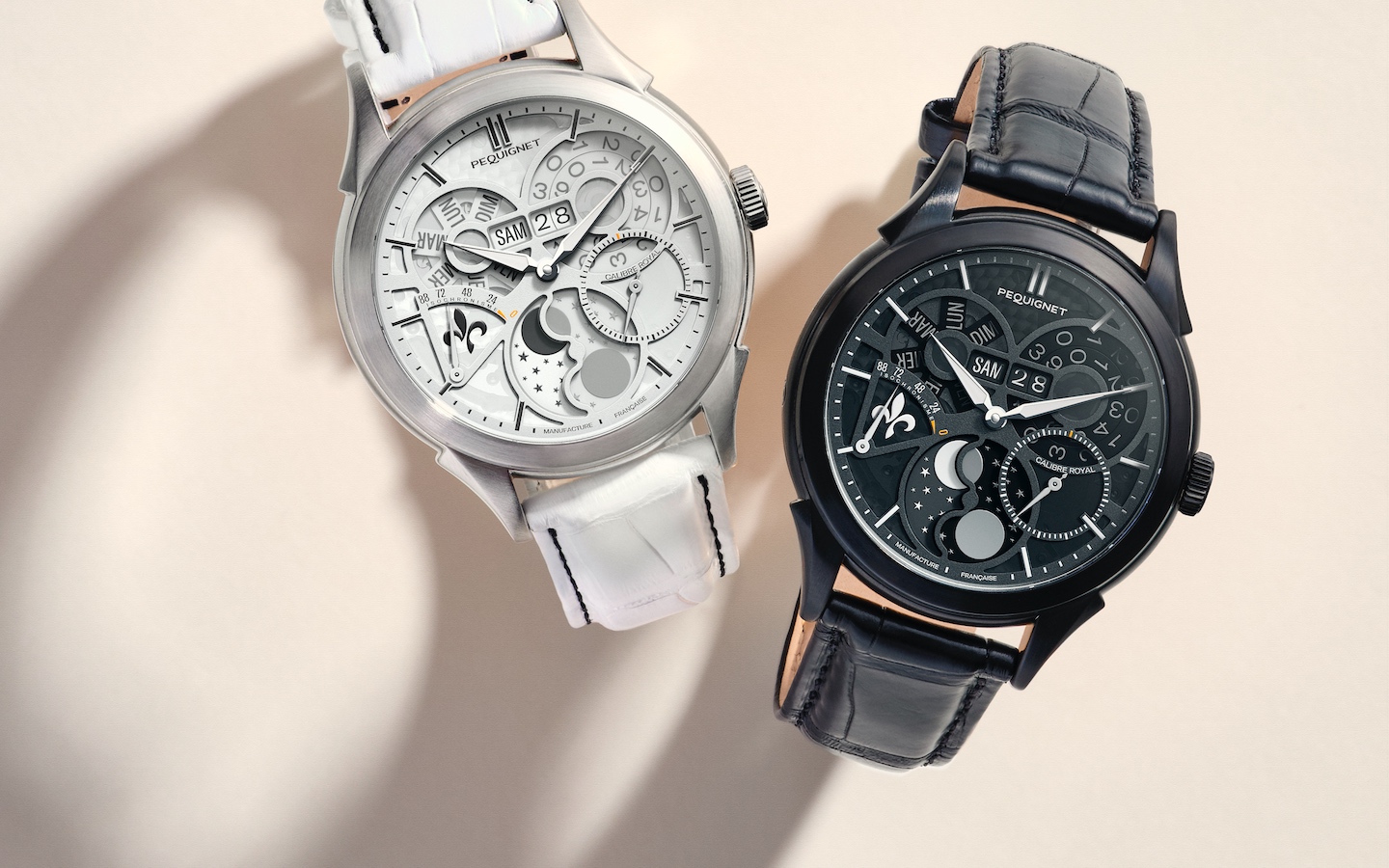
This isn’t an opportunistic calibre; it’s a manifesto. The Calibre Royal was drawn around a simple idea: integrate complications at the mainplate level, rather than stacking modules. The result is a harmonious architecture, improved reliability, and a dial that can breathe. The big date, power reserve, day and moonphase (depending on version) settle in without friction, with crisp legibility and a rare sense of balance.
Another deliberate choice: generous autonomy achieved via a single, efficiently sized barrel, and an automatic winding system engineered to capture even the slightest movement of the wrist. The frequency remains intentionally measured to favour stability, while the finishing—without hysteria—embraces a well-judged classicism: satin-brushed bridges, perlage, a radiating motif on the oscillating weight, softened edges. This is functional elegance—engineering placed in the service of use.
There is a distinctly French philosophy of watchmaking here: precise, but not doctrinaire; cultivated, without mannerism. At heart, the Calibre Royal isn’t trying to imitate Switzerland; it tells something else—seriously, and with panache.
Rue Royale, Royal Saphir: The Watch That Embodies the Ambition
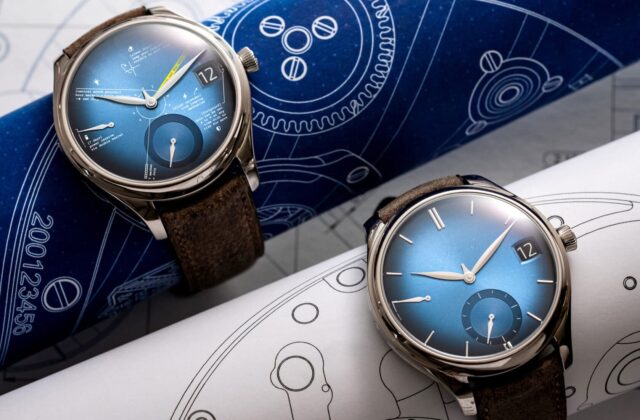
For mechanics to speak, they need a face. At Pequignet, it’s called Rue Royale—sometimes Royal Saphir, depending on the aesthetic interpretation. The former plays the card of drawing-room watchmaking: measured proportions, a carefully worked case, a dial laid out with the big date at 12 o’clock, a fan-shaped power reserve, small seconds and, often, a moon at six—staging that says a great deal about the brand’s sense of visual rhythm. The latter, the Royal Saphir, dares a contemporary twist: a tinted sapphire dial that subtly reveals the mechanics, without tipping into exhibitionism.
In both cases, the whole remains resolutely automatic, driven by an in-house calibre best admired through the back. Wrist comfort, perceived slimness, and stable regulation all contribute to the impression of an object designed to last—far from hurried trends.
Up Against the Swiss: Where the Difference Lies
Let’s compare, without partisan fervour. Many mid-range Swiss houses rely on proven but standardised movements, carefully dressed. Pequignet, for its part, advances an argument of identity: an exclusive, integrated movement, designed for its dials and indications. In terms of feel, the visual signature of the big date, the dial’s breathing space, and the logic of the displays bring a personality you don’t forget.
In the hand, perceived quality holds its own: crisp printing, precise assembly, the work on the hands and indices, the coherence of the case and exhibition back. Is it the same decorative emphasis as Swiss haute horlogerie? No—and that isn’t the point. The aim here is to offer a characterful automatic watch, technically distinctive, that you can wear every day without giving up real watchmaking substance. On that ground, the French contender holds its rank.
Why This Watch Speaks to Collectors
Because it ticks boxes you don’t tick by accident: an identifiable design, an in-house movement, a story anchored in a specific place, and that measured rarity that feeds the insider’s pleasure. You appreciate the way it reconciles watchmaking culture with daily wear: the big date that snaps over cleanly, the moon that’s poetic yet functional, the power reserve that informs without weighing the dial down. Above all, you like the idea that French watchmaking becomes, once again, a proposition with substance—not nostalgia, but reality.
Style: How to Wear It
The Rue Royale pairs beautifully with a textured suit, a soft-collared shirt, a double-breasted coat in winter: the complication remains visible, but civilised. The Royal Saphir, more contemporary, welcomes raw denim and a cold-wool jacket, a turtleneck, or even a minimalist leather blouson. In both cases, start with an alligator or grained calf strap; smooth chocolate or anthracite leather underscores elegance without stiffness. And, importantly, let the watch live: an automatic reveals itself in the gesture.
What to Remember
- A French watchmaking statement of conviction, born in Morteau, facing the Swiss.
- An in-house automatic calibre, conceived as a whole: legible, reliable, elegant.
- Integrated complications (big date, power reserve, moon) without stacking.
- A clear aesthetic identity: Rue Royale classic, Royal Saphir contemporary.
- A characterful alternative for those who seek meaning, not noise.
Competing in watchmaking isn’t a matter of decibels. It’s a question of accuracy, architecture, and attitude. With the Calibre Royal, Pequignet reminds us that in France, too, time can be made to speak—firmly, and with purpose.