The Return of Aged Leather Straps in Watchmaking
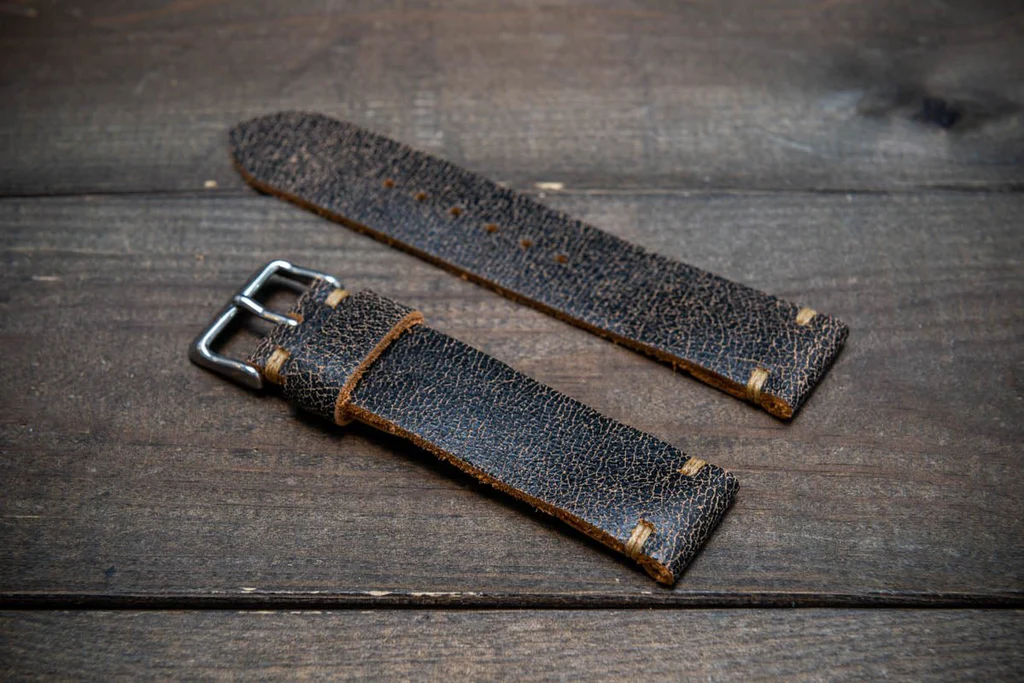
A whiff of salt and petroleum: the return of a leather that tells a story
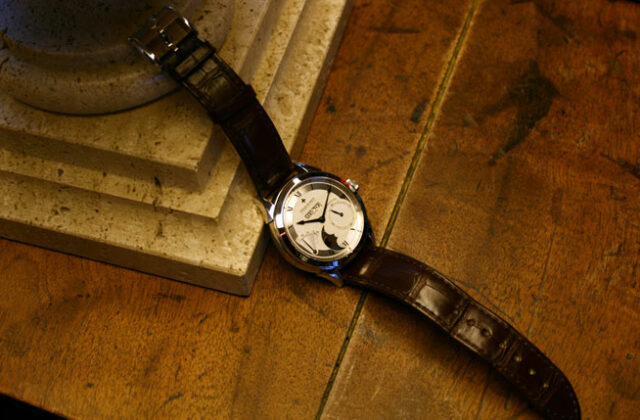
In a world where everything shines too quickly, the aged leather strap returns as an elegant off-beat. Its irregular grain, tobacco-toned nuances and ecru stitching speak of the road, of time passing, of repeated gestures. In watchmaking, this retro-leaning leather strap re-enchants the everyday: it warms up steel, humanises ceramic, and lends a contemporary watch the charm of a well-lived object. The trend isn’t a whim—it’s a craving for material and for history, a return to the tactile in the face of the overly smooth. For those considering choosing the strap that best complements their timepiece, understanding these elements can be essential.
Patina: the beauty time sculpts
Aged leather isn’t a gimmick. It lives, breathes, absorbs light and wear. The finest come from full-grain hides, vegetable-tanned (oak, chestnut), aniline-dyed, sometimes enriched with waxes that migrate at the bend (the “pull-up” effect). Patina then appears naturally: a spilled coffee leaves a shadow; a summer day, a honeyed glow. By contrast, corrected leathers—pigmented like paint—age less gracefully and tell less. The beauty of aged leather is this promise: every wrist writes the next chapter.
From tracks to cockpits: a sporting and military heritage
The retro strap is a nod to a heroic age. The 1960s: racing chronographs are paired with perforated “rally” straps, echoing drilled steering wheels and lightening the feel on the wrist. The 1940s: pilot’s watches sit on lined “Bund” straps to insulate the skin from thermal shocks. At Panerai, the legend of “ammo straps” fashioned from old ammunition pouches feeds a tool-watch mythology. Steve McQueen and his Monaco on perforated leather; Paul Newman and a Daytona sometimes on a leather strap—images that forever fixed the sport-chic association: steel, pin buckle, magnetic simplicity.
Why it’s the trend of the moment
Aged leather ticks every box of the era without betraying watchmaking DNA. It reconciles the tool watch and the city watch, minimalism and character, brand-new pieces and a vintage aura. On Instagram, the “strap change” culture did the rest: a simple strap transforms a watch as much as a well-cut suit changes a silhouette.
- Visible authenticity: patina is reassuring in the face of impersonal brand-newness.
- Comfort: softer and warmer than steel, especially in winter.
- Versatility: a single leather strap can make a diver more urban or a chrono more retro.
- Style economy: changing straps renews your watch without replacing it.
- Eco-awareness: vegetable tanning and upcycling appeal to lovers of lasting beauty.
Choosing the right aged leather strap
Material and make: what the eye and hand should look for
- Prioritise vegetable-tanned full-grain: it will patinate better and last longer.
- Hand-sewn “saddle stitch”: stronger and more elegant than basic machine stitching.
- Burnished or waxed edges: reduce moisture absorption; avoid overly thick edges crudely painted.
- Quality lining (Zermatt or equivalent): anti-perspiration, hypoallergenic.
- Controlled thickness (3 to 4 mm) and tapering towards the buckle for comfort.
- Lug width and taper: a 20/16 or 22/18 slims the watch and highlights its profile.
- Quick-release spring bars: to change looks without tools and without scratching the lugs.
Colours, finishes, stitching: the grammar of retro
Aged leather speaks in Havana, cognac, chocolate, charcoal grey, sometimes olive. A sand nubuck brings a “weekend” softness; a cognac pull-up leather shows lively highlights; a pebbled calf recalls period jackets. Ecru or contrast stitching amplifies the retro feel; tone-on-tone for contemporary minimalism. A classic pin buckle suits the instrument spirit, a “Pre-V” buckle adds a Panerai accent, and a deployant clasp if you want practicality without marking the leather.
With which watches?
- 1960s–70s chronographs: a perforated rally strap makes the pushers and tachy bezel sing.
- Field watches: patinated leather reinforces the utilitarian DNA and the adventurer’s spirit.
- Pilot’s watches: try a slim Bund, or a matte Havana strap with cream top-stitching.
- Urban divers: yes—out of the water. Tobacco leather tames the presence of a steel bezel.
- Néo-vintage dress watches: smooth cognac calf brings an argent or eggshell dial to life.
A useful reminder: leather and water are not friends. Keep metal, rubber or nylon for the beach; reserve aged leather for “desk diving”.
Brands and workshops to watch
Major manufactures are already riding the wave: Tudor, Longines, Zenith and Oris are multiplying patinated-leather configurations, sometimes with contrast stitching and tobacco tones. On the artisan side, France and Europe remain lands of excellence: Camille Fournet, Jean Rousseau, Atelier du Bracelet Parisien and Molequin offer full-grain leathers, top-tier linings and impeccable finishing. In Italy, Colareb and Morellato deliver well-controlled retro shades; Austria’s Hirsch remains a safe bet for outstanding value. Among international independents, Delugs, Fluco and Bas & Lokes appeal to enthusiasts of customisation and elegant taper.
Care: let the patina last without freezing it
Aged leather likes restraint. Wipe it down after a hot day, let it breathe flat overnight, and rotate your straps to extend their life. Avoid driving rain and direct heat sources. Every two to three months, a small dab of quality neutral cream is enough; forget harsh products and oil saturation. On nubuck, a crepe brush will restore the nap. Finally, keep an eye on the spring bars: a strap that softens too much near the lugs deserves a rest… or a replacement.
A lasting style gesture
Adopting an aged leather strap is more than a trend. It’s a cultural gesture that links paddock chronographs to today’s watches, celebrating the know-how of tanners and the hand of the saddler. It’s the art of detail that signs a look: that tobacco brown warming a sunburst dial, that ecru stitching answering a cream index, that patina that belongs only to you. In watchmaking, time is king; on an aged leather strap, it becomes material, nuance, memory. And that may be why it’s coming back so strongly: because it reminds us that style—like the finest watches—improves by being lived.