The Manufacturing Secrets of a Guilloché Dial
A Pattern That Breathes: The Soul of the Guilloché Dial
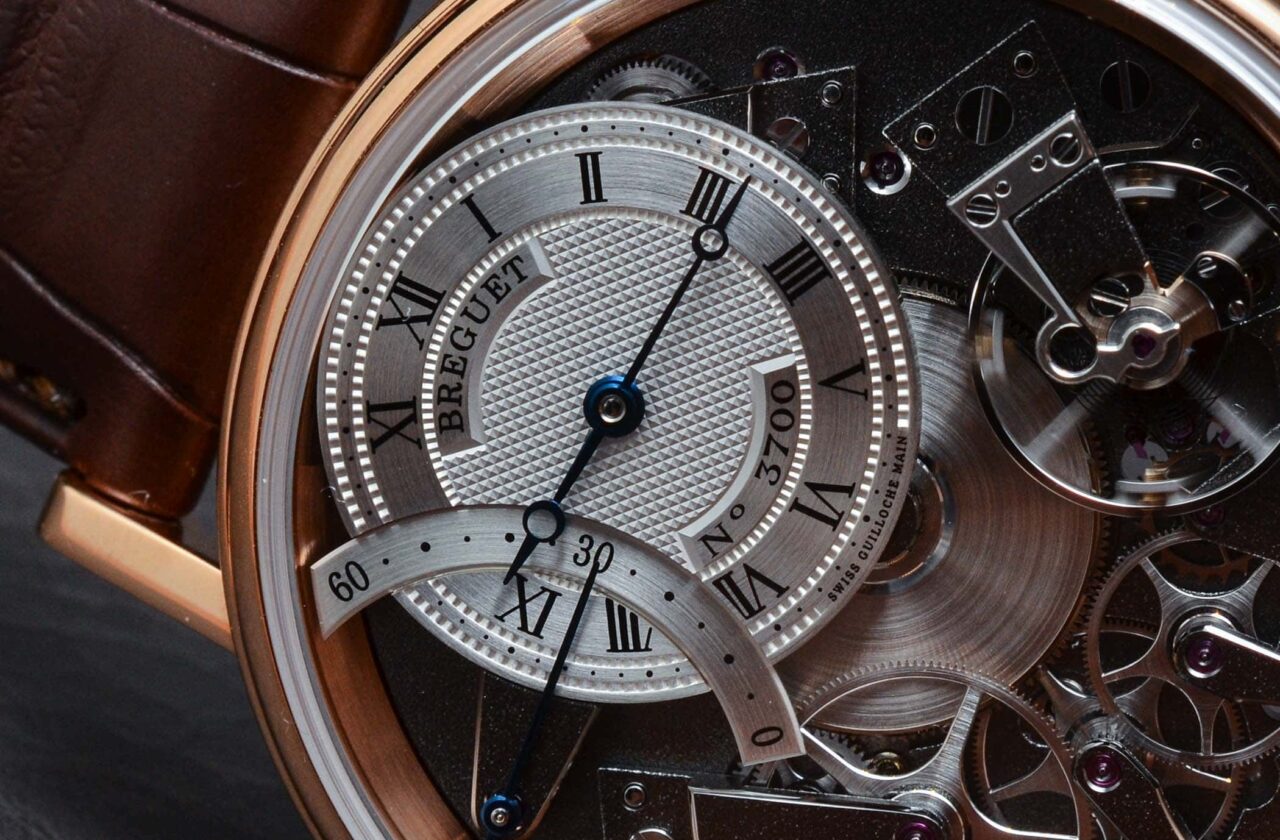
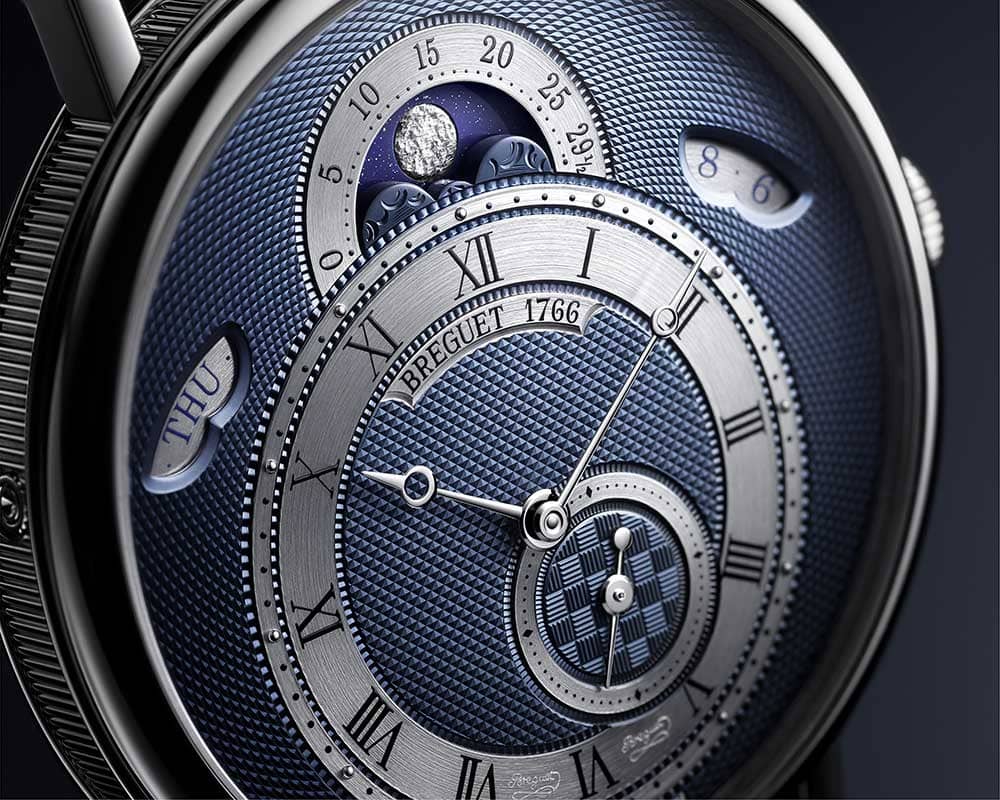
Some surfaces merely reflect light; others sculpt it. The guilloché dial belongs to the latter: it captures brilliance, tames it, stages it in micro-reliefs that shift with every movement of the wrist. Behind this almost hypnotic vibration lies a rare craft, built on sure-handed gestures and patience, inherited from the 18th century. Popularised by Abraham-Louis Breguet to reduce glare and improve legibility, guilloché—this watch-decoration technique—has become a culture of its own within watchmaking: a discreet, coded language that connoisseurs recognise at first glance.
From Hand to Metal: A Mechanical Art
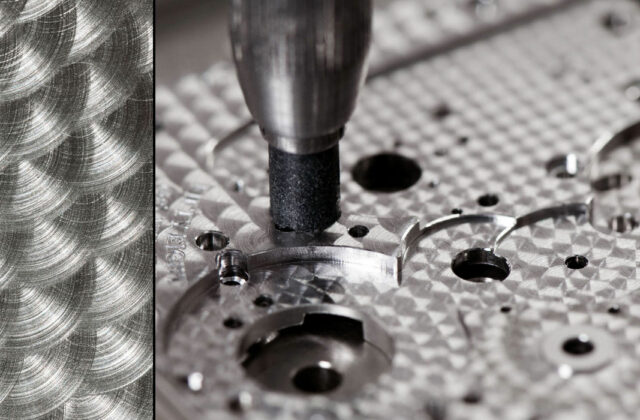
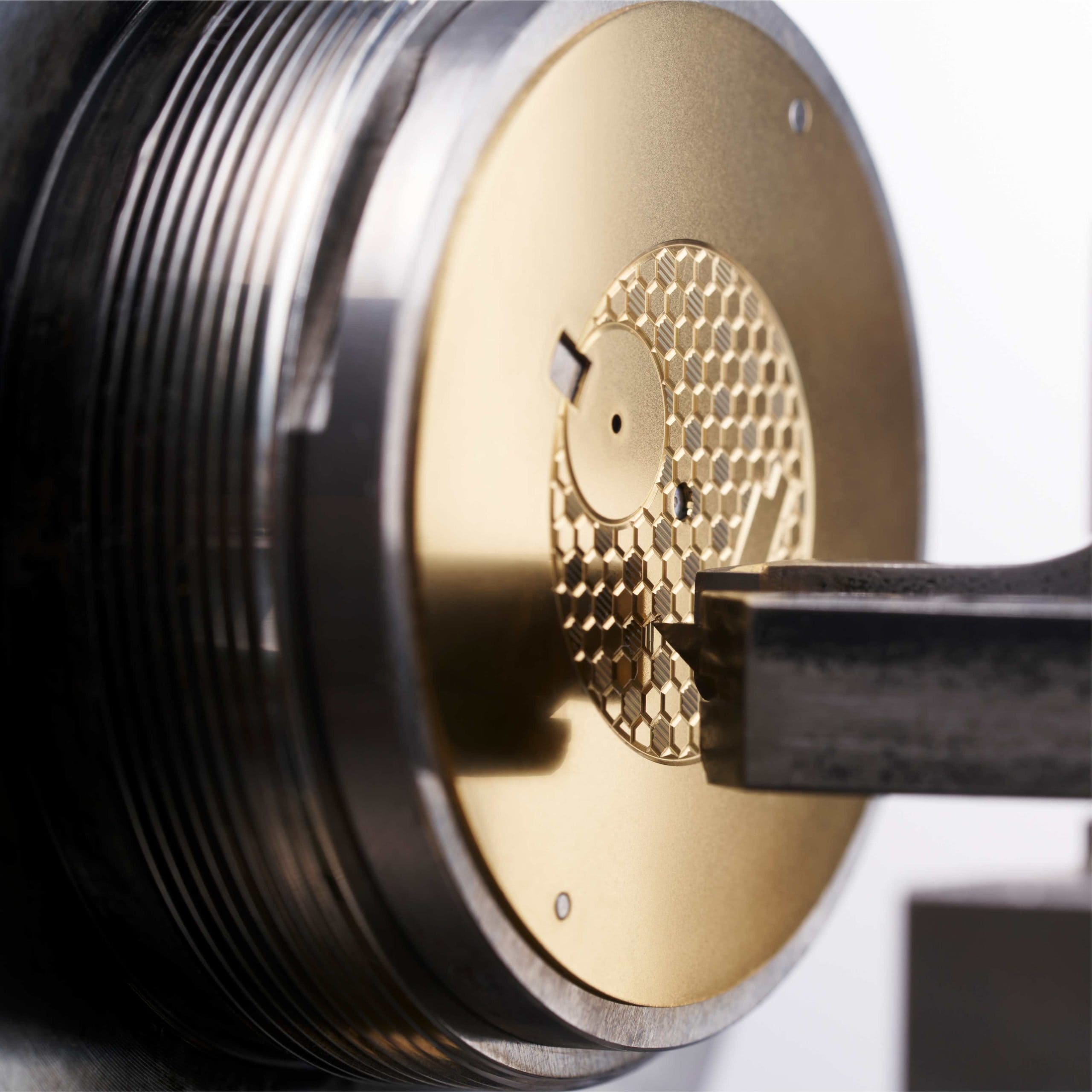
Guilloché is where a machine meets a hand. The machine is called an engine-turning lathe—or rose engine—and it has barely changed in two centuries. The hand, that of the guillocheur, guides a graver that bites into the metal and draws perfectly regular grooves. Between the pressure of the gesture, the geometry of the cams and the choice of tool, a kind of music emerges: a faint rasping, a rhythm, a pulse that you later sense in the depth of the pattern.
Rose Engine and Straight-Line Guilloché Lathe
There are two main families of tools. The rose engine produces circular or radial motifs: suns, concentric waves, medallions. The straight-line engine, meanwhile, generates perfectly parallel straight lines—chequerboards and crosshatching. In both cases, a set of cams—the famous rosettes—dictates the geometry of the pattern, while the artisan adjusts amplitude, pitch and depth. Neither entirely mechanical nor wholly manual: a subtle balance in which eye, ear and hand compensate for the imperfections of the real world.
From a Raw Disc to a Living Dial: The Key Steps
A guilloché dial often begins life as a simple disc of brass or silver. It is cut, drilled for the pinions and appliqués, then prepared by polishing. Next comes the guilloché itself, executed piece by piece, area by area—sometimes with the delicacy of a scalpel.
The Guillocheur’s Choreography
- Preparing the blank: perfect flatness, reference marks, masking according to the areas to be worked.
- Setting up: choosing the rosette and the graver, testing on offcuts to validate depth and cadence.
- Guilloché: the metal is cut, not stamped. Each groove creates a ridge that catches the light and a trough that extinguishes it.
- Cleaning and softening: burrs are removed; the surface is satin-finished without blunting the edges.
- Finishing: traditional silvering, lacquering, varnishing, or pairing with translucent enamel (flinqué) to reveal the underlying pattern.
- Additional decoration: pad-printing the indexes, fitting appliqués, bevels and perlage on the reverse if necessary.
The time involved varies with complexity. A simple “Clous de Paris” can require several hours of set-up and execution; a multi-pattern dial can take several days, with tool and cam changes along the way.
The Vocabulary of Patterns
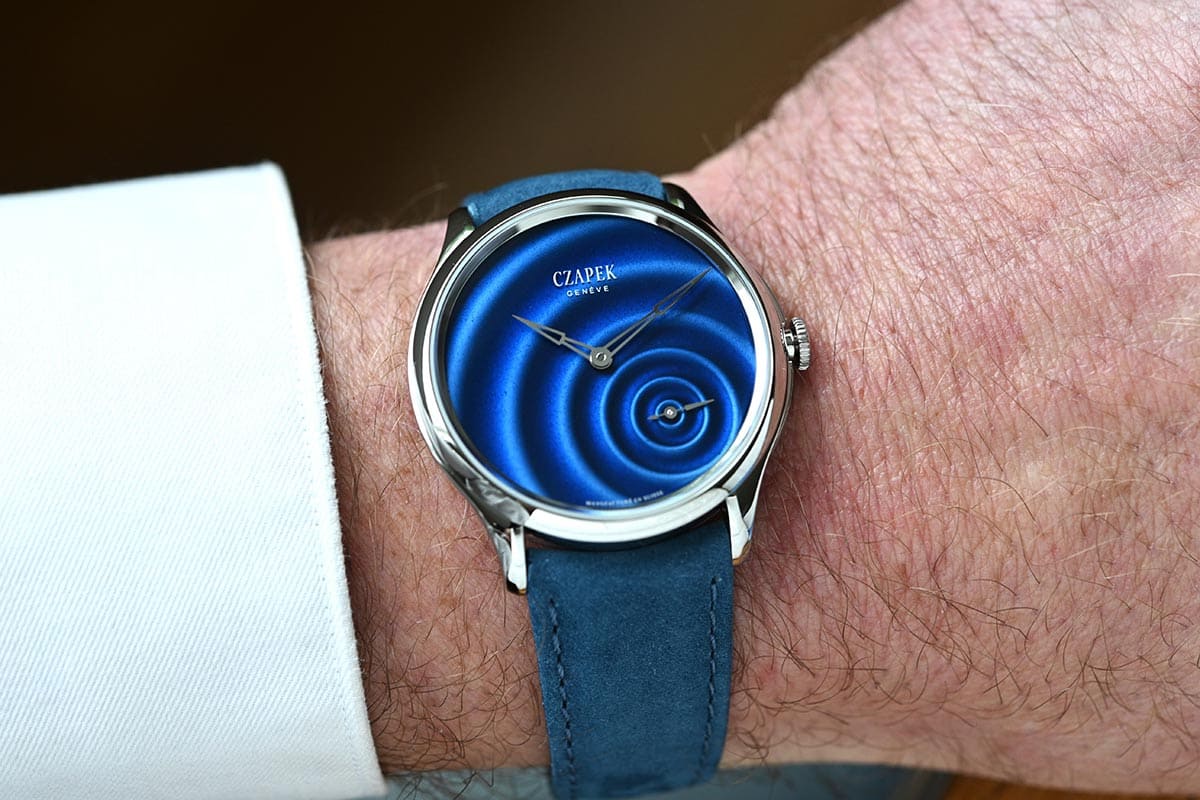
Each motif tells you something about a watch’s style. Clous de Paris—that chequerboard of tiny pyramids—instils an architectural rigour. Grain d’orge (barleycorn) suggests a classic elegance, gently undulating. Waves, sunbursts and basketweaves bring movement, while ultra-fine crosshatching delivers a calmer read and an almost textile texture. You also encounter contemporary interpretations: off-centre spirals, “broken” guilloché, or the “Tapisserie” pattern produced by pantograph—an industrial cousin of the hand craft that nonetheless preserves the magic of relief.
Craftsmanship Versus Imitation: How to Tell the Difference
To the naked eye, a well-executed relief makes all the difference. But modern watchmaking can also imitate: stamping, CNC milling, laser engraving, even simple prints that simulate a pattern. These approaches are not illegitimate—they democratise the look—but they do not recreate the life of a groove cut with a graver.
How to Recognise True Guilloché
- Play of light: reflections “flow” along the grooves; the dial seems to change intensity depending on the angle.
- Crisp edges: under high magnification, the ridges remain sharp, not softened as they often are after stamping.
- Imperfect repetition: the regularity is superb, but never mathematical—an infinitesimal human signature.
- Measured depth: the pattern looks sculpted, not merely drawn on the surface.
Some maisons openly claim this heritage—Breguet, F.P. Journe, Kari Voutilainen via his dial manufacture, as well as a handful of Swiss and French workshops that keep the tradition alive. Conversely, others opt for a more industrial rendering, embracing an aesthetic that is more graphic than artisanal.
Why It Costs (and Why It Fascinates)
Hand guilloché compounds constraints. The lathes are old, rare, and require maintenance. The know-how takes years: feeling the material, adjusting pressure, correcting a vibration. The tooling itself—sharpened gravers, selected cams—is a world of its own. Each dial involves lengthy set-ups; the slightest misstep can mean scrapping a part. This invisible cost, this time that cannot be compressed, explains the value—and the depth—of the result.
Above all, a guilloché dial outlasts fashion. Its modernity lies in its interaction with light. Whether animated by a discreet minute track or paired with faceted appliqués, it remains richly restrained: proof that a tiny detail can transform the experience on the wrist.
Finishes and Modern Pairings
Guilloché does not live alone. It lends itself to superb alliances. Flinqué enamel—that translucent layer applied over a guilloché décor—offers an aquatic depth, almost jewellery-like. Traditional silvering brings a velvety, heritage grain. Coloured lacquers dress more contemporary patterns; petrol, burgundy and forest-green tones reveal the sculpture in a different light.
We also see contrasts of texture emerging: a “Clous de Paris” centre framed by a sunburst ring, or a guilloché medallion encircled by concentric azurage. The trend is towards restraint, towards balance between visual effect and legibility—echoing guilloché’s original intent: to serve readability while celebrating the gesture.
A Living Heritage
To speak of guilloché is to tell the story of watchmaking through its most human facet. It is an artisan, before a venerable machine, reinventing the same motif every day without ever repeating it quite exactly. It is a school of the long view, an aesthetic that does not need to overstate itself to exist. On a dial, these minute grooves weave a discreet link between past and present. And when the light catches the pattern, it is no longer merely decoration: it is the watch’s breathing, its silent signature.