How Diving Influenced the Creation of Modern Dive Watches

Beneath the surface, a simple idea: measuring time to survive
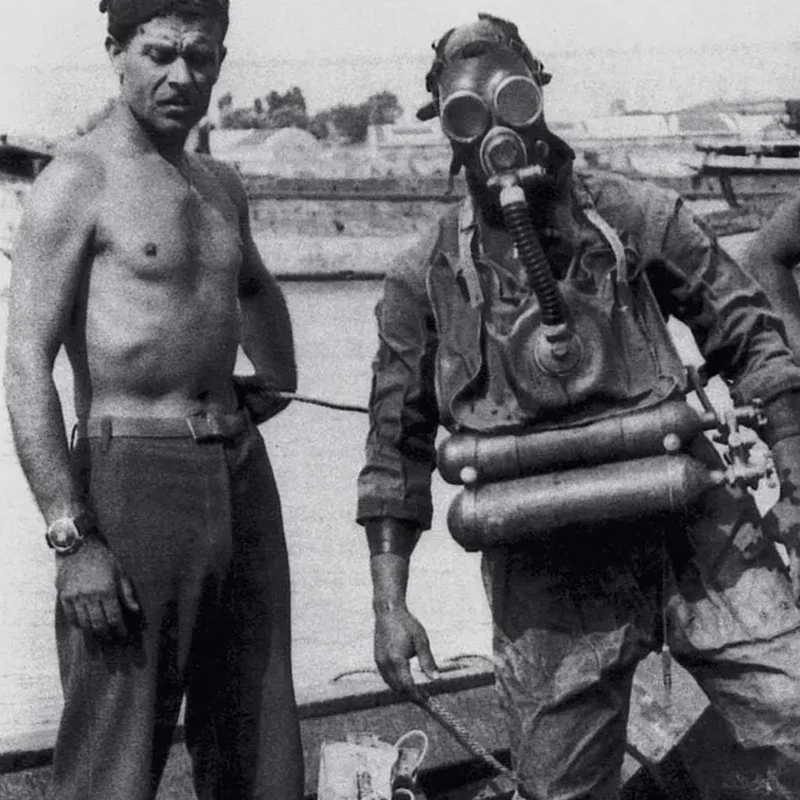
Before they became style signatures in the office, dive watches were born of a vital imperative: knowing how many minutes remain before you must ascend. In the 1940s and ’50s, as Jacques-Yves Cousteau and Émile Gagnan helped democratise underwater autonomy and combat swimmers multiplied their missions, watchmaking crossed below the waterline for the first time in a lasting way. Under pressure, time thickens, visibility dwindles, salt gnaws at everything. This raw reality would impose a set of requirements as radical as it was elegant—one that would become the grammar of modern dive watches.

From combat tools to design icons
The first heroines were called Panerai Radiomir and Rolex Oyster: robust cases, highly legible dials, radium paint to light up the darkness. But the real turning point came in 1953. At Blancpain, Jean-Jacques Fiechter, a passionate diver, conceived a watch that answered the concrete needs of French combat swimmers: the Fifty Fathoms. Outstanding legibility, enhanced water resistance, a rotating bezel to time the dive, an anti-magnetic system, a double crown gasket.
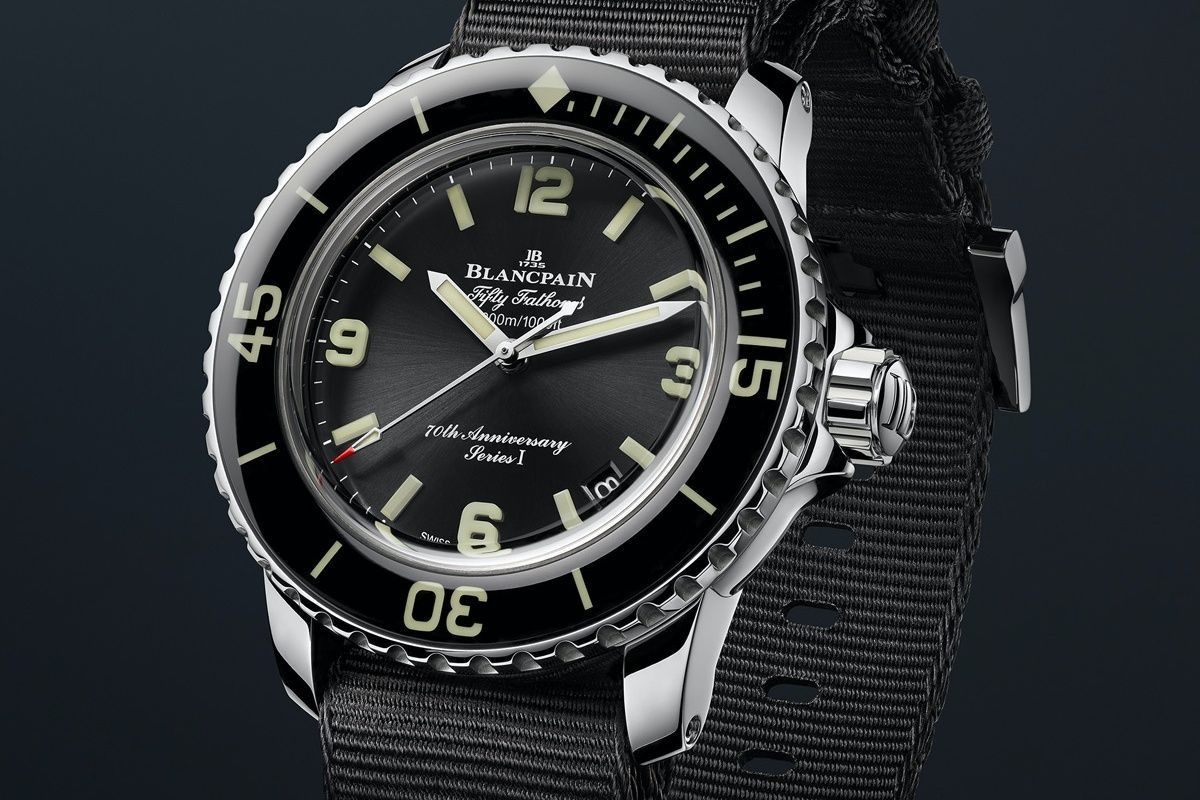
That same year, Rolex unveiled the Submariner, which would in turn set the codes of the genre. In “The Silent World”, Cousteau wears a Fifty Fathoms: the image is powerful, the tool becomes myth. Around the same period, we could also mention the Super compressor (read my article).
The visual language of dive watches
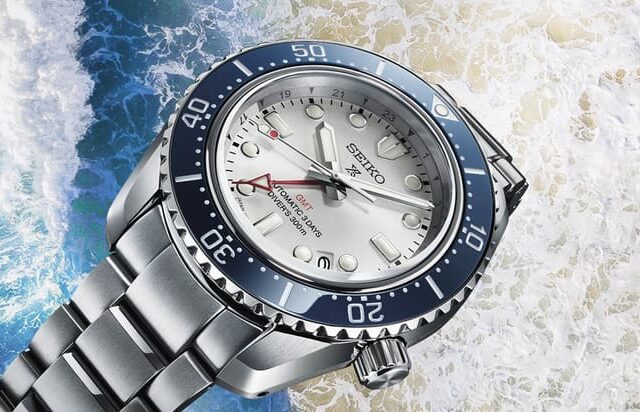
- A rotating bezel with a high-contrast minute scale, ideally unidirectional to prevent any accidental extension of bottom time.
- A matte black dial, oversized geometric markers and differentiated hands for instant reading.
- Screw-down crown and caseback, reinforced gaskets, 316L or 904L steel cases—sometimes titanium for lightness and corrosion resistance.
- A thick crystal (period plexiglass, sapphire today) and anti-reflective treatment to counter glare.
- Extension straps (on “Tropic” rubber, steel with a wetsuit extension, or G10-style textile) to fit over a wetsuit.
- Powerful luminescence: radium yesterday, tritium afterwards, Super‑LumiNova nowadays.
When engineering dictates form
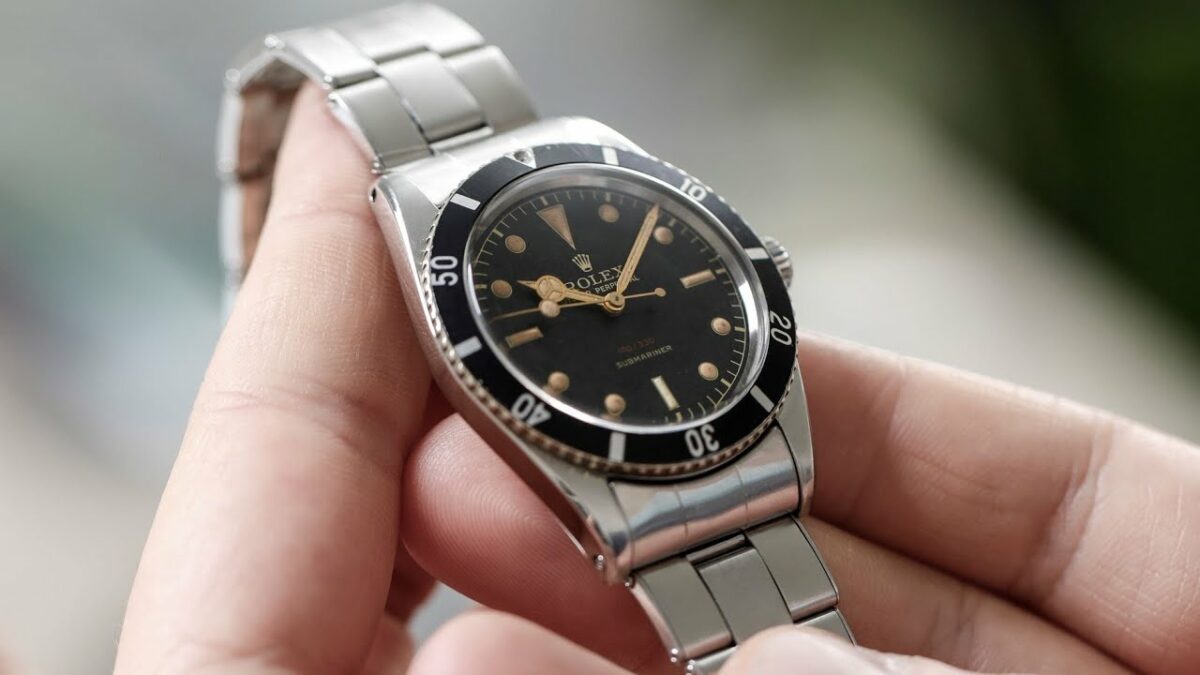
Every detail of a modern dive watch echoes a physical constraint. The bezel, initially bidirectional, would become standardised as unidirectional in the 1970s for safety. Legibility dictates the aesthetic: matte surfaces, high contrast, generously luminescent markers and hands. On the water-resistance front, progress has centred on gaskets, compression and case architecture. Seiko opened an essential chapter with the 62MAS in 1965, then, in 1975, the monobloc “Tuna” and its L-shaped gasket—designed to withstand extreme pressure and thermal shocks.
Colour, too, comes from the field. DOXA dared orange in 1967 on the SUB 300, tested in real conditions and deemed more visible at certain depths; its bezel combines minutes and a no-decompression table derived from U.S. Navy recommendations. The partnership with U.S. Divers—Cousteau’s company—cemented the idea that functionality can be bold and seductive.
The saturation test
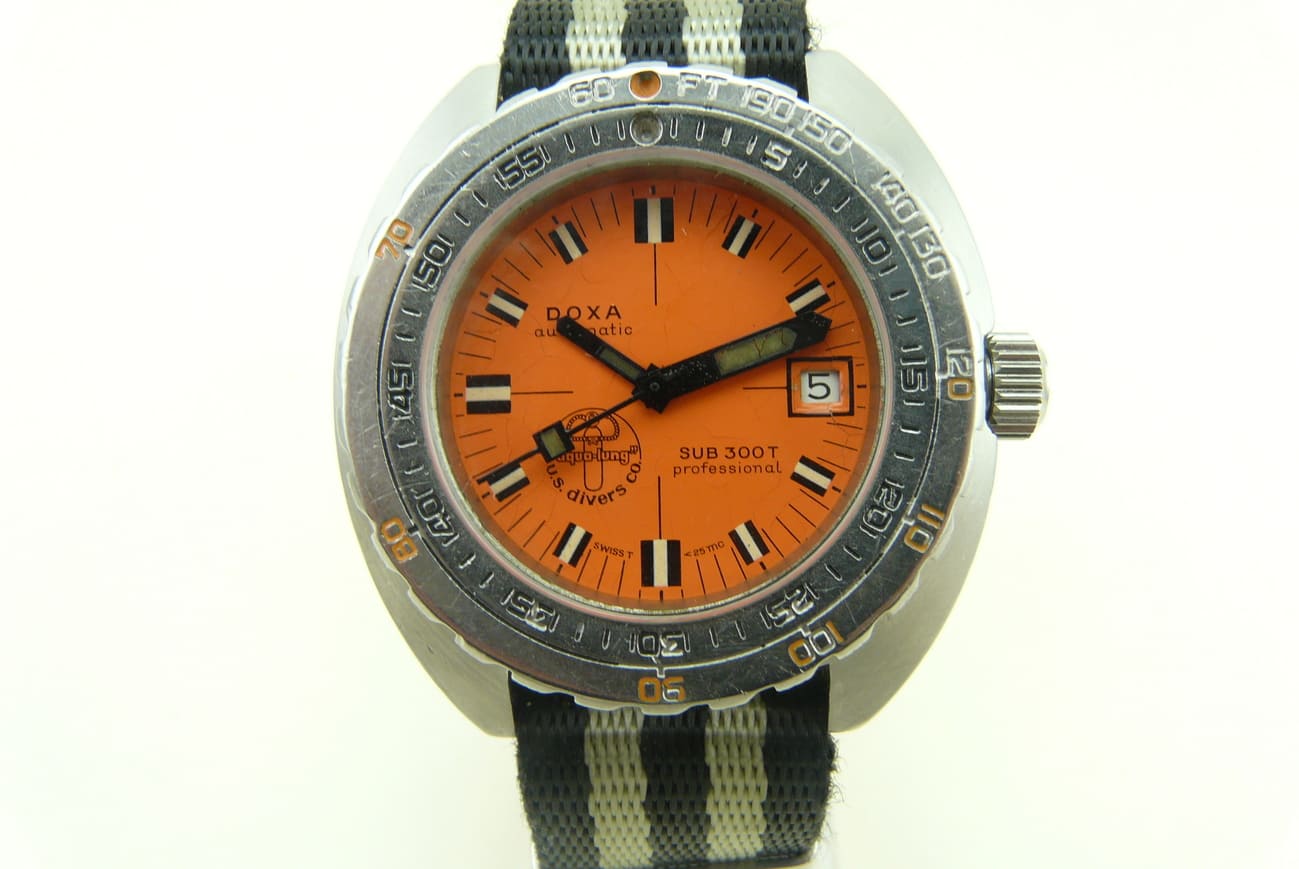
With saturation diving, another challenge emerged: helium seeps into the watch during long stints in a hyperbaric chamber, then tries to escape during decompression, risking the crystal being blown out. The answer? The helium escape valve. Popularised by the Rolex Sea‑Dweller developed for COMEX in the late 1960s, and by the DOXA SUB 300T Conquistador, it became the symbol of professional diving.
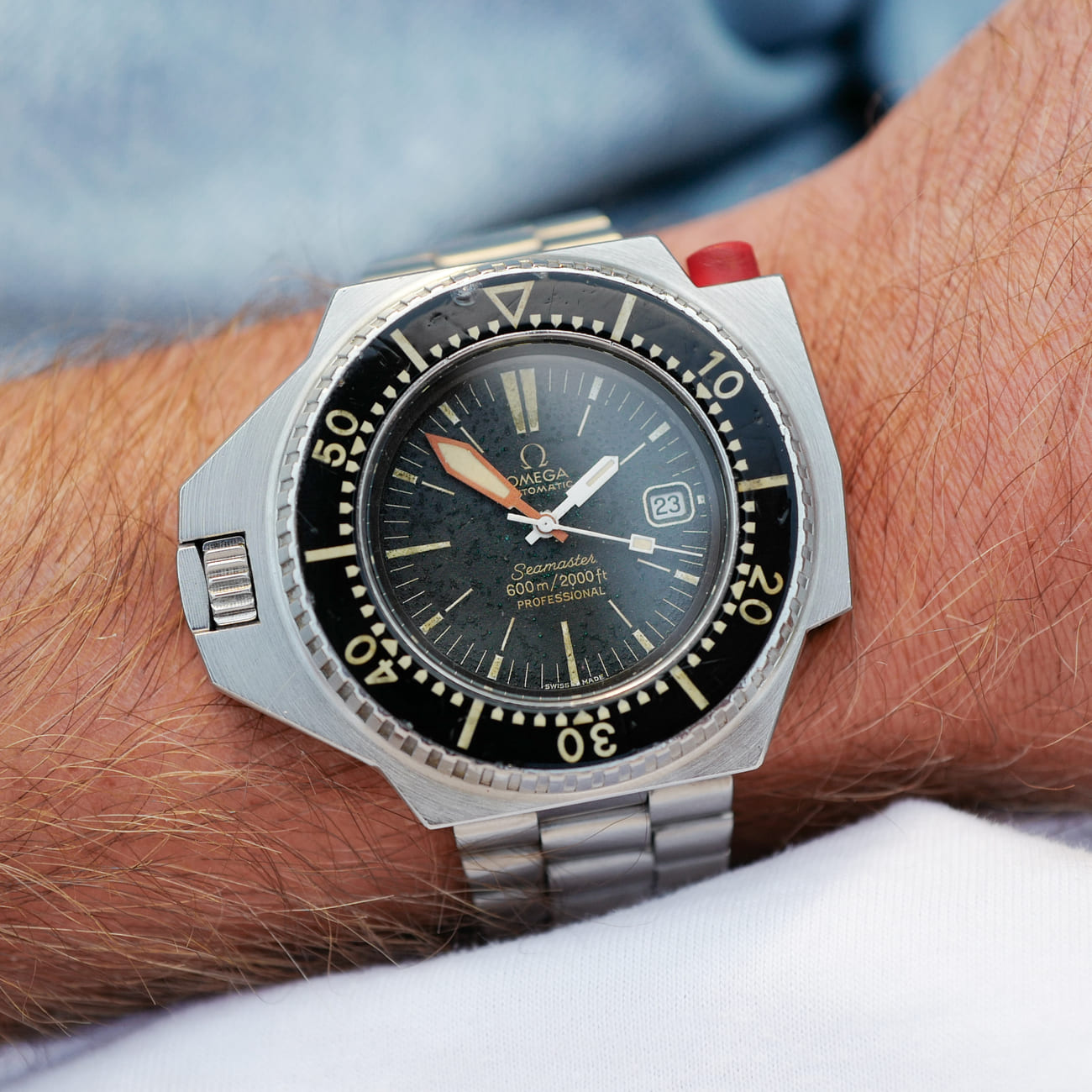
Omega chose an alternative route with the Seamaster 600 “Ploprof” (1970): a monobloc case, bezel lock, a philosophy of total water-tightness rather than a valve. In every case, form follows function.
ISO 6425: writing the law of the sea
In 1982, ISO 6425 put in black and white what divers already knew empirically: legibility at 25 cm in the dark, accuracy, resistance to shocks and magnetic fields, a minimum water resistance of 100 m (with 200 m having become the serious benchmark), a graduated bezel, a running indicator. Certification isn’t mandatory, but it rationalised a body of know-how. Since then, the tool has continued to be refined: ceramic bezels to resist scratches, domed sapphire, higher-performance steels, long-lasting luminous compounds and micro-adjustment clasps to fine-tune fit throughout the day.
From the depths to the office: why they still seduce us
The paradox is delicious: the advent of dive computers has made the mechanical watch almost superfluous underwater, yet elevated it on land. Because the dive watch tells a story—of our limits, of exploration, of reliability. On the wrist, a Submariner, a Fifty Fathoms, a modern Seiko Prospex 62MAS or a DOXA SUB conjures the click of the bezel before the drop, the smell of neoprene, the green glow in the dark. This utilitarian poetry—made of crosshead screws and nitrile gaskets—has conquered the city. And if most “desk divers” will never see 20 metres, they claim an honest style: beautiful because it was designed to serve.
Choosing the right dive watch today
- Real-world use: 200 m of water resistance, a unidirectional bezel and generous Super-Luminova are enough for 99% of situations.
- Comfort: try the extension clasp, the lugs and the balance on the wrist; titanium changes the game.
- Legibility: distinct hands, crisp markers, effective anti-reflective coating; avoid cluttered dials.
- Standards and service: ISO 6425 if you dive, a strong after-sales network and available parts.
- Culture: Fifty Fathoms, Submariner, Seamaster, Pelagos, Superocean, Prospex, Promaster or DOXA? Choose the icon whose story resonates with you.
A culture born under pressure
Ultimately, the sea dictated the rules and watchmaking elevated them. From the knurled bezel you turn like a ritual to the markers that light up with the softness of a lighthouse, every modern dive watch carries the memory of a demanding environment. It is this memory—a blend of salt, steel and elegance—that makes enthusiasts’ hearts beat faster. Diving shaped our watches. In return, they shape our imagination of adventure.