How Are Perlage and Geneva Stripes Applied to Movements?
The gestures that sculpt light
Even before you read the time, the eye likes to wander. On a perlage-covered mainplate, light clings as if to fine sand. On a bridge striped with Côtes de Genève, it glides in satin ribbons. These iconic watchmaking decorations are anything but mere artifice: they speak of know-how, trap dust, guide the gaze, and sign a style. How are they actually created, in the workshop? A dive into the intimacy of the benches where diamantine and watchmaker’s wood tame metal.
Perlage: the granular secret of mainplates
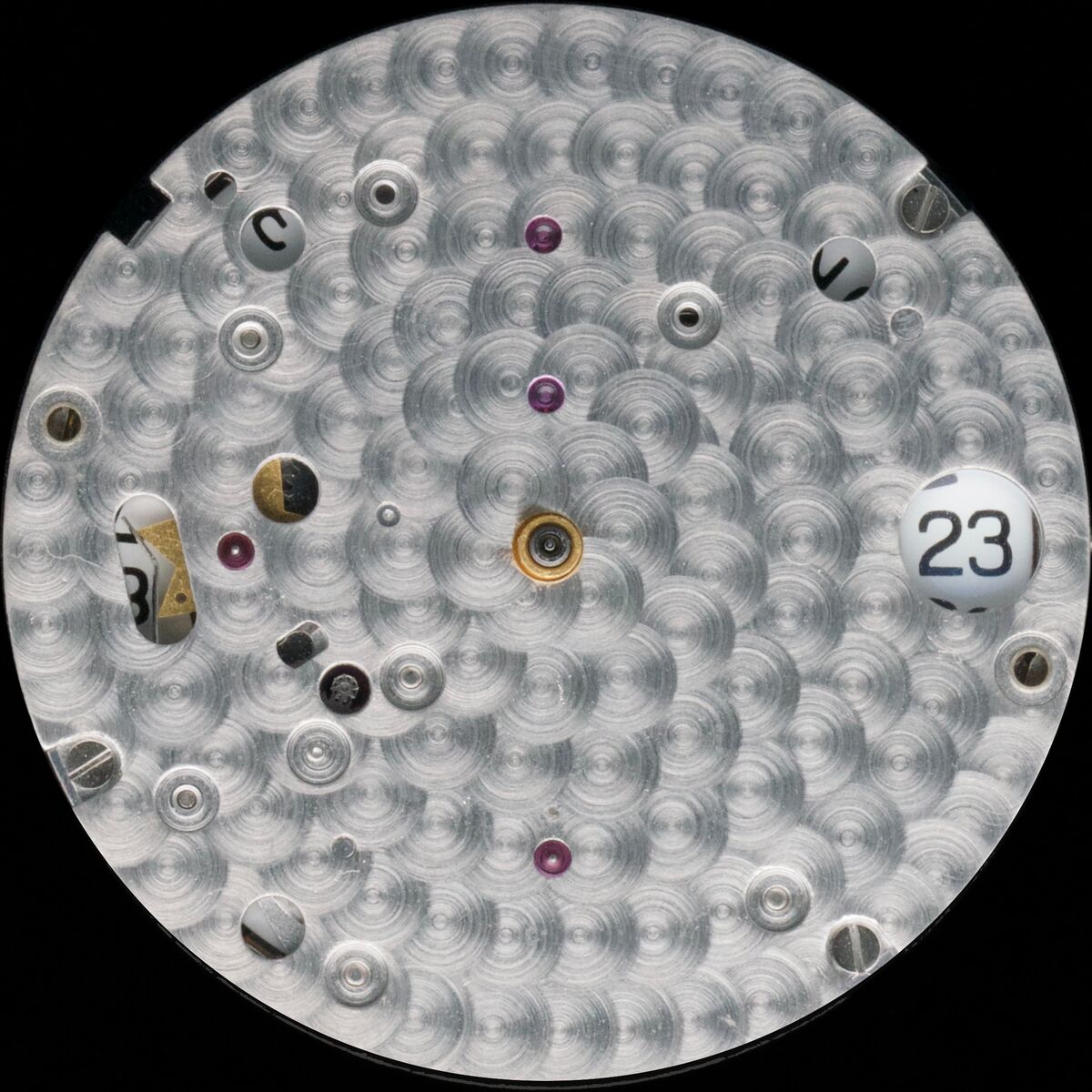
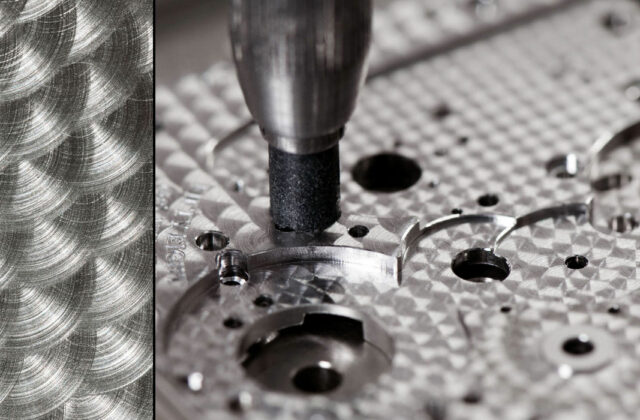
Perlage—also known as circular graining—covers mainplates and hidden areas. Away from the spotlight, it nonetheless plays an essential tune: that of a regular grain, obtained by the repeated imprint of a small abrasive tool. A peg is lowered onto the surface, lifted, shifted by a constant step, and the process is repeated until the metal is covered with a scattering of circles overlapping by a third to a half. Up close, it’s fish scale; from afar, velvet.
Tools and material
- A precision drill press or a perlage machine with micrometric downfeed.
- Wooden tips (boxwood, pegwood) or rubber tips, charged with an abrasive paste such as diamantine.
- An X/Y cross table for regular steps and consistent overlaps.
- Various tip diameters to work close to edges and openings.
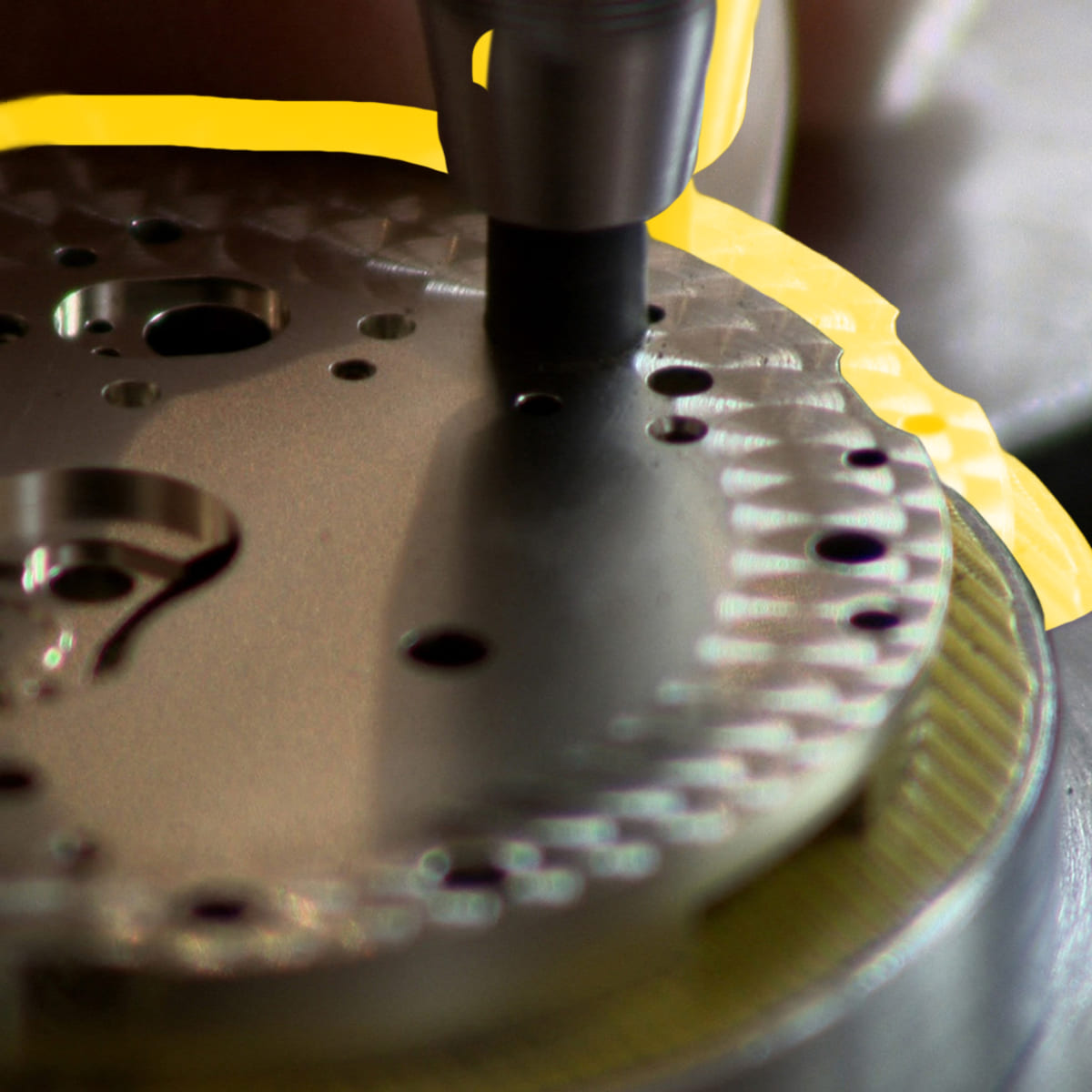
The choreography is slow and measured. One often starts at the edge of an open area, to “lose” the final imprints under a bridge or a barrel. The circles must remain crisp—neither too deep (which would weaken the part) nor too shallow (which will fade). Good perlage breathes: the same density, the same cadence, and a graduation of diameters to kiss the contours without spilling over.
Côtes de Genève: the parallel caress of bridges
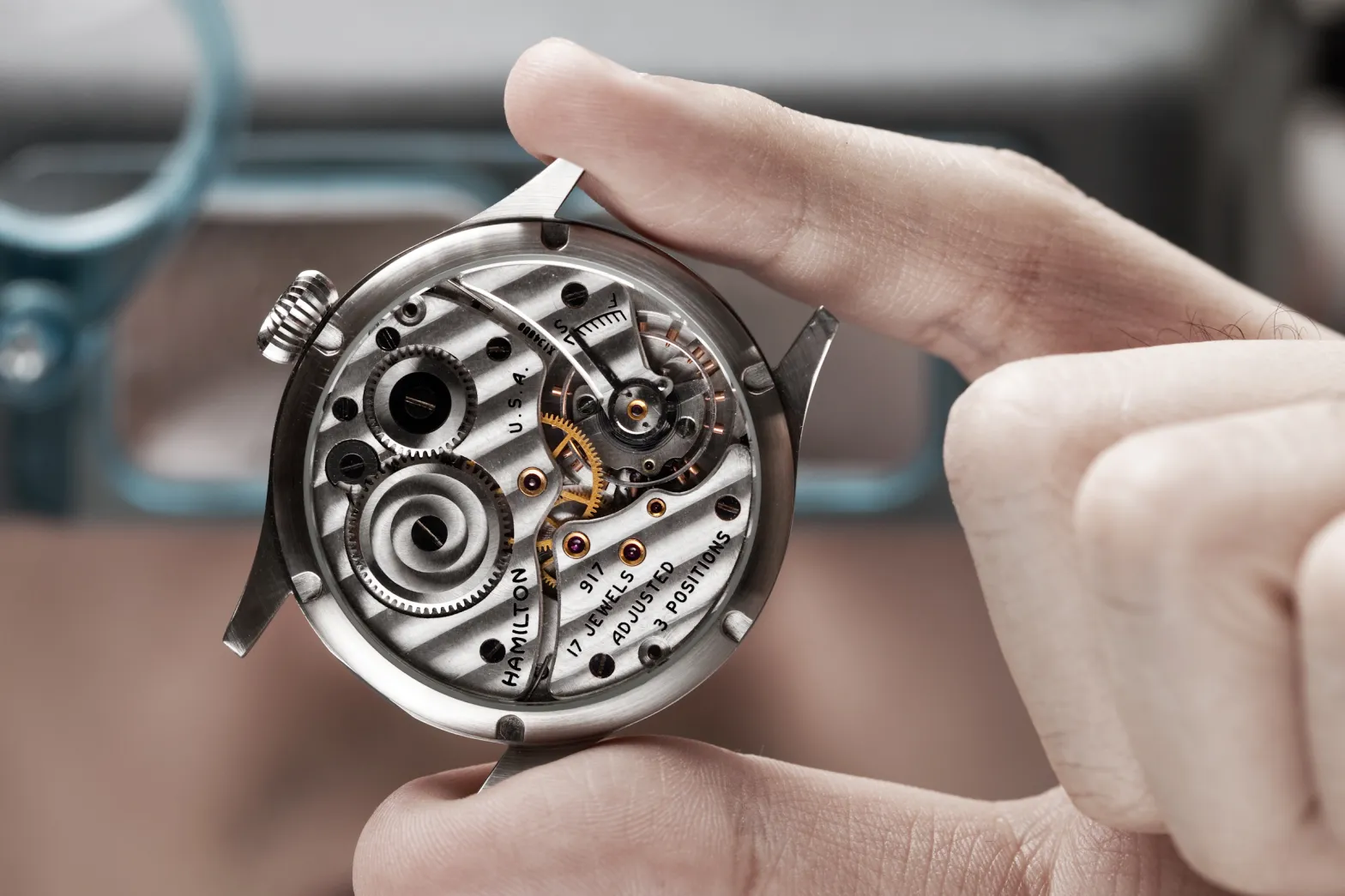
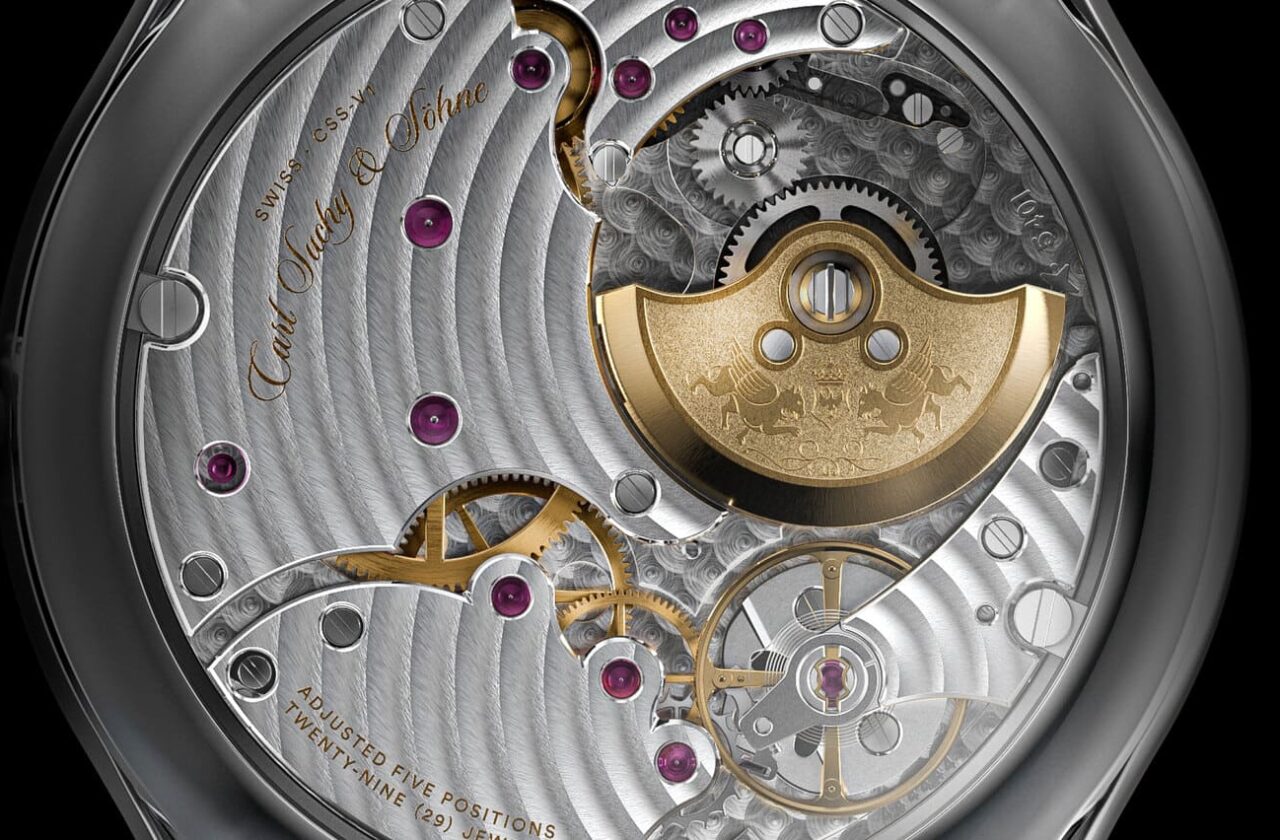
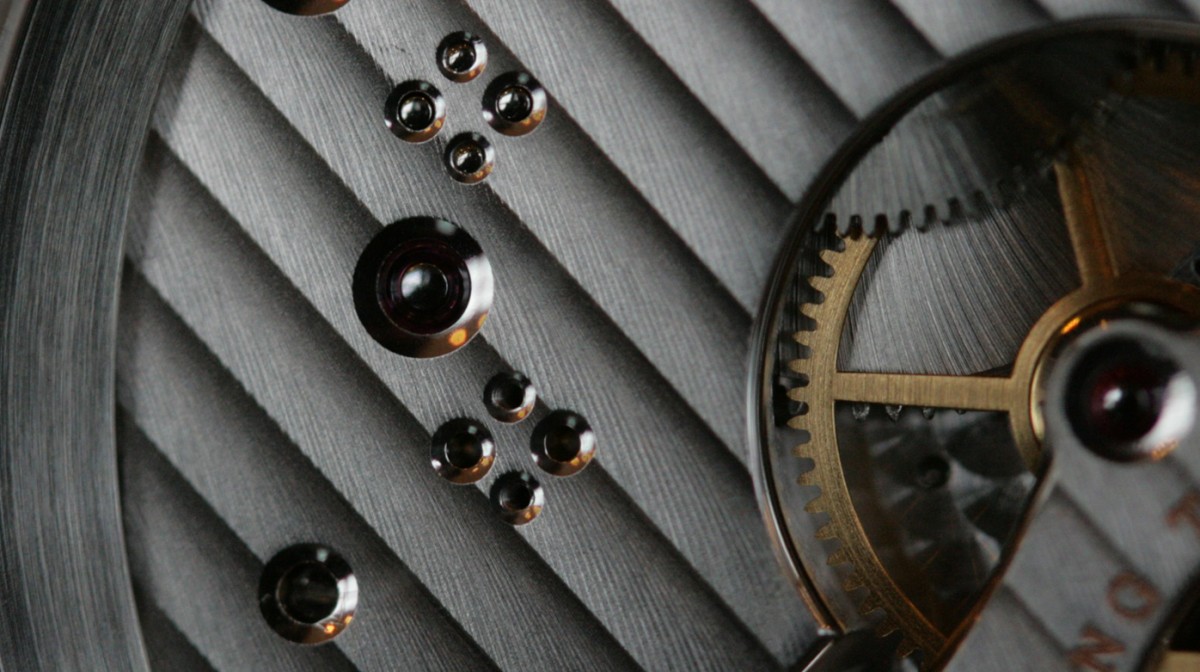
Côtes de Genève, or “Geneva stripes”, are those broad satin ribbons that run across bridges. They are neither engraved nor printed: they are controlled micro-scratches, drawn in perfectly parallel bands. Historically Genevan, they come in straight stripes (classic), circular (on rotors) or radiating patterns. In Germany, in Glashütte, their cousins often adopt a wider, more pronounced rhythm.
The gesture and the machine
- A striping machine: a cylindrical tool or an abrasive belt moves across the part while the operator ensures a steady feed.
- A fine abrasive (emery, diamantine) on wood, felt or cloth, for a controlled satin cut.
- A step gauge to guarantee constant spacing between bands.
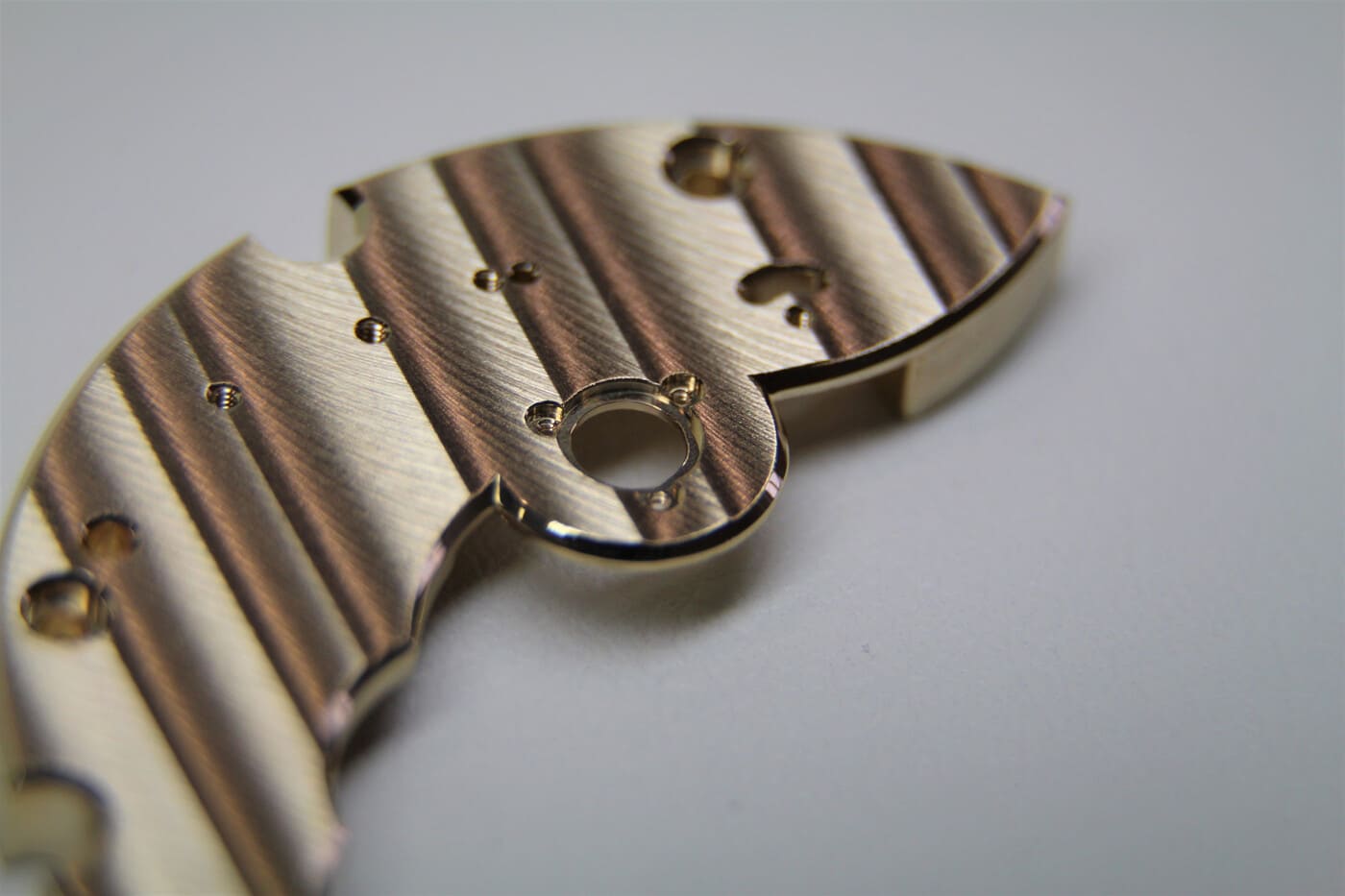
The surface is first prepared with a light satin finish, then the first band is drawn by guiding the longitudinal feed. Each pass overlaps very slightly, creating a silky blend without any “step”. On a complex bridge, virtuosity lies in carrying the stripe beyond a break in level, then picking it up again on the other side as if nothing happened. The bevelled edge, meanwhile, must remain crisp: no stripe should “bite” into the anglage.
More than decoration: function and culture
It’s often forgotten, but these decorations serve a purpose. Perlage, thanks to its micro-topography, traps residual dust away from the pivots. Côtes de Genève break up reflections and guide the eye, clarifying the reading of the architecture. Above all, they are a cultural language: in Geneva, they answer the historical requirements of the Hallmark; in the Vallée de Joux, they pair with mirror anglage; in Glashütte, they assert themselves wide and high-contrast, sometimes on a three-quarter plate.

The sequence in the workshop
- Preparation: flattening, deburring, light satin finishing to even out the surface.
- Perlage: first the central areas, then working towards the edges with finer tips.
- Côtes de Genève: laying out the bands, checking the step, invisible touch-ups after a break in level.
- Anglage and mirror polishing: bevels, inward angles and black-polished screw heads, for edges that cut the light.
- Final cleaning: degreasing and inspection under a loupe to hunt down the slightest overrun.
Depending on the maison, anglage and striping may alternate, but the golden rule remains the same: preserve impeccable edges and crisp transitions. The slightest wrong move leaves a mark that nothing can erase.
Signatures, variations and anecdotes
At Patek Philippe or Vacheron Constantin, the stripes are applied as a matter of course, with an especially silky blend. Audemars Piguet lavishes care on openworked bridges, where the regularity of the bands becomes a tightrope-walker’s challenge. In Glashütte, A. Lange & Söhne favours sharper stripes and anglage of an almost metallic purity. On rotors, circular stripes draw a sun in motion, while colimaçonnage—another decoration, in tight spirals—appears on barrel wheels and click springs.
Even if the industry has automated part of the passes, the hand remains sovereign when it comes to rescuing a join, feeling the pressure, dosing the abrasive. You can recognise a school at first glance: a step that’s too wide, a harsh blend, an irregular overlap betrays a hurried hand. Conversely, perlage with the right cadence or stripes that “breathe” between two screws speak of patient hours at the bench.
What the eye looks for: quality criteria
- Regularity: constant step, homogeneous patterns, identical depths.
- Crisp edges: no stripe crosses a bevel; no perlage bleeds onto a chamfer.
- Invisible joins: perfect continuity after a break in level or across a multi-part bridge.
- Cleanliness: no stray scratches, no “floating” waves or crushed areas.
- Harmony: a coherent dialogue between perlage, striping, anglage and mirror polishing.
Servicing and collecting: the ethics of respect
These decorations are a skin. Aggressive polishing can erase them, and a heavy-handed refinish can distort a period bridge. In collecting, priority is given to reversible interventions and respect for the original grain. Perlage or stripes that look too “new” on a vintage watch raise questions: the trained eye prefers honest patina to an approximate re-creation. In service, the best manufactures recreate the patterns using in-house jigs, to preserve the calibre’s visual DNA.
By way of conclusion
Perlage and Côtes de Genève do not chase cold perfection, but rightness: that of a steady gesture, mastered timing, and sure taste. They don’t just say “beautiful”; they say “well made”. And when you turn a watch over and the movement lights up, you think less about technique than about the breath that animates it: a few grains, a few ribbons, and watchmaking begins to tell a story.