How a Stop-Seconds Mechanism Works
Hacking Seconds: The Art of Stopping Time (Just Long Enough to Set It Better)
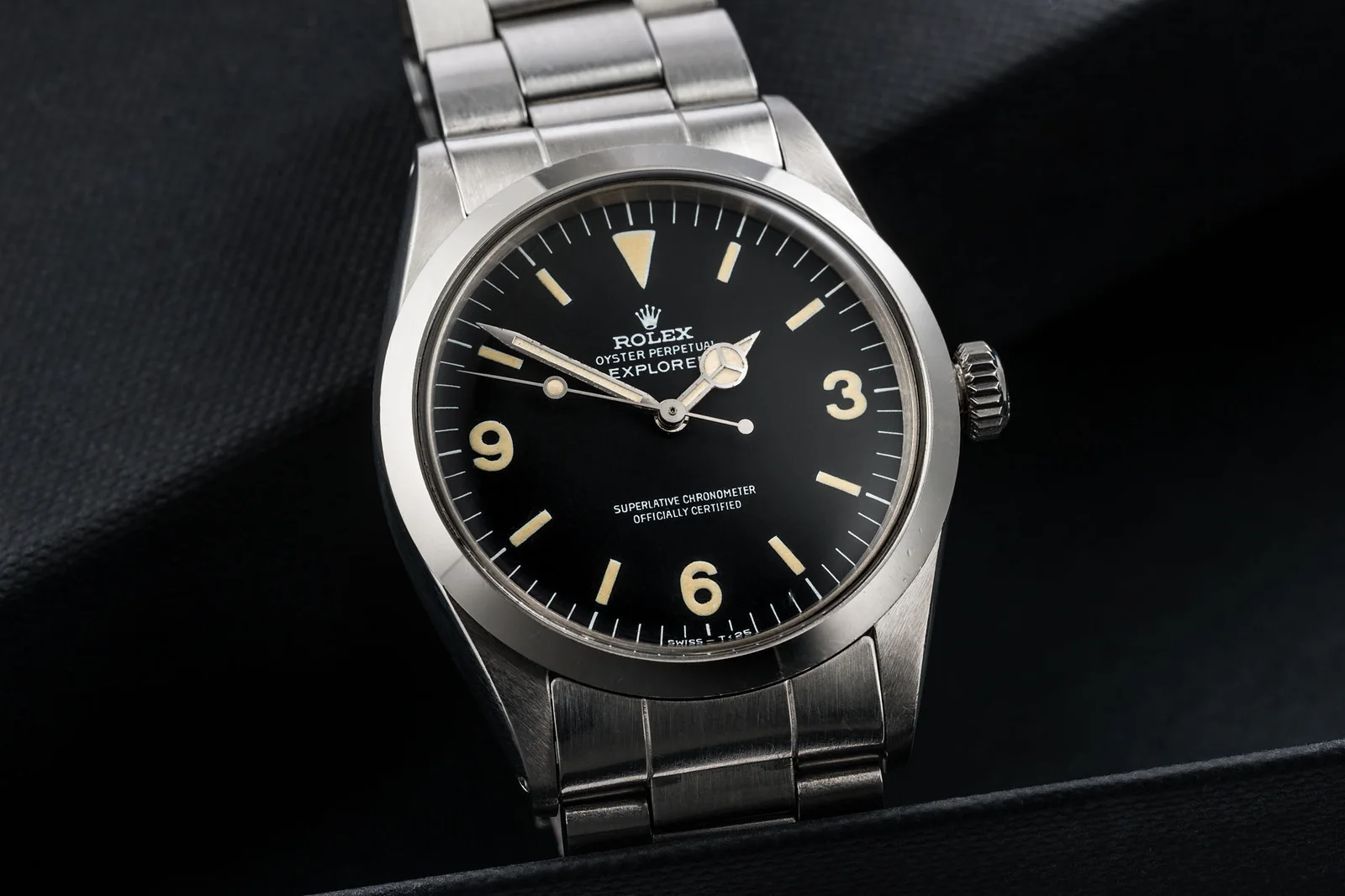
The gesture is familiar to anyone who enjoys setting their watch with near-ceremonial care. You pull the crown, watch the seconds hand… and, on certain watches, it stops dead. Mechanical silence. Time stands still. This discreet yet highly civilized detail has a name: hacking seconds (or stop-seconds).
Behind this function lies neither a gimmick nor a flourish. There is a philosophy: one of precision, synchronization, and an almost military relationship to time—along with a marvel of micro-engineering, capable of halting a movement beating at 28,800 vibrations per hour without harming it.
What Is Hacking Seconds Actually For?
Hacking seconds allows you to set the time to the exact second. Without it, you can adjust hours and minutes, but the seconds hand keeps moving. The result: synchronization with a reference clock (atomic time, GPS, radio-controlled time, smartphone) remains approximate.
With hacking seconds, you can:
- Synchronize multiple watches (useful for teams, collectors, or professional contexts).
- Set your watch precisely against a reliable reference (important if you track a movement’s daily rate).
- Align the gesture with the ritual: pulling the crown “on the mark” and restarting on cue, like the start of a race.
Hacking seconds evokes the rigor of marine chronometers and the efficiency of onboard instruments. That is no coincidence: the ability to stop a second is already a way of mastering navigation, coordination, and, more broadly, modernity.
How Does Hacking Seconds Work in a Mechanical Watch?
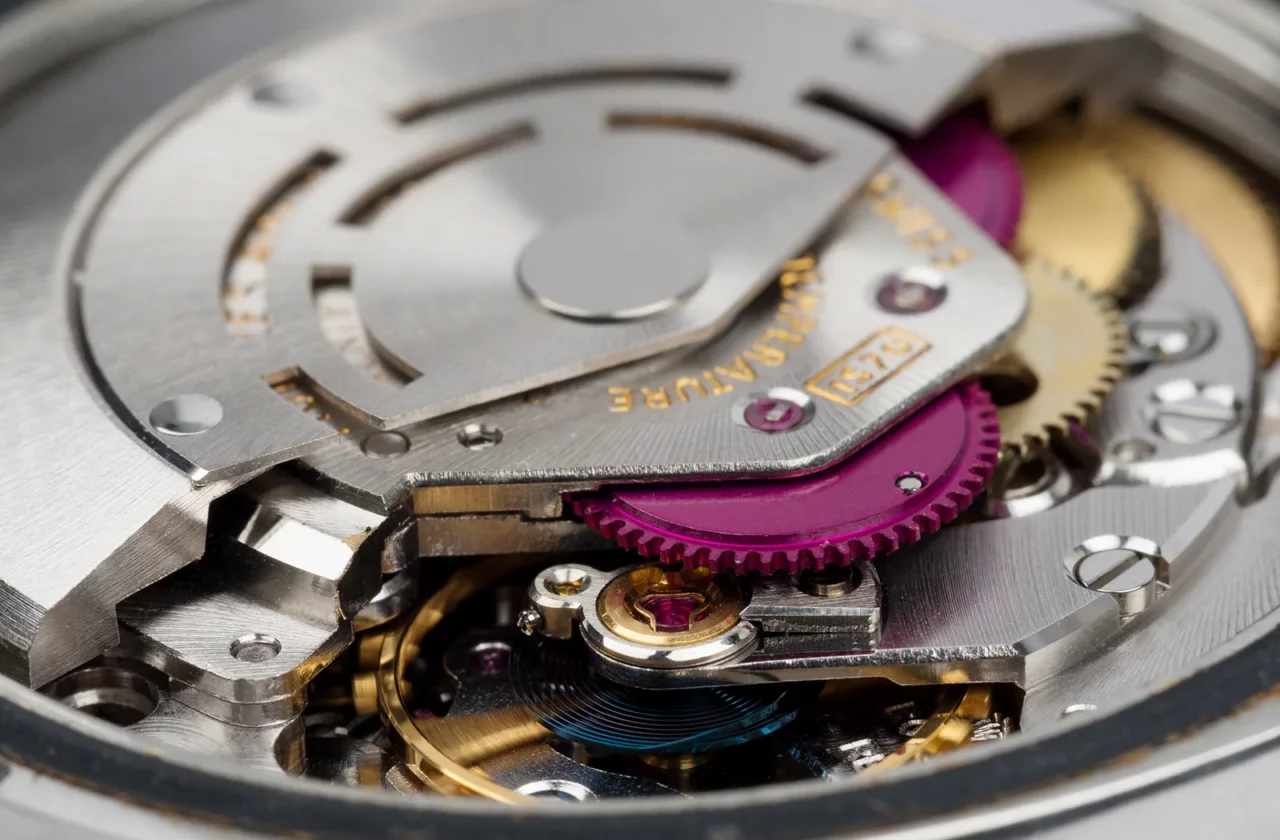
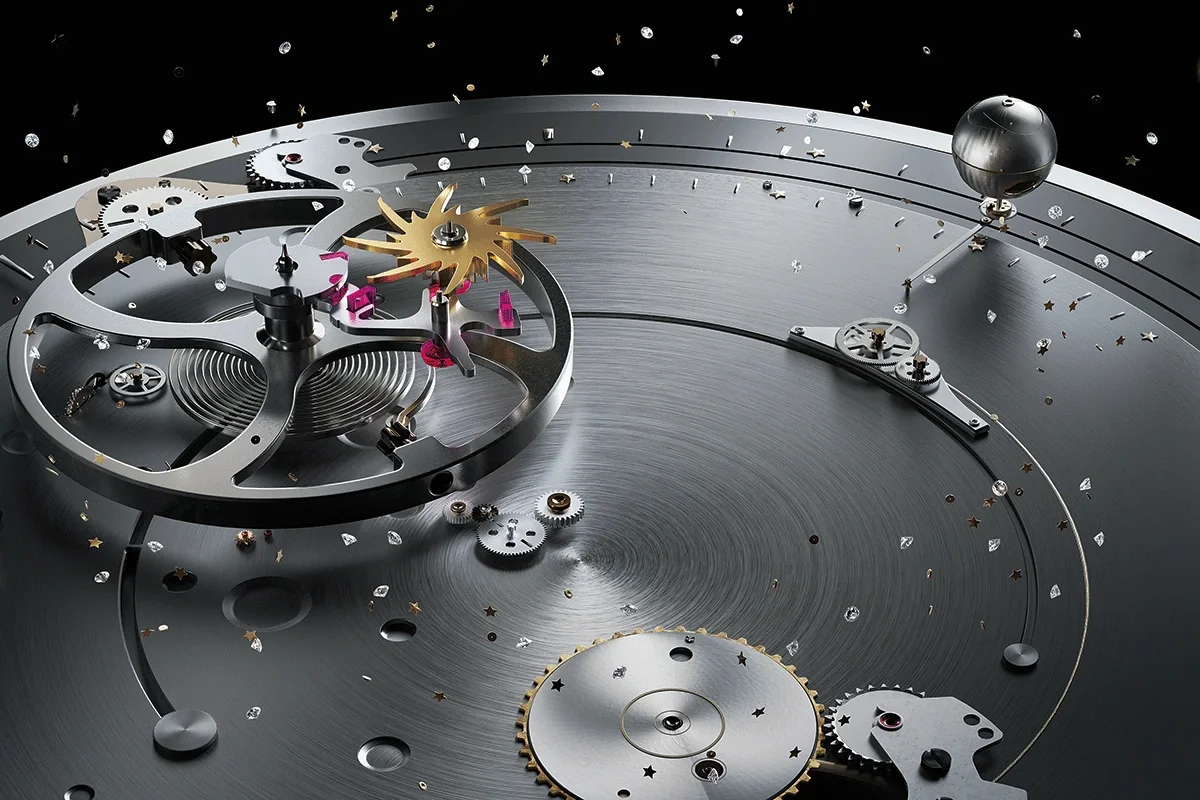
The principle is simple to describe: when you pull the crown into the time-setting position, a lever blocks the regulating organ (often the balance wheel) or a related component, instantly stopping the seconds hand.
The Heart of the System: The Stem and the Keyless Works
When you pull the crown, you move the stem. This action shifts a series of components in the keyless works, switching from “winding” mode to “time-setting” mode.
On a caliber equipped with hacking seconds, this transition also activates:
- a stop lever (or rocking lever),
- a spring ensuring controlled contact and pressure,
- and a braking surface (pad, spring blade, or tip) that comes into contact with a moving part.
Where Does It Act to Stop the Watch? Two Main Approaches
There are several architectures, but they can be grouped into two families.
1) Braking the balance wheel
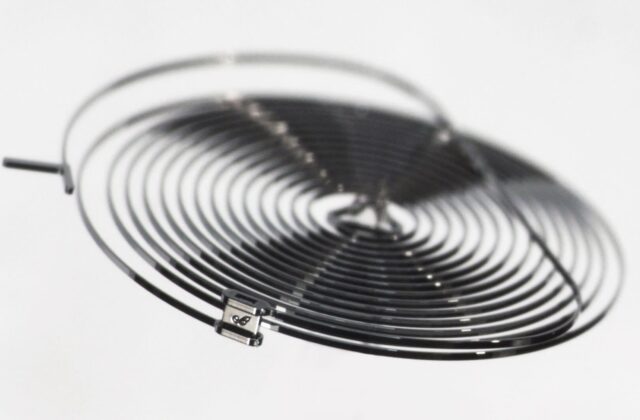
This is the most common solution: the lever touches the balance wheel (or sometimes the hairspring via an intermediate component) and stops it. As the balance is the movement’s “metronome,” the entire watch comes to a halt.
2) Braking a wheel in the gear train
Rarer, this approach involves locking a wheel (often near the seconds wheel). This interrupts the transmission of motion to the hand without necessarily stopping the regulating organ in the same way. It can be found depending on caliber constraints, height, or compatibility considerations.
In both cases, mastering the contact is crucial: stopping a movement requires mechanical finesse. Engineers design these braking systems to avoid excessive pressure that could mark components or affect performance when the watch restarts.
What Happens When You Push the Crown Back In?
When you push the crown back in:
- the lever disengages,
- the balance (or the braked wheel) immediately resumes oscillation,
- the seconds hand starts moving again.
On some watches, the restart is immediate and crisp; on others, there may be a slight delay, depending on the energy available in the mainspring barrel and how the contact is released. It is often imperceptible, but enthusiasts enjoy observing such details, much like listening to the note of a finely tuned engine.
On video, it looks like this:
Is Hacking Seconds the Same as a Chronometer?
No. Hacking seconds is not a certification of accuracy; it is a setting function. A watch can be highly accurate without hacking seconds, and conversely, it can feature it without being particularly consistent.
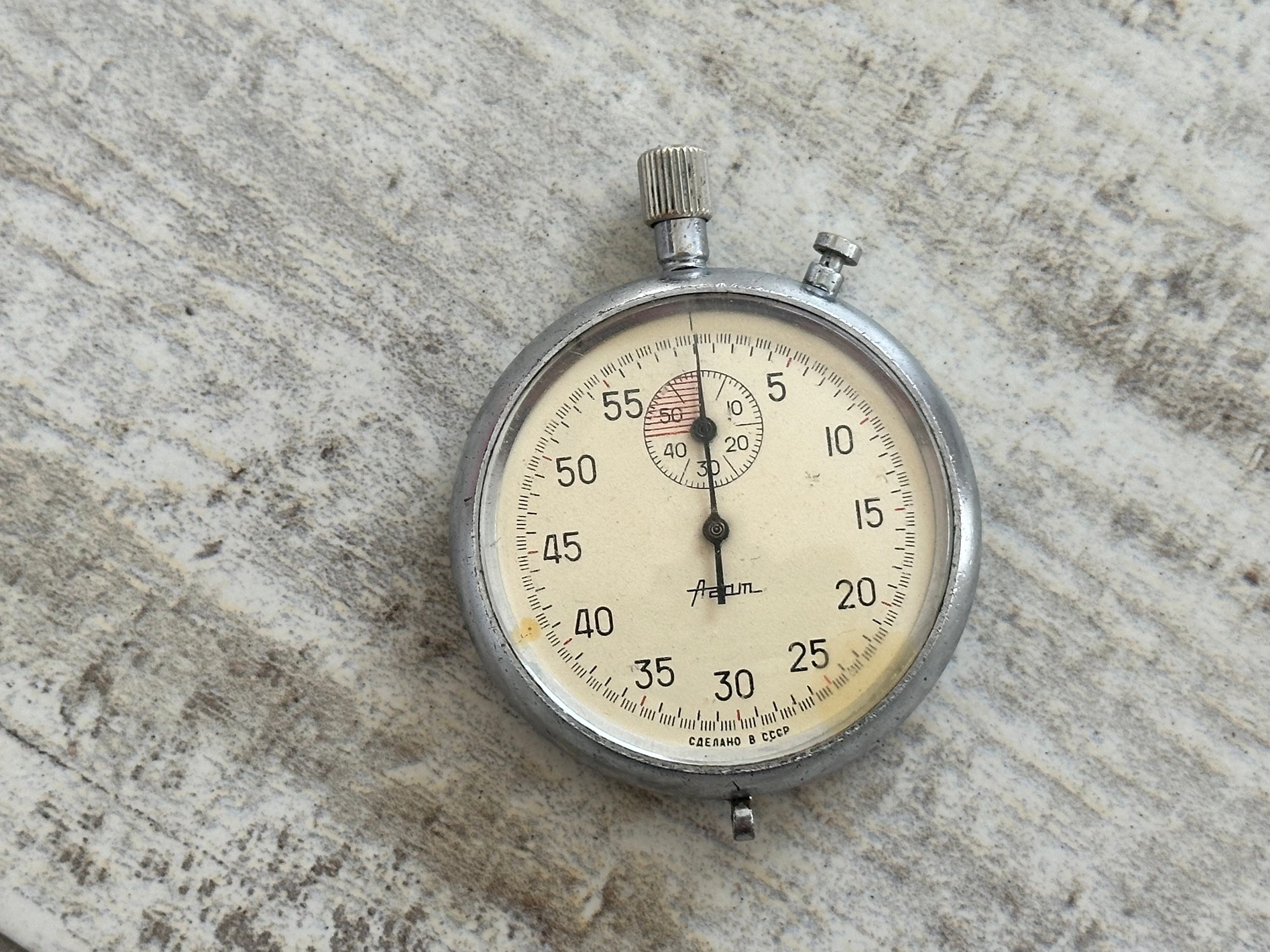
That said, in watchmaking culture it often aligns with the idea of a tool watch: a piece designed to be used, set, and synchronized. This is why it frequently appears on aviation watches, military timepieces, serious dive watches, and many modern, performance-oriented calibers.
A Brief History: When Stopping the Seconds Became Essential
Before it became a collector’s convenience, hacking seconds was a tool. At a time when navigation and coordinated operations depended on rigorous timekeeping, synchronization became critical.
In the military world in particular, being able to set multiple watches to exactly the same time had real operational value: an action triggered “to the minute” does not mean the same thing if every second counts. In aviation as well, coordination between pilot, co-pilot, and onboard instruments requires a shared temporal framework.
Many 20th-century calibers popularized hacking seconds—first in issued watches, then in civilian models that adopted this functional vocabulary. Today, it is widely democratized: many contemporary automatic movements incorporate it, as users accustomed to digital precision expect the same level of exactness from mechanical timepieces.
How to Set Your Watch with Hacking Seconds: The “To-the-Second” Method
If you want to get the most out of this function, here is a simple method inspired by fine-adjustment enthusiasts.
- Choose a reliable reference (a synchronized phone, atomic clock website, etc.).
- Pull the crown to the time-setting position: the seconds hand stops.
- Set the minutes slightly ahead (a small margin can help depending on gear play).
- Move back gently to the exact point if your watch allows it, without forcing, to avoid perceptible backlash in some gear trains.
- At the signal, push the crown back in: the seconds hand restarts in sync.
A purist’s detail: on some watches, the minute hand may shift slightly when you push the crown back in. This is normal and depends on the setting mechanism. The key is consistency in your method, especially if you monitor your caliber’s daily rate.
Hacking Seconds Across Movements: Mechanical, Automatic, Quartz
In Mechanical or Automatic Watches
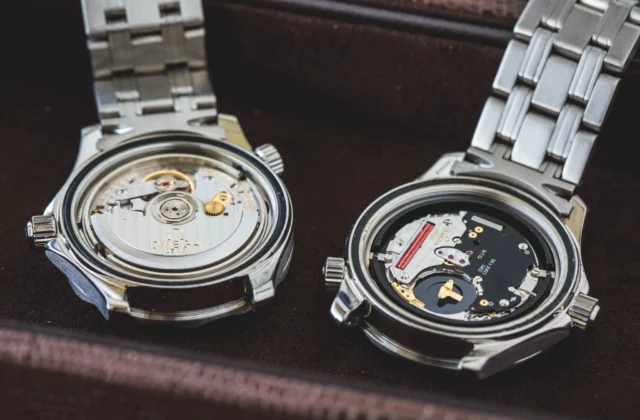
Hacking seconds is a physical interaction with the regulating organ or gear train. When well designed, it does not damage the movement, but it remains an additional mechanical constraint—hence its absence in some vintage or ultra-thin calibers, where simplicity, robustness, or slimness took priority.
In Quartz Watches
In many quartz watches, stopping the seconds for time-setting is simpler: the electronics cut power to the stepper motor. Some quartz models even offer reset-to-zero or more advanced correction features. Yet the charm of mechanical hacking seconds lies precisely in the fact that it is a tangible brake, not just a switch.
Why Some Enthusiasts Swear by It… and Others Don’t
Hacking seconds reveals one’s watchmaking personality. Those who love it value precision and the idea of synchronizing their watch like an instrument. Those who happily do without embrace a more “organic” view: a mechanical watch lives, drifts, breathes, and does not need to be aligned with atomic time to fulfill its purpose.
If only one image were to remain, it would be this: a watch that, for a brief moment, agrees to fall silent before starting again. Hacking seconds is not a pause in time; it is a mark of control—a reminder that, in watchmaking, precision often lies in the details, and that details always tell a story.