How a Power Reserve Indicator Works
The mechanical watch’s “fuel gauge”
On a mechanical watch, the power-reserve indicator has something deliciously human about it: it lets you see the mainspring’s impending fatigue, the end of a surge. In an age of invisible batteries and digital percentages, this small graduated sector—often discreet, sometimes central—reminds us that watchmaking is, first and foremost, a matter of tamed energy. A gesture, a spring, a train of gears, and time starts up again.
From a distance, you might take it for just another “practical” complication. In reality, it’s also a cultural marker: the very idea of displaying autonomy comes from the world of instruments. Like a fuel gauge in a cockpit or a torque indicator on a machine tool, the power reserve tells the story of mechanics in motion. It brings transparency where most watches prefer mystery.
What is a power-reserve indicator for?
The power reserve indicates how much running time remains before the movement stops. Concretely, it translates the energy still stored in the barrel (or in several barrels for long-autonomy calibres) into information you can read on the dial, most often in hours or days.
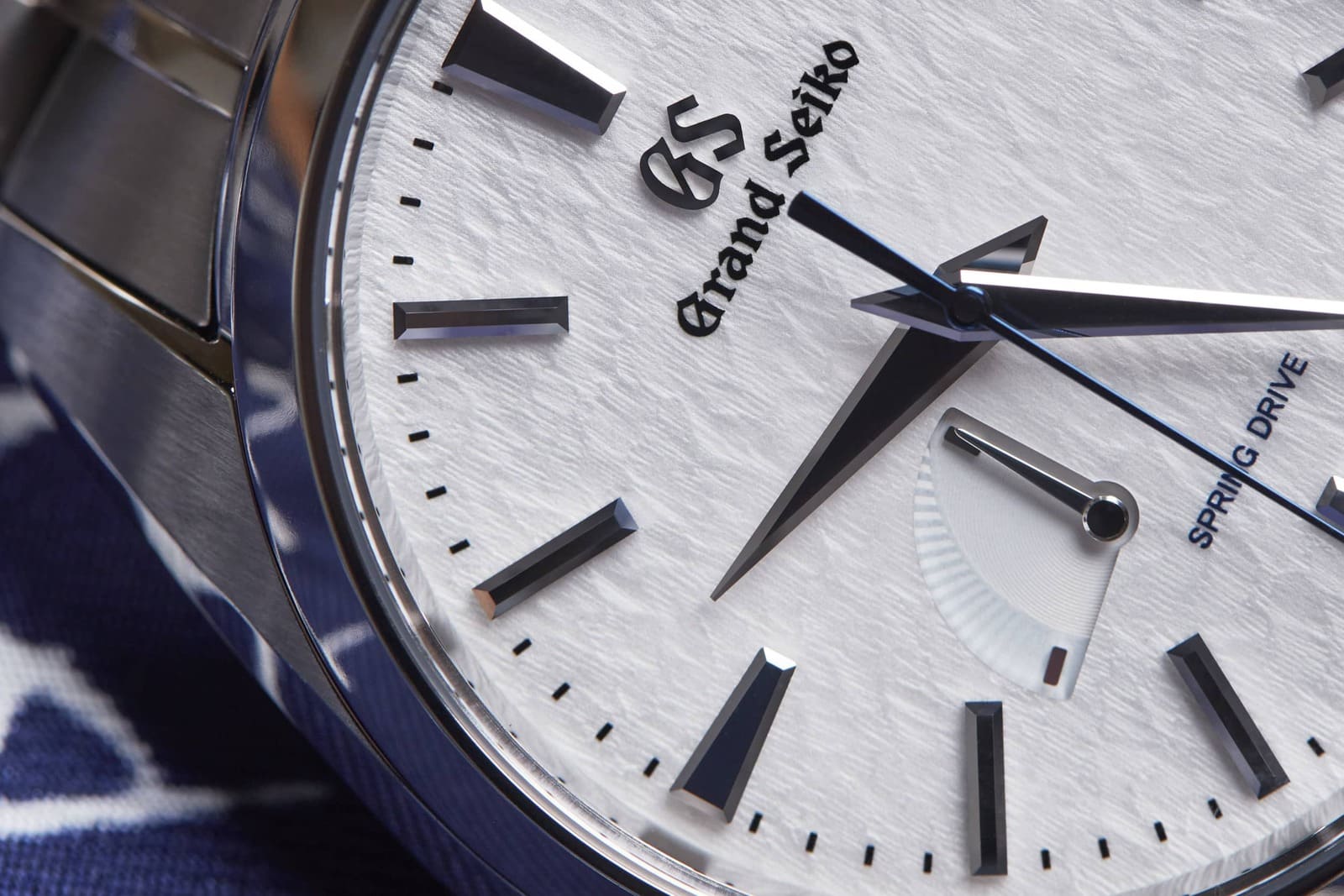
Its usefulness is obvious on manual-wind watches: it prevents you from winding “at random” and helps you stay within a more stable torque zone. But it also makes sense on an automatic, especially if you rotate several pieces. If a watch has spent two days in a box, the indicator tells you at a glance whether it will start right up or whether it needs a few turns of the crown.
Why watchmakers care about it
Because energy isn’t just a quantity—it’s a quality. As the mainspring unwinds, the available torque decreases. Well-designed movements compensate for this drop, but the indicator underscores a simple truth: a watch is never quite as “in its element” as it is in the heart of its operating range.
The mechanical principle: from barrel to hand
In a mechanical watch, energy is stored in a mainspring wound inside the barrel. When you wind (manually) or when the oscillating weight recharges (automatic), you tension the spring. As it relaxes, it drives the gear train, the escapement, then the balance. It’s this gradual unwinding that needs to be “measured”.
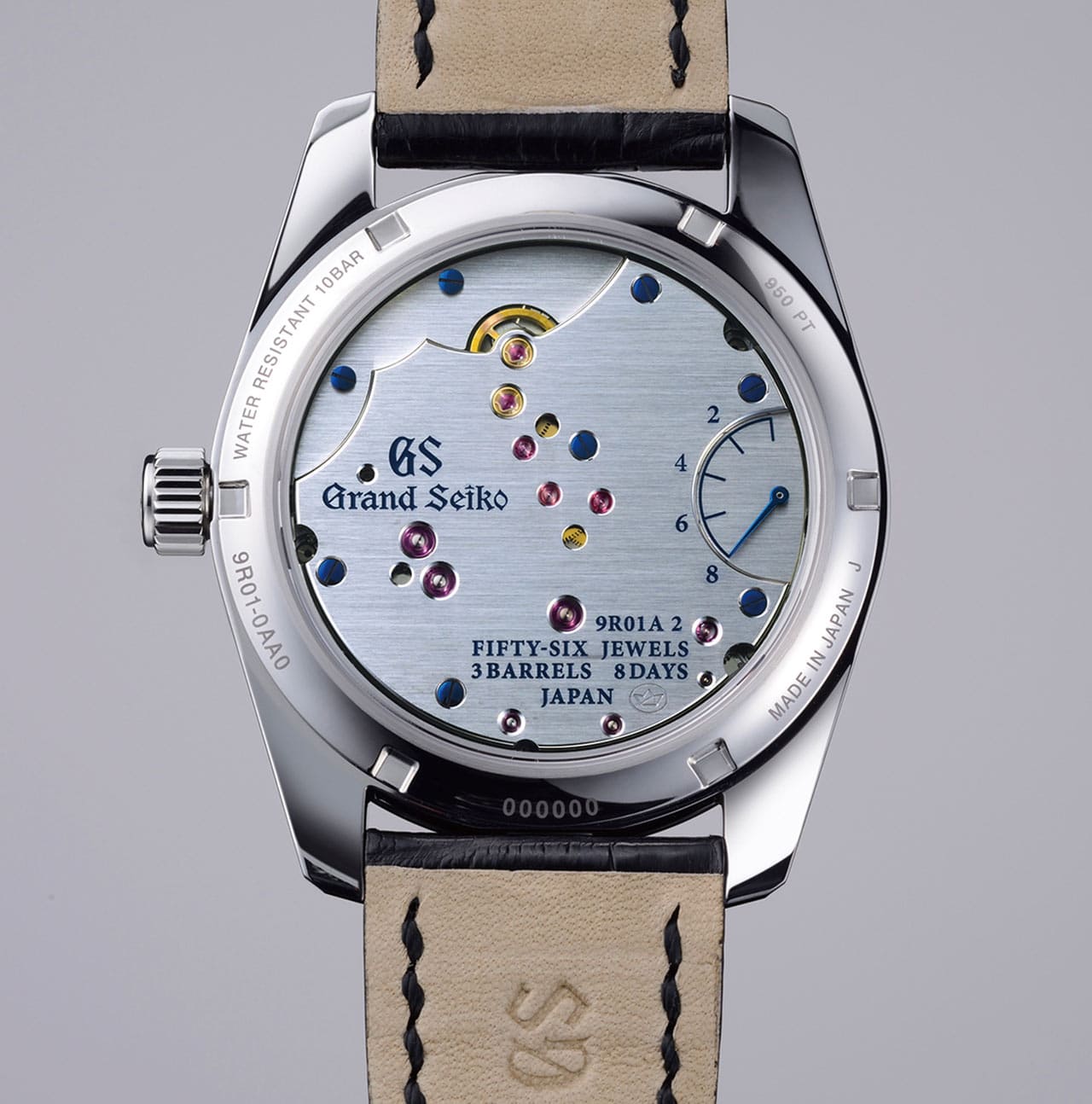
A power-reserve indicator is therefore a mechanism for reading the spring’s tension. It converts the barrel’s state of wind (more or less tensioned) into the position of a hand or a disc. The challenge is to achieve a reliable reading without disturbing timekeeping, while keeping friction to a minimum.
The most common technical solutions
The winding differential: a small system of wheels and transmissions compares two inputs—winding (charge) and unwinding (discharge)—to deliver a coherent hand position. The differential is a classic: elegant, compact, and widely used.
The cone (fusee) or conical transmission: rarer in contemporary mainstream watches, it can contribute to a more linear display (a steadier relationship between actual tension and the indication). It’s the spirit of historic constant-force solutions, applied to the display.
“Direct” barrel-based displays: on certain calibres, the indicator is coupled more directly to the barrel via specific transmissions and pinions. The idea remains the same: read the spring’s position through the rotation of a component linked to the barrel.
Linearity, accuracy… and the poetry of “almost”
It’s tempting to imagine the indicator as a perfectly proportional instrument. But reality is more subtle: a mainspring does not deliver perfectly constant torque. Its tension doesn’t fall like a simple tank emptying out. The result is that the indication can be slightly non-linear (for example, the last “10%” seeming to disappear faster than expected).
Brands compensate with cam geometry, gear ratios, or a deliberately “useful” display range (sometimes avoiding the extremes of the spring). Some high-end movements also aim to maintain a steadier force through constant-force solutions. But in its own way, the power-reserve indicator embraces this organic element: it doesn’t promise a digital chronometer—it tells the story of a living mechanism.
Why the indication isn’t always spot-on
Friction and tolerances: the hand and its train add small resistances—controlled, but real.
Variable mainspring torque: the relationship between tension and remaining autonomy isn’t perfectly linear.
Adjustment and ageing: lubrication, wear, and regulation slightly change behaviour over the years.
The major display styles: from instrument to statement
Beyond the technical side, the power-reserve display is a playground for designers. Some like it utilitarian, almost military. Others turn it into a piece of stagecraft.
The most common formats
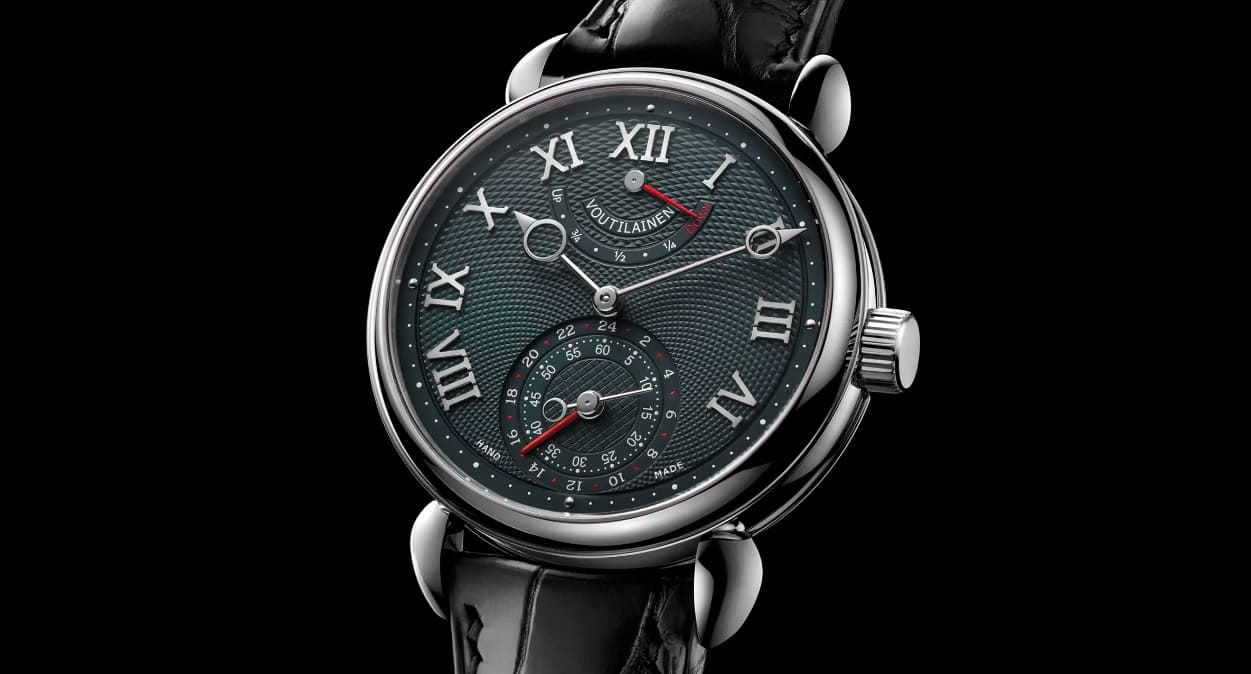
The graduated sector: a hand moves along an arc (0–40 h, 0–70 h, 0–8 days). Legible, classic, immediate.
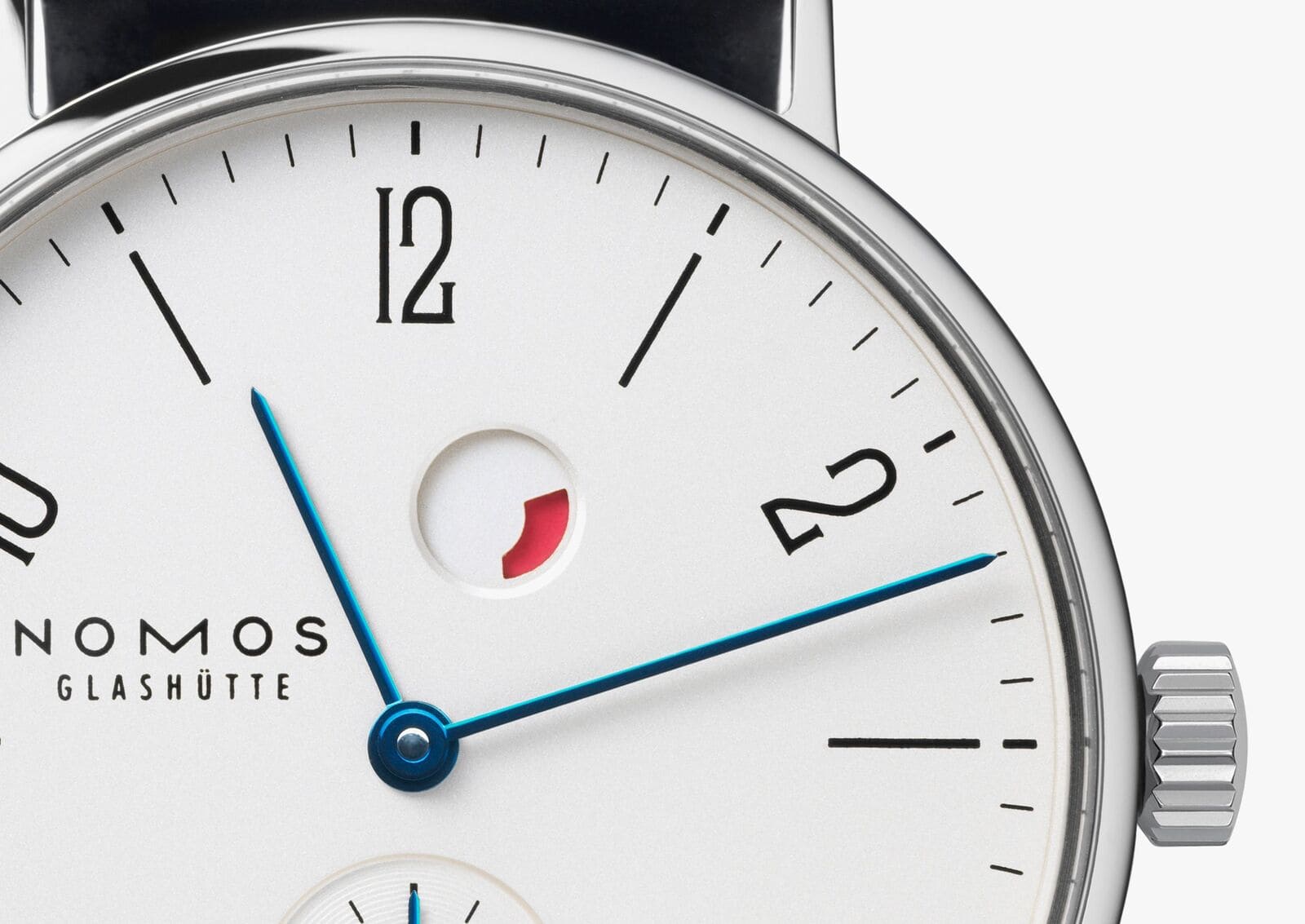
The disc: an aperture reveals a rotating disc, sometimes with colour codes. More graphic, more contemporary.
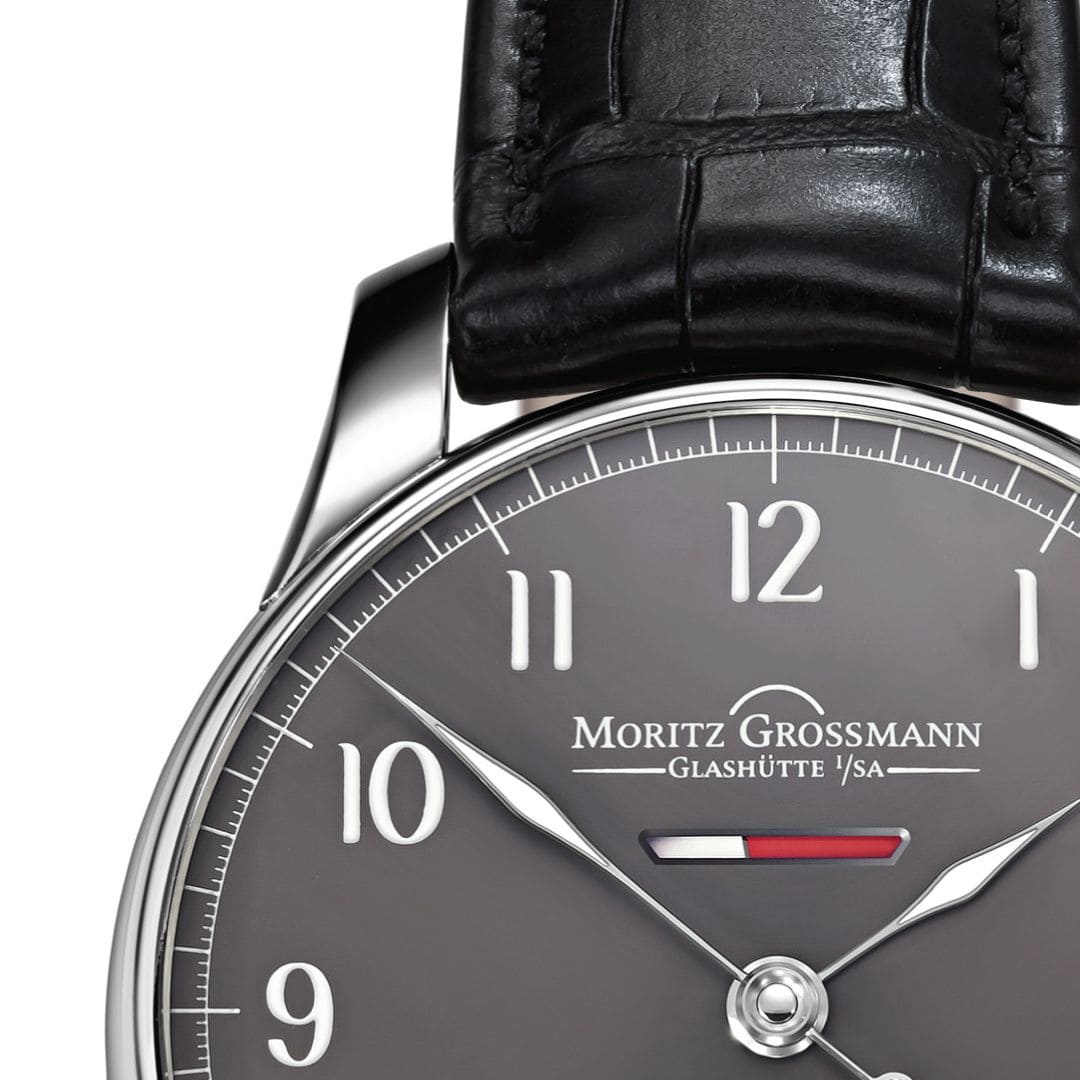
The “up/down” indicator: much appreciated on classically styled watches, it conveys the essentials with terminology that feels almost like traditional bench watchmaking.
Power reserve on the back: under a sapphire caseback, it becomes an enthusiast’s pleasure, visible when you pick the watch up in your hand.
On some pieces, the indicator is central and proudly displayed, like a dashboard. On others, it remains discreet and integrated—sometimes at 6 o’clock—like a quiet signature for those in the know.
Manual vs automatic: a complication that doesn’t play the same role
On a manual-wind watch, the indicator is a companion to the ritual. It tells you when to take two minutes in the morning to “re-arm” the day. And it saves you from waiting for the stop—an oddly frustrating moment when the watch suddenly becomes a beautiful, motionless object.
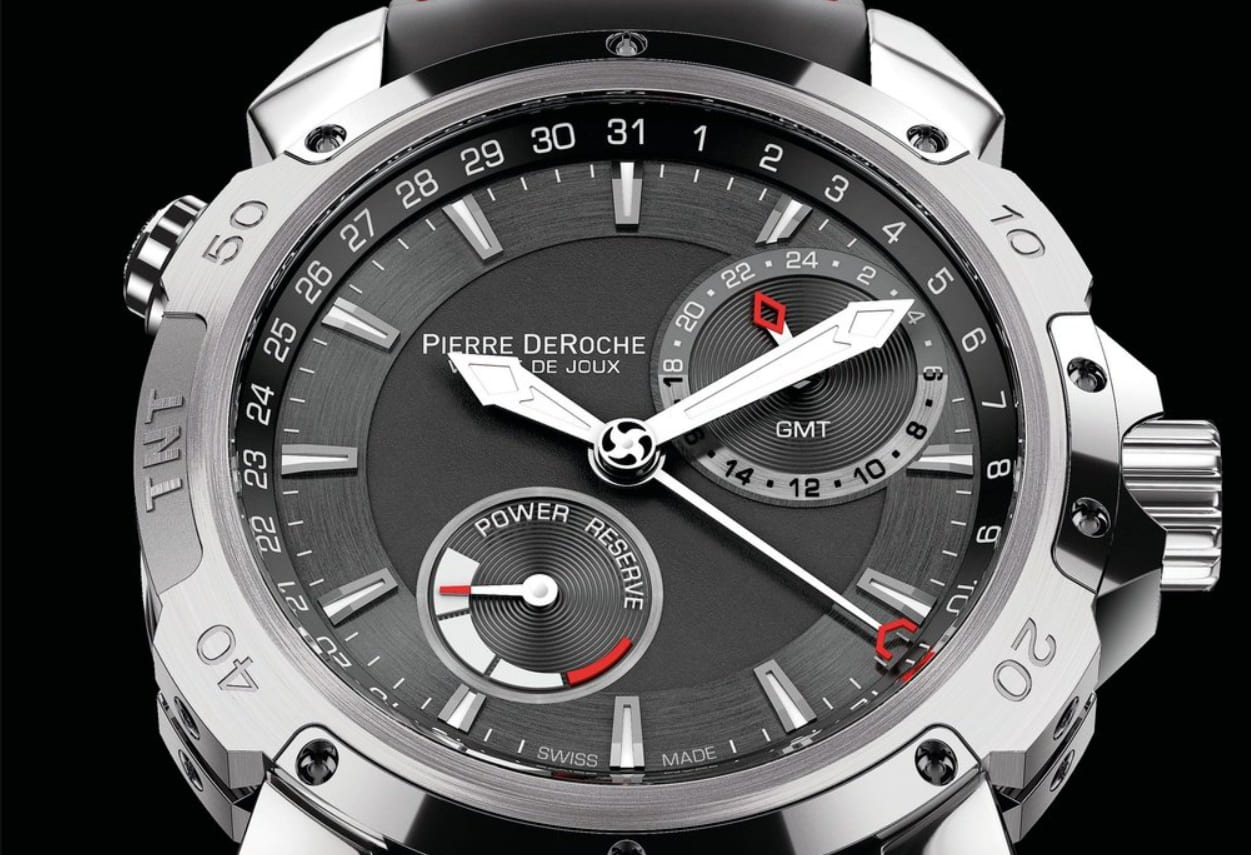
On an automatic, it serves a more strategic function: managing a collection’s rotation, anticipating a restart, or checking whether your daily wear is recharging it sufficiently (some wrists, some lifestyles, some oscillating weights… and the reserve stubbornly stays low).
And on a long power-reserve watch?
From 3, 5, 8 days—sometimes more—the indicator takes on another dimension. It’s no longer a daily reminder, but a planning tool. It’s the weekend pleasure: set the watch down on Friday evening, pick it up on Monday, and see that it kept going. Autonomy becomes a lifestyle argument, almost a promise of independence.
Using it well: a few enthusiast’s habits
A power reserve can be read—but it should be respected, too. The goal isn’t to obsess over the hand, but to understand what it tells you about the mechanics.
Avoid letting it drop to zero too often: it isn’t “dangerous” in itself, but staying within a reasonable reserve promotes more stable amplitude.
On a manual-wind, wind regularly: doing it at the same time each day makes the indication more consistent and the gesture more natural.
Never force it at the stop: when resistance becomes firm, you stop. The indicator shouldn’t push you to “gain” one more click.
On an automatic that isn’t worn much: a few turns of the crown (if the model allows it) or a few minutes on the wrist are often enough to get it going properly.
The paradox of a watch is that it displays time but hides energy. The power reserve reverses that relationship: it makes the invisible visible, giving autonomy a face. In an era when everything is “always charged”, it reminds us that a mechanism needs attention, rhythm, care.
And that may be its true luxury: not complication for complication’s sake, but a small window onto the watch’s inner life. A way of feeling that time passing is also time being spent—and that, sometimes, it needs to be wound back up.