How a Flyback Chronograph Works
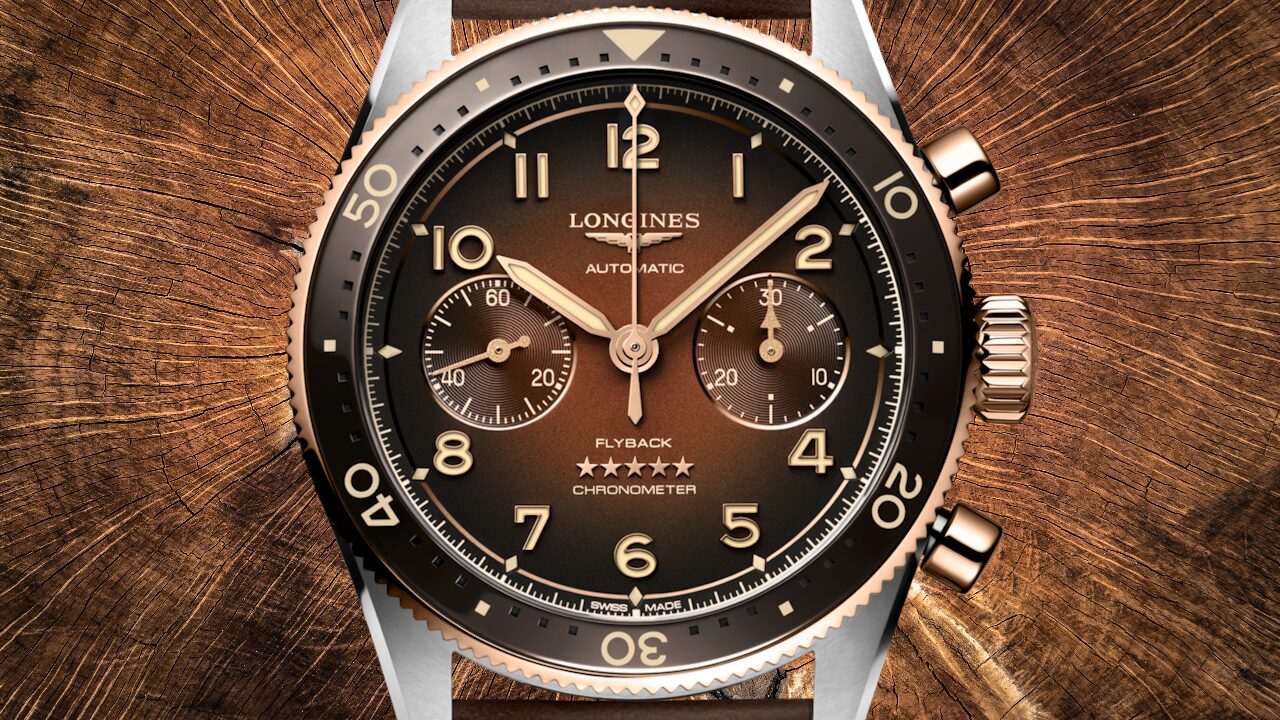
Flyback: the art of restarting time in a single gesture
On a conventional chronograph, the rule is immutable: start, stop, then reset. The flyback chronograph—also known as “return-to-flight”—upends that order. With a single press, the hand snaps back to 12 o’clock and immediately takes off again. That gesture, much like manual winding, delivers a tactile, elegant experience—an invitation to savour the art of mastering time’s mechanics.
An invention born in the sky
The flyback is aviation’s child. In the 1930s, with cockpits vibrating and pilots navigating by compass, timing successive intervals without losing a second was a matter of safety. Hanhart in Germany introduced the “Temposchaltung” (instant return) in the late ’30s; Longines wrote its name into history with the legendary 13ZN calibre, one of the first chronograph movements with a return-to-flight function. Later, the Breguet Type 20 made for the French Air Force turned flyback into a military standard. Since then, the idea has been refined—from tool watches to high horology—often incorporating an automatic movement for greater precision.
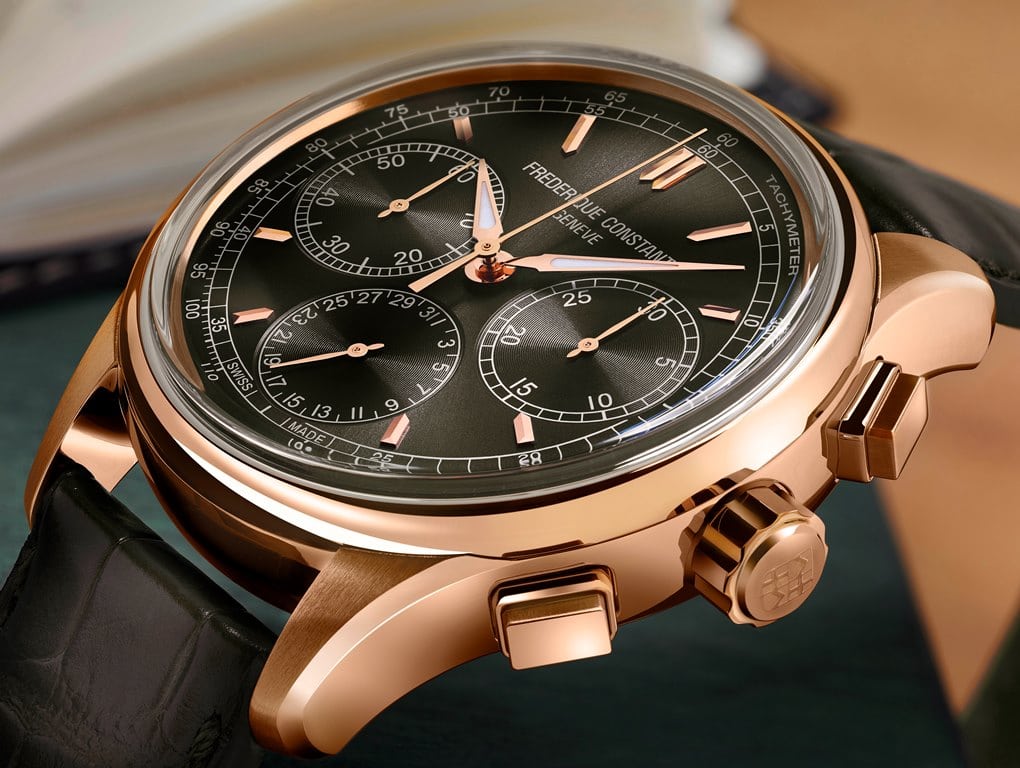
Anatomy of a flyback chronograph
From press to restart: the mechanical sequence
What sets a flyback apart is less what you see than what happens beneath the dial. Where a classic chronograph requires you to stop and then re-arm, the flyback stages a lightning-fast choreography inside the movement. The secret? A kinematic setup that allows the reset while the chronograph is running.
- Press the flyback pusher (often at 4 o’clock): a dedicated lever acts on the control system (column wheel or cam).
- Instant braking of the chronograph wheel to freeze the hand without bounce.
- The reset hammer drops onto the heart cams of the seconds (and minutes) counter, bringing them precisely back to 0.
- Momentary disengagement of the clutch (horizontal or vertical) to avoid stress during the hammer’s impact.
- Release: the hammer lifts, the brake opens, the clutch re-engages, and the hand immediately sets off again from 12 o’clock. All in a fraction of a second.
This controlled brutality demands extremely fine adjustment: spring tensions, cam profiles, clutch engagement depth… a ballet tuned to the micron.
Key components
- Column wheel or cam: the “conductor” coordinating lever, hammer, brake and clutch. The column wheel often delivers a creamier pusher feel.
- Horizontal or vertical clutch: the horizontal is spectacular to watch as the wheel train meshes and unmeshes; the vertical ensures a crisp start without stutter and limits wear if you leave the chronograph running continuously.
- Reset hammer: its face strikes the chronograph hands’ heart cams for a clean return to 0.
- Chronograph brake: prevents the hand from skidding during the flyback manoeuvre.
- Star wheel minute counter and jumper: guarantees precise minute advancement, including during a lightning reset.
Flyback vs. classic chronograph: beyond the gesture
In practical terms, what does return-to-flight bring? First, formidable efficiency for chaining successive timings: navigation legs, in-flight turns, track intervals, sets at the gym. Where a standard chrono requires two presses—stop, then reset—the flyback needs only one.
- Practical advantages: instant serial timing, lower risk of handling errors, improved readability since you always restart from zero.
- On-wrist sensation: the pusher’s “click” and the immediate restart create a tactile and visual experience that becomes addictive for anyone who loves living mechanics.
- Cultural dimension: the flyback retains the aura of aviation instruments, somewhere between military discipline and the romance of the pioneers.
On the other side, a few compromises remain: more parts, more adjustments—therefore higher cost and more demanding servicing. And while vertical-clutch movements tolerate a chronograph left running permanently, that’s not always advisable with a horizontal clutch, which is more sensitive to wear. Pusher water-resistance must also be beyond reproach if you plan to use the function in sporty conditions.
Collectors’ landmarks: from pioneers to moderns
The flyback has its icons. On the vintage side, the Longines 13ZN encapsulates the golden age: legible architecture, column wheel, utilitarian elegance. Hanhart chronographs from the late 1930s and the Breguet Type 20 of the 1950s tell the military epic. Closer to our time, several movements are benchmarks: the A. Lange & Söhne Datograph Flyback with its sculptural finishing; the Zenith El Primero in flyback guise, remaining faithful to high frequency; IWC’s 89xxx family, designed for the cockpit; Blancpain’s Air Command, aviation lineage obliges; at Patek Philippe, the CH 28‑520 calibre brings flyback to sport-chic lines (Nautilus and Aquanaut). At Minerva—now within Montblanc’s orbit—the traditional know-how of return-to-flight lives on, with levers featuring voluptuous anglage.
Each of these interpretations reflects a movement philosophy: vertical clutch for a jump-free start, column wheel for a silky pusher, high frequency for a steadier hand. Choices you can hear as much as you can feel under your fingertip.
Choosing the right flyback
Beyond style, interrogate the movement. Is the chronograph column-wheel controlled? Vertical or horizontal clutch? What are the frequency, power reserve, and the presence (or not) of a jumping minute counter? The answers will shape both feel and use. Try the pushers: consistent effort and a clean reset are telling signs of adjustment quality. On the practical side, check the stated water-resistance and whether the pushers can be operated in the rain—not all of them allow it.
Servicing follows the logic of a denser mechanism: regular maintenance, a watchmaker trained on the specific movement, and careful attention to the reset hammer’s adjustment. A well-lubricated flyback is one that snaps back cleanly, without hesitation or hand bounce.
In summary
The flyback chronograph is not a gadget but an idea of speed made tangible by mechanics. One press, and time is erased—then begins again. Behind the poetry of the gesture lies a movement meticulously orchestrated: brakes, hammers, clutches and heart cams harmonise to turn the instant into precision. That is the flyback’s promise: a tool inherited from cockpits, now a stylistic signature on the wrist, where technique brushes up against watchmaking culture.