5 Iconic Watches Worn in Films
When Fiction Tells the Time: 5 Watches That Became Screen Legends
Cinema has that rare power: to freeze a gesture, a style, a silhouette—and launch it into the collective imagination. A watch that appears on screen doesn’t merely tell the time; it tells a story, sketches a character, stamps an attitude. From the dive tool to the Art Deco icon, the watch becomes a scene partner, a silent accomplice to heroes and heroines. Here are five mythical pieces whose presence in film sealed their legend—models where watch culture meets the grammar of the silver screen, and where every design detail finds its narrative resonance.
Rolex Submariner 6538 – James Bond’s Second Skin
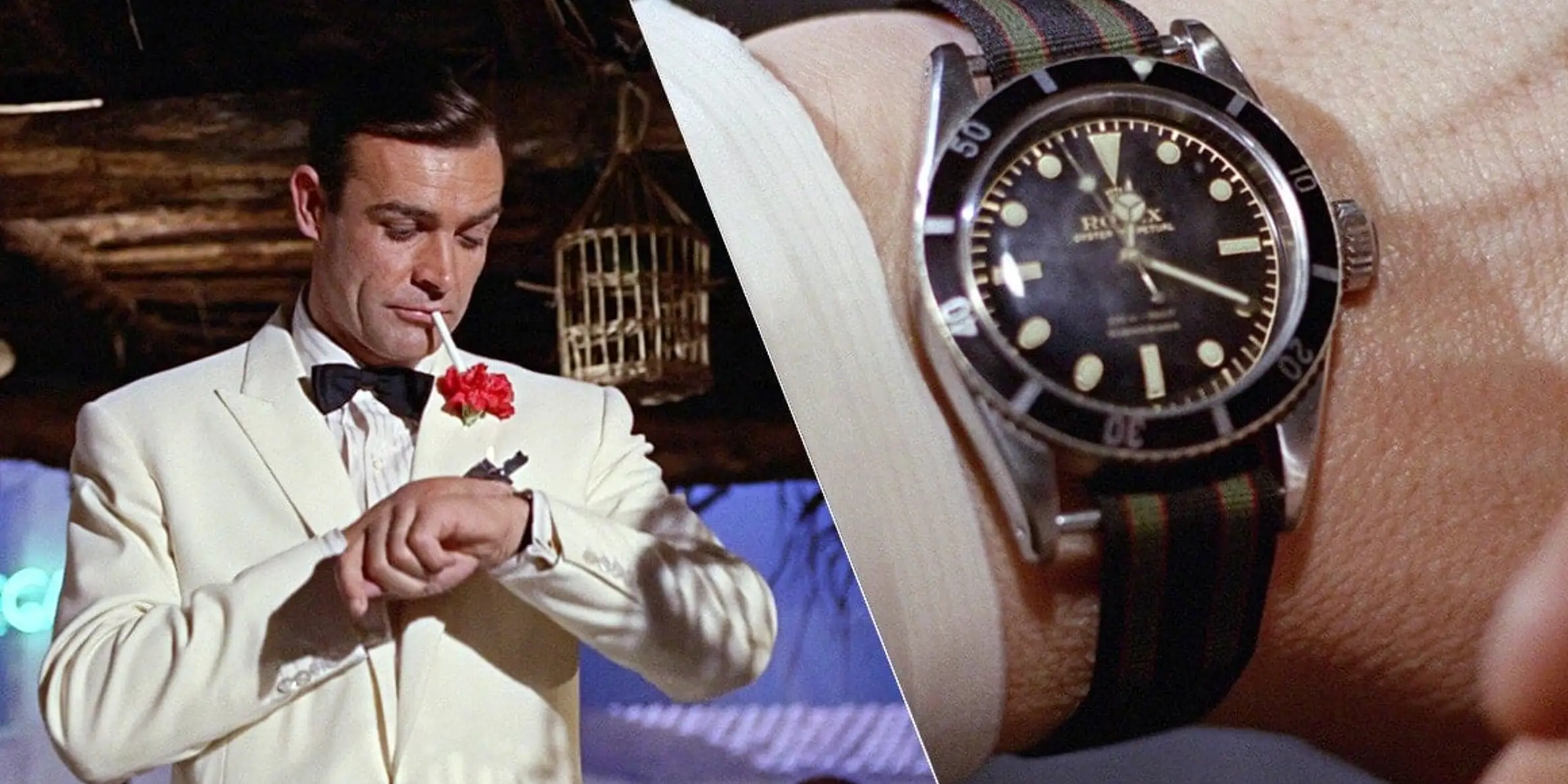
Before it became a symbol of success, the Rolex Submariner was a tool. On Sean Connery’s wrist from Dr. No (1962), reference 6538—big crown with no crown guards, glossy black dial, graduated bezel—lays down a language: brutally elegant efficiency. We see it sometimes on leather, sometimes on a military fabric strap that has since become the “Bond strap” in the collective unconscious. Nothing ostentatious; everything is functional.
On film, this watch does more than accompany Agent 007; it gives him tactile credibility. The Sub is the natural extension of a character who moves between a dinner jacket and a midnight swim. The result: the archetypal tool watch tips into pop legend. Decades later, every Submariner still carries the shadow of a white tuxedo, an acrylic crystal beaded with salty droplets, and a brand of heroism that never blinks.
Heuer Monaco 1133B – Le Mans’ Blue Square
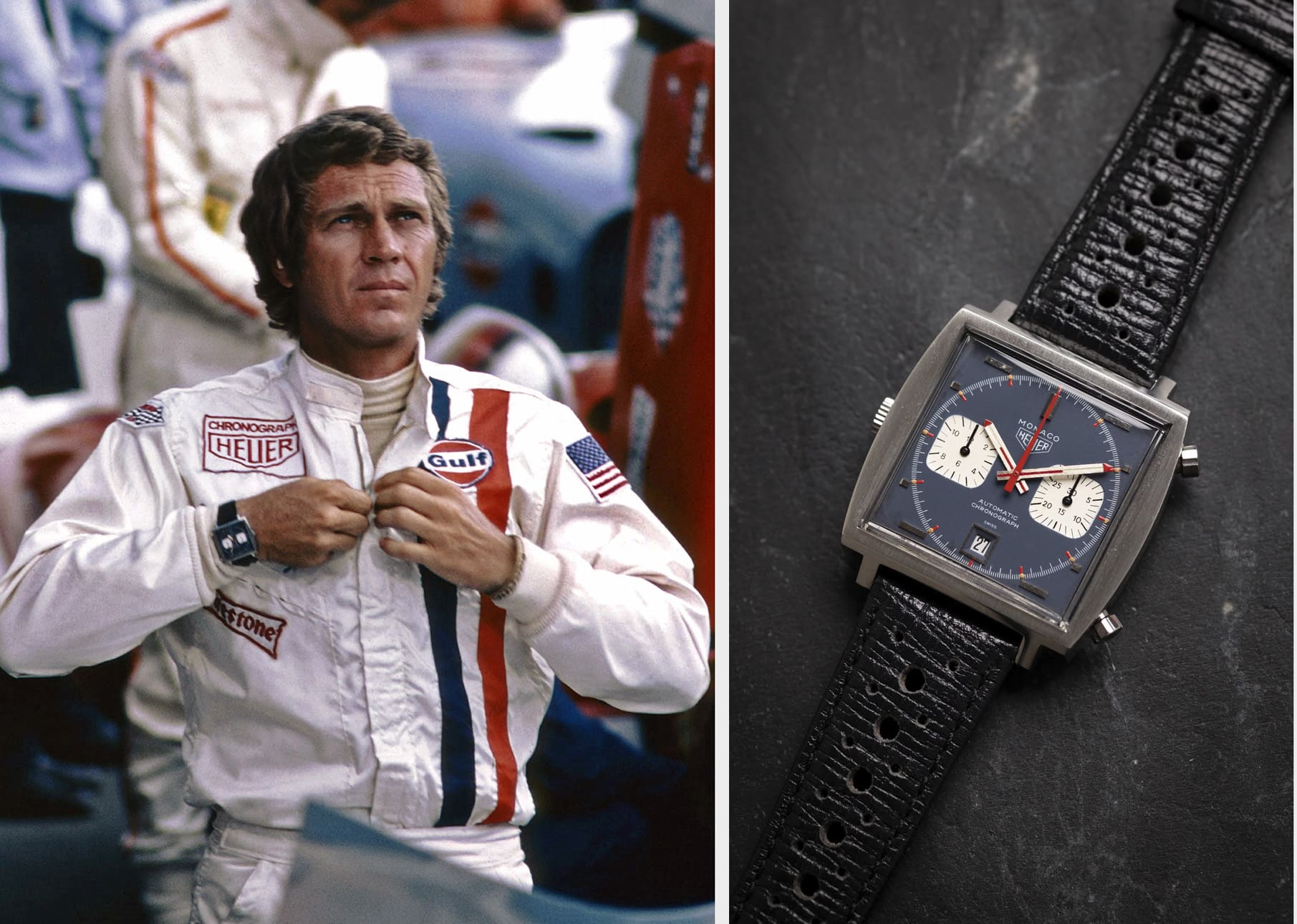
1971. Steve McQueen in his Gulf racing suit immortalises a blue square that looked as if it had been cut for speed: the Heuer Monaco 1133B. Automatic chronograph Calibre 11, left-hand crown, 39 mm water-resistant case, petrol-blue dial crossed by horizontal indices—the watch is a visual dissonance turned signature. In Le Mans, McQueen wanted the truth of the paddock: the Monaco clings to the skin, absorbs petrol and rubber, and imprints an image no one will forget.
The Monaco is distilled Seventies audacity: geometry that refuses conventional roundness, a racing spirit that speaks as much to aesthetes as it does to mechanics. By the end credits, it has earned a double status: a watchmaking icon and a talisman of speed cinema, its echo still resonating in every re-edition.
Seiko 6105 “Captain Willard” – The Breath of Apocalypse Now
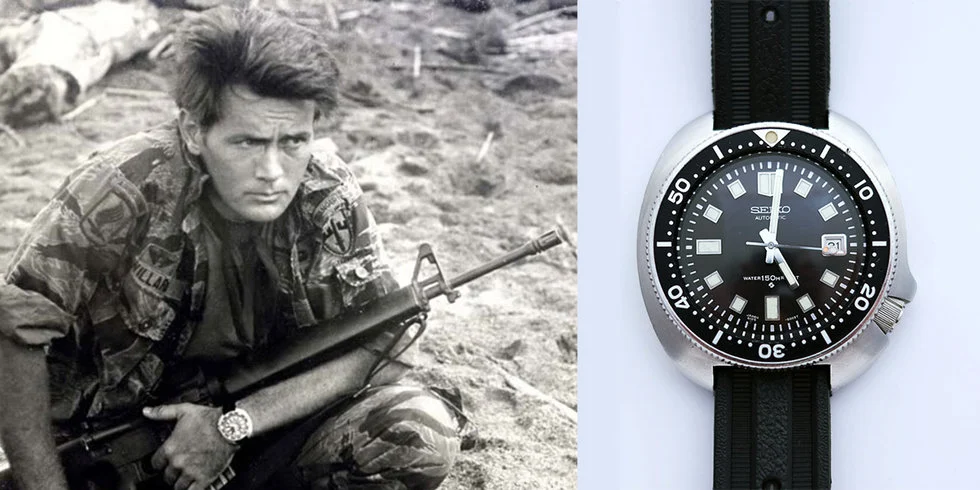
On Martin Sheen’s wrist (Charlie’s dad) in Apocalypse Now, the Seiko 6105-8110/8119 is anything but an accessory: it’s a piece of reality. Asymmetrical cushion case, protected crown at 4 o’clock, 150 m water resistance, no-nonsense legibility—the 6105 is built to survive humidity, mud, the unexpected. Nicknamed “Captain Willard” by collectors, it embodies the reliable tool in chaos, the watch that stays on time when the world capsizes.
Its aura comes from that raw realism. On screen, it doesn’t shine; it endures. This rugged modesty set a template, inspiring generations of Japanese divers with unbeatable value for money. In the history of watches and cinema, few pieces express so clearly the link between function and character.
Hamilton Khaki Field “Murph” – The Beating Heart of Interstellar
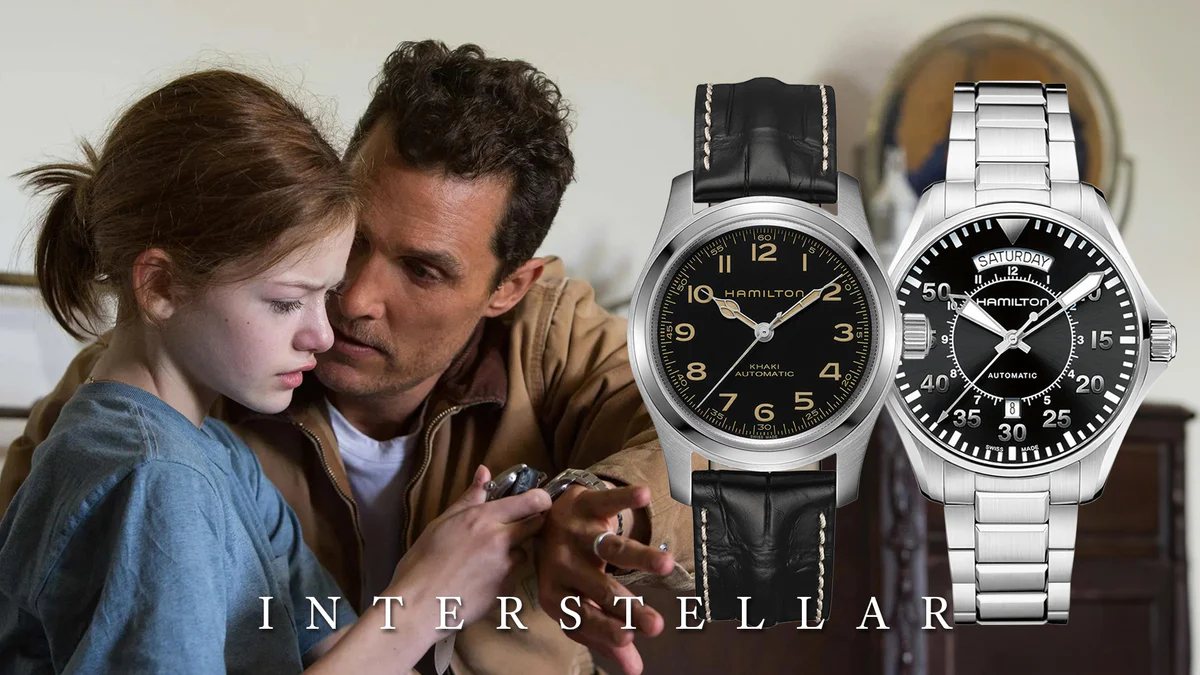
Rarely has a watch been so central to a story as the “Murph”. In Interstellar, Murphy’s field watch transmits the impossible: a message in Morse code, across time and filial love. Hamilton created a prop with classic military restraint—Arabic numerals, cathedral hands, crisp legibility—that becomes the film’s emotional pivot and mechanical linchpin.
The cultural triumph was immediate. At the public’s request, Hamilton released a Khaki Field “Murph” almost identical, with a discreet nod to the Morse code. Proof that cinema can turn an accessible watch into a contemporary relic. Here, the watch isn’t an outward sign—it’s an inward symbol. A watch that measures hours, but also bonds.
Jaeger-LeCoultre Reverso – Bruce Wayne’s Elegant Mask
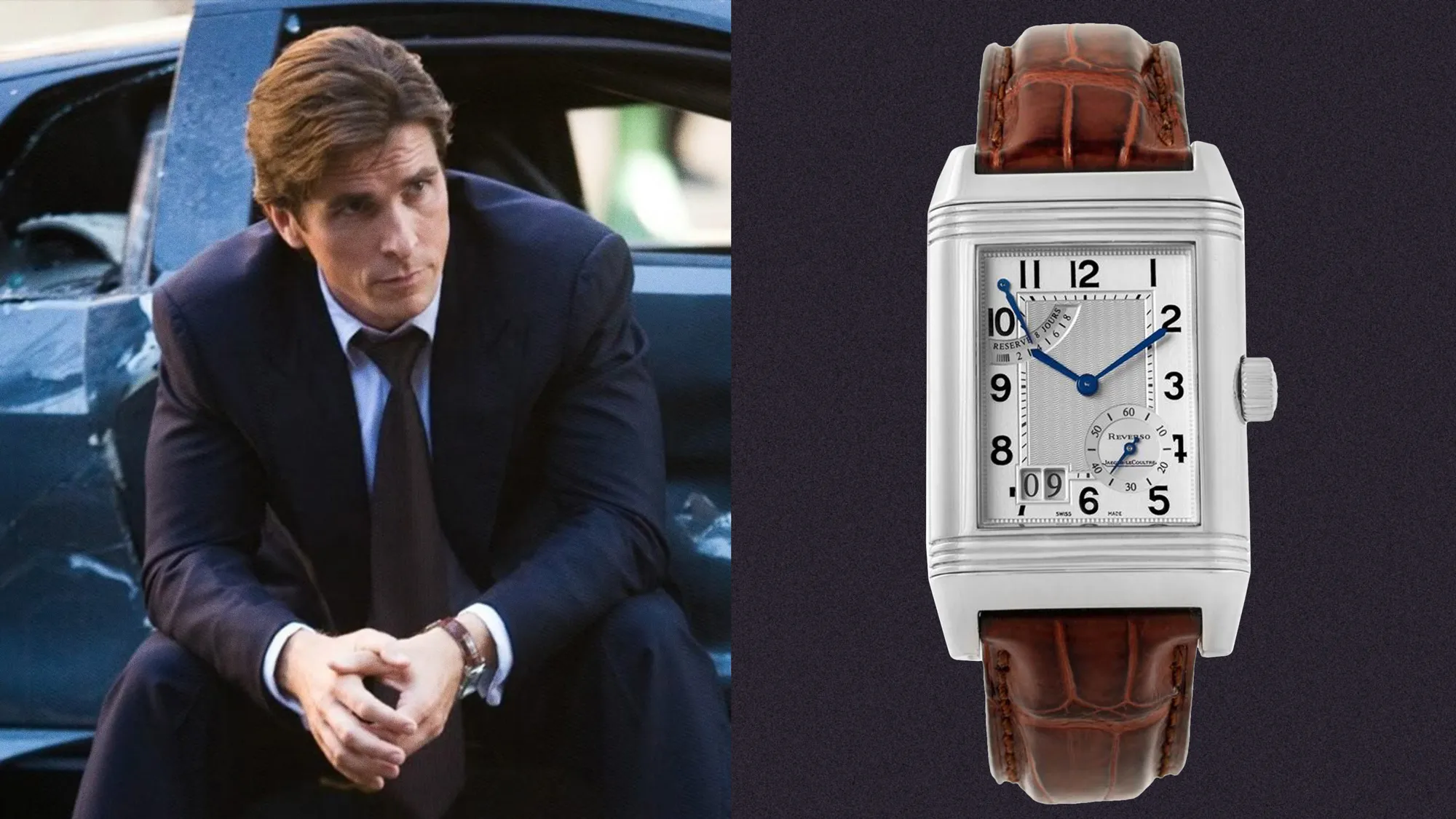
In Christopher Nolan’s Batman revival, Bruce Wayne chooses the Reverso. It’s no accident. Created in 1931 to protect the crystal during polo matches, the Reverso pivots on itself, revealing or concealing its face. Art Deco to its core, it marries crisp angles with understated refinement.
On Christian Bale’s wrist, the watch becomes a metaphor: front side for the public billionaire, reverse for the nocturnal vigilante. The Reverso is a reminder that fine watchmaking can speak in symbols. It embodies a kind of luxury that whispers: a slim case under a cuff, a turning gesture that, on screen, says everything about the character’s duality. A lesson in design and storytelling.
What These Watches Tell Beyond the Time
From Bond to Bruce Wayne, from McQueen to Murphy, these watches owe their aura to more than their screen time. They crystallise an era, a design, a philosophy. Their power lies in uniting watch culture—its inventions, proportions, materials—with cinema’s narrative ellipsis. And when the two converse, the watch becomes more than an object: it becomes a lingering image, a fragment of collective memory.
- Codes that read on screen: high-contrast dials, iconic silhouettes, recognisable gestures.
- A strong story: innovative creation (Monaco), utilitarian heritage (Sub, 6105), narrative metaphor (Reverso, Murph).
- Fit with the character: credible tool for action, measured elegance for style.
- A real afterlife: re-editions, nicknames, collector communities.
Honourable Mentions
The list could go on with the black Hamilton Ventura from Men in Black, Cartier’s Tank beloved of French New Wave actors, or the futuristic Seiko Giugiaro from Aliens. All are proof that cinema, more than any other popular art form, knows how to reveal a watch’s personality. Because, scene after scene, a watch doesn’t merely accompany an action: it sets the tempo of a destiny, measures tension, sculpts a style. And that is how, between light and mechanics, myths are born.