Why Buy an Omega Watch Today?
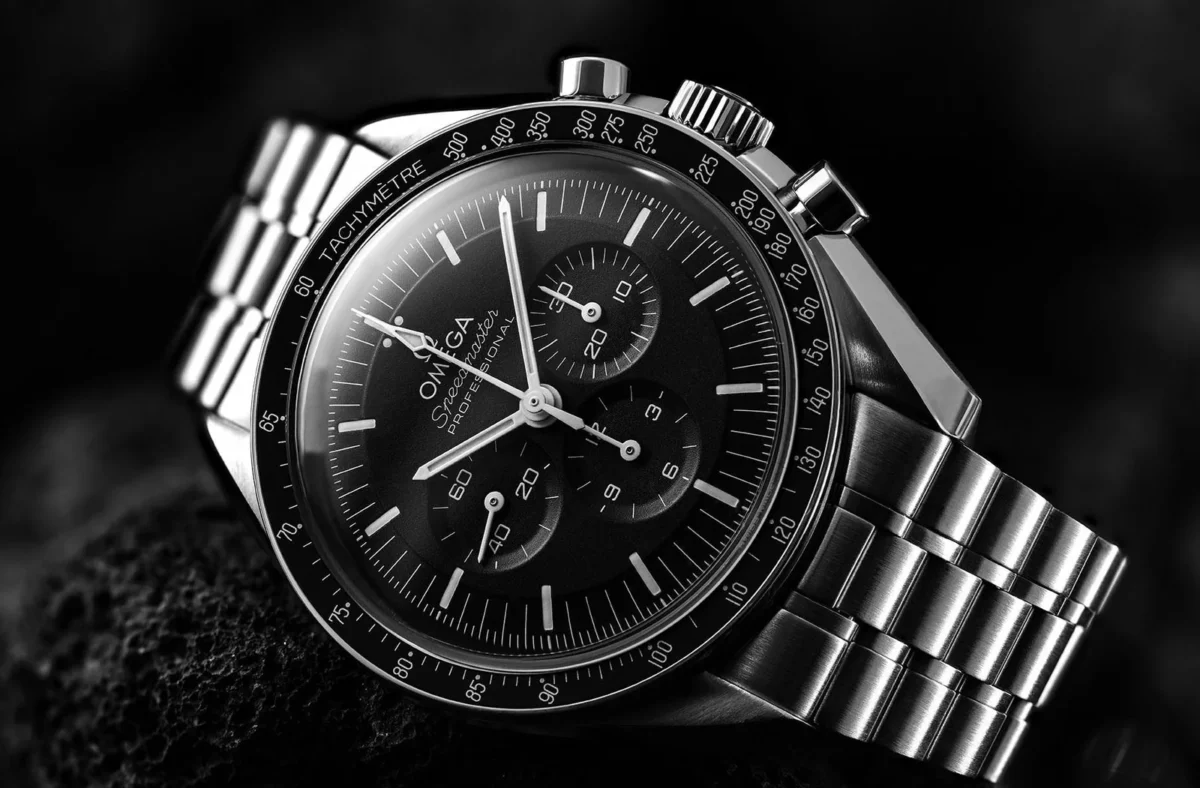
Talking about Omega without talking about the Moon is almost an endurance test. You can try. Hold out for a few minutes. Mention the Seamaster, Co-Axial, James Bond and the Olympic Games. Sooner or later, Apollo 11 will land in the conversation in its big white boots.
Omega is obviously not entirely blameless. Ever since Buzz Aldrin set foot on the lunar surface wearing a Speedmaster in 1969, the manufacture has exploited this chapter of its history with a consistency that commands as much respect as it can occasionally cause fatigue. Moonwatch, Dark Side of the Moon, Grey Side of the Moon, Snoopy, Moonshine Gold, MoonSwatch and its galaxy of variations: in Biel, nobody has forgotten where the Moon is.
The amusing thing is that Omega could probably talk about it far less. The brand has enough watchmaking arguments to stand on its own without bringing up Apollo 11 at every family dinner.
So why buy an Omega in 2026? The question becomes interesting once the astronauts are put aside for five minutes.
A genuine watchmaking personality
Omega is one of those brands whose watches are instantly recognisable, even with the Greek letter in its logo concealed.
A Speedmaster Professional looks like very little else. The Seamaster Diver 300M, with its scalloped bezel, skeletonised hands and wave-patterned dial, also has considerable personality. An Aqua Terra is far more restrained, while the Constellation continues to cultivate a design that is not really trying to appeal to everyone.
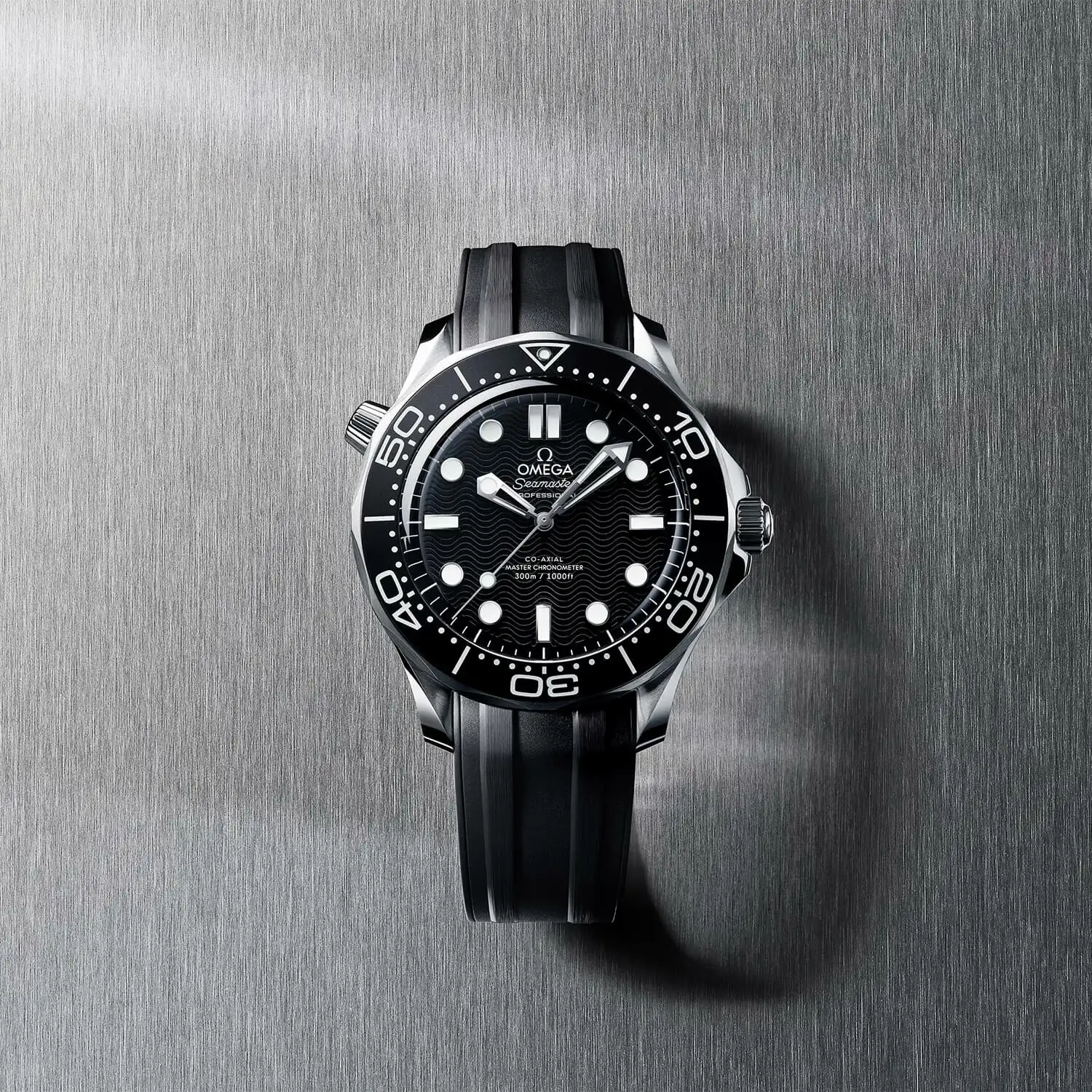
The current catalogue demonstrates this rather well. A glance at the Omega models offered by Frojo takes you from a ceramic Speedmaster Dark Side of the Moon to a Seamaster Planet Ocean, a Diver 300M or a 30 mm or 41 mm Aqua Terra. Prices and intended uses change, but the house signature remains fairly easy to identify.
This diversity matters. Someone walking into an Omega boutique with €7,000 or €8,000 to spend can hesitate between a dive watch, a relatively discreet all-rounder and one of the most famous chronographs in history. Few brands offer several collections that are this well known at this price level.
The Co-Axial deserves better than its status as a marketing slogan
The term “Co-Axial” has appeared everywhere at Omega for years. After seeing it on dials, in catalogues and in shop windows so often, one could almost forget that it refers to a genuine mechanical distinction.
George Daniels began working on his Co-Axial escapement in the 1970s. Omega industrialised it on a large scale from 1999 onwards—an undertaking considerably more complicated than simply attaching an attractive name to an existing movement.
Its principle notably involves reducing the sliding friction found in the conventional Swiss lever escapement. Less sliding means that lubrication is less critical on certain surfaces and, in theory, delivers better long-term stability. I went into its operation in detail in this article on how a mechanical watch escapement works.
Omega has continued to build on this architecture. A large proportion of its recent movements now receive Master Chronometer certification. METAS tests the completed watch and examines, among other things, its accuracy, power reserve, water resistance and resistance to magnetic fields. The requirements call for resistance to 15,000 gauss. That is the kind of figure that seems abstract until you remember how many magnets surround us in everyday life.
On this front, Omega has something serious to defend. In my view, it is even a far more interesting part of the brand’s modern identity than the perennial piece of Moon lore served with the coffee.

Omega: the Rolex for someone who didn’t get their Rolex?
The cliché comes up regularly in watch discussions. Someone wanted a Rolex, failed to get one or did not want to pay the asking price, and left with an Omega instead.
I have never found the idea particularly convincing.
Nobody chooses a Speedmaster Professional because it resembles a Daytona. Aside from their chronograph function, they have virtually nothing in common. Nor is a Seamaster Diver 300M a substitute Submariner. The two watches share neither the same design, bracelet, dial architecture nor, really, the same mood on the wrist.
The comparison with Rolex nevertheless remains inevitable. The two Swiss houses have long occupied similar territory: luxury sports watches, dive watches, chronographs, precision and strong public recognition. Rolex has built an extraordinarily stable range and an almost monolithic image. Omega changes more, experiments more and sometimes produces so many variations that even an enthusiast can lose track along the way.
I also think Omega would sometimes benefit from allowing some of its watches to breathe. The Speedmaster needs nobody else to justify its existence. It would probably survive very well without a few more anniversaries being celebrated.
With Omega, there is still plenty of choice
The abundance of the catalogue has at least one virtue: personal taste still has a genuine place within it.
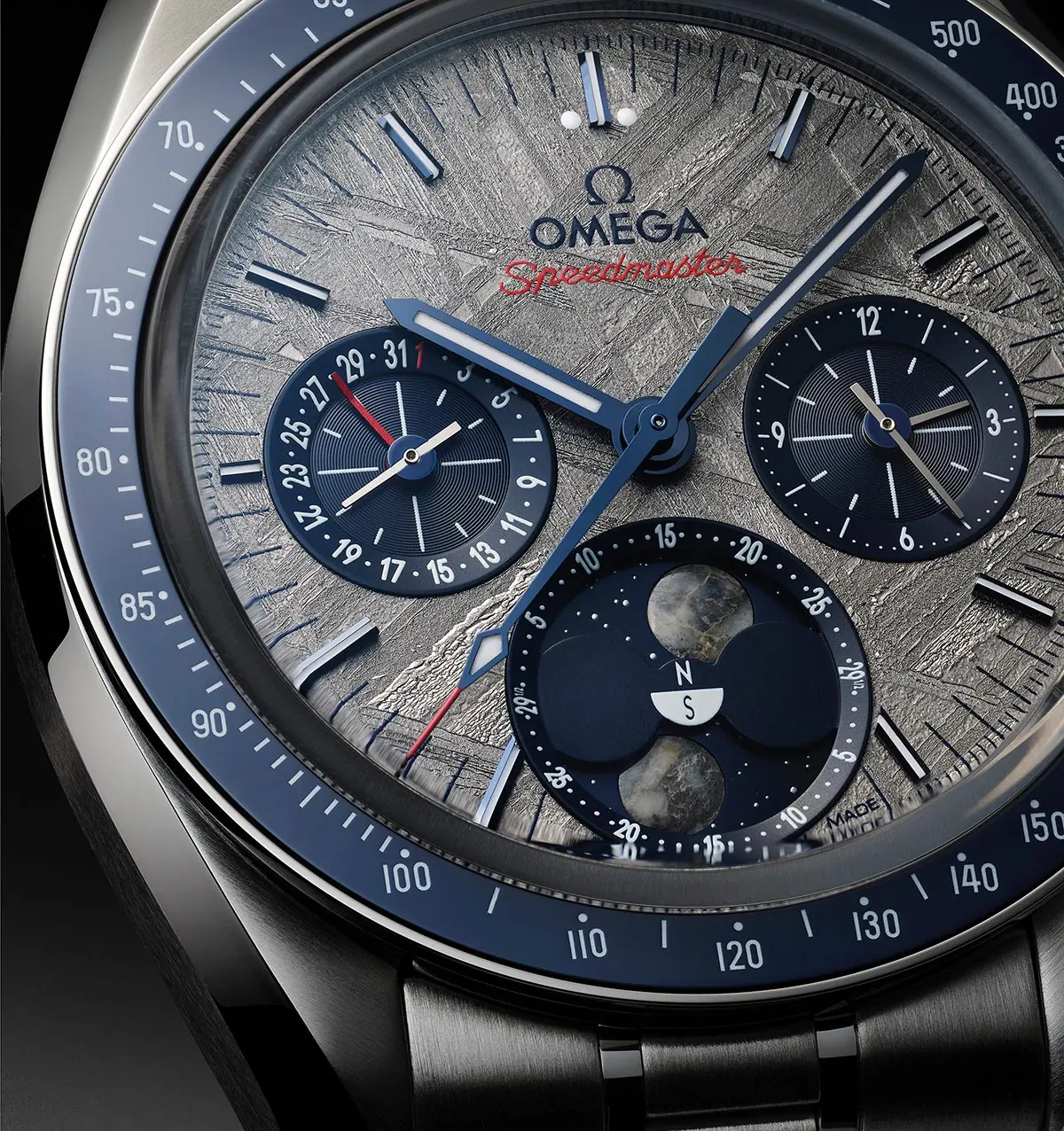
Different diameters, steel, titanium, ceramic, gold, steel, leather or rubber straps, restrained or boldly coloured dials, automatic or manually wound movements… Omega rarely seems to know when to stop once it has a good idea.
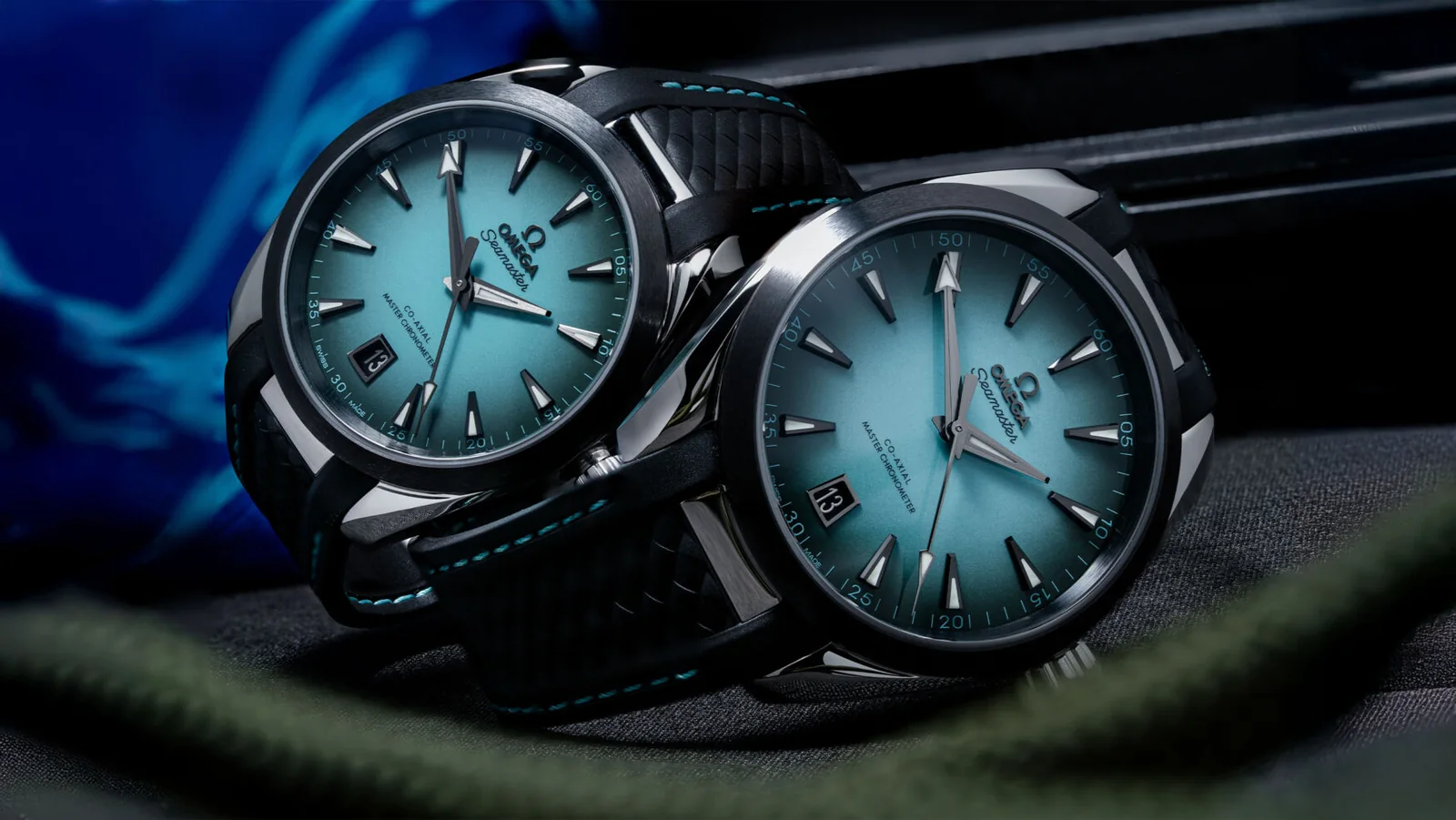
This generosity can make the range feel somewhat labyrinthine. It also allows you to find less obvious models.
The Aqua Terra is probably the best example. It lives in the media shadow of the Speedmaster and Seamaster Diver 300M, even though it can be an excellent everyday watch. Sporty enough not to fear a weekend away, restrained enough to wear with a shirt, it avoids much of the folklore attached to the brand’s two major icons.
The De Ville collection covers a different territory again. The Constellation, meanwhile, retains its highly distinctive aesthetic, complete with its famous claws on the case. You can love it or hate it. At least something is happening.
Let’s talk about depreciation, since everyone is thinking about it
Here is the passage you rarely find in texts designed to sell you a new watch.
An Omega bought at retail can lose a serious amount of its value on the secondary market.
As of 22 September 2026, WatchCharts calculates an average market value 30.8% below retail for the Omega watches in current production covered by its index. By comparison, the same tool currently gives Rolex an average value 16.2% above retail. Situations vary enormously by reference, of course. Certain Speedmaster models even escape this logic entirely.
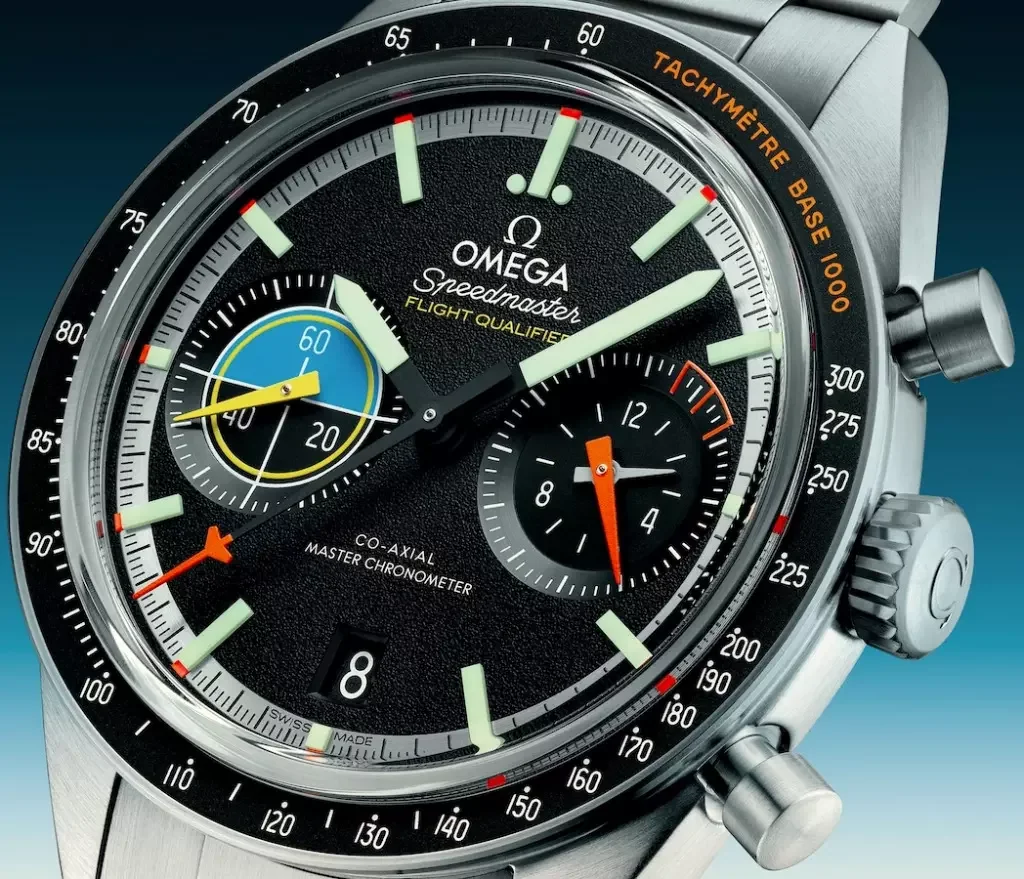
Take the Moonwatch Professional 310.30.42.50.01.002. WatchCharts currently lists it at $9,000 at US retail, with an estimated market value of around $6,500. The difference stings a little.
Should you therefore give up on buying a new Omega? Everyone can do what they like with their money. This depreciation simply deserves to be part of the equation.
It also creates a rather pleasing opportunity for the enthusiast willing to buy pre-owned. The secondary market is full of relatively recent Omegas offered at considerably gentler prices. Bad news for someone looking to sell their watch six months after buying it becomes excellent news for someone arriving six months later.
The Speedmaster was also among the models we included in our selection of the most sought-after watches on the pre-owned market. Its history and popularity remain strong, even when its second-hand price falls below the official retail price.
Buying new nevertheless retains some very tangible advantages: the manufacturer’s warranty, advice and the opportunity to try the watch in a boutique, access to the latest references, and a clearly identified point of contact for after-sales service. On the pre-owned side, the saving should not make you overlook the watch’s provenance and condition: buying through a professional able to authenticate, inspect and guarantee it helps ensure that a bargain does not turn into an unpleasant surprise.
An Omega is not a financial investment
Watchmaking has experienced some strange years. Certain watches had become portfolio assets with hands on them. We looked at Chrono24 before looking at our wrists, and an increase in market value sometimes seemed to generate more excitement than the movement inside the case.
Omega brings us back down to earth a little.
Buying a new Seamaster or Aqua Terra with the intention of selling it quickly at a profit seems adventurous to me. The buyer planning to wear it for ten years is already asking a different question.
A watch also retains a kind of value that WatchCharts measures rather poorly: the years spent on the wrist.
I know, the sentence comes dangerously close to watchmaking romanticism. Let’s allow ourselves this one.
Omega’s problem may be abundance
Rolex knows how to make people wait. Patek Philippe knows how to make people dream of watches that almost nobody will be able to buy. Some independent manufactures produce a few hundred pieces and live very well with that scarcity.
Omega, by contrast, produces a lot, communicates a lot and creates a lot of variations.
The mechanics of desire are inevitably different as a result. Seeing a new Speedmaster appear regularly can remove some of the solemnity from the arrival of the next one. The MoonSwatch family amplified the phenomenon further by turning the Speedmaster’s silhouette into a pop object sold in an impressive number of versions.
You can regret that. You can also consider that a watch does not have to be impossible to find in order to be desirable.
The watch industry has accustomed us sufficiently to waiting lists, allocations, references reserved for the best customers and watches admired in shop windows but unavailable to buy. Walking into a retailer, trying on several models and leaving with the one you prefer ultimately has a rather revolutionary charm in 2026.
So, why buy an Omega?
For the Speedmaster, if you want to own one of the rare chronographs whose silhouette has crossed the decades without needing to be explained.
For a Seamaster, if you like Omega’s very particular way of designing a dive watch.
For an Aqua Terra, if you are looking for something more discreet and probably less recognisable from ten metres away.
For the Co-Axial and Master Chronometer calibres, if mechanics and technical performance genuinely matter to your choice.
The pre-owned market also deserves close attention. The depreciation that penalises the new-watch buyer opens up remarkable possibilities for anyone willing to accept a watch that has already spent a few months or years on someone else’s wrist.
There remains Omega’s sometimes overbearing communication, a range in which it is easy to get lost and the feeling that every historical event will sooner or later receive a new reference. I can live with that perfectly well.
After all, Omega has a Speedmaster, a Seamaster, the Co-Axial, technically serious movements and nearly two centuries of watchmaking history. They could almost leave the Moon alone for five minutes.