How to Recognize a Watch That Has Been Over-Polished
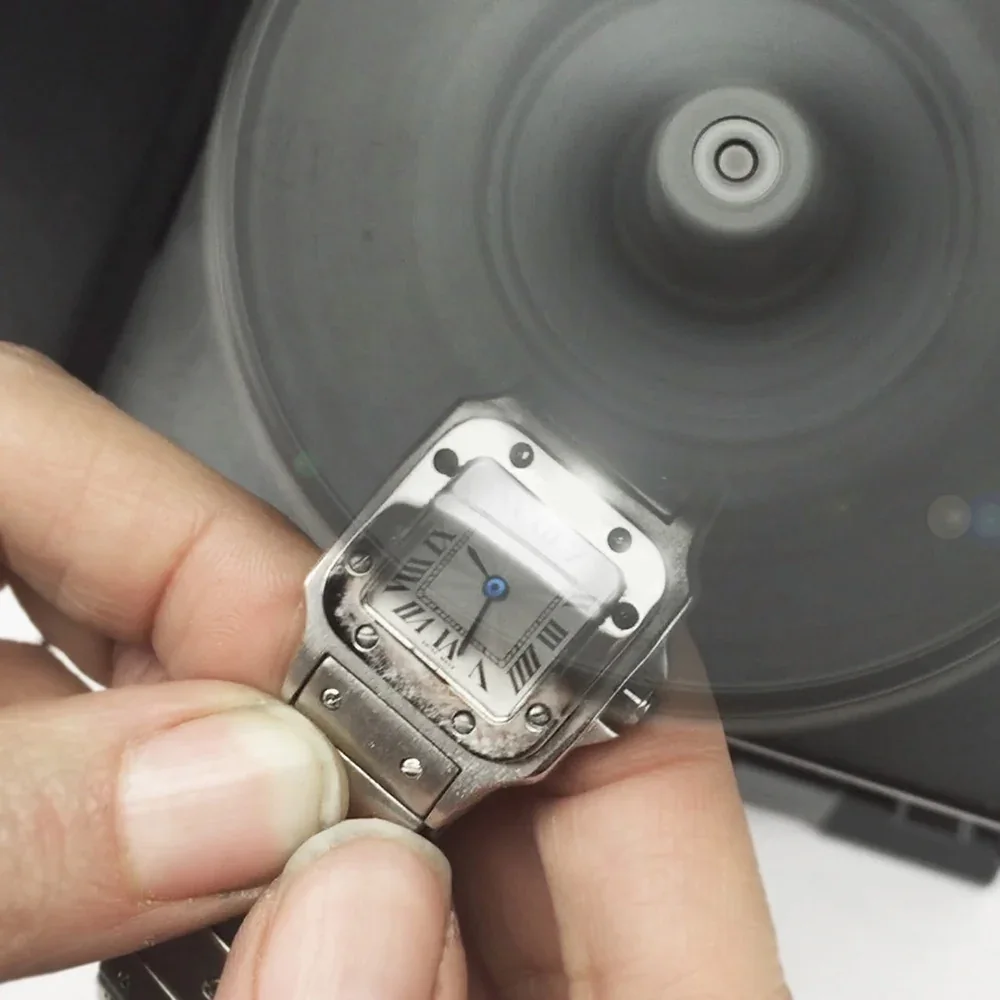
A watch may have been cleaned, serviced and worn with care. It may also have been put to the wheel with the enthusiasm of a hurried bodywork specialist. In both cases, the case will shine. But only the latter will have lost part of its identity. Knowing how to recognise a watch that has been over-polished is therefore essential, particularly when it comes to a vintage piece whose value rests as much on its condition as on its history.
Polishing is not inherently a bad thing. An old watch may need light refinishing after several decades of scratches. The problem begins when the process no longer merely erases the marks of time, but alters the geometry of the case. Edges become soft, chamfers disappear and the transitions between surfaces lose their sharpness. The watch remains functional, and may even look very attractive at first glance. It is simply no longer quite what it should have been.
Polishing: an aesthetic but irreversible process
Polishing a case involves removing a thin layer of metal in order to eliminate scratches and recreate a clean surface. Depending on the material, the workshop will work with steel, gold, platinum or titanium, using suitable abrasives and polishing wheels. A brilliant finish requires a different treatment from a satin or pebbled surface.
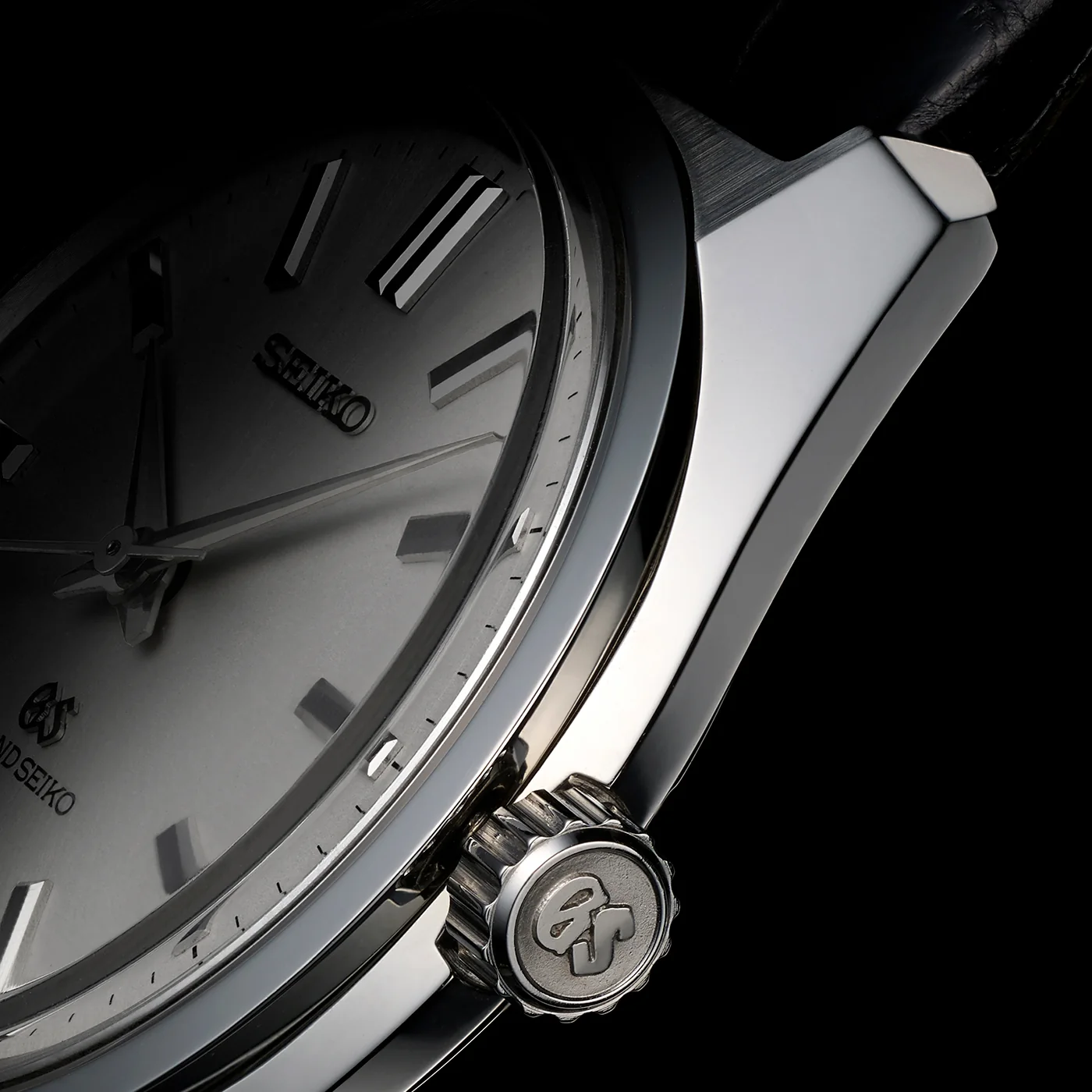
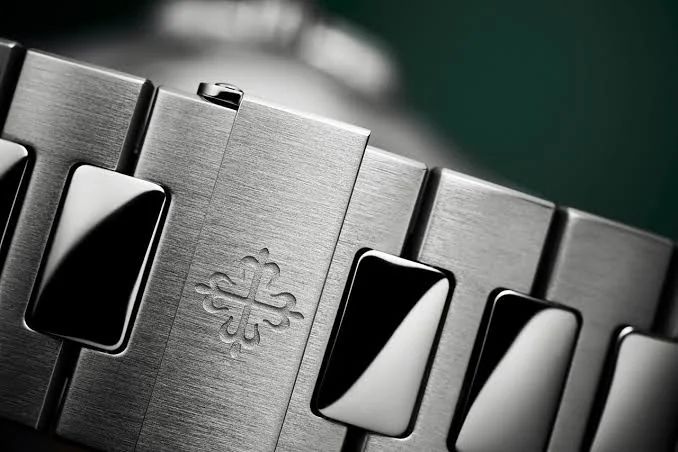
On a new case, the surfaces are precisely defined. The upper face may be satin-brushed, the side polished, while a very narrow chamfer connects the two. These lines are not merely decorative. They give the case its tension, silhouette and, in some instances, much of its aesthetic signature.
The removed metal does not return by magic. A skilled workshop can sometimes rebuild an edge using laser welding and then re-machine the area. But this is neither a trivial nor invariably desirable intervention. In most cases, excessive polishing is therefore a permanent alteration, even if the watch looks cleaner in a display cabinet.
The first clue: edges that have lost their sharpness
The most revealing sign of an over-polished case is often visible on its lugs. On a well-preserved watch, they generally have crisp profiles, with a clear separation between the upper surface, the side and the chamfer. On a watch that has been worked on too heavily, these transitions become rounded.
The light then becomes diffuse. It no longer “breaks” across a crisp edge, but glides over a blunted form. The case appears softer, more compact and sometimes almost swollen. This impression is particularly noticeable on vintage sports watches, whose lugs and crown guards rely on pronounced angles.
The lugs should be examined from the front and side
Look at the watch at eye level, then tilt it slightly beneath a light source. The lugs should retain a certain thickness and a coherent shape. An overly rounded tip, a narrowed end or a chamfer reduced to a simple line may indicate several successive polishing operations.
You should also compare all four lugs. A perfectly symmetrical case is rare after decades of wear, but a marked difference between the two sides may reveal careless refinishing. The professional may have had to remove more metal from one area to eliminate a deep scratch. The result may be clean, but unbalanced.
The chamfer: the small line that tells the whole story
A chamfer is an angled surface connecting two planes of the case. On certain vintage watches, particularly angular-cased models, it is a genuine design element. Its width, angle and continuity vary according to the brand and generation.
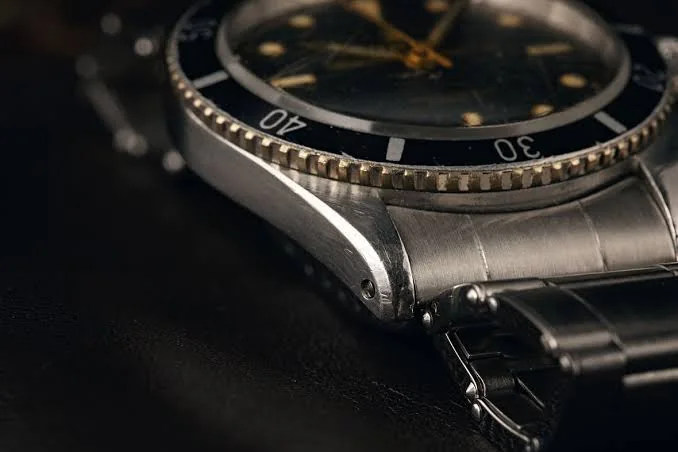
An original chamfer is not necessarily broad or particularly dramatic. It should, however, remain even and follow the geometry of the case. When it disappears on the lugs, widens abruptly near the side or has a different thickness from one side to the other, the polishing has probably altered the original structure.
Photography in raking light is particularly useful. It reveals overlapping surfaces, angles that lack definition and areas where the satin finish has been redone without respecting the original construction. By contrast, an image taken flat under uniform lighting conceals much of this damage.
Satin finishes should not look like fog
Polishing a case does not concern only its glossy surfaces. Satin finishes can also be mistreated. A correctly brushed finish has regular striations running in a consistent direction. They stop cleanly where they meet a polished surface or an edge.
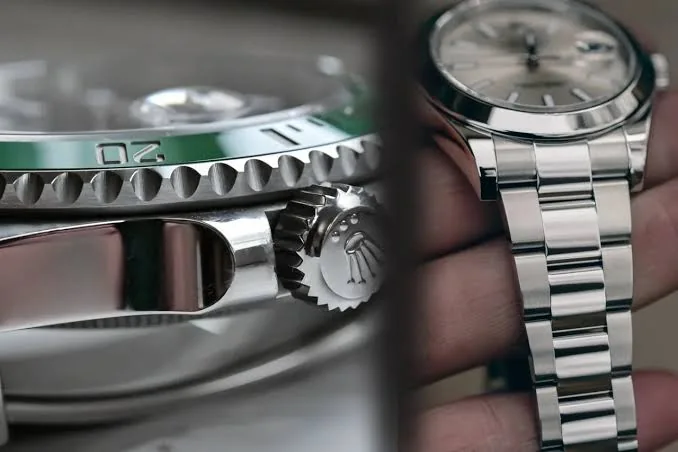
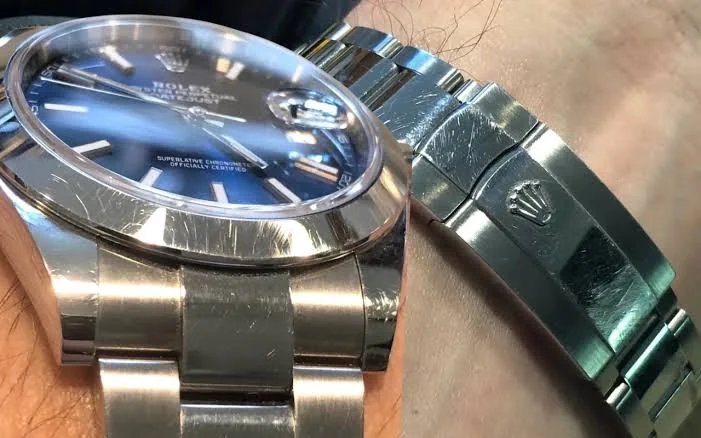
After overly vigorous intervention, the brushing becomes blurred, irregular or too broad. The striations may cross an edge that should remain crisp, spill over onto a polished area or change direction between different parts of the case. This is common on case sides and bracelet links.
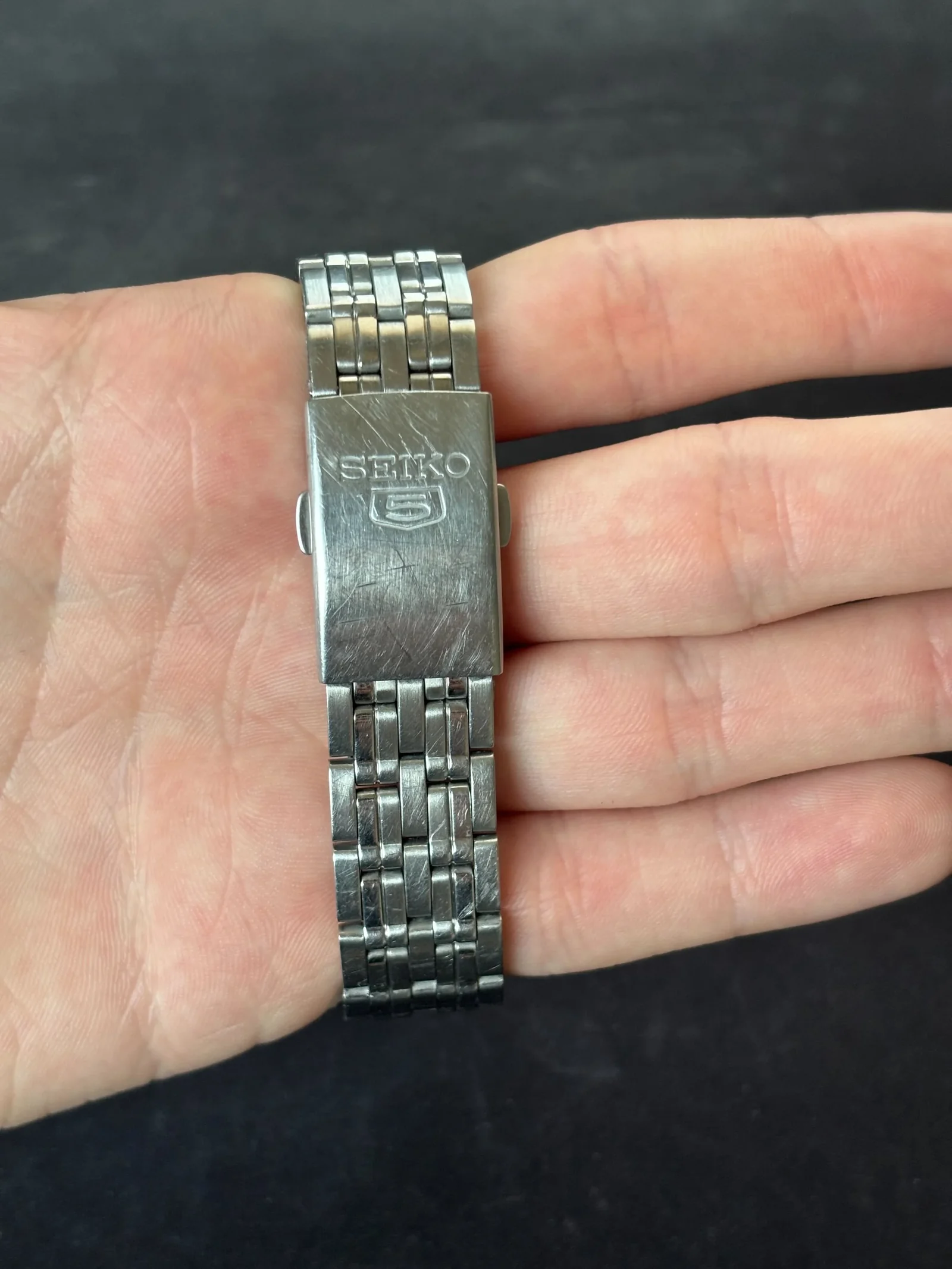
A highly polished bracelet is not necessarily a well-maintained bracelet. Steel links often alternate between satin-brushed surfaces and mirror polishing. If the separations have disappeared, the link edges are rounded or the bracelet seems thinner than it should be, several refinishing operations may have removed a significant amount of metal.
The bezel, guards and caseback offer further clues
The bezel deserves particular attention. On a watch with a fixed bezel, its edge should retain a regular shape and a precise relationship with the case middle. Excessive polishing can reduce its apparent diameter, round off its edges or alter the component’s height. On a rotating bezel, you should also check that the graduations, clicks and transitions between finishes remain coherent.
Crown guards are equally revealing. They should retain their volume and symmetry. Very thin guards, whose contours are almost blended into the side of the case, are rarely a good sign. The same applies to the shoulders surrounding the pushers on a chronograph.
On the reverse, inspecting the engraving can be revealing. A reference, serial number or logo that is too shallow, with softened contours, may have been partially erased. However, do not confuse a faint original engraving with one worn down by polishing. The brand’s archives, photographs of comparable models and the overall coherence of the case will help resolve the question.
Pay attention to dimensions, but avoid jumping to conclusions
Comparing the manufacturer’s published dimensions with those of the watch is useful, but not sufficient. A variation of one-tenth of a millimetre may result from the measurement method, the presence of a bezel, a gasket or manufacturing tolerances. By contrast, a noticeably reduced thickness combined with very rounded lugs and weakened engravings constitutes a serious body of evidence.
Vintage watches did not all leave the factory with exactly the same profile. Some underwent production changes, featured cases made by different subcontractors or received service finishes approved by the brand. A verdict based on a single detail should therefore be avoided. In watchmaking, the evidence must be coherent.
Factory polishing, service polishing or extensive restoration
The phrase “unpolished” has become a commercial argument, sometimes used with bewildering freedom. A watch may have been cleaned and lightly satin-finished without undergoing any major transformation. Conversely, a case described as “never polished” may show traces of earlier intervention that are difficult to identify if the work was carried out carefully.
Service polishing performed by the brand may preserve the overall geometry while slightly altering the edges. A more extensive restoration may go as far as recreating certain surfaces, reworking the chamfers or using laser welding. It is not necessarily to be condemned, particularly if it is documented. But it should not be presented as original condition.
For a collector, transparency matters more than a veneer of perfection. A watch restored with an invoice, photographs taken before the intervention and a precise description may be preferable to a supposedly untouched piece whose case has been discreetly softened.
How to inspect a watch before buying it
- Examine the case under raking light, never solely beneath display-case lighting.
- Observe all four lugs from the front, side and caseback.
- Check the continuity of the chamfers and the sharpness of the transitions between polished and satin finishes.
- Compare the symmetry of the crown guards, pushers and case sides.
- Check the depth of the engravings, without drawing an isolated conclusion from them.
- Compare the dimensions with reliable photographs and data for the same model.
- Ask for the service history, invoices and any photographs taken before restoration.
- Have the watch examined by an independent watchmaker if its price justifies the precaution.
An expert does not simply look at whether the watch shines. They study how light travels across the case, the logic of its surfaces, the remaining thickness and the coherence between the case middle, caseback, bezel and bracelet. It is an almost architectural reading.
Should you buy an over-polished watch?
It depends on the watch and the price. For a common, reliable model intended to be worn, somewhat heavy-handed polishing is not necessarily a deal-breaker. A watch is meant to live, and a scratch is not a national tragedy. For a rare piece, a sought-after reference or a vintage chronograph, the situation changes: the case geometry may represent a significant part of the value.
The price should then reflect the watch’s true condition, not the artificial gleam of its presentation. A watch with intact edges, even one marked by time, will often be more desirable than a shining example whose case has lost its proportions. Experienced collectors know this: patina should be respected; missing metal cannot be haggled back into existence.
The best rule can be summed up in a few words: look for coherence. An honestly worn watch, with visible marks but lines that remain crisp, tells a credible story. A “perfect” watch with rounded lugs, absent chamfers and weak engravings mainly tells you that it has met a particularly motivated polisher.