Rolex Perpetual Padellone: Annual Calendar, Moon Phase and Exhibition Caseback
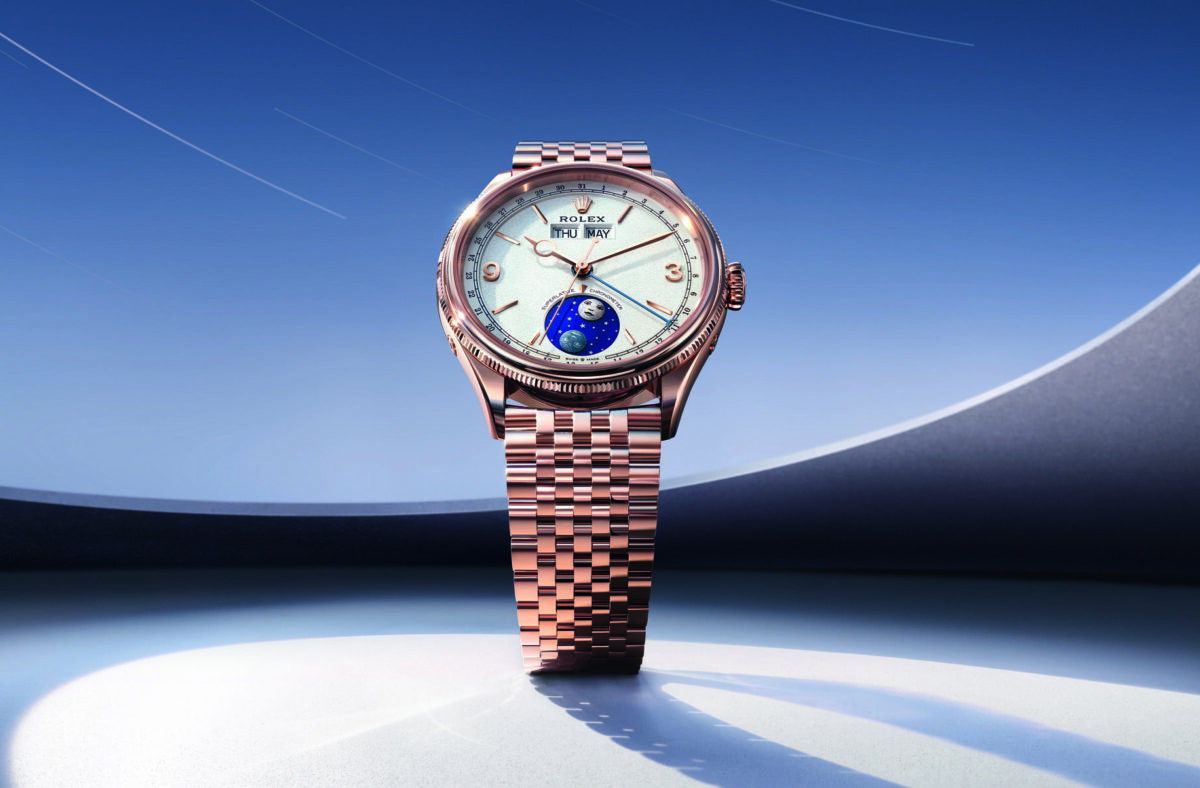
With the Perpetual Padellone, Rolex unveils one of its most ambitious creations of recent years. An instantaneous annual calendar, a meteorite moon phase, a new automatic calibre operating at 5 Hz and a transparent caseback: this new model moves decisively away from the codes of the sporty Oyster watches with which the Geneva manufacture is so often associated.
The Padellone becomes the second model in the Perpetual collection, launched in 2023 with the 1908. It also takes its name from a historic reference that is particularly sought after by collectors: the Rolex 8171, produced between the late 1940s and early 1950s.
Yet behind its highly classic appearance lies one of the most modern movements currently being developed by Rolex.
The Rolex Padellone refers to the legendary 8171
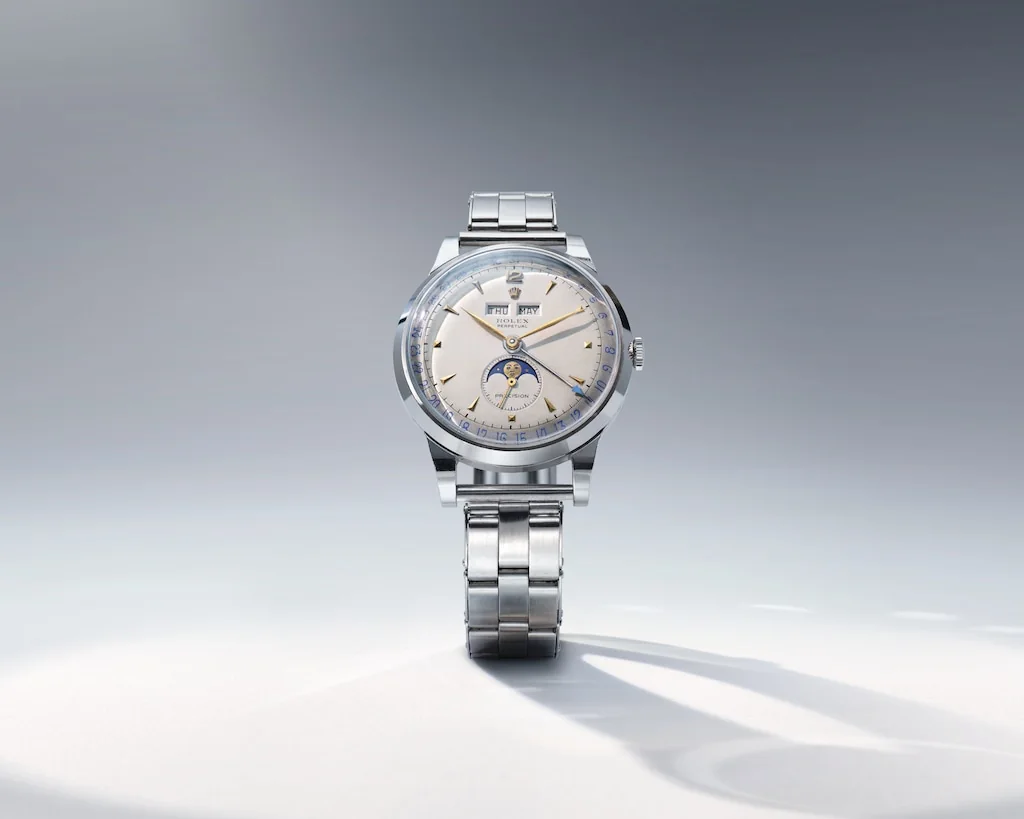
The name “Padellone” is not a recent Rolex invention. Collectors have long used this nickname to refer to the reference 8171, a complete-calendar watch produced more than 70 years ago.
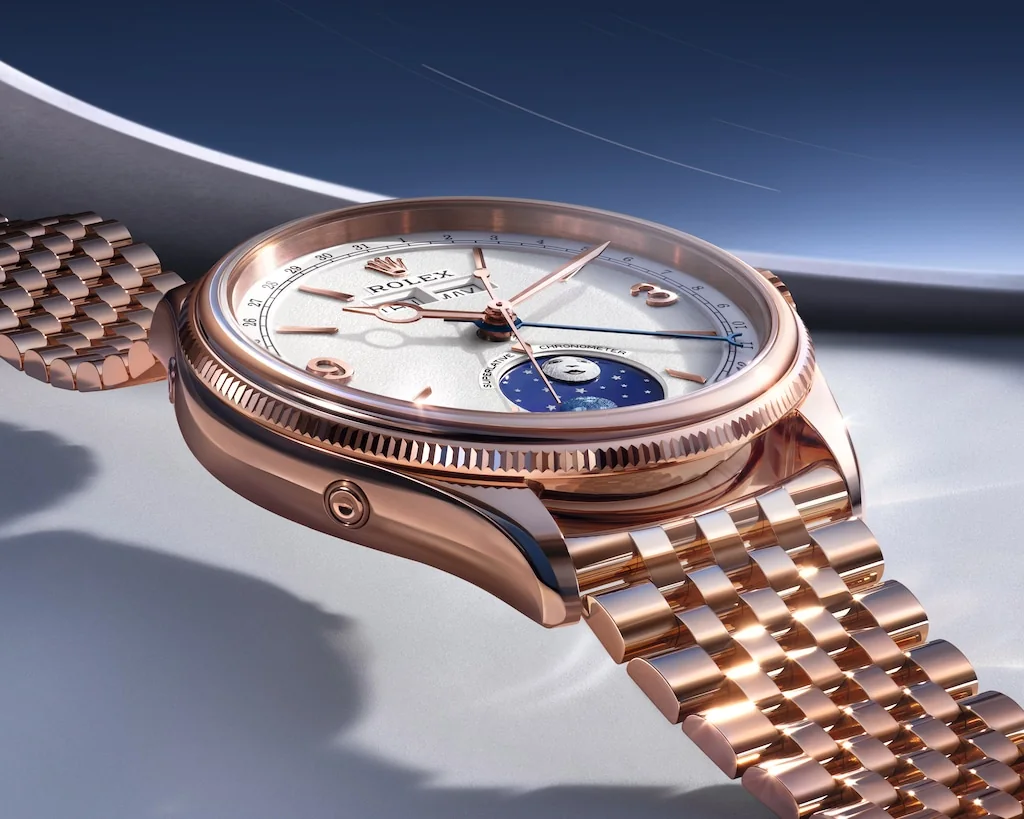
The new Perpetual Padellone incorporates several elements that directly evoke its predecessor: the day and month displays at 12 o’clock, the peripheral date indicated by a central hand and, above all, the moon phase positioned in the lower part of the dial.
Rolex is not, however, attempting to reproduce an vintage watch identically. The case construction, movement and entire calendar mechanism fully belong to the brand’s contemporary watchmaking.
The link with the historic reference is most apparent in the proportions, the dial layout and a few deliberately retro details, notably the faces depicted on the representations of the Moon.
A particularly versatile 39 mm case
The Perpetual Padellone adopts a 39 mm-diameter case, with a thickness of 12.20 mm and a lug-to-lug width of 20 mm.
This diameter is an interesting choice for a dress watch equipped with numerous complications. It remains sufficiently substantial on the wrist to accommodate an information-rich dial, while retaining much more restrained proportions than many contemporary watches.
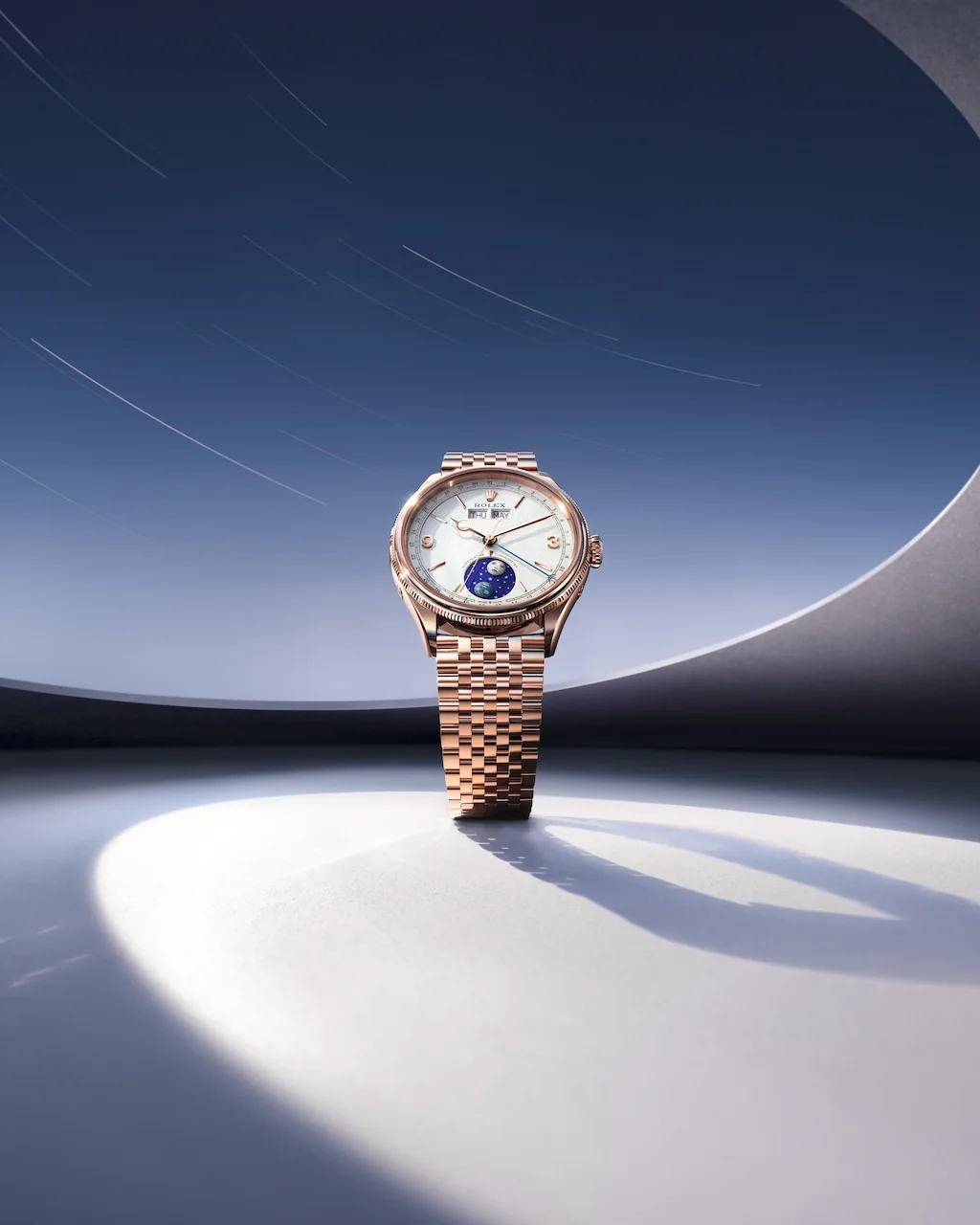
At 39 mm, the Padellone can also perfectly well be considered a men’s watch as well as a women’s one. The choice between Everose gold, platinum, the Settimo metal bracelet or the various alligator versions will probably alter its presence on the wrist more than its diameter itself.
The case design remains visually quite slim. Rolex uses a bezel whose upper section is domed, while its lower section features delicate fluting.
The sapphire crystal is also domed and benefits from a double-sided anti-reflective treatment. Water resistance reaches 50 metres.
Four correctors are positioned on the sides of the case middle. Using the supplied stylus, they allow the month, date, moon phase and day to be adjusted separately.
A moon phase that occupies a genuine place on the dial
The moon-phase disc positioned at 6 o’clock immediately draws the eye.
Rolex has chosen not to use the traditional display in which part of the lunar disc gradually disappears behind an aperture in the dial. Here, the blue enamelled disc remains fully visible.
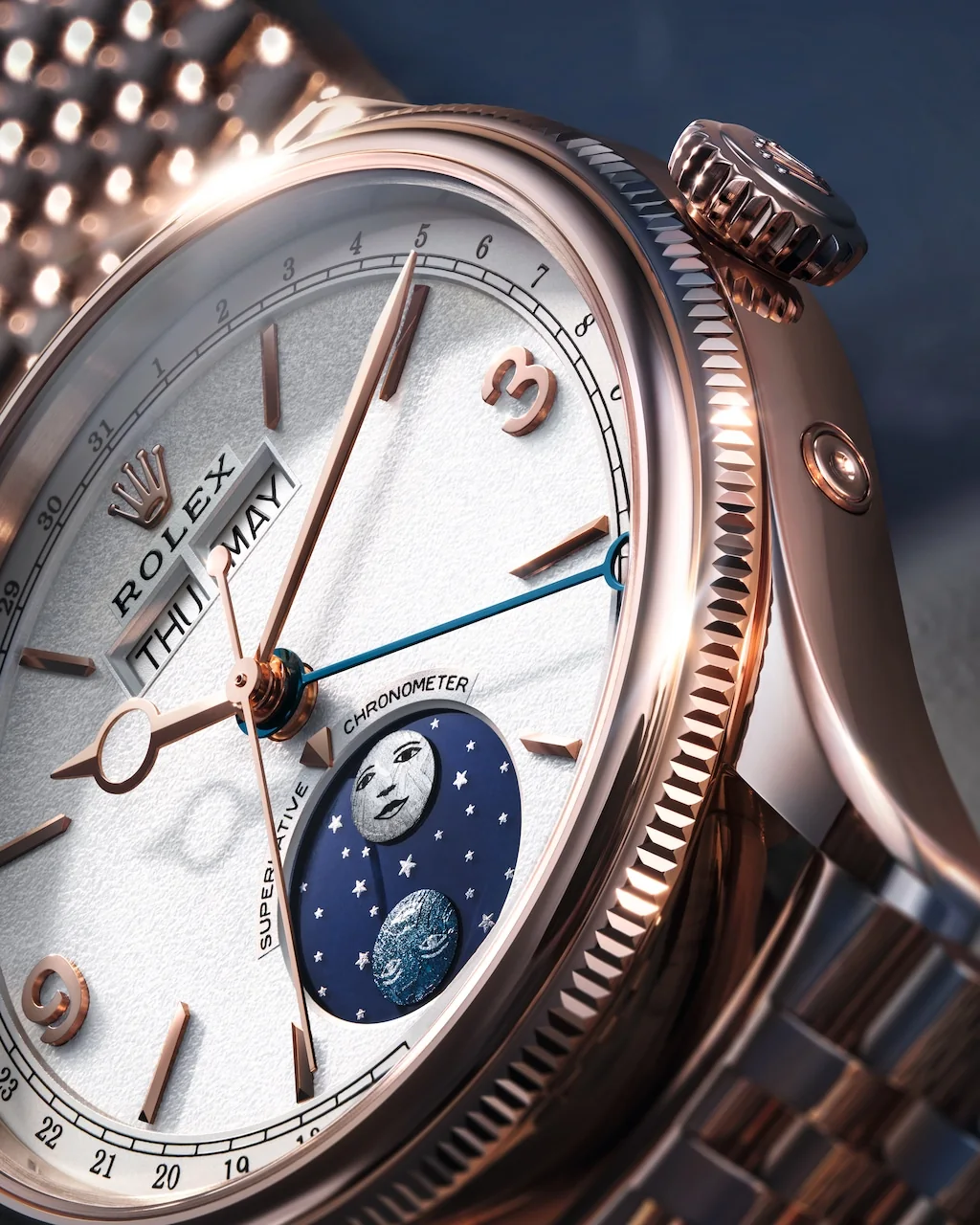
It completes one full rotation in 29.53 days, the average length of a lunar month.
Two representations of the Moon move across this disc. The first corresponds to the full moon. The second represents the new moon. They successively position themselves in front of a small triangular marker located above the disc.
Rolex uses meteorite for both celestial bodies. The new moon also receives a dark blue PVD treatment, while the silver stars scattered across the disc are applied by pad printing.
Each moon also has a face.
This detail directly references certain historic depictions of the moon phase and, more specifically, that of the original Padellone. The result gives this Rolex a rather unusual appearance within the brand’s modern production.
Day, date and month change simultaneously at midnight
The Perpetual Padellone is a watch with an instantaneous annual calendar.
The day and month appear in two separate windows positioned at 12 o’clock. The indications are in English. The date is displayed on a peripheral scale by means of a long blue central hand tipped with a crescent moon.
The system’s main interest, however, lies beneath the dial.
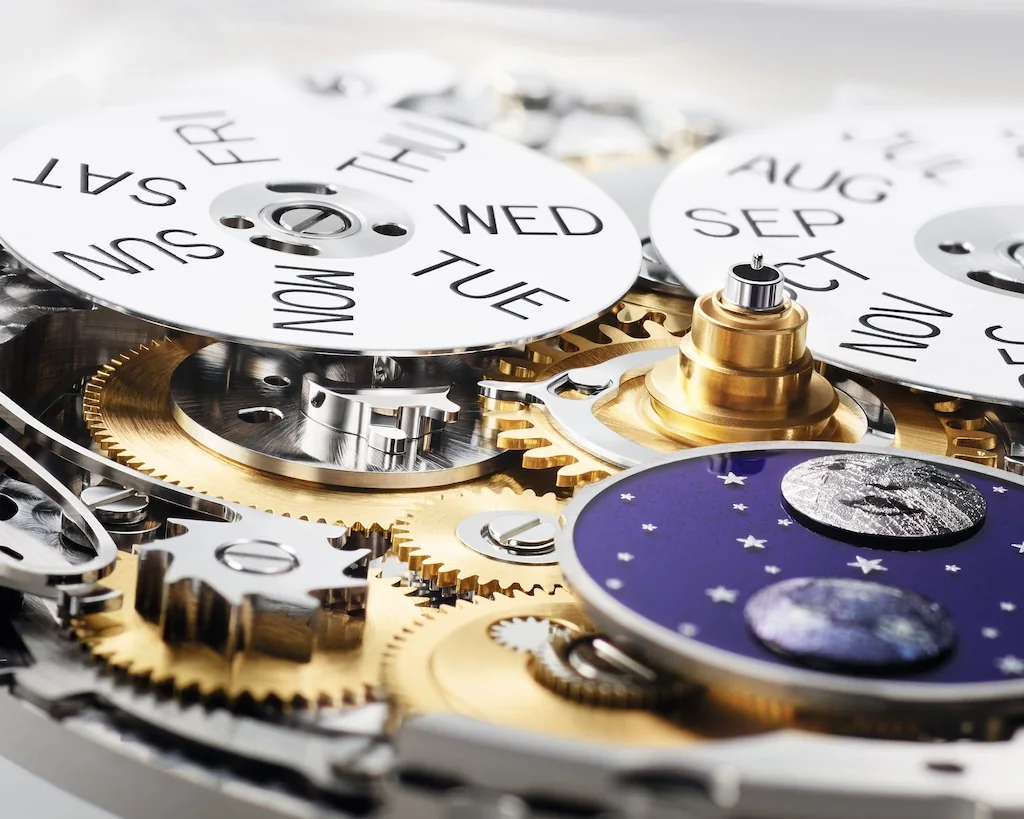
The calendar automatically accounts for the difference between 30-day and 31-day months. Only one correction is required each year, when February changes to March.
Rolex combines this annual adjustment with an instantaneous changeover of the indications: the day, date and month switch together at midnight.
This simultaneous transition avoids the sometimes lengthy period during which the various calendar displays begin changing progressively on certain movements.
The design of this mechanism has resulted in the filing of a specific patent.
Haplos: an annual calendar with just two additional components
Rolex has named Haplos the system responsible for distinguishing between 30-day and 31-day months.
Its construction relies on just two additional parts associated with the date mechanism: a driving finger and an annual lever.
The calendar programming does not require a complex set of additional cams either. Rolex has integrated it into the underside of the month disc. This indicates the length of the current month to the annual lever.
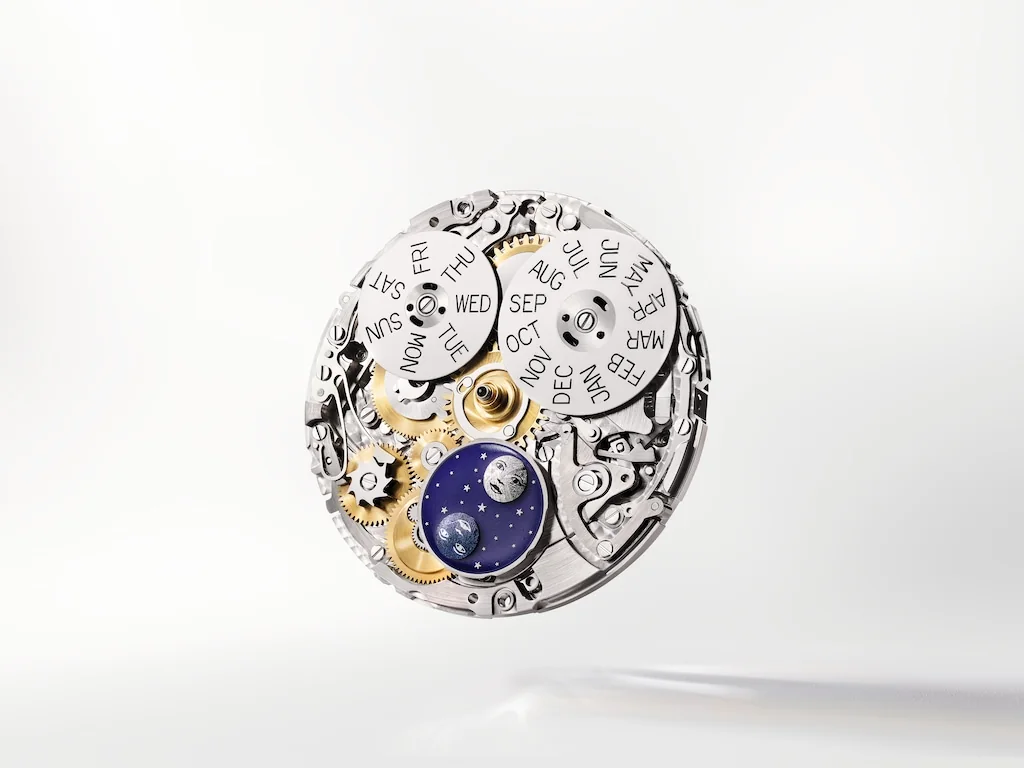
This architecture is one of the most interesting technical features of calibre 7190.
The mechanism also retains the ability to correct the various calendar indications at any time, with Rolex specifying that these adjustments do not compromise the movement’s integrity.
The new Rolex calibre 7190 operates at 5 Hz
The Padellone introduces calibre 7190, a self-winding mechanical movement developed and manufactured by Rolex.
Its architecture derives from calibre 7135, introduced in 2025 with the Land-Dweller. The two movements share several technologies and, above all, a high frequency of 36,000 vibrations per hour, or 5 Hz.
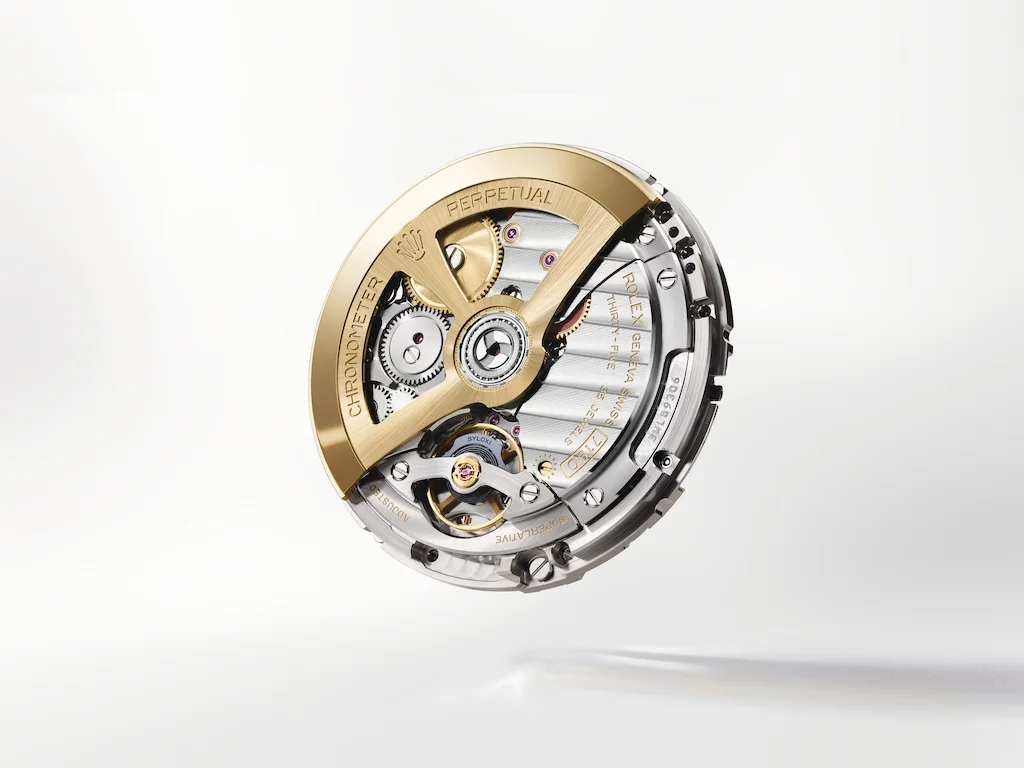
Calibre 7190 contains 35 jewels and offers approximately 66 hours of power reserve.
Rolex states that the movement benefits from 30 patent filings, two of which are exclusive to it.
Its regulating system combines several of the manufacture’s recent developments: a Syloxi silicon hairspring, a ceramic balance staff, a variable-inertia balance and optimised Paraflex shock absorbers.
The Syloxi hairspring used in this calibre has particularly thick coils to achieve the rigidity required for operation at 5 Hz.
The balance staff is made from a high-tech ceramic developed by Rolex. The brand is thus seeking to reduce the movement’s sensitivity to magnetic fields, a factor that has become increasingly important in the design of its recent calibres.
The Dynapulse escapement continues its development
Calibre 7190 is also fitted with the Dynapulse escapement, introduced with the Land-Dweller.
Made from silicon, this sequential-distribution escapement notably uses an impulse rocker, distribution wheels and a transmission wheel.
Its construction is intended to achieve high energy efficiency while maintaining reliable operation.
Silicon also gives it strong resistance to magnetism.
The combination of a 5 Hz frequency, the Syloxi hairspring, the ceramic balance staff and Dynapulse demonstrates just how far Rolex has evolved its technical approach in recent years.
Thus, beneath its classically inspired dial, the Padellone uses an architecture far removed from that of the reference 8171 from which it takes its name.
A transparent caseback to view calibre 7190
The transparent caseback is another important feature of the Perpetual Padellone.
For decades, Rolex primarily used solid casebacks, even on watches whose movements nevertheless offered genuine technical interest.
The Perpetual collection takes a different approach by “stripping down” for our viewing pleasure. Here, the sapphire crystal caseback allows the wearer to observe an openworked yellow-gold oscillating weight as well as bridges decorated with Rolex Côtes de Genève.
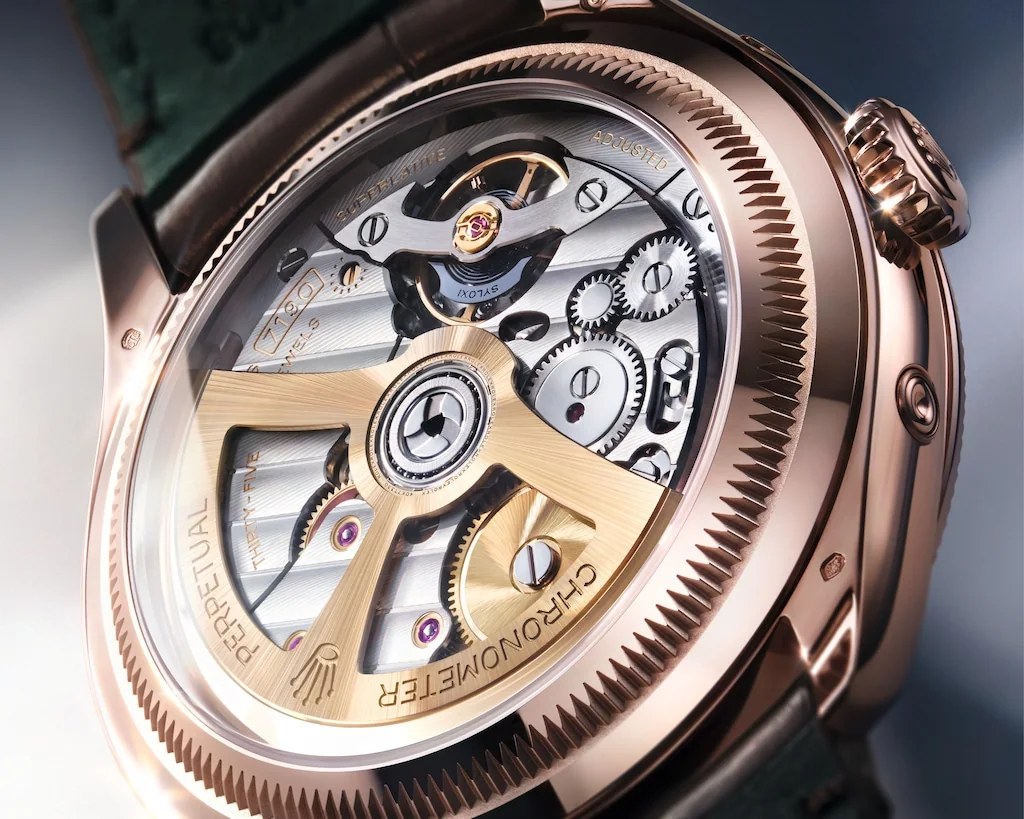
This finish differs from traditional Côtes de Genève through the addition of a fine polished groove between each stripe.
The calibre’s architecture therefore takes on a much greater aesthetic importance than it traditionally did at Rolex. This choice seems particularly coherent on a watch that openly embraces its place in dress watchmaking and the world of complications.
Three versions of the Rolex Perpetual Padellone
Rolex currently offers the Padellone in three configurations.
The first combines an 18-carat Everose gold case, an intense white grained-finish dial and the Settimo metal bracelet.
A second version features the same Everose case and white dial, but is fitted with a matte brown alligator-leather strap.
The third uses a 950 platinum case, paired with the ice-blue dial traditionally reserved by Rolex for platinum watches. It is fitted with a matte black alligator-leather strap.
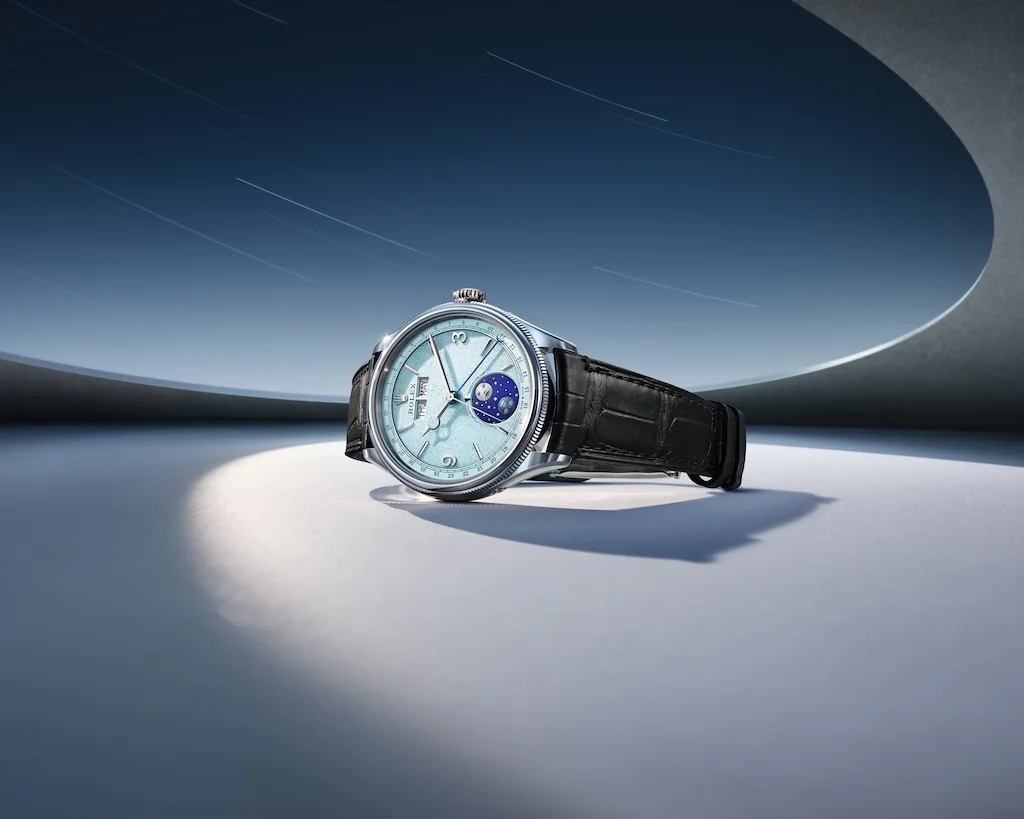
The dials feature a grained finish across their main section and a fine satin finish around the periphery.
The hour markers and the numerals 3 and 9 are made from rose gold on the Everose references and white gold on the platinum version.
The Settimo bracelet gives the Padellone a different character
The Everose version fitted with the Settimo bracelet has a distinctly different identity from the two leather-strap variants.
Rolex introduced this bracelet in 2025 on the Perpetual 1908.
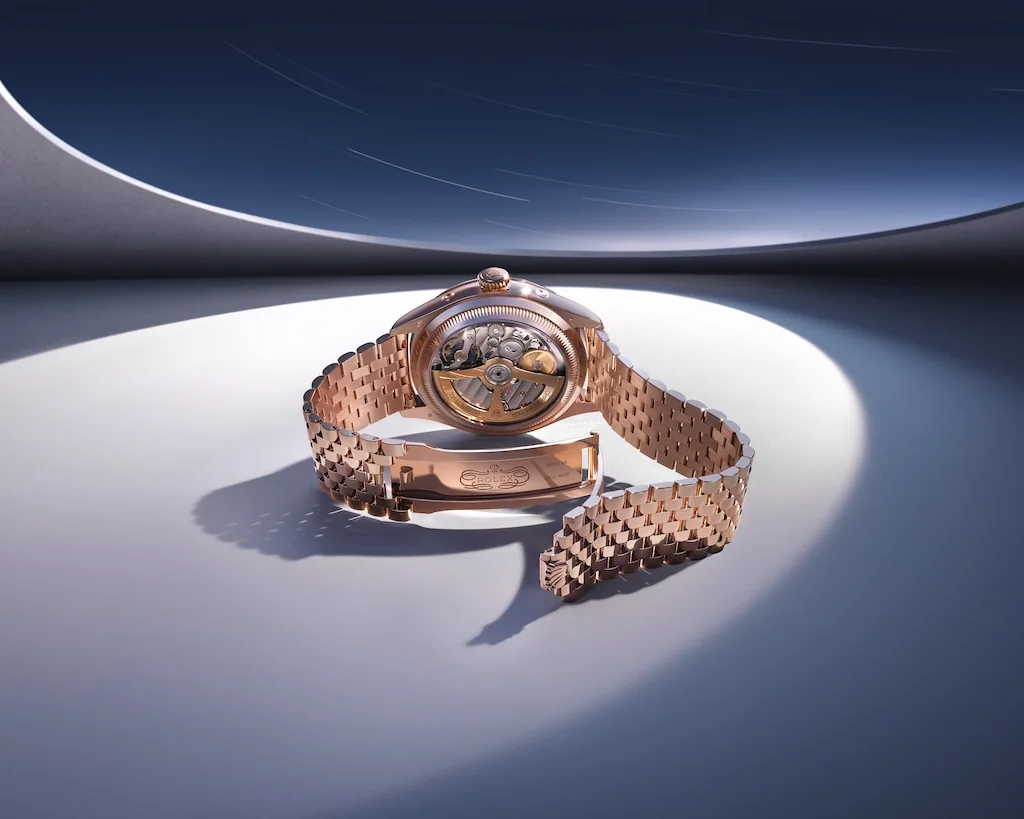
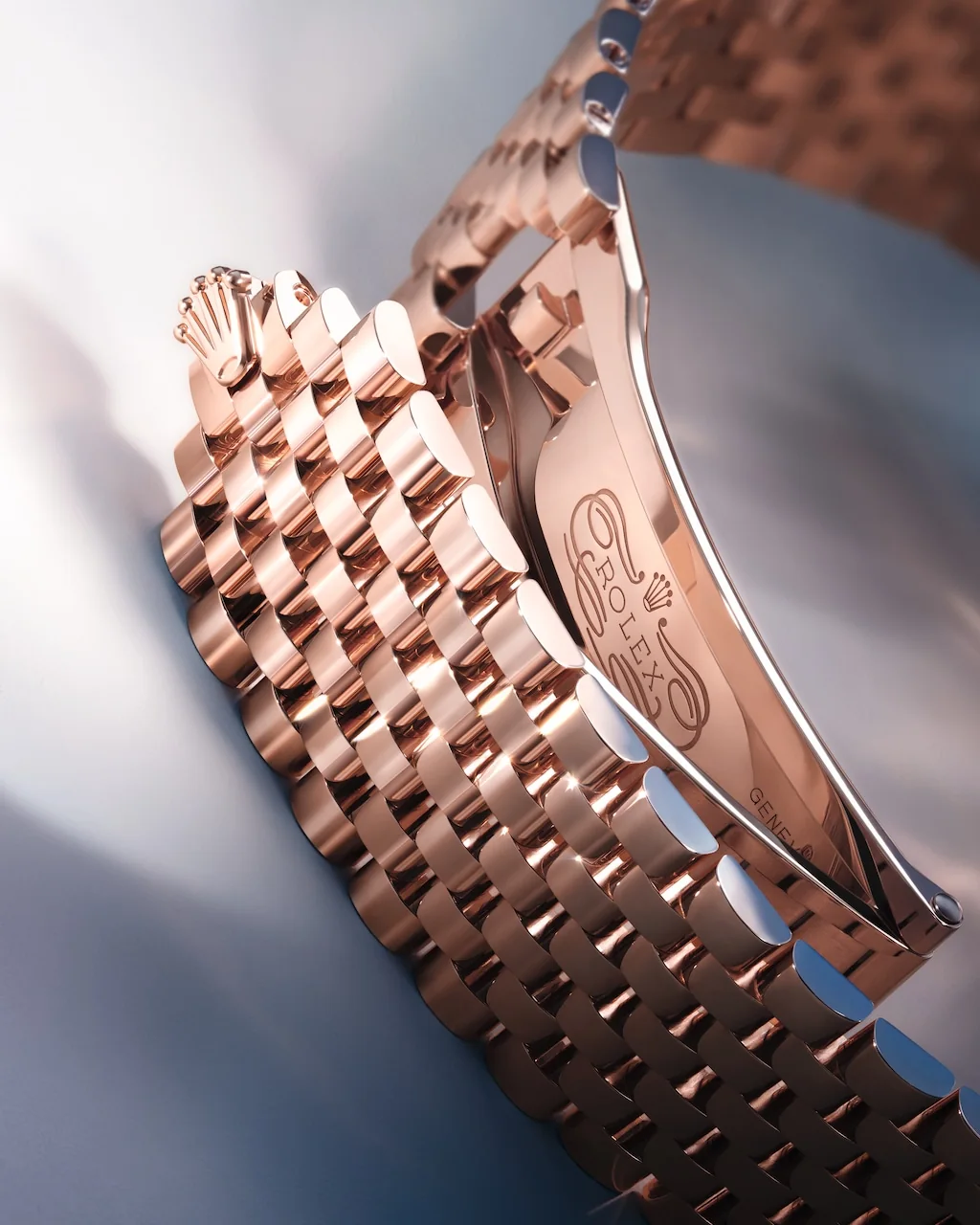
Its construction is based on links made up of seven slightly domed, fully polished small links. The multiplicity of elements gives it a more supple appearance, closer to the jewellery bracelets fitted to certain vintage watches.
The Settimo bracelet also features a dedicated attachment system for the case middle and an invisible Crownclasp.
The leather versions, meanwhile, use matte alligator: brown with the Everose case and black with the platinum model. Rolex adds a green calfskin inner lining and a Dualclasp with a double folding clasp.
The Perpetual collection takes on a new dimension
Rolex launched the Perpetual collection in 2023 with the 1908. This first watch already allowed the brand to reconnect with a much more classic aesthetic, far removed from the Submariner, GMT-Master II, Explorer and Daytona models that occupy such a prominent place in its catalogue.
The Padellone considerably broadens this direction.
The collection is no longer limited to offering a dress watch with a visible movement. It now welcomes an annual calendar, an elaborate moon phase and a calibre that brings together several of Rolex’s most recent technologies.
This combination of a design inspired by a 1940s reference and entirely contemporary mechanics gives the Perpetual Padellone a rather distinctive position within the current range.
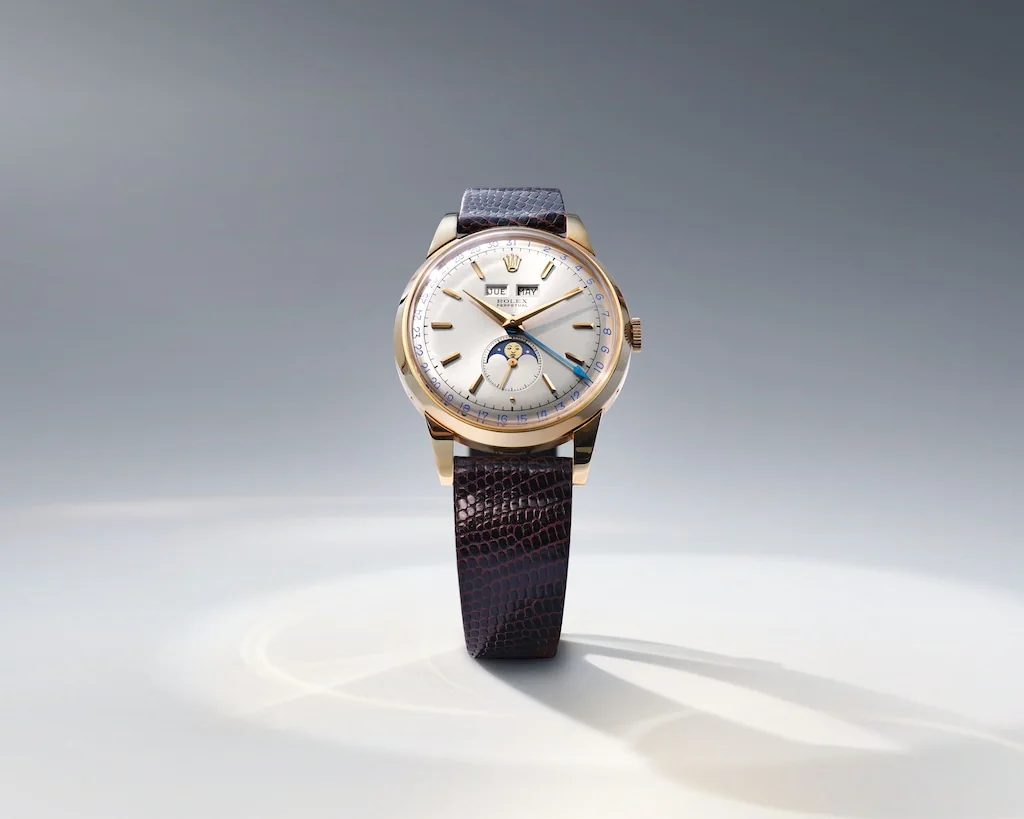
The return of the moon phase deserves attention in its own right. The Haplos system, instantaneous calendar and calibre 7190 nevertheless show that Rolex has not merely revived a historic complication for aesthetic reasons.
Above all, the Perpetual Padellone opens up new possibilities for a collection that is still very young.
Technical specifications of the Rolex Perpetual Padellone
| Specification | Rolex Perpetual Padellone |
|---|---|
| Diameter | 39 mm |
| Thickness | 12.20 mm |
| Lug width | 20 mm |
| Case | 18-carat Everose gold or 950 platinum |
| Movement | Rolex calibre 7190 |
| Winding | Bidirectional automatic winding via Perpetual rotor |
| Frequency | 36,000 vph – 5 Hz |
| Jewels | 35 |
| Power reserve | Approximately 66 hours |
| Accuracy | –2/+2 seconds per day, fully cased |
| Functions | Hours, minutes, seconds, date, day, month, moon phase |
| Calendar | Instantaneous annual calendar |
| Calendar system | Haplos |
| Escapement | Silicon Dynapulse |
| Hairspring | Silicon Syloxi |
| Balance staff | Ceramic |
| Moon phase | Blue enamelled disc, meteorite moons |
| Crystal | Domed sapphire with anti-reflective treatment |
| Caseback | Transparent sapphire |
| Water resistance | 50 metres |
| Bracelet | Everose gold Settimo or alligator |
| Certification | Superlative Chronometer |
| Warranty | 5 years |
| References | 53505 in Everose gold / 53506 in platinum |