Why Mechanical Movements Are Sensitive to Gravity


There is something profoundly insolent about a mechanical watch. A few grams of brass, steel, synthetic rubies and hairspring presume to divide time with regularity, even as the Earth pulls relentlessly on every one of their components. Gravity, that force we forget until a glass falls, a knee buckles, or we have to get out of bed after a particularly well-lubricated night, is one of the great intimate enemies of the mechanical movement.
It does not break the watch. It does not slow it dramatically like a violent shock or a magnetic field. It acts more subtly, like an aesthete of disorder. It modifies friction, disrupts the oscillation of the balance, influences the position of the hairspring and creates rate variations depending on whether the watch lies flat, rests on its crown, sits on its side or lives on the wrist. In short, it reminds the watchmaker of a simple truth: in a mechanical watch, precision is never a given. It is won.
Gravity, the silent enemy of watchmaking precision
A mechanical movement works through an energy chain of almost absurd elegance. The barrel spring unwinds, transmitting its energy to the gear train, which in turn feeds the escapement. At the end of this chain, the balance and hairspring oscillate. This is the regulating heart. This is what sets the rhythm.
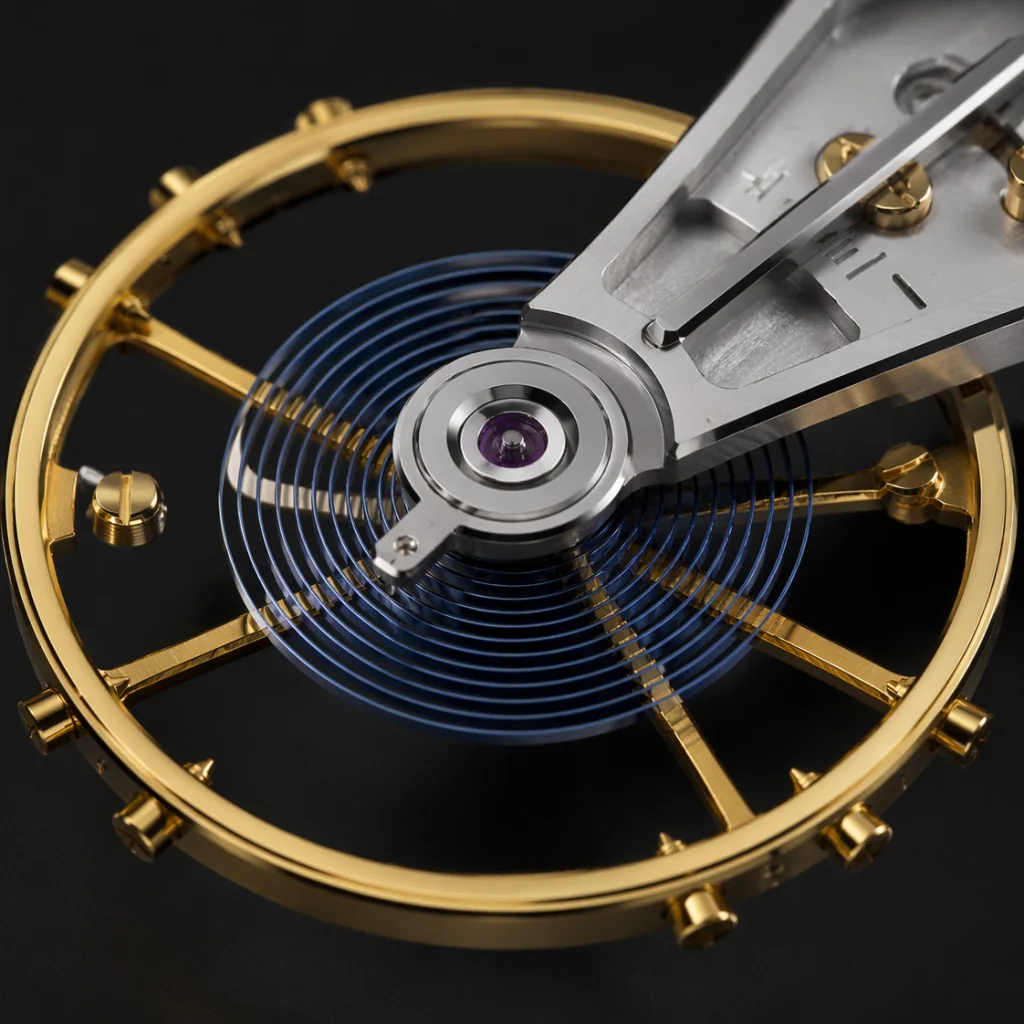
In a mathematical ideal, this balance would oscillate perfectly, with the same amplitude, in every position, without variable friction, without parasitic constraint, without changing lubrication, without microscopically imperfect components. In real life, in other words in watchmaking, none of this exists.
Gravity acts primarily on the most sensitive organs of the movement: the balance, the hairspring, the pivots and the escapement. It intervenes differently depending on the position of the watch. A watch laid dial-up is not subject to the same constraints as a watch laid crown-down. And since the human wrist has the unfortunate habit of moving in every direction, with no particular respect for chronometric standards, things quickly become complicated.
Positions, the little theatre where a watch reveals its character
When a watchmaker regulates a watch, he does not simply let it run on a table and nod with satisfaction. He measures its rate in several positions: dial up, dial down, crown up, crown down, crown left, crown right. These positions correspond to what the watch will experience day to day, especially when it is not being worn.
Why do these positions matter so much? Because pivot friction changes. In a horizontal position, such as dial up or dial down, the balance pivots rest differently on their jewels than they do in vertical positions. In a vertical position, the effect of the balance’s weight becomes more critical: any poising defect, however tiny, can accelerate or slow the oscillation.
This is where we understand why a watch can gain two seconds a day on the wrist, lose six seconds on a bedside table, then return to a respectable rate in another position. It is not temperamental. It is mechanical.
Amplitude, beat and friction
Amplitude refers to the angle travelled by the balance with each oscillation. A well-regulated watch generally displays a high and stable amplitude, even if exact values vary according to the calibre, the condition of the lubrication and the architecture of the movement. When gravity alters friction, amplitude changes. And when amplitude changes, the rate can change too.
The balance is not the only culprit. The pivots, those tiny ends of the arbors, work inside ruby jewels. If the oil ages, migrates or distributes itself differently according to position, gravity accentuates the variations even further. At this scale, a drop of lubricant becomes a landscape. A speck of dust, a boulder. Watchmaking is geography for insects.
The hairspring, that metallic hair gravity loves to thwart
The hairspring is one of the most fascinating components in a mechanical watch. Extremely fine, made from a metal alloy or silicon depending on the calibre, it contracts and expands with every alternation of the balance. Its role is to bring the balance back towards its neutral position, with the greatest possible regularity.
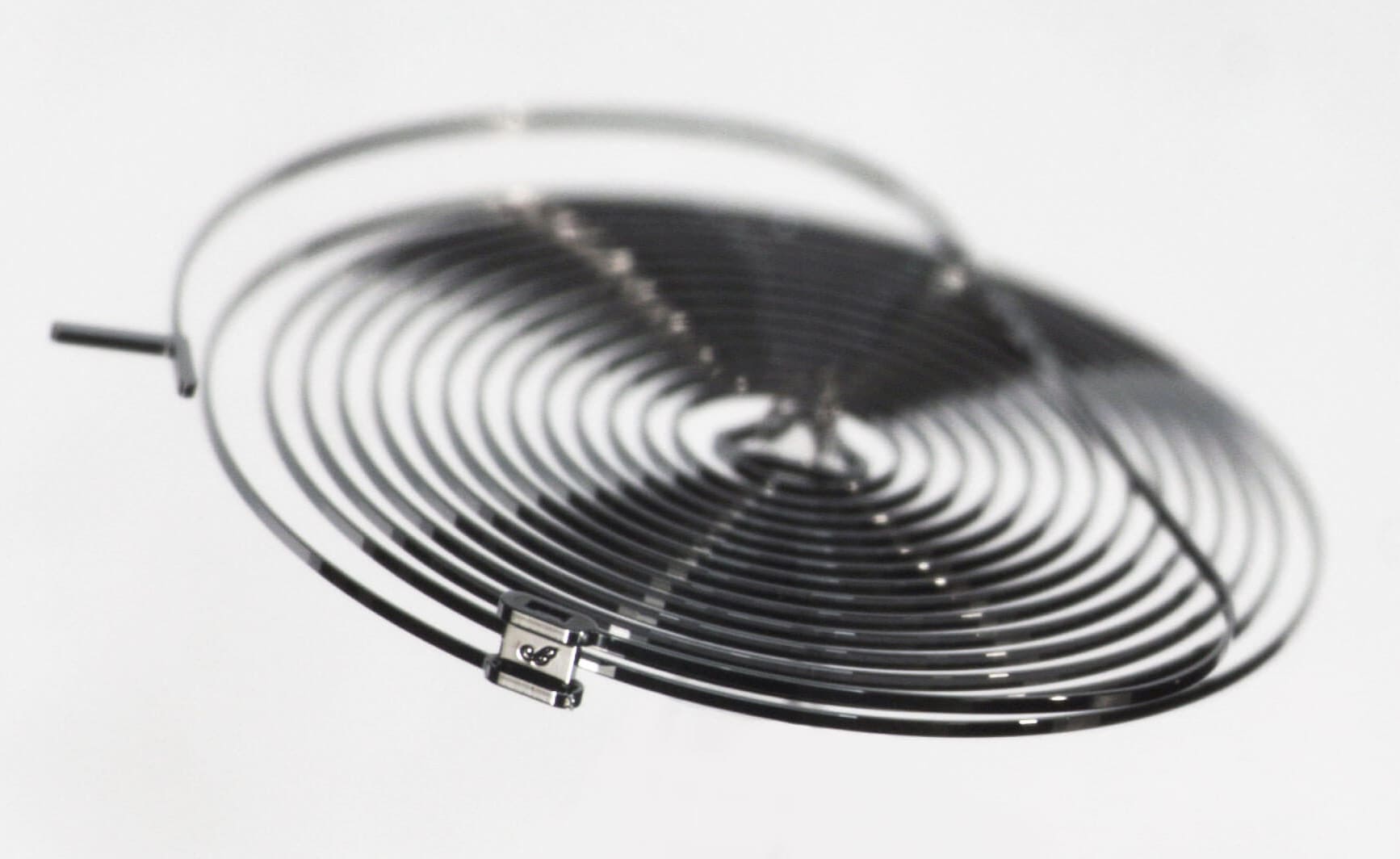
The problem is that the hairspring is physical. It has mass. A shape. Attachment points. It can breathe in a slightly eccentric manner. In a vertical position, its own weight can imperceptibly alter its concentricity. For a long time, watchmakers sought to improve this breathing with hairsprings featuring a terminal curve, the most famous of which remains the Breguet overcoil. By raising the outer end of the hairspring, Abraham-Louis Breguet allowed for more concentric expansion, and therefore better regularity.
We sometimes forget that these refinements are not intellectual decorations intended to fill catalogues. They respond to very concrete problems. Gravity pulls, metal resists, the watchmaker negotiates.
The tourbillon, a brilliant answer to a very old problem
It is impossible to talk about gravity without mentioning the tourbillon. Patented by Abraham-Louis Breguet in 1801, it was designed for pocket watches. At the time, these spent most of their lives in a vertical position, in a waistcoat pocket. This constant position accentuated gravity-induced errors on the regulating organ.

The idea behind the tourbillon is as simple to explain as it is difficult to execute: place the balance, hairspring and escapement inside a mobile cage that completes a full rotation, often in one minute. Instead of always being subjected to gravity in the same orientation, the regulating organ successively exposes its errors in every vertical direction. The variations then tend to compensate for one another.
In a pocket watch, the reasoning made a great deal of sense. In a modern wristwatch, worn on a moving wrist, the debate becomes more delicious. The tourbillon remains a remarkable watchmaking feat, but its real chronometric advantage depends on the calibre, the regulation, the quality of execution and the way it is used. In other words, no, a tourbillon watch is not automatically more accurate than an excellent chronometer-certified three-hander. Sorry about the dinner-party conversation.
A few landmark tourbillons
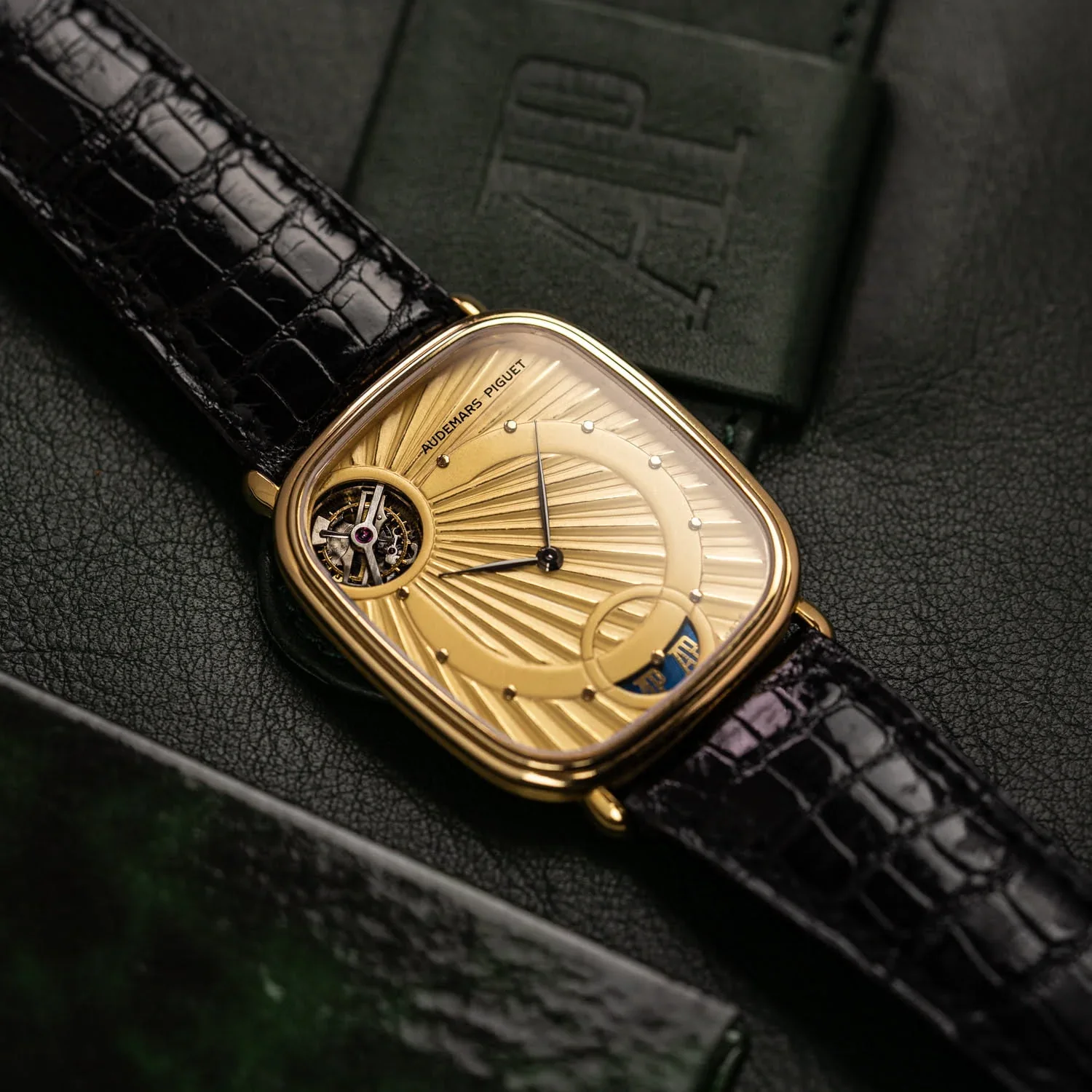
Certain tourbillons have nevertheless profoundly marked the contemporary history of the wristwatch. The Audemars Piguet Reference 25643, launched in 1986, is often cited as the first self-winding tourbillon wristwatch produced in series. Extra-thin, audacious and technically brilliant, it posed a question that watchmaking has never really stopped reformulating: is a complication there to solve a problem, or to show that one can solve it with grandeur?
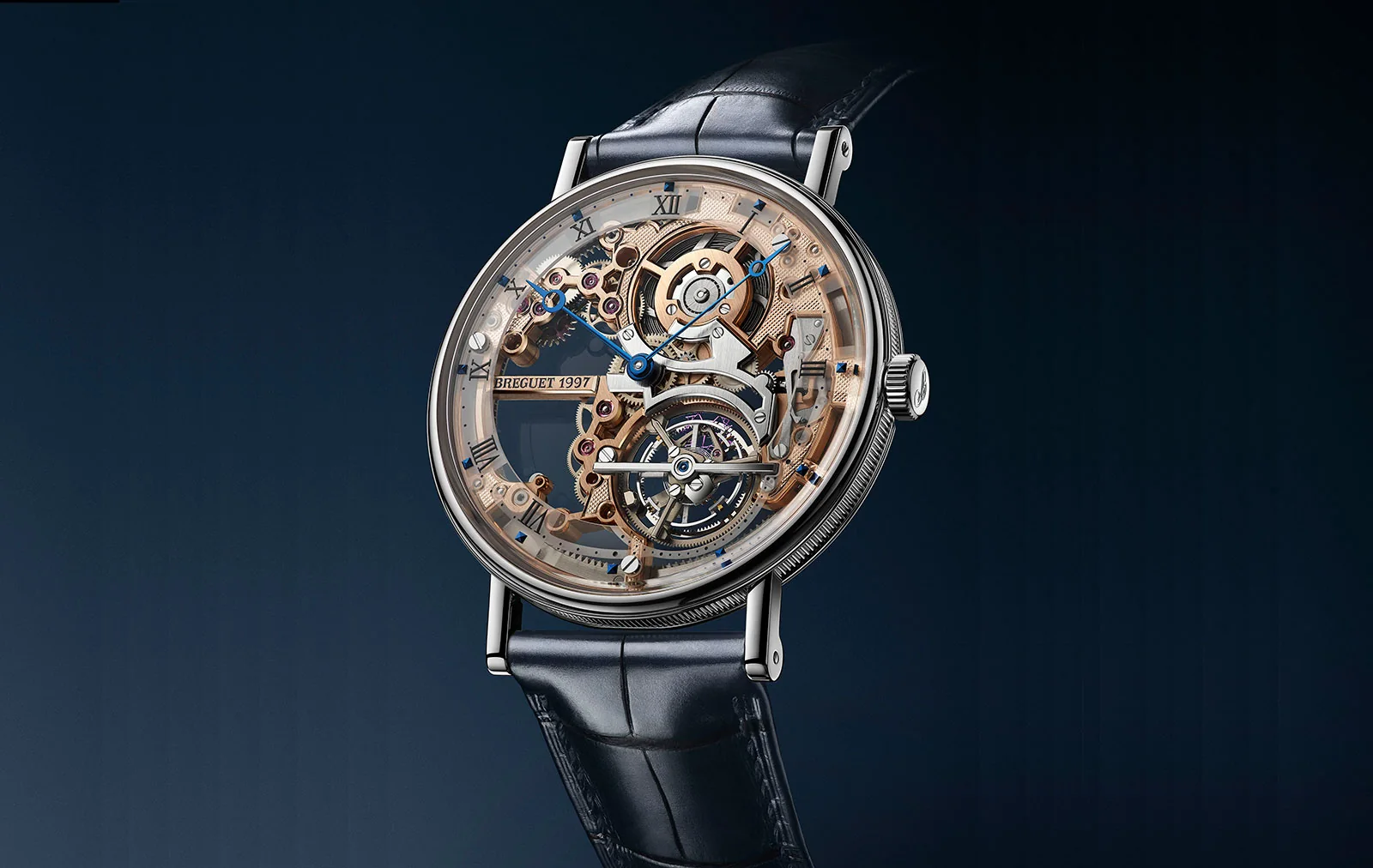
At Breguet, tradition naturally remains central. Classique Tourbillon models, depending on the references and configurations, pay tribute to the original invention while making use of contemporary materials, finishes and architectures. Prices vary significantly according to the version, often well beyond €100,000 on the new market for pieces in precious metals and with grand complications.
The karussel, a less famous but equally serious cousin
The karussel is often presented as a cousin of the tourbillon. Invented by the Dane Bahne Bonniksen at the end of the 19th century, it pursues a similar ambition: to compensate for positional errors linked to gravity. But its architecture differs. Whereas the tourbillon generally shares the same driving source for the rotation of the cage and the escapement, the karussel uses a separate, more complex driving system.
It was long considered a more robust solution, sometimes easier to regulate in certain contexts, but it remains far rarer in contemporary production. Blancpain brought it back into the spotlight with spectacular watches, notably in the Le Brassus collection, sometimes pairing it with a tourbillon. Because one anti-gravity device, apparently, was not enough to soothe the human ego.
Modern solutions: silicon, high frequency and fine regulation
The fight against gravity is not limited to rotating cages. The most decisive advances are often hidden in less theatrical components.
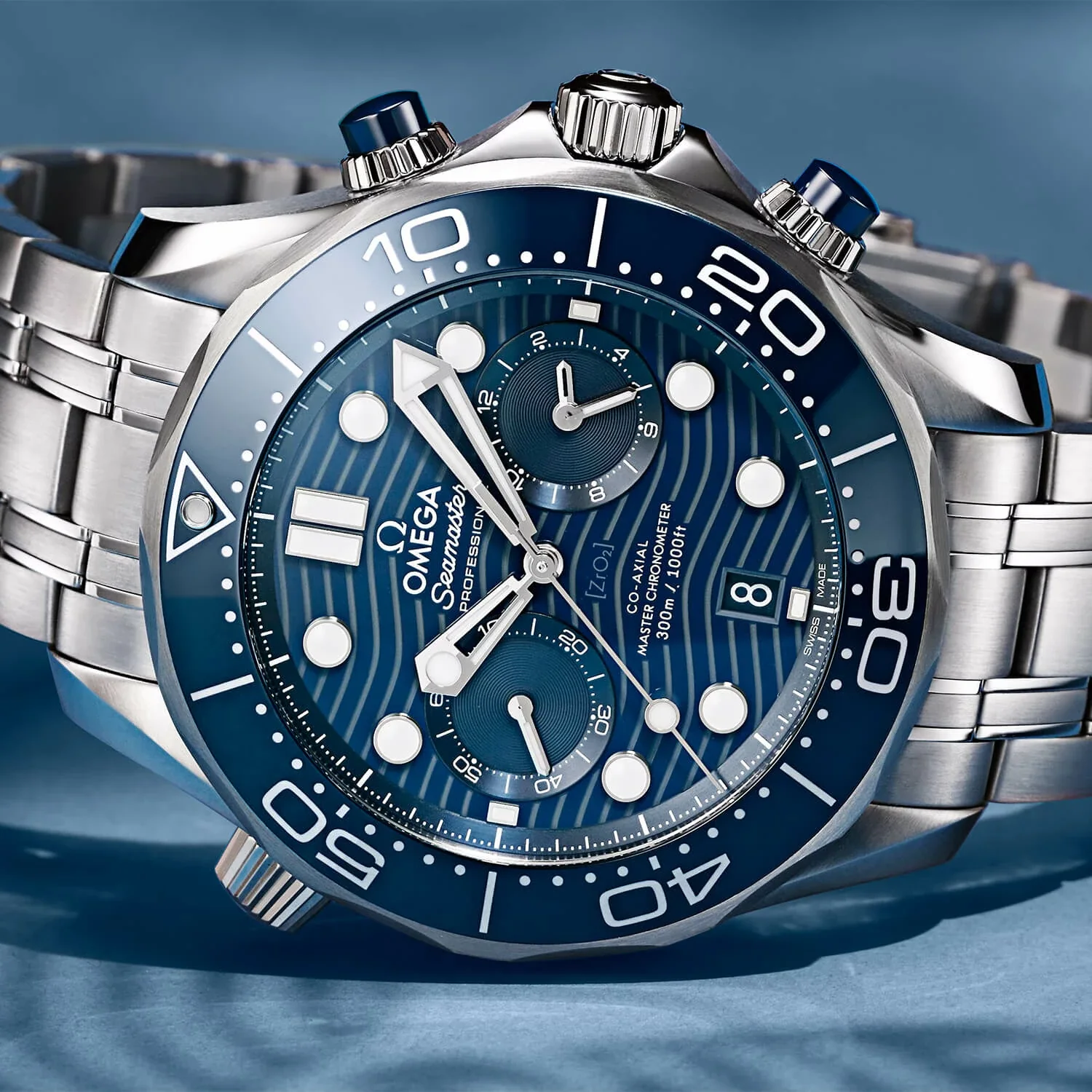
Silicon, for example, has transformed the manufacture of certain regulating and escapement organs. Light, anti-magnetic and extremely precise in its geometry, it makes it possible to produce hairsprings with highly controlled shapes. Breguet, Omega, Patek Philippe, Ulysse Nardin and several other houses have explored this path with different philosophies. Patek Philippe’s Spiromax hairspring, or the silicon hairsprings used by Omega in its Co-Axial Master Chronometer calibres, are part of this pursuit of overall stability.
High frequency offers another answer. A movement beating at 36,000 vibrations per hour, like certain Zenith El Primero calibres, divides time into finer portions than a movement running at 28,800 vibrations. This can improve rate stability in the face of certain disturbances, even if it does not make the watch immune to gravity. Nothing makes a mechanical watch immune to gravity. Not even the price, which is sometimes the most painful discovery.
Finally, there is regulation. Real regulation. The kind performed by the watchmaker who adjusts the regulator index or the inertia blocks of a variable-inertia balance, checks the beat error, measures positional deviations, corrects, and starts again. Good regulation in five or six positions can work wonders. It is less spectacular than a flying tourbillon beneath sapphire crystal, but often more useful in everyday life.
Why your watch gains or loses time overnight
Every enthusiast has noticed it at some point: the overnight resting position influences the rate. A watch that gains time on the wrist may sometimes lose a little when placed crown-up. Another may behave better dial-up. There is no universal rule, since every movement has its own positional variations.
It is therefore possible to use gravity as an empirical tool. If your watch regularly gains time, try several resting positions over a few nights and observe the results. There is no need to turn your bedside table into a COSC laboratory. A little method is enough.
Experienced collectors know this little ritual well. Placing a watch in the position that will slightly compensate for its drift is a simple way of engaging in dialogue with the movement. A mechanical watch is never entirely possessed. It is learned.
COSC, METAS and the reality of precision testing
Chronometric certifications exist precisely because accuracy must be verified under varied conditions. The COSC, the Official Swiss Chronometer Testing Institute, tests uncased movements for fifteen days, in several positions and at different temperatures. For a mechanical movement, the commonly known average tolerance is -4 to +6 seconds per day.
Omega, with its Master Chronometer certification validated by METAS, tests the complete cased watch, notably against magnetic fields, with rate checks in several positions and at different levels of power reserve. Rolex, for its part, announces an accuracy of -2/+2 seconds per day after casing for its Superlative Chronometer-certified watches, according to its own internal protocols.
These figures do not eliminate the effect of gravity. They show that the watch has been designed, manufactured and regulated to master it within a given range. That is the whole difference between a magical promise and industrial discipline.
Does gravity explain everything? No, and fortunately so
It would be convenient to blame gravity for every rate variation. Too convenient. A mechanical watch can also vary because of magnetism, shocks, wear, ageing lubrication, an insufficient power reserve, a hairspring that is stuck or deformed, or a poorly adjusted escapement. Gravity is a major player, not the sole culprit.
In an old watch, positional variations may be more pronounced if the pivots are worn, if the oils have dried out or if the balance is no longer perfectly poised. In a good-quality modern watch, they are often contained, but never entirely absent. Perfect mechanics do not exist. They would, in any case, be rather boring.
What gravity really tells us about mechanical watches
The sensitivity of mechanical movements to gravity is not a shameful weakness. It is their condition of existence. A mechanical watch is an object regulated against the real world: against weight, against friction, against temperature variations, against the distracted gestures of its owner. It is not accurate despite its fragility; it is fascinating because it attempts to be accurate through it.
Quartz settled the question of everyday accuracy with almost brutal efficiency. A smartwatch makes it look more ridiculous still, synchronised to atomic time while your tourbillon meditates in its cage. And yet we return to mechanical movements. Because they make effort visible. Because they transform a physical constraint into architecture, regulation and invention.
Gravity pulls everything down. Watchmaking responds with bevelled bridges, breathing hairsprings, rotating cages and obstinate balances. This is not merely a struggle for a few seconds per day. It is elegant insubordination.