Deadbeat Seconds, the Most Misunderstood Tick-Tock in Mechanical Watchmaking

Why do some watches have deadbeat seconds? It is a question that comes up often, usually with a raised eyebrow and a cutting remark: “It’s quartz, isn’t it?” That is where the misunderstanding begins. In a mechanical watch, a seconds hand that jumps from one marker to the next, instead of gliding with that reassuring smoothness we instinctively associate with traditional calibres, is not a sign of technical poverty. Often, it is quite the opposite. A watchmaker’s flourish. A useless complication, and therefore indispensable. And sometimes, a lesson in chronometry.
Deadbeat seconds, also known as “jumping seconds” or deadbeat seconds in English, consists of advancing the seconds hand once per second, in clean, distinct jumps, just like on a quartz watch. Except that here, nothing is electronic. Everything is mechanical, constrained, regulated, sometimes needlessly sophisticated. In other words, everything enthusiasts love.
A hand that jumps, but a heart that beats fast
In a classic mechanical watch, the seconds hand does not move continuously. It merely gives that impression. In reality, it advances in micro-jumps corresponding to the frequency of the movement. A calibre beating at 28,800 vibrations per hour, or 4 Hz, produces eight impulses per second. On the dial, the hand therefore appears to glide. A movement running at 21,600 vibrations per hour, or 3 Hz, will make six small steps per second. At 18,000 vibrations, five steps. It is less fluid, but still a long way from the rigid one-second jump.
Deadbeat seconds take this rapid breathing of the movement and transform it into a slow, crisp, almost administrative gesture: tick, tick, tick. Each second becomes a visible unit. The hand waits. Then it jumps. It waits again. Then it jumps once more. This behaviour, which has seemed commonplace since the arrival of quartz in the 1970s, was once a mechanical refinement. And it remains one when achieved without a battery, without an integrated circuit, without a stepper motor.
Why imitate a quartz watch?
The short answer: deadbeat seconds do not imitate quartz. Historically, it is rather quartz that visually trivialised a behaviour mechanical watchmaking already knew. An important nuance, especially if you wish to preserve your dignity over dinner with collectors.
Before becoming an aesthetic curiosity, deadbeat seconds had a practical function. On precision clocks, observatory regulators and certain pocket watches, seeing the exact passing of a second made time easier to read. To regulate a watch, take a measurement, synchronise an astronomical or medical observation, a jumping seconds hand offers a clearer reading than a smoothly sweeping hand. The gesture is less romantic, but more legible.
The same logic can be found in certain doctor’s watches, scientific watches, or instruments intended for measurement. A second that lands exactly on an index is convenient. It is not spectacular. Better still: it is useful.
How do mechanical deadbeat seconds work?
The principle seems simple: make the seconds hand move once per second. The problem, as is often the case in watchmaking, is that apparent simplicity conceals an unreasonable number of mechanical headaches.
In a standard movement, energy from the barrel passes through the going train, reaches the escapement, and the oscillator regulates the whole system. If you want to obtain deadbeat seconds, you need to insert a mechanism capable of accumulating or holding back the motion for one second, then releasing the hand all at once.
Several solutions exist.
The star wheel and jumper system
This is one of the most intuitive architectures. A star-shaped wheel generally has as many teeth or positions as necessary to divide the minute into sixty jumps. A jumper holds the hand in place, then releases it at regular intervals. Every second, the mechanism advances by one position. The jump must be clean, with no rebound, no hesitation, none of that unattractive little tremble that turns a noble complication into a tired mechanical toy.
The challenge is twofold: energy is needed to produce the jump, but the regulating organ must not be disturbed. Every complication consumes torque. Poorly designed deadbeat seconds can degrade the amplitude of the balance, and therefore accuracy. Which would be rather awkward for a function historically associated with chronometry.
Independent deadbeat seconds
“Independent deadbeat seconds” are even more delicious. In certain historic watches, the seconds hand has a separate train, sometimes with its own barrel or a dedicated transmission, and can operate independently of the main timekeeping train. It can be stopped, even restarted, without interrupting the hours and minutes display.
Here we touch on a borderland between deadbeat seconds and the chronograph. The complication does not necessarily measure a short interval like a modern chronograph, but it gives the seconds hand mechanical autonomy. It is technical, refined, and sufficiently unnecessary to become instantly desirable.
The remontoir d’égalité
Another, more aristocratic route: the remontoir d’égalité. This device periodically rewinds a small secondary spring that supplies the escapement with a more constant force. Depending on the construction, this periodic impulse can drive deadbeat seconds. Here, the jump of the hand is not merely a visual effect; it becomes the external manifestation of a pursuit of chronometric regularity.
This is notably what makes certain creations by F.P. Journe so fascinating. In the Tourbillon Souverain with remontoir d’égalité, deadbeat seconds are not a dial-side joke. They are linked to the distribution of energy. The visible tick tells the story of the calibre’s inner workings. And when a watch shows you its soul without opening the caseback, you listen.
Rolex Tru-Beat, the anti-Rolex collectors are rediscovering
It is impossible to talk about deadbeat seconds without mentioning the Rolex Tru-Beat reference 6556, launched in the 1950s. A Rolex with mechanical deadbeat seconds: today, it is an object that feels almost ironic, so strongly is the brand associated with pragmatic robustness, aesthetic continuity and that polite refusal of eccentricity.
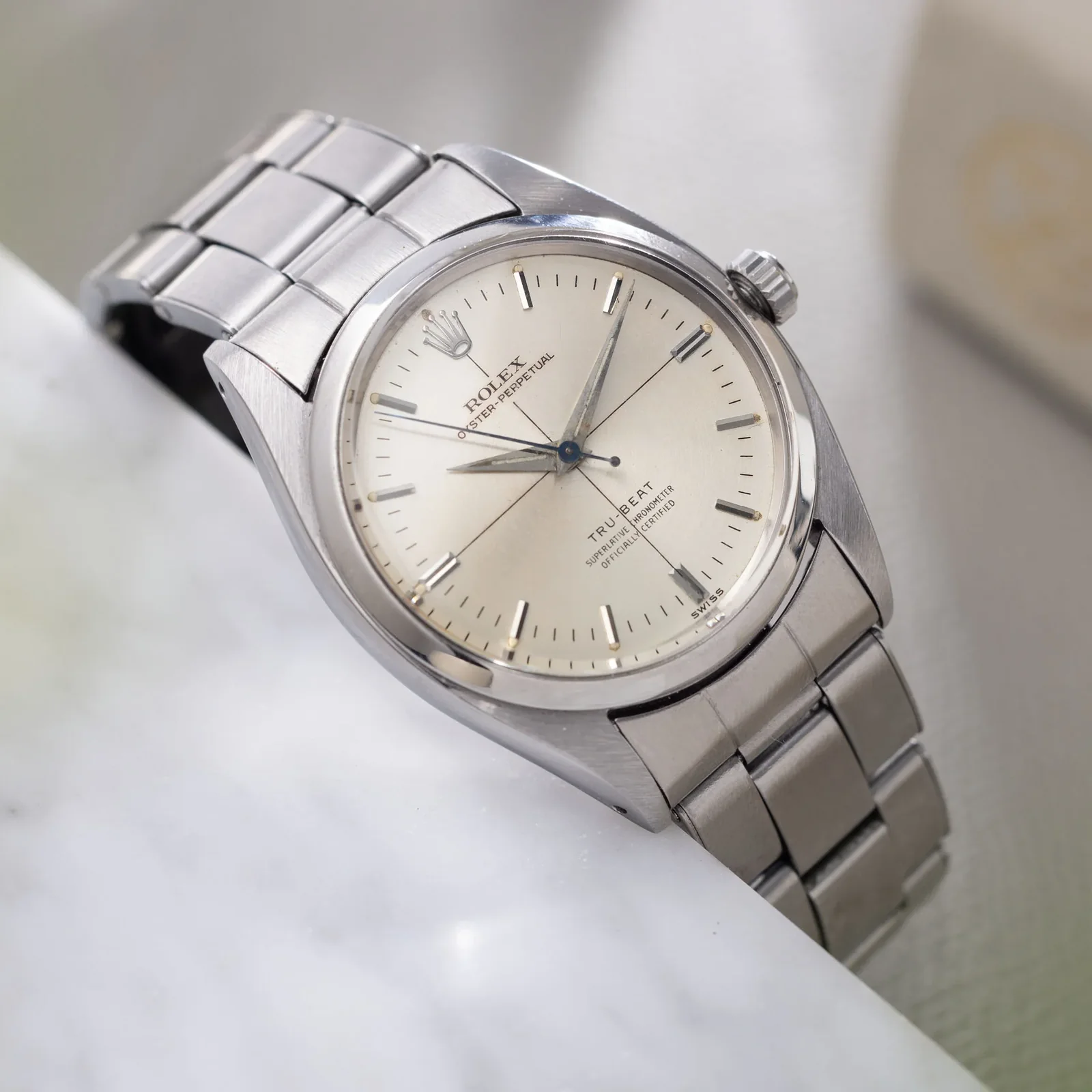
And yet the Tru-Beat was a genuine technical proposition. It used an automatic calibre derived from the 1030 family, modified to display jumping seconds. Its objective was clear: to provide an immediate and precise reading of the seconds, particularly for professional or medical use. The market did not really follow. As a result, the Tru-Beat remains a watch apart in Rolex history: rare, intriguing, sometimes underestimated by those who swear only by patinated Submariners and miraculous drawer-find Daytonas.
On the vintage market, prices vary widely according to condition, dial, component consistency and provenance. As always with vintage Rolex, the watch is expensive, and then the missing detail is even more expensive.
Jaeger-LeCoultre Geophysic True Second, deadbeat seconds with manners
In 2015, Jaeger-LeCoultre brought the complication back to centre stage with the Geophysic True Second. The watch is in no way a baroque exercise. A measured case, a restrained dial, a scientific spirit, almost cold. And then that central seconds hand jumping every second, with delicious visual precision.
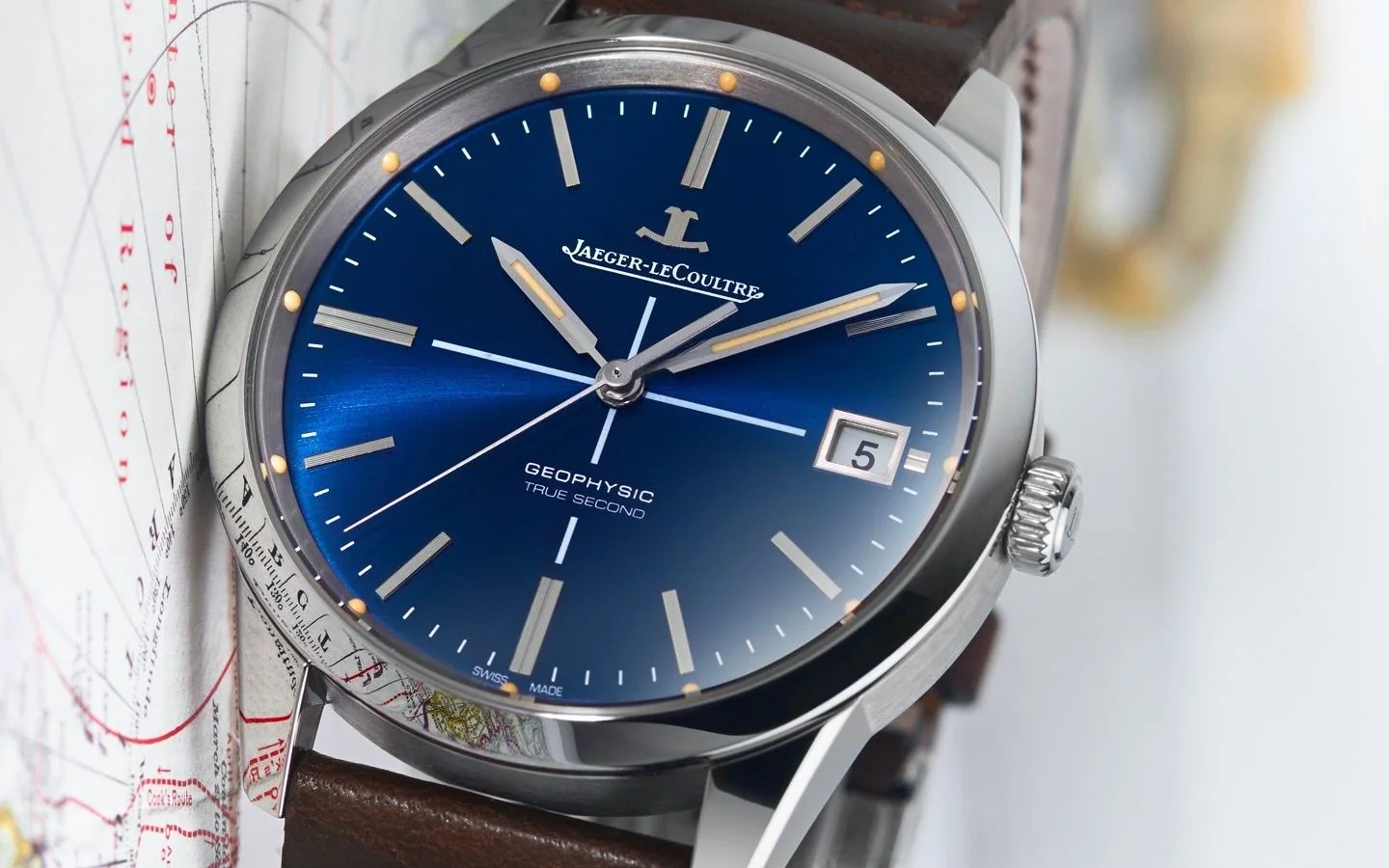
The automatic Jaeger-LeCoultre calibre 770 incorporates a deadbeat seconds mechanism and the Gyrolab, a non-circular balance developed to optimise aerodynamic and mechanical performance. The whole thing is typically JLC: less showy than a display-window tourbillon, but technically far more interesting than its understated appearance suggests.
- Model: Jaeger-LeCoultre Geophysic True Second
- Known references: Q8018420 in steel, Q8012520 in pink gold
- Movement: Jaeger-LeCoultre automatic calibre 770
- Frequency: 28,800 vibrations per hour
- Function: deadbeat seconds, world time on certain Geophysic Universal Time variants
The relatively short production run of the Geophysic True Second gives it a particular aura today. It speaks to enthusiasts who like discreet watches, but not simple ones. The nuance is essential.
A. Lange & Söhne Richard Lange Jumping Seconds, the Saxon lesson
At A. Lange & Söhne, deadbeat seconds become a manifesto of rigour. The Richard Lange Jumping Seconds reference 252.025, presented in platinum, combines jumping seconds with a regulator-style display and a calibre architecture of almost intimidating beauty. The large seconds hand dominates the dial. The hours and minutes sit in subdials. Everything indicates that the second is the main subject here, not a side effect designed to amuse Instagram.
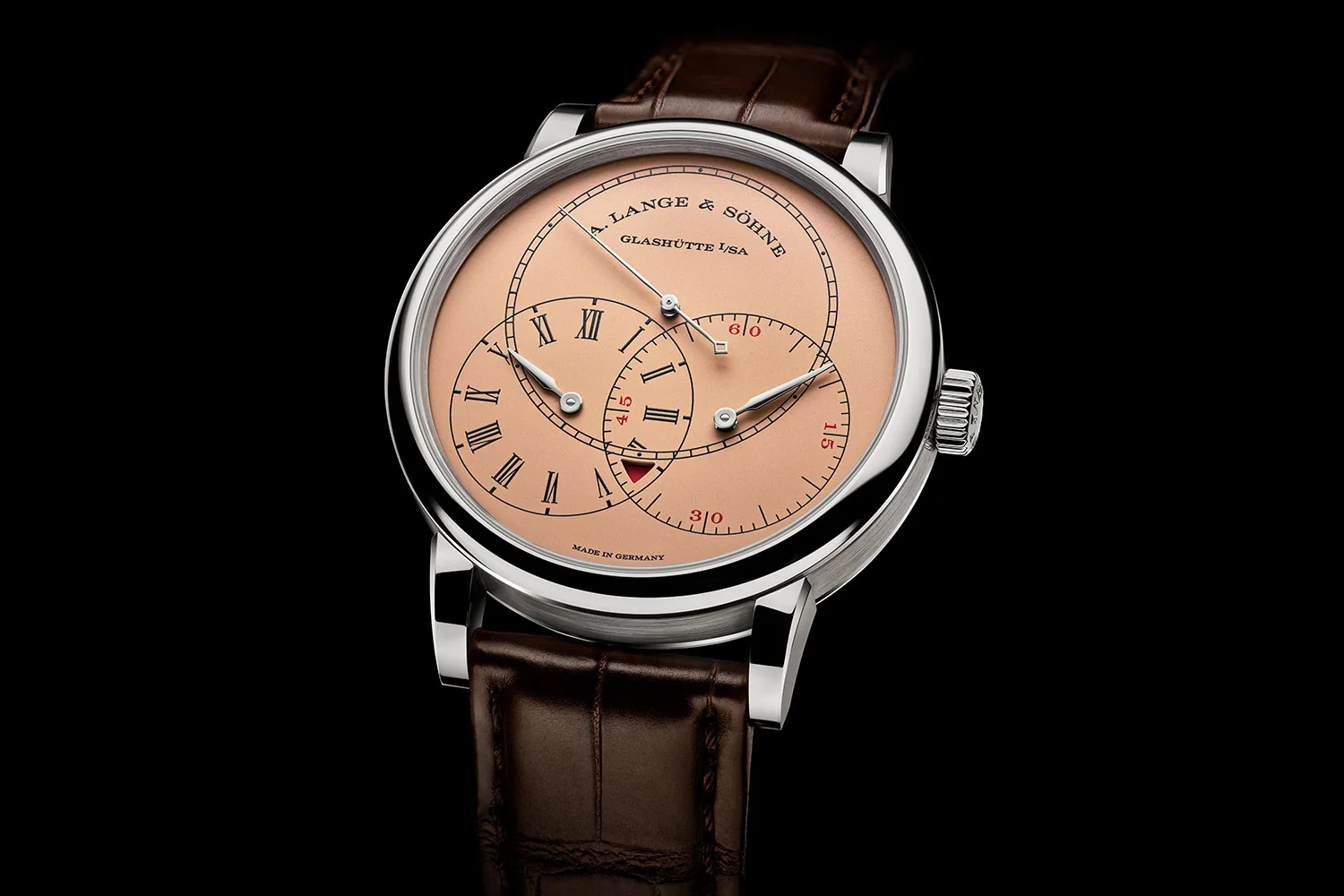
The L094.1 calibre incorporates a remontoir d’égalité that delivers a constant impulse and controls the jump of the seconds hand. The watch also has a zero-reset seconds mechanism when the crown is pulled, useful for precise setting. This is chronometry staged with the gravity of a German treatise. Not funny. Superb.
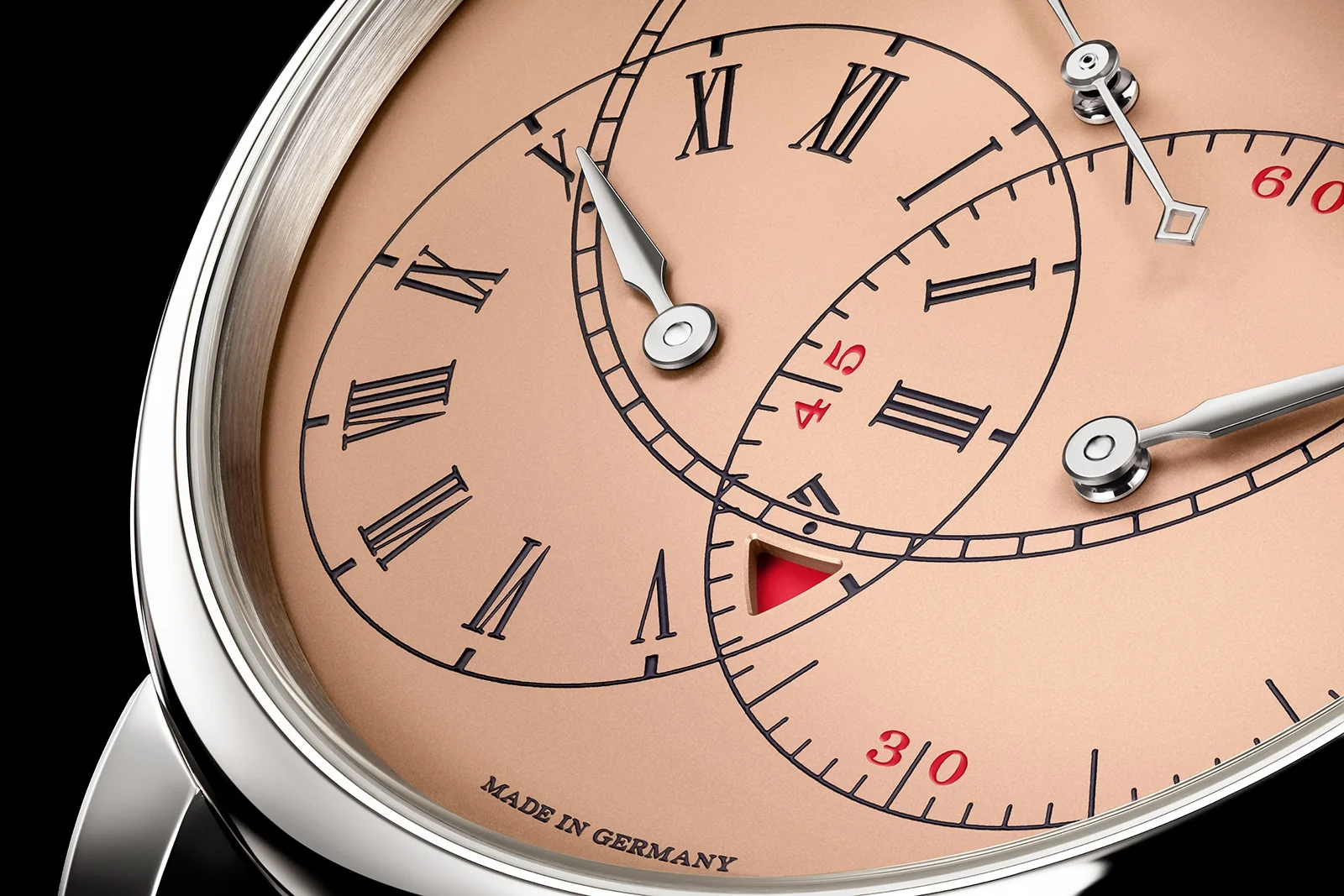
- Model: A. Lange & Söhne Richard Lange Jumping Seconds
- Reference: 252.025
- Case: platinum
- Movement: manufacture calibre L094.1, manually wound
- Functions: hours, minutes, jumping seconds, remontoir d’égalité, hacking seconds with zero reset
Grönefeld One Hertz, when an independent brand takes possession of the tick
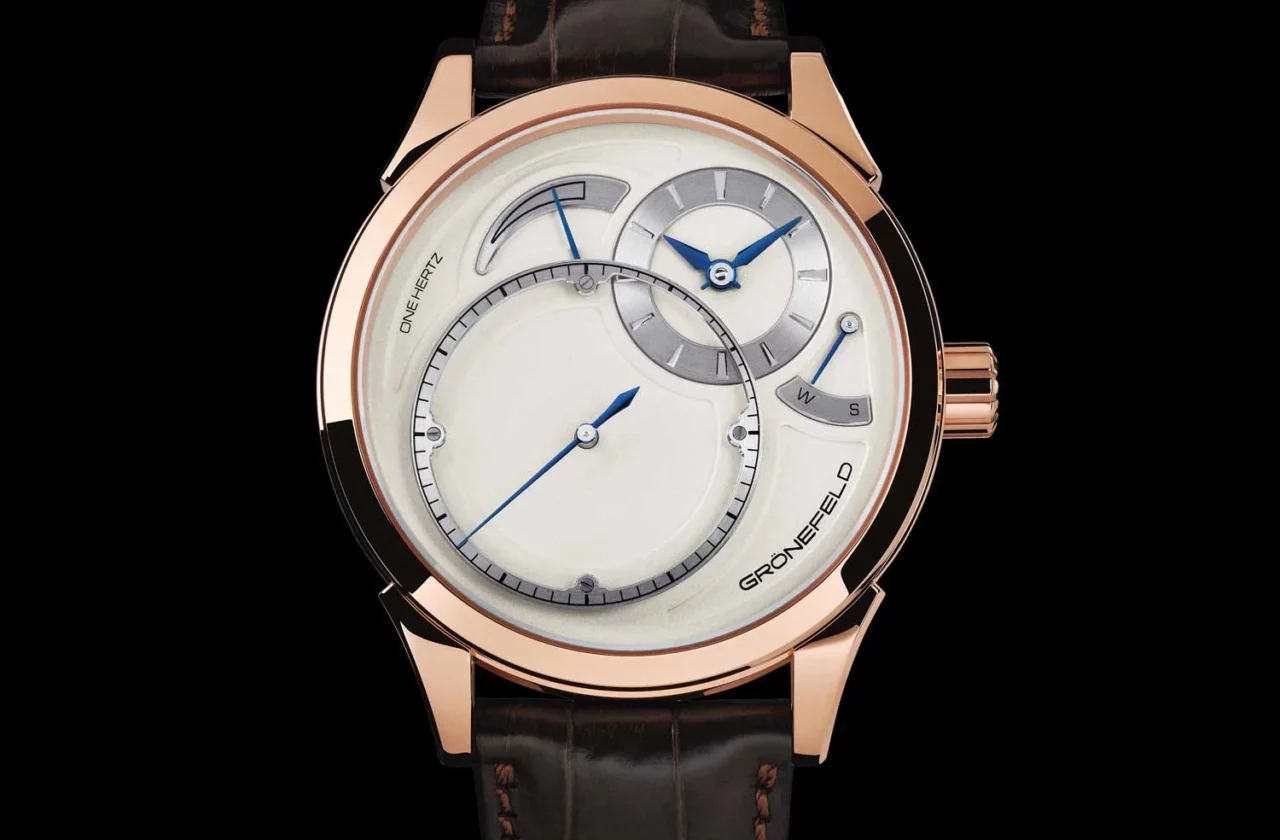
The Grönefeld One Hertz, unveiled in the early 2010s by brothers Bart and Tim Grönefeld, is among the most memorable modern interpretations of deadbeat seconds. Its name states the programme: one second, one hertz, one jump. The watch separates the deadbeat seconds display from the main timekeeping train, in a construction that is both technical and highly legible.
This is not a watch trying to seduce everyone. All the better. Independents often shine when they take a marginal idea and develop it to the point of obsession. The One Hertz (pictured on the article’s cover) does exactly that. It transforms a complication some mistake for an anomaly into a mechanical signature.
Why do brands still make them?
Because deadbeat seconds are a delicious paradox. They require more work to produce a behaviour that the general public associates with an inexpensive watch. It is luxury against the beat. A complication that does not shout about its difficulty, and may even be insulted by a passer-by convinced they have spotted a battery.
For brands, it also offers another way to talk about chronometry. The tourbillon has been so overexposed that it has sometimes become a rotating jewel. Deadbeat seconds remain more intellectual, drier, more demanding. They appeal to enthusiasts who look at a hand for a long time before talking about case diameter.
A complication for initiates, not snobs
It would be tempting to turn deadbeat seconds into a mark of distinction reserved for connoisseurs. Bad idea. Their charm lies precisely in their ability to unsettle. The beginner sees a quartz watch. The enthusiast sees a provocation. The collector sees an architecture. The watchmaker, for their part, probably sees the hours spent adjusting a jumper so that the hand lands exactly on the index, without trembling like a promise of after-sales trouble.
Deadbeat seconds remind us of a simple truth: in watchmaking, what you see is never the whole story. A smooth seconds hand can conceal a perfectly honest but ordinary industrial calibre. A jumping seconds hand can conceal a remontoir d’égalité, an independent train, a precision mechanism conceived with unreasonable patience.
Should you buy a watch with deadbeat seconds?
If you are looking for a watch that everyone immediately understands, probably not. If you want a complication that impresses at first glance, a chronograph or moon phase will earn more applause around the table. But if you love watches that require an explanation, that turn a visual detail into a conversation, deadbeat seconds are one of the most endearing complications in the mechanical repertoire.