Why Some Watches Display the Date at 4:30
Why do some watches display the date at 4:30? Because watchmaking is rarely a matter of chance, and almost always a matter of compromise. Behind that small angled aperture, often adored by some and loathed by others, lies a very serious conversation between movement architecture, dial balance, legibility, historical heritage and, sometimes, sheer aesthetic laziness. Yes, it happens even at major maisons.
The 4:30 date is one of those tiny details that ignite disproportionate debates. On a forum, it can ruin a watch. In a display window, it may go unnoticed. On the wrist, it can suddenly seem obvious, even intelligent. As so often in watchmaking, it all depends on execution.
How does a date window actually work?
Before judging the 4:30 date, you have to look beneath the dial. A classic date display by aperture generally relies on an annular disc placed just below the dial surface. This disc carries the numerals from 1 to 31. Once a day, a driving finger, linked to the motion works and a jumper system, advances the disc by one step. On better-designed movements, the change is instantaneous, or nearly so. On others, it crawls slowly around midnight with all the grace of a tired metal shutter.
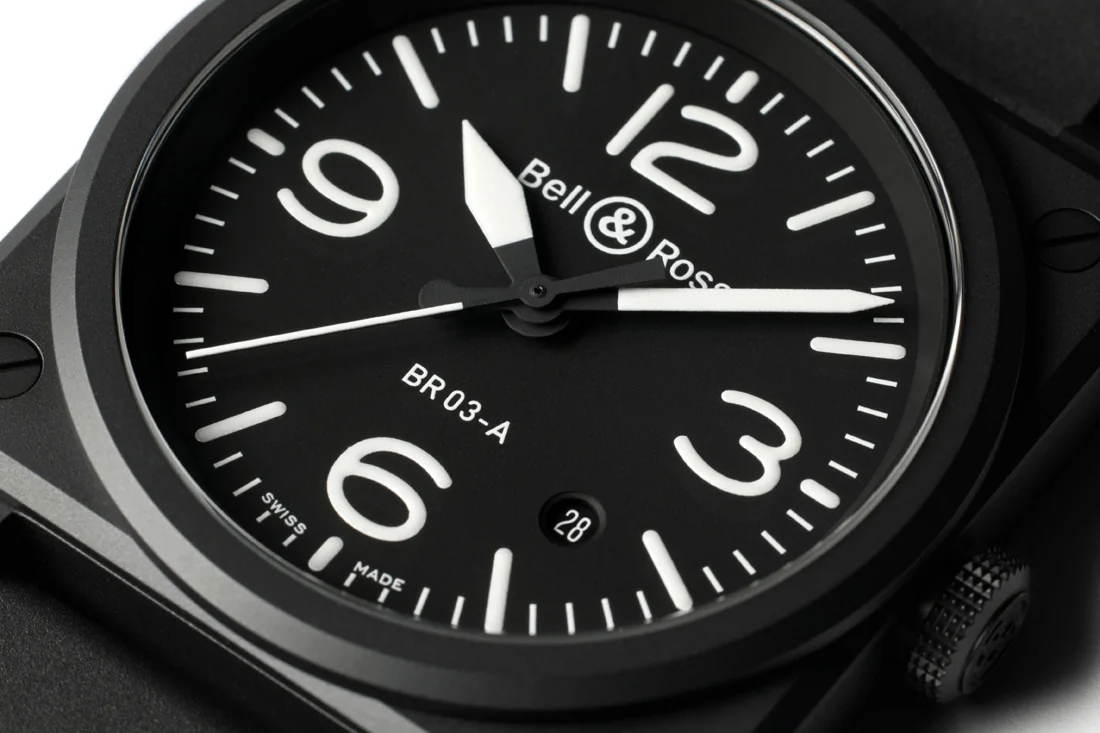
The dial’s role is simply to reveal the right number in the right place. So an opening is cut: the famous date window. Traditionally, it sits at 3 o’clock, a position that became almost canonical with the 1945 Rolex Datejust, then was reinforced by the Cyclops magnifier introduced in the 1950s. Simple. Legible. Bourgeoisly efficient.
But technically, nothing forces the date to live at 3 o’clock. If the disc is printed to correspond to another opening, the window can migrate to 6 o’clock, 12 o’clock, between 4 and 5 o’clock, or elsewhere. In theory, anything is possible. In practice, everything comes at a price: thickness, cost, development, or elegance.
The most common reason: preserving dial balance
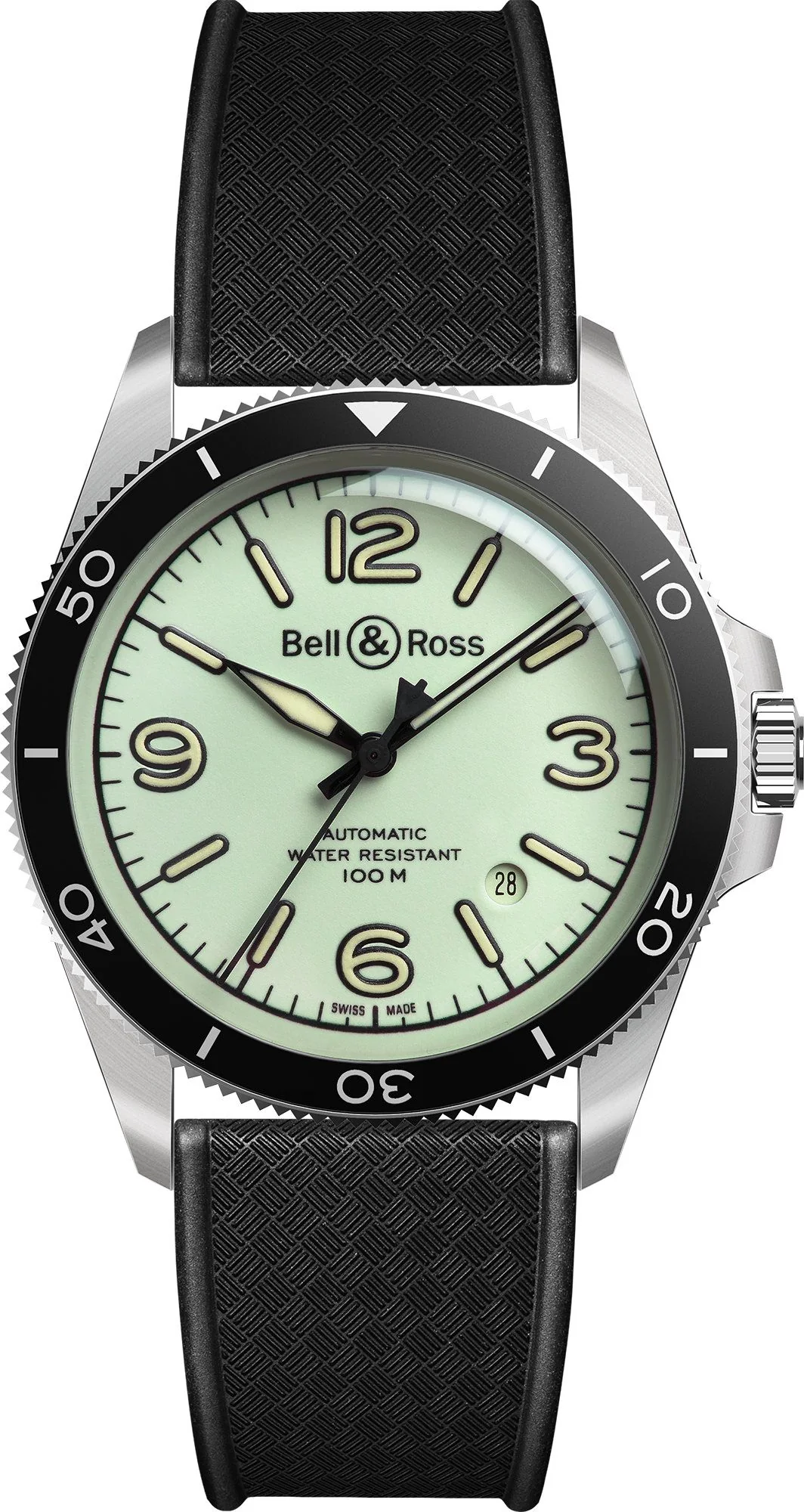
The 4:30 date often appears when a designer wants to keep the major hour markers at 3, 6, 9 and 12 o’clock intact. On a sports watch, these markers can be essential to legibility, especially when generously filled with luminous material. Cutting into the 3 o’clock index to house a date can feel like mutilating the dial. Placing it at 6 o’clock may upset the minute track or interfere with a subdial. The 4:30 window then becomes an escape route.
It slips into a dead zone, between two indices. It sacrifices neither the cardinal marker at 3 o’clock nor the one at 6 o’clock. On paper, it is elegant. On the dial, it can be admirable or frankly awkward. It all depends on the size of the aperture, the colour of the disc, the orientation of the numeral, the typography and, above all, the brand’s ability to own the choice rather than hide it like a sauce stain on a white shirt.
On chronographs, the 4:30 date often makes sense
The chronograph is the natural territory of the 4:30 date. A chronograph dial is already occupied by counters, sometimes a tachymeter scale, a dense minute track, text, a logo, central hands and a chronograph seconds hand. In short, it is a Paris apartment: every square millimetre has a price.
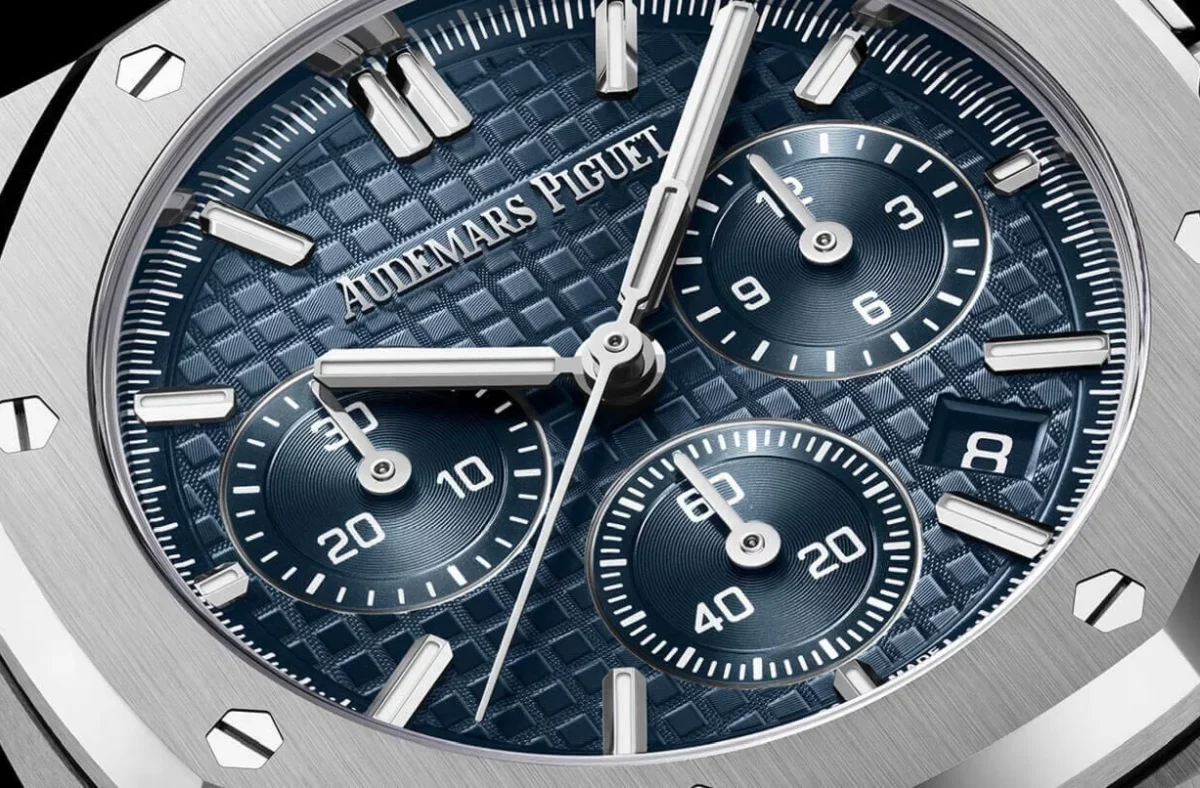
On a tricompax layout, with counters at 3, 6 and 9 o’clock, placing a date at 3 o’clock is impossible without amputating a totaliser. At 6 o’clock, it encroaches on another counter. At 12 o’clock, it disrupts the logo or the vertical balance. What remains is the 4:30 diagonal, which becomes an almost natural solution.
Zenith made it a textbook case. The 1969 El Primero A386, one of the first integrated automatic chronographs in history, already displayed the date between 4 and 5 o’clock. The El Primero calibre beat at 36,000 vibrations per hour, a high frequency that allowed measurement to one-tenth of a second. On the modern Chronomaster Original, this positioning is therefore not a contemporary whim, but a fully embraced heritage.

A movement constraint, not just a designer’s choice
It would be tempting to think the designer places the date wherever they like, as a decorator might move a vase. That is not quite true. A movement is a highly codified machine. The position of the date disc, the construction of the quickset mechanism, the height of the calendar, the diameter of the movement and that of the case all influence the result.
On certain industrial calibres, manufacturers offer several date-disc variants, printed to suit a window at 3 o’clock, 6 o’clock or 4:30. On others, changing the position of the aperture requires a specific adaptation. And in mechanical watchmaking, “specific” often means “more expensive”, that wonderful phrase that can turn a good idea into a crisis meeting.
The 4:30 date can also reveal a mismatch between the diameter of the movement and that of the case. If a relatively small calibre is housed in a large watch, the date disc ends up visually too close to the centre of the dial. The window then appears to float in a strange zone: neither truly peripheral nor truly intentional. It is one of the great sins of certain modern watches: the case has grown, the movement has not. The dial, meanwhile, tells the truth.
Why the numerals are sometimes angled
Another point of irritation is the orientation of the numeral in the window. At 4:30, should the date be printed horizontally, so it reads naturally when you look at the watch straight on? Or should it be aligned with the axis of the aperture, and therefore set diagonally?
Both schools exist. A horizontal date seems more practical. It respects the reader’s eye. An angled date, by contrast, follows the geometry of the dial and can feel more integrated. But it requires a second of adjustment, especially when the numeral is small. At this point, some collectors begin talking about aesthetic crimes. Excessive, perhaps, but not always unfair.
The right choice depends on the watch. On a highly technical chronograph, an angled date can reinforce the instrumental impression. On a dress watch, it can look like a layout error. A Calatrava with a date at 4:30? The very idea deserves an awkward silence.
The real advantages of the 4:30 date
When it is well executed, the 4:30 date has several strengths. It preserves the main indices, particularly useful on dive watches or chronographs. It avoids overloading the dial’s vertical axis. It allows for a more dynamic composition, less static than the eternal 3 o’clock window. It can also become a signature, as at Zenith, where it almost belongs to the vocabulary of the El Primero.
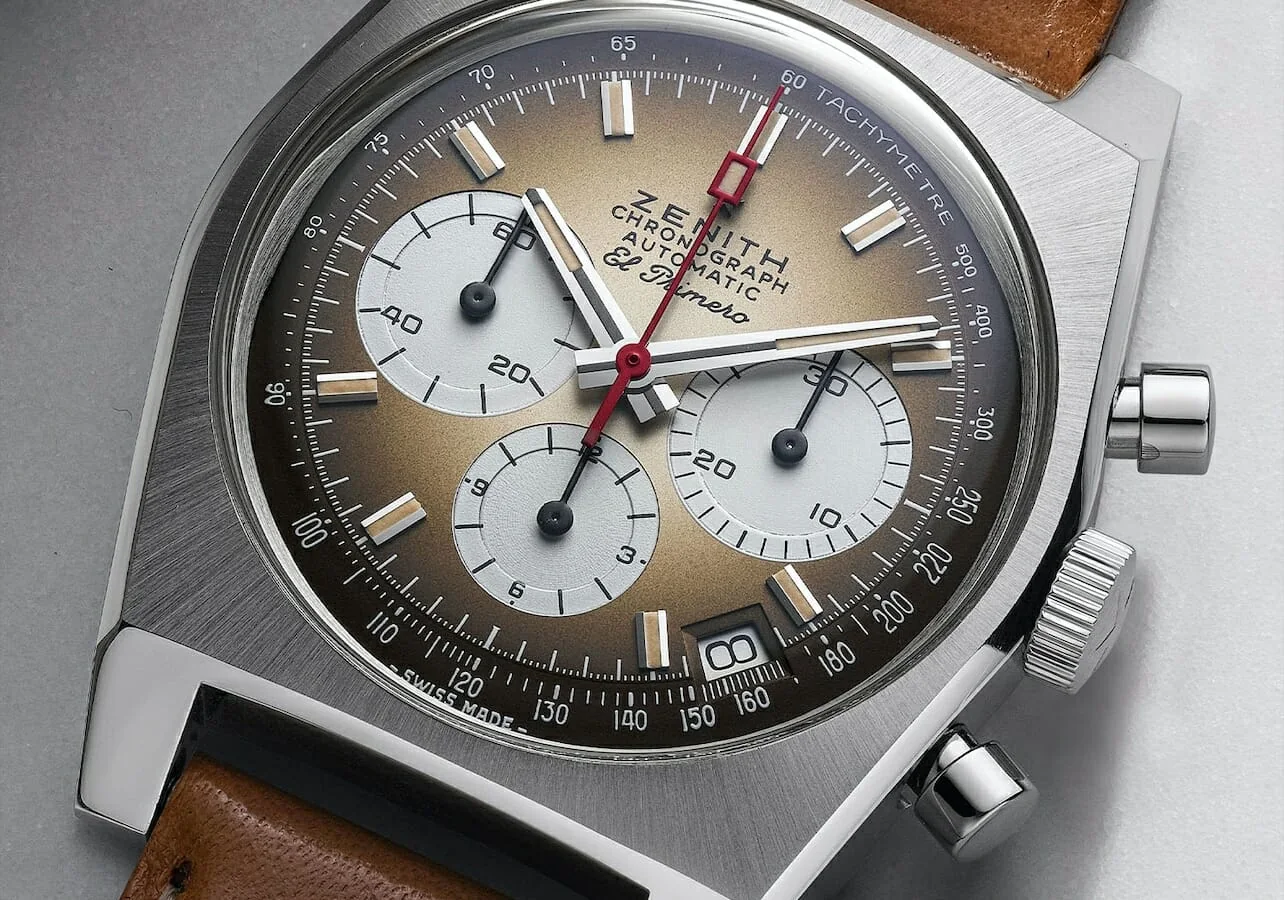
It also has a discreet advantage: it interferes little with subdials. On a chronograph, that is decisive. A poorly placed window within a counter often ruins the readability of the totalisers. At 4:30, the date becomes small, lateral, almost peripheral.
Finally, it can avoid the notorious chopped index. And a truncated marker, especially on a sports watch with large indices, can throw off the entire dial. Enthusiasts forgive many things. A butchered index, far less so.
The drawbacks, because there are some
The 4:30 date can be a brilliant solution. It can also be an admission of failure. Poorly integrated, it gives the impression of having been added after the fact, as if the brand remembered at the last minute that customers wanted to know the day of the month. The result: a small white rectangle lost on a black dial, typography with no relation to the rest, an absurd angle, an immediate visual rupture.
The most common problem remains contrast. A white date disc on a dark dial draws the eye brutally. At 3 o’clock, you get used to it. At 4:30, it becomes a bright comma in one corner of the dial. Some brands correct this with a disc matched to the colour of the dial. It is more expensive, certainly. But on a watch costing several thousand euros, the cost argument quickly becomes comic.
Another drawback is legibility. A small angled window, positioned low on the dial, can require a twist of the wrist. For a complication meant to provide practical information, that is somewhat paradoxical. The date should be read at a glance, not warrant an eye examination.
Date at 3 o’clock, 6 o’clock or 4:30: which should you choose?
The date at 3 o’clock remains the most classic. It is intuitive, effective and historically anchored. It works well on three-hand watches, especially when the design embraces asymmetry. With a magnifier, as at Rolex, it even becomes an identity marker.
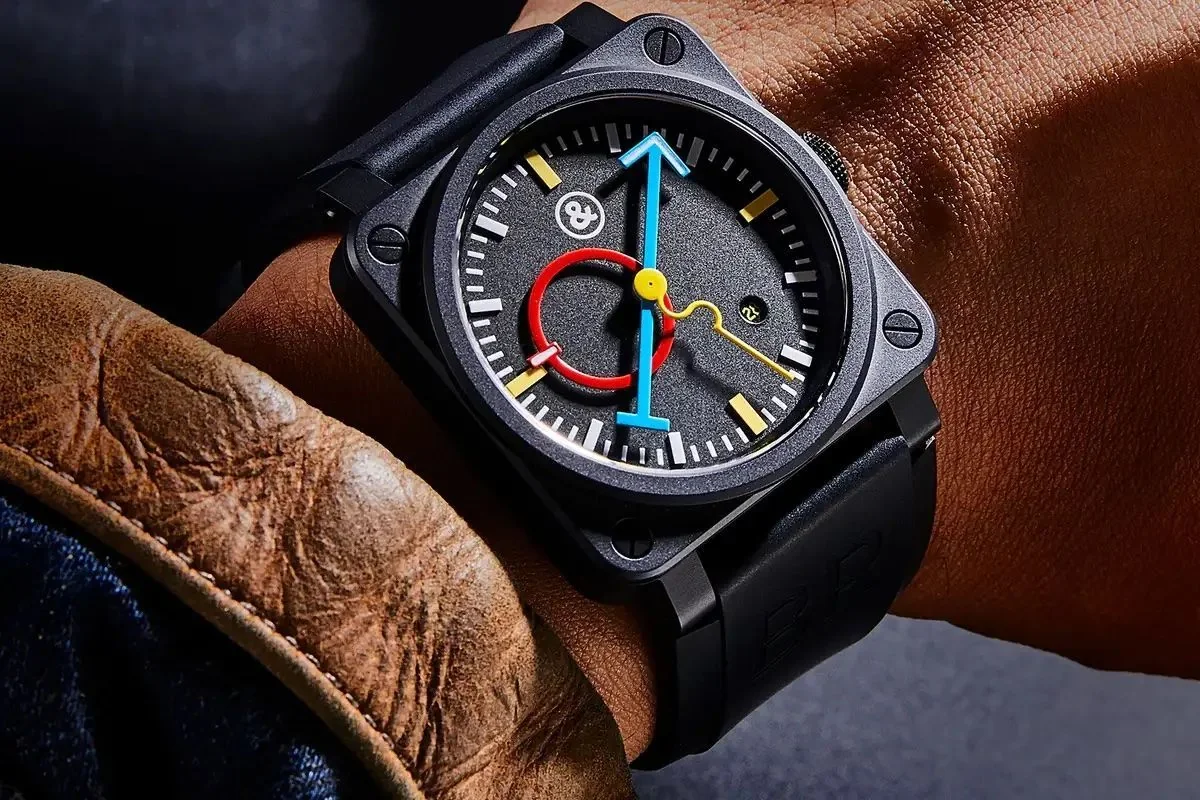
The date at 6 o’clock is often the most balanced. It respects the vertical symmetry of the dial and integrates beautifully into dress or sporty-chic watches. Many enthusiasts prefer it for that reason. It has a kind of visual politeness.
The 4:30 date is more restless. More technical. More divisive. It suits complex dials, chronographs and watches whose design accepts a certain tension. It is rarely neutral. That is why it fascinates as much as it irritates.
So, should you hate the 4:30 date?
No. You simply have to judge it without laziness. A 4:30 date is neither an automatic fault nor a sign of genius. It is a compositional tool. Used well, it saves a crowded dial and respects the architecture of a watch. Used poorly, it betrays approximate design and turns a beautiful piece into a frustrated exercise.
The best test remains simple: forget the spec sheet and look at the watch for five seconds. If your eye lands immediately on the aperture, and only on it, it has failed. If the date exists without shouting, if it serves legibility without breaking the rhythm of the dial, then 4:30 becomes a real watchmaking decision. Not an excuse.
And perhaps that is the charm of this strange position. It reminds us that a mechanical watch is never a freehand drawing on glossy paper. It is a permanent negotiation between beauty, mechanics, cost, history and use.