Greubel Forsey Balancier QM: Museum Quality
When Greubel Forsey Gives Its Exacting Standards a Name
I once had the opportunity to visit Greubel Forsey in La Chaux-de-Fonds. This kind of visit rarely leaves you indifferent. In some manufactures, what you first sense is organisation, production, prestige, the brand narrative. At Greubel Forsey, my memory is different: an atmosphere almost like a watchmaking sanctuary. A place of concentration, silence and gesture. Somewhere you quickly understand that time spent on an invisible component is not an economic anomaly, but a form of loyalty to an idea of watchmaking. A demanding idea, almost austere, but admirable.
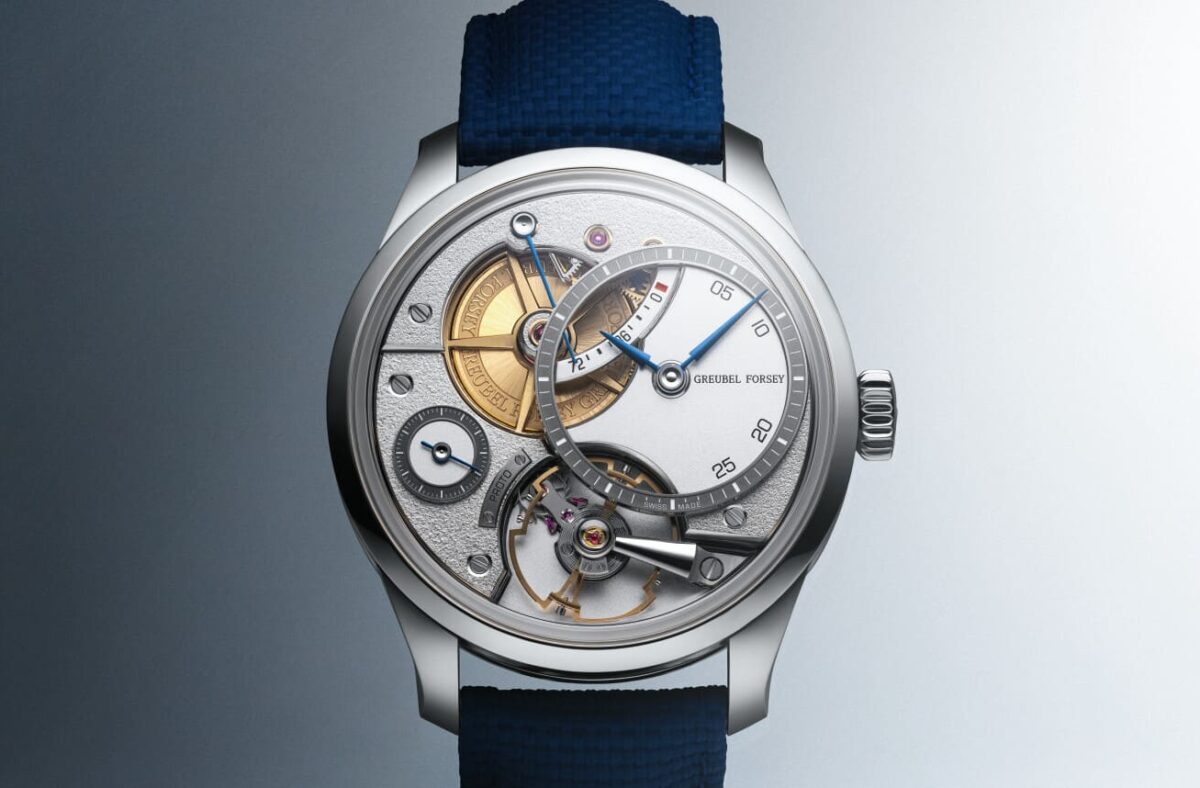
It is in this spirit that the new Greubel Forsey Balancier QM should be considered. Not as just another novelty, nor as a simple exercise in haute horlogerie designed to tick a few technical boxes. This watch has a far more precise subject: hand-finishing taken to a level the maison now calls Museum Quality.
The term is a powerful one. It could even sound solemn. At Greubel Forsey, however, it feels entirely appropriate.
Greubel Forsey Balancier QM: a standard finally given a name
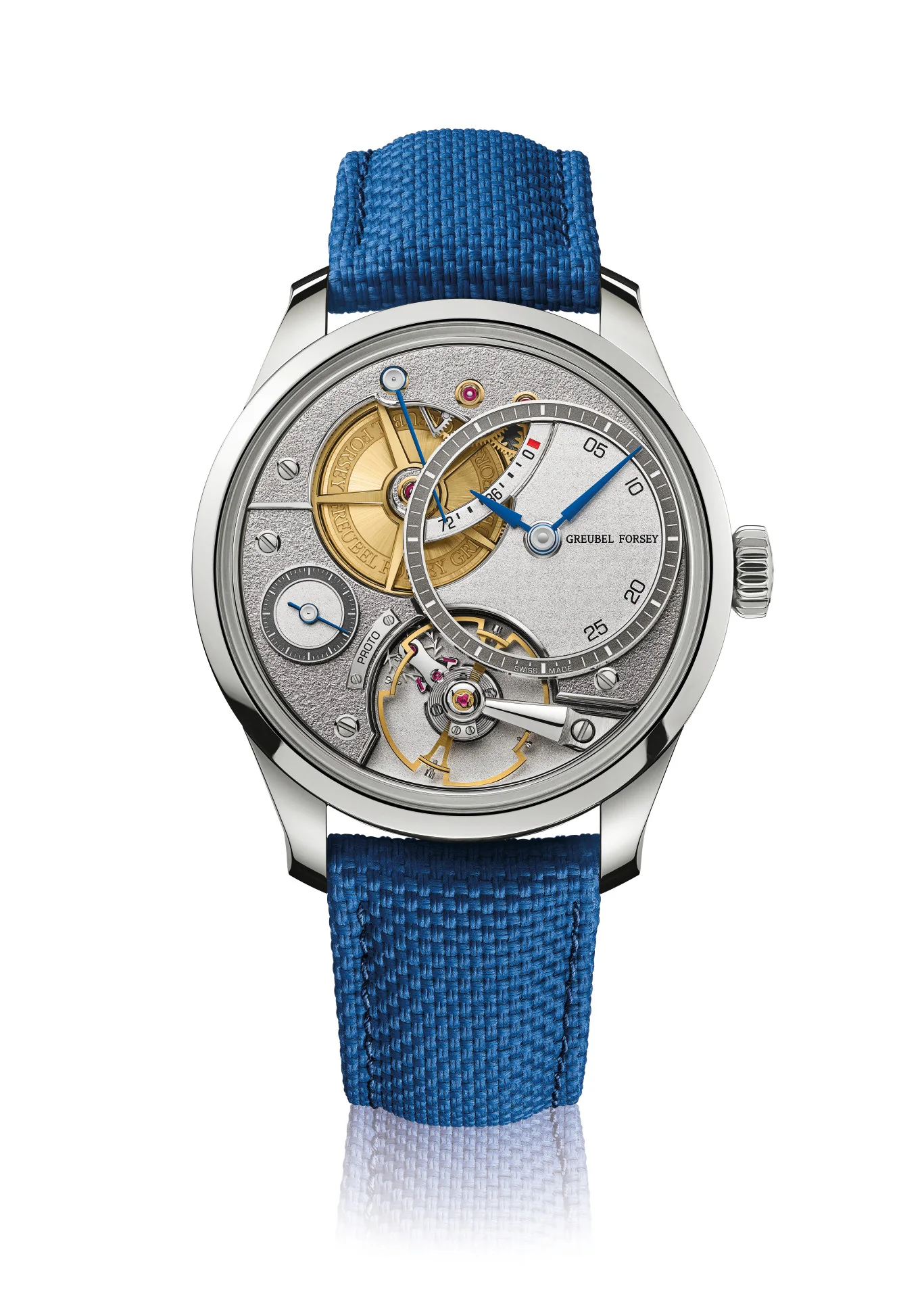
The Balancier QM, reference GF09CM, is the first Greubel Forsey timepiece to officially carry the Museum Quality standard. This standard has not appeared out of nowhere. It had already been applied implicitly to the maison’s creations since its founding in 2004 by Robert Greubel and Stephen Forsey. It had simply never been named quite so explicitly.
The Balancier QM therefore formalises a long-standing level of expectation. Greubel Forsey is not merely creating a watch. The manufacture is giving a name to a discipline, a method, an obsession with execution that has long been one of its strongest signatures.
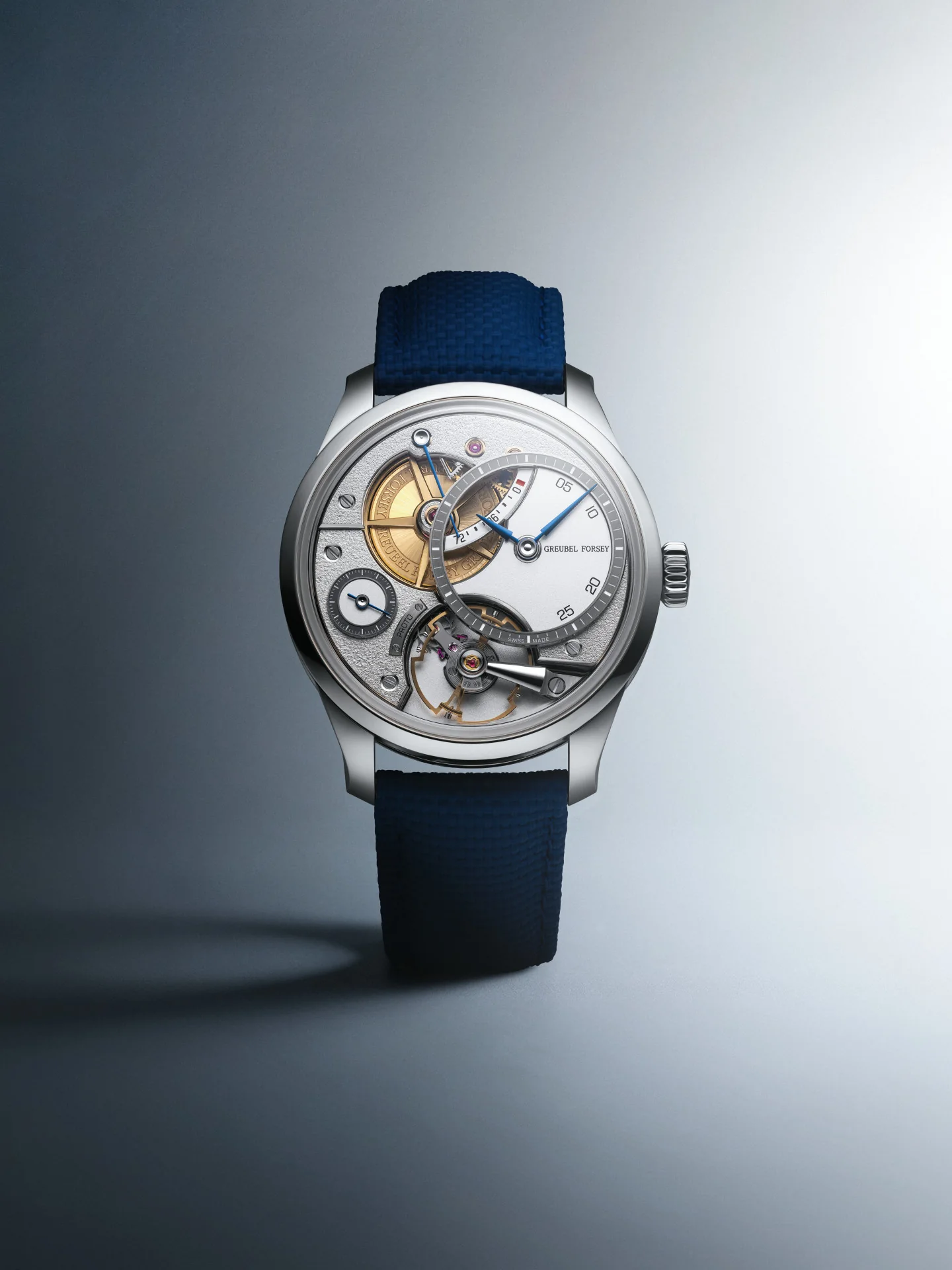
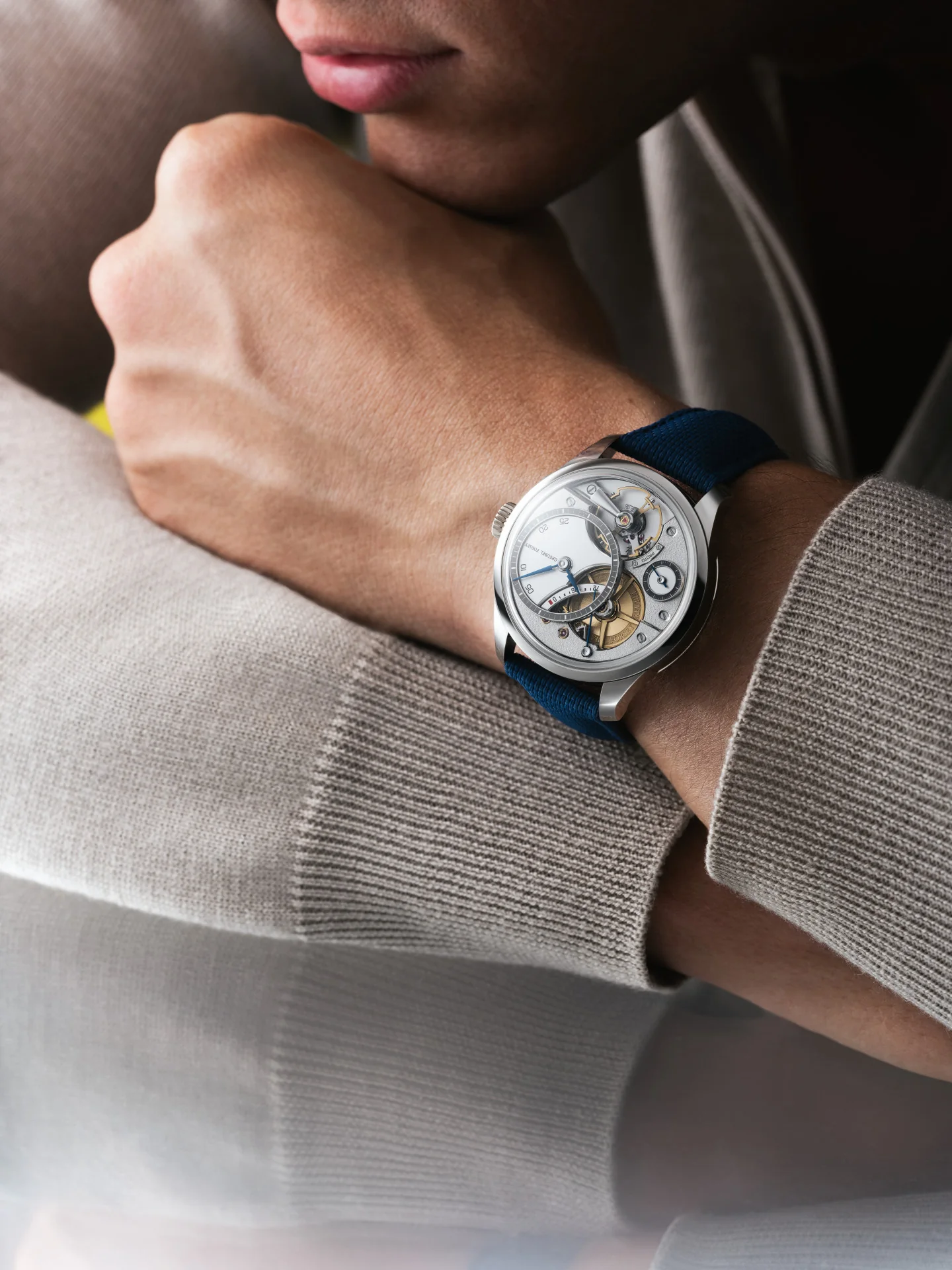
The piece comes in a 39.60 mm white gold case, with a hand-wound movement displaying hours, minutes, small seconds, and a so-called mysterious power reserve. It is limited to 33 pieces.
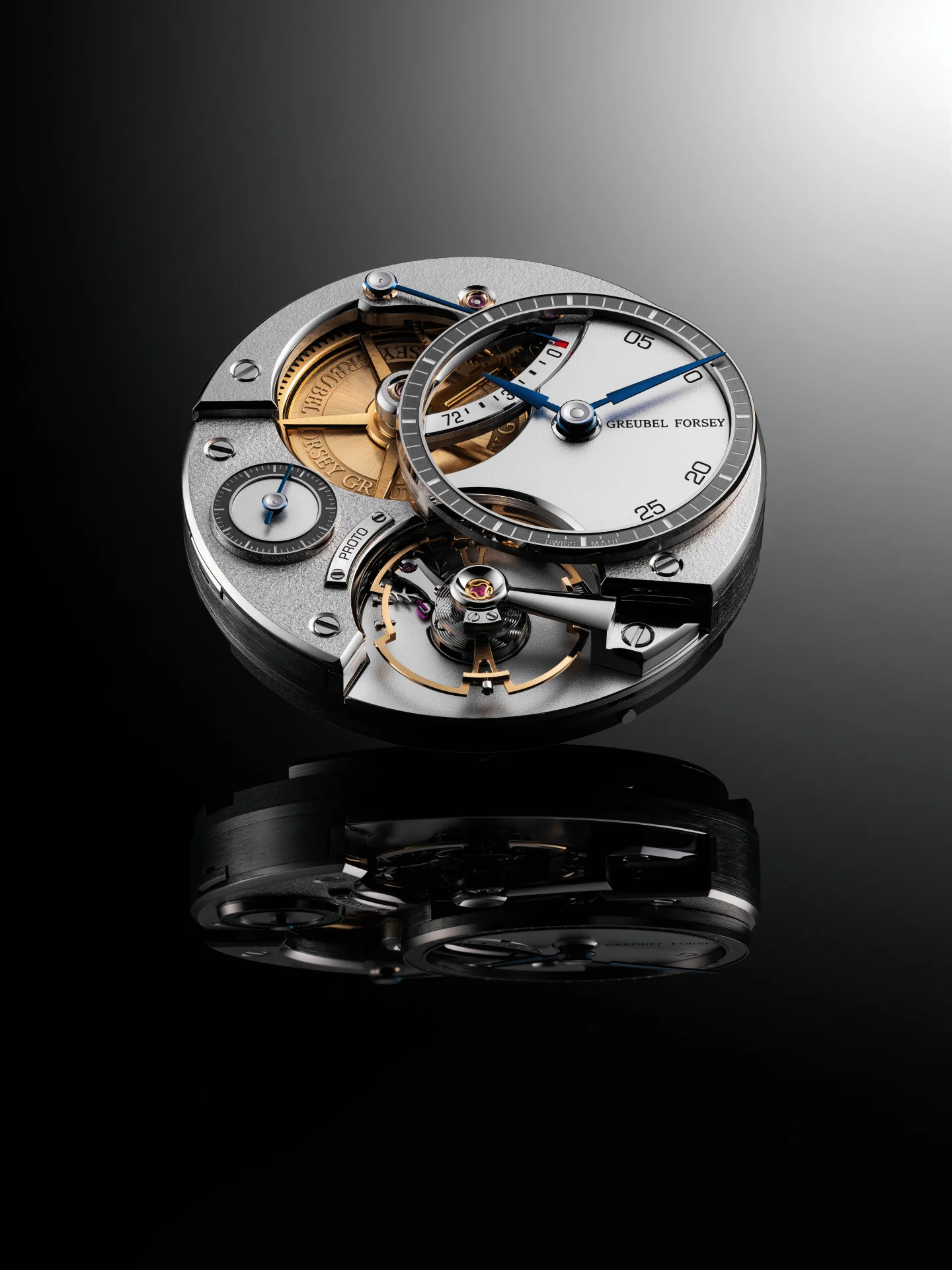
On paper, the functions remain relatively simple for a maison capable of spectacular grand complications. But that is precisely where the Balancier QM becomes interesting. Its purpose is not to add one more complication to the inventory. Its ambition lies in the architecture, the depth, the finishing, and the coherence between what is visible and what is almost never seen.
Museum Quality: what it really means
The expression Museum Quality deserves a closer look. In watchmaking, hand-finishing has become a central topic. Collectors examine bevels, polished surfaces, flanks, hidden surfaces, bridges, springs, clicks, screws, and tiny components that hardly anyone truly looked at just a few decades ago.
When Greubel Forsey was born in 2004, this obsession was not yet so widely shared. Yet Robert Greubel and Stephen Forsey chose to make it a pillar. Not a decorative addition, not luxurious embellishment, but a principle of construction.
With the Balancier QM, this exacting approach is now carried by a dedicated research team within the EWT Laboratory, Greubel Forsey’s Experimental Watch Technology laboratory. The goal is not only to perpetuate traditional finishes. It is to push their limits, improve them, and adapt them to ever more ambitious architecture.
Museum Quality is therefore not merely about the visible beauty of a movement. It implies a deeper requirement: every component must be able to be considered a work in its own right. Even when it measures only a few millimetres. Even when it is partially hidden. Even when it will never be observed by the majority of owners.
It is an almost excessive idea. But Greubel Forsey belongs precisely to that realm of watchmaking where excess can sometimes become a form of truth.
One bridge, seven finishes
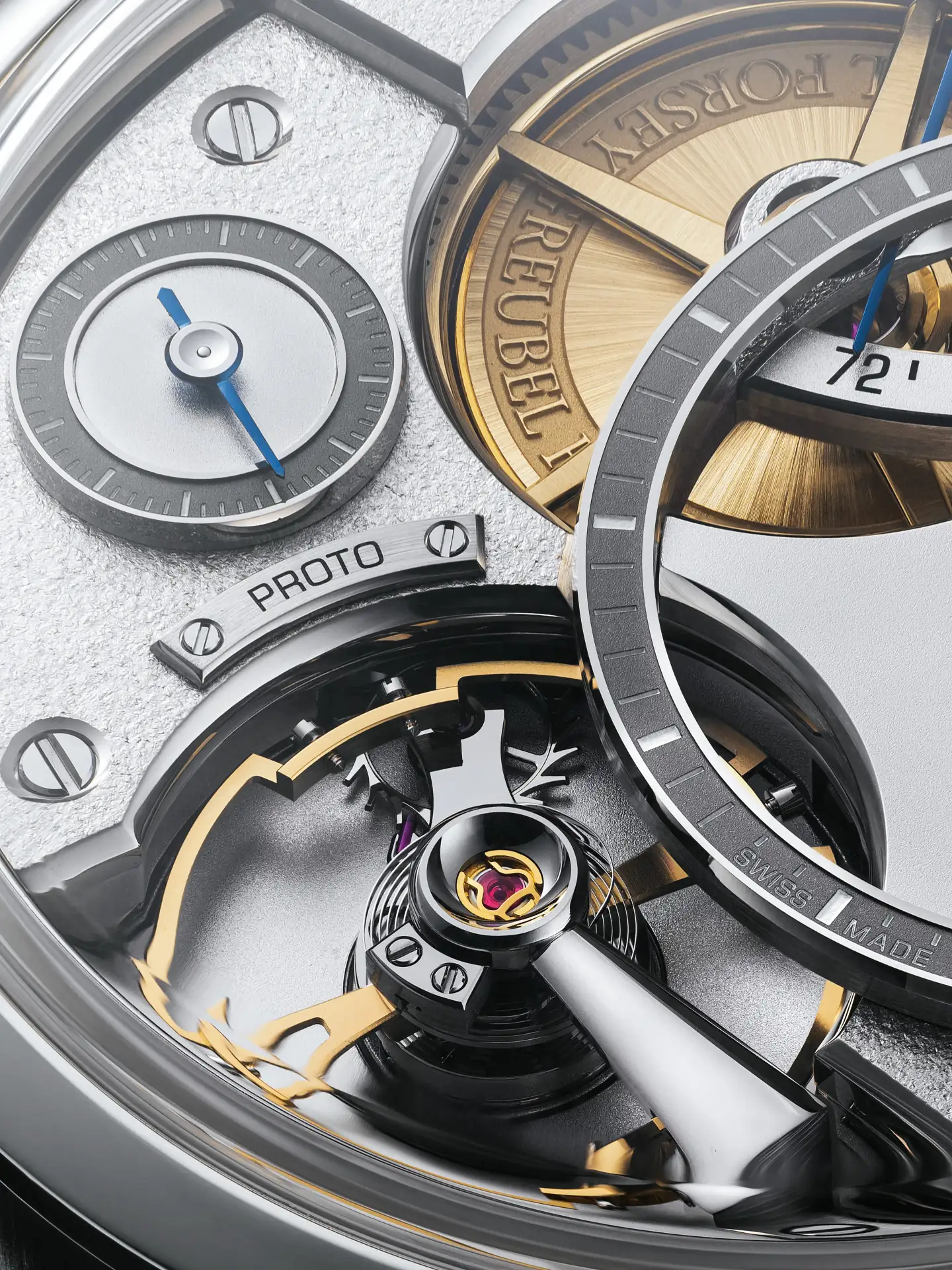
The best example is the bridge that holds the balance. Just a few millimetres of steel, yet seven hand-finishing techniques.
The arm receives a bercé polished finish, worked until a perfect mirror is achieved on its domed profile. The flat surface on the jewel side is straight-grained and flat polished. One surface is pearled. The underside receives circular graining. The visible flanks are hand-polished, while other areas are finished with straight graining. The chamfers and bevels are also hand-polished, with extra-wide 0.40 mm bevels.
Seven operations. On a single bridge.
And this principle then extends to the entire movement, made up of 298 components. That is the true extravagance of the Balancier QM. It is not found in a spectacular complication that can be read at a glance. It lies in the time devoted to transforming every mechanical fragment into a finished, considered, worked and fully assumed object.
This is also what separates a watch of very high finishing from a watch that is merely well decorated. The difference is not always immediately obvious. It reveals itself over time, through observation, through a component’s ability to withstand close scrutiny.
The Greubel Forsey balance at the heart of the piece
The name Balancier QM is not decorative. The regulating organ occupies a central place in the construction of this watch.
Here we find a Greubel Forsey variable-inertia balance measuring 12.60 mm, fitted with six gold adjustment screws. The balance is not simply a technical element placed inside a movement. It becomes a visual, architectural and horological anchor point.
Around it, Greubel Forsey deploys a series of important developments. The double-level escape wheel is bevelled and polished on both sides, with the same care given to hidden surfaces as to visible ones. The pallet stones are convex rather than flat, in order to work the light differently across the ruby. This kind of detail may seem almost unreasonable. Yet it says a great deal about how Greubel Forsey conceives finishing: not as a skin laid over the mechanics, but as a reflection on how each element exists in space.
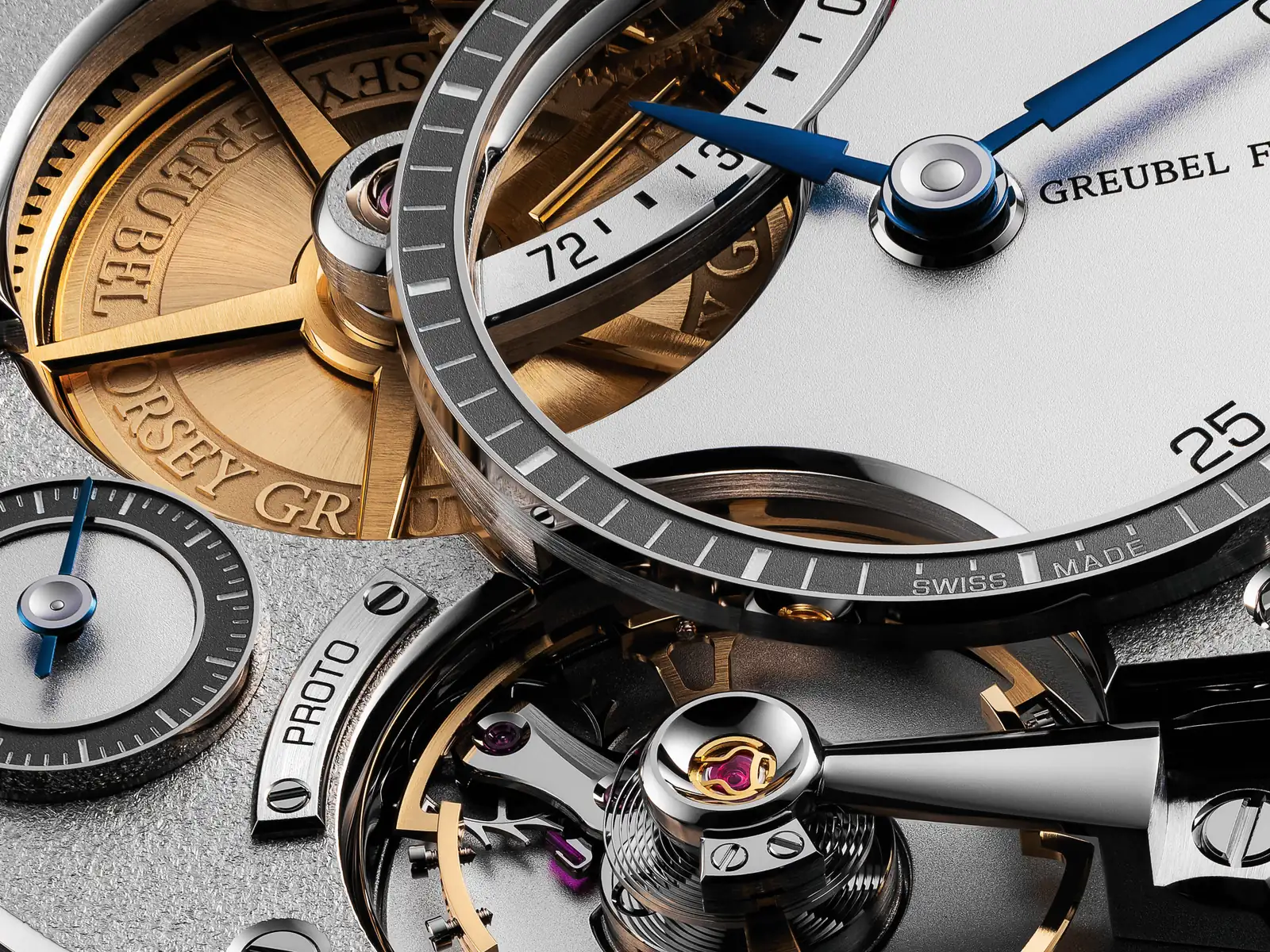
More interesting still, these characteristics will not necessarily remain confined to this edition alone. The new geometry of the escape wheel, the domed pallet stones, the broad bevels and certain polished flanks are intended gradually to inform other creations from the maison whenever they serve the harmony of the whole.
The Balancier QM is therefore not a parenthesis. It is a milestone.
A spring made in-house
One of the most impressive aspects of the Balancier QM is something almost invisible. Greubel Forsey now makes its own spring.
The project dates back to 2012, when the manufacture decided to produce the springs it could not source at the desired level. This involves its own alloy, wire drawn through natural diamond dies, flat rolling with tolerances measured in microns, hand-coiling, then fixing in a precision vacuum furnace.
Most of the equipment used was recovered and restored. It remains period equipment, because the savoir-faire it serves is older than the modern machines that came to replace it.
Greubel Forsey produced its first complete in-house spring for the Hand Made 1 in 2019, then again for the Hand Made 2 in 2025. With the Balancier QM, this production is beginning to extend gradually across all of the maison’s timepieces.
This is an important point. In watchmaking, vertical integration can quickly become a convenient phrase. At Greubel Forsey, it takes on a very concrete meaning here. The manufacture is not trying to make everything itself simply to tick a prestige box. It does so when it considers it necessary to guarantee the promised level of quality.
One component at a time.
Three-dimensional architecture in 39.60 mm
The format of the Balancier QM also deserves attention. 39.60 mm, for a Greubel Forsey piece with such deep architecture, is far from insignificant.
For several years, the maison has been working to reduce the dimensions of its three-dimensional architectures. The Balancier QM brings that ambition to life in a more contained format, without relinquishing the relief and sense of depth that are part of Greubel Forsey’s identity.
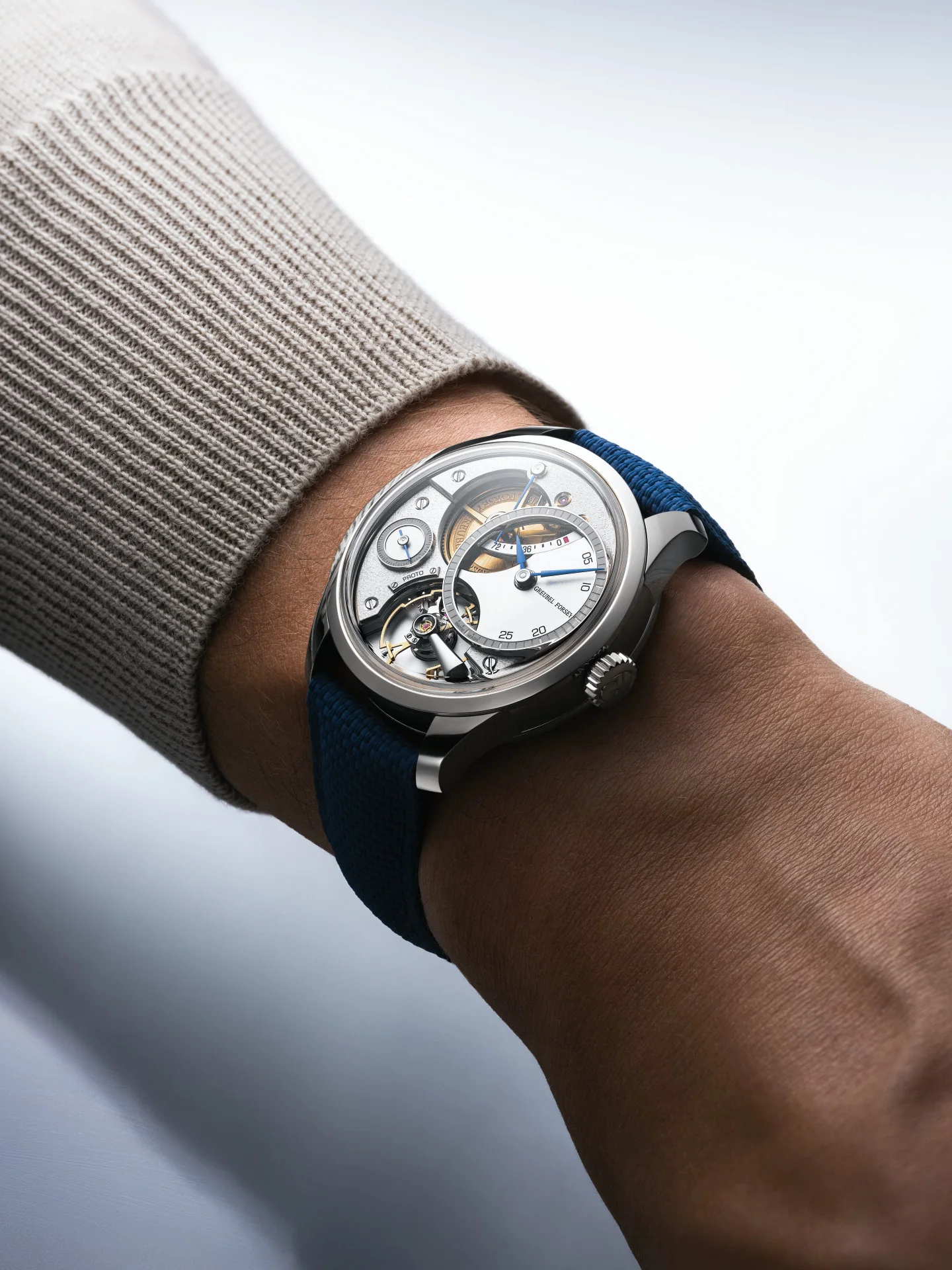
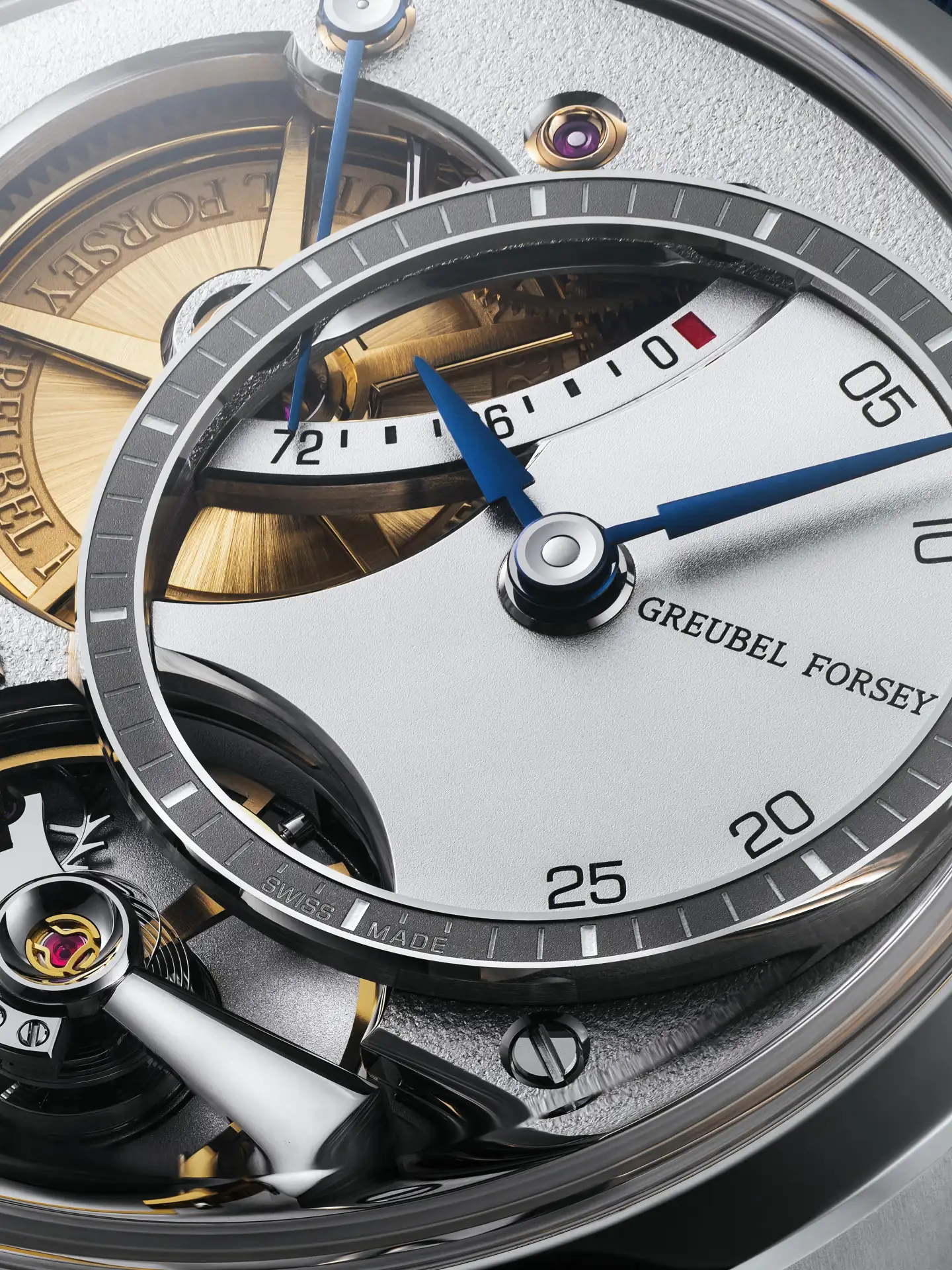
The movement is constructed like a mechanical landscape. The escapement sits deep within the architecture. The eye rises towards the small seconds, positioned on a higher level, then descends towards the barrel, before returning to the flame-blued steel hands. Higher still, the hour ring accommodates the mysterious power-reserve hand, which slips beneath it to display the available 72 hours on a sector.
Two domed sapphire crystals create the space needed to let this composition breathe. This choice is anything but gratuitous: it preserves the sensation of depth without excessively enlarging the case.
The result seems to concentrate two directions rarely reconciled: the relative compactness of the format and the spatial complexity of the movement.
A mysterious power reserve
The power reserve of the Balancier QM contributes to this reading in depth. It is not treated as an indication applied to the dial, but as an element integrated into the architecture.
The mysterious hand slips beneath the hour ring and indicates the 72 hours of chronometric power reserve on a sector. The idea is not only functional. It gives the dial additional visual movement, a circulation of the eye, a way of linking the display to the different levels of the movement.
In such a carefully worked watch, the power reserve is therefore not an accessory. It contributes to the overall construction.
Visible and invisible: the same exacting standard
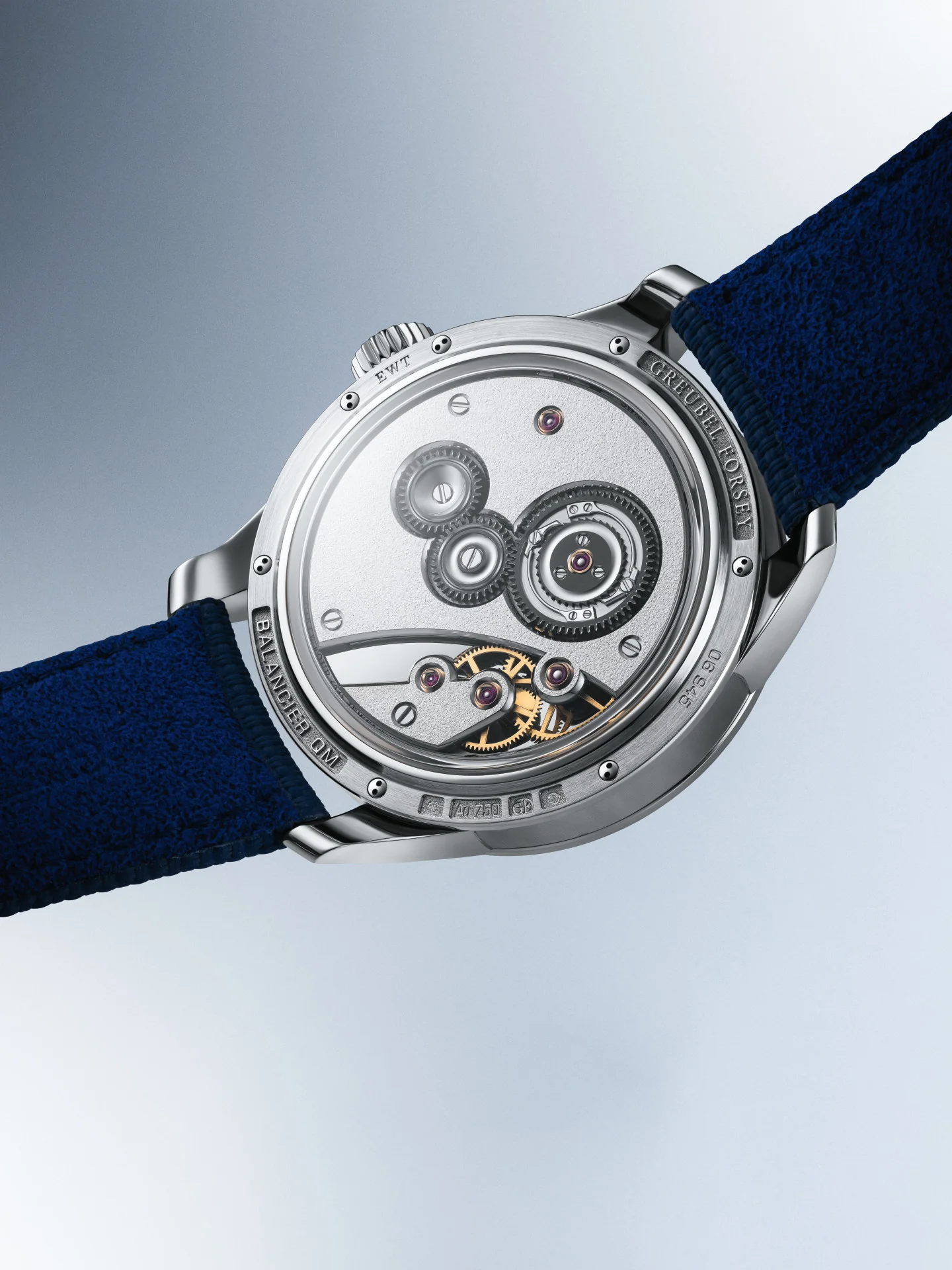
The back of the Balancier QM follows exactly the same logic. The winding system occupies an important place there, with openworked wheels polished by hand, bevelled and polished teeth, clicks and springs with flat black polishing, and bevelled edges that follow each component without interruption.
But the most revealing aspect is not only what one sees. It is what one does not always see.
Greubel Forsey applies the same level of finishing to visible and invisible components. The steel parts of the winding mechanism, even when they almost always escape the eye, receive the same attention. This is where Museum Quality takes on its full meaning.
Working only on what is visible would reduce finishing to an argument of immediate seduction. Here, it becomes a discipline. A way of making. Almost an ethic.
At Greubel Forsey, finishing is not merely a spectacle. It is a method applied even to the areas where the eye almost never goes.
A secret plate engraved “Qualité Musée”
The most interesting detail may be the most discreet. Inside the movement is a secret plate engraved with the words Qualité Musée. It is the only appearance of this name anywhere in the timepiece.
Greubel Forsey could have displayed this mention on the dial, made it a visible element, an immediately recognisable sign. The maison chooses the opposite. The name exists, but it remains hidden within the movement.
That choice is highly revealing. Museum Quality is not used as a surface-level slogan. It is inscribed within the intimate construction of the watch, where only those who know to look will fully understand its presence.
For a maison that claims such exacting finishing standards, this discretion is more eloquent than a frontal inscription.
The Balancier QM points to what comes next
The Balancier QM is not merely an isolated piece within the Greubel Forsey collection. It opens a new phase.
The maison has announced a series of creations responding to the same ambition in increasingly compact formats. A new Nano Foudroyante is due to follow later in the year with a diameter of 37.9 mm. A new movement housed in a 39.5 mm convex case is planned before the end of 2026. A new invention measuring 39.5 mm has been announced for 2027, along with an innovative 38.5 mm movement.
This direction says a great deal about Greubel Forsey’s current trajectory. The maison is not merely seeking to impress through complexity or volume. It wants to concentrate its savoir-faire further, work on density, and reduce formats without sacrificing architecture.
It is a fascinating programme, especially at a time when many brands seem to be rediscovering the importance of more restrained proportions.
Doing better, not necessarily producing more
The Balancier QM also reaffirms a rare position: quality before volume.
Greubel Forsey specifies that this level of expectation could even lead to a reduction in production in 2027. This point deserves to be noted. In an industry where growth is often presented as self-evident, the maison embraces a different logic: not measuring itself by the number of pieces produced, but by the level of execution achieved.
That sentence might sound easy if it came from just any brand. In the case of Greubel Forsey, it corresponds to a tangible reality. The manufacture of components finished to this level, the development of in-house springs, research within the EWT Laboratory, hand-finishing pushed into invisible areas: all of this costs time, labour, concentration and production capacity.
The objective is not to do more. The objective is to do better.
And in this segment of watchmaking, that difference matters enormously.
My view on the Greubel Forsey Balancier QM
The Greubel Forsey Balancier QM should not be seen as a simple three-hand watch with small seconds and a power reserve. That would miss the point. Its true complication, if one can say so, lies in the execution.
The piece gives a name to what Greubel Forsey has practised since its origins: a form of almost absolute exactingness applied to every component. The term Museum Quality is ambitious, perhaps even a little intimidating. But it corresponds rather well to what the maison represents within the landscape of independent haute horlogerie.
The 39.60 mm format makes the whole even more interesting. Here, Greubel Forsey is working on a more concentrated, more wearable, denser form of haute horlogerie, without abandoning the architectural depth that forms part of its signature.
And then there is that personal memory of La Chaux-de-Fonds. That atmosphere of a manufacture apart, almost silent, where one senses that every gesture carries weight. The Balancier QM extends exactly that impression. This is not a watch designed to please quickly. It is a piece that asks for time, attention, a trained eye, almost an inner disposition.
Watchmaking can still be this: not merely the measurement of time, but the patient demonstration of what the human hand is capable of achieving when it refuses the shortcut.
Technical specifications of the Greubel Forsey Balancier QM
Model
- Greubel Forsey Balancier QM
- Reference: GF09CM
Case
- Material: white gold
- Diameter: 39.60 mm
- Crystals: two domed sapphire crystals
Movement
- Hand-wound mechanical movement
- Three-dimensional architecture
- 298 components
- Finishing standard: Museum Quality
Functions
- Hours
- Minutes
- Small seconds
- Mysterious power reserve on a sector
Regulating organ
- Greubel Forsey variable-inertia balance
- Diameter: 12.60 mm
- Six gold adjustment screws
- New double-level escape wheel
- Convex pallet stones
Power reserve
- 72 hours
Finishing
- Hand-finishing applied to every component
- Seven finishing techniques on the balance bridge
- Extra-wide 0.40 mm bevels
- Bercé polishing
- Flat polishing
- Perlage
- Circular graining
- Straight graining
- Hand-polished flanks
- Flat black polishing on certain visible and invisible components
Special features
- Spring made in-house
- Secret plate engraved “Qualité Musée”
- First Greubel Forsey timepiece to officially carry the Museum Quality standard
Edition
- Limited to 33 pieces