What Is a Doctor’s Watch (Pulsometer)

Long before optical sensors, smartwatches and electronic oximeters, mechanical watchmaking had already found an elegant solution to a very practical problem: measuring heart rate. This is the origin of the doctor’s watch, known as the pulsometer watch.
At the crossroads of medical science and horological precision, this complication tells a fascinating story. A story of genuine utility, far removed from decorative complications. A story in which the watch is not a piece of jewellery, but an instrument.
The pulsometer watch: a medical tool first and foremost
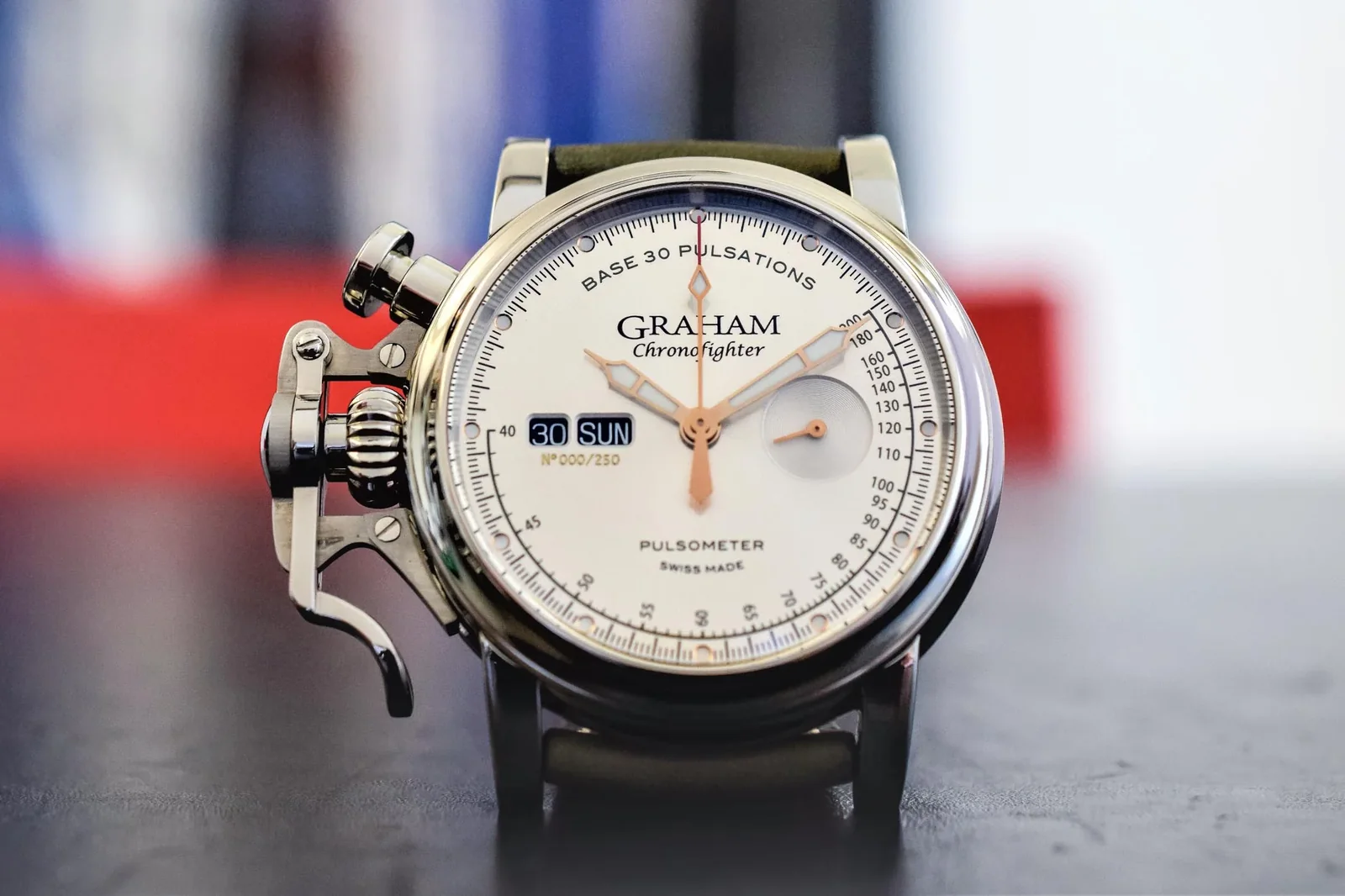
In most cases, a pulsometer watch is a chronograph fitted with a specific scale called a pulsometer. This scale, printed on the dial or around its periphery, allows the wearer to calculate a patient’s heart rate in just a few seconds.
The principle is remarkably simple. The doctor starts the chronograph at the moment a heartbeat is felt. He or she then counts a fixed number of beats, usually 15 or 30 depending on the chosen scale. Once that number is reached, the chronograph is stopped. The hand then directly indicates the number of beats per minute on the pulsometer scale.
No mental calculation. No conversion. The information is immediate.
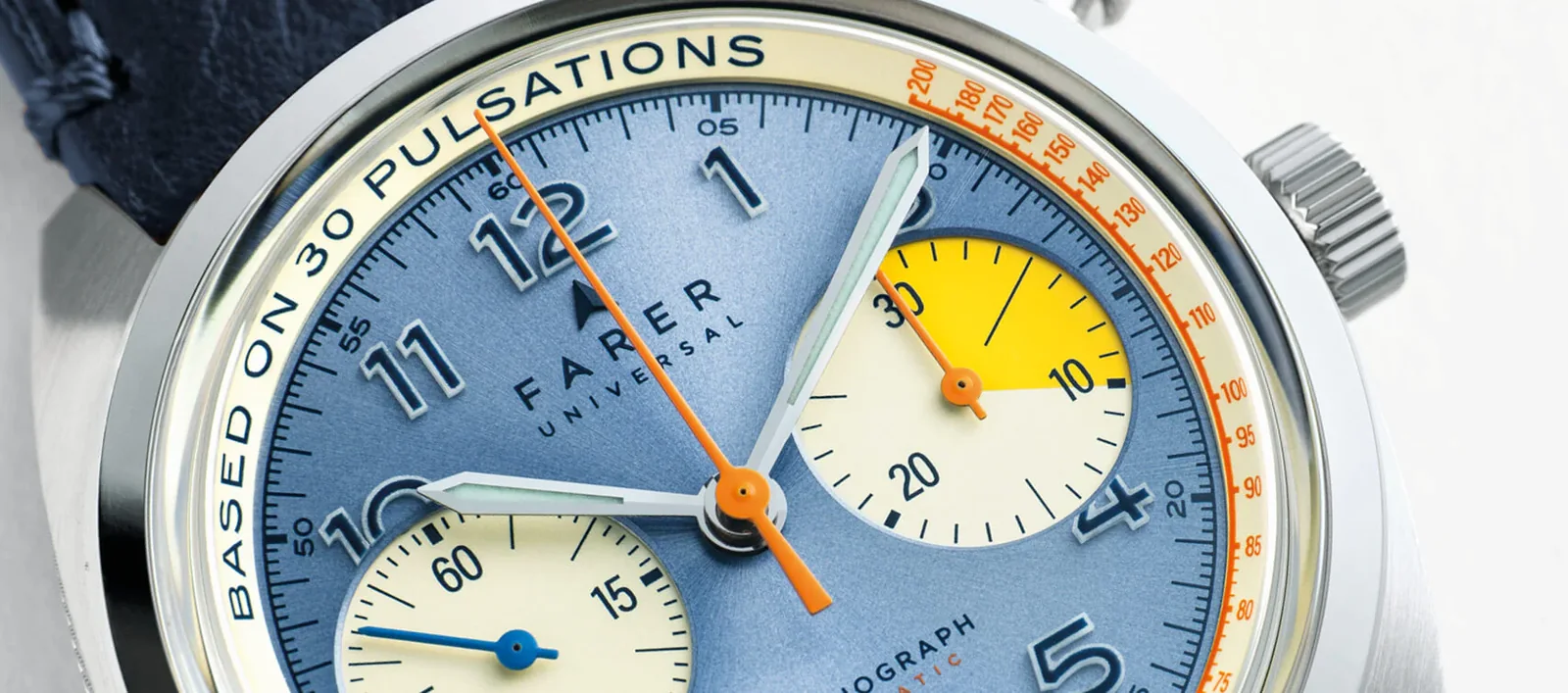
This system emerged at the end of the 19th century, when chronographs became sufficiently precise and reliable for scientific use. Swiss manufactures quickly recognised the value of integrating these medical scales directly onto watch dials.
Longines, Omega, Universal Genève, and later Patek Philippe and Vacheron Constantin all produced chronographs specifically intended for doctors.
Understanding the pulsometer scale
Let this eminent doctor known to all of us (don’t pretend otherwise…) explain:

“Visually, the pulsometer scale looks like a graduation running around the chronograph dial. It often bears the inscription Pulsometer followed by an indication such as Graduated for 15 pulsations or Graduated for 30 pulsations.
This detail is essential, as the entire scale depends on it. The logic is mathematical. If the hand takes 10 seconds to measure 15 beats, the watch automatically converts this duration into beats per minute using the scale.
The higher the number of beats counted, the more accurate the measurement. In practice, many doctors preferred scales based on 30 beats.”
-Thank you, Doctor.
This detail also explains the very distinctive appearance of certain pulsometer dials. The numerals may seem irregular, sometimes compressed on one side and more spaced out on the other. This simply reflects the conversion of time into heart rate.
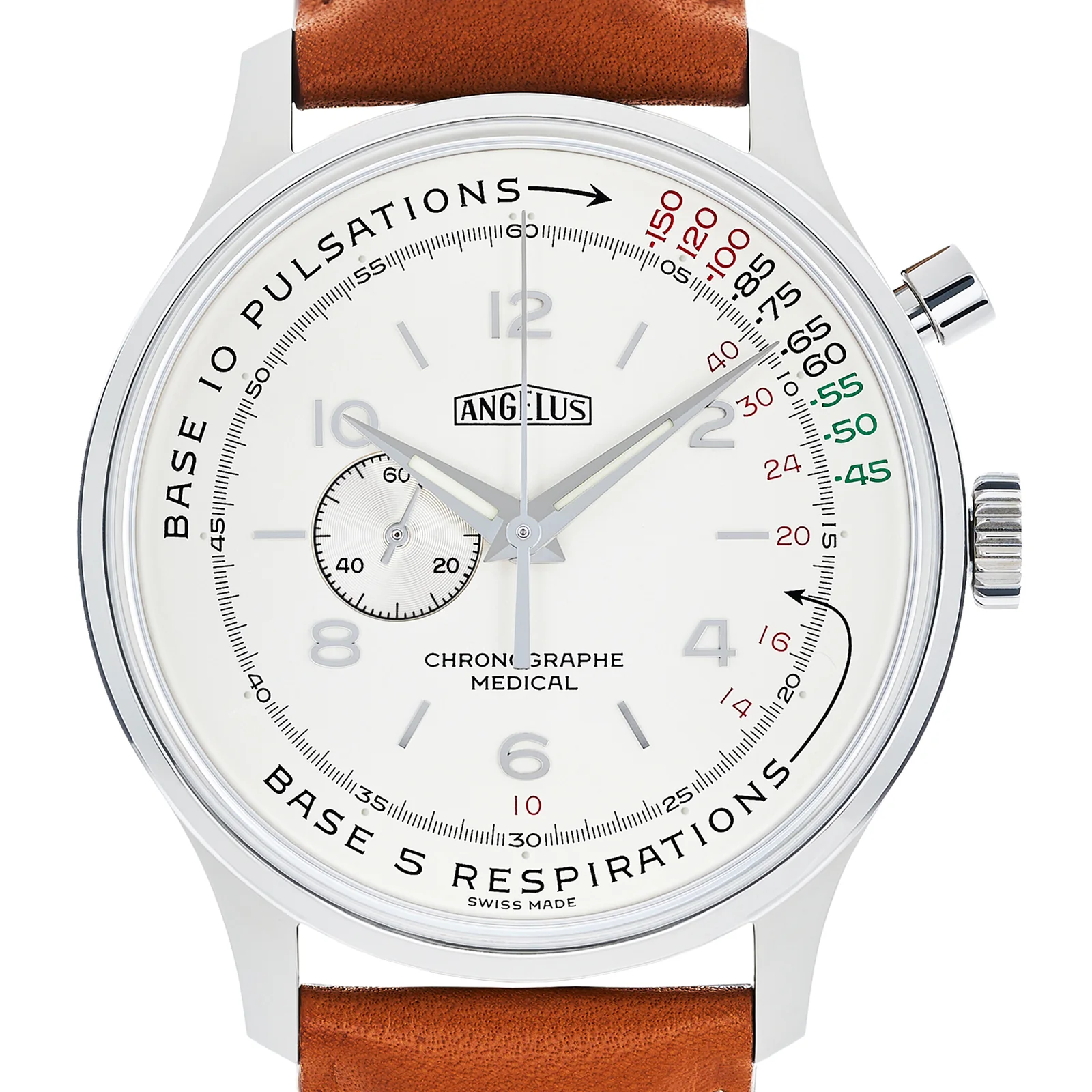
The chronograph: the mechanical heart of the doctor’s watch
The pulsometer complication relies entirely on the chronograph. Without it, no measurement is possible.
The chronograph is a function that measures a time interval independently of the main time display. It features a dedicated central hand, often accompanied by subdials for minutes or hours.
In a classic doctor’s watch, operation is very straightforward:
- press the pusher to start the chronograph
- manually count the beats
- press the pusher to stop
- read the result directly on the pulsometer scale
Early models often used column-wheel chronograph movements, prized for their smooth operation and precision. Legendary calibres such as the Longines 13ZN or Valjoux 22 can be found in many historic medical watches.
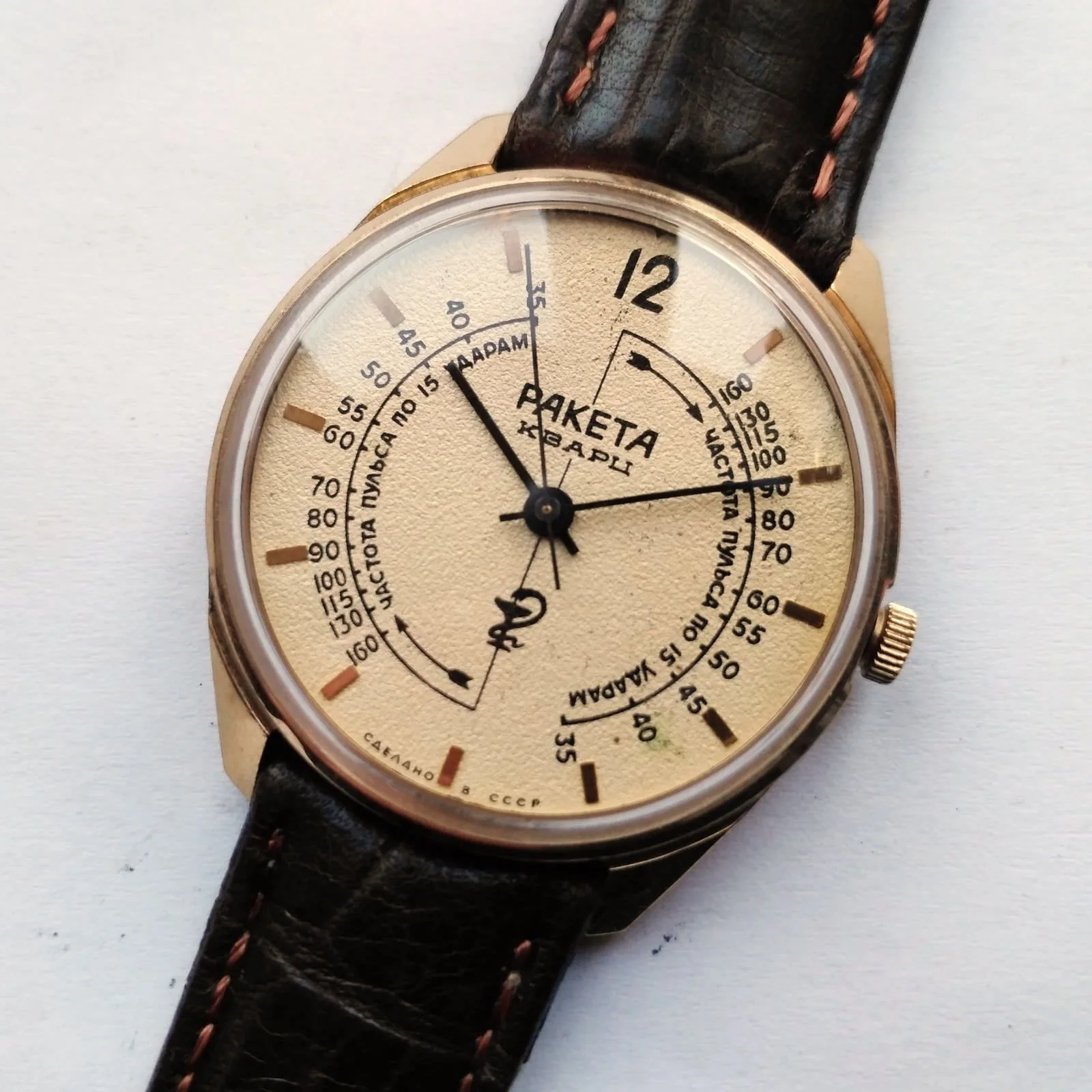
The golden age of doctor’s chronographs
The 1930s to 1950s represent the golden age of pulsometer watches. Chronographs became more accessible, more robust, and clinical medicine still relied heavily on analogue instruments.
The dials of these watches are often stunning. Many feature a bi-compax layout with two subdials, a pulsometer scale around the edge, and highly legible Arabic numerals. Everything is designed for quick reading.
Some models even incorporate multiple scientific scales:
- pulsometer for heart rate
- telemeter to measure distance using the speed of sound
- tachymeter to calculate speed
The result is these spectacular dials, almost saturated with information, yet governed by a brilliantly logical scientific purpose.
Swiss watchmakers competed in ingenuity, sometimes using spiral pulsometer scales that wind toward the centre of the dial. A bold graphical choice, but one that enhances reading precision.
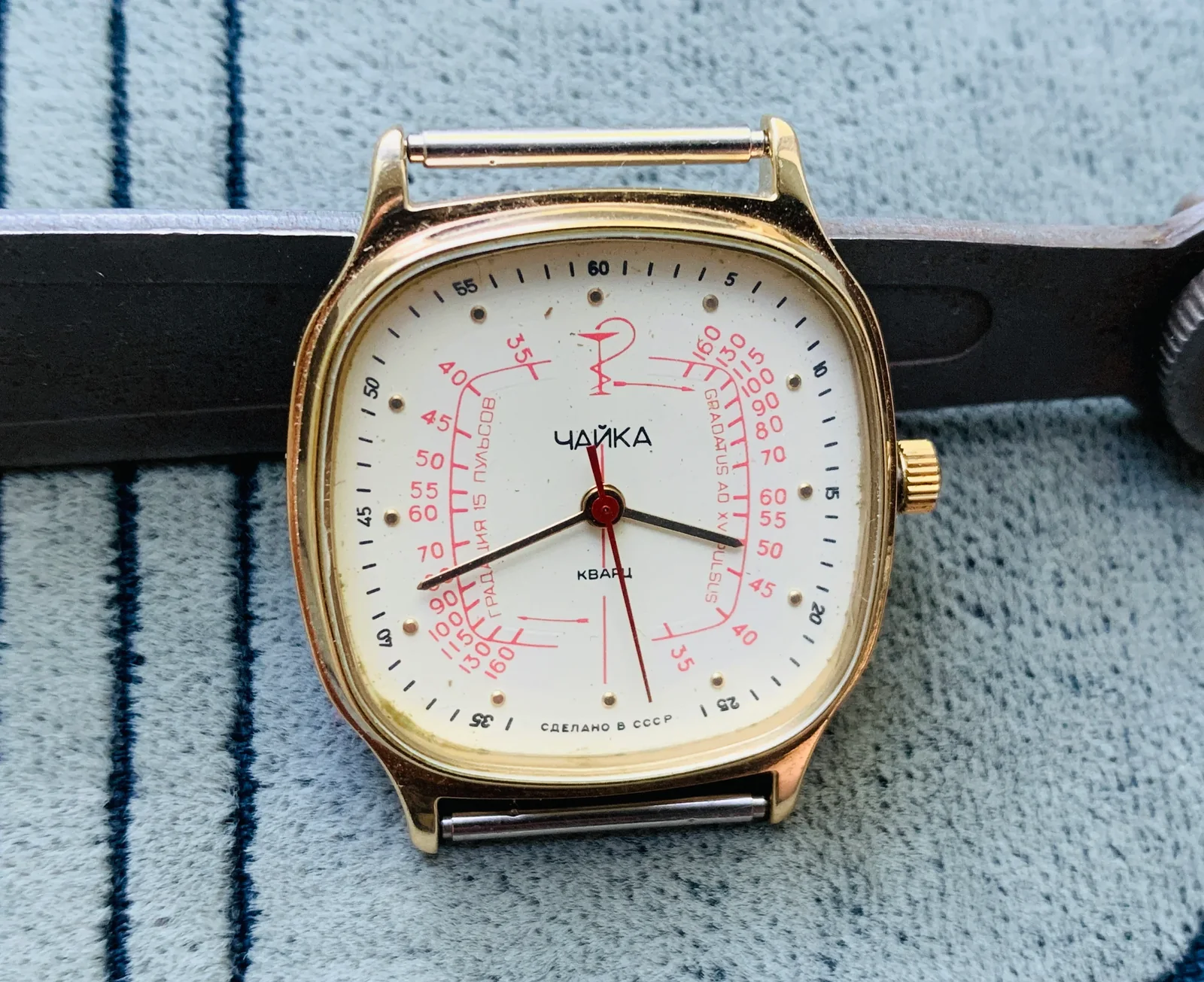
Famous examples of pulsometer watches
Longines Pulsometer Chronograph
Longines has one of the richest histories in this field. The brand was already producing medical chronographs in the early 20th century, notably with the famous 13ZN calibre, considered one of the finest chronograph movements ever made.
The Saint-Imier-based maison has regularly paid tribute to this heritage. One of the most well-known modern interpretations is the Longines Pulsometer Chronograph, directly inspired by medical models from the 1920s.
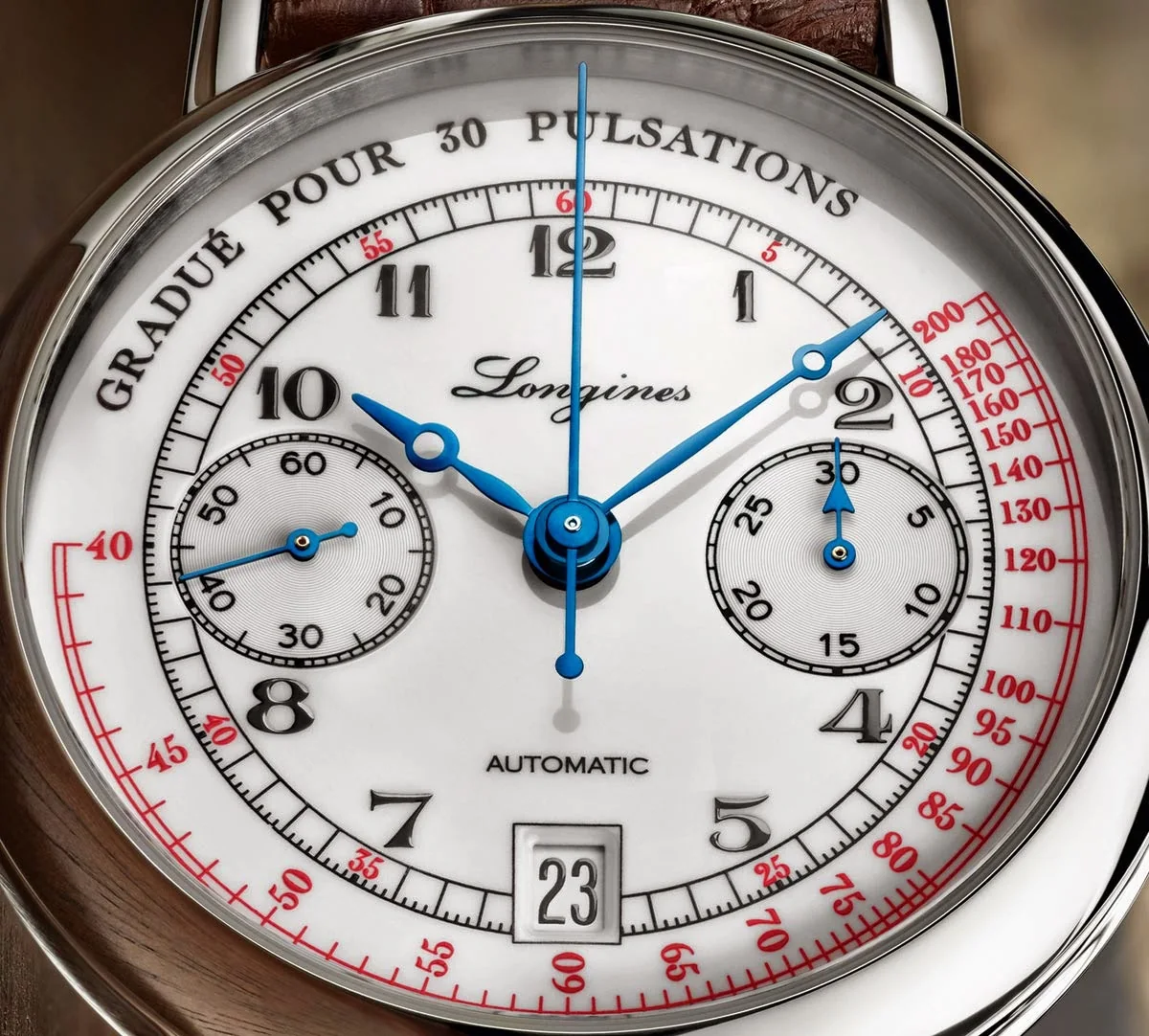
The white enamel dial, high-contrast black numerals and red pulsometer scale create a vintage style that is extremely faithful to period medical instruments.
The watch was priced at a few thousand euros when it was released, making it one of the more accessible entry points into the world of medical chronographs.
Patek Philippe Chronograph pulsometer ref. 7150R
In a far more exclusive register, Patek Philippe has incorporated a pulsometer scale into certain classic chronographs.
Reference 7150R, for example, combines a manually wound chronograph with a medical scale printed on a superb opaline dial. The result is quintessentially Patek: scientific, refined, almost aristocratic.
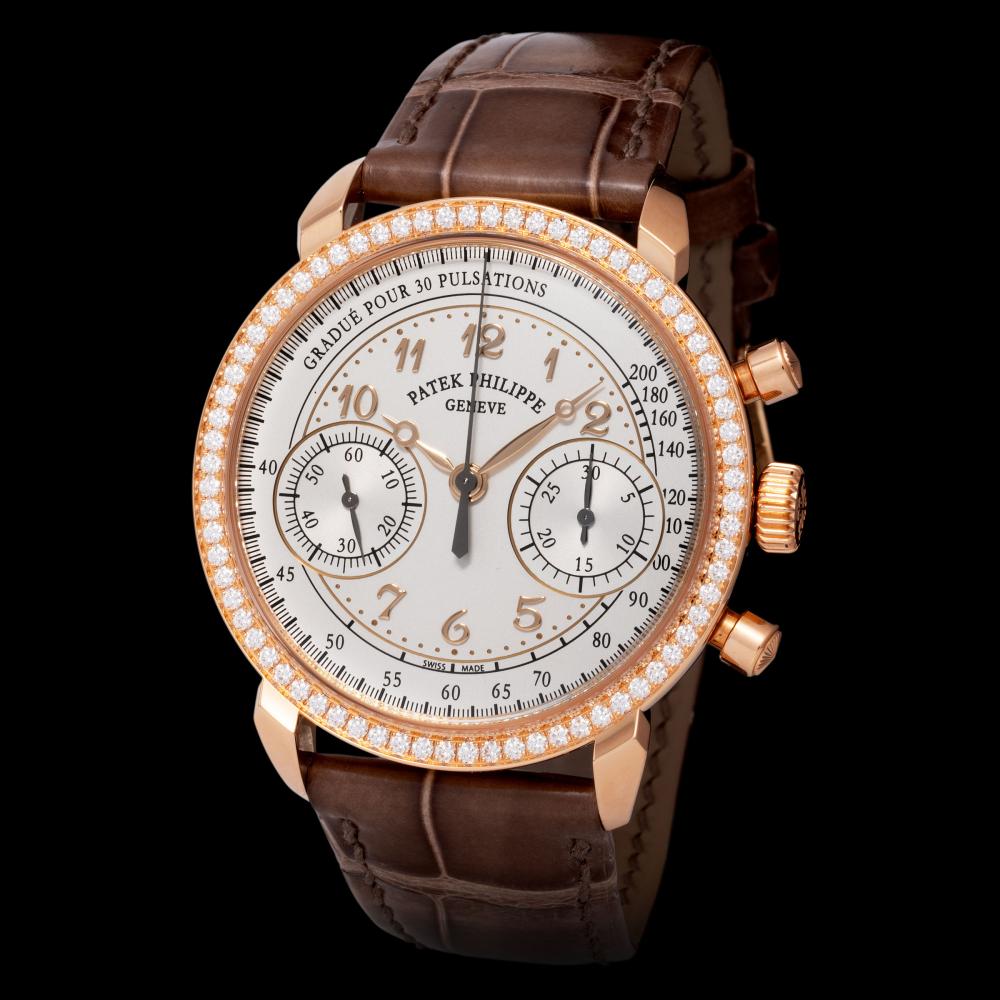
The price comfortably exceeds 70,000 euros, proof that even a complication born in doctors’ offices can become an object of high horology.
Why these watches are still sought after today
Let’s be honest. No doctor today measures a patient’s pulse with a mechanical chronograph. Pulsometer watches have been replaced by electronic tools that are infinitely faster.
And yet, these watches continue to fascinate collectors.
Why? Because they tell a very particular chapter in watchmaking history: a time when the watch was a genuine professional instrument. Like pilot’s watches, diving watches or racing chronographs.
The pulsometer is not decorative. It is a function born of a real need.
Add to that highly graphic dials, perfect legibility and a distinctive scientific charm, and it becomes clear why these medical chronographs are so sought-after on the vintage market today.
Some pieces from the 1940s or 1950s now achieve very high prices at auction, particularly those signed by Longines, Universal Genève or Rolex in their multi-scale versions.
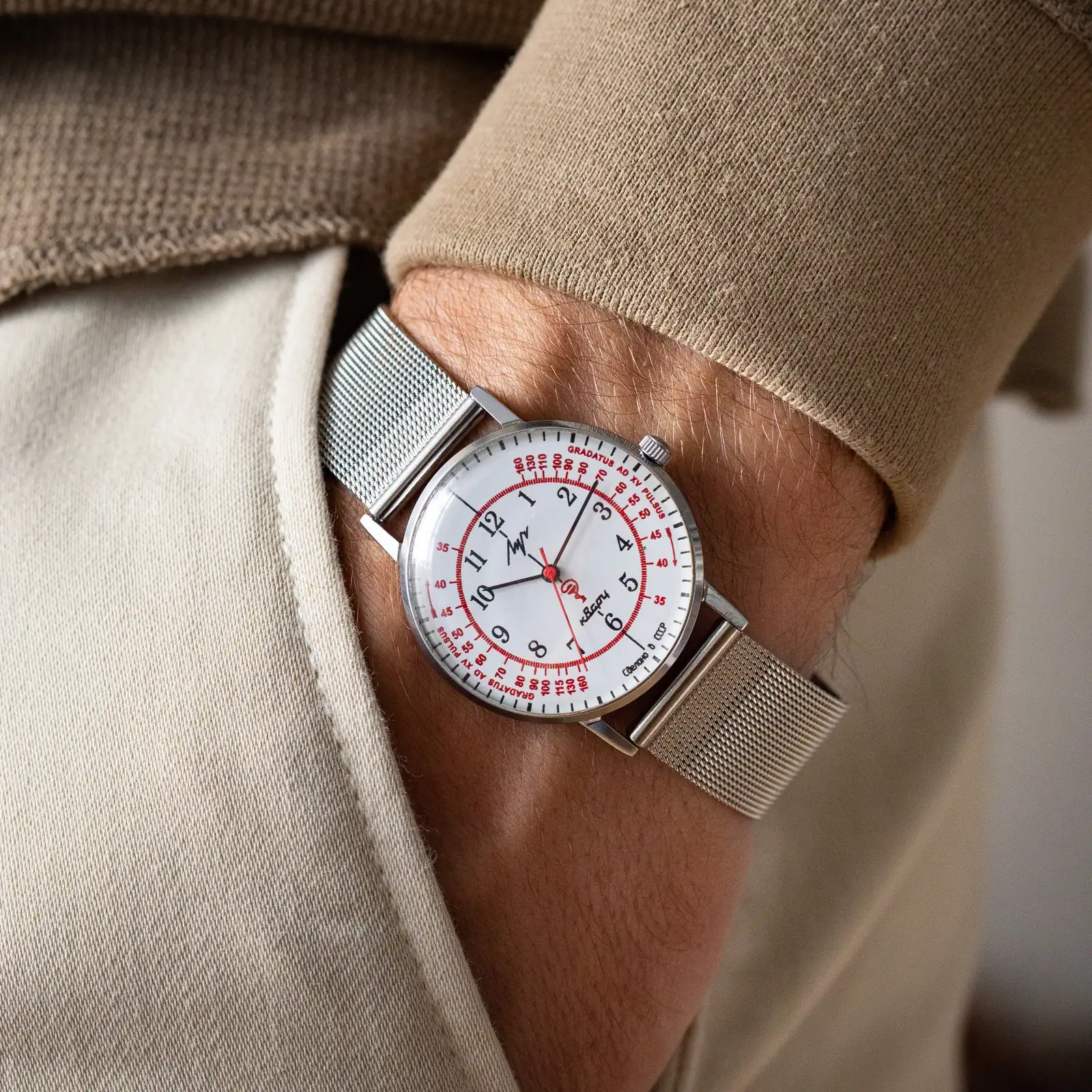
A symbol of instrumental watchmaking
At its core, the doctor’s watch embodies a somewhat forgotten idea today: that of the instrument watch.
Before becoming a social marker, a mechanical watch was a measuring tool. Measuring time, of course, but also depth, speed, distance—or in this case, heart rate.
The pulsometer watch may be one of the most elegant expressions of this philosophy. A few wheels, a spring, a chronograph—and suddenly, a vital sign becomes readable on a dial.
For a mechanism that knows only one unit—time—that is an almost poetic feat.